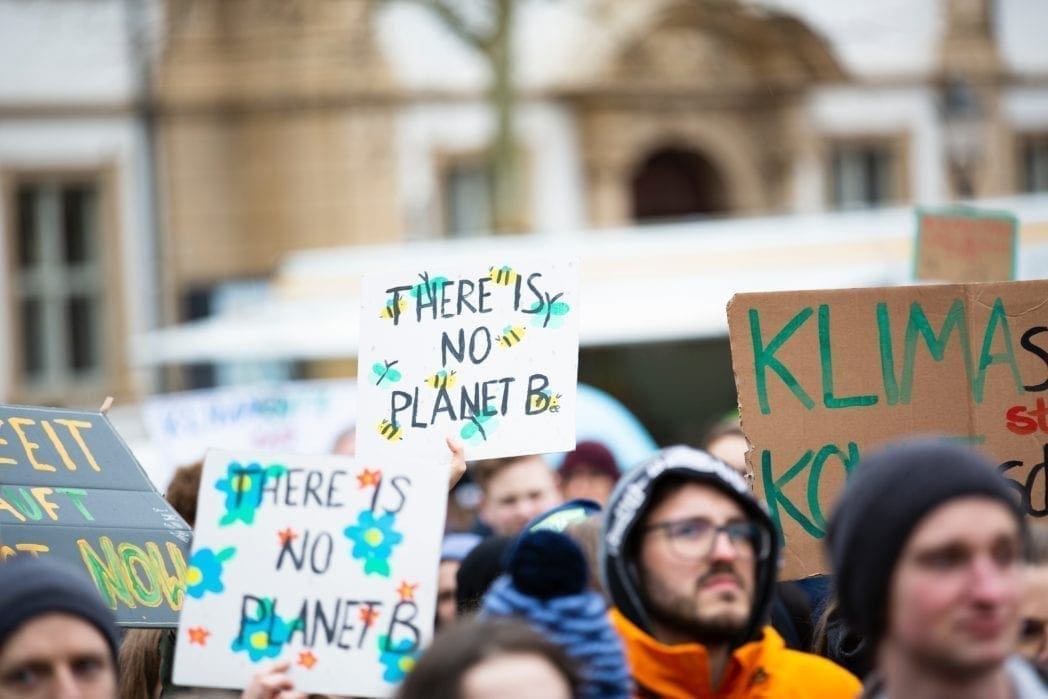
“Our house is on fire,” Greta Thunberg tells us.
Is she right? Are we on fire? Is the Earth getting greener or less green?
If you go by the prevailing narrative, ecological collapse is just around the corner, and your answer would probably be that the Earth is drying up, plants are dying, the seas are rising, and polar bears are on the brink of extinction.
You’d be wrong—by a lot.
Here’s what NASA reports, summarizing a 35-year study of global greening: “The greening represents an increase in leaves on plants and trees equivalent in area to two times the continental United States.” The Earth has gotten greener by an area that is over three million square miles!
Yet many policymakers continue to ignore such findings and make policy based on talking points, as illustrated by UN Secretary-General António Guterres: “Humanity is waging war on nature.”
Consider another case: humans consume a lot of oil. From 1980 to 2019, global oil consumption grew by more than fifty percent. Despite constant calls to reduce use, consumption keeps rising. However, over the same period, proved global oil reserves also grew. Oil reserves in the ground, recoverable “under existing economic and operating conditions,” increased by more than 150 percent.
Fifty years ago, Jimmy Carter was certain that we’d run out of oil very soon: “The oil and natural gas that we rely on for 75 percent of our energy are simply running out.”
Neither was he the first nor the last to make such doomsday predictions. There’s even a Wikipedia page, “Predicting the timing of peak oil,” noting that such worries date to the 1880s. Yet here we are, with more reserves than ever.
So why do “the experts” keep predicting the exact opposite?
Doom Sells
Humans have a negativity bias. We assume the worst, overplay the bad, and downplay the good. This trait helped us survive in the wild. Today, it can blind us to the enormous gains of the last few centuries and to the progress still unfolding around us.
What’s your political type?
Find out right now by taking The World’s Smallest Political Quiz.
Take the Political QuizNews outlets profit from that. You can question the ethics, but from an economic standpoint, you can’t blame them. They’re capitalizing on this inherent human trait. As long as people pay for horror-and-doom stories, the market will supply them.
Look past that bias and a different picture emerges: We are not running out of resources, and we are not destroying the planet.
Two simple dynamics explain why:
- Supply and demand: As a resource becomes scarce, its price rises. That creates incentives to conserve and profit opportunities for anyone who can supply a substitute.
- The environmental Kuznets curve: The richer we get, the more we tend to care about environmental quality. If you don’t know where your next meal is coming from, the environment is a distant concern. Greater security fosters greater care for your surroundings.
Resources
What is a resource? The Cambridge Dictionary says, “Resources are natural substances such as water and wood which are valuable in supporting life.”
Two hundred years ago, people had little use for dinosaur juice. In the 1850s, people began using kerosene, refined from petroleum, for lamp oil. As uses multiplied, the black gold became central to modern life. It is in everything.
What does this tell us? A thing becomes a resource only when human ingenuity finds a use for it. Over time, we often find more uses. That raises demand and prices, making it profitable to look for more.
When individuals are free to experiment, trade, and own what they create, they discover new uses for resources. Those materials gain value, and scarcity signals the search for more.
Only Ten Years Left…
An early doomsayer was Thomas Malthus. In 1798, he proclaimed that Earth could not sustain unchecked population growth. At the time, global population was just under 1 billion.
A later prophet of mass starvation was biologist Paul Ehrlich. He was certain that as population grew, resources would be depleted. Economist Julian Simon disagreed. They made a bet: Ehrlich picked a basket of five metals. If, from 1980 to 1990, its inflation-adjusted price rose, he’d win. If it fell, Simon would.
The result: Ehrlich mailed Simon a check after the basket's value fell by almost forty percent in real terms.
Two centuries on, Malthusian ideas persist, and alarmists, too many to list, still warn that the world will end in ten years.
Alarmists
These alarmists aren’t just teenage protesters from Sweden. They include senior policymakers. And it shows in their policies.
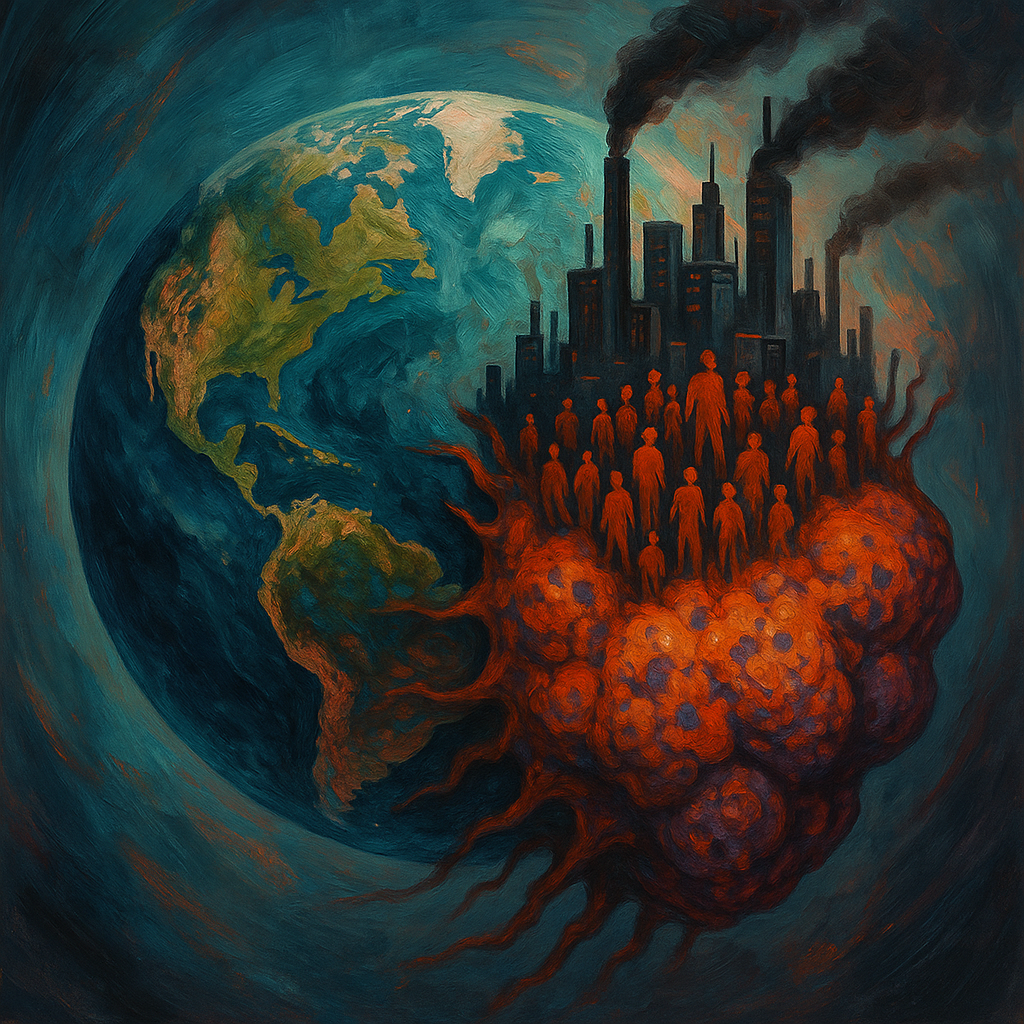
If you think humans are a planetary cancer, you aim to shrink their influence as much as possible. You treat human activity as something to be managed to minimize its planetary impact. Rationing, bans, and managed decline are your tools of choice.
Recognize human ingenuity, and you see people as problem-solvers. You recognize that individuals will find a way, and without heavy interventionism, progress is the default. Freedoms are protected, experimentation is encouraged, and market incentives take the lead.
Progress
Your smartphone is a tangible example. Nowadays, one device, right in your pocket, replaces the camera, camcorder, alarm clock, Walkman, calculator, flashlight, pager, voice recorder, console, landline, and complete libraries. That convergence means fewer metals mined, plastics produced, shipments made, shelf space used, and waste created.
This is not to say that humans are exclusively a force for good. Oceans carry plastic pollution and heavy metals. Large forest areas continue to be burned. Soils are being depleted. As good stewards, we should reduce and mitigate those harms. Hence, we choose not to buy from companies that pollute. If enough people act on these values, firms will lose customers and be forced to adjust.
With more capital, knowledge, and technology, we can adapt to a changing environment. We have to. A case in point is the Netherlands. Much of the country lies below sea level, yet the Dutch are fine. They built infrastructure to protect themselves.
Human Ingenuity Unleashed
Humans are not bacteria in a Petri dish. When something grows scarce, we adapt. Rising prices curb consumption and spur innovation, pushing people to develop technologies that make more efficient use of a resource, or to locate new supplies or find substitutes.
State intervention can only hinder this process. Humanity benefits most when markets are free to send price signals and individuals are free to respond. Unleash human ingenuity, and we’ll weather any storm. The real threat isn’t running out of resources but running into barriers that block human ingenuity.