When Pedro Rodriguez injured his hand, it ended his career as a musician of the cajón—a traditional Peruvian percussion instrument. But instead of giving in to adversity, Pedro reinvented himself. He launched a business crafting cajóns and selling them to other artists.
Despite his talent, Pedro faced a persistent challenge. Without legal registration, he was initially forced to operate in the informal economy, lacking both legal recognition and opportunities for growth.
This isn’t a challenge for Pedro alone. As of April 2025, Peru continues to struggle with one of the highest rates of informality in Latin America. An estimated 12.4 million Peruvians—71% of the workforce—work outside the formal regulatory framework. From street vendors to laborers in small enterprises, most operate without contracts, protections, or access to credit.
“In Peru, many people work informally––not because they want to––but because they have to,” explains José Alberto León, Project Director of Argentinian think tank Fundación Internacional Bases.
His point underscores a border reality: informality is rarely a deliberate choice. Instead, it is perpetuated by bureaucracy that makes formalization unnecessarily complex and costly. The process is poorly coordinated across government agencies and lacks accessible information. On top of that, compliance costs, paired with high taxes, are also frequently unaffordable for many micro-entrepreneurs operating on thin margins.
In other words, without the financial literacy or capital to overcome these barriers, many businesses remain trapped in informality.
The consequences are significant. Informal workers lack social protections and legal security, leaving them vulnerable to exploitation. And informal businesses are excluded from credit and formal banking options, remaining stagnant and undercapitalized. This dynamic limits social and economic mobility and entrenches inequality, sustaining a two-tiered society: one with rights and opportunity, and another left behind in legal and economic uncertainty.

Pedro recalls a moment that brought this reality into focus. Latin American rock band, Maná, had released a music video featuring a cajón—one he had crafted. But the moment was bittersweet. The instrument had been ordered through a mutual acquaintance without documentation. It bore no label or trace of his craftsmanship.
In that moment, Pedro grasped the cost of informality in a new way: his work had reached a global audience, but he remained invisible to it.
In 2023, Fundación Internacional Bases—an Atlas Network partner—launched “Dignity Voices” to shed light on how informality undermines economic freedom and human dignity.
Based in Argentina, the initiative used documentary filmmaking to capture the personal stories of inspiring individuals who overcame hardship and transformed their lives through hard work and determination. Within three months, the documentaries received over 500,000 views.
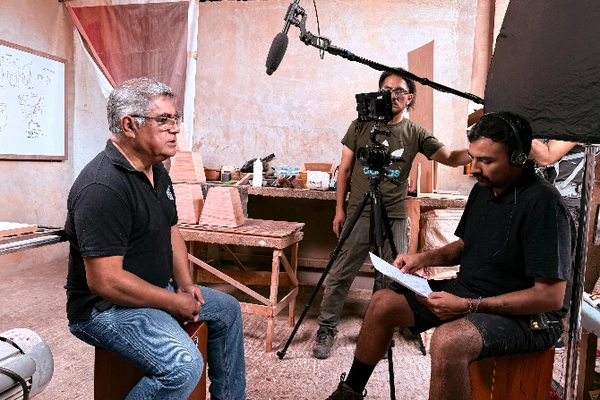
Backed by Atlas Network’s support, Fundación Internacional Bases expanded the effort to Peru through a new initiative: “Dignity Borderless.” This mission brought the film crew to Pedro’s workshop in Villa María del Triunfo, Lima. There, he shared how the injustice of informality motivated him to formalize his business. With the help of a local accountant, he registered Percusión Real—a legally recognized enterprise with a tax ID, accounting, and official receipts.
What’s your political type?
Find out right now by taking The World’s Smallest Political Quiz.
Take the QuizFor Pedro, formalization opened the door to economic inclusion, opportunity, and dignity: his work now has a recognizable name and a place in the market. His workshop now spans an entire floor, dedicated to his craftsmanship and to training his formally employed artisans.
Pedro’s story is part of an eleven-film cycle—six documentaries from Dignity Borderless (Peru) and five from Dignity Voices (Argentina). Together, these companion series share the same editorial throughline—dignity rooted in work and formal inclusion—while speaking in the voice of each place. Their release is designed to reach audiences across Latin America, from policymakers to the very people whose stories they tell.
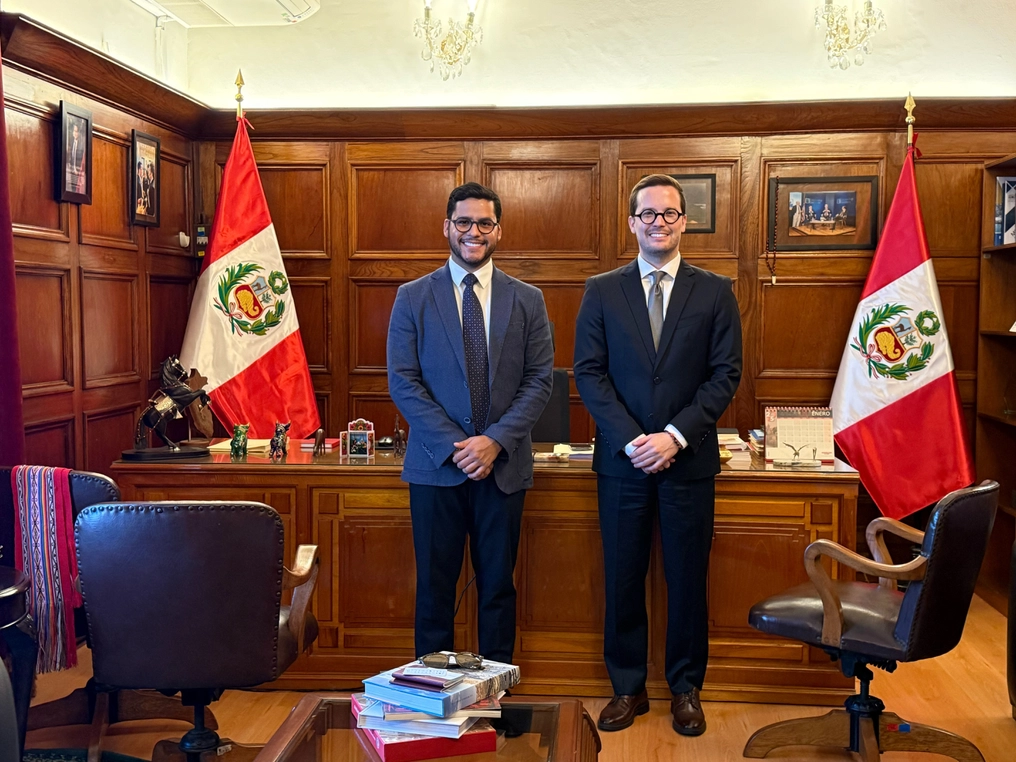
José Alberto León was recently invited to present the “Dignity Borderless” project before the Congress of the Republic of Peru and the Andean Parliament. Met with genuine interest and openness, his presentation fostered discussions about how future policy efforts could make formalization more accessible and inclusive.
Momentum is already driving meaningful change. Since early 2024, the Peruvian government has established a National Registry of Informal Workers, launched a formalization support network, and introduced reform efforts aimed at expanding formal employment. Still, more remains to be done.
Following Atlas Network's Latin America Liberty Forum 2025, the Fundación Internacional Bases team partnered with Alfredo Flores and his team at Ciudadanía sin Fronteras in Lima Norte—co-hosting community workshops with local universities and, later, a Foundation for Economic Education-supported webinar that reached 851 participants across 14 countries.
“These initiatives signal institutional awareness,” José Alberto León explains. “The harder task is cultural and practical: if formality is not the path of least resistance—simple, predictable, and low-cost—fear of bureaucracy, low trust, and compliance burdens will keep people out.
That is the power of “Dignity Borderless.” Through cinematic storytelling, it bridges abstract principles with lived experience. The ideals of economic freedom and human dignity become deeply personal and profoundly human.
For policymakers and civil society leaders, these stories serve as a tool to confront the entrenched bureaucracy behind formalization. And for everyday people, they ignite a sense of agency, revealing that they, too, can shape a future grounded in dignity and opportunity.
By reshaping both policy and mindset, “Dignity Borderless” challenges the prevailing narrative that often overlooks the resilience and determination of Peru’s hardworking citizens. In its place, it promotes a culture grounded in self-reliance, economic freedom, and the inherent dignity of every individual.
Republished from Atlas Network.