
Let’s be honest about what taxation actually is.
It’s not what your civics teacher may have taught you. It is not “public investment” or “shared responsibility” or any of the other sanitized euphemisms politicians reach for when they want to make the thievery sound noble.
Let’s call it what libertarian and voluntaryist thinkers have always called it: a non-consensual extraction of the fruits of your labor, backed by the credible threat of force.
Benjamin Franklin gave us the famous line about death and taxes being the only certainties in life. He wrote it in 1789, marveling at the new American Constitution, and it has echoed ever since as a kind of resigned wisdom.
Libertarians quote it too, though usually with a different emphasis. Yes, it’s inescapable, but that doesn’t make it right.
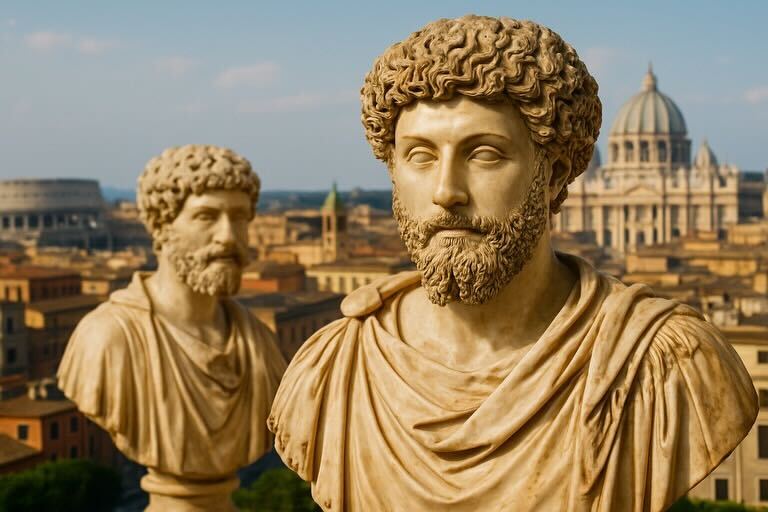
Murray Rothbard, the intellectual godfather of modern libertarianism, once pointed out that Lao Tzu, writing in ancient China, understood this dynamic long before anyone called it a political philosophy. The narrative he espoused was that when rulers take more than the people can freely give, something breaks.
The Tao Te Ching is blunt about this. So was Rothbard. So, increasingly, is the empirical record coming out of California, Washington State, and Massachusetts.
The moral case against coercive taxation is not complicated. It goes like this: If you own your labor, you own what your labor produces. A non-consensual taking of that production is theft, regardless of what we call the institution doing the taking, how many people voted for it, or how many good things the revenue funds. Calling it theft doesn’t mean you burn your tax returns. It means that you keep the moral presumption against it honest.
Is There a Self-Governance Approach to Taxation
Self-governing libertarians—specifically the kind who want to actually survive and build lives under the current system rather than martyring themselves to a principled abstraction—generally counsel something more strategic: minimize legally, build resilient private networks, and work toward the long cultural shift that makes voluntary arrangements first thinkable, then normal.
Which brings me to Tom Wheelwright. Because if you’re going to live under a system you believe is fundamentally coercive, you might as well be excellent at navigating it. No one I’ve interviewed over the years offers more clarity, more precision, or more practical firepower on how to legally steer clear of taxation than Wheelwright.
Wheelwright is a CPA, CEO of WealthAbility, and the author of Tax-Free Wealth. He is a Rich Dad Advisor and one of the clearest thinkers I know on the relationship among taxation, personal freedom, and economic self-determination.
Wheelwright speaks plainly, which I appreciate. No ideology. Just raw strategy, pattern recognition, and the occasional uncomfortable truth.
When the Government Takes Too Much
I’ve been thinking about taxes through two very different lenses lately. One is libertarian. The other is Taoist. You wouldn’t think those two would have much to say to each other, but they do. Both look at a government that takes too much and see the same problem: when a ruler takes more than the people can freely give, something breaks.
Chapter 75 of the Tao Te Ching is almost uncomfortably direct: “When taxes are too high, people go hungry. When the government is too intrusive, people lose their spirit.” That was written roughly 2,500 years ago, and I think of it every time I see another headline about taxation.
The libertarian tradition arrives at a similar place through a different lens. Taxation, in that framework, isn’t merely inefficient; it is coercion. It’s the handshake of commerce replaced by the threat of force.
Enter Wheelwright, who isn’t particularly interested in the philosophical argument. He’s interested in self-governance and minimizing the damage of taxation.
In my most recent conversation with him, he began by discussing California’s proposed billionaire’s tax, Washington State’s new 9.9 percent income tax, and the Massachusetts cities that are quietly hiking property taxes. Taking in his opening salvo reminded me why taxation isn’t about abstract policy debates but the slow, methodical redistribution of the fruits of your labor. Sadly, this trend is accelerating.
What’s your political type?
Find out right now by taking The World’s Smallest Political Quiz.
Take the QuizThe Great State Tax Reckoning
The starkest thing Wheelwright said to me wasn’t about tax rates. He noted how many California, New York, and New Jersey residents are moving to low- or no-income-tax states like Florida, Nevada, and Texas to relieve some of their tax burdens.
For example, Howard Schultz, the founder of Starbucks left the state of Washington and moved to Florida after that 9.9% income tax hit.
When people with options start voting with their feet at that scale, it tells you something. The Tao would say the river found its natural course. Libertarians would say that the market spoke.
“When taxes are too high, people go hungry. When the government is too intrusive, people lose their spirit.”
Lao Tzu, Tao Te Ching, Chapter 75
Here’s what’s worth sitting with: People who are frustrated by high taxes often focus entirely on income tax rates. Wheelwright would redirect your attention by noting that the base tax matters as much as the rate. In other words, a state with lower rates but a broader tax base can cost you just as much.
At that point, he walked me through the California 1031 exchange problem: If you sell real estate in California and try to do one of these exchanges outside the state, California will tax the gain anyway. That’s not a loophole but more like a trap.
You Can’t Pretend to Move
This is the part of the conversation where Wheelwright got a little animated … and understandably so.
He’s seen it too many times: Someone buys a house in Las Vegas, lists it as their primary residence, and keeps their kids in school in Los Angeles. California’s Franchise Tax Board finds out—and they will find out, he laments—and suddenly that person owes back taxes, penalties, and interest on years of California income.
“You’d better really move,” Wheelwright said. “You can’t pretend to move.”
The documentation requirements are genuinely demanding. Where do your children go to school? Where does your spouse live? Where do you go to the doctor? Where’s your car registered? These aren’t hypothetical audit questions. They’re the actual checklist.
And once you’ve established residency elsewhere, California will track whether you’re spending more than six months a year back in the state. One calendar day over that threshold, and the whole relocation unravels. It’s a reminder that self-governance isn’t just a philosophy but a daily practice.
This is where Taoist and libertarian traditions diverge in an interesting way. Taoism would say: flow around the obstacle like water. Find the natural path of least resistance. Don’t fight the mountain; move through the valley.
Libertarianism would frame it as a moral stand: your labor, your property, your right. To have them taken from you is theft.
Wheelwright occupies a third space that’s more pragmatic than either. The code is what it is, so work it. Move your body and your business. Document everything. The philosophy can wait; if you happen to be a Californian, the Franchise Tax Board cannot.
AI Is Coming for the Non-Filers
I asked Wheelwright where the future of taxation is headed. His answer surprised me, and I don’t surprise easily. He thinks AI-driven tax audits are going to get significantly more aggressive at both the state and federal level within the next three to five years. Not in a distant, theoretical way, because in truth, it’s already beginning to occur.
For instance, he describes how automated notices are going out to taxpayers, flagging mortgage interest deductions that appear to exceed the legal limit. No agent or human review, but an algorithm that spotted it.
Then he points to a population of non-filers who believe that the IRS is too lean, too distracted, or too overwhelmed to come after them. Wheelwright’s message to those folks is direct: You’re building up a debt that AI enforcement is eventually going to collect.
What he appears to be saying here is that the machine doesn’t forget. It doesn’t take budget cuts or resource constraints personally. It just waits until it has the processing power to work through the backlog, and then it sends the notice. “You can run, but you can’t hide,” he said, not as a threat but as an observation.
His response to AI-driven enforcement is, unsurprisingly, an AI-driven tax strategy. Wheelwright says his firm is building tools that analyze your specific situation and identify the deductions, incentives, and structures that apply to your circumstances.
He then adds that the arms race between tax enforcement and strategy has always existed; it’s just going to get faster and more data-intensive. In this environment, a self-governing individual needs knowledge and a tax advisor.
Preferably both.
The Federal Code as an Invitation
Here’s the part I keep coming back to. Wheelwright draws a clear distinction between federal and state tax codes. Federally, the code is written to incentivize behavior the government wants to encourage: investment, manufacturing, real estate development, research and development, and job creation. If you do those things and structure them correctly, you can pay less in federal tax.
Both Taoism and libertarianism are skeptical of government, and for good reasons. But the Taoist tradition doesn’t counsel rigid resistance; it counsels intelligent navigation. Wu wei, governing through non-action, isn’t passivity but alignment with what’s actually happening rather than what you wish were happening.
The federal tax code is actual reality. Responding to it clearly and strategically is alignment. Ignoring it out of ideological frustration is, ironically, the least free thing you can do with your money.
Libertarians believe in voluntary cooperation, persuasion over coercion, and individuals’ right to keep the fruits of their labor. The conversation between freedom and taxation doesn’t have to end in paralysis. It can end in a tax strategy.
Self-Government Means Knowing the Rules
I want to close with something Wheelwright said that stuck with me. When I asked about the future of tax strategy in an AI-driven world, he said, “Hopefully, we’ll get technology that’ll make it a lot easier to do tax returns.” It sounded almost like a throwaway statement. But the more I think about it, the more I realize that’s actually the whole point.
What he seems to be saying here is that the friction of the current tax system (the complexity, the professional fees, the anxiety, the documentation burden) is itself a form of control. Reduce the friction, and you deliver some of that cognitive, financial, and lifestyle freedom back to the individual.
Self-government isn’t a bumper sticker. It’s a set of choices you make every day about where you live, how you structure your business, what you document, whom you listen to, and what you do with what you earn.
The ancient Taoist sage and the modern libertarian theorist would both agree on at least this: that a government that takes too much by way of theft eventually loses its people. The people running from California to Texas are living proof.
The question for the rest of us is whether we’re going to be proactive about our own version of that calculation or wait until we’re forced to run. Wheelwright gives a thought-provoking roadmap for beginning to think critically about this aspect of our lives.