For more than 30 years, a deceptively simple interaction has played out at booths and events across America.
Someone walks by a table. They’re invited to take a short quiz, just a few questions about their political views. They say yes. They pick up a clipboard and a pen. A few minutes later, they place a sticky dot on a chart.
That dot represents where they fall on the political map. And more often than not, it lands somewhere they didn’t expect.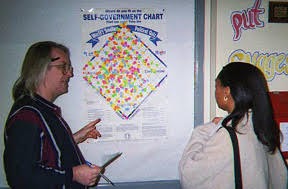
They’re not as “left” or “right” as they thought. They’re something else entirely. For many people, that sticky dot is the first moment they realize they might be libertarian.
That interaction is called Operation Politically Homeless. It was created by The Advocates for Self-Government, a nonprofit focused on helping people think beyond the traditional political spectrum.
A Tool That Has Stood the Test of Time
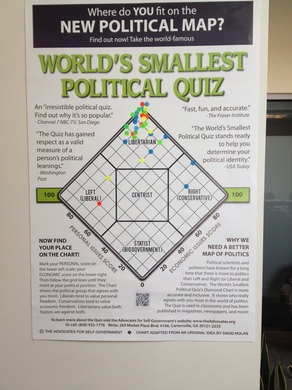
At the heart of OPH is the World’s Smallest Political Quiz, a ten-question assessment that maps political views beyond left and right. Since it launched online in 1995, it has been taken nearly 30 million times.
But that number only tells part of the story.
What’s your political type?
Find out right now by taking The World’s Smallest Political Quiz.
Take the Political QuizThe offline version, the clipboards, the conversations, the sticky dots at fairs, campuses, and conferences, has been happening for decades with no way to measure it. Every interaction was real. Every person walked away with a new perspective. But when the event ended, the data disappeared.
We’ve never actually known how far OPH has reached.
The World Has Changed. OPH Hasn’t. Yet.
Political conversations no longer happen in just one place.
They happen in group chats, online communities, podcasts, and social feeds. The booth at a local event still matters, but it is no longer the only way people encounter new ideas.
OPH was built for clipboards and poster boards. It was never designed for QR codes and shareable links. That gap between where OPH lives and where people are is what we are working to close.
The goal is simple. Bring OPH online in a way that scales.
A version that can be used by a professor in a classroom, a speaker at a conference, a podcaster with an audience, or someone sharing a link with friends. A version where results can be seen in real time, where participation is tracked, and where each interaction builds on the last.
Why Now
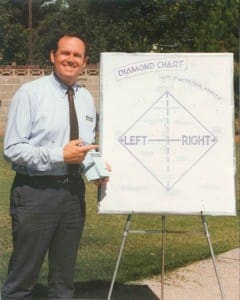
The Advocates for Self-Government was founded by Marshall Fritz, who understood that ideas spread through people, and that the tools for spreading them have to evolve.
This is not about replacing OPH. It is about making it work in the world as it exists today.
We Want Your Input
If you’ve ever staffed an OPH booth, used the quiz in a classroom, shared it with others, or simply believe in what it does, your perspective matters.
We’re running a short survey to understand how OPH is used today, what works, what doesn’t, and what an online version would need to be worth using.
It takes 5 to 10 minutes.
The sticky dot was the beginning. The next version should reach far beyond the booth.