
Prohibition is an awful flop.
We like it.
It can’t stop what it’s meant to stop.
We like it.
It’s left a trail of graft and slime,
It don’t prohibit worth a dime,
It’s filled our land with vice and crime,
Nevertheless, we’re for it.
— “Prohibition” by Franklin P. Adams, 1931.
William Stewart Halsted is known as the “father of modern surgery.” He was one of the four founders of Johns Hopkins Hospital in 1886, and he is credited with surgical innovations including promoting antiseptic practices and the discovery that cocaine, when injected into the skin, could be used as a local anesthetic. He was also a drug addict.
Halsted’s drug use began with cocaine, and after a few failed attempts at kicking the habit, he switched to morphine. He spent more than 40 years addicted to the drug, all while maintaining one of the most distinguished careers in the history of surgery. According to Sir William Osler, one of the co-founders of Johns Hopkins, Halsted could not get through the day without a minimum of 180 milligrams of morphine. “On this,” said Osler, “he could do his work comfortably, and maintain his physical vigor.”
Halsted’s story illustrates the reality that—while perhaps not desirable—it is possible to both be addicted to narcotics and still function very well in society. Imagine if America had been in the throes of the War on (Some) Drugs in the 19th century, and instead of doing groundbreaking work as a surgeon and helping to build one of the country’s most prestigious hospitals, Halsted had been thrown into a prison cell. Who would have benefited from that outcome?
More to the point: How many Halsteds are rotting away in prison today, and what gifts are we all missing out on as a result?
In Halsted’s day, drug addiction looked very different from what it looks like today. Federal control of narcotics only came about in 1914, with the passage of the Harrison Narcotics Act.
Before that, anyone could walk into a drug store and purchase medicines—and even soft drinks—that contained opium or cocaine. And some did become addicted.
But, as Mike Gray writes in Drug Crazy:
“It was not until the late 1800s that the public began to realize that some of their favorite medicines could be highly addictive. … At that time, the highest credible estimates put the number of U.S. addicts at about three people in a thousand. Others thought it was half that.” (Note: Some estimates put the number as high as one in two hundred.)
“All the leading authorities now agree,” he writes, “that addiction peaked around 1900, followed by a steady drop. The reason was simple common sense coupled with growing awareness.”
Other sources
confirm that narcotic use began to decline as early as 1895, and that by 1920 it had dropped to less than 0.1percent of the population.
And who were these addicts?
According to the 1914 book The Opium Problem, by Dr. Charles E. Terry, “a very large proportion of the users of opiate drugs were respectable, hardworking individuals in all walks of life, and … only about 18 percent could in any way be considered as belonging to the underworld.”
So what happened? Why did the profile of the average drug addict change so dramatically, and why did drug addiction numbers stop their decline and shoot up from .01 percent of Americans in 1920 to where they now sit at around 2.3 percent (an increase of 22,900 percent)? (Note: The 2.3 percent estimate does not include much of illegal fentanyl use, so the real number is even higher.)
Given that the War on (Some) Drugs makes drug use a crime, why would addiction climb so dramatically? After all, the purported goal of enforcing drug laws is to reduce the use of drugs. Why has this failed so badly?
The economics of drug prohibition have been thoroughly studied, giving us clear insight into its unintended consequences. Among these is the fact that the illegality of drugs incentivizes producers to increase their potency and addictive qualities dramatically.
Drug prohibition has many other dire, albeit presumably unintended, consequences.
When a product that people want is prohibited by the government, the people who want that product will find ways to get it. Under prohibition, buyers, sellers, and producers must become criminals under the law. They—producers and distributors especially—need to be willing to risk going to jail for conducting their business. Morever, as they can no longer expect protection for their business activities from the police, they must provide their own “protection” from thieves and from violent competitors. Meanwhile, those who are addicted have a much harder time seeking and receiving treatment.
What’s your political type?
Find out right now by taking The World’s Smallest Political Quiz.
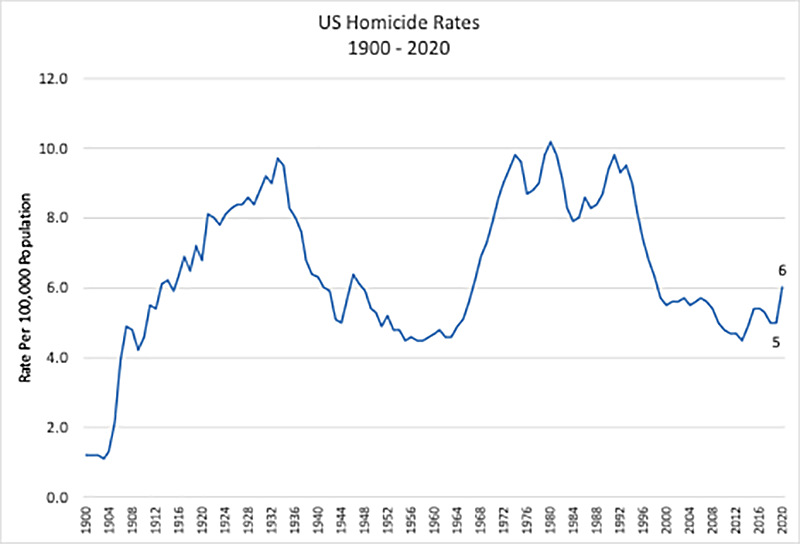
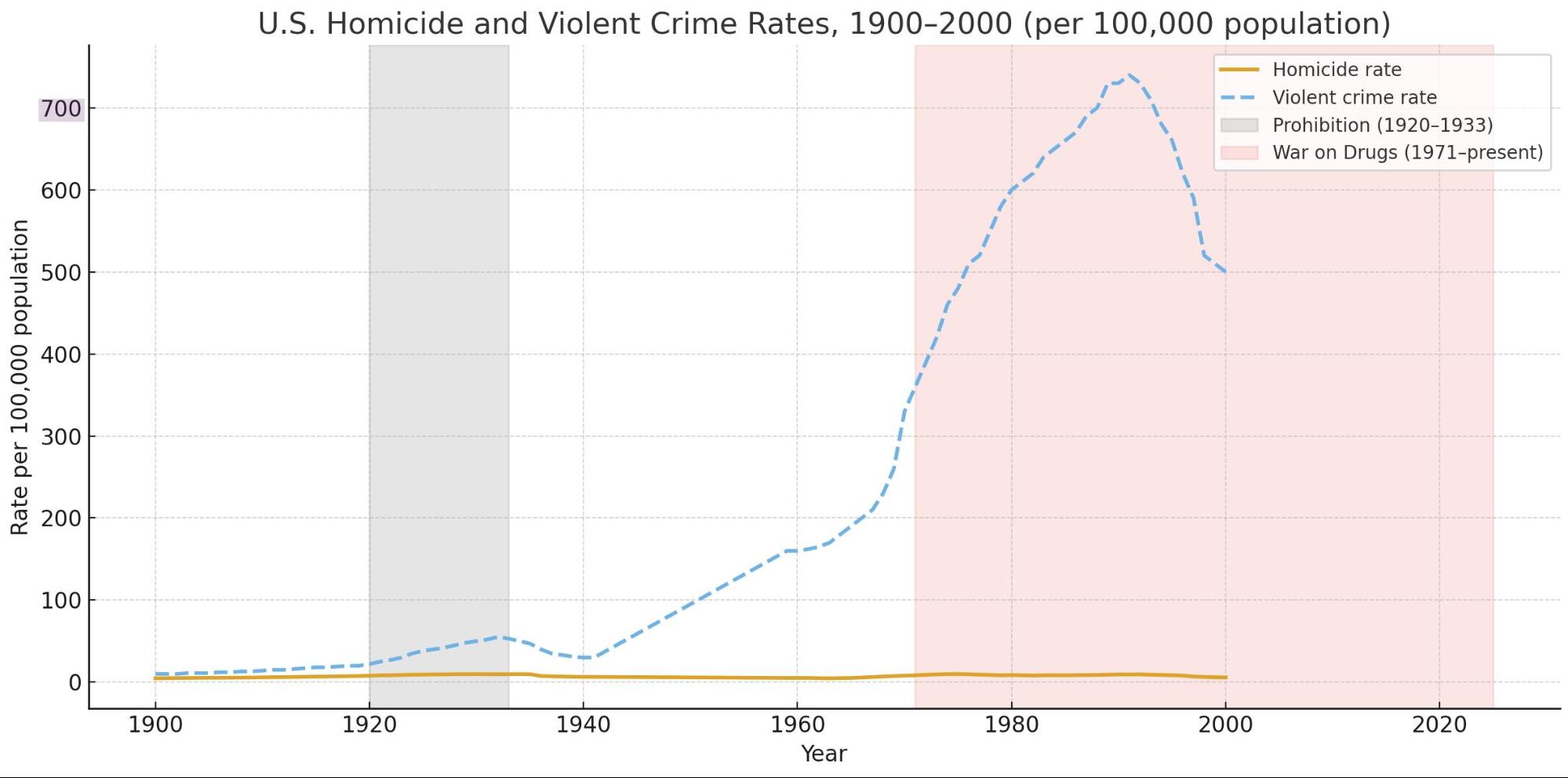
Take the QuizWe know this not only because economists and others have explained it ad infinitum, but because we have witnessed it play out in real life: When alcohol was prohibited beginning in 1920, the national murder rate shot up from around 6/100,000 to a high of 9.7/100,000 in 1933. As soon as prohibition was ended, murders dropped back down to pre-prohibition levels.
Without prohibition, Al Capone would have been a grocer.
Likewise, the murder rate spiked upwards once again, beginning in the early 1960s, alongside the beginning of more aggressive enforcement of drug laws (which now included both the Boggs Act of 1951 and the 1956 Narcotics Control Act, creating harsher penalties and mandatory minimum sentencing). When the War on (Some) Drugs began in 1971, violent crime continued its climb, up to Prohibition-era levels. It did begin to decline in the 1990s, but still remains well above where it was prior to the 1960s.
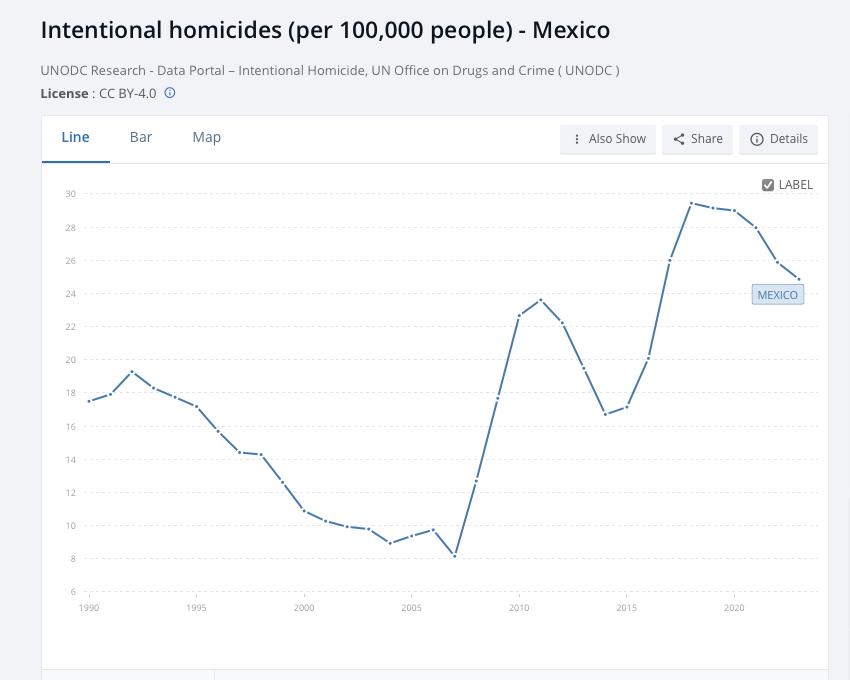
The U.S. is not an isolated example. When the Mexican government, under President Felipe Calderón, began its war on the drug cartels at the end of 2006, it also sparked a sharp increase in homicides. By 2011, the homicide rate had tripled.
Then, there are the less-tangible costs of waging war on chemicals and the people who use them. There is an impact on the social fabric that might not even be felt or recognized by those who are born into it. But go spend a year or so living in a society that does not enforce a rabid drug war, where police officers do not routinely burst into people’s homes in the dead of night searching for “controlled substances,” and where the lives of entire communities do not revolve around criminal activity. Then come back to the U.S. You’ll see what I mean.
The relevant question here is not whether a specific substance is harmful or not harmful. We can agree that all of the drugs that are currently prohibited can cause harm. We can even agree that cannabis can potentially be harmful. That is not the question.
The real question, of course, is whether the government has the moral right to forcibly prevent Americans from ingesting whatever substances they choose to ingest, and the answer to that question is: “No, it does not.”
But for those who do not believe in individual rights—sadly, it seems, most Americans—another relevant question is this: Will government prohibition of this substance make things better or worse? The answer to this question is just as clear: The great harm done by this war is not limited to those who participate in the drug trade. All Americans live in more danger today because of the crime engendered by this policy. Each of us is more at risk—even inside our own homes—because of increasingly militarized and hostile police forces, and entire neighborhoods and communities have been turned into war zones. Surely all of this presents a far worse outcome than any of the effects produced by a small percentage of people being addicted to drugs.
This is not rocket science.
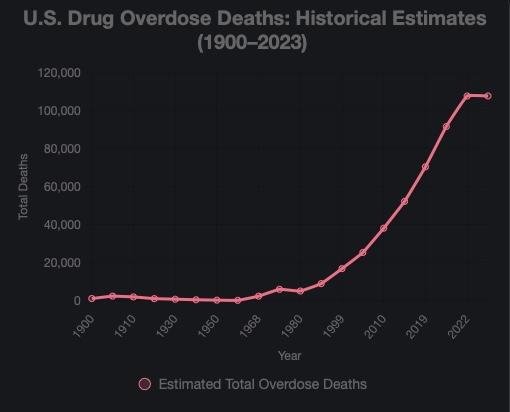
- We already know prohibition does not work. The U.S. government has been waging an aggressive and violent war against drug use for 65 years now, but addiction numbers are higher than before this war began, and overdose deaths are at all-time highs.
- We already know prohibition is incompatible with a free society.
- We already know that drug prohibition only feeds and strengthens the people who profit from illegal drugs, and that it boosts violent crime.
We already know all of this. We’ve known it for decades. So the real question we should all be asking is,
Why are we still talking about this instead of just ending it?