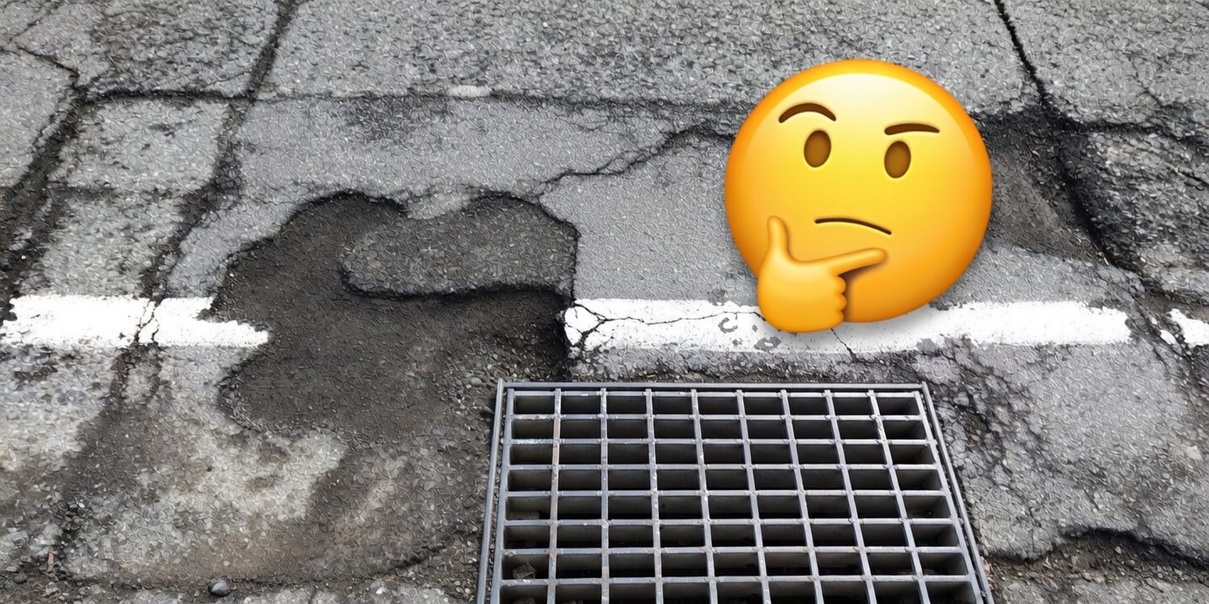

In “The Day Government Stole My Dream Property,” I told the story of how the perfect piece of (seemingly) pristine land—something I have wanted to buy since I was five—turned out to be downslope from a toxic waste dump … courtesy of the county government.
In “The Fallacy of 'Argument from the Brochure','” we discussed the fact that not only does government do a poor job of protecting us from social ills, it is also frequently the worst source of those ills.
In this piece, we will look at a few examples in the area of pollution.
I. Government as Direct Polluter
State-run enterprises
Governments frequently own productive enterprises. This is more likely to be the case in socialist economies, but it is by no means limited to them.
Here are a few examples:
oil and gas companies
mining operations and steel mills
factories and heavy industry
rail, shipping, aviation, and other transportation systems
agriculture and forestry
Typical harms include water and air pollution, spills, toxic waste, deforestation, soil degradation, and tailings contamination.
One can argue that these are productive and necessary functions—tasks that the private sector would likely perform if the government did not. And there is truth to that. However, as we will touch on later in this piece,
Governments are far less likely to be held accountable for environmental damage, and
The bigger the government, the dumber their ideas and the less they care about the damage done.
The massive industrial pollution in the Eastern Bloc is a representative example of utter disregard for environmental standards. The East Germans burned lignite coal and contaminated rivers. Some of the environmental ruin of Cold War-era Central Europe could be seen from space.
And speaking of the Cold War … The Chornobyl disaster was made possible by substandard technology (a pervasive problem in the USSR), perverse political incentives, and secrecy. The aftermath was compounded by political delays, more technological problems, and more secrecy. Totalitarian regimes are excellent at secrecy, incompetence, and perverse political incentives. Caring for the environment … not so much.
I was in the USSR for a month in 1991. There were no toilet seats in the men’s bathrooms in Kalinin (Tver) University—they had all been taken home by students to burn for heat. When people are poor—and in socialism, everyone is poor except party leaders—they don’t think about the environment. They think about survival. We would do the very same. (And anyone who thinks they’d somehow be nobler than that is a peculiar combination of ignorant and arrogant.)
Government’s operational footprint
The state, as an institution, has a massive environmental impact simply as a result of its normal operations.
Examples include
government offices
schools
courthouses, law enforcement, prisons
travel fleets
procurement chains
Governments have multiple divisions (central, state, regional, local, etc.), each with its own footprint. Government facilities, personnel, and transportation use energy, emit air pollution, consume water, generate waste, encroach on habitat, and more.
If you believe that government is a necessary evil, then the issue will be one of scale: how can we ensure that governments cause as little environmental damage as possible?
If you believe that private agencies and smaller polities can provide all the legitimate services of government (security, justice, and roads) and do so far more efficiently and accountably, then government is just a giant rights-violating, consent-violating, environmental-destruction machine.
Military and national security
This one’s a doozy.
Let us set aside, for the time being, the environmental destruction caused by actual fighting. The environmental footprint of the world’s standing military forces, even in so-called peacetime, is enormous:
fuel consumption
overseas travel and operations
development of WMDs
infrastructure
air and naval operations
training, war games, and weapons testing
munitions contamination
burn pits
land mines
unexploded ordnance
contaminated bases
abandoned equipment
Nuclear weapons testing requires separate treatment, as it produces a broad range of environmental harms far beyond the immediate blast zones:
radioactive contamination (air, soil, groundwater, and oceans);
long-lived radionuclides (cesium-137, strontium-90, plutonium, and iodine-131) entering the environment and food chains;
radioactive fallout dispersed globally;
lasting human and animal health risks linked to contaminated environments (e.g., increases in thyroid cancers)
contamination associated with mining, processing, refining, and storage of nuclear materials;
and much more.
And then there’s the devastation of war and conflict:
WMD
chemical
nuclear
biological
What’s your political type?
Find out right now by taking The World’s Smallest Political Quiz.
Take the Quiz
battlefield damage
fire
trenching
bombing
habitat damage
scorched earth
chemical pollution
fuel spills
spent ammunition
explosives residues
heavy metals
depleted uranium
solvents
industrial toxins
defoliation
sabotage
ecological manipulation
destruction of infrastructure (including secondary effects)
water issues
naval warfare
sunken ships
oil spills
mines and explosives
harbor destruction
dam destruction/intentional flooding
This list could easily continue. One item that deserves special mention is biological weapons. Who but governments have the resources and perverse incentives required to research, test, store, and deploy biological agents that could kill … everyone on the planet?
Remind me again what government is protecting us from?
Public infrastructure
Governments tax (directly or through inflation) and then provide certain infrastructural systems, such as
waste management
sewers and wastewater systems
landfills
incinerators
roads, highways, and travel infrastructure
public power generation
etc.
Typical damage includes sewage discharges, chemical releases, leaks from aging infrastructure, leachate, air pollution, and more. Government is always described as the necessary solution to externalities (a.k.a. neighborhood effects, e.g., pollution, noise, etc.), but in all these cases, government is the externality.
As above, though some of these are necessary infrastructure services, private companies would provide them more efficiently and cheaply, and would be far easier to hold accountable for damage. And they would do it without the consent-violating coercive force of government.
Mega-projects and land transformation
Big government—with their unlimited supply of taxpayer and printed money—loves big projects:
dams
canals
reservoirs
irrigation systems
eminent-domain development
wetlands draining
flood-control projects
Typical damage:
habitat destruction
river disruption
species collapse
sediment changes
population displacement
salinization
subsidence
Here too, while some of these mega-projects can be helpful, central planners lack knowledge, price feedback, and normal incentives. Governments have captive populations whom they can tax at will. Governments are run by ambitious bureaucrats, myopic ideologues, and politically motivated operatives. And because they are playing with other people’s money, there is no end to the foolish projects they can undertake or the harm they can cause.
In the 1960s, the Soviet government diverted the rivers feeding the Aral Sea to support centrally planned cotton production. The result was one of the greatest ecological catastrophes in recorded history. The sea lost 90 percent of its volume. An entire ecosystem (and all the human activity that depended upon it) was wiped out. Dust from the exposed seabed created the toxic Aralkum desert.
This was not caused by market incentives; it was caused by government agricultural quotas enforced from the top down. The hubris is staggering.
Not to be outdone, the Chinese communists diverted rivers (causing them to dry up completely); attacked birds (creating plagues of insects); and tried to farm rice on hillsides instead of in paddies—all of which caused tens of millions to starve to death. Their brilliant idea to put a steel furnace in every backyard caused massive deforestation.
Again, being a government, they had only political incentives and no price signals. Being a psychotic communist government, they had plenty of fear. As a result, no one dared speak up to let them know that they were devastating the environment. Because no one dared speak up.
II. Government as Indirect Polluter
The brochure fallacy asks, “Without government, who will protect us from pollution?” with the underlying assumption that governments are actually doing that. This fallacious premise not only ignores the fact that government is the biggest polluter, it also ignores the fact that it abets pollution by others.
Crony Capitalism
Defenders of the state argue that we have government bureaus and accountable elected officials whose role is to protect the public. This argument from the brochure ignores the reality of the iron triangle: the incestuous, mutually reinforcing relationship among government agencies, politicians, and private industries.
In a phenomenon known as regulatory capture, the committees and agencies that are supposed to be keeping tabs on private interests end up being captured by those same interests.
In the brochure version, industries lobby the government. In the actual version, private industries end up writing the rules by which they will be governed.
In the process, they gain
exemptions, selective enforcement, or delayed intervention
weakened permitting standards
liability shields or indemnification
suppression or minimization of evidence
favoritism in contracting
special grants, loans, or status
The politicians, for their part, gain campaign support, the goodwill of powerful private players, and pork for their constituents.
The bureaucrats in the oversight agencies never solve anything, so they gain a permanent raison d’être, ongoing funding, and the job security that follows.
A revolving door also forms whereby all these players rotate from private to public and back again, writing their own rules and scratching each other's backs along the way. Naturally, the taxpayers have no real seat at the table.
The end result is that the government is more responsive to entrenched private interests than to the general public or to the living things of planet Earth. It does not punish polluters nearly as often as it protects and assists them.
Bad policies and incentives
Nearly all politicians have a disease. It is called the do-something disease.
Constituents clamor that “There oughta be a law.” Special interests lobby for favors and preferential treatment. And there is nothing stopping politicians from giving them what they want.
The laws they pass do not need to comport with common sense or natural law. They just need to get out of committee and onto the floor for a favorable vote.
In the real world, there are market signals. Prices. Competitive pressure. Bottom lines. Politicians have none of this. The result is an endless stream of legislation that doesn’t actually need to work in the real world—it just needs to satisfy the political incentives of the moment.
Subsidies. Tax policy designed to steer activities. Mandates that sound good in a campaign speech. Production targets or limits.
The result is a market distorted by politics. One mode of transportation, one crop, one industry is favored over another. Private players—who cannot simply tax their way to prosperity—must adjust accordingly. And sometimes, these adjustments prove worse for the environment than if politicians had simply left things alone.
But they won’t ever leave things alone, because the system is set up to reward them for doing something, even if that something is bad.
The tragedy of the commons
Here is a quick example to serve as an explanation for the phenomenon known as the tragedy of the commons:
If no one owns a plot of pasture land (if it is considered the commons or ‘owned’ by everyone), then the incentive is for all the farmers to try to graze their animals there before the other guy does. If one farmer owns it, his incentive is to use the land wisely, to preserve its capital stock for the future.
In fact, public land is frequently overgrazed for this very reason, just as fishing grounds are overfished.
Socialist countries have been a study in the tragedy of the commons, but even in the mixed-market economies of the West, the problem is still the same; there is just somewhat less of it.
Governments can manage resources well, but they face greater obstacles, including short time horizons, misallocation of funds driven by political or budgetary considerations, and unclear accountability.
By way of example, public forest lands in the United States frequently fall victim to a peculiar set of tragedies:
Laws are in place that allow environmental organizations to sue the government on the taxpayers’ dime.
Because certain lands are “public,” these organizations feel they have the right to have a say in how they are managed.
They sue the government to prevent the needed thinning of smaller trees.
Fire loads become so large that wildfires become catastrophic crown fires (rather than merely burning the grass while leaving the larger trees mostly untouched).
Thus, forests that are supposedly ‘yours’—you’re paying for them, after all—are turned into ashen wastes, all at your expense.
Bottom line:
Private ownership works better than public ownership. Always.
Market incentives work better than political incentives. Always.
III. Governments are not accountable
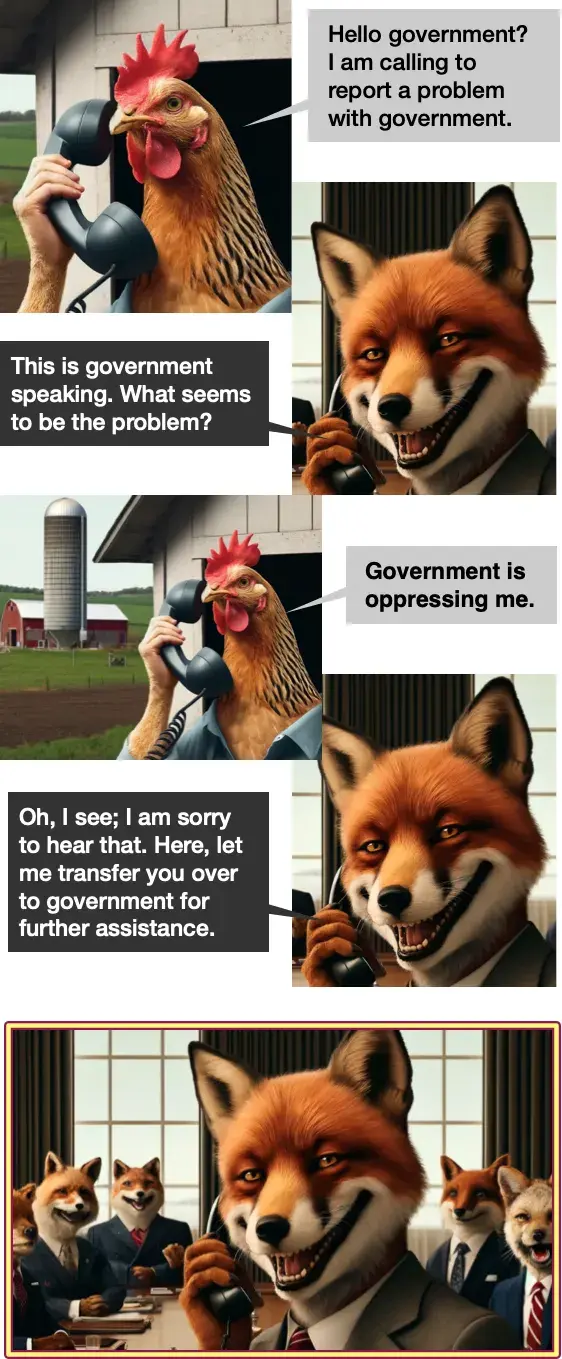
The government causes pollution. The pollution harms people in a way that is (or ought to be) actionable.
Now what do we do?
We sue the government.
Where?
In government courts, staffed by people paid by the government.
Held accountable by whom?
Other government agencies, staffed by other people paid by the government.
Do such lawsuits work? Sometimes. But the hurdles are high. Statistically, private businesses are far more likely to be held accountable than governments are.
None of these people have market or ownership incentives. They all have political incentives. And there are other obstacles to holding governments accountable for pollution.
Government officials may have sovereign immunity.
Officials can hide behind bureaucracies; specific individuals are rarely accountable.
Governments can statutorily grant themselves exemptions or reduced liability.
Governments can put any activity they like behind a shield of “national security” or “emergency.”
Governments are a monopoly. They lack the pressures of competition. This means they don’t have to perform well, since they have no peers who can hold them accountable.
You are a captive of your government. They can pollute all they want and continue to tax you. You cannot opt out. Thus, they have no pressure of losing ‘customers.’
Oh, and they can externalize the costs of all of this to you. The damage. The cleanup. The court costs (whether they win or lose). The economic dislocations.
You pay for all of it. Government officials have zero skin in the game. They are playing with the house’s money, and the house is YOU.
We are being played.
We are being polluted.
We are being gaslit into believing that the world’s biggest polluters are protecting us from pollution.
Please don’t do them any favors by making their arguments for them.