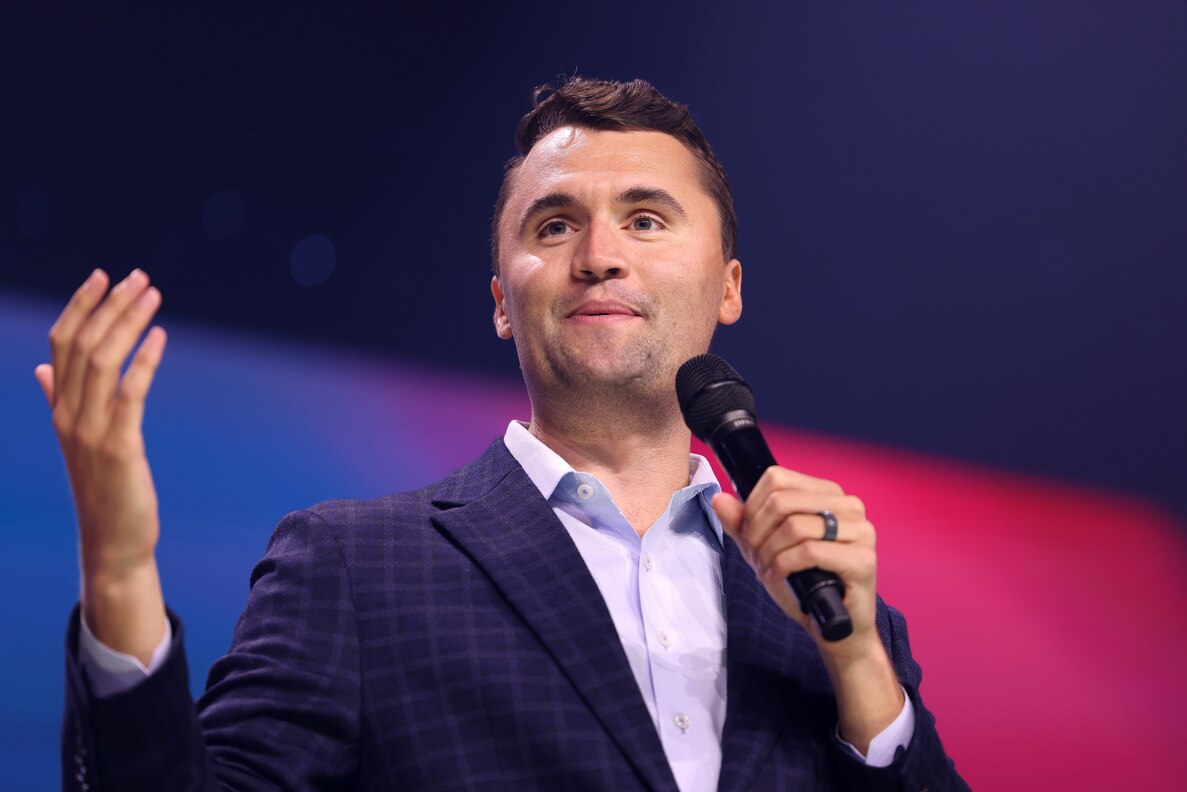

At FreedomFest in Las Vegas this July, the conversations echoing through the halls of Caesars Forum reflected a community united by learning, the free exchange of ideas, and a renewed sense of hope for freedom and liberty.
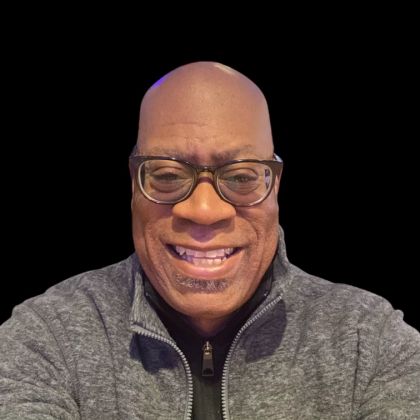
It was there that I sat down with Alix Mayer, president of the Free Now Foundation and former board member of Children’s Health Defense, to talk about vaccines and bodily freedom. Our conversation quickly moved beyond politics and into something far more tangible: trust, informed consent, and what happens when people entrust their lives to a government whose edicts and mandates usurp their freedoms.
An Apple Executive, a Trip to Bali, and the Day Her Legs Gave Out
Prior to becoming an advocate for vaccine-injury awareness, Alix Mayer led the worldwide customer research team at Apple during the 1990s. At the time, she had never even heard the term “anti-vaxxer.” Vaccines were simply a routine part of international travel.
Before a trip to Bali, she received six vaccines—hepatitis A, hepatitis B, diphtheria, tetanus, polio, and oral typhoid—from a travel clinic. Within weeks, she says, her legs gave out, turning, as she puts it, “into noodles.” The exhaustion she initially dismissed as jet lag gradually became impossible to ignore. The effects included stretches when she slept sixteen hours in a single cycle, as well as afternoon naps reclined in the seat of her car in an Apple parking garage.
Seven months later, she struggled to comprehend several articles in the Wall Street Journal, a periodical that she read daily. Drawing on the pattern-recognition skills she had honed at Apple and turning them inward, she began to sense that the problem wasn’t the articles themselves but her executive function and short-term memory.
By her account, it took thirteen years to connect the six vaccines she received to what she now describes as a vaccine injury. She attributes the delay not to any single ingredient but to what she calls, with a rueful laugh, cognitive dissonance—the reluctance to believe that something intended to protect you might have caused you harm.
From Sacramento Sidewalks to a Statewide Legal Fight
By 2015, the California legislature’s move to eliminate personal-belief and religious exemptions for childhood vaccination struck home. This came on the heels of her kids having been required by their school to receive shots. Despite Mayer’s protests in Sacramento alongside thousands of other parents, SB 277 passed anyway, leaving a narrowed medical exemption as the only remaining path.
In 2019, the California state legislature tightened that exemption further. By then, Mayer had joined the board of Children’s Health Defense and helped found its California chapter, which she says outraised every other chapter in the network.
That chapter’s Covid-era litigation produced real courtroom outcomes. In 2022, it sued the Los Angeles Unified (LAUSD) and Piedmont Unified school districts over mandates it argued exceeded individual school boards’ legal authority. Piedmont repealed its mandate after a judge ordered it justified. LAUSD dropped its own.
The most pointed part of my conversation with Mayer centered on the current policy landscape in the Golden State. In California, children attending public school are generally required to receive a series of state-mandated vaccinations unless they qualify for a medical exemption.
“There’s a huge issue of bodily autonomy here,” Mayer told me. “Children can’t access the right to a free and public education if they also want to exercise the right to bodily autonomy. It’s a conflict.”
Connecting the Dots Back to Self-Ownership
Mayer drew a direct line from vaccine mandates to the broader rise of digital identity systems. She pointed to Britain’s short-lived proposal for a “BritCard” digital ID, which sparked millions of signatures in opposition, and contrasted that response with what she views as Americans’ comparatively quiet acceptance of the Real ID program.
“Medical freedom is how they’re taking away our freedoms,” she told me, arguing that governments often begin by expanding their authority in the name of public health before extending that power into other areas of civic life.
Whether one agrees with that conclusion or not, it echoes a longstanding concern among libertarian thinkers. Emma Goldman warned that freedom begins with sovereignty over one’s own body, and that once bodily autonomy becomes conditional on state approval, it becomes easier for the government to exert influence over speech, conscience, work, and the countless other choices that define a free life.
No one expressed the underlying logic more clearly than Murray Rothbard. In The Ethics of Liberty, he framed bodily control as a trilemma with only one coherent resolution. Either every person owns themselves fully, or ownership of all bodies is shared equally among everyone—an arrangement that collapses the moment unanimous consent is required.
The only remaining alternative is that one class of people owns itself while ruling over everyone else, which is simply domination presented as public policy. Only full self-ownership survives as both workable and non-arbitrary. That is why Rothbard regarded it not as one preference among many but as the foundational axiom beneath every other right.
Applied to vaccine policy, the implication is straightforward. A mandate enforced through school exclusion, job loss, or exclusion from public life is not a neutral public health measure. It is the threat of force used to compel a medical procedure.
What’s your political type?
Find out right now by taking The World’s Smallest Political Quiz.
Take the Political QuizRothbard’s non-aggression principle draws the line there: the state may not initiate coercion against a person’s body, even when the stated purpose is protecting others, because nearly every human activity carries some diffuse risk to bystanders. Accepting “risk to others” as sufficient grounds for compulsion erases the boundary between self-ownership and state ownership entirely.
Why Hope Survives the Argument
Mayer’s story is about a woman who spent more than a decade trying to understand the source of her own exhaustion and ultimately transformed that search into an organization that has prevailed in legal challenges against school districts, counties, and a governor’s office.
Whatever one’s conclusions about the underlying science, her journey from a woman struggling to make sense of a mysterious illness after a trip to Bali to a plaintiff’s table in Sacramento is, at its core, a story about reclaiming agency—about refusing to stop asking questions, even when the answers carried her into uncomfortable and contested territory.
Henry David Thoreau wrote that he went to the woods to confront only the essential facts of life. Mayer’s version of that journey unfolded over thirteen years and led her to courtrooms and legislative chambers rather than the shores of Walden Pond. The impulse beneath both is the same: a determination to keep asking questions until confusion gives way to understanding.
Self-ownership is the starting point. Every individual owns their body. No one else—neither a neighbor, a majority, nor an institution calling itself “government”—has a superior claim over it.
Consent to medical intervention is therefore non-negotiable, and a vaccine requirement enforced by the state is not a neutral public-health measure, for it is the assertion of ownership over someone else’s body. That assertion is incompatible with the aims of self-sovereignty, and no amount of good intention changes what it is.