
A rumor is currently circulating across social media that thousands of truckers will park their rigs on October 1 to protest fuel prices and regulation.
As a result, there are warnings that retail shelves could go empty. Yet as of September 24th, I could find no announcement of a coordinated national stoppage in the public newsrooms of the Teamsters or the Owner-Operator Independent Drivers Association. In other words, a viral conjecture is not a verified mobilization, and there is no responsible basis yet for predicting widespread food and product shortages.
Still, the rumor exposes something real: that our everyday needs rest upon systems we barely notice until they go dark. Trucks carried about 72.7 percent of domestic freight by weight in 2024. Every store aisle depends on diesel, drivers, warehouses, software, roads, credit, contracts, and vendors delivering on their promises.
This fragility turns Ayn Rand’s Galt’s Gulch from a literary fantasy into a critical thinking exercise:
If conventional systems became unreliable, what could free people build together?
And would those communities remain voluntary, or merely replace distant authorities with more local ones?
The Oath Was Never the Architecture
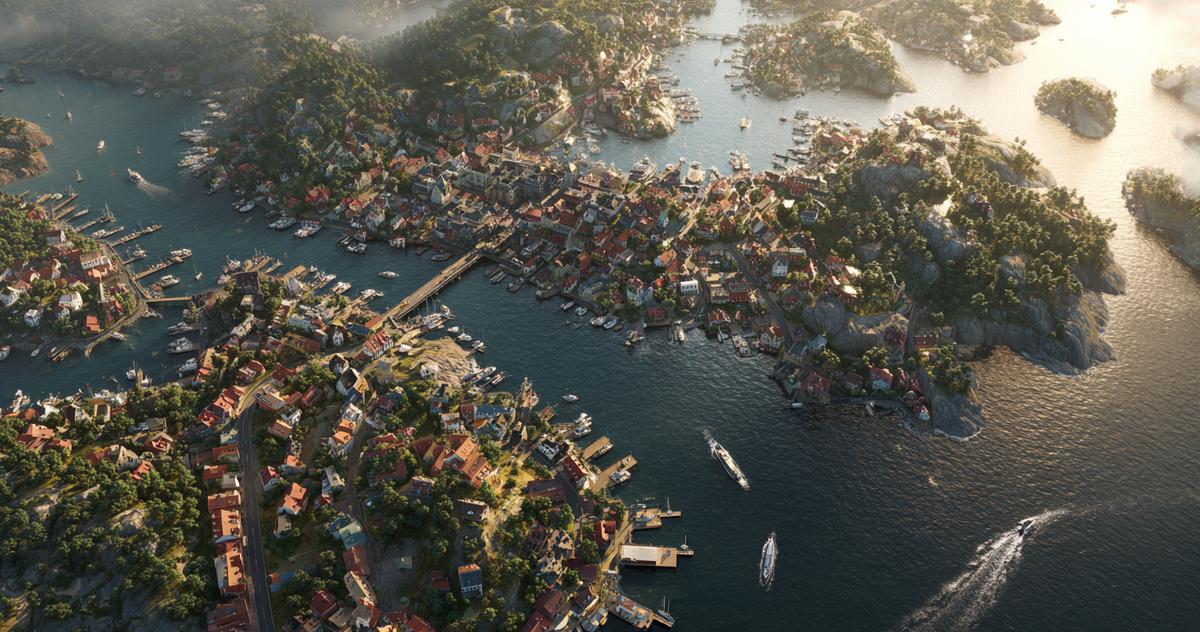
In Atlas Shrugged, Ayn Rand imagined a hidden Colorado valley where producers withdrew from a coercive society. Yet her fictional enclave is more radical than the limited government she defended. The Gulch has no taxes, legislature, welfare bureaucracy, or conventional police. Property, contract, reputation, and private adjudication hold it together.
As fiction, I found it a thought-provoking read. Where it is lacking a bit is in its structural design. Rand says little about sanitation, infectious disease, catastrophic injury, water allocation, child protection, fraudulent land titles, hostile outsiders, or judgments against those who refuse to cooperate.
Pierre-Joseph Proudhon wrote, “Liberty is the mother, not the daughter, of order.” That line rejects the assumption that order must be imposed from above. But it also challenges free people to create trustworthy ways to resolve conflict, protect property, care for the vulnerable, and restrain anyone who attempts to dominate others.
I came to agorism years ago while living here in Colorado, but it felt less like discovering an ideology than finding language for an old instinct. I have long wanted to live without being ruled or ruling others. “Never have a boss, and never be a boss” has remained my mantra. Yet freedom from hierarchy does not eliminate responsibility—it intensifies it.
Ideology Is Not Due Diligence
Voluntaryism, anarcho-capitalism, agorism, and anarchist intentional communities are not interchangeable. Their overlap lies in their suspicion of imposed authority and their confidence in consent, association, mutual aid, or contract.
Samuel Edward Konkin III argued that counter-economics could build an agorist society inside the existing one. His New Libertarian Manifesto envisions “an ever-larger agorist subsociety” embedded in statist society. That may be more useful than the isolated valley: overlapping networks growing through practice rather than a purified community appearing fully formed.
Real experiments have encountered stubborn limits. Próspera, the semi-autonomous development on Honduras’s Roatán Island, operated under the country’s ZEDE framework until political and constitutional conflict threatened its foundation. Honduras’s Supreme Court declared the framework unconstitutional in 2024, while Próspera pursued international arbitration. The lesson here is not that experimentation is impossible. It’s that an enclave inside a recognized state remains entangled with courts, treaties, elections, and public legitimacy.
Resilience Is a Relationship
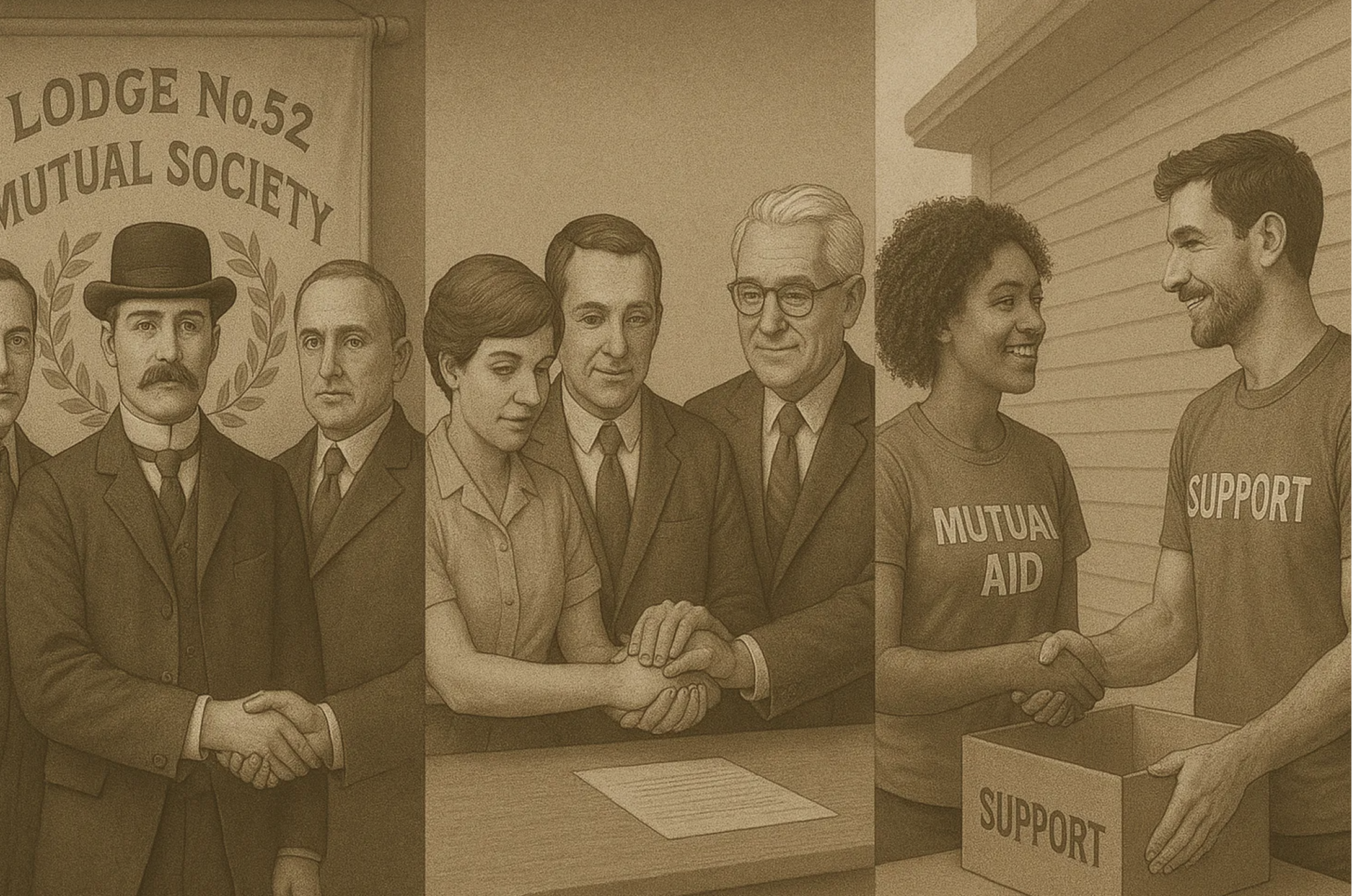
The trucker rumors bring the argument down from charter cities to the loading dock behind the neighborhood supermarket. Individual preparedness moves food from a public shelf into a private closet. Community resilience creates capacity: gardens, small farms, seed exchanges, food cooperatives, preservation skills, mutual-aid funds, independent clinics, and agreements to check on those who cannot provide for themselves.
Peter Kropotkin’s Mutual Aid challenged the idea that survival belongs only to the strongest competitors. His argument was that cooperation is itself an evolutionary force.
What’s your political type?
Find out right now by taking The World’s Smallest Political Quiz.
Take the QuizThe same standard applies to private health care. Direct primary care and mutual-aid arrangements may simplify routine access, but they do not automatically absorb catastrophic costs. Sovereignty becomes theater when the system works only for healthy people who can pay cash. Any serious voluntary order must explain what happens after the ambulance arrives.
Emma Goldman described anarchism as a “free grouping of individuals” organized to produce social wealth. In her formulation, the individual and the community were not enemies. Instead, I believe the message she espoused is that freedom requires association.
The Gulch Is Not a Place
State failure does not automatically create liberty. A vacuum can be filled by mutual aid, private institutions, local custom, or armed coercion. Removing one monopoly does not guarantee peaceful competition. Voluntary communities still require trusted procedures, transparent finance, credible protection, material exit, and the ability to remove leaders without destroying the community.
David Graeber wrote, “The ultimate hidden truth of the world is that it is something we make and could just as easily make differently.” That is the enduring promise behind Galt’s Gulch. We are not confined to inherited institutions. But imagining differently is the beginning of the work, not its completion.
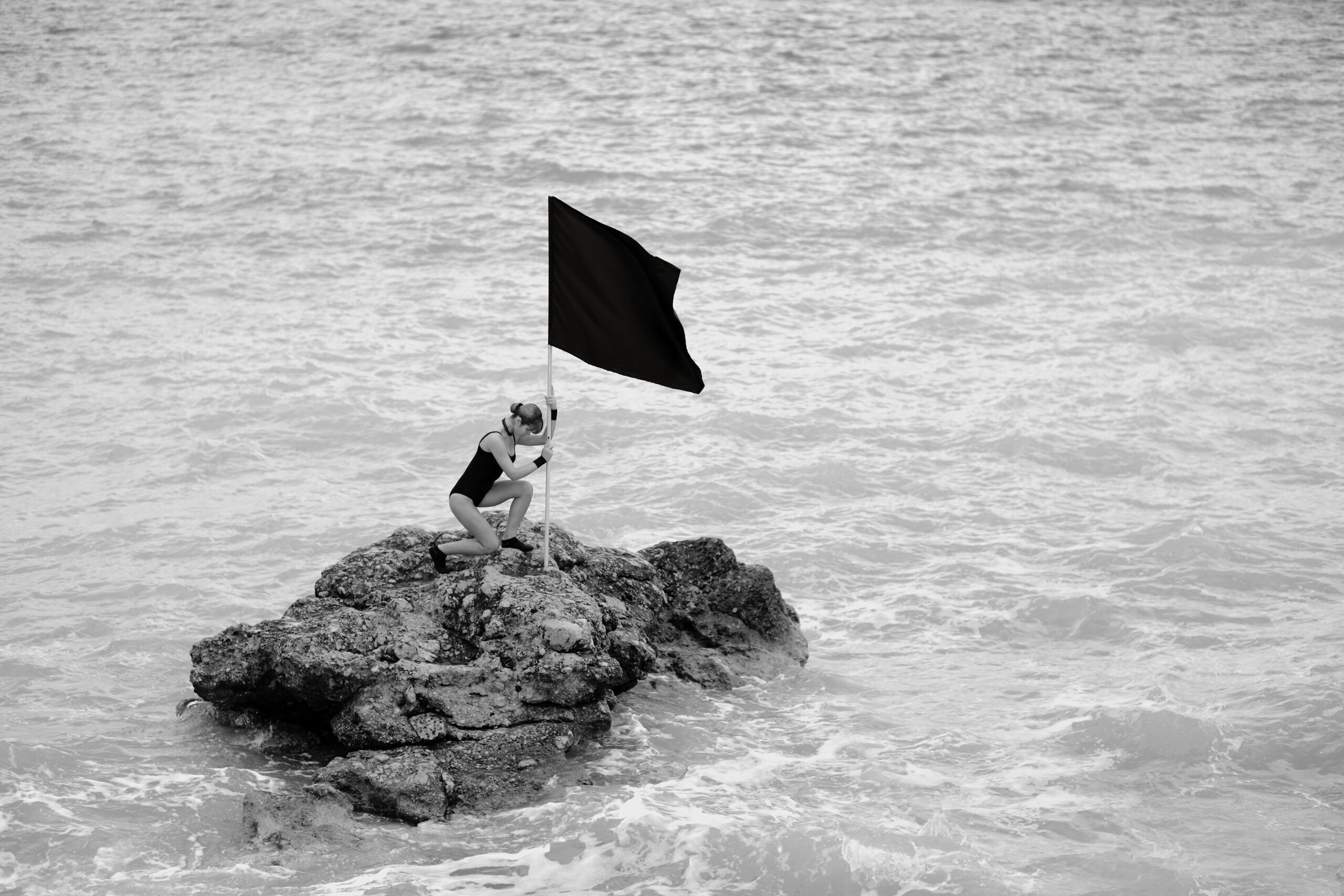
The practical Gulch will probably not be a secret valley, floating city, or flag planted on disputed land. It will look like people building capacity inside the world that exists: contracts they understand, food networks they maintain, clinics they can question, associations they can leave, and communities that never require ideological submission as the price of belonging.