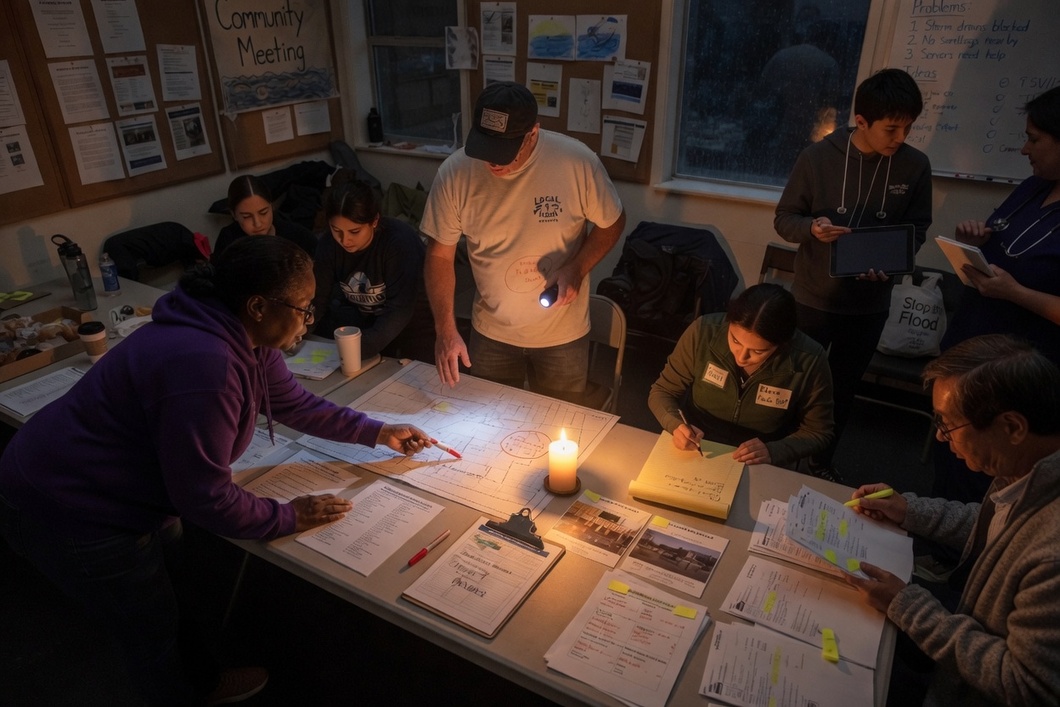
Most people are persuaded by values, not by ideology. “Winning hearts, not arguments” means leading with what someone already cares about, like their safety, their sense of fairness, or their compassion, instead of with abstract theory. Done well, it turns a debate you “win” into a conversation that changes a mind.
Self-government, at its deepest level, is the belief that people and communities possess the wisdom and capacity to govern their own lives without coercion, centralized control, or force imposed by others.
It’s an idea rooted in sovereignty, voluntary cooperation, personal responsibility, and the conviction that human beings often solve problems more intelligently, compassionately, and creatively when solutions emerge organically from the ground up rather than being mandated from afar.
The greatest obstacle to this philosophy of freedom is not that its principles are flawed, but that the language surrounding them often feels abstract, ideological, and disconnected from everyday life. Too often, as advocates of self-government, we speak in theories, policy jargon, and intellectual frameworks, while failing to recognize that ordinary people are struggling with mortgages, family challenges, rising costs, and communities that no longer feel connected.
I believe that if we want people to truly understand the living heartbeat of self-government, we must move beyond abstractions and speak in human realities. This means sharing concrete examples of how freedom has long operated in neighborhoods, friendships, families, churches, businesses, and local communities, well before distant institutions imposed one-size-fits-all solutions.
To understand why this message so often fails, and how we can make it resonate again, we need only look across the backyard fence.
A conversation that went wrong (the fence)
John leaned against the wooden fence that separated his yard from Mary’s. The evening air was cool, and his neighbor Mary was busy potting geraniums. John had been reading extensively about decentralized authority and individual liberty, and he felt an urgent need to share his thoughts about a new municipal proposal to heavily regulate home-based businesses in their town.
“Mary,” John began, “did you see the new city council agenda? They want to mandate expensive permits for anyone running a business from their house. Personally, I believe the city has no right to control this, as it violates our natural rights and pushes us down a slippery slope toward total collectivism. We need to stand up and defend our absolute property rights.”
Mary paused, holding her garden spade in midair, and looked at John with a mixture of confusion and mild defensiveness. “I hear you, John. My sister across town runs a small accounting firm from her spare bedroom. But my neighbor down the street runs an unpermitted car repair operation out of his driveway. There are loud power tools running at all hours of the day and night, oil spilling into the storm drains, and customers blocking my driveway. The city needs to do something to keep our neighborhood orderly and clean. Some rules are necessary for the common good.”
John shook his head, frustrated. “You’re missing the forest for the trees, Mary. The common good is a myth used to justify tyranny. If a neighbor causes actual damage, that is an issue for civil courts. But preemptive regulation destroys the market process and violates individual autonomy. We must oppose the regulation on principle, or we lose our freedom.”
Mary sighed, turned back to her flowers, and muttered something about needing to finish her gardening before dark. The conversation was over.
Why winning the argument loses the person
John walked away frustrated, certain he had defended the cause of liberty with passion and precision, yet somehow feeling as though he had lost ground. The reality struck him that Mary seemed even more entrenched in her position than when the conversation began.
As he made his way back toward his porch, an uncomfortable realization settled over him: He had spoken for nearly five straight minutes without asking Mary a single question. In his effort to defend freedom, he had completely bypassed her lived experience, her fears, and the realities shaping her point of view.
What he thought had sounded principled and persuasive had likely come across as something else entirely. He appeared less like a concerned neighbor having a conversation and more like a lecturer delivering a monologue.
Many advocates of liberty fall into this “righteousness trap” without realizing it. We become so focused on being factually and intellectually correct that we forget persuasion is emotional before it is intellectual. We mistake winning debates for building trust. Over time, this creates a movement filled with brilliant intellectual arguments but very few converts.
When we lead with rigid ideology, people instinctively put up their defenses. They are no longer hearing a conversation or even a policy proposal. What they often take in is an unspoken demand to abandon the worldview, experiences, and values that help them make sense of their lives.
Most people do not move through the world thinking in political theories or abstract philosophical frameworks. They live through relationships, responsibilities, fears, hopes, and deeply held human values. If we fail to speak to those realities first, even the most principled ideas can come across as cold, distant, or threatening.
How to speak in human terms, not ideology
I believe breakthroughs come when personal freedom is explained through concerns people already carry in their daily lives. Instead of demanding that someone adopt a new philosophical framework, this values-based approach identifies the values they already hold and demonstrates how self-government best fulfills them.
Most people are not secretly longing for ideological purity. They are trying to protect something tangible: their safety, their dignity, their family, their sense of fairness and decency, and the people they care about.
There is, therefore, a deep emotional resonance when the focus is on widely shared values. The most potent of these values are safety, fairness, and compassion. By grounding freedom in everyday human concerns, philosophy becomes accessible and the argument becomes persuasive and deeply appealing.
The three values that persuade: safety, fairness, compassion
Reframing Safety at a Human Scale
Safety is often viewed as the primary justification for state intervention. This messaging approach, however, ignores a citizen’s legitimate fear of disruption, like Mary’s concern over midnight power tools and hazardous oil spills. To reframe safety, we must communicate through shared values and show that top-down government solutions often create centralized points of failure.
Government bureaucracies often treat every situation as if it were identical because standardized rules are easier to administer than nuanced judgments. But human beings do not live standardized lives. Thus, the more distant the decision maker becomes, the less responsive the solution feels.
Self-government works best on a human scale, where people can actually see the consequences of their actions and where accountability is personal rather than bureaucratic. True safety comes from mutual responsibility, targeted rule enforcement, and community cooperation.
Making the fairness argument real
Fairness is one of the deepest values people carry, yet advocates of freedom often undermine their own message by speaking about inequality in cold, abstract terms. Telling people that life is unfair and that the market will sort everything out may be philosophically consistent, but it rarely connects with the lived experiences of ordinary people trying to build stable lives.
A far more human approach is to show how bureaucratic systems frequently tilt the playing field against the very people they claim to protect. Large corporations can absorb layers of regulations because they can afford teams of lawyers, accountants, and compliance officers. The ordinary small business cannot.
The single mother trying to open a small bookkeeping business, the neighborhood food vendor, or the one-person independent contractor often finds themselves buried under rules, fees, permits, and paperwork that quietly price them out before they even begin.
That is where the conversation about fairness becomes real. It is fundamentally unfair to create sweeping compliance laws that punish thousands of honest people simply to catch a handful of bad actors. In practice, those systems often protect the powerful while making it harder for everyday people to pursue independence, ownership, and self-determination.
What’s your political type?
Find out right now by taking The World’s Smallest Political Quiz.
Take the Political QuizReclaiming compassion
Compassion is perhaps the most misaligned value in political discourse. Proponents of state expansion often claim a monopoly on caring for the vulnerable. The response should not be a cold dismissal of social safety nets, but rather a translation of principles into lived experience to demonstrate how true compassion requires human connection.
State programs are mechanical and transactional. Self-government enables communities, charities, and neighbors to provide personalized, dignified support. It recognizes that the best way to help a struggling neighbor is to remove the costly bureaucratic barriers that prevent them from earning an honest living.
What everyday self-government already looks like
Most people already participate in forms of self-government every day without calling it that. Parents coordinate carpools without state supervision. Neighbors shovel each other’s sidewalks after snowstorms. Churches organize meal deliveries for sick families. Open-source programmers scattered across the globe collaborate voluntarily to build software used by millions. Human beings are far more capable of peaceful cooperation than modern politics often assumes.
Alexis de Tocqueville famously observed that early Americans formed voluntary associations for nearly every social need imaginable. If a problem emerged, people gathered, organized, contributed, and worked together to solve it. Long before sprawling bureaucracies inserted themselves into everyday life, communities relied on cooperation, mutual responsibility, and local initiative to meet challenges directly.
That spirit has never fully disappeared. Across the nation today, people still step in to help neighbors after disasters, organize food drives, mentor children, support local businesses, build community organizations, and care for one another without waiting for distant institutions to intervene. The instinct toward voluntary cooperation remains deeply woven into the American character.
The Breakthrough
Equipped with a better understanding of how to speak in human terms, John resolved to try a completely different approach the following evening when he saw Mary tending her garden.
“Mary,” John said gently, “I was thinking about what you said yesterday about the neighbor with the car repair setup. You’re completely right that it is unfair when someone blocks your driveway and leaves oil everywhere. Everyone deserves to feel safe and comfortable in their own home.”
Mary looked up, surprised and pleased by his acknowledgment. “Exactly, John. It’s just stressful dealing with the noise and the mess.”
“I completely understand,” John replied. “That is actually why I am so concerned about this new city council permit proposal. I worry it is going to hurt the wrong people and fail to fix the real problem. My main concern is fairness. If the city passes this, your sister will have to pay hundreds of dollars and fill out mountains of paperwork just to do accounting in her spare bedroom. Meanwhile, the guy causing the actual disruption will probably just ignore the law anyway. It punishes the innocent while doing nothing to stop the bad actor.”
Mary frowned, processing this. “I had not thought about how it would affect my sister. She is barely scraping by as it is. It does seem unfair to penalize her.”
“Right,” John continued. “And true safety and peace in our neighborhood does not come from a city inspector who lives miles away. It comes from us. What if, instead of a sweeping new law that harms local families, we used existing nuisance ordinances to target the specific issues of noise and pollution? That way, we protect our neighborhood’s safety and cleanliness without destroying the livelihoods of honest people who just want to work from home.”
Mary smiled and nodded. “You know, John, that makes a lot of sense. Focus on the actual problem instead of making everyone pay the price. I think I’ll write an email to the council about that.”
Cultivating Capable Citizens
By changing his approach and rethinking his language, John was finally able to break through and capture Mary’s attention. He did not abandon his principles or water them down. He simply learned how to translate them into terms that connected with Mary’s existing values and lived experiences.
In doing so, he helped her see that self-government is not an anarchic void where chaos reigns unchecked, but a voluntary and cooperative social arrangement where people, families, and communities retain the freedom and responsibility to handle many of their own affairs fairly, peacefully, and effectively.
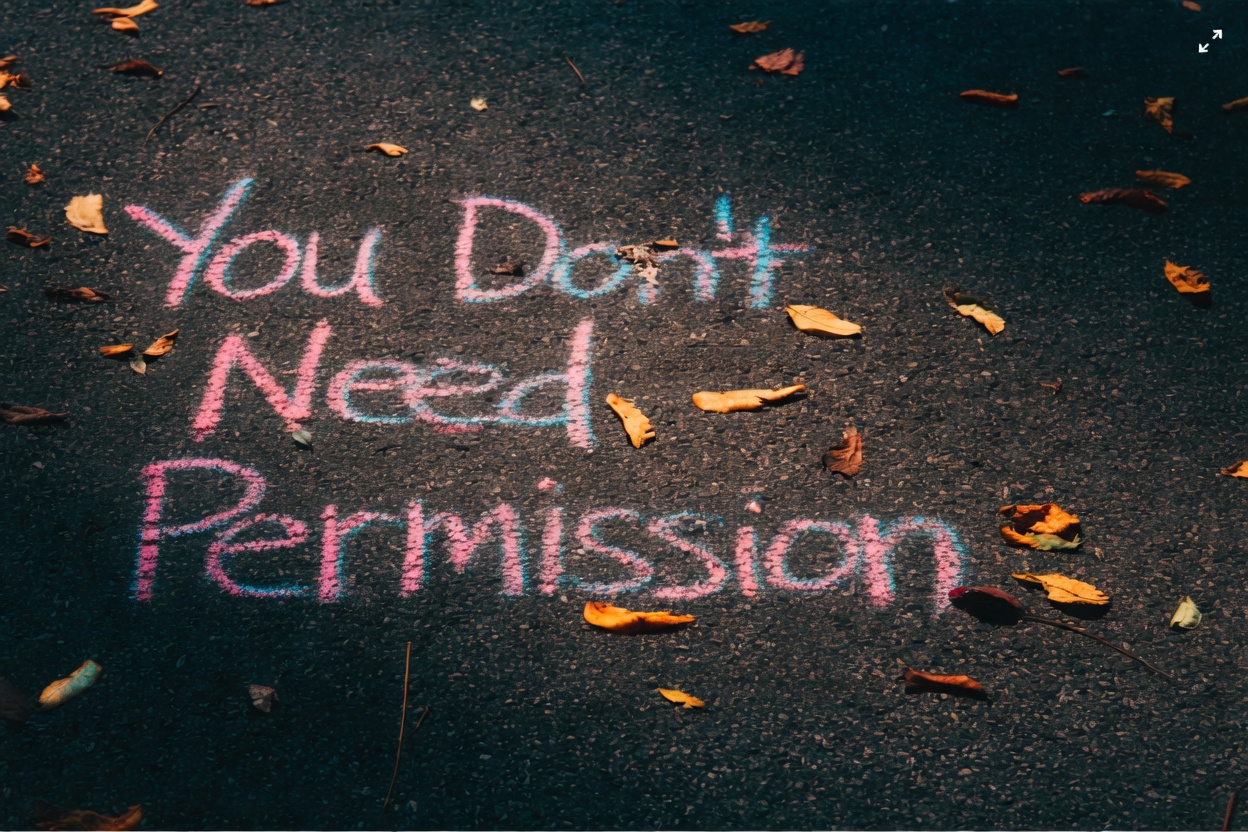
At its best, self-government fosters a culture where people no longer wait for permission to improve their lives, strengthen their neighborhoods, or solve problems within their communities. It cultivates capable, self-directed citizens rather than passive dependents conditioned to look outward for every solution.
Instead of automatically handing every disagreement, hardship, or social challenge over to distant bureaucracies and institutions, self-government encourages neighbors, families, and local communities to work together directly, voluntarily, and responsibly. In doing so, it strengthens not only individual freedom but also the bonds of trust, cooperation, and shared responsibility that hold healthy societies together.
Most importantly, self-government replaces a culture dominated by compliance, dependency, and coercion with one rooted in dignity, trust, initiative, creativity, personal agency, mutual respect, and shared responsibility. It calls people to become active participants in shaping their communities rather than passive recipients of directives handed down from afar.
If we truly want to build a society grounded in liberty and mutual respect, we must stop approaching every disagreement as a debate to be won. Instead, we must learn how to speak to the human heart, not just the political mind.
The next morning, the fence between John and Mary still stood physically, but something far more important had begun to disappear: the suspicion, the defensiveness, and the quiet instinct to see one another not as neighbors with shared concerns, but as ideological enemies living on opposite sides of the divide.
I believe this is how self-government actually begins, not in think tanks or comment sections, but in ordinary conversations where people feel heard instead of cornered.
The future of liberty will not be won through viral outrage or ideological purity tests. Victory will instead be won neighbor by neighbor, conversation by conversation, through people who demonstrate that freedom is not chaos, but mutual responsibility rooted in trust, dignity, and human cooperation.