If you are one who truly values individual liberty, few things hit harder than watching someone passionately argue for restrictions to their freedom. You might feel tempted to write them off as lazy, ignorant, or beyond hope. But if your real goal is to change minds, I would encourage you to strongly consider dropping the intellectual superiority and dig into the raw human psychology at play.
For most people, resistance to self-government is not an intellectual failure but a deeply wired survival response. To reach them, we must first understand the heavy psychological baggage that makes freedom feel terrifying. Only then can we deploy practical persuasion strategies that ease those fears and open real doors to possibility.
During my years in legal practice, I often saw this psychological submission play out under mountains of government paperwork. I will never forget a client of mine—a talented local baker who wanted to partner with a neighboring coffee shop to sell his pastries. It was a simple, mutually beneficial handshake deal. Yet, he sat in my office completely paralyzed, clutching a 100-page municipal retail code. He was terrified he’d face ruinous fines if he did not first secure the “correct” administrative permits.
The sheer weight of the regulatory state had convinced him that ordinary human cooperation was illegal without government permission. In other words, he had fully outsourced his own entrepreneurial judgment to City Hall, all out of fear of stepping outside the lines.
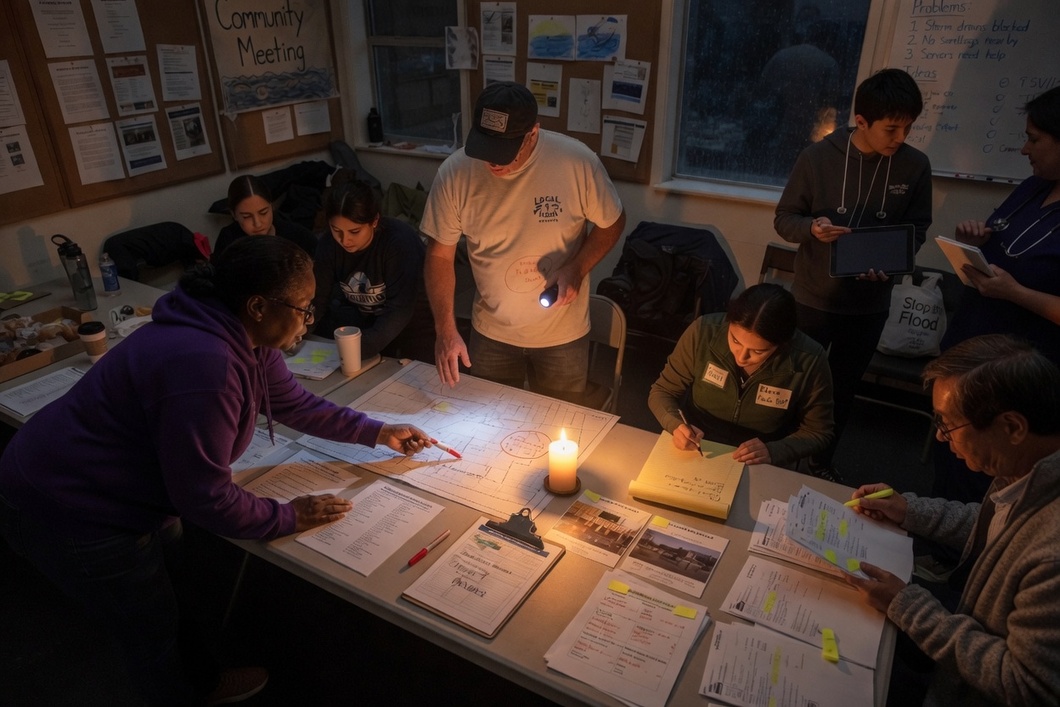
Yet when we step outside of government control, human nature tells a far different story. In my own neighborhood, a massive summer storm once toppled a huge oak tree, completely blocking our shared cul-de-sac. No one filed city maintenance tickets or waited for municipal crews. Instead, a few neighbors simply grabbed chainsaws. Within two hours the wood was chopped, the road was clear, and the problem was solved through spontaneous, voluntary cooperation. In other words, no overseer was required.
To reach people, I believe we must first understand the heavy psychological baggage that makes freedom feel terrifying, then apply practical persuasion strategies to lighten the load.
The Invisible Chains: Why Freedom Is Such a Hard Sell
We are taught that freedom is humanity’s highest aspiration, and there is truth in that. Yet when freedom demands that we take greater responsibility for our own lives, many of us freeze. The idea of living without a government safety net triggers deep anxiety. That sort of reaction reveals just how complicated our relationship with freedom really is.
The Terror of Total Responsibility (Escape from Freedom)
Psychologist Erich Fromm nailed this in his concept of “escape from freedom,” an idea many libertarians recognize as being at the core of statism. Freedom offers possibility, but it also demands responsibility.
When a centralized authority calls the shots, it becomes easy to hand off accountability. When things go wrong, you can just blame the system. If you lose your job or your health coverage changes or gets dropped, there’s always someone else to hold responsible.
True self-government requires you to own your failures. For many, that weight of total personal responsibility triggers paralyzing existential dread. Without an authority figure to blame, every setback feels like proof of your own incompetence.
This is why so many people willingly surrender portions of their autonomy. It buys them a sense of safety and relief. Freedom is not just about having choices. It is about living with the consequences of those choices—a burden that many would rather avoid than carry
Status Quo Bias and the Comfort of the Known
Humans are hardwired to prefer familiar misery over an unknown alternative. Psychologists call this status quo bias. This is the result of our brains having evolved as survival engines that conserve energy and avoid unnecessary risk.
Even when a system is corrupt, inefficient, or burdensome, people adapt. They learn the rules, master the paperwork, and stay inside the lines. Their familiarity feels like security.
Self-government offers something very different: open space, personal responsibility, and limitless possibilities. To the primitive brain, this expansive landscape feels less like freedom and more like a dangerous wilderness where threats are unknown and the path ahead is uncertain.
As F.A. Hayek observed, when the state takes control over large parts of our lives, it breeds deep psychological dependence. The cage may be uncomfortable, but at least the bars are familiar and the food arrives on schedule.
Authority Conditioning (The Institutionalized Mind)
From age five onward, most of us are funneled through institutions that reward compliance and punish autonomy:
School: Sit in rows, raise your hand to speak, ask permission to use the restroom, and memorize whatever is on the standardized test.
The Corporate Ladder: Follow the handbook, defer to management, don’t rock the boat, and seek validation through performance reviews.
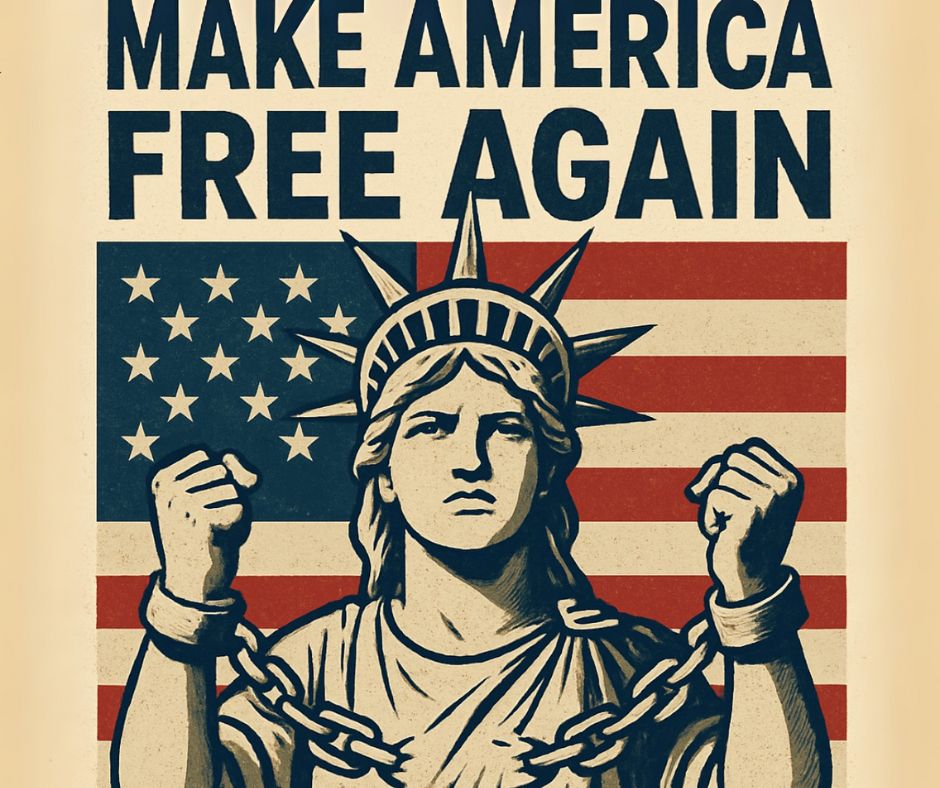
Decades of this conditioning produce what psychologists call learned helplessness, the modern version of what the 16th-century philosopher Étienne de La Boétie called “voluntary servitude.” La Boétie noted that people born into subjection come to view their lack of freedom as natural simply because they have never known anything else.
So when you suggest to friends or family that communities could govern themselves, educate their children, or organize healthcare without a distant authority calling the shots, they often stare at you like you have proposed something unimaginable.
“But who would make the rules?” they ask. That question is revealing. After generations of outsourcing responsibility to institutions, many people cannot even picture how free individuals might coordinate their own affairs. Their muscles of self-reliance have atrophied from decades of disuse.
How to Reach Them: Practical Persuasion Strategies
If you meet these deep fears with abstract philosophy or aggressive debate, their brains will treat your words as an attack. Defenses rise, positions harden.
To bypass those defenses, your communication must create three key shifts:
Pivot 1: Lower the stakes. Move them from a defensive posture to small, manageable steps.
Pivot 2: Validate the risk. Replace fear with trust and psychological safety.
Pivot 3: Reframe the ask. Connect it to their deep desire for personal control.
Here is how to put these into practice.
Pivot 1: Lower the Stakes (The “Gateway Drug” to Autonomy)
Never open with a sweeping vision of total societal overhaul. That triggers instant panic. Instead, break your self-government proposition into tiny, low-risk experiments.
Don’t say: “We need to privatize the entire education system and abolish the school board.”
Try this: “What if our neighborhood pooled resources this summer to hire a private tutor for the kids? We could get them ahead without fighting the district’s bureaucracy.”
By starting hyper-local and short-term, you let them taste the efficiency and pride of self-management without the terror of systemic collapse. Small wins build trust, and comfort with bigger decentralized ideas grows naturally.
What’s your political type?
Find out right now by taking The World’s Smallest Political Quiz.
Take the Political QuizPivot 2: Validate the Risk (Empathy First)
Never pretend self-government is easy or risk-free. That makes you sound out of touch. Acknowledge the fear head-on. When you validate their anxiety, they stop fighting you and start listening.
Try this: “You’re right. It is scary to think about handling this ourselves. If we mess up, there is no giant agency rushing in to fix it. It takes real work and cooperation. But wouldn’t you rather have your hands on the steering wheel, even on a bumpy road, than sit helpless in the back seat of a car driven by people who don’t even know you?”
Pivot 3: Reframe the Ask — From “Freedom” to “Control”
The word “freedom” has been politicized and abstracted into near meaninglessness. “Control,” on the other hand, feels immediate and visceral. Everyone senses they are losing control over their money, time, and family’s future.
Don’t say: “We need to fight for libertarian principles and individual liberty.”
Try this: “You work hard for your money. You, not some bureaucrat hundreds of miles away who has never met your family, should have the final say in how it is spent.”
Tie self-government directly to their daily frustrations and you will capture their attention. When they see it as a practical tool for reclaiming control over their own life, their resistance will begin to melt.
The Long Game of Deconditioning
Reclaiming freedom is rehabilitation, not sudden conversion. You cannot undo thirty years of authority conditioning in one conversation or one brilliant article.
Your job is to plant seeds of agency. Every time you encourage someone to solve a problem without waiting for a manager, an agency, or a new regulation, you help them flex that atrophied autonomy muscle.
Over time, as people rack up small wins in their personal lives, neighborhoods, and businesses, the fear of uncertainty fades. They stop seeking permission, start seeking cooperation, and trade voluntary servitude for voluntary association.
The Takeaway
People do not resist self-government because they oppose freedom. They resist it because they worry freedom will lead to chaos. Your role is to help them discover, one small step at a time, that the opposite is often true. When people are empowered to take responsibility for their own lives and communities, they develop the very habits and relationships that create lasting stability and genuine peace of mind.
A Weekly Micro-Experiment
Don’t let this remain a purely academic exercise. This week, try one low-stakes micro-experiment in your own neighborhood or workplace. The next time a minor problem arises (a cracked sidewalk, a messy local park, or an inefficient workflow), resist the urge to call a manager or file a formal complaint. Instead, talk to one colleague or neighbor, propose a quick independent fix, and execute it together. Notice how people respond when they realize they do not need permission to make a difference.
A Brief Closing Thought
The safety promised by the centralized state is an illusion, paid for with our agency.
The journey to self-government begins the moment we stop asking authorities to care for us and start building a shared future without their permission. The more we practice it, the more capable we become of sustaining it; each act of responsibility strengthens the habits, trust, and confidence upon which a free society depends.