
I just found $10 in a puddle!
Here’s how it went down…
I was overdue for an oil change, so I took the car to a local shop. I prefer the outdoors, so I avoided the waiting room and instead sat under a tree with my iPad to get some work done.
An ant kept walking around on my jeans. I would gently blow him off, but he kept coming back again and again, as if he wanted to be my friend. Or maybe each was a different ant—I suppose I am not particularly good at telling them apart. (Why am I telling you about ants? I don’t know. I think they call it “establishing mood.”)
The Tire
Sitting there alone with my iPad and the ants, I happily assumed that the oil change would be done soon, so I could get on with my day. Then, the manager of the auto shop came over to my tree to deliver me and my new ant friends some “bad news.” In addition to discovering that the car’s air filters are filthy (I kind of expected that), they also found a bulge in one of the tires. (I went and checked for myself—it was big.)
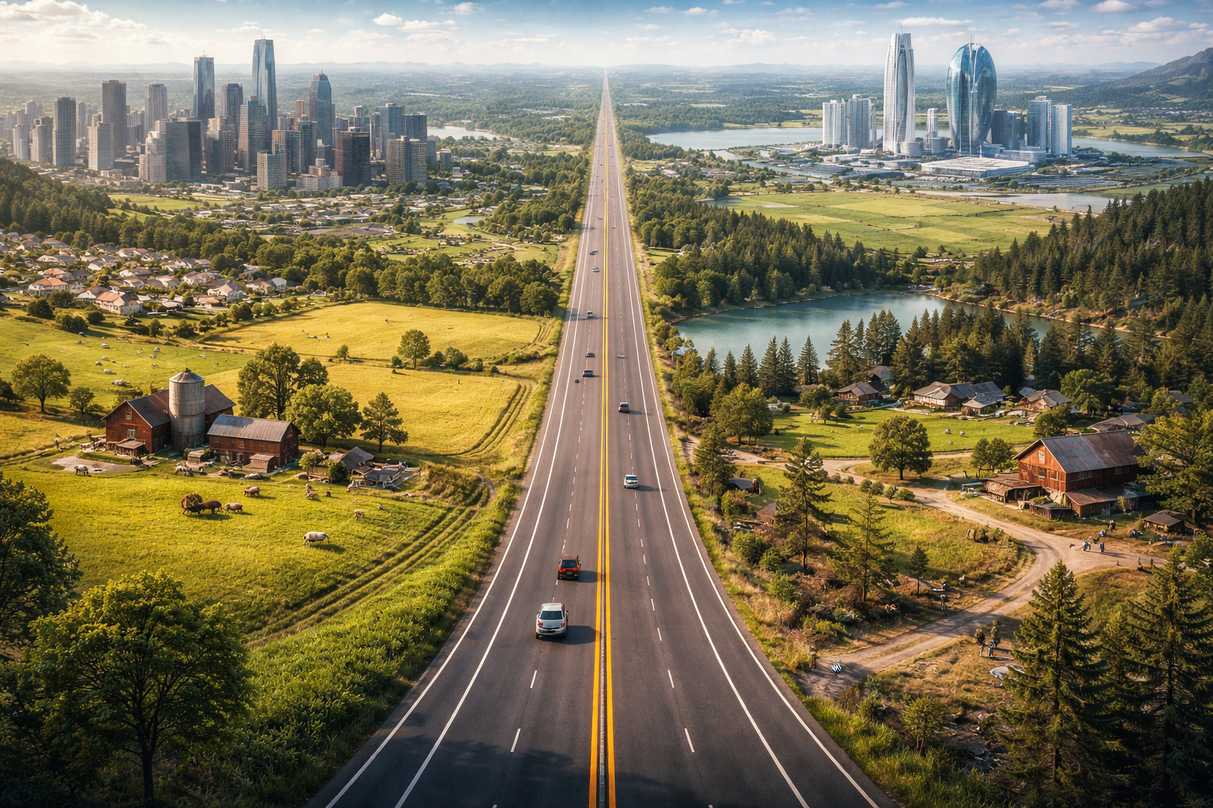
Regular readers will recall that my family has had a lot of tire problems recently. A bulged tire and bent rim on a trip to Florida was followed in short order by a lost battle with a massive pothole. You know—a pothole that wasn’t fixed on roads that we are told only governments can possibly provide.
Annoying, yes, but a new tire won't break the bank. Also annoying is the extra time the job will now take. I have a ton of things to do today—including putting the finishing touches on a landscaping project I have been doing as a surprise for my wife’s birthday. (I have been slaving away for two days, and I have to finish before she gets back from her trip!)
Since it will be two hours before the tire arrives from the warehouse, I decided to go to the Mexican restaurant across the street. (I am writing this there, as I eat my burrito.)
So there’s silver lining #1: I get to justify a lunch out at a really yummy place.
Silver lining #2: I found a ten-dollar bill floating in a pothole in the parking lot as I was walking here. So my lunch is (almost) free! (Wait, is the fact that it was in a pothole irony?)
But there is something better than either my chicken-and-chorizo burrito or the cash I found that will (mostly) pay for it…
We are going on a long drive this weekend, and we discovered the bulging tire before that trip. Before something bad happened. I would call that more than a silver lining. The term blessing in disguise seems more apropos.
Would we definitely have had a blowout on the freeway at 70 mph? Of course not. But a bulged tire makes the likelihood go up.
My wife has a way of approaching these things: She tries to foresee a bad thing that might happen in the future and act in the present so that it does not happen. I suppose that’s called prudence, though she is pretty darned deliberate about it. Like she’s doing alternative-timeline planning or something.
There are problems with being too careful and risk-averse, of course, but in general, the practice is sound. Which brings me to my second story.
The Tree
Once again, it begins with me sitting and writing on my iPad (I do a lot of that, as you might imagine). This time, I was in a big comfy chair in my living room, listening to a gale blowing outside.
Bam!
The noise wasn’t deafening, but it was … different. Different enough that I needed to go check. Even before I made it outside, however, I got a good look through the window: part of our large elm tree had fallen into our neighbor’s yard. I called up to my wife as I was heading outside.
“A branch from our tree just fell into Mike and Becky’s yard! A BIG branch.”
“Branch” doesn’t quite capture it, but in that moment, I couldn’t think of a better word. A third of the tree had sheared off at the trunk and come crashing down. All I could think of, as I was running outside, was,
Please, please, please … I hope no one was back there!
I came around the fence praying not to find our friends, or their teen daughter or two-year-old son, underneath the massive fallen limb.
Their pool fence was toast, and some outdoor furniture got crunched, but mercifully, no one was there. (As it turned out, they had already left for a vacation.)
Here are some pics for your amusement.
What’s your political type?
Find out right now by taking The World’s Smallest Political Quiz.
Take the Political Quiz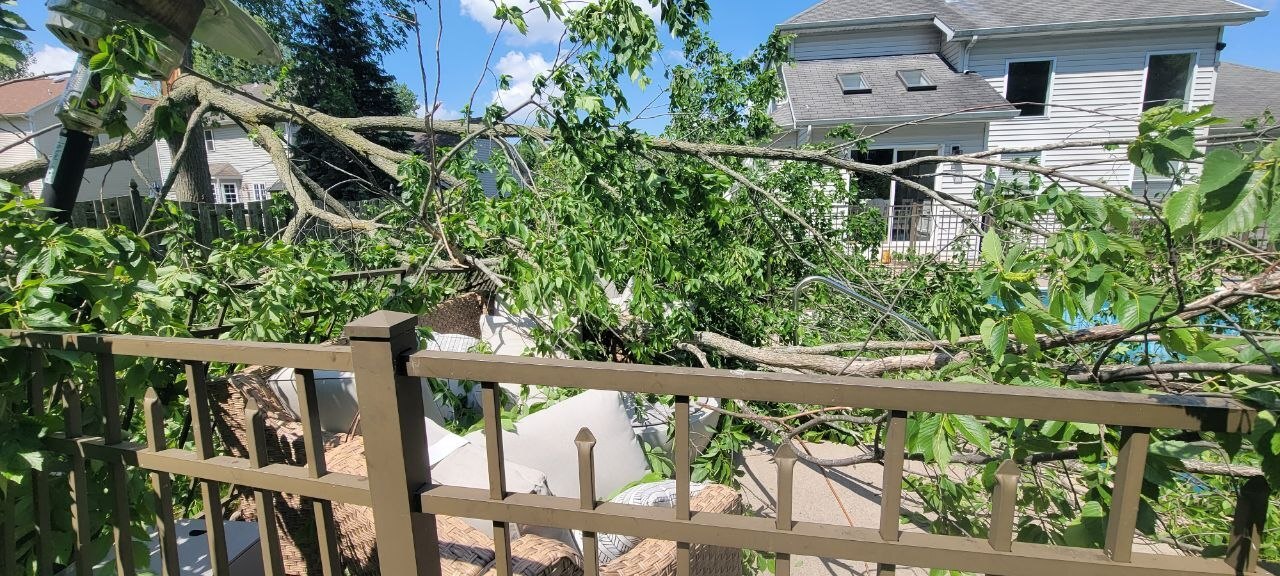
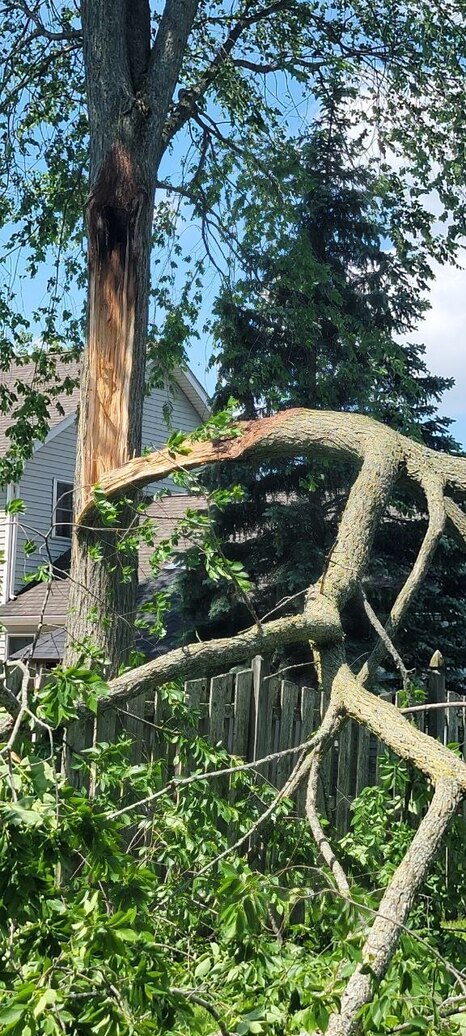
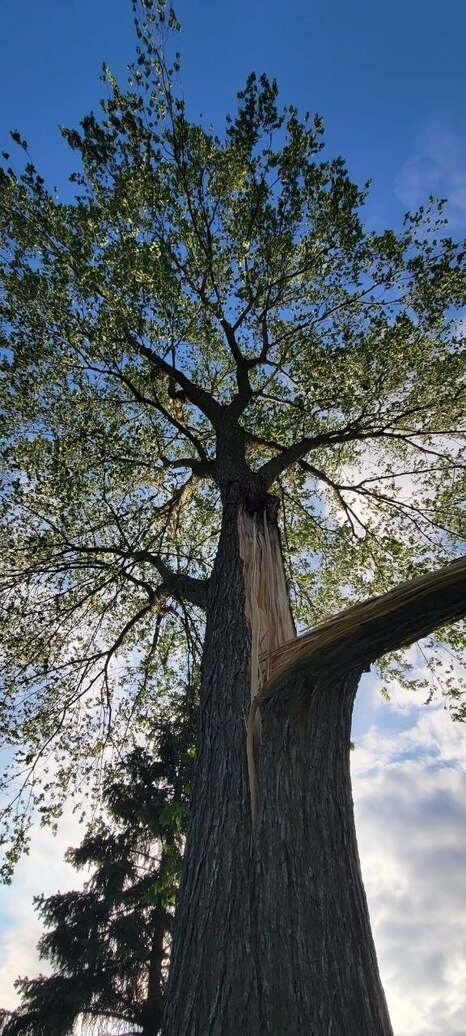
Neighbors from the other side, and from across the street, came to look and commiserate, but with the gale still blowing strong (and a newly unbalanced American elm towering above us), we didn’t stay long. We talked a bit about insurance, but all I could really say was, “Thank God no one got hurt.”
Our neighbors’ insurance will cover the damage to their property. We will cover their deductible. (We love our neighbors, and we don’t want them to be out of pocket for anything. And it’s the right thing to do, even though we technically don’t have to. More on that later.)
We, however, will not be so lucky. Insurance would cover us if the tree had hit our house or shed, but there’s no coverage for removing a damaged tree. The first estimate we got for said removal was ridiculously expensive, but the tree does have to go. Sadly, the damage is too extensive. It’s not going to make it.
But even if the tree were salvageable, we’d be fools not to learn a lesson from this.
Whatever it costs, this was a blessing in disguise. A danger was revealed in such a way that no one got hurt. Now, we have the knowledge to take action to ensure nothing bad happens in the future. This incident has allowed us to do some alternative-timeline planning. An ounce of prudence against a lifetime of regret. (What’s that fable about the Ants and the Grasshopper?)
So what does all this have to do with self-governance?
Freedom is not a top-down phenomenon, bestowed from on high. Freedom exists as a natural condition; governments can only interfere with freedom to one degree or another. (Even when the stated purpose of a government policy is rights-protective in nature, it still necessitates some other diminution of rights: taxation and restrictions applied, ex ante, on everyone, whether they’ve harmed others or not.)
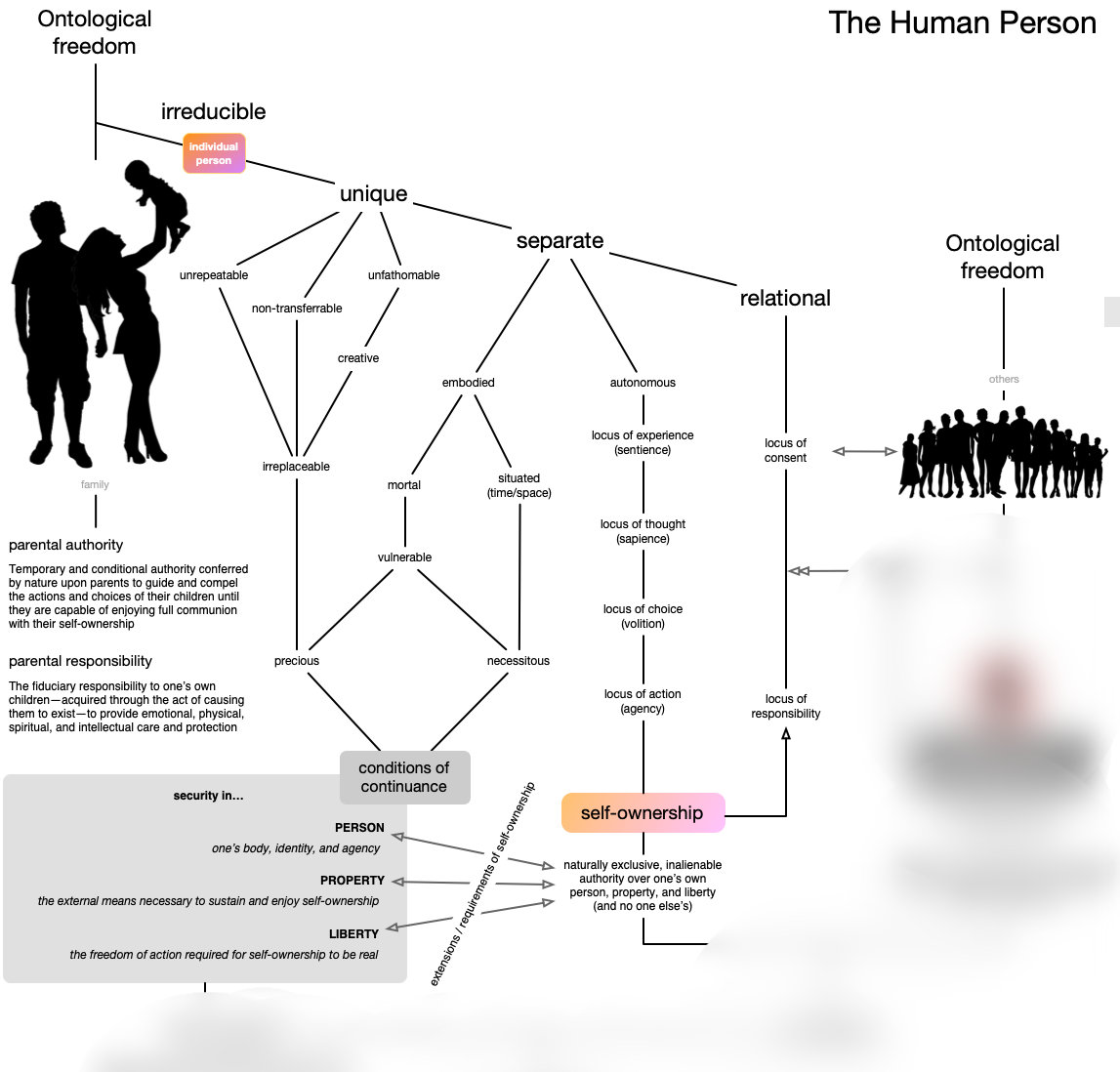
The locus of freedom is the individual. Only the individual experiences freedom or diminutions thereof. But this also means that the individual must manifest freedom. If we’d like to remain free, each of us must behave in such a way that we do not interfere with the person, property, or liberty of others. That way, they will not be compelled to defend themselves in a way that reduces our freedom.
We must govern ourselves from within, lest someone else decide that we must be governed from without.
Self-governance, in other words, is about more than just heady discussion of private protection agencies and whether we call them “aggression-insurance agencies” or “rights enforcement firms.” (Wait … Rights Enforcement Firms: REFs, like referees in sports. Hey, I kind of like that! Anyway…)
Self-governance begins with each of us—with how we behave, the vibe we project, and whether or not we meet our responsibilities to others. It is, first and foremost, an individual phenomenon.
One very crucial aspect of self-governance, then, is figuring out how to solve problems (whenever possible) without involving third parties. So here, in no particular order, are a few pertinent takeaways from tires and trees.
Be neighborly.
We are blessed to have really good neighbors on both sides. We party together in the summer, break bread every now and then, and collaborate on yard projects of mutual interest.
I fully acknowledge that not everyone is so lucky. Some people end up living next to Bob McCrankypants, Sketchy Joe, or Gladys Kravitz, and there’s nothing that can be done about it.
But most of the time, it’s not that bad, and it is amazing what the occasional kind word or plate of cookies will do. Having good relations with your neighbors is the first line of defense against the meddling of a government overlord. The more problems we can solve in our own backyards, the better.
Have insurance.
Not every problem can be solved with a simple handshake, however. Sometimes, big, bad things happen. That is what insurance is for.
In a way, insurance is people helping people. It spreads risk among large groups so that no one person is ruined by a disastrous event. It is one of the most important private solutions for life’s big problems. (Just make sure to get policies from a reputable agency. Cut-rate agencies are not the bargain they seem, once it comes time to make an actual claim. Also, insurance in general would be far better without government regulations and cronyism, but that’s another article.)
Don’t make your problems into other people’s problems.
One of the best ways to preserve freedom is to live in such a way that you do not become a burden, hassle, or danger to others.
This might be physical:
Fix bad tires before you have a blowout and crash into someone. Don’t leave boards with rusty nails sticking up. (Accidents happen, but try to keep your things in good order.)It might be financial:
Have good insurance. Pay your own way. (We all need help once in a while, but try not to make it a habit.)It might be emotional:
Don’t subject the people around you to emotional turmoil. Try to find silver linings rather than dark clouds. (We all need a little grace once in a while, and we should seek help when we need it, of course. But others don’t need to swim endlessly in the pool of your personal turbulence!)
A little prudence (alternative-timeline planning) and a little work on ourselves are crucial elements of a self-governing life.
Life matters above all.
A philosophy of freedom begins with the importance of life. Life is the reason why anything matters at all.
A pool fence, a tire, an insurance deductible … these are just things. What matters is people. Relationships. Happiness. Love and friendship.
The means of living are important, but they aren’t the reason for living. People are irreplaceable, precious, and sacred. We should treat them as such.
The bottom line
Happy, healthy, self-reliant, prudent people with respect for one another are far more likely to be able to self-govern. We’re all works in progress, of course. But a focus on doing the right thing goes a long way.
Governments are terrible at everything. Building a better, freer life doesn’t begin with yet another government program. It begins with us doing our best.