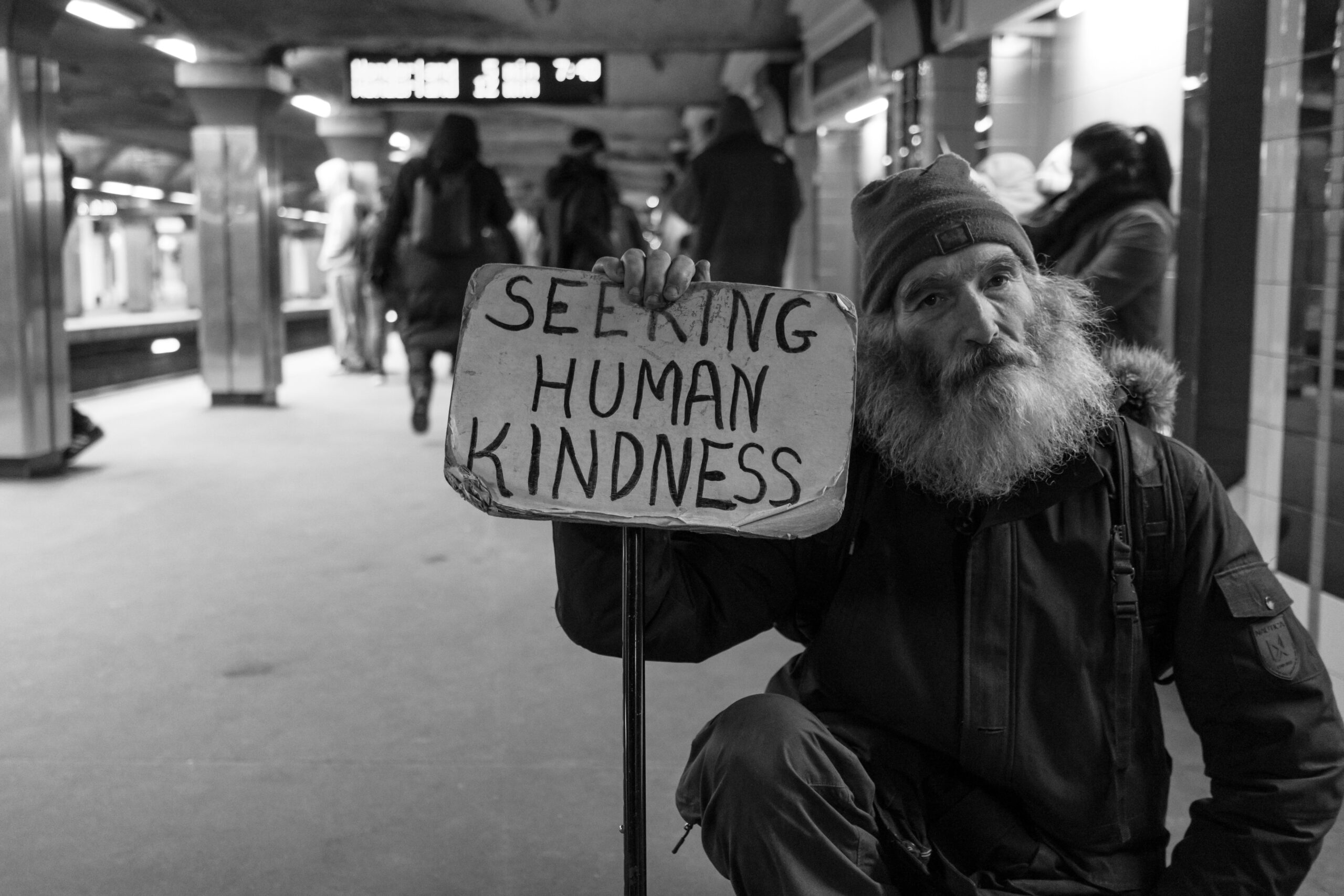
In two recent essays for The Advocates, I argued that self-command is the price of maintaining a free society: the alternative to governing yourself is being governed. I also argued that self-deceit obstructs self-command by operating through grievances.
Since Adam Smith, moral philosophy has offered further help to those willing to overcome their grievances and become stronger champions of self-government.
How Do Grievances Trap Us in Victimhood?
My wife recently met Joanna (not her real name), a former colleague, for lunch. Joanna’s mind had collapsed into grievance: the conversation became a stream of stories proving she was a victim.
When my wife shared that we had recently enjoyed a local chamber music concert, Joanna said, “Oh, I could never go.”
Joanna explained that her sister was a famous opera singer; classical music reminded her of her sister’s success. Joanna added that she had once been told she “was the one with the beautiful voice.”
Joanna wants peace of mind, as we all do, but her plan for a good life cannot work. She is waiting for someone or some circumstance to rescue her from her grievances.
Few who harbor intense grievances embrace self-government. If someone else caused their suffering, someone else must make them whole.
Self-deceived about how her mind was operating, Joanna exaggerated her virtues and the faults of others, while remaining blind to her faults and others’ virtues.
Joanna is in an extreme place, but there is something universal to learn. When we cast ourselves as mistreated victims, resentment and entitlement follow. The world begins to look unjust: others advantaged and ourselves broken.
How Does Self-Betrayal Distort Reality?
In Bonds that Make Us Free, contemporary moral philosopher C. Terry Warner calls this distorted way of being “self-betrayal.” We betray the best in us when “we do to another what we sense we should not do, or don’t do what we sense we should.” It is “moral self-compromise, a violation of our own personal sense of how we ought to be and what we ought to do.”
Warner explains why self-betrayal hurts us: “Our own humanity is intimately bound up with our capacity to sense something of others’ needs and feelings.”
Warner observes our resistance to seeing self-deception: “We're generally not aware of having gone through a process of first refusing to do the right thing and of then cooking up an excuse to get ourselves off the hook.”
Warner explains how we “maintain self-deception regarding our actions”: “The violation of our sense of what is right, the accusation of others, and the distortion of reality—all these are aspects of one and the same self-betraying act.”
We “summon up” our distorted feelings to hide our self-betrayal and “to find someone to blame.” In short, “In its very first moment, self-betrayal brings with it the accusing feelings and the distortion of reality.”
Haven’t we all experienced the warning signs? Defensiveness, self-righteousness, resentment, anger, and self-pity alert us to self-deception. Our minds are working overtime to justify our agitated feelings and conduct.
Warner asks us to notice when we are most troubled. The source of our “afflicted emotions” is often “self-absorption.” He cautions, “Those times when we feel most miserable, offended, or angry are invariably the occasions when we’re also most absorbed in ourselves and most anxious or suspicious or fearful, or in some other way concerned about ourselves.”
Warner helps us see that self-betrayal can occur in small ways, as in his story of a “busy man”:
A busy man driving home late at night notices the gas gauge dropping near empty. Almost imperceptibly, yet unmistakably, he feels he ought to fill the tank for his wife so she won’t have to do it the next day. But he doesn’t.
To justify his choice, the busy man searches for excuses. Thinking of all he does that his wife doesn’t, he concludes I’m far busier than my wife; she should keep the tank filled for me. In his mind, he becomes the victim of an unsupportive wife.
What’s your political type?
Find out right now by taking The World’s Smallest Political Quiz.
Take the Political QuizIn this trivial example, the busy man portrays himself as a victim and undermines both his marital relationship and his chance at happiness.
Warner writes, “Life becomes hard to bear only when we, as self-betrayers, cast ourselves in a victim’s role by regarding others as our victimizers and nurse our misfortunes as if they were badges of honor.”
Accusatory emotions of “irritation [escalating to anger], humiliation, self-pity, resentment or frustration” come with self-betrayal. Warner writes, “Only people who are doing something that goes against their own sense of right and wrong have to spend time and energy spinning out a self-justifying story.”
Our self-justifying stories create resentment. Warner writes, “To take up a hard, resentful attitude toward others is to have to live in a resented world, a world full of people who oppose and threaten us. How they are in our eyes is reflective of how we are.” A “resented world” is zero-sum: you must lose so I can win.
How Can We Break the Grievance Cycle?
Warner’s way out is not a technique. A technique is a maneuver conducted from within the grievance, leaving the grievance intact. What follows is my distillation of a process for applying Warner’s theories.
First, notice how your mind is occupied. The question shifts from How was I wronged? to What am I doing to keep this alive? Notice your retellings, rehearsed rebuttals, and search for corroborating evidence. If you tell your grievance story again and again, it is because the grievance has no existence apart from the telling. Warner writes, “We participate in the creation of our emotional troubles and deny we’ve had any part in it.”
Second, become aware of what the grievance is costing you. Are you at peace today? Does your life feel meaningful? What are you trying to exonerate yourself from by holding your grievances? When these costs are not clear to you, you are seeing grievance as a benefit rather than a burden. Ask what would be at issue about your own conduct if the other’s culpability were set aside for now. Honesty is the way out.
Third, refuse your ego’s two options. The grievance presents two possibilities: either you feel aggrieved, or you don't and are faking it. The feeling is plainly real to you, so it seems the grievance is real. There is a third possibility that sets you free. You accept your agency and, at the same time, understand that the emotion is genuine only because you authored the emotion.
Fourth, don’t do a number on yourself. Releasing the grievance does not necessarily exonerate the other. Warner does not advocate moral indifference. Whatever the other did may still warrant a legal claim or a changed relationship. Importantly, what fades away is the belief that the offense controls your state of mind.
Fifth, take a seat above the battleground and stay there. Adam Smith’s impartial spectator is the seat that grievance prevents you from occupying. Warner’s work points to a discipline that Smith advocated: View the matter “neither from our own place nor yet from his ... but from the place and with the eyes of a third person.” A change of heart may not be permanent. When you are lax in noticing how grievances occupy your mind and what they cost, grievances ramp up.
As we rediscover our humanity, our fears about ourselves and “resentments towards others” begin to loosen. Instead of grievances, we see that “our measureless worth … has something to do with our capacity to respect and revere others.”
What Does Inner Freedom Have to Do With Political Freedom?
Warner doesn’t consider the political implications of his theories, but we can. Tribal societies do not “respect and revere” outsiders. A free society rests on rights that are not conferred by anyone and therefore cannot be withdrawn by anyone.
Do we want to hold on to our grievances? Or are we willing to overcome grievances and take our place among those with enough agency and internal freedom to be champions of liberty?