
Free market capitalism. These words have been used, abused, praised, pilloried, misunderstood, weaponized, and twisted throughout history.
We treat free markets as either the golden engine of human prosperity or the villain behind every economic inequality since the dawn of time. But the truth is that it is probably neither. Or maybe it is a little of both.
The Tao Te Ching opens with a warning that the Tao that can be named is not the eternal Tao. I have always read that as a caution against ideology. The moment you slap a label on something, you have already started lying about it.
Free-market capitalism is often reduced to a label. Yet I am not interested in exploring it as an ideological abstraction, a bumper-sticker slogan, or the private playground of economists debating in academic journals. I want to examine it through the lens of my own lived experience.
That is where philosophy truly comes alive. Not in books or academic debates, but in the moment when a bill is slid across the counter, you look at the total amount, and your jaw drops.
A Raw Encounter With Economics
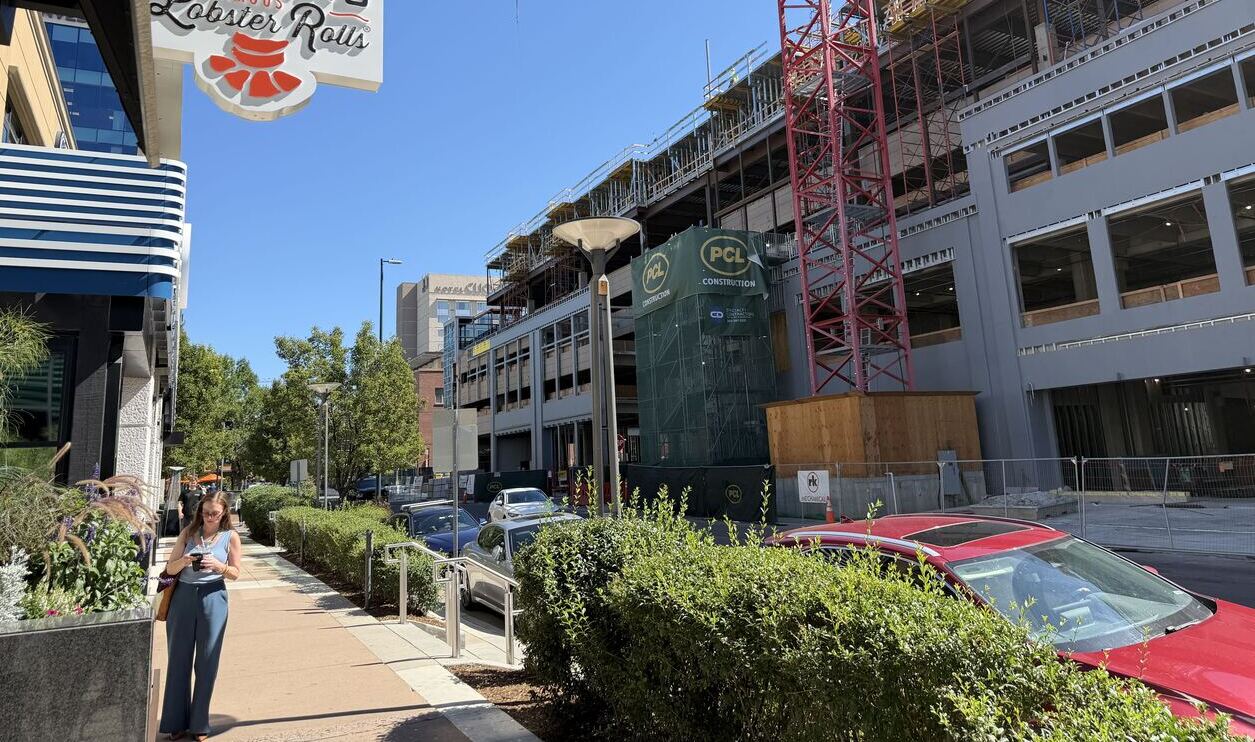
It was 2014. I was an independent journalist in Denver and a regular at a dry cleaner in one of the city’s most upscale neighborhoods.
One day, I dropped off two pairs of pants and one shirt. Three items total. A few days later, I returned for pickup to find the clothes folded, plastic-wrapped, and pressed to perfection. Then the employee at the counter slid the ticket across the counter.
Forty-eight dollars. My jaw hit the floor.
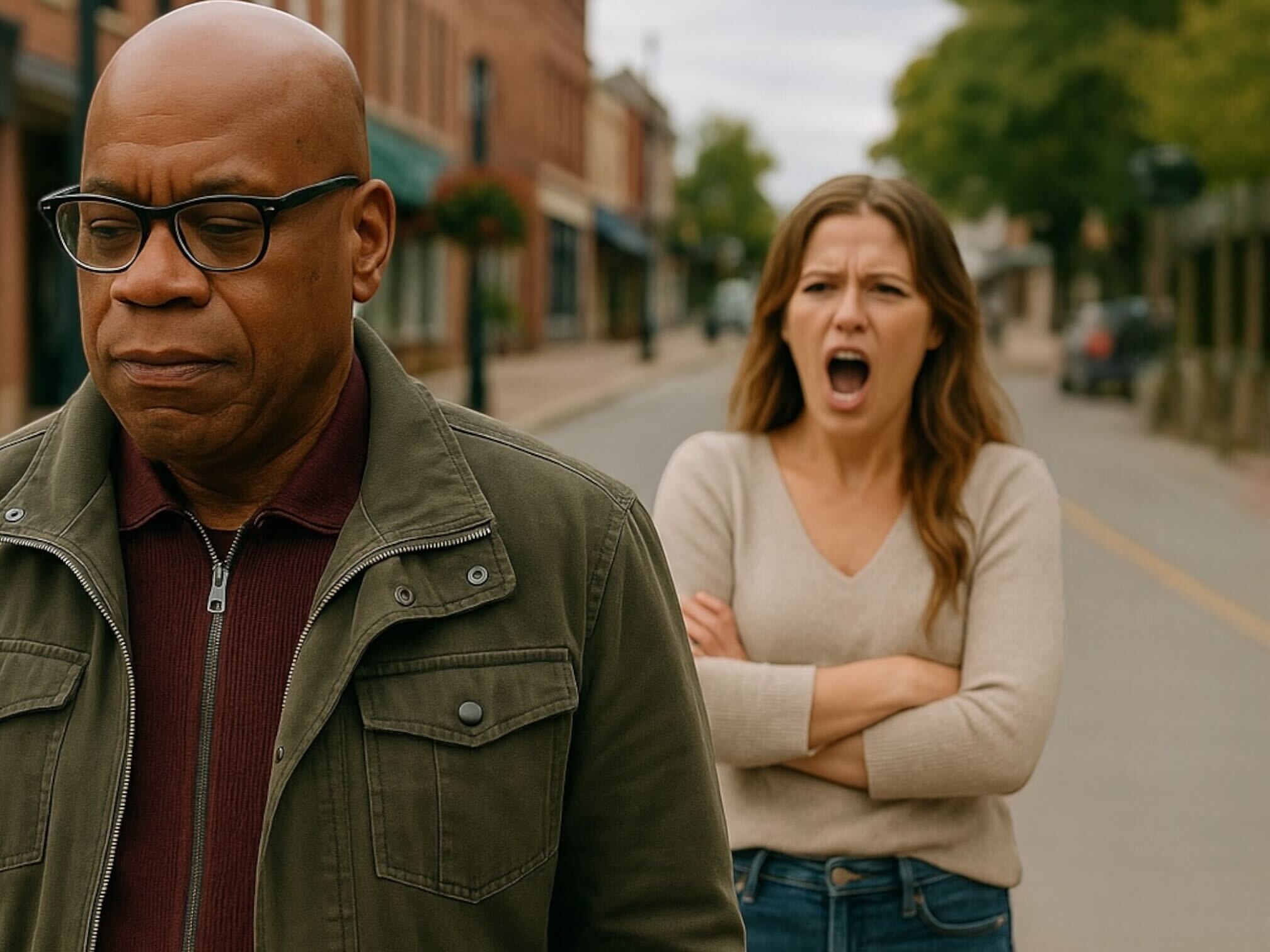
She calmly printed the breakdown when I asked for an itemization. The total was correct. No misprint. I stood there stunned. Then I made what I thought was a compelling case for a courtesy discount. I received none. I left, as I later put in my online review, in a huff.
The Taoist sage Zhuangzi tells the story of Prince Hui’s cook. This man had butchered so many oxen that his cleaver never struck a bone. He had become so intimately familiar with the animal’s natural structure that he moved through it without resistance or force. This is wu wei. Effortless action arises from living in harmony with the nature of things.
The dry cleaner symbolized that cook. He had read his market so precisely. The neighborhood, the rent, the clientele, the going rate for pressed clothes among people who do not flinch at receipts. His pricing required no apology. I, on the other hand, arrived expecting a different ox.
What separates a rational actor from someone who merely rants online is the ability to pause and reflect. When I got home, I took a deep breath. I reflected on the experience and wrote a review that tried to fairly capture both sides of the transaction.
First, I acknowledged the owner’s right to set his prices high given the soaring net worth of the area as well as the owners own high real estate costs. I even admitted that if I had been running a business of my own in that zip code, I might have reached the same conclusion regarding pricing.
I also acknowledged that as a private business owner, it was his prerogative to charge what he felt the market would bear. Equally, as a customer, I asserted that it was my choice to decide whether to continue to patronize his dry cleaner or find one that was a better match for my wallet.
About a week later, the owner responded to my review. He called it, in his words, the most respectful one-star slapdown he had ever received. In his response, he confirmed the logic behind his pricing. High rent, affluent customers, and a clientele that rarely blinked at the prices. He was simply reading his market and pricing accordingly.
My one-star review was not an expression of moral outrage. It was raw feedback. It was my way of talking back as a market participant.
What Free Markets Actually Are
When you strip away the political barnacles, the free market is elegant in its simplicity. It is the voluntary exchange of goods and services at prices that sellers deem appropriate for what they deliver and buyers deem acceptable for what they receive.
That is it. No shadowy cabal. No systemic oppression baked into the concept. Just two parties. A provider of value and a receiver of value decide whether the trade is worth making.
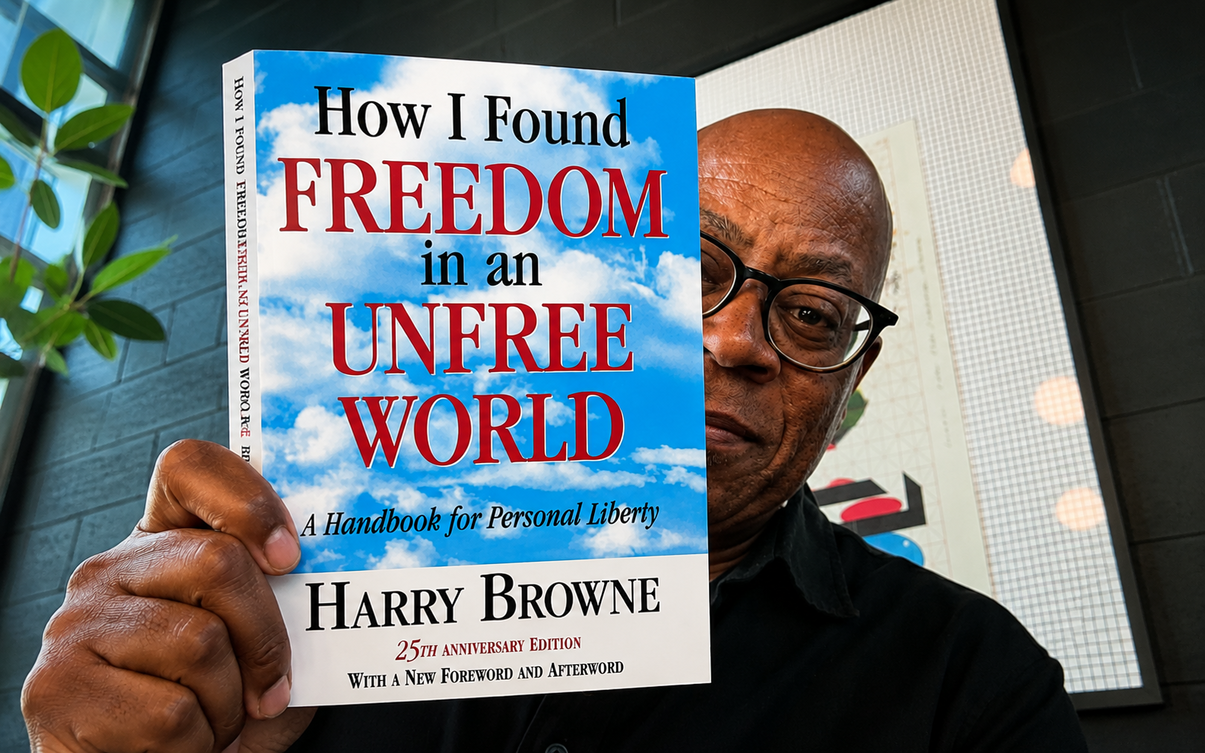
F. A. Hayek, the Austrian economist who spent a lifetime explaining why centrally planned economies eventually consume themselves, showed that prices are the most efficient information system ever devised. The price tells a story. It reveals production costs, the seller’s need to survive, current scarcity, and what buyers in that community are willing to pay.
Hayek called it spontaneous order. Lao Tzu, writing twenty-five centuries earlier, might have called it tzu-jan: things as they naturally are. An order that emerges from ten thousand individual decisions without requiring a committee.
What’s your political type?
Find out right now by taking The World’s Smallest Political Quiz.
Take the Political QuizThat forty-eight-dollar dry-cleaning receipt told me a story. It revealed that the business I had chosen charged premium prices, operated with significant overhead, and served enough customers who were willing to pay those prices without hesitation. The market in that zip code had spoken. I just happened to be the character who did not like the ending.
A Sixty-One-Dollar Meal and the Revelation of Value
A couple of years after the dry-cleaning drama, I walked into a favorite restaurant of mine about a tenth of a mile away. I sat at the bar and spent sixty-one dollars on a hamburger and two glasses of wine. I did not flinch one iota nor leave in a huff. I left full, satisfied, and having made two new business connections at the bar.
So what explains the contradiction? Why absorb sixty-one dollars at a restaurant but balk at forty-eight dollars at a dry cleaner?
Value. It always comes down to perceived value.
Jim Rohn, the business philosopher who lit a fire under me during a conference presentation in Chicago in 1995, put it plainly. He said that a person’s value to the marketplace determines their success. In that observation, he highlighted a crucial distinction that many people casually conflate, which is the difference between price and value.
Price is a number on a receipt. Value is the experience, the relationship, the transformation, or the result. Price is what you pay. Value is what you feel when you walk away.
Chapter 11 of the Tao Te Ching makes the same argument without mentioning restaurants. Thirty spokes share a hub, Lao Tzu writes, and it is the empty space at the center that makes the wheel useful. A room has walls and a roof, but you inhabit the empty space inside.
The sixty-one-dollar hamburger was more than beef on a bun. Its value lived in the spaces surrounding the meal. It was found in the exceptional food, the unexpected conversation with other patrons at the bar, the unanticipated business connection I made, and the quiet sense that I was exactly where I was meant to be. The price purchased the container. The real value lay in everything that container made possible.
Sure the dry cleaner delivered clean clothes. But at forty-eight dollars, the math on that transaction led me to question whether the amount aligned with the value of what I was receiving.
The Question Nobody Wants to Answer
Beneath much of the political noise surrounding free markets lies an uncomfortable question. Are things actually that expensive, or do they merely exceed your current ability to pay for them?
These are not the same thing. Confusing them lies at the root of a lot of bad economic reasoning and personal financial frustration. When I walked out of that dry cleaner, the honest truth was that forty-eight dollars for three items stretched my budget at that stage of my entrepreneurial journey. The price was not objectively criminal. It was simply more than I was positioned to absorb comfortably.
This was not the dry cleaner’s problem. The encounter simply gave me useful information about my financial position and the changes I needed to make moving forward.
Thomas Sowell has spent decades reminding us that most complaints about markets are really complaints about scarcity. Resources are limited, and some people have greater access to them than others. That gap is a serious social issue worthy of genuine debate. But blaming the mechanism of voluntary exchange for the gap is like blaming language for miscommunication. In other words, the tool is not the problem.
Zhuangzi tells the story of Lieh Tzu, a man who could ride the wind. The townspeople saw this as the ultimate expression of freedom. Zhuangzi saw it differently. He noted that Lieh Tzu still relied on the wind and was therefore not truly free.
True freedom, Zhuangzi argued, comes from depending on nothing outside yourself. I do not interpret this as a form of mystical escapism. Rather, I see it as a challenge to our internal orientation.
The person who storms out of a dry cleaner’s in a rage has surrendered their peace of mind to a receipt. On the flip side, the individual who walks with their own sense of value, clear about their standards, and fully capable of either saying yes or walking away without resentment is operating from a different place altogether. That person is riding something far more reliable than the wind.
At its core, the libertarian tradition from Hayek and Friedman to Leonard Reed and Murray Rothbard is an argument for that latter type of agency. The free market works, however imperfectly, because it trusts individuals to make decisions about their own lives, resources, and definitions of value.
As I have discussed, the owner of the dry cleaner exercised his agency, and I exercised mine. We both walked away with our integrity intact, even if I did not walk away with a pressed shirt and set of trousers.
The Critique Worth Having
Free markets are not beyond criticism. They can contain power imbalances, favor established players over newcomers, and often produce outcomes that feel neither clean nor fair. Acknowledging those realities is not only reasonable but necessary.
What I find puzzling, however, is how often legitimate criticism of market imperfections becomes an argument against voluntary exchange itself. The existence of flaws in a market does not invalidate the underlying principle that people should be free to engage with one another on mutually agreed terms.
When markets fail, the best solution isn’t to reduce choice or concentrate more power in the hands of a small group of decision-makers. More often, the answer is greater competition, better information, lower barriers to entry, and fewer opportunities for politically connected interests to rig the game in their favor. A healthy market is not one without problems. It is one in which people remain free to seek alternatives, reject bad deals, and create better solutions.
Taoists were not naive about power. The Tao Te Ching is, among other things, a political text written during the Warring States period, when competing kingdoms were distorting and capturing the social order the same way entrenched interests distort and capture markets today.
Chapter 57 of the Tao Te Ching says that when a country is governed through non-interference, the people believe that they have accomplished everything themselves.
What this appears to be saying is that coercion is the opposite of allowing things to unfold in their own natural order. A transaction where one party has no real choice has left the territory of the Tao and entered the territory of the warlord.
So what creates value? Who determines it? How do power dynamics shape the choices people actually have available to them?
These questions do not weaken the free-market case but refine it. They push us beyond ideology and into the messy reality of how human beings exchange, negotiate, cooperate, and pursue flourishing in the world as it exists rather than as we imagine it.
My Definition, Forged in Dry-Cleaning Steam
After the forty-eight-dollar dry-cleaning receipt, the respectful one-star review, the sixty-one-dollar hamburger, and years spent absorbing the ideas of Hayek, Rohn, Sowell, Lao Tzu, and Zhuangzi, while testing those ideas against my own lived experience, I have arrived at a simple definition of free-market capitalism:
The free exchange of goods and services at prices the provider believes reflect the value being offered, and that the recipient is free to accept, reject, renegotiate, or replace based on their own assessment of that value.
To me, this is the essence of the entire game. Two parties enter a transaction, each possessing agency and choice. Each has the freedom to say yes, say no, negotiate different terms, or seek alternatives elsewhere. The moment that freedom is compromised through coercion, monopoly power, fraud, or the manipulation of information, the market ceases to be truly free.
The owner of the dry-cleaning business was free to charge forty-eight dollars. I was free not to return. The restaurant was free to charge sixty-one dollars for a hamburger and two glasses of wine. I was free to decide whether that experience justified the price. No one was coerced or deceived. The transaction conveyed information, and both parties walked away better informed than before.
This is where the Taoism and the free market converge for me. The Tao is not a force to be imposed upon reality. It is a current to be observed, understood, and navigated. Markets, at their best, function in much the same way. They provide a continuous flow of information about value, preference, scarcity, and desire. Wisdom lies not in fighting that current, but in learning how to read it and move with it.
The Real Lesson
Free markets are not magic, nor are they moral guarantees. They are not the final word on justice, inequality, or the human condition. But they are both powerful and fragile. They embody a system built on the radical idea that you and I get to decide what something is worth to us.
Chapter 81 of the Tao Te Ching, the book’s final chapter and the one that closes the entire argument, asserts that true words are not beautiful and beautiful words are not true. The wise do not argue. Those who argue are not wise. The sage does not compete, and therefore no one can compete with him.
I often think about that dry-cleaning receipt and the one-star review that managed to be both truthful and respectful. In many ways, it feels as close to the Tao as I have ever come in a marketplace transaction because I saw the situation clearly, spoke what I believed to be true, and walked away without losing myself in the process.
That dry cleaner in Denver taught me more about free-market capitalism than most economics textbooks I have ever read. The restaurant a tenth of a mile away reminded me that the best version of a free market is one in which both parties walk away feeling as though they have won.
I never returned to the dry cleaner, even after the discount offer. Yet some lessons are worth every penny.