
I stumbled upon the esoteric word agorism in a bar when I was living in Denver back in 2014. A boisterous, loud, liberty-minded drinking group met semi-regularly there to argue about everything from Bitcoin to the drug war to whether voting actually accomplished anything.
I don’t recall who first dropped the word. Someone leaned across a table sticky with spilled beer and sketched the idea that freedom wasn’t something you could legislate into existence. It was something you built by trading, working, and living as if a permission slip were optional.
Someone else pushed back hard. Another round of beer arrived, and the conversation veered into crypto. The night felt like it was half bar fight, half seminar. I walked out with a word rattling around in my head that I couldn’t quite pin down yet.
It was years later when I circled back and sat with Samuel Edward Konkin III’s actual writings on agorism. Only then did I see that the bar conversation had not been some fringe rant. It had a name, a history, and a tenor I had seriously underestimated.
Konkin described agorism as a philosophy of voluntary exchange and counter-economics. It views the marketplace itself—the agora—as the engine of a freer life, built one trade and one relationship at a time.
Reading his definition felt less like discovering something new and more like finally finding the right name for the person I had already been becoming since that night in Denver.
One of the strange gifts of philosophy is that it doesn’t always teach you something new. Sometimes it simply names the life you were already living.
What Konkin Actually Meant
Konkin’s agorism was never merely an economic theory. It described a real class divide between those who live by producing and trading freely and those who live by controlling and extracting.
He argued that the state would not fall through elections or protest but through irrelevance, worn down by millions of ordinary people quietly choosing to trade, build, and live outside its permission structures. Freedom, in his view, was not legislated but practiced into existence.
This is why agorism hit me differently than most political theories. It never asked me to fight anyone. It simply asked me to notice what I was already doing.
The Tao Got There First
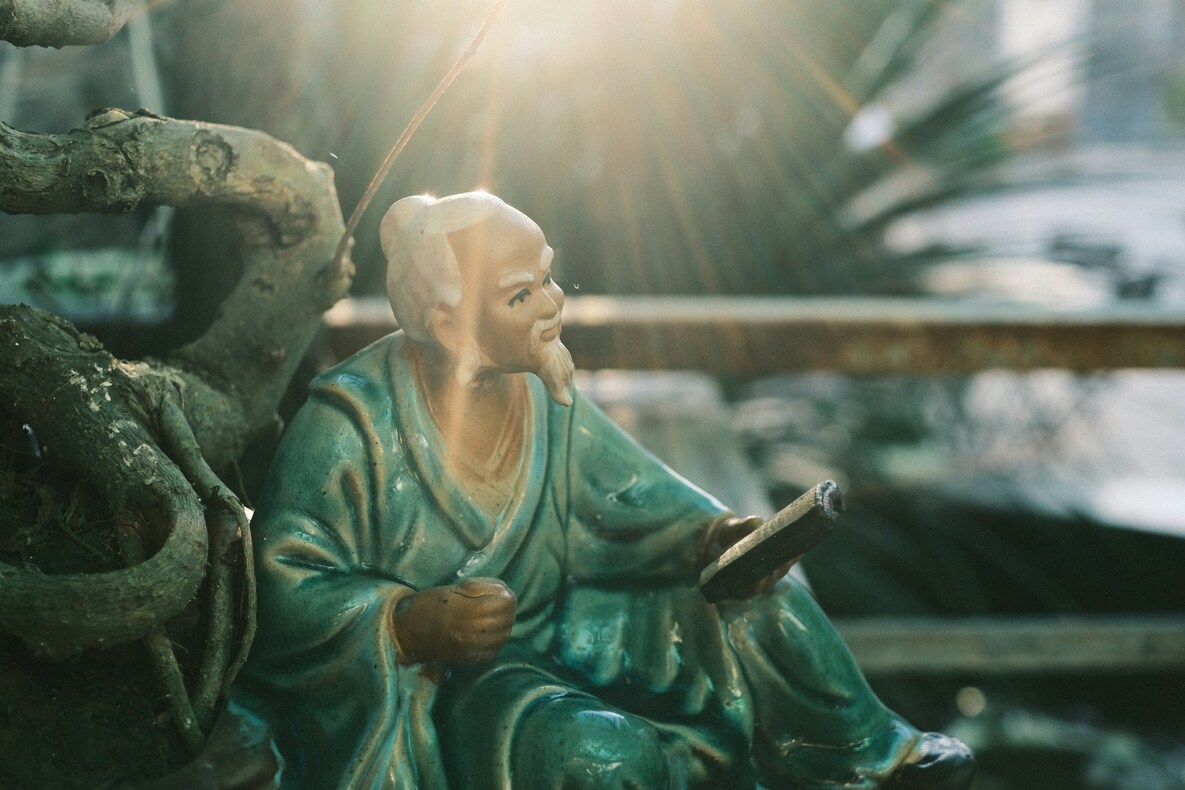
Long before Konkin, Lao Tzu by way of the Tao Te Ching made a similar case in a completely different language. He wrote that governing a large country is like frying a small fish. Too much handling ruins the thing you are trying to nourish. The lesson here is not passivity but restraint. It’s trusting a system enough to let it find its own order.
What’s your political type?
Find out right now by taking The World’s Smallest Political Quiz.
Take the Political QuizI have spent years learning to live inside that restraint, not forcing outcomes, not engineering relationships. I generally allow conversations, friendships, and opportunities to arrive the way water finds the lowest ground, without a plan and without a permit.
Murray Rothbard argued that liberty is not a program handed down from above but a condition that emerges when people are simply left alone to cooperate. Set that beside Lao Tzu and you see two old teachers, one from ancient China and one from the Austrian School of Economics, reaching strikingly similar conclusions. Neither trusted the hand that grips too tightly.
My Agora Was Never a Marketplace
For years I assumed my agora, if I had one, would look like commerce, a shop, a transaction, a deal closed over a handshake. It turned out that my agora was a coffeehouse table with a book open while a stranger two seats away leaned over to ask what I was reading.
It was a book recommendation passed across the table that changed the direction of my month. It was an introduction offered with no expectation of return. None of it shows up on a balance sheet, yet all of it created more value in my life than most paid transactions ever have.
I started calling this pattern Random Co-Creation. It implies that the most meaningful things in my life were never planned into being. Instead they simply emerged the way Lao Tzu insisted things do when we stop forcing them.
The Question Underneath the Philosophy
Agorism gave me a language for the outer practice of trading and living beyond permission. Taoism showed me the inner discipline beneath it, the willingness to loosen my grip long enough for something honest to surface.
But neither tradition matters unless you turn the question back on yourself. Where have you already been practicing freedom without a name for it? Which relationships in your life were never engineered or scheduled yet turned out to matter more than the ones you planned meticulously? Where are you still waiting for permission you were never actually required to give?
You do not need Konkin or Lao Tzu to answer those questions honestly. You only need to look at how you already move through an ordinary day.
The Life, Not the Label
I keep returning to a simple realization which is that labels matter far less than we think. Agorism didn’t change how I live; it simply explained it. Taoism didn’t give me new values; it gave me older words for the ones I had been carrying all along.
Maybe that’s the real invitation—not to adopt a new philosophy, but to discover the name of the one you’re already living. Beneath your habits, your friendships, and the quiet choices you make when no one is watching, there’s probably a philosophy waiting to be recognized rather than invented.
I found mine over a beer, chatting with a handful of liberty-minded people. My guess is you’ll find yours somewhere just as ordinary.