











Beta

Password Reset Confirmation

If an account matching the email you entered was found, you will receive an email with a link to reset your password.

Welcome to our Beta

The Advocates of Self-Government is preparing a new experience for our users.

User Not Found

The username/email and password combination you entered was not found. Please try again or contact support.

Skip to main content

Quizzes & Apps

Articles

Month: September 2018

FL Lawmakers Make It Hard For Hearing Aid Specialists To Help The Impaired

In its never-ending search for control, government is now forcing hearing aid specialists to go through a series of tests before they can help people with hearing impairment find an aid that meets their needs.

Florida officials are forcing licensed hearing aid specialists to pass tests quizzing them on technology dating back to the 1950s before they can go back to their practices. The extensive load of tests is so burdensome that Dan Taylor, a hearing aid specialist in the Sunshine State, is suing.
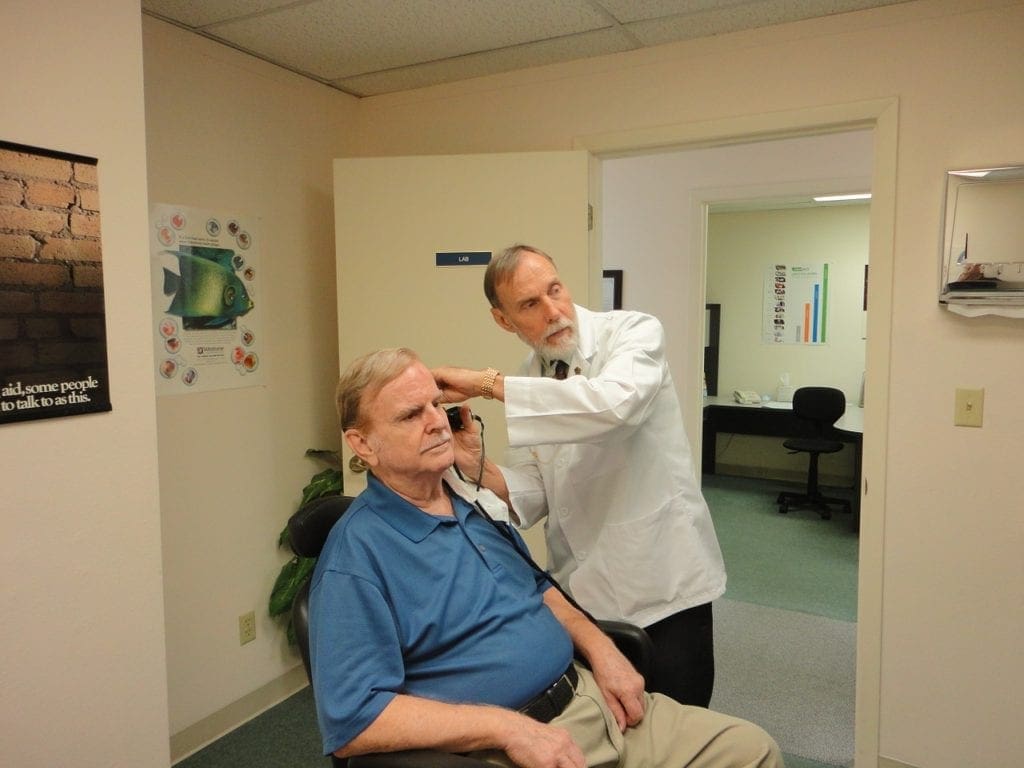
In the lawsuit filed with the federal government, Taylor claimed that Florida’s hearing aid licensing requirements are illegitimate, citing the federal government’s own regulations to prove the state is overwhelming local specialists needlessly.

In 2016, the Food and Drug Administration (FDA) abolished rules that required hearing aid specialists pass comprehensive exams before being allowed to fit patients with devices. Now, federal rules state that patients must simply have a prescription from a doctor before heading to a specialist.

And in what appears to be a strange turn of events, the federal government is even urging states to remove the same type of requirements imposed in Florida, claiming they represent “a barrier to access with no substantial enhancement of patient safety.”

Oddly enough, the FDA is (partially) right on this one.

Top-Down Regulations Are Never The Answer

Regulations on health care have, over the decades, snowballed into a major crisis, making the cost of care prohibitive and impractical. While President Barack Obama’s Affordable Care Act tried to deal with the situation by creating more regulations and restrictions on both the insurance and health care industries, the reality is that the law simply helped to make care even less affordable.

What ACA and other past regulations have in common is that they create an artificially restricted supply of doctors and hospitals while also artificially increasing the demand for care by either putting people on Medicare and Medicaid or by requiring that more individuals purchase health insurance.

Unfortunately, this ongoing meddling with the U.S. healthcare industry dates back to the early 1900s, when medical special interests lobbied politicians to impose barriers to entry in the profession, effectively restricting the supply of physicians and hospitals over the decades.

If the FDA was serious about bringing an end to what the agency itself called “barrier[s] to access,” it would be lobbying for its closure and the end to the U.S. government’s involvement in our health care. Unfortunately, that’s not the case.

Until we have a real free market in health care, patients will continue to suffer, either because of poor care thanks to a lack of competition or because of the increasing costs also tied to government intervention.


Government Hates Efficiency: Woman Arrested For Rescuing Pets During Hurricane

Where would we be if the government wasn’t around to stop kind ladies rescuing animals from deadly hurricanes?

Tammie Hedges, a North Carolina resident and founder of Crazy’s Claws N Paws animal rescue, was charged with practicing veterinary medicine without a license for taking in 27 dogs and cats to prevent them from becoming sick or dying during Hurricane Florence.

“We were trying to help abandoned animals,” Hedges told reporters. “A group of us got together to do something to help those animals. [That’s] why we opened our building to them, so they’d have a safe dry place to go until their owners returned to get them.”

While caring for the animals, some of whom were sick, she reportedly administered amoxicillin and a topical antibiotic ointment. Authorities also accuse her of soliciting a donation of tramadol, a prescription painkiller used on pets. Prior to arresting and charging the woman, the Wayne County animal control office pressured her to hand over the animals, threatening to get a warrant if she failed to do so. She complied but was arrested and charged afterward despite following their orders.

Despite the local government’s actions in this case, what Hedges did was the action of a concerned animal care worker who simply did not have any access to veterinary clinics or hospitals in the middle of a hurricane.

Speaking to reporters, she said that if animal control had left the animals at her temporary rescue center, she could have a veterinary come to her place later. But during the hurricane, “vets were closed,” she explained.

“During a state of emergency, you’re not going to find anybody open. I did what I’m supposed to do. I’m not about to let an animal be in pain and run a fever. When I have the availability and the supplies to help them, I’m going to do it.”

Market Vs. Government: When Efficiency Is Punished

The private market, encompassed by countless private persons who are also members of their communities, is better equipped to answer to emergencies than the government.

When tragedy strikes, neighbors and small business owners get first-hand knowledge of what their communities are experiencing. In the meantime, government offices shut down, including those tasked with helping in emergencies.

If Wayne County animal services were genuinely worried about the animals being abandoned because of the hurricane, they would have worked around the clock to find animals in need to take them in, but that’s not what happened. As a matter of fact, another local government-run animal shelter threatened to euthanize all unadopted animals before the hurricane hit, making it clear that, to the government, the well being of the animals has little to do with their actions.

Efficiency in the private market is often seen as a threat to the government, and individuals like Hedges are punished as a result. After all, if you dare to cross the government by helping those in need, how will officials justify the implementation of policies that keep us chronically dependent on the government?

Wall Street’s Very Good Year: An Average American’s Nightmare

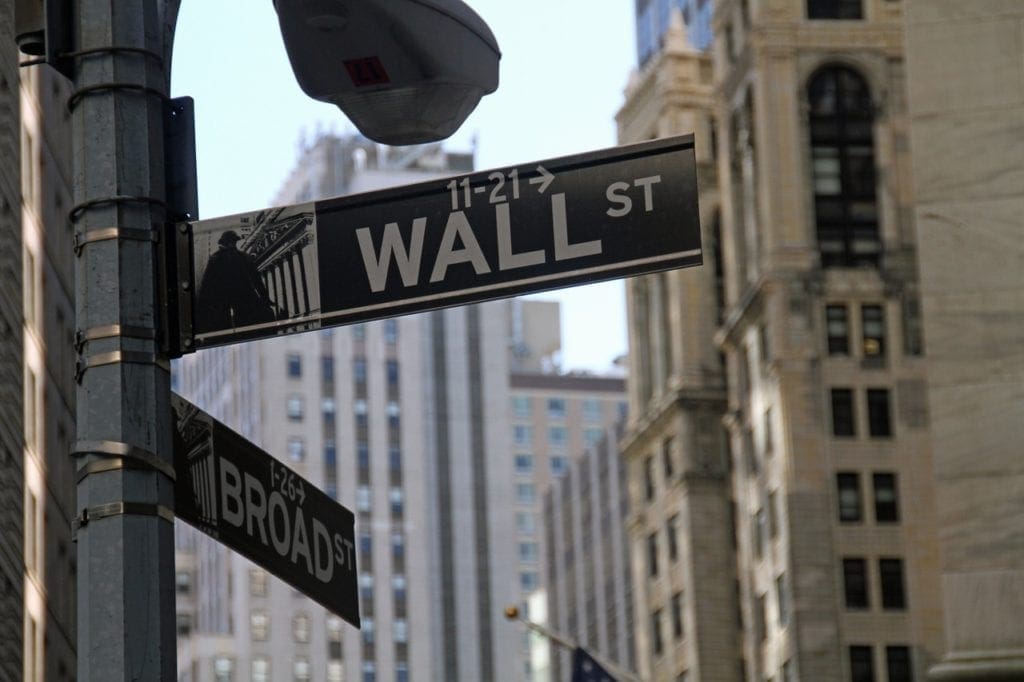
Wall Street is having a great time, as demonstrated by how much brokerages and investment banks are paying their employees.

According to the Associated Press, Wall Street salaries rose to the highest level since the 2008 financial crisis, with the average salary for Wall Street employees in 2017 being $422,500 — a 13 percent increase over the year. But the salary doesn’t mean that employers are happy with their employees’ overall performance. Instead, the increase reflects how well Wall Street has been doing since the 2008 bailout.

wall

In 2017, Wall Street had a $24.5 billion profit, a 24 percent increase from 2016. And in the first half of 2018, Wall Street profited $13.7 billion, an 11 percent increase from the same period last year.

With Wall Street accounting for 21 percent of all private-sector wages in New York City, NY state officials are more than happy with this increased success as the industry paid $14 billion in taxes last year alone.

It’s almost as if the government and Wall Street had a cozy relationship.

Government Has A Wall Street Problem

The success of the country’s most powerful bankers lies in the hands of both Washington, D.C., and the Federal Reserve, a highly politicized institution that, for some reason, continues to claim “neutrality” whenever politics is brought up.

From the 2008 bailouts, when hard-working taxpayers rescued Wall Street from ruin to the Federal Reserve’s easy money policies, the country’s top brokerages and investment banks rely heavily on their cozy relationship with government to succeed.

As Mises Institute’s Ryan McMaken explained, Wall Street’s dependence on government is so evident, that the minute the Fed hints at raising interest rates, the Dow will undoubtedly crash.

Unfortunately, this dependence translates into suffering to Main Street over time, where working Americans see the value of their dollar drop as a result of the policies that benefit Wall Street.

As CNBC explained, the Fed’s easy credit policy may benefit investors, but average savers lost $7.5 billion between 2006 and 2009, all the while the stock market benchmark had grown more than 60 percent.

As Austrian economist Murray Rothbard explained, when the Fed increases money and credit supply (inflation), the ones who benefit are the first ones to get their hands on this newly-created money, i.e., investors, bankers, and brokers.

Whenever Wall Street celebrates another year of great success, you can bet its gain is based on easy money policies as well as the ongoing support the industry has from the government, whose policy is to continue sticking you and me with the bill.

This County Has A ‘Bail Machine’ & It’s Forcing People To Plead Guilty

According to the Supreme Court, the public has “a first amendment right of access” to preliminary hearings in criminal cases. However, certain counties don’t follow this rule, setting their bail hearings behind closed doors, and criminal justice groups are accusing them of trying to skirt the U.S. Constitution.

The county under the activists’ scrutiny is Dallas County in Texas, where family, lawyers, the press, or social workers are not allowed to enter bail hearings.

bail

In order to learn what was happening behind closed doors, activists such as Texas Organizing Project and Faith in Texas filed a class action lawsuit with the American Civil Liberties Union of Texas and Civil Rights Corps representing the plaintiffs. The district court judge eventually ordered video footage released after the January lawsuit, but only footage of three days of hearings was made available.

The material proved that the court was doing exactly what activists were afraid of: Giving defendants no recourse.

In the footage, the accused often saw the judge for no more than 15 seconds, the time frame in which the judge would set the defendant’s bail amount, verify their citizenship status, and then send them to jail. In such a short period, it’s clear that neither party manages to bring up the facts of the case or whether the accused could pay the stipulated sum.

In February, perhaps thanks to the pressure from the suit, the county changed its approach, but not by making hearings public. Instead, it started offering arrestees an assessment, however brief, of their financial resources before declaring what their bail amount would be. Still, this change alone isn’t enough, as plaintiffs in the suit claim the Dallas County jails impoverished people without inquiring whether they can afford bail.

Shannon Daves, a 47-year-old homeless transgender woman, was one of the plaintiffs. Daves was arrested in January on a shoplifting charge. At the Dallas County Jail, the judge set her bail at $500 during a hearing that lasted 20 seconds.

Like Daves, thousands of people who are brought to the Dallas County jail are unable to afford their bail. As a result, only 23 percent of arrestees brought in 2018 were able to wait for their court dates in freedom.

“Bail hearings feel like calling customer service where the employees have charts with set instructions,” she said. “Judges are only concerned with getting you booked into the system. It’s all so impersonal.”

Because of the high bail costs, the system becomes overwhelmingly hard to fight. As a result, arrestees oftentimes prefer to plead guilty on their first court dates, as they already spent weeks in jail and might be tired of dealing with the justice system, lead attorney from Civil Rights Corps Elizabeth Rossi said. In many cases, innocent individuals who simply cannot afford to remain in jail one more day take sentences of time served, going home with a criminal record.

In other words, Dallas County authorities seem to be responding to the perverse incentives of running a government prison. By setting bails too high, they trap the poorest suspects, whether they are, indeed, guilty or not. By keeping them in jail for long periods of time, they end up breaking and finally giving up on clearing their name. The result is big, bold success cases for the county at the expense of the county’s poor residents. But are they real? Do they prove that Dallas officials are “doing their job?”

If their job is to serve the state’s needs then yes, they are performing as expected.

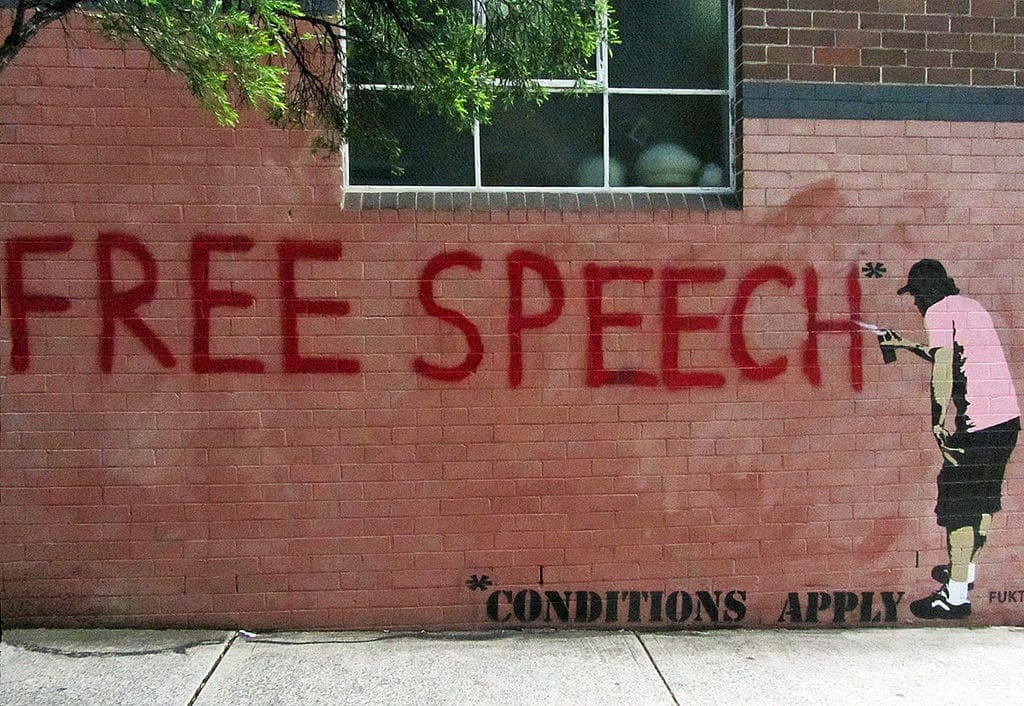
Ontario Presses Universities To Protect Free Speech

Canadian universities have a history of restricting and oftentimes completely blocking students from sharing controversial or unpopular opinions on campuses. Now, a directive from a local government could help ignite change across the Great White North.

Ontario’s provincial government issued a mandate requiring that local universities, both private and public, come up with a free speech policy by the first day of 2019. It must emphasize that the school will protect speech while fighting “hate” speech.

In a release titled “Ontario Protects Free Speech on Campus,” the provincial government outlined what policies universities must follow, requiring these institutions to define free speech, base its protection principles on what the University of Chicago Statement on Principles of Free Expression states, and “ensure that hate speech, discrimination and other illegal forms of speech are not allowed on campus.” However, Canadian laws do not define what “hate speech” is.

Regardless, universities are expected to recognize that free speech protections don’t apply to discrimination or other forms of speech that could break the law. Still, there’s hope that these new policies could actually help expand Ontario’s young minds.

The country’s Supreme Court has established that “everyone can manifest their thoughts, opinions, beliefs, indeed all expressions of the heart and mind, however unpopular, distasteful or contrary to the mainstream.” If universities follow the rule established by Canada’s high court, the country’s reputation could benefit greatly.

Up until recently, Canadian schools made the news for providing a stifling environment to its students.

The problem is so widespread that in 2017, two-thirds of all Canadian universities received F grades for their lack of free speech protections from the Justice Centre for Constitutional Freedoms (JCCF)’s Campus Freedom Index. Student unions got zero A grades.

In many cases, universities were found to overlook the disruption of peaceful events while actually charging students with offenses “solely because of the content of their peaceful expression,”  the Campus Freedom Index explained.

If Ontario’s example is followed by other provinces, the new policy changes could ignite a sweeping wave, helping students feel safe to exchange ideas again. With schools no longer shielding students from being exposed to different worldviews, they won’t fear being punished for expressing contrary opinions. In the end, everyone wins.

As Austrian economist Ludwig von Mises explained in “The Ultimate Foundation of Economic Science,” it was the very climate created by capitalism that gave people the freedom to openly discuss “the most momentous problems of philosophy, religion, and science … without any fear of reprisals on the part of the powers that be.” When universities, the very pillars of human expression and development in Western society, turn their backs to freedom of speech, they are turning their backs to centuries of progress, teaching their students that oppression is the pillar of a great society.

Is that the kind of message Canadian schools want to send their young enrollees? If Ontario’s move is considered, then the answer is “no” — and we should all be grateful for it.

What Both Obama And Trump Get Wrong About The Economy

President Donald Trump and former President Barack Obama have been openly attacking each other for claiming that the U.S. economy is strong because of their policies, with Obama telling the current president that while his unemployment numbers are impressive, the “recovery” had already started when he occupied the White House.

While U.S. employers created 3.58 million new jobs since Trump’s inauguration and small business owners credit Trump’s tax breaks for their increased optimism, Obama brags about his numbers because during his last 19 months, the U.S. economy had created 3.96 million jobs. Still, official numbers indicate that under Trump, the economy grew at 4.2 percent, which is a higher rate than the growth seen during the end of Obama’s term.

But no matter how many harsh words the two exchange over the economy, or how much yelling and cussing you hear from either president’s supporters, the reality is that the economic “miracle” both presidents claim responsibility for are based on little but empty promises.

The Economy, The Federal Reserve, And Its Money-Making Machine

While tax cuts are always welcome, there’s only so much that Trump’s tax plan can accomplish within an economy drowning in easy money and credit.

As Paul-Martin Foss, the president of the Carl Menger Center for the Study of Money and Banking, explained in a recent article, Obama’s era was marked by a loose monetary policy that injected (read “printed money”) trillions of dollars into the economy. This artificial manipulation of the currency leads to its devaluation, even if stock markets got a boost for some time as a result.

“According to the Fed’s own figures,” Foss explained, “over $6 trillion in money has been added to the United States’ M2 money supply over the past decade.” That is a lot of easy cash for Wall Street, and a huge threat to main street.

While the Fed continues with its loose monetary policy, tightening slightly now under Trump, the interest rates on lending remains under 2 percent. As a result, the market’s optimism continues to create a false sense of security and opportunity, creating what Foss calls “the mother of all bubbles.”

Considering that Trump is a man who has called on the Fed’s power to just “print the money” to solve problems, it’s clear that his understanding of what makes the economy “great” is flimsy at best. So, while small gains here and there can be made because of slightly less intrusive regulatory policies, neither president is correct to argue that the economy is doing well.

On paper, things might look good but underneath the surface, we’re creating the perfect conditions for greater misery, as we’re robbing the value of our hard-earned money from the hands and mouths of those in the low- and middle-income brackets.

In no time, we’ll be hearing both presidents saying they had nothing to do with the collapse we’re soon to witness.

Chicago’s Latest Victim Was A Young Anti-Violence Activist

Delmonte Johnson, 19, a teenage activist involved with anti-violence group GoodKids MadCity, died of gunshot wounds in Chicago. The tragedy was particularly saddening because of the nature of Johnson’s activism and the reality of Chicago residents like himself.

Johnson was standing outside of a store in the South Side of Chicago when someone shot him from inside of a tan sedan at about 7:30 p.m. on Wednesday. Unfortunately, Johnson later died at the hospital. Police have yet to announce a suspect.

On Twitter, members of GoodKids MadCity mourned Johnson’s death, vowing to “continue [the] fight to end #GunViolence in Chicago.” And during a vigil on the same day, the victim’s mother, Onique Walker, celebrated her son’s passion for his community.

“He was getting ready to get a fundraiser going for the kids so they could go on a Christian camping trip,” Walker said. “My son, oh, God… I’m gonna miss my baby.”

While the circumstances surrounding Johnson’s death remain under investigation, it’s clear that his death was tragic and unnecessary.

Unfortunately, gun-related crimes have never ceased to happen in the Windy City. Quite the contrary, as they worsened considerably since gun control was widely adopted by the city.

According to an investigation in 2013, the city’s murder rate was so high then that it actually beat the murder rate during the Al Capone era, when no gun laws were in place. And recently, in late August, 59 people were shot in Chicago in just one weekend, killing six people and sending 53 to the hospital.

And as left-leaning researchers have pointed out, a close look at gun-related violence shows that aside from suicide, which is the most common cause of gun-related death in the country, gang violence is the second most common factor in gun-related deaths, claiming young men mostly between the ages of 15 and 34.

In other words, gun restrictions do little to prevent the top two most common gun-related deaths, especially because criminals do not go through the proper legal channels to purchase weapons. Evidently, government-backed gun restrictions will do absolutely nothing to stop them.

New Yorker Disinvites Bannon From Event After Stars’ Pressure

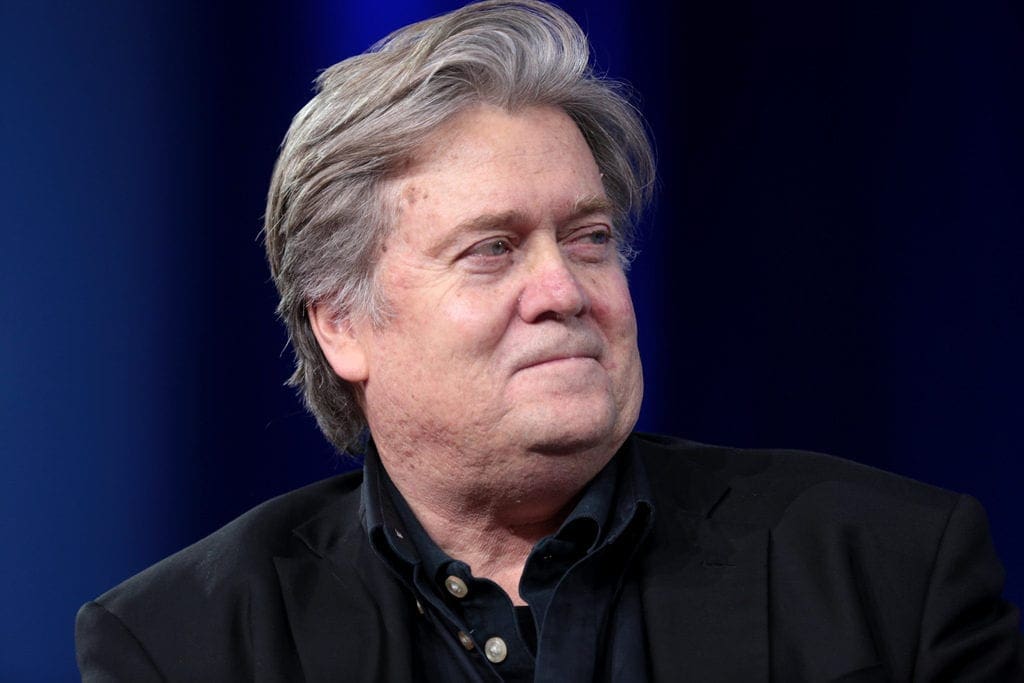
In the era of President Donald Trump, the American media continues to ignore its role in helping to shape Trumpism. The latest example is The New Yorker’s decision to disinvite Steve Bannon from its annual festival.

After the publication announced its editor-in-chief David Remnick would be interviewing Bannon during this year’s festival, Jim Carrey, John Mulaney, Judd Apatow, Patton Oswalt, Jimmy Fallon, and many other stars threatened to drop out. Within a day, Bannon had been disinvited.

“To interview Bannon is not to endorse him,” Remnick said about talking to Bannon prior to the publication’s decision. “By conducting an interview with one of Trumpism’s leading creators and organizers, we are hardly pulling him out of obscurity. Ahead of the mid-term elections and with 2020 in sight, we’d be taking the opportunity to question someone who helped assemble Trumpism.”

However, Remnick didn’t stick to his guns, promising to interview Bannon in a more “traditionally journalistic setting” in the future.

On Twitter, Apatow showed just how out of touch the mainstream liberal mind is when it comes to Trump supporters when he threatened to leave.

“I will not take part in an event that normalizes hate,” he said.

As Reason noted, Apatow was naive to think that whatever ideology Bannon stands for hasn’t been “normalized.” After all, millions of people appear to condone it through its support of Trump.

But long before the left lost its marbles because Democracy did not legitimate their viewpoints in 2016, it was the same disregard for their opponents’ concerns that gave rise to Trumpism. And, as many have noted, it is the sneering at Trump supporters that further fuels their convictions regarding both liberals and the media.

Disinviting Bannon didn’t prove that hate is not “normalized,” it simply confirmed it, corroborating his followers’ conviction that the left has no courage to face them.

Hate Comes In Many Shapes

In the past, journalists didn’t fear interviewing controversial figures because they spewed “hate.”

As Reason pointed out, that was the case with Dick Cavett interviewing Lester Maddox and George Wallace. Oriana Fallaci also took on the task of interviewing “hateful” figures in her “Interview with History” series. In which she sat and talked to Henry Kissinger and even Ayatollah Khomeini.

Nobody then accused the journalists of helping to “normalize” hate. But today, in our post-moral society, our quest for virtue has turned us all into cultural puritans.

In a setting such as this, we all lose, as bad ideas aren’t being shut down in open and honest debates. Instead, cries for boycott, threats, and fighting hate with hate is what rules the day.

One can only hope that in the meantime, libertarians continue to stand out as the real voice of sanity.

Democrats Fight Kavanaugh On Abortion, Ignore His Support For Surveillance

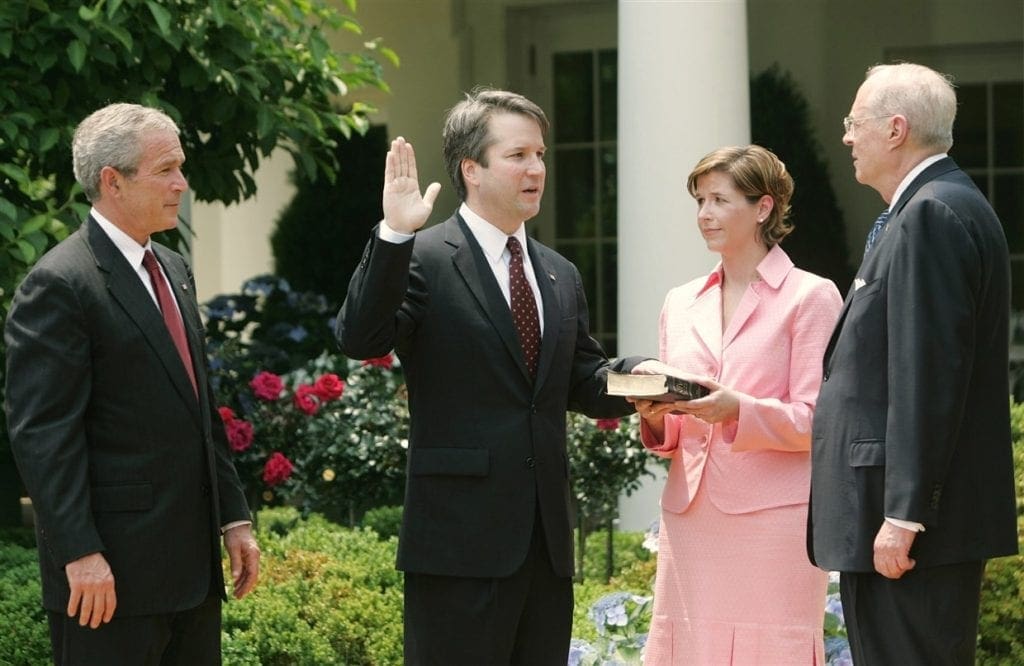
Senate Democrats may not have the numbers to kill President Donald Trump’s Supreme Court nomination. Still, they are going to do their best to grill Brett Kavanaugh on two of the left’s staple policies, abortion, and Obamacare.

While their goal is to force Kavanaugh into committing to uphold the two SCOTUS decisions that made both of those policies a possibility, it would be imprudent of any judge to deliberate on how he or she would vote in a hypothetical case before Congress. Why? Well, because of the “Ginsburg Rule,” which allowed then-Supreme Court nominee Ruth Bader Ginsburg to refuse to answer Senate Republicans in 1993 whenever they pressed her about her views.

In addition, the Model Code of Judicial Conduct prohibits any judge or judicial candidate from explicitly indicating how they would rule on any issue that may come before the courts. They are also not allowed to even create the appearance of partiality, making the very idea of forcing the current Supreme Court nominee to discuss his views an attempt at making the judge seem unethical.

Still, Democratic Senators don’t care about the rules. And what’s worse, they also don’t care about the real reasons why Kavanaugh would actually be a bad choice for the Supreme Court.

Opposition To Kavanaugh Has Nothing To Do With Protecting Rights

In an op-ed for Fox News, Judge Andrew Napolitano attacked the president for choosing Kavanaugh for accepting to “[cut] holes in the Fourth Amendment” and accepting “unlimited spying on innocent Americans by the National Security Agency because [he doesn’t] believe that the NSA is subject to the Constitution.”

In addition, Napolitano explained, Kavanaugh is also a big supporter of government regulating the healthcare system.

Still, Senate Democrats truly believe Kavanaugh is the devil in disguise.

“If Americans really knew what he intends to do to our republic, perhaps many more Americans would be speaking out against his nomination,” Sen. Cory Booker (D-N.J.) said.

Senate Minority Leader Chuck Schumer even promised to make the question of whether the judge would uphold the Roe v. Wade abortion case ruling “key” during the hearings, with others like Sen. Tammy Duckworth (D-Ill.) even questioning whether the Trump nominee would stand for healthcare regulation “protecting” women of color and veterans like herself.

Not one senator seemed worried about the future of our privacy and our actual rights upheld by the Fourth Amendment of the U.S. Constitution.

Whether Democrats want it or not, it would take a lot more than a protest to block Kavanaugh. But while they claim all efforts are valid because they want to educate the American public on what it means to confirm Kavanaugh, focusing on the judge’s abortion and health care views alone implies that what they are concerned about is pushing their agenda, not caring for Americans.

Just what politicians are supposed to do.