
Public Schools Don’t Work Well At All
Given the wretched performance of government schools, it’s hard to imagine people defending them — yet they do. It’s almost like they spent twelve formative years in indoctrination camps designed to make them worship the government!
Government schools are terrible on every educational metric we measure, and many come with a side order of shocking violence. As Michael Malice quipped, “Government schools are literal prisons for children, and the only place many people will ever encounter physical violence in their lives.”
But at least they’re being “socialized,” right?
Hundreds of thousands of violent incidents are reported in government schools each year. Kids who cannot read sit next to kids who can simply because they are assigned by zip code. Parents are conditioned to hand their children over to these barbaric institutions reflexively — like mandated daycare with risk of bodily harm.
When people point out the violence and poor results, we hear the eternal refrain: Just pay the teachers more! That demand reveals who a monopoly system really serves, and it isn’t us or our children. Per-pupil spending has climbed dramatically over the decades while educational results have stayed flat or fallen.
Perversely, the new money does not even reliably land in teacher paychecks. A large share goes to benefits, pensions, and non-teaching staff. More than half of government school employees are part of the bureaucratic bloat. Teacher salaries have stagnated or dropped in real terms even as the machine has gotten more expensive.
This is perfectly predictable when goods (and services) are provided by the “political means”: government coercion rather than voluntary choice. We see a system captured by an enormously powerful union complex whose first priority is jobs, contracts, and political muscle — not whether your kid can read or do basic math. When results collapse, the demand is never to scrap the model. It is always to spend more.
This clearly isn’t a spending problem. It’s a monopoly problem.
Educational Choice Options, Today and Beyond
Corey DeAngelis has done a great job pushing Education Savings Accounts through some red-state legislatures. Now, parents of hundreds of thousands of kids across the country are beginning to experience at least a modicum of choice in their educational options, and it has resulted in improved performance wherever it has been allowed.
This is progress, but it’s not enough. An ESA that still treats the school district as the default and still routes the money through the political system is a halfway house to freedom. Ultimately, children (via their parents) need the right to walk away entirely, not a nicer voucher tied to the same monopoly system.
Education is a good, like any other. People already buy tutoring, music lessons, coding camps, karate, and college. There is no law of physics that requires third-grade reading to be a government function.
A free market in education wouldn’t be perfect, of course. Nothing is. But it would be better than a geographically assigned factory that cannot teach or keep order. Free-market providers would compete on results, safety, culture, and price. Failures would lose customers. By contrast, government ‘educators’ have no such accountability: they merely yawn and wait to capture the proceeds of the next municipal bond issue.
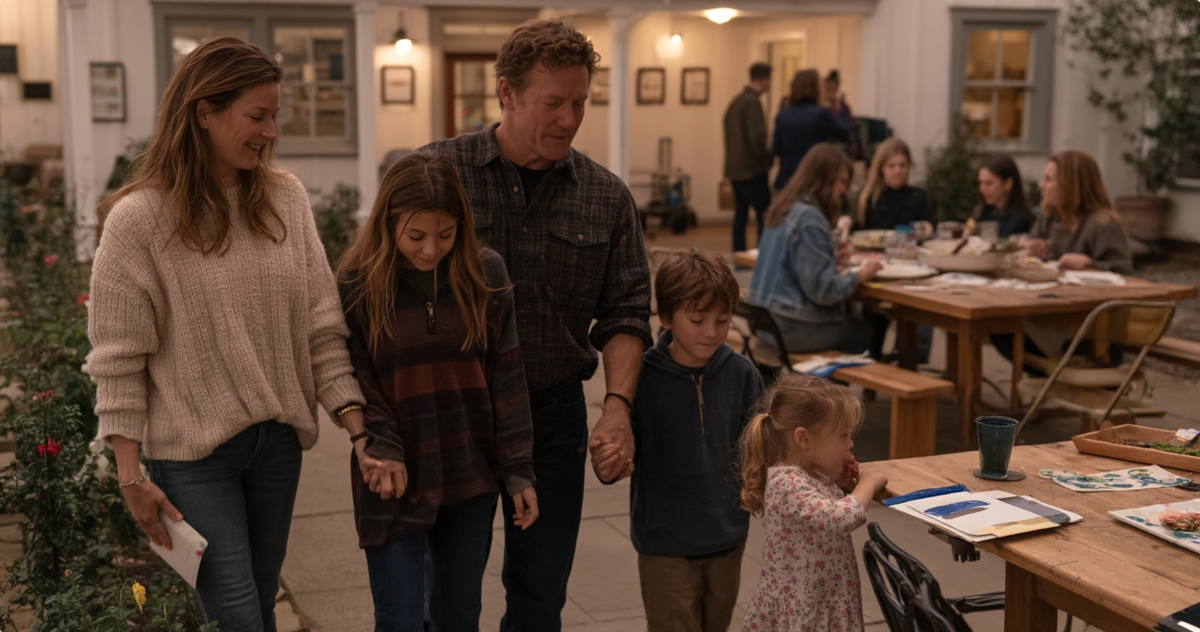
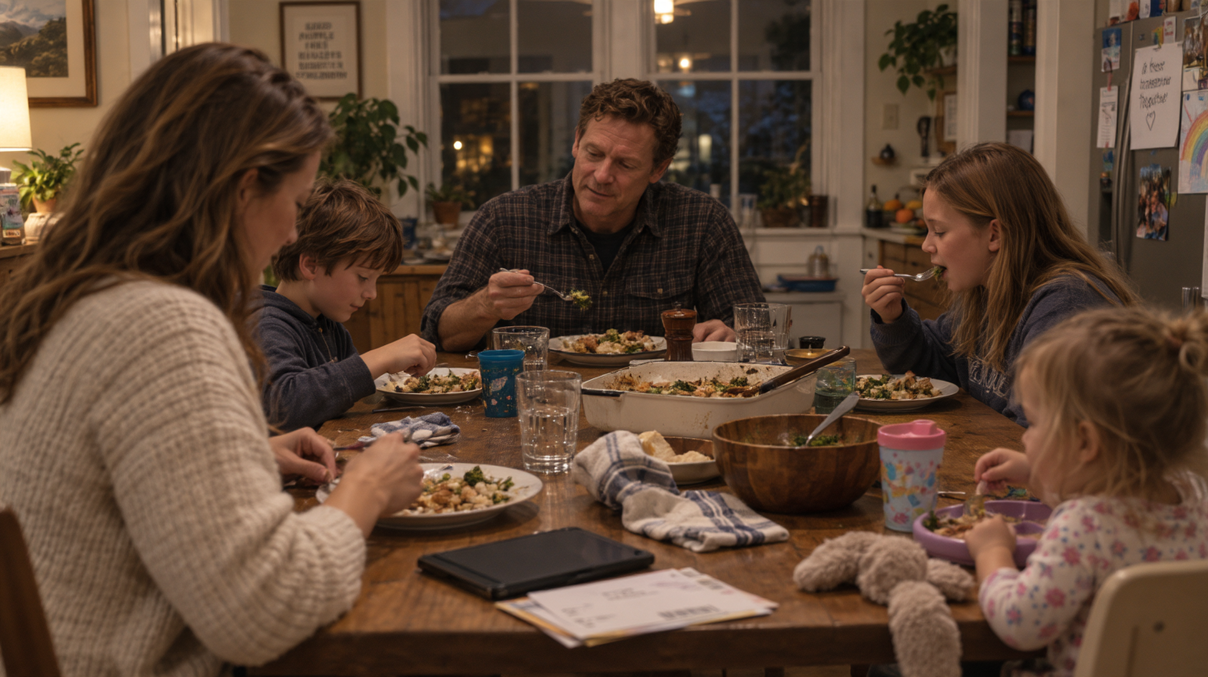
Without the state, families like the Kanes could mix a workshop three days a week with a philosophy track and an afternoon at home. That is a very ordinary manifestation of consumer choice, and it is beautiful as well as empowering. Adding compulsion poisons the whole enterprise. You don't improve bread production by forcing everyone on the block into the same bakery and jailing the customer who leaves.
Part of government schools’ mission is to teach a civic religion: The state is the adult in the room. It is the only possible source of all public goods. You owe the government gratitude and fealty merely for existing. Nasty political battles over curriculum are the obvious result of a monopoly system that claims the right to mold a child’s mind for twelve years. No wonder so many graduates treat political authority as natural and markets as suspect. They spent their childhoods in propaganda factories.
Meanwhile, the alternatives keep working, here and abroad. Homeschooled and microschool students greatly outperform national averages, even across income levels, and their prevalence is rising fast. Covid really woke a lot of parents up to the horrors their kids were experiencing at government schools. Homeschools, microschools, and hybrids now number in the tens of thousands and educate well over a million children. Costs are low. Performance is high.
Competition works.
What’s your political type?
Find out right now by taking The World’s Smallest Political Quiz.
Take the QuizWe always knew this. In nineteenth-century Britain and America, working-class literacy was on the rise before compulsory public systems were forced upon the citizenry. And now, in the slums of India and Africa, poor parents pay small fees to low-cost private schools because the government classrooms are either empty or useless — and these kids outperform their state-school counterparts on tests. These poor people aren’t waiting for some committee to approve a theory. They are buying a product.
Chapter 3 of the Kane story offers a vision of the beauty and efficacy of freedom in education. Amazing things can happen when government busybodies aren’t involved. The Kanes get competing providers, reputation scores they can actually use, flexibility in programs, and a budget that falls even as the fit and the results improve — all managed by a contract they can sign or refuse. That freedom, that low price, that ordinary parental joy of watching your kids choose instead of being assigned — it all looks to us like science fiction. But of course, it isn’t. Pieces of it already exist wherever families are allowed to exit. The governmental monopoly is the experiment that failed.
“There will be no standards,” the monopolist shrieks. Nonsense. There will be many standards, which is the point. Lex-1 and Lex-2 protocols, Equitas-certified materials, covenant baselines, insurer requirements, and parent contracts are (our fictional examples of) standards. They are just not politically monopolized. Good for us. Bad for the monopolists.
Homeschooling, competing microschools, freelance tutors, online courses — all these things work. Freedom works. The open house on display in the Kane story is a glimpse at the alternative to government monopoly, already here in places and pieces, and already beating the thing we were told could never be replaced.
If we open our eyes, we can all live like the Kanes.