












Beta

Password Reset Confirmation

If an account matching the email you entered was found, you will receive an email with a link to reset your password.

Welcome to our Beta

The Advocates of Self-Government is preparing a new experience for our users.

User Not Found

The username/email and password combination you entered was not found. Please try again or contact support.

Skip to main content

Quizzes & Apps

Articles

Tag: California

Los Angeles Spends Millions on Temporary Homeless Shelter, as Root Cause Goes Ignored

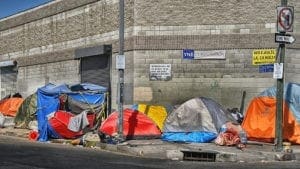
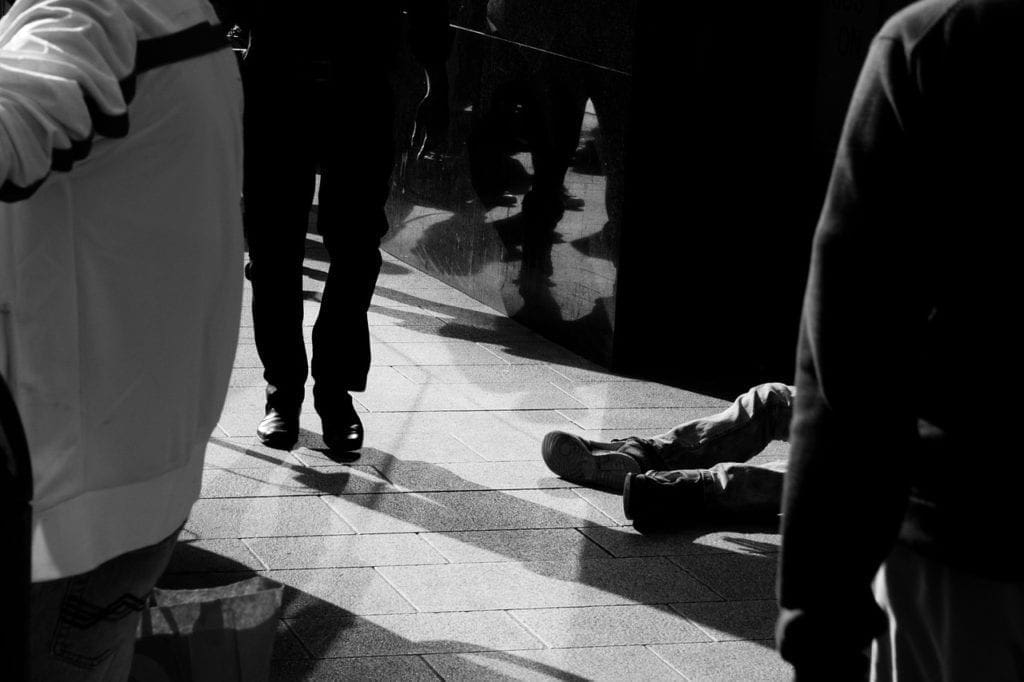
California continues to struggle to deal with its homeless problem, but while even county and local officials admit that government-imposed housing regulations are worsening the situation, the state continues to allocate millions in taxpayer-backed funds to cities for the implementation of programs that “fight” homelessness. But is there a real solution that wouldn’t involve looking at homelessness’ root causes? As part of this campaign, the Los Angeles Services Authority (LAHSA) has been working on developing expensive housing to thousands of homeless residents. Unfortunately, simply housing them in brand-new apartments isn’t working, as this series of Los Angeles Times articles have shown. But despite the city’s failures to address the problem, the Los Angeles City Parks Commission announced recently that the Griffith Park in the trendy neighborhood of Los Feliz is going to get a temporary homeless shelter. The structure would be located on the southern end of Griffith Park, the home to the historic Griffith observatory and a favorite hot spot for tourists trying to take a photo under the Hollywood sign. The temporary shelter is expected to house only 100 people and cost $4.6 million. It will be built just south of the Griffith Park Recreation Center and it’s part of the “Bridge Home” program. Unveiled by L.A. Mayor Eric Garcetti in 2018, the effort is meant to put up two dozen temporary shelters for the homeless across the city. But while a total of five shelters are already in use, there is only so much that temporary housing can do.

A Crisis That Goes Way Back

California’s homelessness problem is one that can only be explained when you step back and look at the state’s history of meddling with the housing industry. While the federal government also has housing regulations in place, state and local officials have long subsidized, regulated, and used restrictive urban planning policies that made housing in urban areas prohibitively expensive to low- and middle-income families and individuals. These policies are often meant to hurt the poor, as it is only the rich and connected who manage to successfully lobby lawmakers to impose restrictions that insulate them from seeing their neighborhoods change as the demand for more housing increases. And as housing becomes increasingly restrictive, the number of people unable to afford a roof over their heads grows. That coupled with other policies such as the high minimum wage also helped to push the working poor out of the state. Who’s left behind? The millionaires, who can afford to live in a reality far removed from what the working class experiences, as well as those who have called the streets their home. In any case, cities like Los Angeles and San Francisco are on the verge of collapse, with rare diseases such as typhoid fever and, some experts say, the bubonic plague, making a come back. If the goal is to make housing affordable again, and give entrepreneurs incentives to work to truly address the homelessness, California and local city officials should roll back its regulations and minimum wage law, especially if they want the unskilled and poor to get back on their feet.

Even With Police, Gun-Free Zones Aren’t Safe From Mass Shooters

One minute lasts forever. A six-year-old boy, 13-year-old girl and young man were murdered, while 12 more were maimed at the Gilroy Garlic Festival before police killed the shooter. The clear takeaway is that a gun-free zone is always a potential kill zone. Enough already! Sunday’s mass shooting in Gilroy, California, is being used to promote more gun control, of course. But while Democratic presidential campaigns capitalize on the tragedy, honesty must be elevated above the typical mainstream TV “debate.” The Gilroy Garlic Festival was a gun-free zone, where “no weapons of any kind” were allowed. The rule applies year-round at Christmas Hill Park, where the annual event took place. Since 1950, approximately 94 percent of all mass public shootings occur in gun-free zones, according to the Crime Prevention Research Center. The definition for such a shooting is that it be non-gang and non-drug related, not carried out in pursuit of another crime such as robbery, and that there be four or more victims killed. In the Gilroy case, there were three victims killed, although a wounded victim is reportedly in critical condition. There may be other common denominators with mass shootings, such as the killers being mentally ill. But practically speaking, the obvious solution is to end gun-free zones. At least six potential mass public shootings have been prevented by private gun owners since May 2018, according to the Crime Prevention Research Center, which collects media reports. In each case, whether a dental office, restaurant, grocery store, or school, the shooter was only stopped because of a lawful gun owner. Any police officer rushing in to stop a mass shooter is a hero, but the minute leading up to that moment must be cut shorter next time. Mass shootings in the US are rare, despite the mainstream media narrative. The Center has shown the US to rank 66th in the world and 12th when comparing only to Canada and Europe. However, the politicization isn’t slowing down. The extremist gun grabbers are emboldened, so those who have the facts on their side need to force the gun-free zone question relentlessly. It should also be noted that even if gun-free zones were abolished, California must still go further in actually permitting its residents to purchase and carry firearms. The Center notes that in 2018, Santa Clara County, which includes Gilroy, issued no more than 113 concealed handgun permits. The county’s adult population is 1.5 million, so that’s 1 permit per 14,300 people. In California, after the required psychological screenings and 16 hours of training are completed and fees are paid, it will cost hundreds of dollars just to exercise one’s Second Amendment-guaranteed right. There may not be a simple antidote to mass shootings, but disarming good people is nothing but snake oil poison that must not be allowed to be marketed any longer.

Major Spike in LA Homelessness Doesn’t Change Attitudes of Central Planners

The homeless populations in both the county and city of Los Angeles are increasing so rapidly, elected officials say even they are “stunned.” But don’t expect anything other than more government spending, higher taxes and tighter regulations in the near future. A year after celebrating a small decrease in homelessness, Los Angeles politicians have less to say now that a point-in-time count shows a 16 percent increase in the city and a 12 percent increase across the county. That brings the total number to nearly 59,000 countywide, with over 36,000 in the City of Angels.

“We are pretty well stunned by this data,” LA City Councilman Mark Ridley-Thomas told the LA Times on Tuesday, reacting to a report published by the LA Homeless Services Authority. Stunned indeed, as in unshaken. There is no sign from anyone on the city council or county board of supervisors that cutting red tape for private developers is in the works. In fact, LA Mayor Eric Garcetti used the news to promote another “investment” of $42 million toward homeless services. “And I know that, if we keep working together, believing in one another, and caring for people in desperate situations, we will end homelessness in this city,” Garcetti said. More than ever, the blame is being placed on the lack of affordable housing. Although lip service is paid to the issues of mental illness and drug addiction, the official narrative is that people are “pushed” into “experiencing homelessness” by exorbitant rent rates and federal disinvestment. While libertarians understand that an increase in housing supply would lower prices, what if much of the time that didn’t address the hardcore elements of this crisis? After all, Pasadena saw a steep decrease of 20 percent in its homeless population, but housing is quite expensive there. There are other cities like that too. By far, the highest increase of homeless by age was the 18-to-24-year-old group, which grew 24 percent since last year. Why aren’t they living with their parents, as roughly 42 percent of all Los Angeles millennials do? There was a 17 percent uptick in “chronic homelessness,” those who are mentally or physically impaired and homeless for over a year. The report also found that over 2 percent of the homeless population was transgender, while transgender people have been estimated to be as high as 0.5 percent of the total LA County population. All this is to say that a big part of the problem can’t be solved as simply as building more housing, because there are special needs in more difficult circumstances. Yes, developers in California and LA County especially have to go through hell and back to build anything. But election after election, the people vote in more top-down socialist leaders and approve more taxes by the ballot as well. Homelessness in LA is not new, though it has grown in intensity and danger and produced more medieval diseases in recent years. It’s probably not realistic to expect much progress in terms of liberty or free market reforms, considering the demonization of Airbnb and similar innovations in lodging decentralization across California. Maybe it will take the bubonic plague, which Dr. Drew says is likely already present in LA, to discourage more homelessness. Aside from the taboo of suggesting the forceful institutionalization of the mentally ill, the other most uncomfortable part of the homelessness issue is how much of it might be a lifestyle choice. LA is set to host the 2028 Olympics, so what’s going to happen until then? If the sense of urgency grows, will that mean a mass conversion to freeing the housing industry? Or, a rejection of the “right” to live in the streets?

California’s Minimum Wage Is Hurting Its Restaurant Industry

According to a recent study from the University of California Riverside, California’s minimum wage increases have stagnated job growth in the restaurant industry. Forbes pointed out that California was one of the first states to get the ball rolling on minimum wage hikes that moved “towards the “living wage” of $15 per hour by 2022—a 50% hike over 2012.” The UC Riverside detailed some of the negative effects:
“Data analysis suggests that while the restaurant industry in California has grown significantly as the minimum wage has increased, employment in the industry has grown more slowly than it would have without minimum wage hikes.”
The same study concluded that “there would be 30,000 fewer jobs in the industry from 2017 – 2022 as a result of the higher minimum wage.” Additionally, the study found that the minimum wage’s negative impact was “greater in lower income communities than higher income communities” based on how high-end restaurants “can pass on the additional costs to customers more easily.” The study finished off by highlighting that the most vulnerable and least skilled were negatively affected:
“Specifically, we see a decline in the employment share of low-skilled workers, disabled workers and part-time workers in the sector.”
A few months ago, Liberty Conservative News reported on how Whole Foods’ new minimum wage policies have generated layoffs and reduced work hours. Despite these developments, activists insist that more states adopt $15 minimum wage laws.

Cringey California Sues Trump Administration For Train Money

Defying the feds on Tenth Amendment grounds was once California’s specialty. No more, now that the broken Golden State is suing the Trump administration to make off with nearly a billion dollars for a high-speed rail boondoggle. It’s not a good look, California. After “a decade of lies and deception from Gov. Jerry Brown and the California High-Speed Rail Authority,” as the Mercury News and East Bay Times editorial boards put it, the state is so incontinent, even groveling to the feds would require too much integrity. Governor Gavin Newsom is suing the Trump administration to stop the cancellation of $928.6 million in Federal Railroad Administration funds for a high-speed rail project that has already received over $2.5 billion from the FRA. The long-awaited rail project has shrunk to a fragment of what was promised in 2008 when California voters were (easily) duped into approving state bonds for the ultimately unaffordable train of the future. The state of fruits and nuts hasn’t always been so cringe-worthy. Remember when California set the precedent for marijuana nullification? It’s taken for granted now that states can effectively ignore federal prohibitions, but California was the first and only to do so in 1996. That’s how the American system of government should work, and the other states needed California to remind them of their sovereignty. But Nullifornia is canceled, much like the majority of the train project seems to be, just like its federal funding. Now other states should take California as an example of how not to resist DC. Setting aside for a moment legalizing marijuana, which failed to meet half of the projected $1 billion to fill California’s tax coffers in year one, the big laugh here is that Governor Newsom himself admitted the high-speed rail cost overruns were fatal. In his State of the State address in February, Newsom indefinitely suspended the project, except for a pitiful line from Bakersfield to Merced in the Central Valley. “Right now, there simply isn’t a path to get from Sacramento to San Diego, let alone from San Francisco to LA,” he said. So, the Trump administration has acknowledged that California can’t meet its requirement to have 119 miles of track laid by 2022. As Mercury News notes, the federal grant doesn’t amount to 5 percent of the cost to complete just that part of the project. Private funding had been promised but hasn’t come through. The total cost of California’s high-speed rail was recently estimated to be $77 billion, far above the original $64 billion. States must resist Washington, DC, but they also must resist turning into California, especially as Californians flee their state. Yet, in recent history, California remains among the best examples for how to effectively say “No” to federal overreach. For the sake of a more perfect union, states must assert their sovereignty, and the federal government must not hesitate to let them fail on their merits.


An American Autobahn? California Imagines a Road Without Speed Limits

Every day, Americans abide by rules we don’t like. In some states, it is illegal to collect rainwater. (That means collecting water that literally falls from the sky can get you in trouble, how ridiculous is that?) Also, haven’t we all been tempted at one point in time not to stop at that “STOP” sign in the middle of a country road where no other human is around? For those that do stop, do you stop because you really fear to hit another car in the middle of nowhere, or because a cop car hiding behind the bushes might give you a ticket? California is considering an experiment in radical freedom, and the two words to justly describe it are fast and furious. During the first several days of the legislative session in the California State Senate, one senator “introduced a new bill that would create an American autobahn. The proposal titled Senate Bill 319 would allow unlimited speed lanes on two major highways. SB-319 would add two lanes each to the north- and south-bound lanes of I-5 and Highway 99. Those lanes would have no speed limit and allow you to go as fast as you darn well please” according to Brobible.com. Afraid of a road without speed limits? The facts about the Autobahn in Germany might lay those to rest. The Autobahn in Germany is not necessarily a road-rage free for all, there are “recommended speed limits.” As far as traffic safety is concerned, “A 2008 report from the European Transport Safety Council (ETSC) looked at 645 road deaths in Germany, and found that 67 percent occurred on highway sections without limits.” That may seem like a reason to oppose an Autobahn here in the US but “60 percent of road deaths in Germany occur on rural roads, not the Autobahn (which is responsible for only 12 percent).” The general thought is that because of other drivers on the road, speeding drivers will be more cognizant and less likely to do something insanely reckless. According to HG Legal Resources out in California, “Experts essentially split down the middle when it comes to whether they think higher speed limits contribute to traffic accidents and fatalities. In 2000, the Automobile Club of Southern California performed the first in-depth analysis of the effects of higher speed limits in California. The study showed that higher speed limits set in 1995 and 1996 did not increase the rate of fatal or injury traffic crashes. In fact, actual travel speeds on roads with increased speed limits barely changed. People were already traveling faster than previous speed limits, and once speed limits were altered they generally did not speed faster than their comfort zone.” Therefore the real question remains: Should states be allowed to develop roads without speed limits? Or is that question a race for another day?

Should You Be Required to Help Law Enforcement?

What if a law enforcement officer demands you assist him and you refuse?  In California, you could be convicted of a misdemeanor and fined up to $1,000. A new bill could change that. Ted Bundy was a notorious rapist and serial killer in the mid and late 1970s who served time in the Pitkin County jail in Aspen, Colorado. In 1977, Bundy escaped from jail. The sheriff there called a posse – a group of able-bodied, armed men summoned by a sheriff to enforce the law – to apprehend him. Bundy was later apprehended and sentenced to death. It’s laudable that members of the Pitkin County community worked to apprehend a wanted rapist and serial killer. But what if the situation was different? What if a sheriff commanded you to help him apprehend a non-violent drug user and you refused? What if a police officer demanded you assist her apprehending a sex worker? In California, under the California Posse Comitatus Act of 1872, if “an able-bodied person 18 years of age or older”… refuse[s] to comply with a cop’s call for assistance in making an arrest, recapturing a suspect fleeing custody “or preventing a breach of the peace or the commission of any criminal offense” that person could be convicted of a misdemeanor and fined up to $1,000.   But even without posse comitatus, citizens can volunteer to help apprehend the Ted Bundys of the world without the threat of a misdemeanor and a hefty fine hanging over them if they refuse. Let’s dig a little deeper for a moment. What does posse comitatus mean and why do we have it? According to Black’s Law Dictionary “posse comitatus” means “…the power or force of the county. The entire population of a county above the age of fifteen, which a sheriff may summon to his assistance in certain cases as to aid him in keeping the peace, in pursuing and arresting felons …” can be traced back to the reign of Alfred the Great in ninth-century England. Alexander Hamilton argued in Federalist 29 that the Necessary and Proper Clause in the U.S. Constitution granted the federal government the power of posse comitatus. Prior to the American Civil War, the Fugitive Slave Act was passed by Congress which required citizens to hunt fugitive slaves if they were called upon. To many Americans living in the north, being forced by federal marshals to recapture slaves felt eerily close to practicing slavery. And even after the Civil War, posse comitatus continues. And, as mentioned prior, California in 1872 passed the California Posse Comitatus Act. Recently California State Senate Majority Leader Bob Hertzberg, D-Los Angeles, introduced a bill to repeal the California Posse Comitatus Act. Sen. Hertzberg thinks the law is “…antiquated and no longer needed…” Meanwhile, law enforcement lobbying groups are still formulating a response. The United States and California, in particular, needs less government coercion and more freedom. When criminals in our communities engage in rape, robbery, and murder, community members have and will volunteer to assist law enforcement. But law enforcement should not have the power to order citizens to assist them in capturing non-violent citizens engaging in victimless crimes or crimes that violate their consciences. Therefore, the California Posse Comitatus Act of 1872 should be repealed.

California’s Suffocating Policies Worsen Crime Among Homeless

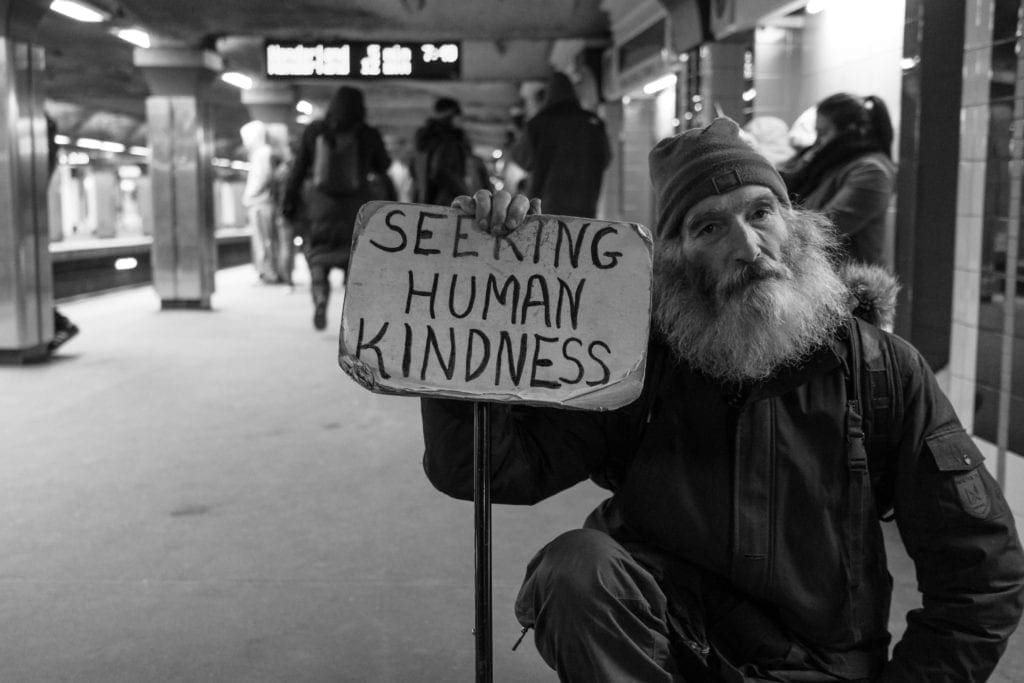
California’s homelessness problem is still here, even after city officials funneled millions in federal money to its epicenter, Downtown Los Angeles. But as a great number of people continue to live in the streets, officials struggle with yet another issue: increased crime rates.

A local NBC affiliate reports that Los Angeles police are scrambling to keep up with the number of crimes involving homeless suspects. And in January, this number increased once again, reaching the 920 incident mark during the first month of the year. According to LA officials, that’s a 29 percent increase from January 2018.

The number of crimes naming the homeless as victims also increased by 22 percent.

The noticeable increase, LAPD Commander Dominic Choi told reporters, is not as much about more crime being committed as it is about more crimes being reported.

“There’s an awareness and [people] are reporting more, our coding is better so we’re capturing a lot more, and, quite frankly, there are more victims out there,” he said. Still, the fact officials are only now managing to properly categorize these crimes doesn’t change the fact the city’s homelessness problem is making the entire region less safe, for both residents and the homeless.

For instance, homeless suspects were connected to 101 of the 731 cases of aggravated assaults reported in January. And out of all the aggravated assault cases happening in downtown Los Angeles, officials add, nearly half were reportedly committed by homeless suspects.

In one case, a 31-year-old suffered a collapsed lung and other critical injuries in a knife attack committed by a 45-year-old man described as an “unemployed transient.”

A 67-year-old man was also severely injured and placed in a medically-induced coma after a man with no permanent residence beat him and smashed him with a table. And in yet another horrific case, a man was pushed off a sidewalk and into the path of an oncoming truck and suffered major injuries. His attacker, a man described as a transient, was later arrested.

Despite this reality, the city maintains that the number of people living in the streets has fallen in 2018. But, the three percent drop hasn’t seemed to make crime involving the homeless less likely. And with the state’s suffocating housing policies still in place, it’s clear we’re not even close to seeing a real solution to this problem.

Government Is Why California Has A Homeless Crisis

Being the state with the worst poverty rate in the country, California also trails behind when it comes to housing. But with more than four in every 10 households spending more than 30 percent of their income on rent, it’s clear that things aren’t getting easier.

But why is it so hard to find affordable living structures in the Golden State? Well, when there’s a shortage of units, there’s a huge spike in costs. And as counties and other local government bodies continue to impose restrictive land-use regulations, builders cannot build.

With a lower supply of housing available, the growing demand sees no alternative. In the end, this cycle forces people to take on desperate measures.

With other restrictive policies in place such as high minimum wage laws and environmental regulations, businesses also suffer either because it’s hard to fill up positions or because it’s nearly impossible to obtain permits to carry out projects.

The housing industry suffers the most, as it requires resources that impact the environment.

If city and state officials truly cared about the crisis, they would push for deregulatory policies, not more government intervention in the economy. Unfortunately, that might not be in the cards for the Golden State any time soon.

A California Charity Becomes a Casualty of City Regulators

Charity is a beautiful thing that everyone tends to support, regardless of creed or partisan slant. However, there is a strange concept of “forced” charity that both Republicans and Democrats try to enforce in their own various ways. Whether it is through entitlements, bailouts, or pork spending, some in government think that their involvement makes everything better, but in reality, those good intentions more often than not have adverse consequences. In a press release issued by the California based charity Deliverance, the non-profit organization which has helped thousands of homeless individuals and those in need, announced that as of January 31st, 2019, the organization will cease to exist. Because of the added requirements and regulations by state entities, Deliverance was no longer capable of maintaining their current operations while at the same time trying to stay afloat as they were drowned by red tape and other expenses thrown at them by the state of California. Deliverance noted the main difficulties they encountered in their statement:
The San Diego Department of Environmental Health established requirements for LSCFOs [Limited Service Charitable Feeding Operation]. If an organization is distributing prepackaged, non-perishable food, or whole uncut produce, no action is required. However, if the organization wishes to prepare food for distribution, the LSCFO must register with SDDEH [San Diego Department of Environmental Health] and follow established best practices as set forth on their website. The primary change for Deliverance is the requirement that no food may be prepared in a volunteer’s home, which has been our primary method of food preparation. The Board of Directors discussed options for utilizing an existing food prep facility, but due to the distributed nature of the organization, this option would prove to be cumbersome and perhaps only a short term solution to the problem. As a result, Deliverance, San Diego can no longer prepare hot meals for distribution to the homeless population of downtown San Diego without incurring significant logistical and financial costs.
So instead of allowing volunteers to make food in their homes and bring it to those who didn’t have food nor a home, the SDDEH decided it was too risky for all parties involved, thus giving them the grounds to craft the rules and regulations which caused the premature death of this charitable organization. Across the country, there are many cases of state and local governments arresting people for giving food to the homeless. So the question is, in an absence of a private, voluntary exchange between consenting people, what is left? An impersonal welfare state that treats recipients like cogs in machine or numbers on a computer instead of flesh and blood human beings. If the government can create laws that restrict free people from providing a home cooked meal to the homeless, what is there to stop them from crafting a law that prohibits me from giving a pan of brownies to a neighbor? Or an office potluck where everyone brings a meal? This example might sound exaggerative but this whole situation creates a slippery slope for more state intervention in consensual and voluntary exchanges. While the intentions of the regulators might be good, the homeless and needy probably would prefer a free meal instead of going hungry.

Mitigate Climate Change With Mandatory Vegan Meals, LA Councilman Urges

Los Angeles City Councilman Paul Koretz, a Democrat, wants to push veganism down Angelenos’ throats by mandating that all concessionaires at city-owned properties serve at least one vegan dish. The plan would extend its mandate to the city’s Meals on Wheels program, which delivers meals to seniors who are unable to purchase or prepare their own food, and to privately owned venues such as the Staples Center and movie theaters.

Claiming that the city should cut its consumption of animal products in order to reduce greenhouse gas emission, boost animal welfare, and help better the air quality, Koretz seems adamantly opposed to science in his approach to public policy.

After all, “[t]he current CO2-induced warming of Earth is … essentially irreversible on human timescales,” according to scientists from the U.S. National Academy of Sciences and the UK’s Royal Society. So why would a local paperpusher think that forcing eateries to offer vegan meals think he would make a difference?

In a city completely overwhelmed by burdensome regulations, the food industry is already having a hard time navigating the city’s unnecessary restrictions. Restaurants do not operate on big budgets or large profit margins. As such, adding items to their menus because of bureaucracy, not because customers asked for it, means adding unnecessary expenses to their budget. In the long run, this hurts their profits, severely limiting their incentives to stay on business.

If this doesn’t prove Koretz and his colleagues are out of touch, nothing else does, especially considering the recent developments in the agriculture industry.

Bureaucrats Have No Right To Dictate What We Do With Our Property

As pointed out by the Los Angeles Times, avocado farmers from the Mexican state of Michoacán were recently behind a sudden avocado price spike.

Angry with the low wholesale prices they are forced to charge because of the fierce competition, farmers responsible for 90 percent of the avocados we consume in the United States went on a major strike. And as the green, fatty, and delicious fruit ripened on trees, they blockaded truck routes and ran over piles of seized avocados with steamrollers. For a whole week, clients had no ripened avocados to buy, and LA restaurants had to tell their customers that their favorite avocado toast was out of order.

With the drug war ravaging through Michoacán and cartels taking over Mexico’s agriculture industry, it’s not far-fetched to assume that this type of shortages could happen again. But in a Los Angeles where restaurant owners would suffer penalties for not carrying vegan options, a shortage of avocado could translate into closed doors.

Koretz might think he’s looking good by pushing a rule that would force restaurants to cater to an artificially boosted vegan clientele. But what he’ll produce instead is hardship — and all because lawmakers feel entitled to dictating how private individuals should run their own lives.

Businesses are the property of their owners, and as such, they should be free to use the information they obtain from the market to make better-informed decisions. Bureaucrats don’t hold all the knowledge, and forcing their view on business owners is a violation of basic human rights.

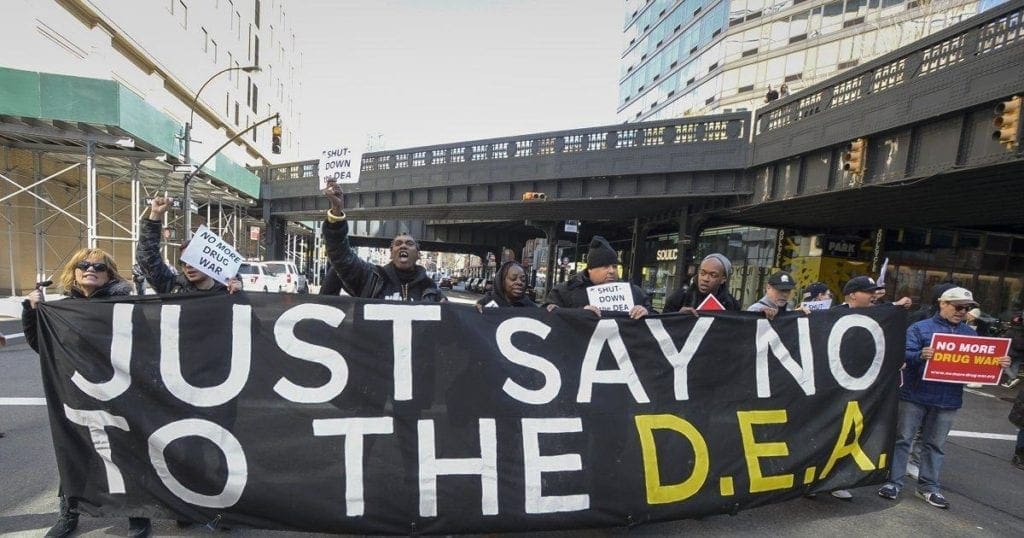
With Arrest Rates at Historic Lows, California Proves it’s Time to End the Drug War

A recent report by the Public Policy Institute of California shows that arrest rates in the state dropped to historic lows. This new development is especially important because it follows the implementation of policies involving the drug war.

In addition to seeing the arrest rates dropping by more than half since 1989, when they were at their peak, the report also found that black people are now three times more likely than whites to be arrested, a drop from the 1990s when they were about 3.6 times more likely to be arrested.

This is not the first report to make a similar claim, as researchers in the University of California, San Francisco, published a study earlier this year demonstrating that criminal penalties for drug possession had dropped since the state passed Proposition 47. Thanks to the new law, penalties for drug-related crimes were reduced as all criminal offenses related to the possession of narcotics, concentrated cannabis, and controlled substances were reclassified as misdemeanors.

Law enforcement in the Golden State is still more likely to arrest blacks than whites, as data shows they account for 16.3 percent of those arrested in 2016 despite accounting for just 5.7 percent of the population. Whites, on the other hand, make up 38.1 percent of the population but are only 36 percent of arrests.

Still, the changes are encouraging, especially if you consider that the drug war has helped to completely destroy the foundations of generations of black families in California.

The Immorality of the War on Drugs

Libertarians understand that the government’s enforcement of laws involving the personal use of substances is nothing but a futile attempt at legislating morality.

You might be completely against putting chemicals in your body and yet still understand that this decision, ultimately, lies in the hands of the consumer — not the state. In addition, when prohibition is in effect, drugs tend to become more dangerous and harmful, as they are only available in the black market.

As we’ve seen in California, a small change in how law enforcement deal with drug-related offenders goes a long way to stop hurting vulnerable communities. However, changing drug offense penalties isn’t enough.

As researchers from the University of California explained, just one month after the adoption of the proposition the disparity between black and white felony drug arrests went from 81 to 44 per 100,000.

This is a stark change from the 1980s, when the state increased its crackdown on the commerce of drugs. At the time, arrests skyrocketed, and blacks were disproportionately affected.

In the end, researchers concluded, the “reclassifying drug offenses to misdemeanors is an effective approach to decreasing felony arrests across racial/ethnic groups.” So if a small change such as Proposition 47 can do a major difference, just imagine what would happen if the federal government put a definitive end to the war on drugs.

Gov. Brown Once Agreed With Trump On Forest Management

After the horrific Woolsey and Campfires ravaged California, killing more than 80 people and leaving thousands without a home, President Donald Trump argued that better forest management could have prevented the devastation. His comments prompted angry responses from California Gov. Jerry Brown, who slammed the president for not mentioning climate change as a factor. But despite his criticism, the president’s argument was not always bemoaned by Brown, who once proposed allowing landowners to thin the forest and build temporary roads to prevent wildfires from spreading.

At the time, members of the timber industry supported Brown’s idea, saying that if they were allowed to cut down trees on their own, they would have extra incentives to help avoid major fires — and the burden wouldn’t fall entirely on the shoulders of the state. Unfortunately, environmentalist groups decried the plan, and Brown didn’t push it further.

Still, Trump was the one who got all the hate from both the media and environmentalists, while few, if any, pointed out to the fact that Brown actually agreed with the president at some point.

Of course, Trump’s argument is partially correct. After all, forest management could have helped to prevent or at least lessen the effects of these wildfires. But when it comes to proper land care, nothing beats the private sector.

After all, private landowners have more than a few incentives to prevent fires altogether, and regular control of potentially dangerous shrubs and other fire-fueling materials such as deadwood is part of that.

A great example of how much better private owners are better at controlling and preventing fires can be found in the very South, where private land ownership is widespread as opposed to the West, where the government owns most of the land.

Self-Interest Could Have Prevented California’s Wildfires

As libertarianism teaches us, there are no rights but property rights. Whether you’re talking about self-ownership or wildfire preventions, a piece of land, like any other property, will always be better cared for if someone owns it.

When self-interest is at play, property owners will take actions that preserve the land and, as a result, help to preserve and protect neighboring land as well.

If Brown or Trump truly cared about California’s residents, their property, and their lives, they would be advocating for a change in policy that would increase the number of private landowners in the West, not putting more managing responsibilities in the hands of the state.