












Beta

Password Reset Confirmation

If an account matching the email you entered was found, you will receive an email with a link to reset your password.

Welcome to our Beta

The Advocates of Self-Government is preparing a new experience for our users.

User Not Found

The username/email and password combination you entered was not found. Please try again or contact support.

Skip to main content

Quizzes & Apps

Articles

Tag: Colorado

Columbine Survivor, CO Minority Leader Supports Armed Teachers

Columbine massacre survivor and now Colorado State House Minority Leader Patrick Neville supports the idea of armed school campuses. Neville recently endorsed the idea of school carry in an interview with NPR in the wake of the STEM school attack in Highlands Ranch, where one student was killed and several others were injured. He argued that the students at the school would have been safer if there had been a legally concealed handgun on campus the day the shooting took place. Neville argued that “I think that probably wouldn’t have – the shooting probably wouldn’t have happened in the first place.” The State Representative then expanded: “One of the reasons I propose this bill year after year is the fact that it’s a major deterrent. If they (school shooters) know they’re going to go in there and face opposition and they don’t know where that opposition’s going to come from, they’ll probably think twice about doing it in the first place. So I think they probably would have been safer had it actually broken out. But I think it probably would have prevented it from even happening in the first place.” Neville is onto something when discussing campus security. Since the Gun-Free School Zones Act of 1990 was signed into law, schools have effectively turned into soft targets for mass murderers. Research has indicated that the overwhelming majority of shootings take place in these areas, roughly 98 percent to be exact. However, there are signs that this trend could be reversed with Florida signing Senate Bill 7030, which gives school boards the power to allow trained teachers to be armed on campus. Although this legislation is not the ideal libertarian solution, it’s a step in the right direction. SB 7030 reasserts local autonomy for schools while also gradually advancing the idea of an armed campus. Colorado is definitely in need of such legislation. Once one of the most pro-gun states in the country, Colorado has slipped in recent years thanks to gun control measures passed after the Aurora shooting in 2012. Now, Guns & Ammo magazine puts it in an abysmal 40th place in its ranking for most gun friendly states. Representative Neville is on the mark when it comes to armed campuses. Getting teacher carry passed in Colorado at the very least would stem the tide of gun control that’s been surging in the state for the past decade.


Public Sector Unionization Will Put Colorado on the Path to Stagnation

Despite being a leader in the area of marijuana legalization, Colorado might be on the verge of taking a step backward in labor freedom. The introduction of House Bill 19-1273 in the 2019 session of the Colorado General Assembly would allow state employees to have a union represent a single department or all state workers. Additionally, HB 19-1273 delineates a process for those entities to negotiate contracts over benefits, wages, and work conditions. If passed, Colorado Public Radio reports that approximately 26,500 workers would gain collective-bargaining rights. This represents an overwhelming majority of the Colorado state government’s “certified workforces”, which are mostly made up of employees in executive branch officers and departments. Employees of the Colorado state government have sought collective bargaining rights for years. With favorable political winds blowing in 2019—A Democratic trifecta in all chambers of the state legislature—this could finally become a reality this year. Advocates contend that collective bargaining would be a step in the right direction for state workers who have complained about low pay and understaffing at state agencies. Opponents worry, and rightfully so, that public sector unionization would limit the power that legislators and taxpayers have in terms of spending. With state spending taken out of the hands of legislators, who theoretically can be held accountable by voters, and instead put it in the hands of bureaucrats and arbitrators, this can lead to financially reckless outcomes. A Heritage Foundation study highlighted how public sector monopoly bargaining costs the average family of four up to $3,000 in taxes per year in states that have fully unionized its sector. States like California have witnessed public sector unions take taxpayers hostage in order to obtain as much government privilege as possible at current and future taxpayers’ expense. Public sector union benefits are at the heart of California’s flimsy pension system. The same Heritage study contends that California could have saved anywhere between $11.6 billion to $24.2 billion in taxpayer dollars had it prohibited collective bargaining in the public sector. Over the years, Colorado has built a reputation as a state that respects economic freedom. According to the latest Freedom in the 50 States index, Colorado is ranked in 4th place for overall freedom. However, a public sector union bill like HB 19-1273 would go a long way in undermining Colorado’s otherwise pristine economic state. Like burdensome taxation, public sector unions are fixtures of many blue states that are witnessing the capital flight. The passage of HB 19-1273 could be a Rubicon moment for Colorado as its enactment could lay the groundwork for a litany of anti-growth policies in the years to come.

Friendly Cryptocurrency Environment Coming to Colorado

Typically when you hear the words “cryptocurrency” and “regulation” in the same sentence, it includes a sad tale about some dinosaur politicians enacting laws that will restrict consumer access to Bitcoin and other altcoins. Instead – for the first time in the United States –  we might have something that will go ahead and stop those dinosaurs from touching cryptocurrencies in the first place. A recent bill signed in the state of Colorado called the Digital Token Act will essentially restrict regulators from enacting many of the draconian laws the federal government and many other foreign nations have to restrict the access and trading of cryptocurrencies. According to CCN, “The new legislation also exempts crypto broker-dealers and salespeople from state licensing requirements under limited circumstances.” This is a brave move for the government of Colorado to place limits on their reach compared to states like New York which has been on a campaign for years trying to kill their booming crypto-industry. The article continues saying that “The pro-bitcoin law is part of a move to elevate Colorado into a tech hub for decentralized ‘Web 3.0’ platforms by making it easier for entrepreneurs to launch blockchain and crypto-centric businesses. Lawmakers hope this will bolder Colorado’s economy by creating new jobs and luring venture capitalists, developers, and investors to the state.” The bill is far from perfect, limiting actions to “consumption” and placing limitations on “speculative or investment” purposes, but in an environment where regulators place limitations on consumers, this bill largely regulates the regulators themselves. Bitcoin and other cryptos are illegal to trade with and mine for in many countries, since the blockchain based technology undermines the rule of authoritarian regimes and enables private transactions to be made between people. For the last several years especially, regulators in the United States have been trying with little success to stamp out the wild west of crypto and bring it under their control. Libertarians believe that sound money is a natural right to all free men and women and that the market is the ultimate determiner of what consumers decide to trade as value for value. Whether its physical gold coins or a Bitcoin wallet on your phone, consumers have the right to opt out of government-backed fiat currency powered by private, central bankers if they so choose.

Supreme Court: Baker Can Exercise Religion Freely

The Supreme Court has ruled that Colorado baker Jack Phillips was unfairly treated because of his religious views. Effectively, this means he had, indeed, a right to refuse service. But was the Supreme Court right to focus on his freedom of religion rights? Or should the justices have looked at this issue as a private property case?

The Christian bakery owner cited his Christian faith in 2012 when he told David Mullins and Charlie Craig that he couldn’t bake them a cake to celebrate their upcoming wedding.

“I didn’t want to use my artistic talents to create something that went against my Christian faith,” Phillips told reporters.

Adding that he also refused to bake Halloween cakes, the baker explained he actually offered the two men to bake other goods, letting them know that he would not bake a cake celebrating the union of two men.

Unfortunately, he said, the men “stormed out and left.”

Instead of going to another bakery and letting this go, Craig and Mullins filed a formal complaint with the Colorado Civil Rights Commission. After the commission sided with the men, Phillips took the case to the Colorado Court of Appeals, where he was prohibited from discriminating against potential customers over their sexual orientation.

The baker then took the case to the Supreme Court where the justices ruled in his favor.

Freedom To Exercise A Religion Is Just Another Property Right

Seven of the ten justices agreed that the Colorado Civil Rights Commission was hostile toward the baker because of his religious beliefs. So in the eyes of the Supreme Court, this case was simply about religious liberty.

The Colorado Civil Rights Commission was acting on its bias against Christians when they ruled against the baker, the justices ruled, thus making this case about the First Amendment.

But while this ruling was positive in the sense that it finally allowed Phillips to rest assured that he didn’t have to be forced to bake cakes, this case has absolutely nothing to do with freedom of religion or speech. Instead, this case is just another example of the importance of property rights.

As Ryan McMaken explains for the Mises Institute, government-backed bigotry is far more tyrannical and dangerous than bigotry that comes from a private business. And that’s because businesses who are free to associate with whomever they wish are also free to refuse service to people for a variety of reasons. By the same token, consumers are free to boycott said businesses if they don’t agree with their refusal to serve a particular class of customers.

But government has the power to destroy a business simply because it doesn’t always recognize the individual’s right to private property and freedom of association.

As Austrian economist Murray Rothbard explained, “there [are] no human rights which are not also property rights.” And while we like to discuss freedom of speech and religion as “rights,” the only right needed to justify both is the right to property. So while it’s certainly a victory for liberty that the baker from Colorado was able to secure his right to refuse service to whomever he wishes, it’s still far from a true win, as the case didn’t revolve around his right to ownership over his business, work, and will to associate freely.

And yes – if you don’t agree with the baker, you are absolutely free to boycott his services.

No Property Rights: CO Supreme Court Allows Cops to Destroy Seized Pot

The Colorado Supreme Court has ruled that police are allowed to destroy marijuana seized in criminal investigations, reversing the requirement that police store marijuana as personal property. Property Rights According to the Associated Press, local police disliked the requirement that forced officers to care and store marijuana gathered as evidence correctly. As a result, the recent decision has been welcomed by local law enforcement. The decision stems from a 2011 case revolving around a medical marijuana patient from Colorado Springs whose plants were seized after he was accused of having more plants than allowed by law. Currently, residents are allowed to grow up to 12 plants . As a result of the investigation, the Colorado Springs resident lost more than 60 pounds, which were held by the police and then returned moldy. While the accused was later acquitted, he lost access to his possessions because of police’s lack of proper care to the product. According to Colorado Justice Allison Eid, a possible Supreme Court nominee, the return provision that had been en vogue violates federal law. The decision supported that Colorado law enforcement should thus follow federal rules, despite comments made by dissenting judges who argued that the return provision does not violate federal law. To libertarians, this decision sounds beyond appalling for a simple reason: it ignores property rights altogether in the name of the U.S. government’s long lasting war on personal choice — also known as the war on drugs. While Colorado set an example to the entire country by legalizing marijuana for recreational use, restrictions concerning growth of the plant require law enforcement officials to violate property rights of the individual in question by not allowing individuals to do what they please in their own property. And by ruling that even during an investigation seized marijuana is not to be treated as personal property, the state’s highest court just emphasizes both the state and local governments’ lack of dedication to the individual’s right to the fruits of his labor. Instead of spending precious resources seizing, investigating, and arresting individuals for exercising their right to keep and maintain personal property, it’s time to put an end to the madness that the nationwide war on substances seen as immoral or damaging. After all, it’s up to the individual whether he is willing to expose his own body to whatever substance available or not. And the government has no moral obligation to stop him.

Drug War: CO Residents Treated as Criminals in Neighboring States

Drug War: CO Residents Treated as Criminals in Neighboring States

This article was featured in our weekly newsletter, the Liberator Online. To receive it in your inbox, sign up here. Colorado was the first state in the nation to legalize recreational marijuana. But while freer drug markets have also helped to boost other aspects of Colorado’s economy, issues associated with other state-run agencies were never fully addressed, mainly how law enforcement’s long-lasting love affair with targeting drug users and dealers hasn’t really changed. Traffic StopEver since recreational marijuana was made legal, Tech Dirt reports, law enforcement agencies in neighboring states inched closer, considering any road coming out of Colorado a “drug corridor.” Due to this approach to drug-related law enforcement, several unconstitutional stops and seizures have been taking place at the borders surrounding Colorado. Recently, one of the incidents in which out of state officers attempted to send innocent travelers to jail turned sour—for the Kansas police. The Tenth Circuit Court of Appeals ruled that a traffic stop carried out in Kansas was unconstitutional because the driver involved did not commit a crime by traveling from a state where marijuana is legal. After all, Tech Dirt adds, “it isn’t against the law to conspire to perform an act that is legal in another state.” The incident that prompted the court’s decision involves Peter Vasquez. Originally, Kansas Highway Patrol officers claimed they pulled him over because his vehicle’s temporary tag was unreadable. But moments after his tag was verified, officers launched an expedition to find out whether the Colorado resident had any illegal substances in his vehicle. While Vasquez was in the car, one of the officers told the second agent that Vasquez was “notably nervous,” urging the officer to “get a feel for him” to see “how nervous” he was. Once the second Kansas officer returned, he allegedly said Vasquez was “scared to death.” After checking Vasquez’s insurance and noticing he had added two new cars to his policy, one of the officers assumed Vasquez had been transporting illegal drugs. That’s when the K-9 unit was called. During a quick interrogation, officers learned Vasquez owned a boutique, and that the newer car he had bought was given to his girlfriend. Once Vasquez told the officers he was moving to Maryland, they urged the driver to disclose the location of his belongings. Vasquez answered that he had already moved most of his belongings. After issuing Vasquez a warning, officers continued to pressure him to give them consent to search the vehicle. But the attempts were fruitless. As a result, the officers decided to consider his stand was enough to prove Vasquez had something to hide. Because one of the officers believed Vasquez was “probably involved in a little criminal activity,” they arrested him. Once the dog was summoned, it failed to bark at anything in the vehicle. Nevertheless, cops went further, searching the vehicle on their own anyway. They also found nothing. After the ordeal was finally over, Vasquez sued the Kansas Highway Patrol officers over their illegal search. In their defense, officers involved claimed that the fact Vasquez was driving alone at night in a “known drug corridor” made him a suspect of taking part in illegal drug activities. Officers also claimed that, the fact Vasquez’s back seat “did not contain items” the law enforcement duo expected to see “in the car of someone moving across the country,” and the fact he seemed nervous, where all reasons for them to arrest him. Thankfully for Vasquez, the judge ruled the officers’ conduct unreasonable and unconstitutional. While this is a victory for this one individual, it’s disturbing to learn that law enforcement agencies see residents of a state where marijuana is legal as “instant criminals.” When looking for what the drug war has accomplished over the years, look no further. Officers now consider anyone from Colorado a potential suspect. Even if drugs aren’t involved. That, and that alone, is what the drug war has produced.

Nullification Works, Colorado & Other States Show How

Nullification Works, Colorado & Other States Show How

This article was featured in our weekly newsletter, the Liberator Online. To receive it in your inbox, sign up here. Colorado, the state of legal recreational marijuana, may soon be able to kick the federal government’s erratic surveillance policies to the curb, proving that state nullification is worth the effort. Iphone A bill signed into law earlier this year that has been active since May 11, 2016 applies state law rules to federal agencies, effectively barring agencies such as the Bureau of Land Management (BLM) and the U.S. Forest Service (USFS) from taking actions locally that infringe on certain rules. The result is important, since the refusal to enforce federal rules on Colorado soil means that federal acts that go against the Constitution could be thwarted. The piece of legislation (HB1109) was a bipartisan effort that, according to Tenth Amendment Center’s Mike Maharrey, could help to put an end to federal efforts that infringe on Americans’ constitutional rights such as the National Security Agency’s mass surveillance programs. Since massive databases used by the NSA require a great deal of water to keep computer systems cool, refusing to provide resources to federal agents may help to prevent the expansion of the surveillance state. This type of approach to federal laws has been upheld in court in the past. In 2007, when the federal government sued the state of Nevada for refusing to give the Department of Energy (DOE) access to its water supply to build a nuclear waste disposal site on Yucca Mountain, US District Judge Roger L. Hunt ruled that the state of Nevada had a right to say no the federal government, basing his decision on the fact that state rights are protected and shouldn’t be violated by a federal agency. Maharrey explains that the legal basis for this refusal to cooperate is known as the anti-commandeering doctrine, which came to be due to four Supreme Court cases, including the Printz v. US from 1842 that serves as the doctrine’s cornerstone. The anti-commandeering doctrine reassures the states that they are free to refuse to cooperate, while also making it clear to the federal government that its agents are prohibited from forcing state officials to comply. If Colorado is able to use its water rights to thwart the growth of programs that effectively infringe on our constitutional rights, that means that other states may join the effort. Recently, Louisiana took an important step toward hindering the surveillance state by passing a law that requires a court order for the use of stingray technology, which is often used by law enforcement to track the location of phones and give officers access to their contents. The law is now into effect. Illinois has also passed a very similar bill, which will go into effect on January 1, 2017. According to the bill’s wording, stingray technology use will also be restricted by court orders. But the bill goes further by prohibiting the use of the technology to gather the contents of phones targeted by law enforcement. Instead, officials with a warrant will only be able to use the stingray system to track the location of a device or identify it as a communications device, effectively protecting the individual’s conversations.

As Use of Pot Drops, Prohibitionists Must Look Elsewhere for Pro-Drug War Arguments

As Use of Pot Drops, Prohibitionists Must Look Elsewhere for Pro-Drug War Arguments

This article was featured in our weekly newsletter, the Liberator Online. To receive it in your inbox, sign up here. The Washington Post has recently reported that rates of marijuana use among teens who reside in Colorado are unchanged when compared to data gathered before state voters legalized marijuana in 2012. WeedIn 2009, a survey showed that 25 percent of Colorado youths had used marijuana in the past 30 days but in 2015, only 21 percent of youths did the same. The survey was carried out among random middle and high school students across the state. According to the Colorado health department, the agency behind this survey, the use of marijuana among teens has not increased since legalization. A fact many drug warriors did not predict before voters decided to make the recreational use of the plant legal across the state. In the past, opponents of legalization made the case that lifting restrictions on access to weed would push the number of teen smokers up, but as the number of marijuana use nationwide is falling considerably, prohibitionists begin to panic. According to Mason Tvert, the Marijuana Policy Project’s director of communications, the theory that “making marijuana legal for adults will result in more teen use” has been clearly debunked with the help of these surveys. “Levels of teen use in Colorado have not increased since it ended marijuana prohibition,” Tvert added, “and they are lower than the national average. Elected officials and voters in states that are considering similar proposals should be wary of claims that it will hurt teens.” But the fight against prohibition continues to win new supporters, even as prohibitionist politicians continue to put failed policies before real progress. Most recently, a group known as Arkansans for Compassionate Care submitted 117,649 signatures to the secretary of state urging the state to place a proposal on the ballot that would legalize medical marijuana. The proposal would help people with certain medical conditions have access to marijuana products with the help of a doctor’s recommendation. While the signatures haven’t been confirmed, the group needed 69,000 signatures from registered voters to have the initiative added to the ballot. Two other groups in the state of Arkansas are also gathering signatures for other proposals, one that would legalize medical marijuana and a second that would legalize recreational weed. At least 25 states and Washington D.C. currently have laws legalizing marijuana in some form, with Ohio being the latest state to allow residents suffering from chronic pain, epilepsy, or side effects of cancer treatments to be treated with the help of cannabis. As more states where the use of cannabis is legal investigate the use of its residents, it becomes clearer that freedom—not the government’s micromanagement skills—works.

More Members of the Law Enforcement Community Join the Fight Against Tough Marijuana Laws

More Members of the Law Enforcement Community Join the Fight Against Tough Marijuana Laws

This article was featured in our weekly newsletter, the Liberator Online. To receive it in your inbox, sign up here. Ever since the state of Colorado decided to set an example to the nation by practically nullifying the federal ban on the commerce of marijuana, legislators in many other states also acted on the marijuana ban locally. But as more and more lawmakers embrace a more humane approach to marijuana laws, and several states show signs that the times are changing, it’s even more interesting to see that members of the law enforcement community are also giving in to the “trend.” PoliceWith the help of organizations like the Drug Policy Alliance and the National Organization for the Reform of Marijuana Laws (NORML), two groups working alongside free marketers, marijuana researchers, freedom advocates, and Tenth Amendment champions, a greater number of states now have policies that lessen the consequences of the nationwide drug war, granting marijuana users and sellers the guarantee that their transactions won’t be targeted by law enforcement under certain circumstances. According to PennLive.com, Harrisburg Police Chief Thomas Carter has shown signs that he supports some pro-marijuana advocates in Pennsylvania by urging local policymakers to reduce the penalties for marijuana possession. While Carter believes young people should avoid marijuana, he also believes that individuals caught using marijuana should not go to jail. Instead, Carter wants to treat the offense as a traffic ticket. “We can turn our heads and deny we have a marijuana problem among our youth or we can proactively take action,” Carter told reporters. Instead of putting these kids in jail and ruining their lives, “I want to give kids a chance, an opportunity to make something better of their lives.” The comment may have shocked many who were expecting to hear a tough on crime approach to what Carter calls a “marijuana problem,” only to be pleasantly surprised. Last Tuesday, Carter appeared with other Harrisburg officials at a news conference to discuss the city’s efforts to lower the number of marijuana possession charges. This meeting follows the introduction of a proposal sponsored by Harrisburg Mayor Eric Papenfuse, who hopes to reduce the level of crime for possession of less than 30 grams of marijuana to a summary offense. As it stands, possession is handled as a misdemeanor locally. But to critics of Papenfuse’s proposal, the new policy would force poor residents to pay steep fines. Currently, residents in the cities of Philadelphia and Pittsburg pay a $25 fine for a first marijuana possession offense. But in Harrisburg, residents caught with pot would have to pay $100 for their first offense if the proposal becomes an ordinance. Regardless of whether the proposal becomes an ordinance, the fact the law enforcement community in various areas across the country are joining anti-drug war advocates is important, and shouldn’t be ignored.

What is a Libertarian Win? Part 2

What is a Libertarian Win? Part 2

This article was featured in our weekly newsletter, the Liberator Online. To receive it in your inbox, sign up here. **Note: This is the second part of an article focused on wins for libertarians. You can find the first part, focused on electoral politics, here.** Outside of winning your election as a candidate or some of the other wins we shared in Part 1, libertarians can win in other ways as well.
  • winWinning a voter referendum. Colorado, Washington, Alaska, and Oregon re-legalized the possession and use of marijuana recreationally. About half of the states that legalized marijuana for medical use did so through ballot measures. These popular votes increased freedom for everyone in their respective states and pressured nearby states to “keep up with the Joneses.” These referendums gave libertarians an opportunity to share a message about the freedom to choose what goes into your body. Statewide ballot measures are not the only opportunities to share a freedom-oriented position on an issue. Local tax referendums take place across the country, and are a great opportunity for a win for libertarians. We can highlight wasteful spending, cronyism, and the proper role of government in opposition to the proposed tax. Who votes to tax themselves? 
  • Lobbying for legislative action. Referendums are not the only avenue for libertarian legislative wins. Strong working relationships with legislators and their staff can yield positive results for liberty if you work with them to pass freedom-oriented bills. This can be a difficult route, even if you have legislators friendly to the issue you’re working on. This will also require some coalescing with other groups with a similar interest and potentially compromising to get some of what you seek. This is easier with the more populist beliefs we hold.
  • Disruptive innovation. Almost entirely outside of politics, free market innovations that revolutionize industries and change the way we do things disrupt the status quo and offer another win for libertarians. Innovations like Uber, Airbnb, and Amazon transformed transportation, travel lodging, and retail sales. Until your innovation affects Big Government and their cronies, this won’t become a political issue. As Uber, Airbnb, and Amazon can tell you, the politicization of innovation will get you interested in politics, no matter the level of interest you held before.
Can you think of any other ways a libertarian can win?

When Will the EPA Adequately Clean Up Its Mess?

When Will the EPA Adequately Clean Up Its Mess?

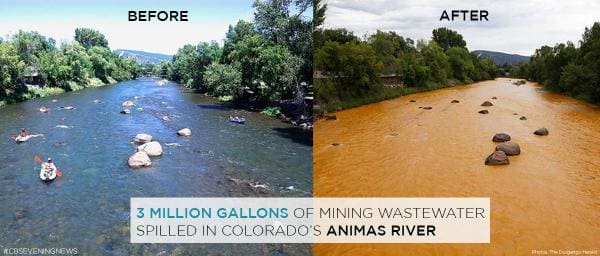
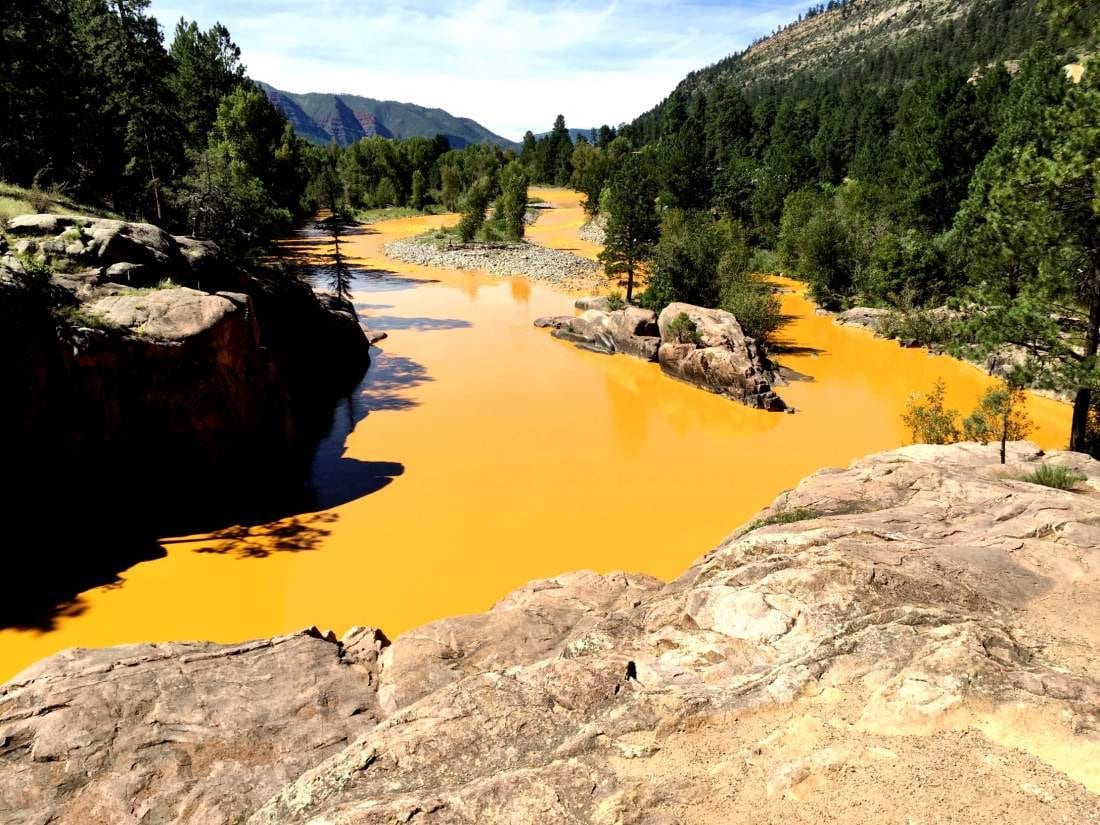
This article was featured in our weekly newsletter, the Liberator Online. To receive it in your inbox, sign up here. On Sept. 2, the Environmental Protection Agency officials released new data that indicates that surface water concentrations from the Animas River are returning back to normal. Samples collected on Aug. 16 and 17 “have been validated,” the agency said. animasThe EPA review of the data included a comparison to screening levels for exposure during recreational river use to see if the metal concentrations in the water are consistent with levels prior to the disastrous 3 million-gallon spill that contaminated the river in early August. “Based on the results of the surface water samples in the Animas River, surface water concentrations are trending toward pre-event conditions,” the EPA said. However, experts say that metals lining the riverbed could continue to cause long-term effects for agriculture, aquatic life and the health of those along the Animas River. “The long-term effects are the concern that every time we have some sort of a high-water event, whether a good rain in the mountains or spring runoff next year, that’s going to stir up sediments and remobilize those contaminants that are sitting at the bottom of the river right now,” said Ty Churchwell, Colorado backcountry coordinator for Trout Unlimited. Experts stress that the current disaster will severely damage the Animas’ fish population – one that has been diminished by heavy metals and sedimentation for years. The river has seen an almost 80 percent decline since 2000 in the fish biomass – the weight of all the trout collected in a certain area, said Jim White an aquatic biologist for Colorado Parks and Wildlife. Navajo Nation leadership also voiced fears of long-term impact as the contaminants from the Animas flowed into for 215 miles through Navajo land. On Aug. 5, a team of workers contracted by the EPA spilled 3 million gallons of orange-colored waste from the Gold King Mine into the Animas River in Colorado. The pollutants flowed into New Mexico where it merged into the San Juan River, a critical source of water for Navajo communities. Navajo Nation Office of the President and Vice President released a statement to the public in regards to FEMA and the EPA’s refusal for assistance in cleaning up the toxic water in the San Juan River:
“We are extremely frustrated with the news that both FEMA and the U.S. EPA have declined our urgent requests to continue assistance to the Navajo Nation. U.S. EPA caused this entire disaster, they have harmed the people, the water and the land. I appreciated the fact U.S. EPA took responsibility and I was hoping for the U.S. EPA to prove to the Navajo Nation they are willing to hold themselves accountable. This action clearly shows otherwise. For years, we have consistently been at the receiving end of toxic spills and contamination with no adequate relief as the United States Government and Private Companies became wealthy off of the natural resources of the Navajo Nation.
The EPA doesn’t seem to want to help the people that will be affected by their government intervention for the long-term. If these communities aren’t given adequate help in the wake of this environmental disaster, there could be thousands of people that suffer for years to come.

381 Million Taxpayer Dollars Turned to Sludge

381 Million Taxpayer Dollars Turned to Sludge

This article was featured in our weekly newsletter, the Liberator Online. To receive it in your inbox, sign up here. On Aug. 5, a team of workers contracted by the Environmental Protection Agency (EPA) spilled 3 million gallons of orange-colored waste from the Gold King Mine into the Animas River in Colorado. The pollutants flowed into New Mexico where it merged into the San Juan River, a critical source of water for Navajo communities. Local citizens and lawmakers alike are outraged by the lack of transparency from the EPA for the spill and now, the amount of tax dollars given to the firm responsible. Colorado and New Mexico are now in a state of emergency because of the accident. RiverNew Mexico governor Susana Martinez said in a press release that she is “concerned about the EPA’s lack of communication and inability to provide accurate information.” Stating that, “one day the spill is 1 million gallons, the next day, 3 million.” Part of the frustration is the EPA’s failure to disclose the name of the contractor responsible to law makers and media outlets. However, the Wall Street Journal (WSJ) reported that a Missouri-based firm, Environmental Restoration LLC (ER), was the “contractor whose work caused a mine spill in Colorado that released an estimated 3 million gallons of toxic sludge into a major river system.” According to a WSJ review of data, ER received $381 million in government contracts since October 2007, approximately $364 million from the EPA and $37 million from work performed in Colorado. That $381 million is a large chunk of change for taxpayers to spend to have pollutants that were carried to the Shiprock community on the Navajo reservation. Despite preliminary tests showing minimum adverse health effects, Shiprock Chapter President Duane “Chili” Yazzie told CNN that he is waiting for a definitive all-clear before using river water on crops. “Our community here, the very critical nature of our predicament is that we are a river-based community and we’re a strong agricultural community and the impact is very, very tremendous,” Yazzie said. Around 750 families rely on the river to grow melons, corn and other crops. According to CNN, the Navajo Nation is the first to announce legal action against the federal government. Yazzie said the EPA didn’t alert them about the spill until 24 hours after the incident, placing tribe members’ health at risk. Navajo Nation President Russell Begaye told CNN that the spill will have a “destructive impact on the ecosystems…that the Navajo culture depends on.” Begaye also said that the Navajo Nation intends to “recover every dollar it spends on cleaning up up this mess and every dollar it loses as a result of injuries to our natural resources.” Beyond the obvious economic impact, it is the cultural and traditional impact on the community that is the most agonizing. The river represents a spiritual element that is the basis of the tradition of the Navajo religion and for it to be harmed is spiritually, emotionally and psychologically very difficult, Yazzie said.