












Beta

Password Reset Confirmation

If an account matching the email you entered was found, you will receive an email with a link to reset your password.

Welcome to our Beta

The Advocates of Self-Government is preparing a new experience for our users.

User Not Found

The username/email and password combination you entered was not found. Please try again or contact support.

Skip to main content

Quizzes & Apps

Articles

Tag: economic liberty

New California Law Will Hurt the Rideshare Industry

A Jalopnik writer, Aaron Gordon, claimed that Uber and Lyft don’t have a right to exist in an article for the automotive news and opinion website. He specifically talks about how ridesharing companies currently treat employees as independent contractors. Gordon covered Assembly Bill 5, a recently signed California law that would label gig economy workers as employees rather than independent contractors. Uber and Lyft expressed concerns about how AB 5 would hurt their business. In this regard, they may be on to something. But this goes beyond profit, as such a designation would hurt and price out many potential workers that could greatly benefit from the new opportunities that the gig economy provides. By making these companies treat their drivers as employees, they could potentially subject them to arbitrary labor regulations and even make them susceptible to coercive union politics. Minimum wage, paid sick days, and health insurance benefits are just some of the requirements that could be forced upon these companies. In turn, these companies will have to lay off employees or cut their hours just to be able to comply with these costs. Workers who are traditionally down and out can at least do ridesharing work to stay afloat in the interim. This beats being unemployed, turning to public assistance, or engaging in antisocial behavior such as crime. On top of that, the gig economy represents a revolutionary development in the workplace that doesn’t require workers to be tied down to fixed locations or rigid work schedules. Sadly, this kind of legislation seems like something that would come out of the California legislature. After all, California is notorious for its oppressive tax system, which mirrors the federal government’s convoluted system. As if heavy taxation wasn’t a strike against it, the state features a host of anti-growth policies such as public sector unionization and restrictive land-use regulations. AB 5 is definitely in the same spirit of restrictive economic policies that have made California much harder to live and work in. Instead of trying to comply with this onerous legislative proposal, the rideshare companies offered a reasonable alternative where drivers would earn “a minimum of approximately $21 per hour while on a trip, including the costs of their average expenses.” On top of that, they proposed  “robust new benefits such as paid time off, sick leave, and compensation if they are injured while driving.” However, lawmakers weren’t buying that. By signing AB 5 into law, cities like Los Angeles and San Francisco are now joining New York City in heavily regulating the rideshare industry. Last month, New York City limited the number of vehicles that rideshare companies could use within city limits. If other cities start putting the clamps on Uber and Lyft, it will be much more difficult for them to conduct business. For those concerned about employee welfare, trying to regulate these companies even further is the wrong way to approach this matter. These companies are within their rights to negotiate how they structure their relationship with their workers. That’s freedom of association in its purest form. Yes, there is plenty to be done in order to improve workers’ standards of living. But most would be shocked to find out that it won’t involve government. In fact, it means scaling back the large array of regulations that burden California’s economy. According to the Cato Institute’s Freedom in the 50 States index, California is ranked in 48th place for overall regulatory policy, indicating that it has too much regulation that inhibits the formation of new businesses and stifles economic growth. AB 5’s passage will only solidify California’s status as one of the most anti-business states in the nation.

John Stossel Commends Trump for Deregulation

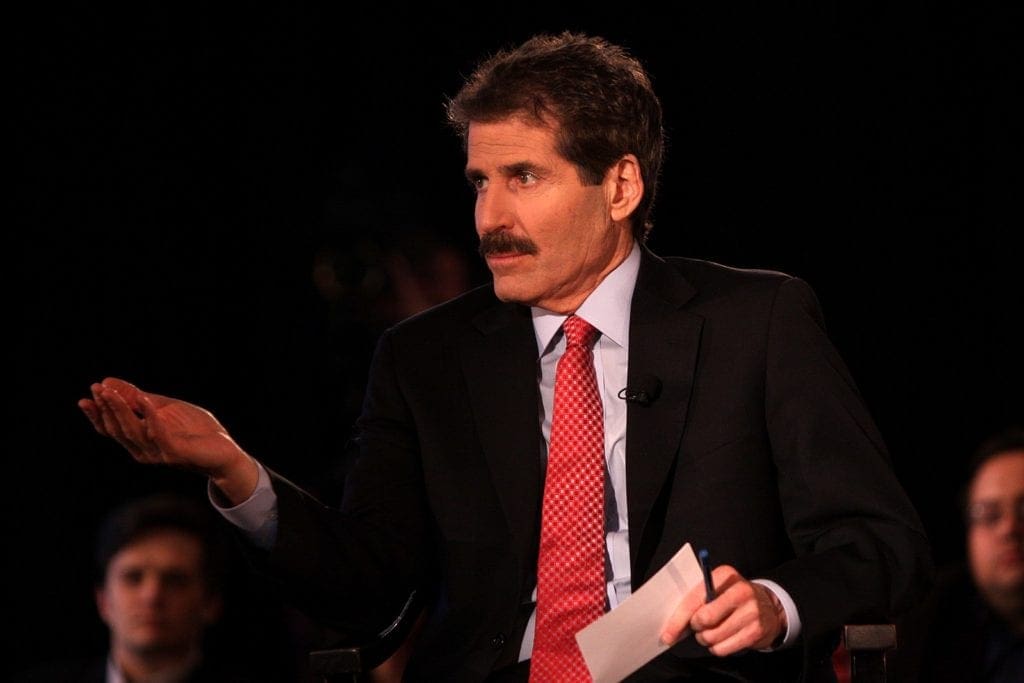
Probably one of the more underrated aspects of the Trump administration has been his deregulation agenda. His efforts to scale back the administrative state have even earned him praise from TV pundit John Stossel. Stossel has been a staunch libertarian for decades and one of the strongest advocates for small government in America. Receiving praise from him is no small feat. He correctly noted in one of his latest columns that Trump’s experience as a developer makes him sympathetic to deregulation. Businessmen, big and small, must put up with the U.S.’s burdensome regulatory state. With Trump in office, there was at least a chance to hack away at these barriers. However, politics has shown time after time that talk is cheap. Stossel was right to be skeptical at first. The journalist aptly highlighted that “Republicans often talk deregulation but then add rules. People called President George W. Bush an “anti-regulator.” But once he was president, he hired 90,000 new regulators!” Nevertheless, Trump hired numerous officials who were skeptical of regulation such as Mark Calabria to help reform certain aspects of housing regulations. Trump also scored some notable deregulation victories by repealing an Obama-era plan to place franchise businesses like McDonald’s as single businesses. Grover Norquist noted that this policy was a boon for trial lawyers. “The trial lawyers want to be able to sue all of McDonald’s, not just the local McDonald’s if they spill coffee on themselves,” claimed Norquist. “And the labor unions want to unionize all McDonald’s, not just the one store. That would have been a disaster.” The President’s FCC also repealed the Obama administration’s “net neutrality” policies which would have greatly restricted internet providers’ freedom to charge prices at market rates. Despite marketed as a way to protect the Internet from predatory companies, the regulations that “net neutrality” entailed would have actually hurt smaller internet service providers and limit competition. A bad situation overall for consumers. Trump’s most notable reform during his administration was his executive order which eliminated regulations at a 2:1 ratio. This has helped businesses of all sizes in America get some breathing room to operate. Like the current tax system, the administrative state is all-encompassing in its reach and curtails the formation of new businesses and investment opportunities that America needs to grow more prosperous. Estimates from the Competitive Enterprise Institute (CEI) put th ecost of federal regulations at $1.9 trillion— a steep cost that American consumers and businesses must bear in the boardroom and at the store counter. These de-regulatory reforms are good first steps. For that reason, Trump should continue breaking the shackles of the administrative state by cutting off funding to bureaucracies and repealing bad laws. Our bloated government is in desperate need of a die
Robert Mugabe’s Death Leaves Behind a Legacy of Economic Despotism

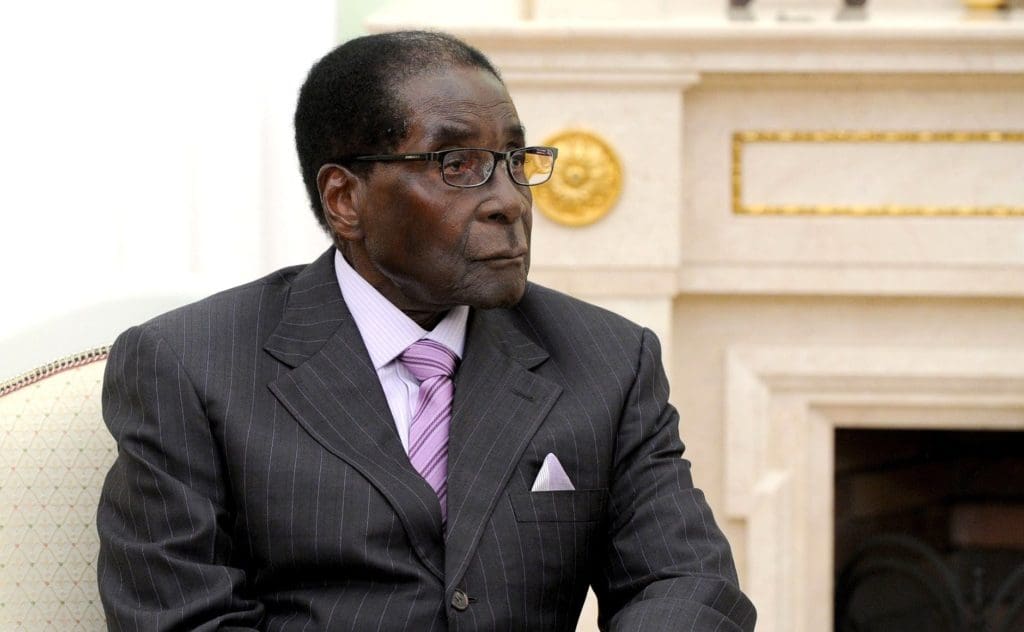
On September 6, 2019, Robert Mugabe died in Singapore — a rather ironic place of death considering Singapore’s economic freedom and Mugabe’s legacy as one of Africa’s most despotic leaders during the last three decades. From 1980 to 2007, he was the leader of Zimbabwe and established himself as an icon for third world socialist activists worldwide. Initially, Mugabe took his time establishing himself as an economic demagogue, making political consolidation of Zimbabwe his top priority during his early years in power. He started his radical redistributionist campaign in 2000 by seizing white farms to allegedly “correct” injustices that lingered from the colonial era. To say that these violations of basic property rights were a disaster would be an understatement. A report from the Commercial Farmers Union highlighted how agricultural production fell by $12 billion from 2000 to 2009. The economic distortions from these programs resulted in the collapse of Zimbabwe’s once illustrious agricultural sector. Furthermore, Mugabe politicized Zimbabwe’s central bank, which allowed him to pursue some of the most expansive easy money policies seen in the world at the time. As a result, hyperinflation rocked the country which prompted it to dollarize and use the American dollar as its main currency after the Zimbabwe dollar was turned into Monopoly money. Curiously, present-day Venezuela mirrors Zimbabwe in terms of its economic policies and episodes of hyperinflationary collapse that have resulted from them. Both of these countries serve as lurid examples of what happens when private property is not respected and excessive political centralization takes root. As a result of the economic wrecking ball that Mugabe applied to Zimbabwe, millions of Zimbabweans left the country for more stable economic environments. Even though Mugabe was deposed in 2017 and is now deceased, the future of Zimbabwe looks uncertain. Emmerson Dambudzo Mnangagwa, the current president of Zimbabwe, has not made any moves so far that indicate Zimbabwe will be moving toward a free market direction. Inflation still has not been tamed, with economist Steve Hanke claiming that inflation stood at a whopping 611 percent in August. The future looks quite bleak for Zimbabwe. However, it does not have to be condemned to misery. Its neighbor Botswana offers a positive example of how a market economy can generate economic growth. Starting in the 1960s, Botswana broke free from the misery that characterized the rest of sub-Saharan Africa by establishing solid property rights, maintaining the rule of law, and not depending on foreign aid. By relying on the comparative advantage of its diamond production, Botswana became one of the fastest-growing economies on the globe and established itself as arguably the most stable country in the African continent. For economic inspiration, Zimbabwe should look southward. There’s no reason for it to continue the errors of the past.

Cuba’s New Shortages Likely the Result of Price Controls

According to a CBC report, the Cuban government is now implementing a wide-scale rationing program. This program covers food products and basic goods such as chicken, eggs, rice, beans, and soap. Cuban Minister of Commerce Betsy Diaz Velazquez pins the blame on the Trump administration’s tightening of the U.S. trade embargo with the island nation. Some other analysts argue that reduced amounts of aid coming from Venezuela have contributed to this new economic crisis in Cuba. Venezuela provides subsidized fuel to Cuba so that it can meet its power requirements and earn hard currency on the market. However, there could be more to the story than these external factors. Shortages have been fixtures throughout Cuba’s history under the rule of its Communist party. Since Fidel Castro assumed control of Cuba in 1959, the Cuban state has dominated the commanding heights of the Cuban economy. This includes its implementation of price controls. As seen on multiple occasions, most recently with Venezuela, price controls inevitably lead to shortages of the goods that they are imposed on. This is simple economics. When the price system is distorted by regulations, artificial demand for the price-controlled good emerges. If the government mandated price ceiling ends up being lower than the price that suppliers are willing to bring a good to market, shortages start to pop up. The Cuban government enacted broad-based price controls in 2016 in response to rising food prices. Despite talk about a tepid market transition, Cuba seems to be reverting back to its old ways. Constant rationing of goods and services is typical of socialist economies which have largely undermined property rights and a rational pricing system. Indeed, Cuba is the Western Hemisphere’s first example of socialist failure. It joins countries like North Korea, Maoist China, and the Soviet Union in the economic hall of shame. Venezuela in its current form will likely join this list of misery. Nevertheless, U.S. sanctions are counterproductive. Ironically, they end up empowering the Cuban state and give corrupt politicians a scapegoat. By pointing to American sanctions, authoritarian leaders can keep their people distracted from the roots causes of their misery—their own government’s actions. In the end, the Cuban case shows that the laws of basic economics continue to be violated even in present times. If Cuba wants shelves to be stocked full of goods, it should quit blaming America and embrace a normal price system and make steps towards respecting private property for once.

Occupational Licenses From All Fifty States Now Accepted in Arizona

While states will tell consumers that the purpose of an occupational license is to ensure consumer safety and a basic level of knowledge before entering the workplace, anyone who has gone through the process knows that these licenses limit market competition. Arizona is paving the way for worker freedom by recognizing occupational licenses issued from other states. This is a win for Arizona’s economy since workers from around the country will see this as an expanded chance for economic opportunity. While this is something to be celebrated, this legislation granting license reciprocity only goes so far in terms of labor freedom. More often than not, occupational licenses are purposefully expensive and can take a long time to secure. This often prevents workers from earning them in order to protect existing businesses. This model still does not guarantee the quality, only competency and the ability to afford to pay the necessary fees associated with the license they are trying to obtain. In a free market, the consumer is the ultimate check over a producer and service provider’s reputation. What is the importance of a license if one worker is efficient at their job and the other is inadequate? Ultimately skill and reputation is the best determiner of quality amongst consumers. Lastly, far too many career paths which you would never assume require occupational licenses. From hair braiding to bartenders and real estate agents, licenses limit the potential for people willing to work to enter the workplace, and the license ultimately says nothing about their quality as an employee. While free market supporters should cheer for this step in the right direction, there is still work to be done to empower workers and allow people of all socioeconomic classes the opportunity to pursue whatever career paths they choose.

Texas Won’t Fine Kids Operating Lemonade Stands Anymore

There is an ongoing war in America, in which dangerous youngsters are setting up unlicensed drink dispensaries in suburban neighborhoods across the country, and getting paid in untrackable stacks of change in exchange for a potentially dangerous substance: lemonade. That’s right America, for years state governments have been arresting or issuing fines to kid’s lemonade stands, from shutting down stands in Denver and even all the way to Albany. This issue became such a national epidemic, the lemonade cartel Country Time even stepped in so they could bail out their underage lemonade pushers. Now, the state of Texas has decided to surrender in the war on lemonade stands by deciding just to legalize themhow disgusting of them. I may have been joking at first, but the real punchline in this whole debacle is that legislators across the country decided to lump lemonade stands run by children into the same category as food providers and vendors in the first place. Texas, however, decided to get smart after national media coverage of cops shutting down a lemonade stand in the town of Overton by two sisters, who were saving up $100 to surprise their father with theme park tickets for Father’s Day. According to TheHill, “The bill, sponsored by Texas Rep. Matt Krause (R), legalizes temporary lemonade stands and other stands selling nonalcoholic beverages operated by minors on both private property or public parks…The measure overturns a ban from the Texas Food Establishment over health concerns from homemade drinks.” If you think that the need for this bill caused by ridiculous government interference in the first place shows that the regulatory state has gone far enough, Texas Governor Greg Abbott agrees with you. Abbott went on Twitter regarding the passing of the bill and stated: “it’s a shame that a law for this was even needed.” Texas follows other states like Colorado and various localities across the nation who are getting smart about the dumb war on lemonade stands. The issue at the heart of this faux-crisis is less about kids selling drinks, and more about the government killing the spirit of entrepreneurship. In 2018, Annabelle Timsit at Quartz wrote perfectly that “Lemonade stands are the ultimate symbol of American entrepreneurship. They represent both the ingenuity and free-market mindset of this country’s young people.” The next time you see a lemonade stand in your neighborhood, go over and buy a drink for our future’s sake.

American Farmers Desperately Need Free Markets

American farmers are up to their necks in debt. Agriculture Secretary Sonny Perdue revealed that debt among American farmers has increased to $409 billion. According to a Reuters report, these numbers are up from $385 billion last year. These levels of farm debt have not been seen since the 1980s. In a testimony to the House Agriculture Committee, Perdue gave a more detailed overview of the situation: “Farm debt has been rising more rapidly over the last five years, increasing by 30% since 2013 – up from $315 billion to $409 billion, according to USDA data, and up from $385 billion in just the last year – to levels seen in the 1980s.” The macrotrends have not looked good for the agricultural sector during the past five years. Deflationary trends in commodity prices, storms causing damage crops, and the present trade war with China have pummeled the U.S. agricultural sector. Luis Ribera, an agricultural economist at Texas A&M University breaks down the current problems U.S. agriculture is facing: “As producers are not able to cover year to year expenses with operating loans, they are forced into transforming operating loans into term debt which erodes their creditworthiness.” Ribera continued: “On top of all that then we have the trade war which reduces the demand of US commodities given that tariffs make them more expensive and then depress the prices even more.” Traditionally, China has bought significant amounts of corn, soybeans, and other agricultural products for the past few decades. However, Trump’s protectionist policies have spurred Beijing to respond with their own tariffs on American products. As a result, trade between the two countries has declined. Robert Johansson, the chief economist of the U.S. Department of Agriculture, contends that farm exports are projected to fall by about $1.9 billion due to the trade dispute. When it comes to tariffs, somethings never change. Punitive tariffs are not conducive to a peaceful foreign policy. The trade wars preceding World War II should make the U.S. weary about continuing a trade war with China. When the Smoot-Hawley tariff was enacted in 1930 in response to the Stock Market crash of 1929, it raised tariffs on over 20,000 goods and created a domino effect of protectionism across the globe. As a result, world trade declined by about 66 percent between 1929 and 1934. In this trade war context, many governments became more militaristic and belligerent, as social cooperation between nations deteriorates. No matter how protectionists spin it, tariffs are always passed on to consumers and create enmity between nations as we see with current the tensions between China and the U.S. Additionally, the relationship the U.S. government has had with the agriculture industry has not been so great either. In fact, it’s one filled with cronyism. Certain sectors are subsidized to the tune of billions. From 1995 to 2017, the wheat industry has received $45.9 billion in subsidies, while the corn industry collected a cool $111.2 billion in subsidies during this same period. All these subsidies considered, it’s become clear that U.S. agriculture is starting to receive rewards based on political favoritism rather than entrepreneurial prowess. Subsidization enables rent-seeking and bad practices which may encourage excessive debt accumulation. When industries are already subsidized by the billions, they can expect a bailout once their businesses sink. Like clockwork, the Trump administration responded to its misguided trade war by giving American farmers $12 billion in bailout funds. Even with Trump’s farm bailout, farmers are still heavily indebted and on the verge of bankruptcy. The number of farmers going bankrupt has skyrocketed to the highest levels in a decade. As farmers become more indebted, these numbers will only rise into the 2020s. This farm dilemma is a textbook example a never-ending cycle of statism we currently live in. First, the government tries to coddle the farm industry with subsidies and then tries to protect it even further with tariffs, paying no regard to the unintended consequences. Once the unintended consequences set in, there will be even more calls for government intervention. Simply put, there are no magical government hacks to solve this problem. As Winston Churchill famously said, “We contend that for a nation to try to tax itself into prosperity is like a man standing in a bucket and trying to lift himself up by the handle.” This same logic should also apply to tariffs and subsidies. To get America’s farm industry back on its feet it will need to truly embrace free markets on all fronts. That means ending the trade war with China and also putting a stop to subsidies that encourage bad behavior and other forms of economic malinvestment. The U.S. farm sector is desperately in need of a free market detox.

Why Are American Industries Still Struggling To Find Workers?

The United States is now experiencing huge job growth, with more job openings than people unemployed. And yet, several industries still struggle to find workers.

While wages haven’t been keeping up with the rising cost of consumer goods, the industries that are suffering the most actually pay good salaries in addition to benefits, and yet, they continue to face difficulties finding workers.

industries

Construction, one of the most impacted fields, is suffering greatly, with young Americans not interested in the physically demanding work, making it difficult for the industry to find replacements for the aging workforce. And as President Donald Trump cracks down on immigration, legal or otherwise, the situation may worsen, as a growing number of workers who are willing to take on the demanding job are often immigrants.

Another industry that is suffering tremendously, especially after Trump, was the farming industry

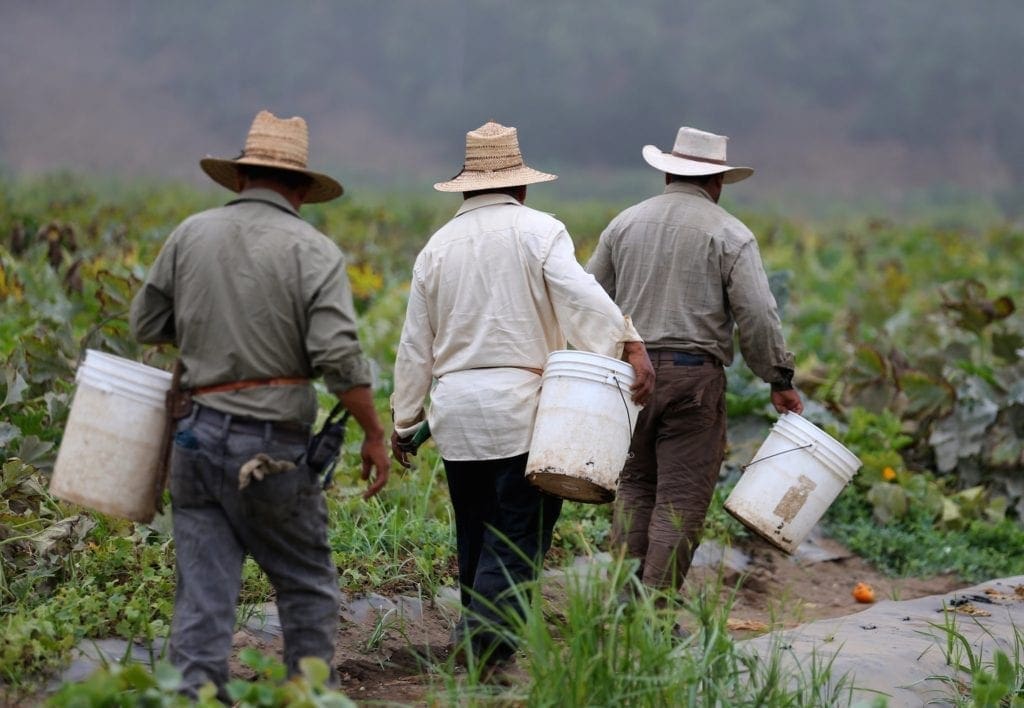
Both in California and Washington, farmers are finding it hard to find workers. Relying on American workers is nearly impossible for these farmers, mainly because Americans don’t want agricultural jobs, and immigrants are hard to come by now. Even if farmers have the option to use the government’s guest worker program, they would have to raise the cost of their product since the program is too expensive.

Companies are also struggling to find truck drivers and the problem has become so widespread that this year alone there was 51,000 truck driving positions that remained unfilled. By 2021, this number could rise to 100,000. Especially if younger Americans don’t step up as baby boomers retire from the truck driving business.

No, You’re Not Entitled To An Education

Unfortunately, the long-lasting campaign to put everyone through college has a lot to do with this reality.

When government stepped in to make college “more affordable” through easy loans and grants, we saw a college debt crisis take shape that continues to haunt us to this day. Still, people continue to push the government to become even more involved, urging officials to even help students who can’t pay their loan back by forcing banks to “forgive” their debt, giving more and more young Americans perverse incentives to seek a higher education when, sometimes, that might not be the best path for them.

By creating a cultural demand for higher education out of the notion we are all entitled to a degree helped to boost the aversion toward professions that require physical work and no time spent in college. Now, as many Millennials see they made the wrong choice when they decided to go to college, they begin to change their tune. Still, not enough young men and women are making the switch, and record numbers of young Americans continue to seek higher education, ignoring high-paying jobs that only require much more affordable training. As such, we might continue to see a shortage in these industries for many more years to come.

Will California Ever Sunset Its Shampooing Hair License Requirement?

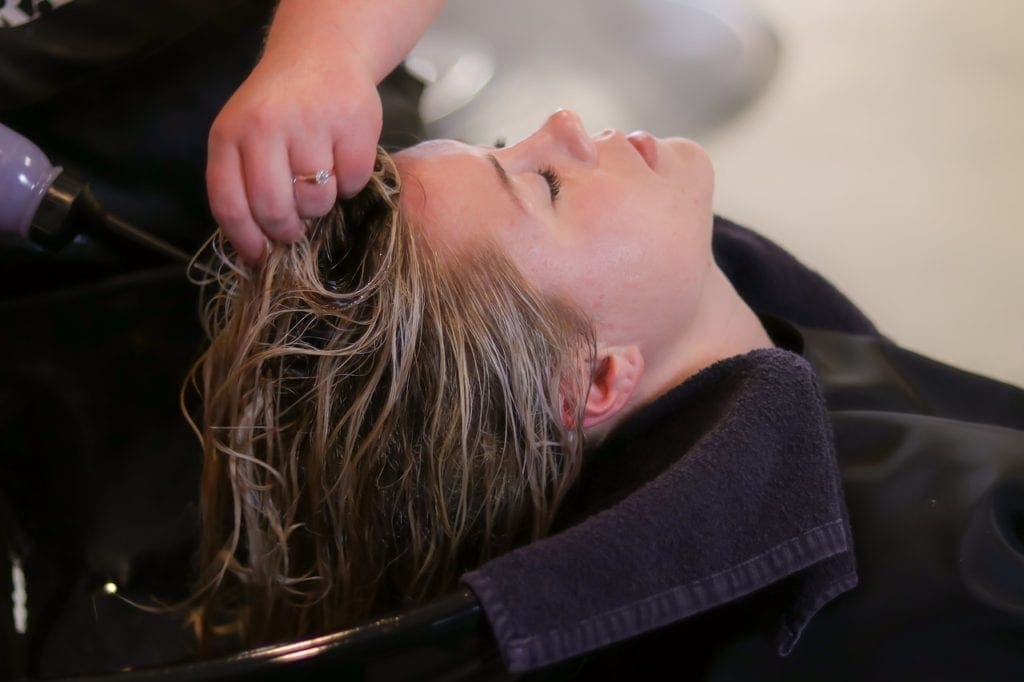
California, like many other states, requires a license to shampoo hair. No, your eyes are not deceiving you: shampooing hair is only legal in the Golden State if the service provider has a license.

The same goes for anyone who wants to arrange, dress, or even curl hair for a living, even if these service providers are not doing any work with a pair of scissors.

This requirement makes it difficult for low-income workers to meet the state’s standards. After all, who has $19,000 lying around to go through barbering and cosmetology school to get a license to shampoo hair? So if you are capable and willing to visit elderly or disabled people to wash and style their hair for a price but you do not have a license, you are effectively breaking the law in California.

With people suffering because of this arbitrary requirement in mind, Sen. Mike Morrell (R-Rancho Cucamonga) introduced a piece of legislation that would have brought this requirement to an end. Unfortunately, the California Assembly killed the bill.

What were Assemblymen so worried about? Special interests losing their revenue, maybe?

In a public hearing regarding the bill, Reason reports, the room was filled with students from local cosmetology schools. These institutions stand to lose big time if the rules change, but not only them. The state’s own Department of Consumer Affairs estimates that passing a bill putting an end to an arbitrary licensing rule would restrict or limit their fee-related revenue.

Imagine that!

With the cosmetology industry potentially dominating the California regulatory body, it’s hard to imagine that, perhaps, the idea of striking the licensing requirements for shampooing hair could be a possibility in the future. But according to Evan Low (D-San Jose), one of the legislators who blocked the bill and the Assembly Business and Professions Committee chairman, the requirement could be handled at the Sunset Review hearings.

Can California Ever End Licensing Requirements For Shampooing Hair?

Every year, the state’s Assembly and Senate business and professions committees hold hearings to “discuss the performance of the boards and make recommendations for improvements.” Ideally, these hearings serve as a means to “sunset” rules that should long be gone. But in reality, they seldom lead to any actual regulatory trimming. And as such, it’s not hard to see that this particular licensing requirement may end up not going anywhere. Especially because the industry itself is unlikely to support the end to the rule.

In the end, low-income Californians just trying to make ends meet will continue to suffer, as they will remain unable to pay the thousands of dollars needed to get a cosmetology license in the state.

How Egg Regulations Hurt the Environment — And Your Pocket!

How Egg Regulations Hurt the Environment — And Your Pocket!

This article was featured in our weekly newsletter, the Liberator Online. To receive it in your inbox, sign up here. Government has a way of making us all question our sanity. Especially when it comes to food regulations and its environmentally unsound consequences. In many countries across the globe, the practice of washing eggs is seen as anti-hygienic. Because when egg producers wash fresh eggs, they also remove a layer of protein known as cuticle. EggsThe cuticle is important because it prevents the egg shell from being porous. With a porous exterior, eggs are vulnerable to bacteria. In the 1970s, regulators with the U.S. Department of Agriculture concluded that egg producers should invest in “fancy machines,” as NPR puts it, to shampoo eggs with soap and hot water. But once the eggs were washed, regulators added, producers should place them immediately in a refrigerator. To justify the addition of yet another requirement for the egg industry, regulators claimed this step helped to avoid salmonella contamination. But washing the egg’s exterior does little to prevent contamination. As NPR explains, the cuticle “is like a little safety vest for the egg, keeping water and oxygen in and bad bacteria out. Washing can damage that layer and ‘increase the chances for bacterial invasion’ into pores or hairline cracks in the shell, according to Yi Chen, a food scientist at Purdue University.” Salmonella enteritidis often infects a chicken’s ovaries, which tends to impact the yolk before the shell hardens. The bacteria can be killed when consumers cook it. Washing the exterior of the egg does little to prevent contamination. As expected, salmonella continues to expose about 142,000 individuals to infections each year. While many contend that washing the egg and refrigerating it or leaving the cuticle both work, only the method adopted by the United States government requires a great deal of electricity use to ensure the product’s safety. Considering only 10 percent of the total U.S. energy consumption comes from renewable sources, it’s hard to see why environmentalists are not urging government to nix this particular regulation. But too much energy consumption is not the only negative consequence of egg-washing. The cost of purchasing an egg washing machine, the device’s maintenance, required labor, and the cost of electricity employed in maintaining the product shielded from contamination all add up, increasing the price of eggs and harming the consumer. With reports showing just how salmonella is still a problem despite the regulatory requirements imposed on the egg industry, it’s hard to contend forcing all producers to wash their eggs is somehow productive. Especially when so much electricity is required to maintain the eggs refrigerated. Why not try freedom for a change?

Airbnb to Collect Taxes from Los Angeles Users

Airbnb to Collect Taxes from Los Angeles Users

This article was featured in our weekly newsletter, the Liberator Online. To receive it in your inbox, sign up here. Airbnb, the short-term rental app, has recently agreed to go along with officials in Los Angeles by requiring users to collect hotel taxes from their clients. The three-year agreement was signed early this week. And according to LA city officials, money collected by Airbnb in Los Angeles would bring $5.8 million in annual revenue. ProtestThe agreement follows the city’s efforts to regulate Airbnb and similar companies locally. As City Council members discussed what to do with Airbnb in the past few months, the company lobbied its users to stand up against suffocating regulations in a series of emails sent out regularly. In one of these emails, Airbnb explained that the LA City Planning Commission was considering putting a 90 day cap on the number of nights Airbnb hosts can list their space, a rule Airbnb called “restrictive and arbitrary.” City officials were also considering limiting the number of listings hosts can have, which could affect users who have more than one room to rent, and instituting a registration procedure that would render the process of hosting through Airbnb difficult and expensive. Another rule LA city officials had considered would also force Airbnb to turn over users’ personal information to the authorities, giving them information on how many nights a host books through the site and how much money renters make. Airbnb warned its users that the city did not detail how this information could be used. Accusing property owners of evicting tenants to turn their properties into “commercial hotel and motel businesses,” Councilman Mike Bonin was one of the first in Los Angeles to propose Airbnb regulations. But while it is true, many users have, in fact, evicted their tenants in order to list their properties on Airbnb, that alone is not an excuse to regulate Airbnb out of existence. After all, the system works because it’s still affordable. To tourists looking for an affordable accommodation option, the extra financial burden tied to the hotel tax could mean that renting through Airbnb might not be that affordable after all. To those who use the service as renters to make ends meet, being part of Airbnb may not be as appealing if rates are high because of the new rules. In an article for US News, Mercatus Center’s Matthew Mitchell urges regulators to “deregulate traditional industries” if their goal is to help all industries and local businesses thrive. Instead of regulating the sharing economy and stifling competition, deregulation could also make it easier for visitors to stay and spend money locally. Airbnb’s decision to go along with Los Angeles city officials may represent the company’s willingness to compromise, but a real solution to this dilemma will only be produced when lawmakers are honest about their goals. After all, regulation will always makes things difficult for the consumer and the businessman, no matter how you slice it.

New Jersey’s Takeover of Camden Proves Freedom is Better Than Taxpayer-Backed Revitalization Projects

New Jersey’s Takeover of Camden Proves Freedom is Better Than Taxpayer-Backed Revitalization Projects

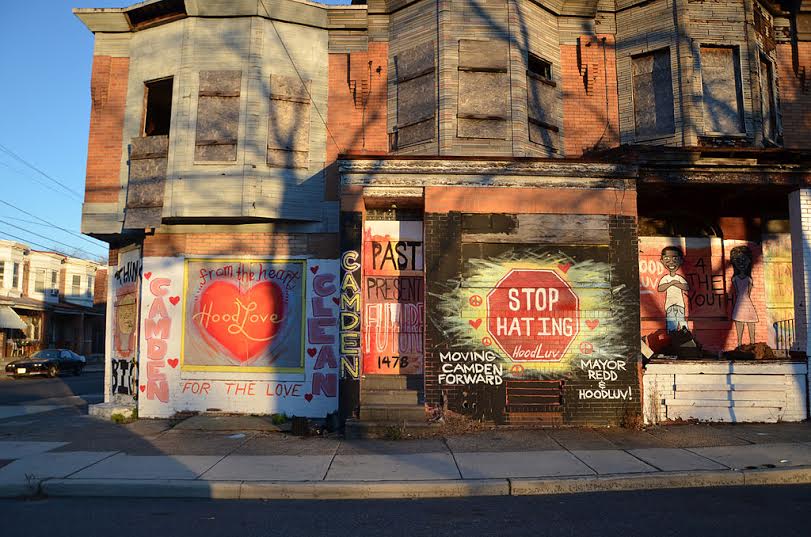
This article was featured in our weekly newsletter, the Liberator Online. To receive it in your inbox, sign up here. Governor Chris Christie has recently announced that the state will take control of Atlantic City’s finances. As the city’s huge debt looms over its residents and the state vows to take over, critics and experts take a closer look at a previous major takeover of the city of Camden. And since many argue that state intervention ended up failing some of Camden’s most vulnerable residents, the promise of a better Atlantic City after intervention seems somewhat unrealistic. In 2002, the state of New Jersey poured millions of taxpayer dollars into one of the largest takeover projects in US history. At least one law school, an aquarium, and a hospital were updated. But despite the taxpayer-backed incentives, the lives of residents did not improve. Instead, poverty and crime rates in the city remain high. Camden Despite the interventionist failures since 2002, the state announced in 2013 that it had decided to take over the education in Camden. As you will see, the results were equally disappointing. According to a report from 2009, the initial revitalization campaign in the city counted with $175 million in bonds and loans and a one-time $7.5 million appropriation from the state budget. Shortly after, the then-Governor Jim McGreevey appointed a chief operating officer to take over the local government and the school board. The plan was to create jobs, bring in new businesses, fix the schools and the sewers, and demolish unsafe vacant businesses. But as the takeover came to an end in 2010, Camden remained one of the most dangerous cities in New Jersey. And despite the state’s repeating efforts to reform the education system in the city, Camden school districts remain problematic. The New Jersey government has been responsible for running the Paterson, Newark, and Jersey City school districts for more than 20 years. In 2013, it took over Camden’s as well. During the first years under state control, Camden failed to meet performance requirements in at least five areas. While Paterson, Newark, and Jersey City report that their graduation rates had improved, local educational leaders claim that the improvement is due to the work members of the community have been doing in partnership with educational groups. According to Paterson Education Fund’s executive director Rosie Grant, the state takeover meant little to the community. “The gains that we have made,” she told The Record, “have been for the most part despite the state takeover.” Instead, Grant believes that the city’s decision to break the region’s largest high schools to form smaller academies is what made Paterson great. But not all is lost in Camden. When it comes to education, the real revolution arrived in the form of school choice. According to a 2015 video by Jim Epstein, school choice gave local families in Camden the ability to choose. Instead of relying solely on state-run schools that continue to fail Camden’s children to this day, the implementation of charter schools has given residents the opportunity to enroll their children in institutions where children actually learn, despite their economic background. If the state’s intervention in Camden has anything to teach other cities across the country is that pouring taxpayer money into an issue won’t make it better. Boosting choice—and freedom—on the other hand, usually works. If the current administration is serious about saving Atlantic City, it will avoid pouring money into the problems the city is facing. Opening its doors for businesses and competition, however, may just do the trick.