














Beta

Password Reset Confirmation

If an account matching the email you entered was found, you will receive an email with a link to reset your password.

Welcome to our Beta

The Advocates of Self-Government is preparing a new experience for our users.

User Not Found

The username/email and password combination you entered was not found. Please try again or contact support.

Skip to main content

Quizzes & Apps

Articles

Tag: Homeland Security

Pentagon IP laws

Pentagon to Explore IP Laws for the Benefit of Contractors

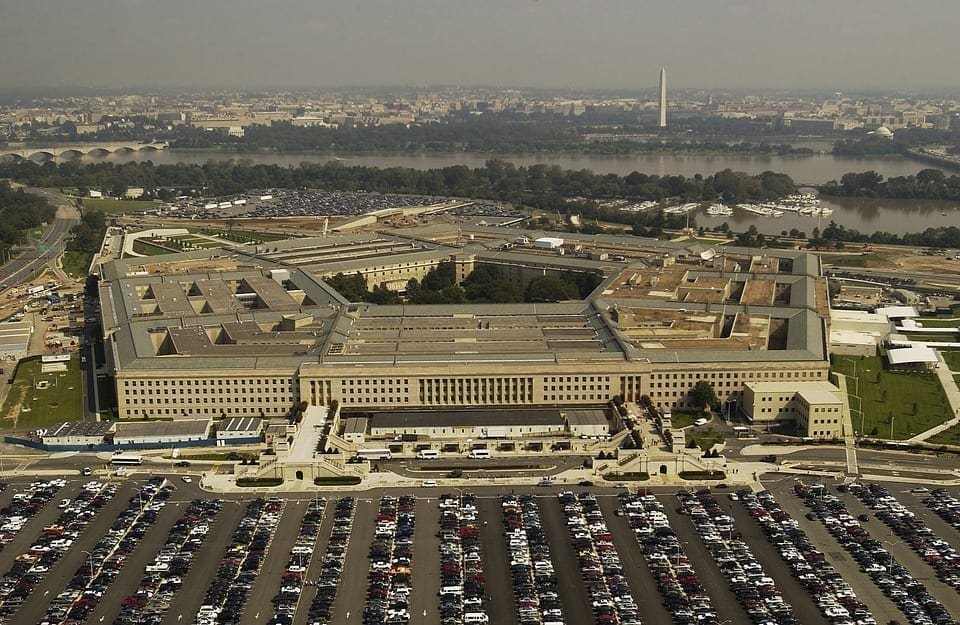
Intellectual property (IP) is, plain and simple, an attack against private property. But while IP rights holders claim they can use government force to limit what others do with their own property, it is clear that all these rules accomplish is to create monopolies. Unsurprisingly enough, the U.S. Department of Defense is now using these very laws to strike a deal with technology firms who have long favored IP laws, and is doing so openly precisely to fend off competition. Pentagon IP laws According to Roll Call, the Defense Department is fighting so-called Chinese aggression by putting a team of IP experts together to help the Pentagon negotiate rights to technology developed by defense contractors. This program is part of the 2018 defense authorization bill, which requires the defense department “to ensure a consistent, strategic, and highly knowledgeable approach to acquiring or licensing intellectual property by providing expert advice, assistance, and resources to the acquisition workforce on intellectual property matters, including acquiring or licensing intellectual property.” But in order to follow Congress’ plan, the Pentagon must bend IP rules to strike new deals with firms providing the U.S. government with defense technology. As Ellen Lord, the undersecretary of Defense for acquisition and sustainment, explained, the government is acting offensively to protect “our technology.” Saying that the government must better define “what is owned by industry and what is owned by government at the outset of a program,” Lord added that officials and contractors are all equally invested in “[addressing] intellectual property.” But despite their excitement, there’s one aspect to this partnership and their use of IP laws that is being completely ignored.
IP Laws Fuel Crony Capitalism

Regardless of whether the government or defense contractors will control IP rights over technology and data, this move is nothing but another example of crony capitalism in action. With defense firms either holding exclusive rights to certain technologies or having contracts with the government that guarantee them exclusivity, IP laws give everyone involved a legal way to keep competitors at bay. By limiting what competitors can do through patent and other forms of IP laws, the government effectively hampers the market, making firms less likely to develop superior and more effective technology. Furthermore, it also inflates the cost of technologies already in use as only a handful of firms have the OK from government to produce defense mechanisms. Who hurts as a result? The taxpayer. Because ideas cannot be controlled with physical force, government restricts people’s property rights by keeping them from reproducing these ideas by the way of computers, paper, recording mechanisms, and printing presses. When someone is given a patent, what he is granted is a guarantee from government that a third party’s property rights will be infringed upon once they try to use “protected” ideas. This isn’t a protection of intellectual property, because ideas cannot be owned the way land or objects are owned. Instead, it is the government imposing limitations on what others can do with their own property. As argued by libertarians in the past, IP laws serve the government well as they give people the illusion that only a large concentration of power could enforce such a rule. And as the defense department is demonstrating now, they have been right all along.

‘Did I Consent?’: New Airport Face Scanners Deployed Without Oversight

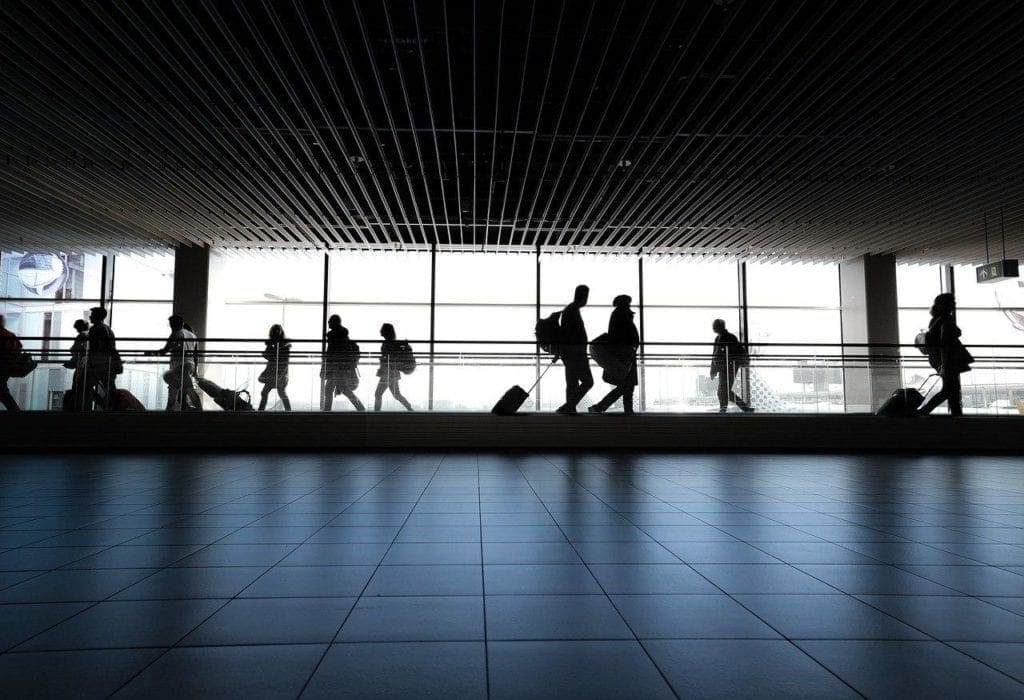
In your pants and now in your face, airport security theater is getting more personal and technologically advanced. Meanwhile, lawmakers and privacy groups are left trying to “pause” the Department of Homeland Security’s new “biometric exit” program. “Did facial recognition replace boarding passes, unbeknownst to me?” air traveler MacKenzie Fegan tweeted to JetBlue in a thread that went viral last week. “Did I consent to this?” Yes, then no would be the answers to those questions. It’s the same dynamic that ushered in the TSA’s naked body scanners and enhanced pat-downs a decade ago. There’s little sign of change in the Trump era. Fegan’s surprise is about to be shared by many other air travelers leaving the US. And already the facial recognition system has been used on over 2 million people on 15,000 flights, according to a DHS report sent last week to congressional judiciary committees. The agency’s goal by 2023 is to scan “over 97 percent of departing commercial air travelers from the United States.” There are no regulations regarding potential (ha!) abuse or even for how the data will be managed by DHS. Senators Mike Lee (R-Utah) and Ed Markey (D-Massachusetts) have joined together to write angry letters about this, but so far DHS has ignored them, according to The Hill. “DHS should pause their efforts until American travelers fully understand exactly who has access to their facial recognition data, how long their data will be held, how their information will be safeguarded, and how they can opt-out of the program altogether,” Lee and Markey have written. Give me liberty, or give me pause! Quite the bipartisan rallying cry. President Donald Trump already hit the fast-forward button in 2017 with an executive order streamlining the implementation of the facial recognition software. It apparently wasn’t enough that in the preceding year, Congress authorized $1 billion be spent on it by 2026. What’s the point of this biometric exit program? To identify non-citizens overstaying visas. As they’re leaving the country. But, of course, citizens will be scanned as well. That’s “homeland security” for you. DHS claims the face scanners identified 7,000 people who overstayed their visas. So, of the over 2 million people scanned thus far, that constitutes one-third of 1 percent. Feel safer yet? The DHS Office of the Inspector General audited the program in September and found that US citizens were six times more likely than non-US citizens to be denied boarding their planes! Young and old people were also denied at higher rates. The system will be assessed over the next six months, an official with US Customs and Border Protection (CBP) assured The Hill. Obviously, there are concerns with how the photographs or data will be stored and/or shared. As of now, JetBlue claims it doesn’t have access to the images the scanners capture. CBP statements from a year ago seem to contradict that, but it’s more certain the facial recognition software providers could keep the data captured. The CBP most recently has said it keeps photos of US citizens for 14 days and non-citizens for up to 75 years. There are many questions left to be answered. But already in at least 15 airports, airliners testing the scanners include American Airlines, British Airways, Delta, JetBlue, and Lufthansa. Oh, and cruise liner Royal Caribbean is in on the action too. This sort of high-tech government surveillance has been an issue for years. If history is any lesson, there will be no stopping further intrusion into our daily lives by the federal government.

Homeland ‘Security’? Gov’t Wants to Collect Travellers’ Social Media Info

Homeland ‘Security’? Gov’t Wants to Collect Travellers’ Social Media Info

This article was featured in our weekly newsletter, the Liberator Online. To receive it in your inbox, sign up here. In Omnipotent Government, Ludwig von Mises writes that tending toward “a transgression of the limit” of the application of violence is a natural impulse among professionals who use violence in their line of work, even if the particular application of violence is seen as legitimate. These transgressions are seen everywhere, from instances of police brutality to the ever-growing presence of law enforcement agents on our borders and airports. SmartphoneNow, this transgression is entering another realm, making way for law enforcement to have an even more formally accepted online presence. According to a new Department of Homeland Security proposal, officials are considering asking visitors entering the United States under the Visa Waiver Program to disclose information pertaining to their social media presence. If the DHS has its way, visitors would have to fill out a form with links to their Twitter, Facebook, and other online applications. According to the DHS, the collection of this information would “enhance the existing investigative process and provide DHS greater clarity and visibility to possible nefarious activity and connections by providing an additional tool set which analysts and investigators may use to better analyze and investigate the case.” But the wording in this new proposal is broad enough to allow officials to dig at will, increasing the risk of abuse of power—a surveillance issue that has already been associated with 4th Amendment violations in the past. To privacy advocacy organizations like Restore The 4th, this new transgression is everything but legitimate. In a press release, the organization explained that the DHS new proposal is toxic. In a letter addressed to the US Customs and Border Protection, the group along with “over two dozen human rights and civil liberties organizations” outlined the program’s “disproportionate risks, excessive costs, and other serious shortcomings.” According to the letter, the DHS will be further invading individual privacy, putting freedom of expression at risk if this proposal is implemented. Furthermore, the federal government would have to worsen the national debt due to the high cost of implementation. The maintenance of this program would also cost taxpayers greatly, Restore The 4th added, and these costs “appear to be unaccounted for in the DHS Paperwork Reduction Act statement.” The advocacy group also claims that the DHS would ignite the expansion of the surveillance state by opening a new window into the traveler’s private life. If implemented, this new rule could impact particular groups of travelers, allowing law enforcement to refer to their racial and religious bias in order to do their job. Restore The 4th explains: “This ‘disparate impact will affect not only travelers from visa-waiver program countries, but also the Arab-Americans and Muslim Americans whose colleagues, family members, business associates, and others in their social networks are exposed to immediate scrutiny or ongoing surveillance, or are improperly denied a visa waiver because of their online presence.’” The letter urges CBP to dismiss the DHS proposal altogether. ​

VIDEO: Grandma Got Indefinitely Detained

(From the Libertarian Christmas Video Bonanza section in Volume 19, No. 26 of the Liberator Online. Subscribe here!) Yikes! In seasons past, Grandma only had to worry about getting run over by a reindeer. But these days… Grandma got indefinitely detained now coming home to visit Christmas Eve You could say she had a right to counsel but some folks in the Congress disagree… Internet sensation Remy delivers a timely tune about Christmas, Homeland Security, and the joys of… civil rights abuses. Another instant holiday classic from the funny minds at Reason TV, about 2 minutes 25 seconds.

Resource: A Verifiable and Disturbing Look Into “Top Secret America”

 Top Secret America“Top Secret America” is a investigative report first published in the Washington Post on July 19, 2010. It is based on a two-year investigation by a team of journalists headed by Pulitzer Prize-winning author Dana Priest and William Arkin. Top Secret America attempted to discover the size and scope of the post-9/11 growth of the U.S. intelligence community. Though the report is now nearly three years old, it remains a startling and shocking profile of the post 9/11 security state. It’s available online, along with supplementary material. The Post found that the top-secret world the federal government created in response to the terrorist attacks of Sept. 11, 2001 “has become so large, so unwieldy and so secretive that no one knows how much money it costs, how many people it employs, how many programs exist within it or exactly how many agencies do the same work.” This constitutes nothing less than “an alternative geography of the United States, a Top Secret America hidden from public view and lacking in thorough oversight.” Among the investigation’s findings:
  • Some 1,271 government organizations and 1,931 private companies work on programs related to counterterrorism, homeland security and intelligence in about 10,000 locations across the United States.
  • An estimated 854,000 people — nearly 1.5 times as many people as live in Washington, D.C. — hold top-secret security clearances.
  • In Washington and the surrounding area, 33 building complexes for top-secret intelligence work are under construction or have been built since September 2001. Together they occupy the equivalent of almost three Pentagons or 22 U.S. Capitol buildings — about 17 million square feet of space.
  • Many security and intelligence agencies do the same work, creating redundancy and waste. For example, 51 federal organizations and military commands, operating in 15 U.S. cities, track the flow of money to and from terrorist networks.
  • Analysts who make sense of documents and conversations obtained by foreign and domestic spying share their judgment by publishing 50,000 intelligence reports each year — a volume so large that many are routinely ignored.
Indeed, the secret government is growing so fast and so secretly that no one really knows its size or scope — including those who are supposedly in charge of it. Reports the Post: “In the Department of Defense, where more than two-thirds of the intelligence programs reside, only a handful of senior officials — called Super Users — have the ability to even know about all the department’s activities. But as two of the Super Users indicated in interviews, there is simply no way they can keep up with the nation’s most sensitive work.” In the years since, we can only imagine the further expansion of Top Secret America. Revelations since then include, for example, charges from reliable sources that the government is tracking most if not all electronic communication in America. This report is an excellent mainstream account of startling information and thus is a useful and reliable resource. Just remember, things are even worse than the Post reports.