















Wanna Start Your Own Country? Someone Near Thailand Already Has
At some point in our lives, we have all thought, “things would be so much better if I were in charge.”
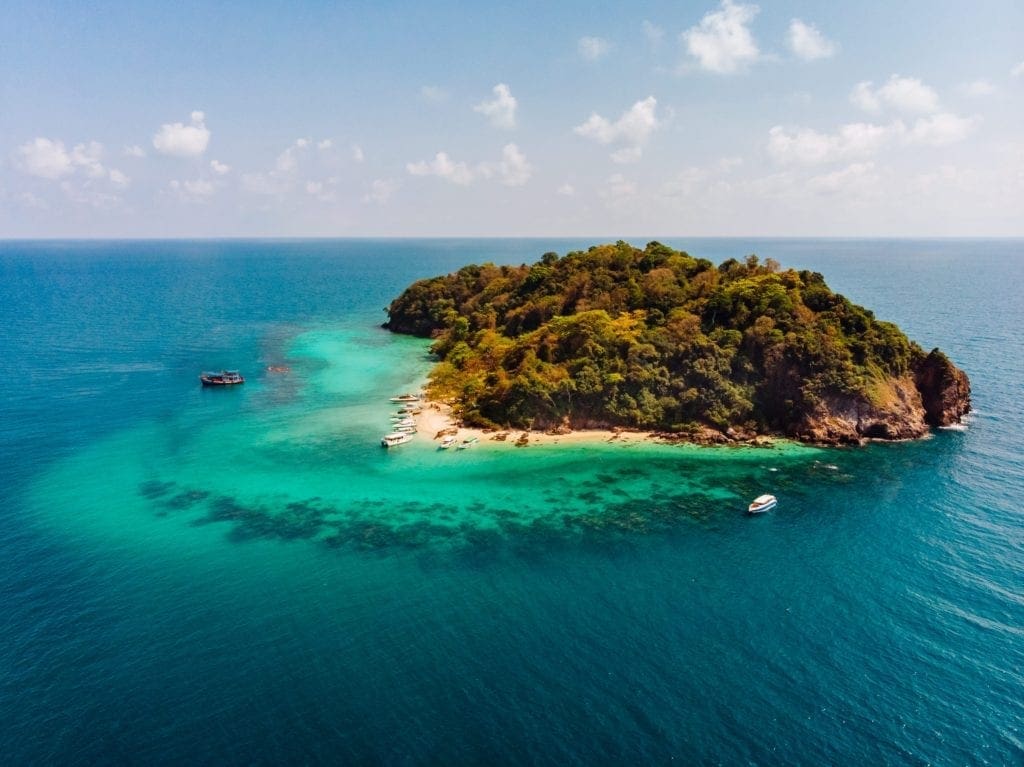 Maybe you’ve even thought, “If a bunch of friends and I went to an abandoned island, we could start our own perfect civilization away from everyone.”
Someone has already put this idea forward combining both aspects, but even though their “island country” might be a little (or a lot) smaller than you’d expect, it does make a big statement.
As seen on the Seasteader YouTube channel, right now there is a tall spar floating in international waters near Thailand owned by activist Chad Elwartowski and his partner where they live on a floating chunk of metal in order to make a point by showing, “my big finger…to all those out there who want to control other people’s lives through force,” adding, “You know where you can stick this.”
Elwartowski has taken to documenting his experience as a Bitcoin HODLR as well as a pseudo-libertarian philosopher, as he attempts to take these ideas of self-determination and individual autonomy to new heights by seasteading.
Seasteading is a concept in which there are no viable, “free” or unclaimed masses of physical land left on the planet for people to claim and begin a new life. Many wealthy individuals and academics – ranging from global warming catastrophists to free-market anarchists– see setting up artificial islands in international waters as the last true frontier for freedom.
In 2017, I interviewed the president of the micronation Liberland, where we discussed the challenges of finding an unclaimed space of land, and attempting to build a country where the neighboring nations might not be too keen on having new neighbors.
By seasteading, you can join a collective community far away from an established land-nation based on a shared basis of core principles, and live a life in which you have far more control over your personal autonomy compared to the typical nation-state structure.
The concept of seasteading has been supported by influential individuals ranging from economist Patri Friedman (founder of the Seasteading Institute) to PayPal founder Peter Theil. This principle unites people from across socio-political and economic backgrounds by promoting the theory that free people can voluntarily come together to form a functioning community without central and collective planning. While Elwartowski’s effort may be minuscule in measure, it is big in the message it sends to central planners that men and women intrinsically have a desire for more freedom.
Maybe you’ve even thought, “If a bunch of friends and I went to an abandoned island, we could start our own perfect civilization away from everyone.”
Someone has already put this idea forward combining both aspects, but even though their “island country” might be a little (or a lot) smaller than you’d expect, it does make a big statement.
As seen on the Seasteader YouTube channel, right now there is a tall spar floating in international waters near Thailand owned by activist Chad Elwartowski and his partner where they live on a floating chunk of metal in order to make a point by showing, “my big finger…to all those out there who want to control other people’s lives through force,” adding, “You know where you can stick this.”
Elwartowski has taken to documenting his experience as a Bitcoin HODLR as well as a pseudo-libertarian philosopher, as he attempts to take these ideas of self-determination and individual autonomy to new heights by seasteading.
Seasteading is a concept in which there are no viable, “free” or unclaimed masses of physical land left on the planet for people to claim and begin a new life. Many wealthy individuals and academics – ranging from global warming catastrophists to free-market anarchists– see setting up artificial islands in international waters as the last true frontier for freedom.
In 2017, I interviewed the president of the micronation Liberland, where we discussed the challenges of finding an unclaimed space of land, and attempting to build a country where the neighboring nations might not be too keen on having new neighbors.
By seasteading, you can join a collective community far away from an established land-nation based on a shared basis of core principles, and live a life in which you have far more control over your personal autonomy compared to the typical nation-state structure.
The concept of seasteading has been supported by influential individuals ranging from economist Patri Friedman (founder of the Seasteading Institute) to PayPal founder Peter Theil. This principle unites people from across socio-political and economic backgrounds by promoting the theory that free people can voluntarily come together to form a functioning community without central and collective planning. While Elwartowski’s effort may be minuscule in measure, it is big in the message it sends to central planners that men and women intrinsically have a desire for more freedom.
Maybe you’ve even thought, “If a bunch of friends and I went to an abandoned island, we could start our own perfect civilization away from everyone.”
Someone has already put this idea forward combining both aspects, but even though their “island country” might be a little (or a lot) smaller than you’d expect, it does make a big statement.
As seen on the Seasteader YouTube channel, right now there is a tall spar floating in international waters near Thailand owned by activist Chad Elwartowski and his partner where they live on a floating chunk of metal in order to make a point by showing, “my big finger…to all those out there who want to control other people’s lives through force,” adding, “You know where you can stick this.”
Elwartowski has taken to documenting his experience as a Bitcoin HODLR as well as a pseudo-libertarian philosopher, as he attempts to take these ideas of self-determination and individual autonomy to new heights by seasteading.
Seasteading is a concept in which there are no viable, “free” or unclaimed masses of physical land left on the planet for people to claim and begin a new life. Many wealthy individuals and academics – ranging from global warming catastrophists to free-market anarchists– see setting up artificial islands in international waters as the last true frontier for freedom.
In 2017, I interviewed the president of the micronation Liberland, where we discussed the challenges of finding an unclaimed space of land, and attempting to build a country where the neighboring nations might not be too keen on having new neighbors.
By seasteading, you can join a collective community far away from an established land-nation based on a shared basis of core principles, and live a life in which you have far more control over your personal autonomy compared to the typical nation-state structure.
The concept of seasteading has been supported by influential individuals ranging from economist Patri Friedman (founder of the Seasteading Institute) to PayPal founder Peter Theil. This principle unites people from across socio-political and economic backgrounds by promoting the theory that free people can voluntarily come together to form a functioning community without central and collective planning. While Elwartowski’s effort may be minuscule in measure, it is big in the message it sends to central planners that men and women intrinsically have a desire for more freedom.

 autobiography Love Life. And he’s been making some very libertarian-ish statements along the way.
In an
autobiography Love Life. And he’s been making some very libertarian-ish statements along the way.
In an