
















Tag: President

Bring them Home, It’s a Lot Easier Than You Think
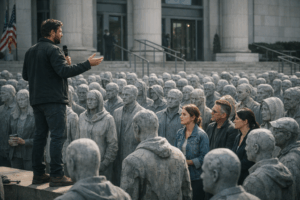
Now that John Bolton is out as National Security Advisor, President Trump needs some advice on foreign policy. Bolton, being a hawk, would never give this advice. It is, however, the most important piece of advice one could give to the president right now. Regarding the troops, it’s time to Bring them Home. By this, I mean that we must bring every troop on foreign soil back to our country without exception.

The President DOES have the Power to Bring them Home
Some would immediately argue that “it isn’t that simple”, but it is. The president has the power and authority to bring every troop home with the stroke of a pen. Trump has possessed this ability since he took office in January 2017. Every day that the president hasn’t brought the troops home is a day that he has allowed these endless wars to continue. With this in mind, anyone who says the president can’t do this is wrong. As commander in chief, he possesses this power. Such power allows for the president to end these wars immediately. He has the power to bring the troops home. He just hasn’t. This, however, is not necessarily Trump’s fault alone.Why Hasn’t the President Ended the Wars
First off, Trump is not a non-interventionist. At the very foundation, he is a Jacksonian. Jacksonians do not believe in intervention unless it is in the best interest of their own country. What is in the best interest of the U.S. is the topic of debate for President Trump. This is how one can reconcile the belief in ending the seemingly endless wars with Afghanistan, Iraq, etc. while also advocating increased hostility with Iran. If Trump believes that intervention is in the country’s best interest, he will intervene. This is why Senator Rand Paul is such an important figure in shaping Donald Trump’s foreign policy. While Rand Paul and Trump have differing core beliefs, Rand Paul’s non-interventionism stems from the idea that foreign intervention, unless the U.S. is attacked, is never in the best interest of the U.S. This is why Paul claims that Trump’s “instincts are in the right place.” He says he wants what is best for America.Rand Paul Isn’t the Only Advisor
While Rand Paul has significantly influenced Trump’s foreign policy, so has Secretary of State Mike Pompeo and the now-former National Security Advisor, John Bolton. Neocon allies like Pompeo and Bolton are consistently trying to persuade Trump that intervention is always in the best interest of the U.S. and her allies. The facts simply are on the side of non-intervention. War has cost the U.S. trillions of dollars, decades of innovation, and thousands of American lives. Endless war is a road to squalor. What we, non-interventionists, must realize is that intervention is never in the best interest of the U.S. We must step up our efforts against these wars. We have a president whose instincts are in the right place; Rand Paul is right about that. We must increase our pro-peace efforts to end the currently existing wars and stop any effort to start a war with Iran. The president has the power to end the wars. What he lacks, however, is the motivation.
Why Tariffs Work: Rethinking a Tax on Trade and Consumers
They don’t.
Tariffs lead to disastrous results and are nothing more than acts of theft against the public.
 While some are celebrating Trump’s decision to cancel protectionist taxes against Mexico, we must realize that this is not a victory. Rather, this is a maintenance of the status quo. If President Trump chose to impose these taxes on consumers, the results would have severely harmed the economy. Even though the tariff was a seemingly small 5%, the American people would have drastically felt the impact. Even in Kentucky, my home state, the effect of these tariffs would have been higher prices, making it harder for the everyday person to live well.
Tariffs are Taxes on Consumers
If Trump increases tariffs on Mexican goods, then Mexican businesses will simply increase prices to offset the cost of these tariffs. If you are an American, you will pay for the tariff. This means that you will be less capable of providing for yourself and your family. Some would say that you could simply buy American, but American goods tend to be more expensive.
In other words, you wind up poorer either way. Since you are less capable of buying goods, businesses suffer. They rely on your ability to buy their good or service. If you cannot do that, then businesses will decrease production. Because they are decreasing production, businesses can lay off workers. This inevitably leads to the impacts of tariffs being far higher than the initial price increase.
In other words, tariffs have a very real capacity to crash an economy especially when the market has become so heavily globalized. This globalization is a good thing. The law of comparative advantage explains that economies are at their best when people can do what that which they perform at their best.
If factories are emerging in Mexico, that means that Mexican labor can produce more quality products at a lower price than American labor. This leads to lower prices, higher quality, and increased innovation. Inevitably, it also leads to increased development in poorer areas.
Because of the presence of jobs, people are more capable of meeting their basic needs. This allows them to partake in entrepreneurship as their wealth expands. Free trade, not government managed trade, is good for all.
Why Trump’s Threats Worked
It would be hard to deny the fact that Trump’s tariff threat did work. It worked because Mexico realized how devastating a tariff could be to the American consumer. In order to save themselves, they saved the consumer. Donald Trump is not the hero in this story.
Rather, he is the strongman villain who chose to force a nation to submit to his will, going so far as to threaten to crash the economy if they resisted. It is a good thing that these tariffs are not happening. What is unfortunate, however, is that Mexico has lost its sovereignty in the process.
While some are celebrating Trump’s decision to cancel protectionist taxes against Mexico, we must realize that this is not a victory. Rather, this is a maintenance of the status quo. If President Trump chose to impose these taxes on consumers, the results would have severely harmed the economy. Even though the tariff was a seemingly small 5%, the American people would have drastically felt the impact. Even in Kentucky, my home state, the effect of these tariffs would have been higher prices, making it harder for the everyday person to live well.
Tariffs are Taxes on Consumers
If Trump increases tariffs on Mexican goods, then Mexican businesses will simply increase prices to offset the cost of these tariffs. If you are an American, you will pay for the tariff. This means that you will be less capable of providing for yourself and your family. Some would say that you could simply buy American, but American goods tend to be more expensive.
In other words, you wind up poorer either way. Since you are less capable of buying goods, businesses suffer. They rely on your ability to buy their good or service. If you cannot do that, then businesses will decrease production. Because they are decreasing production, businesses can lay off workers. This inevitably leads to the impacts of tariffs being far higher than the initial price increase.
In other words, tariffs have a very real capacity to crash an economy especially when the market has become so heavily globalized. This globalization is a good thing. The law of comparative advantage explains that economies are at their best when people can do what that which they perform at their best.
If factories are emerging in Mexico, that means that Mexican labor can produce more quality products at a lower price than American labor. This leads to lower prices, higher quality, and increased innovation. Inevitably, it also leads to increased development in poorer areas.
Because of the presence of jobs, people are more capable of meeting their basic needs. This allows them to partake in entrepreneurship as their wealth expands. Free trade, not government managed trade, is good for all.
Why Trump’s Threats Worked
It would be hard to deny the fact that Trump’s tariff threat did work. It worked because Mexico realized how devastating a tariff could be to the American consumer. In order to save themselves, they saved the consumer. Donald Trump is not the hero in this story.
Rather, he is the strongman villain who chose to force a nation to submit to his will, going so far as to threaten to crash the economy if they resisted. It is a good thing that these tariffs are not happening. What is unfortunate, however, is that Mexico has lost its sovereignty in the process.
While some are celebrating Trump’s decision to cancel protectionist taxes against Mexico, we must realize that this is not a victory. Rather, this is a maintenance of the status quo. If President Trump chose to impose these taxes on consumers, the results would have severely harmed the economy. Even though the tariff was a seemingly small 5%, the American people would have drastically felt the impact. Even in Kentucky, my home state, the effect of these tariffs would have been higher prices, making it harder for the everyday person to live well.
Tariffs are Taxes on Consumers
If Trump increases tariffs on Mexican goods, then Mexican businesses will simply increase prices to offset the cost of these tariffs. If you are an American, you will pay for the tariff. This means that you will be less capable of providing for yourself and your family. Some would say that you could simply buy American, but American goods tend to be more expensive.
In other words, you wind up poorer either way. Since you are less capable of buying goods, businesses suffer. They rely on your ability to buy their good or service. If you cannot do that, then businesses will decrease production. Because they are decreasing production, businesses can lay off workers. This inevitably leads to the impacts of tariffs being far higher than the initial price increase.
In other words, tariffs have a very real capacity to crash an economy especially when the market has become so heavily globalized. This globalization is a good thing. The law of comparative advantage explains that economies are at their best when people can do what that which they perform at their best.
If factories are emerging in Mexico, that means that Mexican labor can produce more quality products at a lower price than American labor. This leads to lower prices, higher quality, and increased innovation. Inevitably, it also leads to increased development in poorer areas.
Because of the presence of jobs, people are more capable of meeting their basic needs. This allows them to partake in entrepreneurship as their wealth expands. Free trade, not government managed trade, is good for all.
Why Trump’s Threats Worked
It would be hard to deny the fact that Trump’s tariff threat did work. It worked because Mexico realized how devastating a tariff could be to the American consumer. In order to save themselves, they saved the consumer. Donald Trump is not the hero in this story.
Rather, he is the strongman villain who chose to force a nation to submit to his will, going so far as to threaten to crash the economy if they resisted. It is a good thing that these tariffs are not happening. What is unfortunate, however, is that Mexico has lost its sovereignty in the process.

National Emergency: A Power Grab with No Justification
President Donald Trump has agreed to sign the funding bill to stop a government shutdown. In addition, he has stated that he will declare a national emergency. Trump is invoking the International Emergency Economic Powers Act (IEEPA) so that he may build a wall along the US’s Southern border. This declaration, while law, has no constitutional authorization. In addition, a national emergency would lead to unprecedented federal power along the border. No opponent of omnipotent government can support this measure.
A National Emergency Destroys Individual Rights
The cost of the wall is only a small part of the problem. In a national emergency, the president will have the authority to enact the largest confiscation of private land in American history. This land grab is a clear violation of the 5th Amendment. While many legal scholars may argue that eminent domain is legitimate because the 5th Amendment claims the government may take land if “just compensation” is provided, one must ask what makes compensation just.
The amount of money does not make it just. The use of the land does not make it just. When considering justice, one must consider consent. Consent is Justice. If the government wants my land, then they should offer a price at which I would agree to sell. If there is no monetary amount I’d agree to, then no one has the right to my land. To say I have to forfeit my land to the state is an egregious breach of individual rights and gives more power to the government than anyone should ever have.
A National Emergency Decimates Checks and Balances
Article 1, Section 8 of the Constitution makes it abundantly clear that Congress has the power to write the law. The president does not have this power. Even if a border wall is a good idea (which it isn’t), the president still does not have the authority to order it to be built. The IEEPA is unconstitutional whereas it allows the president to write and execute the law. This turns the American republic into a despotic state in which all public affairs must operate under the consent of one man: the president.
The IEEPA, of course, was passed in October of 1977, a time in which the Democratic Party controlled the House, the Senate, and the Presidency. In other words, both parties are to blame for this egregious power grab. If your worst enemy should not have power, neither should you or your greatest ally. If the establishment truly opposed a border wall and a national emergency, they would have had the forethought not to give the president this power, to begin with.
How to Stop the National Emergency and the Wall
But now there seems to be no way to stop Trump from stealing land and income to build a wall. Congress is spineless. The courts may step in, but the president may ignore them as Andrew Jackson once did. The one solution to this crisis is nullification. It is not just the right, but also it is the duty of the states to resist this tyrannical law.
This is the prescription James Madison, the author of the constitution, proposed. Simply put, the states created the federal government, and they have the right to refuse to comply with its mandates. There is no other way to resist the national emergency. If the states starve the federal government of its legitimacy, then it matters not what the president says. This is the only way to stop the Wall and the National Emergency.

After Assassination Attempt, Venezuelan President Blames Critics
After an alleged assassination attempt against Venezuela President Nicolas Maduro on Sunday, the government alleged that “far right” groups in the country worked with Colombia President Juan Manuel Santos in Bogota and others in Miami to attack him.
Footage showing bodyguards scrambling to protect him while members of Venezuela’s military scatter out of fear made the rounds in the press, undoubtedly making Maduro look like a vulnerable dictator. Perhaps, that’s precisely what drove him to, once again, make accusations without any proof.
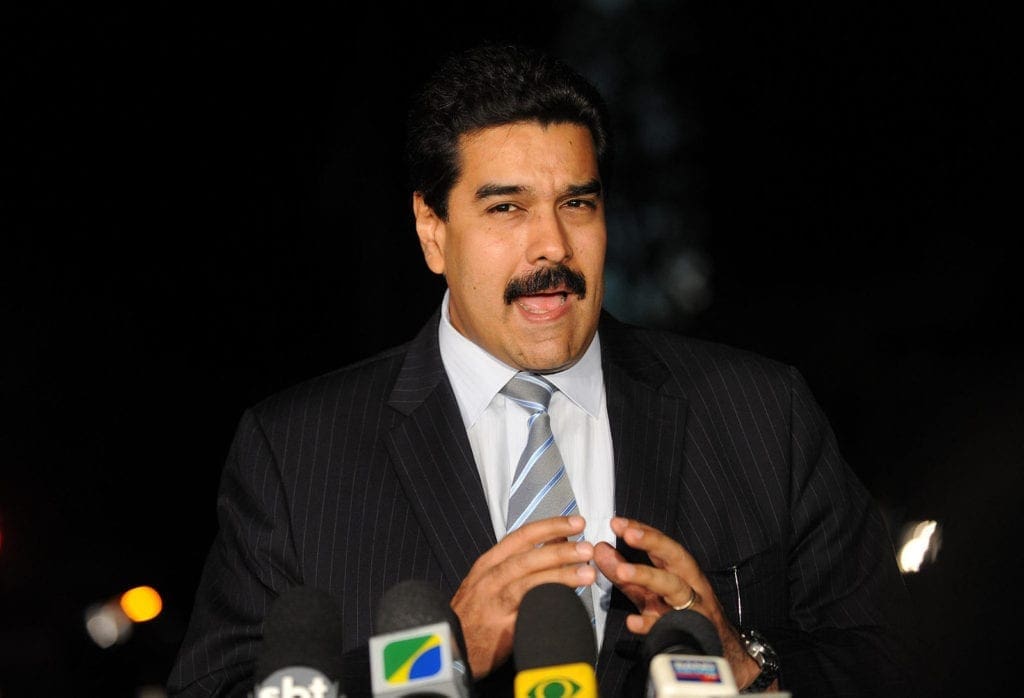
Unfortunately, what we see in Venezuela is far from just a corrupt leader taking advantage of his position. Unlike what left-leaning TV stars may say about the “not-so-socialist” country and its reality, Maduro is guilty of much more than just being a regular politician.
By directly meddling with Venezuelan businesses and taking over factories, forcefully disarming critics and arming supporters, and toying with the country’s currency as if printing Monopoly money, Maduro put an expiration date on his own standing as a leader. But not without hurting and even killing several of his own people in the process.
And yet, when the cameras are rolling, he speaks only to point the finger at the boogeyman he created, the “far right,” whose involvement with the “imperialist Americans” threatens his government.
It is often said that “the first casualty, when war comes, is truth.” But in Maduro’s Venezuela, truth was never part of the package. Perhaps because the president has always been at war with the truth itself.
Venezuela Needs Liberty
In Art of War, Sun Tzu opens the book with the line, “Warfare is the greatest affair of state, the basis of life and death, the Tao to survival or extinction.”
If there’s one thing Maduro and many other government heads understand is that war, any war or even the idea of war, is what fuels the state. It is the thought of standing tall against an enemy, real or otherwise, that gives the state its legitimacy in the minds of people, and that allows leaders to vamp up taxation, inflation, and other policies that ultimately hurt only the common man.
When people are allowed to live freely and worry about their affairs, prosperity ensues. Not because people are inherently good, but because the free market is the most effective way to bring different people together for the exchange of goods and services in the name of mutual benefit.
When governments are in place to pick winners and losers and giver individuals power over others, people suffer.
Instead of another strongman to take over where Maduro left off, what Venezuela needs now is freedom. After so much suffering under the current socialist regime, one would think that Venezuelans are ready.

Outrage Over Gov’t ‘Losing Track’ Of Immigrant Children As Fake As The News
Health and Human Services (HHS) Acting Assistant Secretary Steven Wagner said during a Senate hearing before a Senate Homeland Security subcommittee that the office responsible for unaccompanied immigrant minors “was unable to determine with certainty the whereabouts of 1,475″ immigrant children.
From then on, news outlets ran with the report that the federal government had lost nearly 1,500 children.

And to make matters worse, many anti-President Trump personalities used photos of children in cages from 2014 to illustrate these reports, like former Barack Obama speechwriter Jon Favreau. Unfortunately for their agenda, the photos they shared were taken when Obama was in office.
In the era of Trump, it’s easy to see how these reports spark a great deal of outrage. Critics have no problem turning a poorly edited letter into a damning piece of news against the president, so why wouldn’t this report on immigrant children be any different?
The problem is that the HHS could not track these children after they had already been released from their care. According to the law, they have no responsibility for minors once they are released from government care.
Why are Obama supporters only now showing outrage regarding anti-immigrant policies? Is it just because Trump is president? Or are they genuinely only now realizing that the U.S. has been tough on border crossers for decades?
Everything Goes When It Comes To Political Virtue-Signaling
President Trump does want to separate children from undocumented parents, however, he is building on the work of his predecessors and yes, taking it one step further.
Regardless of where you stand on immigration, the left’s lack of outrage over immigrant children being mistreated under Obama then, and the right’s lack of outrage over immigrant children being mistreated under Trump’s care now, says a lot more about the bankruptcy of left versus right politics than whatever presidents have done or are doing.
If the welfare of all children is what mattered to pundits and “Average Joes” across the nation, then why the inconsistencies?
Libertarians often understand that when it comes to immigration, the government’s own economic policies, trade treaties, and regulations are significant contributing factors toward an environment that promotes mass migration. So when discussing the roots of the issue, we must focus on the policies that have created the problem in the first place.
To many on the left and right, issues are single-serving. They exist so they can be used against their political enemies.
Asking the federal government, an institution created to rule us with one-fits-all policies, to treat immigrants as individuals is a pointless task. But discussing the policies that have laid the groundwork for the creation of more and more immigration restrictions is not.
Instead of embracing hypocrisy just to take a cheap shot against your political opponent, how about actually trying to find a solution that boosts liberty and, as a result, betters the lives of all parties involved? Both left and right should give it a try.

I Went To An Anti-Trump Tax March And This Is What I Found
Saturday, April 15, the day on which individual income tax returns have been traditionally due, anti-President Donald Trump activists flooded the streets of several major cities across the country to demand Trump release his tax returns.
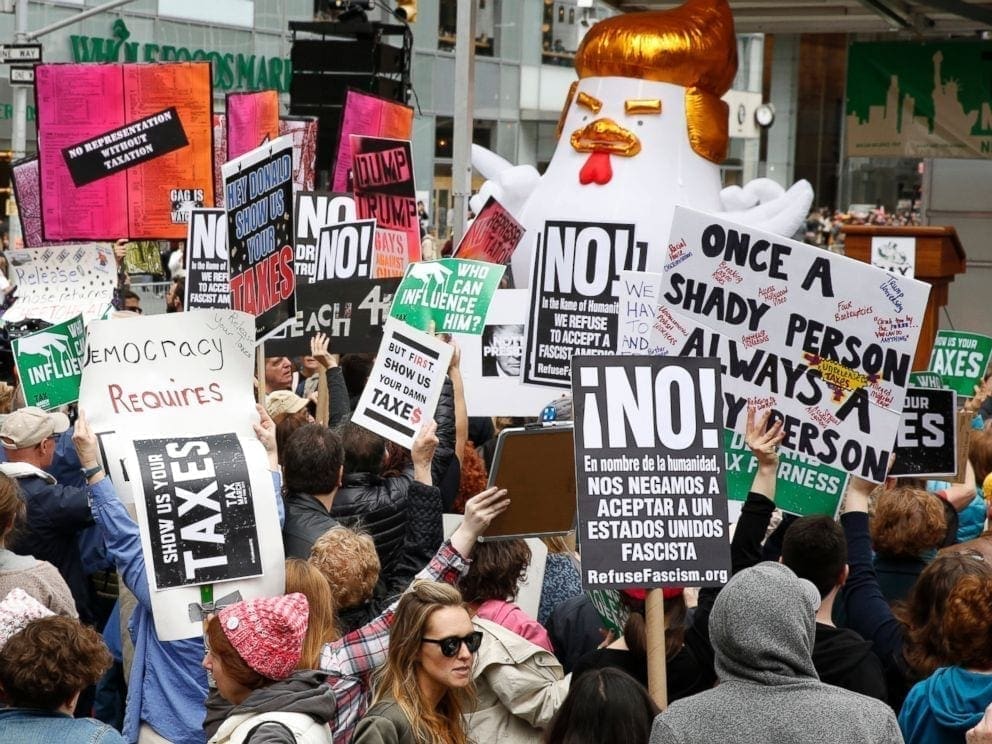 While I was sent to Downtown Los Angeles to cover the “event” as part of a work assignment and I was not allowed to discuss different approaches to the idea of taxation, I was able to ask many of the attendees whether they were happy about the way the U.S. government handles their tax dollars.
In all cases, participants said “no.” And yet, none of those who talked to me thought of using that particular protest to voice those concerns. Instead, what they were really angry about was that Trump’s returns should be released so that his “ties to the Russians” were finally revealed.
How incredibly naive, even for progressives.
What was more unnerving was that they weren’t even angry that their taxes were now in the hands of a man they disliked, and that for the past eight years, anti-President Barack Obama activists were seeing their tax dollars being used by a man they despised. Instead, they found themselves in the right to demand documents from a man who has no legal or moral obligation to disclose documents related to the government confiscation of his wealth.
As participants answered my questions, saying they were unhappy that their hard-earned money was going to build walls and pay for bombs, not one attendee thought that that would be a much greater reason to go to the streets over. Instead, what mattered to them was Russia and how Trump, the “illegitimate” president, stole the election from the hands of a woman.
Many libertarians felt that none of the 2016 presidential candidates truly spoke to them, but to see so many people allowing their own concerns to be overridden by what the masses — or in this case, the great bulk of mainstream media — tells them that matters, is like watching countless of sleepwalkers march toward an abyss.
Giving up on a fight momentarily in order to stay out of trouble is one thing, but to give up on your individuality in order to let powerful groups with an agenda manipulate your political actions is madness. And yet, as I asked each and every person who agreed to talk to me whether they were unhappy, the answer was yes. But the euphoria tied to the Russia narrative was, unfortunately, just too good to let go.
In a time where addictions have replaced the rational decision-making process, it’s easy to see why many call this the age of outrage. And as I hopelessly looked for someone comfortable enough with their own thoughts to openly talk about their concerns and fight for them, I also found we just can’t depend on masses — no matter how compelling they may seem.
While I was sent to Downtown Los Angeles to cover the “event” as part of a work assignment and I was not allowed to discuss different approaches to the idea of taxation, I was able to ask many of the attendees whether they were happy about the way the U.S. government handles their tax dollars.
In all cases, participants said “no.” And yet, none of those who talked to me thought of using that particular protest to voice those concerns. Instead, what they were really angry about was that Trump’s returns should be released so that his “ties to the Russians” were finally revealed.
How incredibly naive, even for progressives.
What was more unnerving was that they weren’t even angry that their taxes were now in the hands of a man they disliked, and that for the past eight years, anti-President Barack Obama activists were seeing their tax dollars being used by a man they despised. Instead, they found themselves in the right to demand documents from a man who has no legal or moral obligation to disclose documents related to the government confiscation of his wealth.
As participants answered my questions, saying they were unhappy that their hard-earned money was going to build walls and pay for bombs, not one attendee thought that that would be a much greater reason to go to the streets over. Instead, what mattered to them was Russia and how Trump, the “illegitimate” president, stole the election from the hands of a woman.
Many libertarians felt that none of the 2016 presidential candidates truly spoke to them, but to see so many people allowing their own concerns to be overridden by what the masses — or in this case, the great bulk of mainstream media — tells them that matters, is like watching countless of sleepwalkers march toward an abyss.
Giving up on a fight momentarily in order to stay out of trouble is one thing, but to give up on your individuality in order to let powerful groups with an agenda manipulate your political actions is madness. And yet, as I asked each and every person who agreed to talk to me whether they were unhappy, the answer was yes. But the euphoria tied to the Russia narrative was, unfortunately, just too good to let go.
In a time where addictions have replaced the rational decision-making process, it’s easy to see why many call this the age of outrage. And as I hopelessly looked for someone comfortable enough with their own thoughts to openly talk about their concerns and fight for them, I also found we just can’t depend on masses — no matter how compelling they may seem.

Give Them Hope!
Give Them Hope!
This article was featured in our weekly newsletter, the Liberator Online. To receive it in your inbox, sign up here. I took the opportunity to see the movie Sausage Party (REMINDER: THIS MOVIE IS NOT SAFE FOR KIDS) over the weekend. While filled with raunchy adult humor and innuendo, near the end of the film, there was a line of dialogue that struck me as important for our conversations with those who aren’t libertarians yet… Give them hope! Conversations about politics right now center around how terrible both old parties’ candidates for president are, and we have a terrific opportunity to discuss libertarian ideas in the vacuum without any good ideas.
In the movie, there is a moment when the lead character can shatter an entire belief system (and does) to share the truth. He has two choices: he can disrespect their beliefs as he tears down their entire way of life, or he can offer them hope as he shows them the truth. At first, he adopts the former, yet moves toward the latter as he sees no fruit borne by his first efforts.
As libertarians, we should strive to adopt the second route.
We are LITERALLY the only people who can offer a world that is peaceful, prosperous, and free.
We need to offer the hope that outcome provides as we bring more people toward our way of thinking.
Think about it for a minute… We’re opening their eyes to something that goes against what the authoritarians have been touting their entire lives. We can either persuade them gently and bring them into the fold, or we can disrespect everything they’ve known their entire lives and lose them.
Those who want control and to use force over others build up the tool they use… The government. They portray it as the only way to do anything, regardless of consequence. Our ideas and beliefs run counter to that, and that change is often hard to swallow after a life filled with being taught what we know to be false.
So, when we work to change hearts and minds, we can do so with a welcoming elegance and grace, shepherding our new brothers and sister in liberty to embrace what we already do, or we can do so clumsily and without lasting effect.
Conversations about politics right now center around how terrible both old parties’ candidates for president are, and we have a terrific opportunity to discuss libertarian ideas in the vacuum without any good ideas.
In the movie, there is a moment when the lead character can shatter an entire belief system (and does) to share the truth. He has two choices: he can disrespect their beliefs as he tears down their entire way of life, or he can offer them hope as he shows them the truth. At first, he adopts the former, yet moves toward the latter as he sees no fruit borne by his first efforts.
As libertarians, we should strive to adopt the second route.
We are LITERALLY the only people who can offer a world that is peaceful, prosperous, and free.
We need to offer the hope that outcome provides as we bring more people toward our way of thinking.
Think about it for a minute… We’re opening their eyes to something that goes against what the authoritarians have been touting their entire lives. We can either persuade them gently and bring them into the fold, or we can disrespect everything they’ve known their entire lives and lose them.
Those who want control and to use force over others build up the tool they use… The government. They portray it as the only way to do anything, regardless of consequence. Our ideas and beliefs run counter to that, and that change is often hard to swallow after a life filled with being taught what we know to be false.
So, when we work to change hearts and minds, we can do so with a welcoming elegance and grace, shepherding our new brothers and sister in liberty to embrace what we already do, or we can do so clumsily and without lasting effect.

The “Most Important Election of Our Lifetime” Fallacy
The “Most Important Election of Our Lifetime” Fallacy
This article was featured in our weekly newsletter, the Liberator Online. To receive it in your inbox, sign up here. As libertarians, we’ve no doubt heard with every election that THIS one is the “most important election of our lifetime.” Even those who’ve decided to no longer participate in voting and elections are not immune. Typically, it’s a hyper-partisan individual who is heavily invested in one side of the “horse race” for President, Governor, or Congress making the statement, and they have a litany of reasons why their candidate is “The One.” To many of us, it’s a broken record. Whether it’s the appointment of Supreme Court justices, ending pointless wars, staving off economic collapse, or fighting back socialism, the refrain from both sides is essentially the same each time it’s shared. It’s been the same since I started paying attention to elections in 1992 and neither George H.W. Bush nor Bill Clinton really spoke to me as they campaigned for President. The idea that THIS YEAR will be what changes everything is an extension of a societal desire for immediate gratification…like the J. G. Wentworth commercials: “I WANT IT NOW!” While a sense of urgency is necessary, things do not change overnight, nor will they even over a politician’s term. Patience and hard work bring the change we seek. The slogan and rhetoric from the 2008 Obama campaign, “Change We Can Believe In,” tapped into the desire for immediate overhaul. What we saw over the last eight years wasn’t much change. It was a continuation of the same. The wars didn’t end. The cronies still got their goodies. Even Guantanamo Bay remains open and operational today. Actual, sustainable change takes time. It is the result of many in their efforts to win over hearts and minds. It is not achieved in a single election, a new law, or a Supreme Court decision.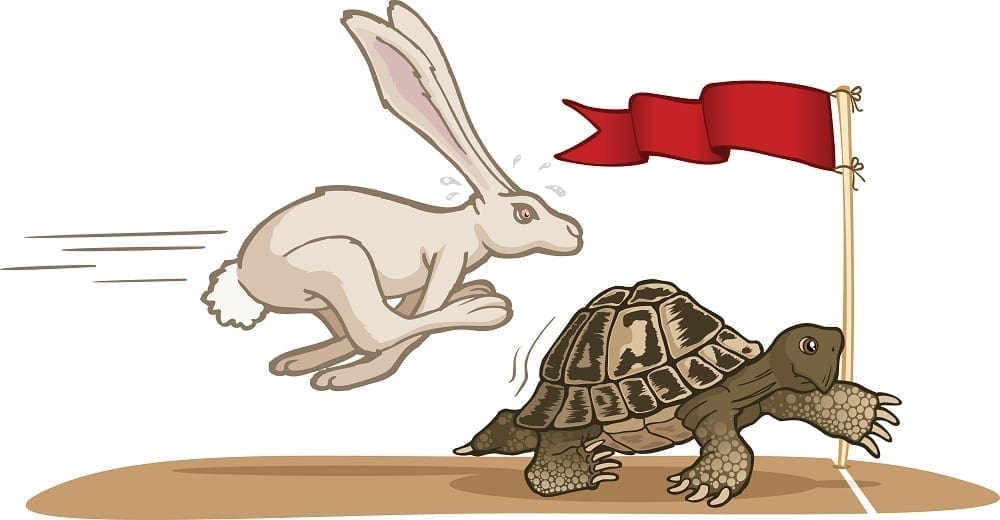 As in the story I recounted in the Tell More Stories article a couple of weeks ago, slow and steady wins the race. That goes for growth as well, whether for an entire philosophy or certain aspects.
I’ve been on the inside as an elected official, and bureaucracy does move with the speed of molasses. In the winter. Uphill. Unless there is a manufactured urgency to DO SOMETHING, when a the square peg will be shoved into a round hole.
We haven’t won over the hearts and minds yet though. We have a long way to go in that regard. When large numbers of people begin to value freedom the same way that you and I do, we can focus our conversations there and on our path to electoral successes, if they are even necessary.
There is no silver bullet. We are building a movement for Liberty, and that growth doesn’t happen overnight, but it’s happening faster with each passing day.
Remember, politicians and laws don’t change hearts and minds, and we don’t win anything without those.
As in the story I recounted in the Tell More Stories article a couple of weeks ago, slow and steady wins the race. That goes for growth as well, whether for an entire philosophy or certain aspects.
I’ve been on the inside as an elected official, and bureaucracy does move with the speed of molasses. In the winter. Uphill. Unless there is a manufactured urgency to DO SOMETHING, when a the square peg will be shoved into a round hole.
We haven’t won over the hearts and minds yet though. We have a long way to go in that regard. When large numbers of people begin to value freedom the same way that you and I do, we can focus our conversations there and on our path to electoral successes, if they are even necessary.
There is no silver bullet. We are building a movement for Liberty, and that growth doesn’t happen overnight, but it’s happening faster with each passing day.
Remember, politicians and laws don’t change hearts and minds, and we don’t win anything without those.

What House of Cards Gets (Very) Wrong
What House of Cards Gets (Very) Wrong
This article was featured in our weekly newsletter, the Liberator Online. To receive it in your inbox, sign up here. Sandy Ikeda, a professor of economics at Purchase College, SUNY, and the author of The Dynamics of the Mixed Economy: Toward a Theory of Interventionism, wrote about why everyone’s favorite TV show is wrong on its portrayal of an economic crisis. In his article for the Foundation for Economic Education, Ikeda argues that, while House of Cards is a major hit among political animals, whether they are progressive, conservative, or libertarian, its portrayal of welfare policies and shortages is extremely unrealistically.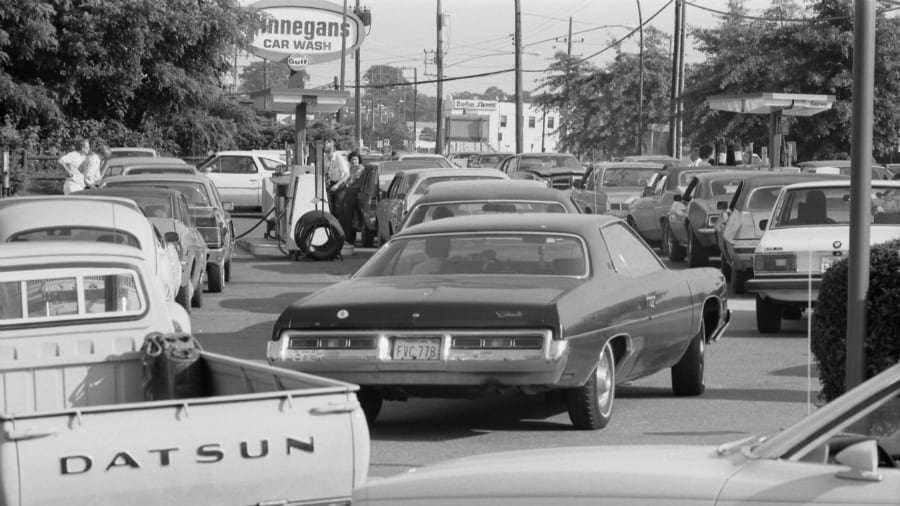 In the third season of House of Cards, ficticious president Frank Underwood proposed a major policy program known as “America Works,” a policy that intended to “create” millions of jobs. Despite the superhuman goals tied to the policy, the real-world consequences of such endeavor were never even questioned, leaving a lot to the imagination.
But as Americans binge-watch season four, Ikeda points out to another faulty portrayal of public policy and its consequences. This time around, the show’s writers failed to grasp what a gas crisis actually looks like.
During the fourth season, the show introduces the audience to Underwood’s America, where an ongoing oil crisis threatens Underwood’s popularity among voters. The audience is told to believe that gas prices have soared, nearing the $7 a gallon mark. Yet any “astute first-year econ student” will tell you that this is very unlikely, at least in a country in which price controls haven’t been enacted—yet.
According to Ikeda, if buyers and sellers are free to adjust prices, gas stations all selling gas for $7 a gallon is a fabrication. “In the absence of price controls,” Ikeda writes, “the quantity demanded and supplied will tend to be equal.” That means that markets won’t have any unexpected inventory accumulation, since most of the oil will be sold, but it will also suffer no shortages, since consumers who are scared by the high prices will simply walk away, empty-handed.
To Ikeda, the scenes depicting long lines of angry drivers waiting at gas stations while these same stations are shown running out of gas are completely unlikely to occur in a real world scenario.
Ikeda adds that, the only thing that could actually cause America to experience something similar is the implementation of a price ceiling, making it illegal for gas stations to sell gas above a certain price.
In the 1970s, the Organization of the Petroleum Exporting Countries (OPEC) flexed their monopolistic muscle by pushing oil prices up dramatically. The long lines and rationing in America that followed OPEC’s actions weren’t caused by the artificial price increase. Instead, price control policies that affected gasoline and diesel fuel prices led to the consequences often tied to what we now call the “oil crisis.” Many ignore the fact that President Richard Nixon had imposed wage and price controls on the American economy prior to the incident, and what followed was chronic shortage everywhere, not only at the pump.
While Underwood’s line about the government having “all the men with guns” may be of great inspiration to liberty advocates everywhere, the show’s ignorant remarks on economics may disappoint some viewers.
Why didn’t Netflix use an economic consultant?
In the third season of House of Cards, ficticious president Frank Underwood proposed a major policy program known as “America Works,” a policy that intended to “create” millions of jobs. Despite the superhuman goals tied to the policy, the real-world consequences of such endeavor were never even questioned, leaving a lot to the imagination.
But as Americans binge-watch season four, Ikeda points out to another faulty portrayal of public policy and its consequences. This time around, the show’s writers failed to grasp what a gas crisis actually looks like.
During the fourth season, the show introduces the audience to Underwood’s America, where an ongoing oil crisis threatens Underwood’s popularity among voters. The audience is told to believe that gas prices have soared, nearing the $7 a gallon mark. Yet any “astute first-year econ student” will tell you that this is very unlikely, at least in a country in which price controls haven’t been enacted—yet.
According to Ikeda, if buyers and sellers are free to adjust prices, gas stations all selling gas for $7 a gallon is a fabrication. “In the absence of price controls,” Ikeda writes, “the quantity demanded and supplied will tend to be equal.” That means that markets won’t have any unexpected inventory accumulation, since most of the oil will be sold, but it will also suffer no shortages, since consumers who are scared by the high prices will simply walk away, empty-handed.
To Ikeda, the scenes depicting long lines of angry drivers waiting at gas stations while these same stations are shown running out of gas are completely unlikely to occur in a real world scenario.
Ikeda adds that, the only thing that could actually cause America to experience something similar is the implementation of a price ceiling, making it illegal for gas stations to sell gas above a certain price.
In the 1970s, the Organization of the Petroleum Exporting Countries (OPEC) flexed their monopolistic muscle by pushing oil prices up dramatically. The long lines and rationing in America that followed OPEC’s actions weren’t caused by the artificial price increase. Instead, price control policies that affected gasoline and diesel fuel prices led to the consequences often tied to what we now call the “oil crisis.” Many ignore the fact that President Richard Nixon had imposed wage and price controls on the American economy prior to the incident, and what followed was chronic shortage everywhere, not only at the pump.
While Underwood’s line about the government having “all the men with guns” may be of great inspiration to liberty advocates everywhere, the show’s ignorant remarks on economics may disappoint some viewers.
Why didn’t Netflix use an economic consultant?

Oh, for the Love of Everything: CNN Poll Finds Bush with a Positive Favorability Rating
Oh, for the Love of Everything: CNN Poll Finds Bush with a Positive Favorability Rating
This article was featured in our weekly newsletter, the Liberator Online. To receive it in your inbox, sign up here. Remember President George W. Bush? He’s the guy who ran huge budget deficits because of his addiction to spending, led the country into an unnecessary war in Iraq that led to the deaths of nearly 4,500 American soldiers, greatly expanded the powers of the executive, and bailed out Wall Street. With a record like that, which only touches the surface of how bad of a president Bush was, one would think Americans wouldn’t think too fondly of him. Well, apparently, one would be wrong. A new CNN poll finds that Bush, who left office in January 2009, actually view Bush positively. “According to the poll, 52% of adults had a favorable impression of George W. Bush, 43% unfavorable,” CNN reported on Wednesday. “When Bush left office in 2009, only about a third of Americans said they had a positive opinion of him.”
Amazingly, it’s not just Republicans and conservatives driving Bush’s numbers upwards. CNN notes that his favorability has grown even among those who opposed most of his policies.
“Bush remains broadly unpopular among groups that made up his main opponents during his time in office: Democrats (70% unfavorable), liberals (68% unfavorable) non-whites (54% unfavorable), and those under age 35 (53% unfavorable),” CNN explained. “But even among these groups, he’s gained some ground since leaving office. In February 2009, 85% of Democrats and 90% of liberals had a negative take on the president, as did 75% of non-whites and more than 6 in 10 young adults.”
Some would argue that President Barack Obama, who received an even split at 49%, is just that bad. Certainly, Obama hasn’t been an improvement over his predecessor and, in many ways, has been much worse. But the absence of Bush in the Oval Office doesn’t mean that voters should have a favorable view of him.
The tension in the Middle East over the Islamic State of Iraq and the Levant (ISIL) may be part of the reason why Bush is rising and Obama is falling. At the same time, voters should remember that Iraq and the rise of ISIL is a failure of the Bush administration.
Certainly, Obama’s foreign policy has been hawkish in some respects, such as Libya, and disastrous in others, like Ukraine, where tensions with Russia have boiled over. But that it doesn’t compare to the utter disgrace that was Bush’s foreign policy.
And again, it’s not just Bush’s foreign policy. He was bad on almost everything. It’s been said voters have a short-term memory; that they’re willing to forgive and move on. That may be true, but failing to remember the lessons of bad presidents means we’re doomed to repeat them again and again.
A new CNN poll finds that Bush, who left office in January 2009, actually view Bush positively. “According to the poll, 52% of adults had a favorable impression of George W. Bush, 43% unfavorable,” CNN reported on Wednesday. “When Bush left office in 2009, only about a third of Americans said they had a positive opinion of him.”
Amazingly, it’s not just Republicans and conservatives driving Bush’s numbers upwards. CNN notes that his favorability has grown even among those who opposed most of his policies.
“Bush remains broadly unpopular among groups that made up his main opponents during his time in office: Democrats (70% unfavorable), liberals (68% unfavorable) non-whites (54% unfavorable), and those under age 35 (53% unfavorable),” CNN explained. “But even among these groups, he’s gained some ground since leaving office. In February 2009, 85% of Democrats and 90% of liberals had a negative take on the president, as did 75% of non-whites and more than 6 in 10 young adults.”
Some would argue that President Barack Obama, who received an even split at 49%, is just that bad. Certainly, Obama hasn’t been an improvement over his predecessor and, in many ways, has been much worse. But the absence of Bush in the Oval Office doesn’t mean that voters should have a favorable view of him.
The tension in the Middle East over the Islamic State of Iraq and the Levant (ISIL) may be part of the reason why Bush is rising and Obama is falling. At the same time, voters should remember that Iraq and the rise of ISIL is a failure of the Bush administration.
Certainly, Obama’s foreign policy has been hawkish in some respects, such as Libya, and disastrous in others, like Ukraine, where tensions with Russia have boiled over. But that it doesn’t compare to the utter disgrace that was Bush’s foreign policy.
And again, it’s not just Bush’s foreign policy. He was bad on almost everything. It’s been said voters have a short-term memory; that they’re willing to forgive and move on. That may be true, but failing to remember the lessons of bad presidents means we’re doomed to repeat them again and again.
They Said It… Dr. Oz, John Stossel, And More!
(From the They Said It section in Volume 19, No. 9 of the Liberator Online. Subscribe here!)
IN OPPOSITION: “I rise today to oppose the nomination of anyone who would argue that the  president has the power to kill American citizens not involved in combat. I rise today to say that there is no legal precedent for killing American citizens not directly involved in combat and that any nominee who rubber stamps and grants such power to a president is not worthy of being placed one step away from the Supreme Court. …Are we comfortable killing American citizens, no matter how awful or heinous the crime they’re accused of, are we comfortable killing them based on accusations that no jury has reviewed?” — Sen. Rand Paul on the Senate floor May 21, 2014, explaining his objections to nominating David Barron to the U.S. Court of Appeals for the 1st Circuit.
DR. OZ JUMPS ON MEDICAL MARIJUANA BANDWAGON:
president has the power to kill American citizens not involved in combat. I rise today to say that there is no legal precedent for killing American citizens not directly involved in combat and that any nominee who rubber stamps and grants such power to a president is not worthy of being placed one step away from the Supreme Court. …Are we comfortable killing American citizens, no matter how awful or heinous the crime they’re accused of, are we comfortable killing them based on accusations that no jury has reviewed?” — Sen. Rand Paul on the Senate floor May 21, 2014, explaining his objections to nominating David Barron to the U.S. Court of Appeals for the 1st Circuit.
DR. OZ JUMPS ON MEDICAL MARIJUANA BANDWAGON:
 “I grew up like most of my generation believing that marijuana was something Satan was throwing at Americans, a communist plot. But I think most of us have come around to the believe that marijuana is hugely beneficial when used correctly for medicinal purposes.” — TV megastar Dr. Mehmet Oz on “Larry King Live,” May 14, 2014. Oz is hardly alone. Earlier this year a CBS News poll found a whopping 86 percent of Americans think doctors should be able to legally prescribe medical cannabis to patients suffering from serious illnesses. Numerous other polls indicate a majority of Americans favor re-legalization for recreational use as well.
LEGAL POT KILLS BLACK MARKETS: “It’s not worth it anymore. I wish the Americans would stop with this legalization.” — Rodrigo Silla, 50, a lifelong cannabis farmer in Mexico, quoted in the Washington Post. Silla, like other Mexican pot farmers, has stopped growing marijuana because the U.S. has re-legalized marijuana or allows it for medical use in 20 states and the District of Columbia. This has gutted the market and lowered prices by 3/4s — exactly as libertarians predicted. Unfortunately, but also predictably, Mexican drug cartels are now pushing heroin harder than ever to make up for their pot losses. Hmmm… how could we stop that?
DO-IT-YOURSELF: “In 2003, the Brooklyn Public Library (BPL) spent $400,000 digitizing The Brooklyn Daily Eagle, which was among the most widely read and influential papers in 19th century America. A decade later, the library was still raising money to finish the remaining 52 years of the Daily Eagle’s run. In the meantime, [Tom] Tryniski digitized all 115 years of the paper in about five months working alone.” — journalist Jim Epstein, “A Retiree Digitizes 27 Million Old Newspaper Pages in His Living Room (and Libraries Fight to Catch Up),” Reason blog, May 18, 2014.
GOV’T KILLING AMERICAN DREAM: “Dallas Mavericks owner
“I grew up like most of my generation believing that marijuana was something Satan was throwing at Americans, a communist plot. But I think most of us have come around to the believe that marijuana is hugely beneficial when used correctly for medicinal purposes.” — TV megastar Dr. Mehmet Oz on “Larry King Live,” May 14, 2014. Oz is hardly alone. Earlier this year a CBS News poll found a whopping 86 percent of Americans think doctors should be able to legally prescribe medical cannabis to patients suffering from serious illnesses. Numerous other polls indicate a majority of Americans favor re-legalization for recreational use as well.
LEGAL POT KILLS BLACK MARKETS: “It’s not worth it anymore. I wish the Americans would stop with this legalization.” — Rodrigo Silla, 50, a lifelong cannabis farmer in Mexico, quoted in the Washington Post. Silla, like other Mexican pot farmers, has stopped growing marijuana because the U.S. has re-legalized marijuana or allows it for medical use in 20 states and the District of Columbia. This has gutted the market and lowered prices by 3/4s — exactly as libertarians predicted. Unfortunately, but also predictably, Mexican drug cartels are now pushing heroin harder than ever to make up for their pot losses. Hmmm… how could we stop that?
DO-IT-YOURSELF: “In 2003, the Brooklyn Public Library (BPL) spent $400,000 digitizing The Brooklyn Daily Eagle, which was among the most widely read and influential papers in 19th century America. A decade later, the library was still raising money to finish the remaining 52 years of the Daily Eagle’s run. In the meantime, [Tom] Tryniski digitized all 115 years of the paper in about five months working alone.” — journalist Jim Epstein, “A Retiree Digitizes 27 Million Old Newspaper Pages in His Living Room (and Libraries Fight to Catch Up),” Reason blog, May 18, 2014.
GOV’T KILLING AMERICAN DREAM: “Dallas Mavericks owner  Mark Cuban left school with no money and no job prospects. He managed to become a billionaire by creating several businesses from scratch. I asked him if he could do it again today, and he said, ‘No … now there’s so much paperwork and regulation, so many things that you have to sign up for, that you have a better chance of getting in trouble than you do of being successful.’ That’s tragic. … Government mostly hinders us, and then brags that it is waiting to take charge when we fail.” — award-winning libertarian journalist John Stossel, “Regulating Away the American Dream,” April 30, 2014.
GOV’T PERMISSION REQUIRED TO WORK:
Mark Cuban left school with no money and no job prospects. He managed to become a billionaire by creating several businesses from scratch. I asked him if he could do it again today, and he said, ‘No … now there’s so much paperwork and regulation, so many things that you have to sign up for, that you have a better chance of getting in trouble than you do of being successful.’ That’s tragic. … Government mostly hinders us, and then brags that it is waiting to take charge when we fail.” — award-winning libertarian journalist John Stossel, “Regulating Away the American Dream,” April 30, 2014.
GOV’T PERMISSION REQUIRED TO WORK:
 “At the state level, government regulation has become so lucrative for crony-capitalists that today almost 40 percent of U.S. jobs require a government license versus about 5 percent a generation ago. Louisiana requires $2,000 plus 80 hours of study to become a florist, while Utah requires hair braiders to get a beautician license that costs $18,000 and 2,000 hours of study.” — economist Antony Davies, “Consumers Are the Best Regulators,” US News & World Report online, May 12, 2014.
 spend money. You can spend your own money on yourself. When you do that, why then you really watch out what you’re doing, and you try to get the most for your money. Then you can spend your own money on somebody else. For example, I buy a birthday present for someone. Well, then I’m not so careful about the content of the present, but I’m very careful about the cost. Then, I can spend somebody else’s money on myself. And if I spend somebody else’s money on myself, then I’m sure going to have a good lunch! Finally, I can spend somebody else’s money on somebody else. And if I spend somebody else’s money on somebody else, I’m not concerned about how much it is, and I’m not concerned about what I get. And that’s government. And that’s close to 40% of our national income.” — Milton Friedman, Fox News interview (May 2004), requoted by Mark D. Friedman in comments field of BleedingHeartsLibertarian.com article.
president has the power to kill American citizens not involved in combat. I rise today to say that there is no legal precedent for killing American citizens not directly involved in combat and that any nominee who rubber stamps and grants such power to a president is not worthy of being placed one step away from the Supreme Court. …Are we comfortable killing American citizens, no matter how awful or heinous the crime they’re accused of, are we comfortable killing them based on accusations that no jury has reviewed?” — Sen. Rand Paul on the Senate floor May 21, 2014, explaining his objections to nominating David Barron to the U.S. Court of Appeals for the 1st Circuit.
DR. OZ JUMPS ON MEDICAL MARIJUANA BANDWAGON:
“I grew up like most of my generation believing that marijuana was something Satan was throwing at Americans, a communist plot. But I think most of us have come around to the believe that marijuana is hugely beneficial when used correctly for medicinal purposes.” — TV megastar Dr. Mehmet Oz on “Larry King Live,” May 14, 2014. Oz is hardly alone. Earlier this year a CBS News poll found a whopping 86 percent of Americans think doctors should be able to legally prescribe medical cannabis to patients suffering from serious illnesses. Numerous other polls indicate a majority of Americans favor re-legalization for recreational use as well.
LEGAL POT KILLS BLACK MARKETS: “It’s not worth it anymore. I wish the Americans would stop with this legalization.” — Rodrigo Silla, 50, a lifelong cannabis farmer in Mexico, quoted in the Washington Post. Silla, like other Mexican pot farmers, has stopped growing marijuana because the U.S. has re-legalized marijuana or allows it for medical use in 20 states and the District of Columbia. This has gutted the market and lowered prices by 3/4s — exactly as libertarians predicted. Unfortunately, but also predictably, Mexican drug cartels are now pushing heroin harder than ever to make up for their pot losses. Hmmm… how could we stop that?
DO-IT-YOURSELF: “In 2003, the Brooklyn Public Library (BPL) spent $400,000 digitizing The Brooklyn Daily Eagle, which was among the most widely read and influential papers in 19th century America. A decade later, the library was still raising money to finish the remaining 52 years of the Daily Eagle’s run. In the meantime, [Tom] Tryniski digitized all 115 years of the paper in about five months working alone.” — journalist Jim Epstein, “A Retiree Digitizes 27 Million Old Newspaper Pages in His Living Room (and Libraries Fight to Catch Up),” Reason blog, May 18, 2014.
GOV’T KILLING AMERICAN DREAM: “Dallas Mavericks owner Mark Cuban left school with no money and no job prospects. He managed to become a billionaire by creating several businesses from scratch. I asked him if he could do it again today, and he said, ‘No … now there’s so much paperwork and regulation, so many things that you have to sign up for, that you have a better chance of getting in trouble than you do of being successful.’ That’s tragic. … Government mostly hinders us, and then brags that it is waiting to take charge when we fail.” — award-winning libertarian journalist John Stossel, “Regulating Away the American Dream,” April 30, 2014.
GOV’T PERMISSION REQUIRED TO WORK:
“At the state level, government regulation has become so lucrative for crony-capitalists that today almost 40 percent of U.S. jobs require a government license versus about 5 percent a generation ago. Louisiana requires $2,000 plus 80 hours of study to become a florist, while Utah requires hair braiders to get a beautician license that costs $18,000 and 2,000 hours of study.” — economist Antony Davies, “Consumers Are the Best Regulators,” US News & World Report online, May 12, 2014.
RE-QUOTED AND NOTED
MILTON FRIEDMAN ON FOUR WAYS TO SPEND MONEY: “There are four ways in which you can spend money. You can spend your own money on yourself. When you do that, why then you really watch out what you’re doing, and you try to get the most for your money. Then you can spend your own money on somebody else. For example, I buy a birthday present for someone. Well, then I’m not so careful about the content of the present, but I’m very careful about the cost. Then, I can spend somebody else’s money on myself. And if I spend somebody else’s money on myself, then I’m sure going to have a good lunch! Finally, I can spend somebody else’s money on somebody else. And if I spend somebody else’s money on somebody else, I’m not concerned about how much it is, and I’m not concerned about what I get. And that’s government. And that’s close to 40% of our national income.” — Milton Friedman, Fox News interview (May 2004), requoted by Mark D. Friedman in comments field of BleedingHeartsLibertarian.com article.