











Beta

Password Reset Confirmation

If an account matching the email you entered was found, you will receive an email with a link to reset your password.

Welcome to our Beta

The Advocates of Self-Government is preparing a new experience for our users.

User Not Found

The username/email and password combination you entered was not found. Please try again or contact support.

Skip to main content

Quizzes & Apps

Articles

Tag: president donald trump

New York City Mayor Uses Coronavirus Crisis To Promote Nationalization

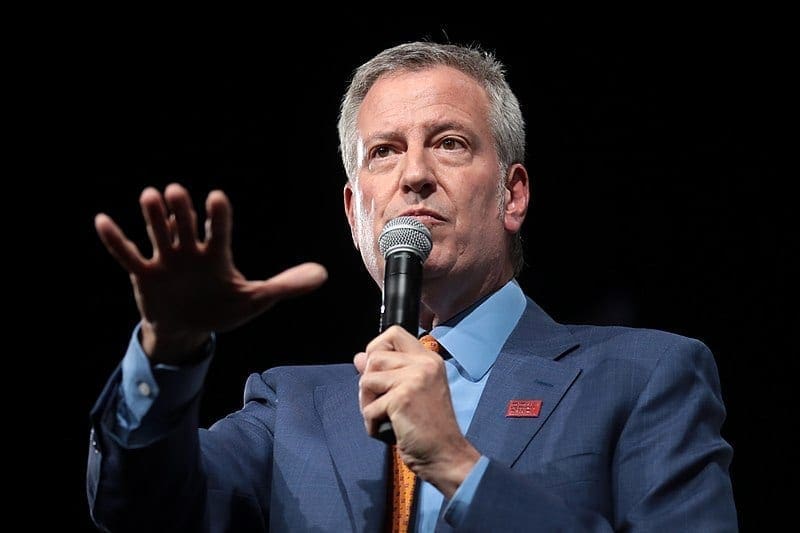
On March 14, 2020, New York City Mayor Bill de Blasio called for the nationalization of certain industries to tackle the novel coronavirus that has been spreading across the globe. De Blasio went on MSNBC to chat with news host Joy Reid to make the case for radical government action. bill de blasio nationalization “Here’s the reality. This is a war-like situation. We’re in a wartime scenario with a Mar-a-Lago attitude being used by the federal government. It’s so laid back, and I don’t understand it,” he told Reid. “By the way, testing. How about ventilators? Where is the federal government making sure our hospitals have the ventilators we’re going to need? Where is the federal government when it comes to surgical masks, getting them distributed? This is a case for a nationalization of crucial factories and industries – literally a nationalization – that could produce the medical supplies to prepare this country for what we need.” In the face of the coronavirus outbreak, New York Governor Andrew Cuomo was able to enlist state prisoners to produce hand sanitizer. For de Blasio, however, this strategy is only one piece of the puzzle in effectively fighting the coronavirus. “The point I’m saying is the federal government should recognize this is a crucial part of stopping this. There should be a national approach to ensuring every factory that can make hand sanitizer should be on 24/7 shifts and the distribution should go to the places that need it most,” the mayor remarked. “We’re not into the discussion because we can’t even get the testing.” Nationalizing “crucial factories and industries” is textbook top-down socialism, as private property is seized by the state in a desperate attempt to stave off a crisis. One can make a good case for state governments and local entities taking necessary steps to curb transmission of the virus in their jurisdictions. However, using this outbreak to engage in outright nationalization is a clear example of a power grab. Economist Ludwig von Mises offered powerful insights about the authoritarian nature of central planning. It is one of the great enablers of authoritarian dictatorship, given how conceited some politicians are. They think they know what’s best for a country, as opposed to free individuals and the subsidiary institutions they form. Mises observed the following in his book, Planned Chaos:
The planner is a potential dictator who wants to deprive all other people of the power to plan and act according to their own plans. He aims at one thing only: the exclusive absolute preeminence of his own plan.
One would think that the fall of the Soviet Union and China’s transition from economic Maoism would have put these disastrous ideas to rest. However, there appears to be a residual acceptance among a section of the population who still believes in the economic authoritarianism of these failed schemes. A potential nationalization of certain American industries could create severe economic dislocations, resulting in the inefficient allocation of essential goods and services that would otherwise be provided under normal market circumstances. A better approach would be to keep the private sector intact and let them cooperate with all levels of government to stem the crisis. Economic education continues to be necessary in order to not repeat the mistakes of the past. In the meantime, civil society, companies, and local and state governments should work as hard as possible to stop the spread of this virus. Nevertheless, we should be leery of any politician who is using this crisis to promote certain forms of government overreach.

Idaho Lieutenant Governor Wants to End Unconstitutional Wars

Throughout 2016, President Donald Trump campaigned to end the “never-ending” wars in the Middle East. unconstitutional wars Fast forward to 2020, and there’s been tepid progress on scaling back conflicts like the Afghan war. One positive sign was the deal that the Taliban reached with the U.S. government on February 29, 2020. Under this deal, the U.S would begin withdrawing troops on the condition that the Taliban would no longer let Afghanistan become a safe haven for terrorists. So, this deal is a good start. But this would have never happened without certain people in the media like commentator Tucker Carlson, grassroots activists, and state politicians putting pressure on Trump to follow through with his promise. One politician who stood out in making Trump live up to his promise was Idaho Lieutenant Governor Janice McGeachin. The lieutenant governor was championing “Defend the Guard” legislation, which requires that Idaho’s guard personnel cannot be activated for combat duty overseas unless Congress issues a formal war declaration. Similar legislation has been pursued in states like Oklahoma, where State Senator Nathan Dahm introduced a bill that would keep the state guard from serving in unconstitutional foreign conflicts. McGeachin drew from the Founding Fathers such as George Washington, Thomas Jefferson, and Benjamin Franklin — who were all skeptics of indiscriminate military action — to justify her efforts to bring some sanity into foreign policy. She called attention to America’s decades of undeclared wars and global democratic crusades based on dubious constitutional and political premises. The war in Afghanistan has cost the U.S. thousands of soldiers’ lives and $1 trillion in nearly two decades of occupation. When factoring in other costs related to the Iraq War and the overarching “War on Terror”, the U.S. has spent over $6 trillion. Undoubtedly, America’s blood and treasure are being drained in these nation-building programs. McGeachin appealed to the Constitution by noting that Section 8 of the document states that only “Congress shall have the power to declare war.” That stipulation has largely been ignored during the last 70 years. The last time a formal war declaration was made was during World War II. Foreign policy is a delicate subject. There are those who believe it’s America’s duty to police the world. This author, on the other hand, believes in a restrained foreign policy that is in line with the Founder’s vision. Regardless of where one stands on the issue, there is one undeniable truth: American taxpayers can no longer afford to finance the U.S.’s robust foreign policy. With trillions spent in our present foreign policy engagements and the U.S. debt at $23 trillion, America is reaching a point of no return for its fiscal profligacy. Should the American government’s negligent spending continue, successive generations will be left with massive tax burdens? Since the federal government is dragging its feet, state elected officials like McGeachin will have to lead the charge and make sure the president lives up to his word.

Rand Paul Exposes ‘Fake Outrage’ Over Trump Whistleblower With Bill to Protect Snowden

Political theater is rarely entertaining but Senator Rand Paul stole the show when he forced an early curtain call on senators pushing a phony whistleblower resolution. Paul introduced a bill that retroactively protects Edward Snowden and applies the Sixth Amendment to the president. On October 30, Senate Democrats showed that they will support or reject legislation based on a single factor of whether or not it helps impeach President Donald Trump, even if it’s a symbolic gesture. That’s why Senate Minority Leader Chuck Schumer of New York and Senator Mazie Hirono of Hawaii were so perturbed when Paul blocked their move to reach unanimous consent to pass a resolution that purports to honor “the contributions of whistleblowers.” “Not one of these people who fake outrage over this whistleblower and President Trump and the impeachment, not one of them will stand up for Edward Snowden,” Paul stated. “They would still put him in jail for life if they could.” In response, Hirono didn’t dare name Snowden but instead called Paul’s bill “laughable” because it restored the Sixth Amendment of the Constitution to the president, who under current rules is being prevented from facing his accuser, an ex-CIA agent who worked for Vice President Joe Biden on Ukraine.  This whistleblower’s name, Eric Ciaramella, is known widely in Washington, D.C., and has been printed in RealClearInvestigations, but he is both closely guarded and highly praised by many in power who hypocritically turned their backs on Snowden or even favored the death penalty in his case. Paul educated a reporter from The Hill on the legality of naming the whistleblower last week. The whistleblower is also a key witness to the alleged corruption of Biden, and his son Hunter, who received $50,000 a month from a Ukrainian energy firm under investigation by a Ukrainian prosecutor who Biden had removed in a quid pro quo arrangement. It’s always a good time to remind the U.S. government and the American people of the injustice done to Snowden, the greatest whistleblower of our time, who revealed illegal mass surveillance conducted on virtually all Americans. Tired and debunked shameful smears against Snowden erupted on Twitter after Paul invoked his name. Snowden isn’t a true whistleblower, they claim because he didn’t go through “proper channels.” Forget that Snowden’s peers – other whistleblowers charged under the Espionage Act, like Thomas Drake, did go through proper channels and were still denied an opportunity to present their case to a jury. Snowden, as a government contractor, didn’t have access to even the same protections that people like Chelsea Manning or Daniel Hale had.  Paul’s brilliant move left the Democrats openly choosing style over substance. The Trump-Ukraine whistleblower, a Democrat himself, is held up as a hero while Snowden is left exiled from the country he served with honor, all because the political show must go on.

Next Target In Trump’s Trade War: Olive Oil Consumers

One of the most overlooked consequences of any type of tax or tariff is that it often hurts the poorest among us. Unfortunately, politicians choose to ignore that small detail, promising that the tariff they are proposing is meant to help a certain cause or protect a particular industry. But while imposing tariffs on exports isn’t a novelty in the United States, President Donald Trump’s trade wars with China and now with Europe have gained a lot of traction in the news. Recently, however, this war became all too personal for countless households in the country as the president is threatening to impose tariffs on European products that could considerably increase the cost of goods such as olive oil. Olive oil consumption in the United States has grown exponentially over the years, with Spain, Italy, and Greece being the largest exporters. If Trump has his way, and a tariff that may reach the 100% mark is imposed, the cost of a bottle of olive oil in America could double. Additionally, an increase in the demand for nationally produced olive oil would be so great that the supply would dwindle, forcing Californian producers to raise their prices as well. Needless to say, more budget-conscious consumers would have to act accordingly, purchasing less expensive and less healthy alternatives or simply choosing to lower or completely cut on their consumption of the product instead. As highlighted by a CBS affiliate, Trump’s proposal to slap products such as olive oil with incredibly high tariffs is a response to the years that Europe has spent subsidizing companies like Airbus, reportedly making members of the European aeronautics industry more competitive than American firms. Unfortunately, Trump’s decision to “hit back” isn’t going to pressure European officials to rethink their subsidies. Instead, it will only hurt small businesses and consumers here at home. One of these businesses belongs to Pam Shaia. Her small olive oil store in Florida would be certainly hit, she told CBS. “Forty dollars on the consumer will wipe us out. No one is willing to pay $40 for a bottle,” she said.

Big Or Small, Tariffs Hurt Us All

Neither Europe nor China are blameless for the United States’ current trade wars, for they, too, play the protectionist game. By the same token, Democrats who are now raging against Trump for the way he’s pushing against other countries are also to blame, as many have remained quiet when members of their party took part in the same policy. But despite this reality, Trump is also to blame for continuing Washington’s neurotic and damaging policies. Instead of draining the swamp, the president is helping to make it deeper. In order to truly get back at Trump, what Europe and other countries should do, argues Richard M. Ebeling, is to lower their own import tariffs. By taking this step, Europe would not only make Trump look like a fool but would also help its citizens, as the price of many products would drop considerably thanks to a larger influx of cheaper goods. Unfortunately, it is rather unlikely that Europe will take this step. Instead, they might resort to even higher tariffs on American goods, further hurting their own residents as a result. In the end, both continents will suffer greatly due to their politicians’ stubbornness. And what’s worse, residents will be all the poorer too. As Murray Rothbard explained, tariffs aren’t meant to help anybody. Instead, they are put in place to attack the market and make it less efficient. As more nations embrace tariffs, he added, we should expect more poverty, and “a regression from civilization to barbarism.” https://newyork.cbslocal.com/2019/06/24/europe-tariffs-price-of-olive-oil-president-donald-trump-airbus-boeing/

Thank God Trump ‘Chickened Out’ After Iran Shot Down US Drone

President Donald Trump decided to show restraint when discussing Iran’s shooting down of a U.S. drone, telling the press he believed the act had been a “mistake.” While we cannot read the president’s mind, it’s clear he was attempting to play the instance down, perhaps precisely because U.S. military officials called this an “unprovoked attack,” and because his secretary of state, Mike Pompeo, had already told the press the U.S. wasn’t provoking Iran with harsher sanctions. Despite his cautious approach in public, news outlets, as well as Trump critics, didn’t wait long to accuse the president of “chickening out” of a conflict with Iran.
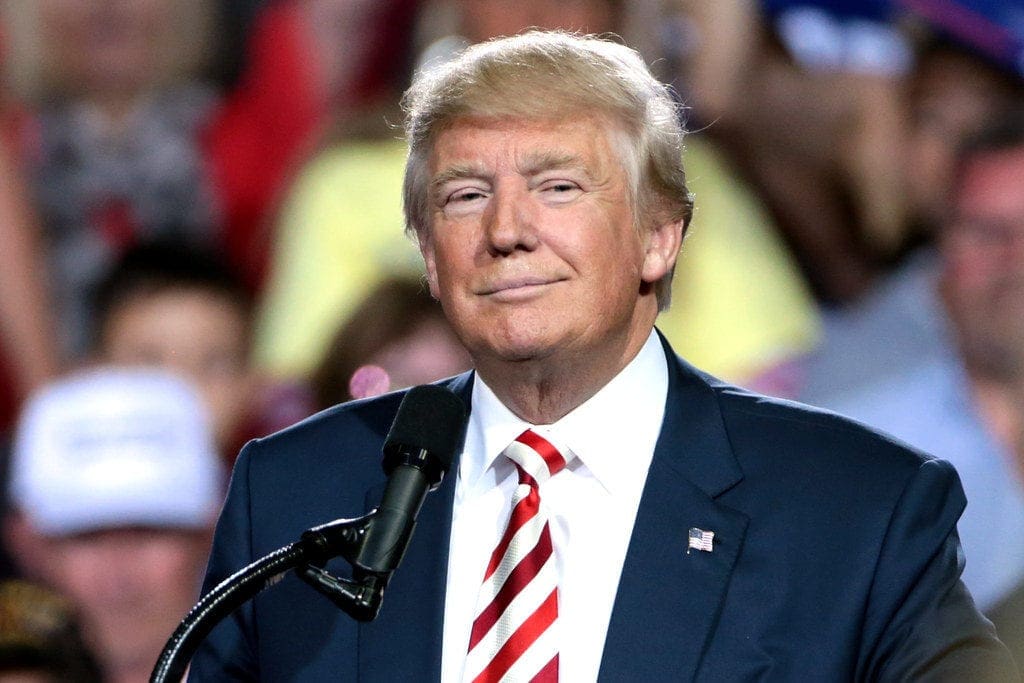
Image by Gage Skidmore (https://bit.ly/31Lb3ST)
The attack, which happened Wednesday night, involved a $130 million U.S. unmanned aircraft flying in what the United States said to be international airspace. Iranian officials, however, say the drone was flying in Iranian airspace. Last year, Trump announced the U.S. would no longer take part in the Iran nuclear deal, which had been brokered by President Barack Obama. And just prior to this incident, the U.S. blamed Iranian forces for an attack on oil tankers in the Strait of Hormuz, which prompted the Trump administration to announce it would be sending 1,000 troops to the Middle East. While Iran admits it shot down the U.S. drone, adding that it doesn’t seek war but will do what it takes to protect itself, the country claims it had nothing to do with the oil tanker attack. But considering the U.S. escalated tensions in the first place by reinstating crippling sanctions, the choice to dismiss this attack as a mistake might indicate that Trump isn’t necessarily trying to start a war with the Persian nation after all. However, some in the media seem a bit troubled by that. In the past, mainstream outlets cheered Trump when he decided to bomb a Syrian military base, proving that both left and right are ready to support the president if he’s waging a war. But when Trump announced it would no longer uphold the Iran deal, the same outlets warned — rightly so — that the move would be seen as a provocation. As former congressman Ron Paul explained, sanctions are an act of war. Therefore, any conflict borne out of his actions shouldn’t come as a surprise. But now that the U.S. took a blow directly from Iranian forces, it seems that war-thirsty elements are ready to use humiliation to force Trump to act in a more radical fashion. Hopefully, he won’t take the bait.
border wall

Don’t Like All The Fuss Over ‘The Wall?’ Limit The Damage The Feds Can Do

President Donald Trump’s plan to end the government shutdown includes $9.5 billion in aid, border security, and funds for the wall. In exchange, he’s willing to give short-term protections for immigrants eligible for Temporary Protected Status (TPS). A “good-faith compromise,” his White House promises, but to Democratic House Speaker Nancy Pelosi, this move is a “non-starter.” Senate Democratic Minority Leader Chuck Schumer also stood against it, claiming Trump is using the plan to “[offer] some of those protections that he took away back in exchange for the wall,” a move he compared to “hostage taking.” border wall This back and forth may sound just like business as usual in Washington, D.C., but because the government shutdown is at the center of this political duel, it is also clear the confrontation is but another product of the “larger culture war between red and blue America,” as the Mises Institute’s Tho Bishop put it. Unfortunately, when both parties have so much to use as leverage, they also have the power to fuel cultural conflicts as a result. Even when, deep down inside, these politicians all agree on the policies they fight over in public. The fact of the matter is that both parties use or have used the border wall as a means to get ahead. In the recent past, President Barack Obama, former Secretary of State Hillary Clinton, and Vice President Joe Biden all lobbied, supported, and advocated for harsher, more stringent border protection between Mexico and the United States. With Trump in power, the focus shifts and Democrats went all up in arms against the idea. The result was a partial government shutdown, which is holding us all hostage and costing businesses their livelihood as the usual federal roadblocks they have to overcome are now impossible to as there are even fewer government employees at work. In some states like Alaska, where 61 percent of the state’s government is managed by federal agencies, industries such as fishing, oil, and tourism are all suffering. And all because we place our trust in men and women thousands of miles away who know absolutely nothing about our needs. If the central government didn’t have such a huge presence in our daily lives, these fights in Washington would never be used as leverage, and politicians wouldn’t be able to use the power they have over to get what they want. But despite this reality, few if any members of the media are arguing that decentralization is the solution.

Make Communities Independent Again

As economist Ryan McMaken explained, power-thirsty politicians and their backers use the high concentration of power the federal government has as tools. And when the government controls everything from “cancer research to national parks,” McMaken added, “it’s only matter of time until we endure a political impasse over one of the countless issues being discussed.” The only way to make Washington, D.C., a little less dangerous is to dilute its power. And that involves not only being part of nullification movements, which empower states to refuse complying with federal rules. It also means actively taking the authority over the several issues the federal government oversees from its hands. The first step toward limiting the federal government is, as McMaken put it, be open and blunt about who’s to blame for this mess: those who mince no words in calling for giving the federal government more and more control over communities across the country. So next time someone tells you Trump is evil because he wants a wall, remind them that it is also the Democrats pushing for more federal control who are making it possible for the president to exert so much power over the southern states’ borders.