
You walk into a grocery store on a Tuesday. You put things in your cart. You head to the checkout. You tap your card, or your phone, or whatever frictionless payment mechanism your bank has enthusiastically rolled out in the name of convenience, and then something happens that has never happened before in the history of human commerce.
The money refuses.
The money does not refuse because there is not enough of it. The money refuses because someone, somewhere—someone who is not you—has decided that what you are attempting to buy is not something you are permitted to buy today. Or this week. Or until your social credit score improves. Or until you comply with a policy you may or may not have been informed of, through a process you have no right to appeal, administered by an institution you had no hand in electing.
Welcome to Central Bank Digital Currency, a technology several major governments are currently building, testing, and in some cases already deploying, which is either the most exciting development in monetary policy in decades or the most comprehensive surveillance and control infrastructure ever constructed, depending on which side of the off switch you plan to be on.
Previous articles (1, 2, 3, 4, 5, 6) covered the suppression infrastructure being built at the platform level, including reach suppression, shadowbanning, algorithmic siloing, behavioral data harvesting, and the attention-extraction economy. All of this is the soft infrastructure of control.
CBDC is the hard infrastructure. This is what happens when the same logic that lets a platform throttle your content gets applied to your ability to participate in economic life. It is the financial layer of everything this series has been describing, and it is considerably further along than most people realize.
What Central Bank Digital Currency Actually Is
Central Bank Digital Currency is programmable money issued directly by a central bank and stored on a centralized ledger controlled by that bank. It is not cryptocurrency. It does not share any of the properties that make cryptocurrency interesting as a tool of financial sovereignty. It is the opposite of those things, wearing the word “digital” as a disguise.
The “programmable” part is where the conversation needs to happen, and where it is conspicuously not happening in most mainstream coverage of the topic.
Programmable money means the issuer can attach conditions to the currency itself. Conditions about where it can be spent. Conditions about what it can be spent on. Conditions about when it expires. Conditions about who is permitted to hold it and under what circumstances that permission can be revoked. The money becomes a policy enforcement mechanism rather than a neutral medium of exchange, and the entity writing the policy is the same entity issuing the currency, which is the same entity with jurisdiction over your financial accounts, your tax obligations, and your economic participation in society generally.
To be very clear about the magnitude of what that means: Every mechanism of suppression described in these articles so far has operated at the platform level and has had workarounds. You can leave a social media platform. You can build an email list. You can migrate to decentralized communication infrastructure. You can move your content somewhere the algorithm cannot touch it.
You cannot leave money. And if money is water, CBDC is the water supply on a smart meter that can be shut off remotely.
The “Features” Nobody Is Putting In the Brochure
The people building CBDCs are not describing them this way in their public communications. They are describing them as more efficient, more inclusive, safer from fraud, better for the underbanked, and generally a warm and responsible modernization of the existing monetary system. These are the same people who described the platforms in this series as digital town halls that take your privacy seriously, so you will perhaps forgive a certain reflexive skepticism about the framing.
Here is what the “features” actually are when you read the technical documentation rather than the press releases:
What’s your political type?
Find out right now by taking The World’s Smallest Political Quiz.
Take the QuizProgrammable expiration dates. Several CBDC proposals and pilot programs have included the ability to set expiration dates on currency, meaning money that is not spent within a certain window simply ceases to exist. This is presented as a stimulus mechanism: If you know your currency expires, you will spend it faster, which stimulates the economy, which is good, according to the people who would control the expiration calendar. The fact that it also makes saving structurally difficult and keeps citizens in a permanent state of economic urgency is presumably just a coincidence.
Spending restrictions by category. CBDC infrastructure allows the issuing authority to restrict currency to approved categories of spending. This has been discussed in the context of welfare payments and government-issued benefits: Money issued for food cannot be spent on alcohol, for instance, which sounds reasonable until you notice that the infrastructure for restricting spending by category is the same infrastructure that can restrict spending by political affiliation, purchasing history, geographic location, carbon footprint score, vaccination status, or any other metric the issuing authority decides is relevant to your permission level. The category list is whatever they decide it is, and they decide it without asking you.
Negative interest rates enforced at the account level. Physical cash resists negative interest rates because you can simply withdraw your money and put it somewhere else. CBDC eliminates this escape route. A central bank that decides to implement a negative interest rate on held currency can enforce it on every account simultaneously with no mechanism of avoidance. Your money loses value at the rate they set, on the schedule they set, with no option to withdraw to a medium that does not comply.
Real-time transaction surveillance. Every CBDC transaction is logged on a centralized ledger. Every purchase, every transfer, every payment is a data point in a financial profile that is, by design, visible to the issuing authority. While cash has no memory, CBDC has a perfect one. The behavioral profiling described in Part 4 of this series, which covered data brokers selling your purchasing patterns to anyone with a budget and a use case, looks quaint compared to a system in which the currency itself is the surveillance mechanism and the issuing authority is the one holding the complete record.
Account suspension and freezing without due process. The financial deplatforming covered in Part 6 of this series, where payment processors and banks withdraw services from disfavored creators and organizations without notice or appeal, is a preview of what account control looks like at the CBDC level, except that at the CBDC level there is no alternative payment processor to move to. There is one currency. It is issued by one authority. And that authority can freeze your access to economic participation with the same unilateral finality that a platform uses to delete an account.
The Canadian government froze the bank accounts of truckers who participated in a protest in 2022, using existing banking infrastructure and emergency powers legislation. They did this without a court order. They did this to private citizens who had committed no crime. They did this to make a political point about the consequences of dissent. That was with the current system, which still has friction, still has banks that can push back, still has legal processes that can eventually intervene. The CBDC system not only removes the friction—the entire point of CBDCs is to remove the friction.
The Failure of Imagination: Why People Think This Is Fine
“The government would never use it that way.” The government already used the existing banking infrastructure that way in Canada in 2022, in Nigeria when it demonetized physical cash to force adoption of its CBDC in 2023, and in the European Union during various crises when financial sanctions were applied to individuals without judicial process. These are not hypothetical scenarios drawn from dystopian fiction. They are documented events from the recent past that involved the tools currently available. CBDCs give those tools considerably more precision and considerably less friction.
“I have nothing to hide financially.” This argument imports the same flawed premise it carries in every other context this series has addressed. The risk is manipulation, discrimination, and targeted coercion, not criminal exposure. You do not need to be hiding anything for a financial profile to be used against you. You need to be spending in ways someone finds inconvenient, donating to causes someone finds threatening, or associating with people someone finds undesirable. The profile decides the consequence. You find out afterward.
“Cash will always exist.” Cash is being phased out in multiple countries simultaneously. Sweden is functionally cashless. The UK, Australia, Canada, and the EU are all running CBDC pilot programs alongside steady reductions in cash infrastructure. The stated goal of several central bank frameworks is to replace physical currency entirely. The timeline varies. The direction is consistent.
“Cryptocurrency solves this.” Cryptocurrency in its current form provides meaningful protection against CBDC-style control, which is precisely why several governments are simultaneously advancing both CBDC implementation and cryptocurrency regulation. The regulatory pressure on cryptocurrency exchanges, the push for KYC (Know Your Customer) requirements that eliminate pseudonymity, and the proposed reporting requirements that would make crypto transactions as visible as bank transfers constitute the policy response to the sovereignty that cryptocurrency offers. The window in which cryptocurrency functions as a clean alternative to centralized financial infrastructure is not permanently guaranteed. It requires active defense.
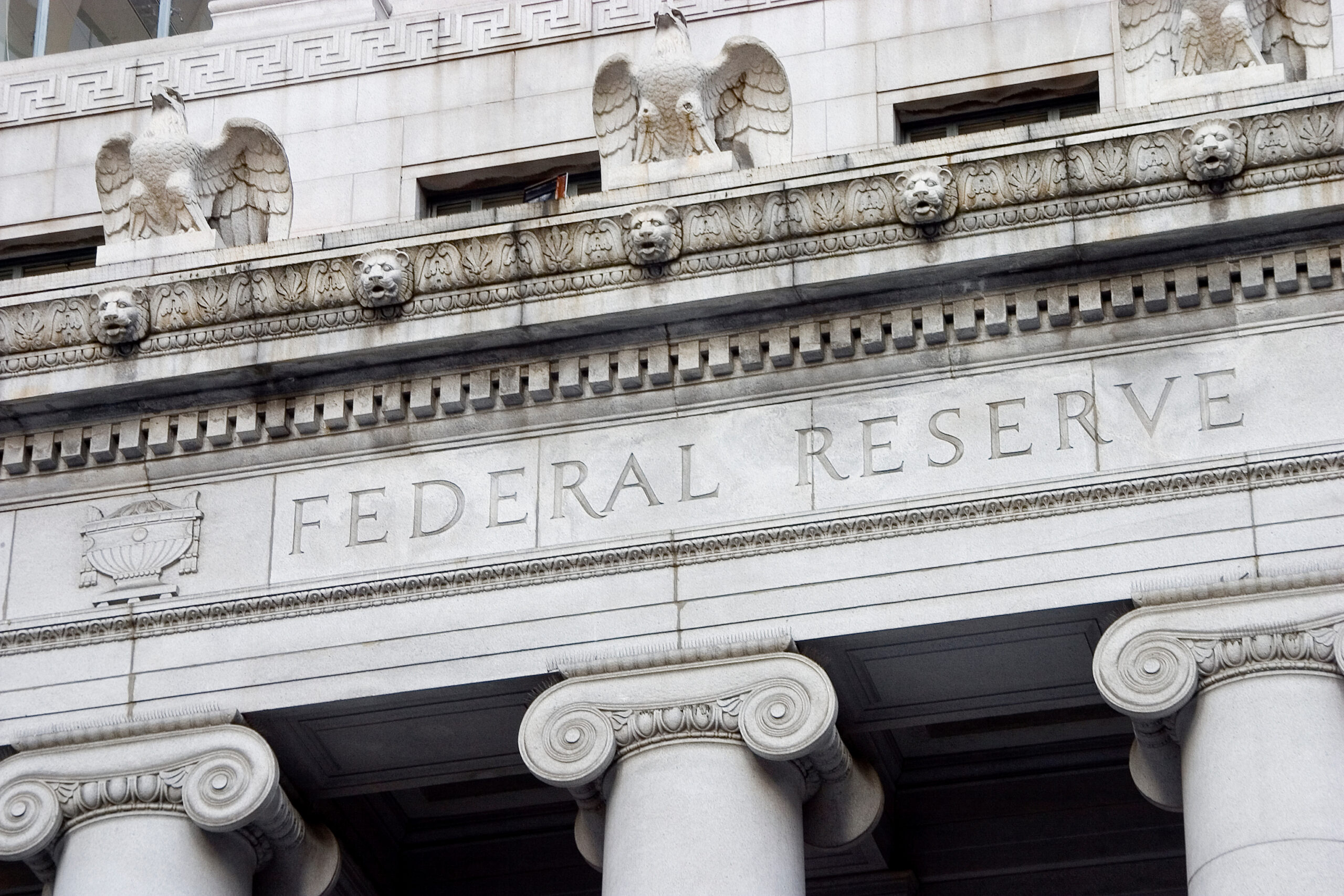
“This is a conspiracy theory.” Several major central banks, including the US Federal Reserve, the European Central Bank, the Bank of England, the People's Bank of China, and approximately 130 others, have published documentation of their CBDC research, pilot programs, and implementation timelines. The Bank for International Settlements, which is the central bank of central banks and not a shadowy organization that meets in a volcano lair, has published extensive technical and policy frameworks for CBDC adoption. This information is available on their websites, written by their economists, for anyone who would like to read it. The “conspiracy,” if there is one, has a remarkably robust publication record.
What You Can Do About It Right Now
Financial sovereignty is a practice, not a state you achieve once and then stop thinking about. The same logic that applies to building owned communication infrastructure before you need it applies here: Diversify before the window narrows, not after.
Hold some physical cash consistently. Physical cash is the only financial instrument that is anonymous by default, requires no infrastructure to function, cannot be remotely deactivated, and carries no transaction record. Most people have almost no cash on hand and have not thought about why. Maintaining a meaningful cash reserve is the financial equivalent of having a backup communication channel: You hope you never need it as your primary option, and you are very glad it exists when the primary option becomes unavailable.
Learn how cryptocurrency actually works, not just how to buy it. Understanding the difference between Bitcoin, which has a public ledger, and Monero, which has a private one, matters. Understanding how to hold cryptocurrency in self-custody, meaning in a wallet you control rather than on an exchange someone else controls, matters even more. An exchange that holds your cryptocurrency can freeze your access to it for exactly the same reasons a bank can freeze your account. Self-custody eliminates that vulnerability and introduces a different set of responsibilities that are worth understanding before you need to act on them.
Diversify into physical assets. Precious metals, land, tools, skills, and durable goods are stores of value that exist outside digital financial infrastructure entirely. This is the oldest form of financial sovereignty, and it remains effective for the same reason it always has: No one can shut off gold. It has no off switch. It has been irritating central authorities for just this reason for approximately five thousand years and shows no signs of stopping.
Build local exchange networks and relationships. The most suppression-resistant economic relationship is a direct one between two people who trust each other and have something to trade. Time banks, skill exchanges, local barter networks, and community mutual aid systems are the agorist infrastructure described in an upcoming article in this series. They are also immediately practical: A community with dense local exchange relationships is significantly less dependent on centralized financial infrastructure than one in which every transaction flows through a monitored digital system.
Know your bank's policies on account freezing and financial deplatforming. Credit unions tend to have stronger member protections than large commercial banks and are governed by different regulatory frameworks. Local and regional banks have more accountability to their communities than national institutions. This does not make them immune to pressure, but it changes the calculus.
Pay attention to CBDC legislation and pilot programs in your jurisdiction. Several US states have passed legislation restricting CBDC adoption or prohibiting state participation in federal CBDC programs. Florida, Louisiana, and others have moved in this direction. Supporting these efforts at the state level is one of the more effective points of intervention available to individuals who prefer their money to remain their own business.
Reduce dependency on financial infrastructure you distrust before that infrastructure becomes the only option. This is the same advice that closes every article in this series, applied to the financial layer. Build the lifeboat now … while the ship is still floating.
The Off Switch Has a Location
The people building the CBDC infrastructure have been asked directly, in congressional hearings and public forums, whether programmable currency could be used to restrict what people buy, freeze accounts without due process, or enforce behavioral compliance through financial access. The answers have been careful, reassuring, and notable for what they did not say. The technical documentation is less careful. The features being described throughout this article, the expiration dates, the spending restrictions, the account controls, are in the architecture because they were designed to be there. Features do not end up in technical specifications by accident.
The question worth asking is not whether the technology could be misused. Technology that can be misused will be misused on a long enough timeline by someone who has decided the situation requires it. The Canadian truckers thought the situation was unlikely too.
The question is what you are building now, while the window is still open, that does not depend on the goodwill of whoever happens to be holding the switch.
Your money exists outside a CBDC for exactly as long as the physical and decentralized alternatives remain available and you are actively using them. That window is measurable. The documentation is public. The timeline is not a secret.
Build accordingly.