
I’ve long been fascinated by the life of the late celebrity chef and storyteller Anthony Bourdain.
In crowded street scenes, I loved watching how easily he fell into conversation with locals, trading observations and jokes with a cook as food hissed in a hot pan, then joining the lively clatter of a table where strangers had gathered to eat. He didn’t just pass through a place. He allowed the community to invite him in.
Watching Bourdain’s documentaries, I can’t say whether he was drawn to libertarian or anarchist ideas. But as he moved through kitchens, markets, and remote villages, I saw him return to a quietly radical truth: people often know how to shape their lives better than government authorities give them credit for. They do it through skill, exchange, custom, and cooperation freely chosen.
To me, this is self-government in its most human form: people meeting the needs and possibilities right in front of them, together.
Bourdain and the Self-Governing Kitchen
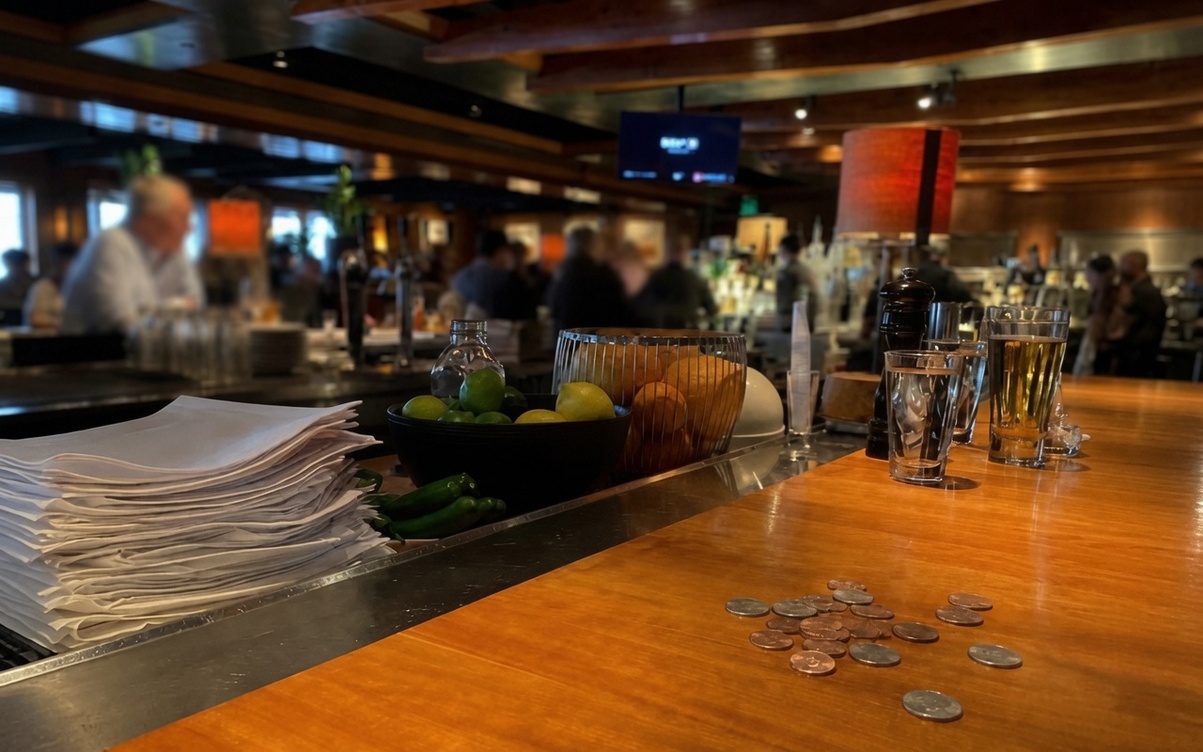
In reading his book Kitchen Confidential, I loved how Bourdain made the professional kitchen feel like a republic of the disregarded. Its citizens were line cooks, dishwashers, immigrants, misfits, and anyone who had learned to keep going under heat and pressure. Diners saw the plates arrive. What they rarely witnessed was the choreography, discipline, and behind-the-scenes intelligence that brought their culinary dish to the table.
Most chefs will tell you that a well-run kitchen needs a hierarchy. Anyone who has watched a dinner rush knows why. But authority earned through knowledge of the work is different from authority imposed by decree. A cook may take the lead because she can hold a station together, read the timing, and help the line recover. That authority carries weight because diners can taste the value of the work.
In God and the State, Russian revolutionary and political philosopher Mikhail Bakunin offered a memorable image for this distinction: when he needed boots, he consulted the bootmaker. I hear the same principle in Bourdain’s kitchens. Expertise matters. Competence deserves attention. But skill does not give anyone a blank check to rule every part of another person’s life.
Restaurant kitchens are not gentle democracies. Many are brutal, and after a hard day’s work, a paycheck can feel like scant compensation for what the job demands. Bourdain’s documentaries showed us both the damage and the camaraderie.
At their best, though, kitchens find order through local judgment, constant adjustment, and trust. Pierre-Joseph Proudhon called this possibility “order in anarchy” in What Is Property? The phrase unsettles anyone who has mistaken order for obedience.
My years in hospital administration in the 1980s and 1990s taught me that coordination and strategy matter. But believe me: an organization chart can’t tell you who knows what’s happening at the bedside, on the street, or at the stove.
Self-Government Begins with an Appetite
Bourdain’s story of addiction and recovery complicates any easy celebration of rugged self-reliance. I resist turning his recovery into a poster for willpower. Addiction is not a character flaw, and no one else can prescribe the path another person must take.
His story brings personal sovereignty close to the body. Before I ask who governs a country, I have to ask what governs me. Habits, hungers, resentments, and fears can become authorities of their own. We can denounce every external master and still be ruled by approval, distraction, intoxication, or outrage.
Taoism doesn’t ask us to conquer ourselves by force. It asks us to notice where force has made us rigid and to meet life with greater care. That isn’t passivity. Bourdain’s work, physical training, and curiosity gave his energy somewhere to go, but his death in 2018 reminds us not to mistake motion for proof that someone is fine. Even the most capable person in the room may need company and help.
Self-government cannot mean self-abandonment. Peter Kropotkin’s Mutual Aid reminds us that survival depends on more than isolated will. We feed one another, share knowledge, take turns, and notice who is missing.
Go Around the Official Tour
Bourdain distrusted what could be best described as the polished itinerary. In a 2018 interview with Popula, he explained why his crews tried to avoid official tourism and government cooperation. In some places, a driver or translator could also serve as a minder, keeping people from saying anything that might embarrass the state. The result was a stage set designed to make power look benevolent.
What’s your political type?
Find out right now by taking The World’s Smallest Political Quiz.
Take the QuizOfficial stories arrive with lighting, talking points, and a designated explainer. Bourdain knew a journalist’s agenda could distort a place, too. He asked simple questions, then watched what people did when the camera stopped asking them to perform.
He sought local knowledge. Ask a shopkeeper where she eats. Follow the lunch crowd. Let a cook explain why a dish matters. Someone who has prepared a meal for years may know more than a guidebook.
That approach has a Taoist quality to it. The Tao Te Ching warns against rulers who overmanage the world and congratulate themselves for the order they impose. A lighter touch leaves room for people to act and correct their course. The lesson is not that every custom is wise. It’s that wisdom is dispersed, and no single office holds the whole map.
The Wisdom of the Queue
Bourdain’s test for a promising street food stall was whether locals across income levels would wait for an inexpensive meal. That observation, shared in a Bon Appétit interview, is more revealing than a glossy ranking. The queue is not infallible, but it carries information no brochure can manufacture.
Economists might call this dispersed knowledge. I see something simpler. People are telling us with their feet and money what they value. A cooking stall survives because someone wants to cook, someone wants to eat, and they find one another.
Street food can be precarious, and licensing rules can make livelihoods harder to sustain. Yet the stall makes initiative visible. The vendor risks a morning’s labor, and neighbors decide whether to return. This is ordinary life, with bargains, improvisations, and small victories.
That is why I find Bourdain’s attention to food politically meaningful. A meal tells us who has access to a kitchen, whose work is hidden, which traditions survive, and who decides what counts as respectable. The most truthful answer may be on a plastic stool, eating from a bowl that costs less than a coffee from Starbucks.
Mocking Power, Then Making Gumbo
In Southern Louisiana’s Cajun country, Bourdain encountered the courir de Mardi Gras, where masked riders and runners gather ingredients door to door for a communal gumbo. The tradition carries irreverence toward clergy, landowners, and those who command respect. For a day, the poor turn the social order upside down. Then the ingredients go into a pot.
Mockery is not the whole point. The gathering becomes a meal. Masks loosen the grip of rank, and the gumbo gives everyone something practical to do. The pot grows from the neighborhood, not distant authority.
This to me is a picture of freedom. It is a community loose enough to laugh at its rulers and strong enough to feed itself. The Taoist lesson is to act with the materials at hand, not wait for perfect conditions or permission from someone who will never taste the food.
The Free Table Is the Point
So what does Bourdain offer those of us drawn to self-government? Here are my thoughts: Take competence seriously. Listen to the person who knows the work, while questioning anyone who claims authority beyond it. Follow the queue. Ask the neighbor.
Govern your appetites without mistaking discipline for invulnerability. Recognize that independence is not a demand to suffer in silence. Build tables. A life spent tearing down authority but making nothing with other people becomes another kind of poverty.
Taoism asks me to move with the living world instead of commanding it from a distance. It keeps my politics honest. Because the ultimate question is whether ordinary people can exercise judgment, take responsibility, and help one another.
That is the kitchen without a king. Cooks still need timing, standards, and a clear call when flames leap too high. Travelers need to listen. People at the table need to choose. No one has to pretend life can be managed from above or that freedom means eating alone.
Bourdain’s journey changed the way many of us looked at food and strangers. I take it as an invitation to travel lighter, notice more, and leave room for other people’s knowledge. Then find a place to sit, break bread, and let the conversation flow.