
The last installment ended with America behind me and nothing in front of me. Where in the world should I live?
One evening, I sat down and asked an AI model exactly that. Twenty-two, alone in a German flat, putting to software a question nobody in my life could answer.
Nobody I knew had done this. Rarely had I ever even heard of someone emigrating anywhere, let alone out of the West. There was no one to call.
The instinct seemed sound: feed in the constraints, receive the optimal answer. What came back was the United States, Switzerland, and Singapore.
Sure, I thought. Now can I get a real answer? I had asked a machine the biggest question of my life, and it read me the brochure.
I wanted to get out of Germany, and my default assumption was that I needed to do it in some official way. A company could sponsor me. A program could admit me. I was trying to leave the mainstream, but I was choosing the mainstream way to do it.
For two years, I had been watching politicians try to micromanage my life, and my plan for escaping was to ask a different set of clerks for approval to leave. I was young and naïve.
Over time, it dawned on me. Why was I waiting for permission at all? No offer was coming. No approved pathway would open for me. I had to take my freedom into my own hands.
The Clock
Urgency was taking hold. A central bank digital currency had been discussed for years and was suddenly being pushed. The General Manager of the BIS, the bank for central banks, laid out the future:
A key difference with a CBDC is the central bank will have absolute control on the rules and regulations that will determine the use of that expression of central bank liability, and also, we will have the technology to enforce that.—Agustín Carstens
This was not a hot-mic incident. He spoke it into a microphone intentionally, as a presentation of his vision.
The aim? Clear! Absolute control.
What’s your political type?
Find out right now by taking The World’s Smallest Political Quiz.
Take the QuizThe technology to enforce it? On its way. Programmable money, over surveillance infrastructure that already existed, in a population that had just spent two years proving it would comply with whatever came next.
I already knew what a tollgate does to a life: it had coerced me into taking the covid vaccination. In five years, would leaving still be something I could simply do? Or would there be another gate, another price, another form?
My blood ran cold picturing the future. For some, this is a reason to become an activist. For me, it was a reason to pack.
The Obvious Exits
They closed quickly.
America was closed for want of a job offer. Switzerland and Dubai wanted money I did not have. Singapore runs its markets freely but controls its citizens carefully—interesting options, filed away to reconsider in a few years.
So I pushed the machines harder: I have no family ties and no sponsor. I want a reasonable cost of living, minimal bureaucratic interference, and ideological distance from the crowd that meets in Davos.
That is when we got somewhere. Names came back that I could not have placed on a map, most of them in Latin America and the Caribbean. I spent hours watching other people’s footage of countries I had never considered. For the first time in two years, I stopped bracing for the future. I was getting excited.
Life on My Terms
Still, none of it looked like a life. Expat visas have a different flaw: most are designed for retirees with passive income and thus exclude the right to work. The Caribbean citizenship programs solved that, but they required a six-figure “investment” for citizenship. Another door politely closed.
By then, the digital nomad world had grown into an industry: insurance products, purpose-built visas, a whole economy orbiting the lifestyle. But that is not for me. I was not running toward adventure. Nomadism resolves the question of where to live by refusing to answer it.
I want a stable life. I want connection. I want a home. I am looking to find a wife, start a family, and build a quiet life with the people who love me most. I was looking for a country where a good life was still mine to build, on my terms.
Theory and Practice
I dipped a toe into the expat community and came across Expat Money, which publishes a newsletter tracking where in the world liberty was improving. Every issue pointed somewhere I had not thought to look. I sat in on their annual summit from my desk in Germany.
Person after person described their life under governments that governed lightly and left them alone. These were people with jobs and children, individuals who had moved somewhere that let them get on with it.
For the first time, the alternative stopped being a theory. I had argued for freedom for years without ever watching anyone go and take it.
America had not worked out, and I had not been happy about it. Somewhere in those months, I felt the ground once again beneath my feet—not a plan yet, but a direction. Freedom had become somewhere I could buy a ticket to.
I Told Them Last
By the end, my search had narrowed to one country.
I had never been there.
With German diligence, I conducted a thorough investigation and made a decision: I would go there, obtain residency as insurance, spend a few weeks on vacation, and decide whether to move there permanently.
But how should I announce that? During my investigation, I had barely told anybody. Once I proclaim a plan, it means it is going to happen, so I say it once, and I say it late. I told my parents the name of the country only once I was certain.
It hurt them to picture an ocean between us. They said so, but they were behind me nonetheless. And then I realized that there had been someone to call all along…
My mother had left East Berlin for the West in 1990, when she was barely an adult, at about my age. It was never told as a big family story, and I never thought to ask her much about it. I had grown up with the knowledge that leaving is something a person can simply do.
Nobody in my family was a perpetual traveler. But from my mother, I at least had a precedent for taking liberty into my own hands.
You do not have to cross an ocean to take freedom seriously. You simply have to stop waiting for someone to give you permission … and then act. Some of what you choose will be wrong. But it will be yours, which is the only part that was ever in question.
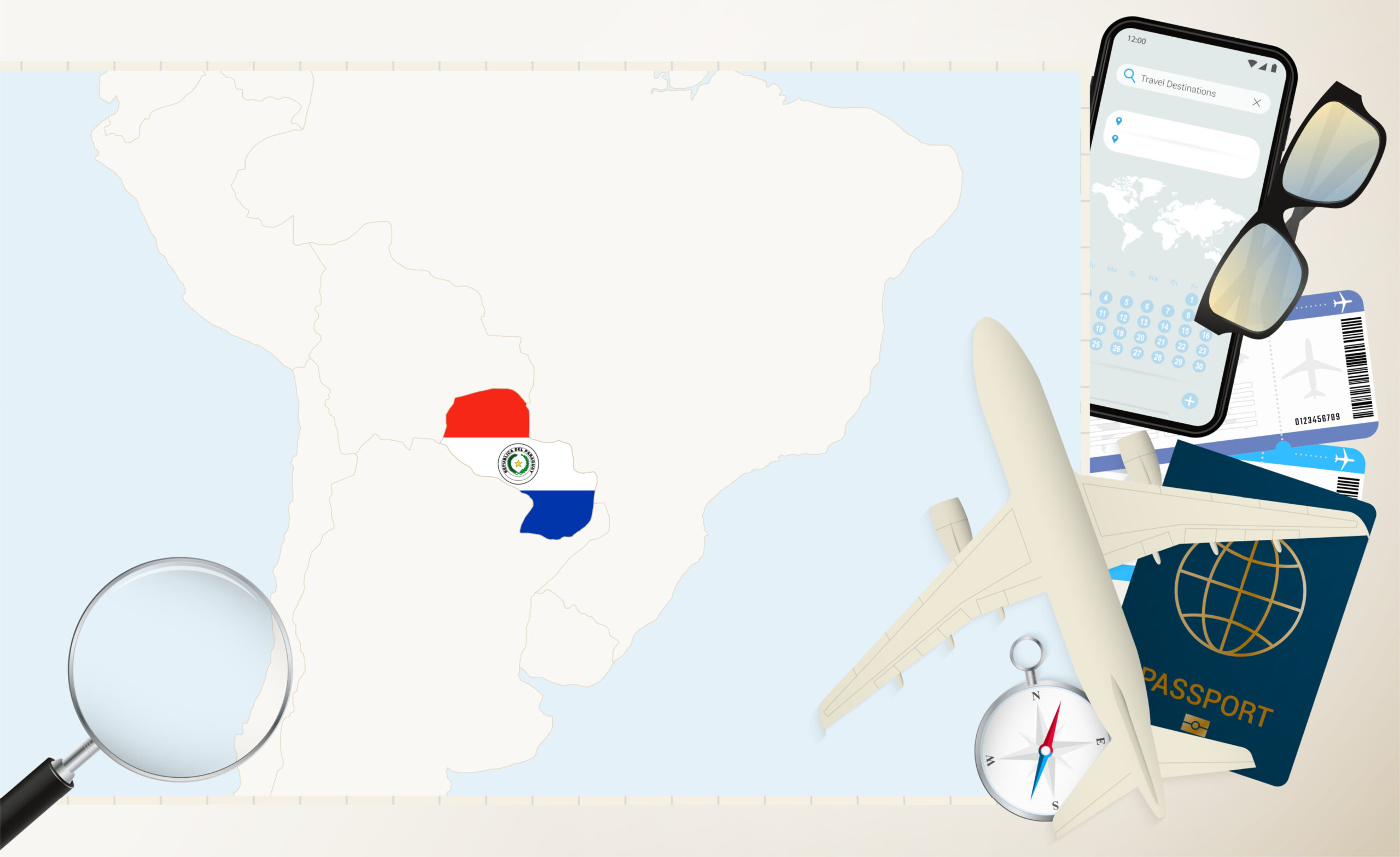
It had taken a laptop and a great deal of reading, but I had found a place to make my own mistakes: Paraguay.
Why it survived the filter is the subject of the next installment.