Beta

Password Reset Confirmation

If an account matching the email you entered was found, you will receive an email with a link to reset your password.

Welcome to our Beta

The Advocates of Self-Government is preparing a new experience for our users.

User Not Found

The username/email and password combination you entered was not found. Please try again or contact support.

Skip to main content

Quizzes & Apps

Articles

Month: July 2016

Fear Shouldn’t Dictate Action

Fear Shouldn’t Dictate Action

This article was featured in our weekly newsletter, the Liberator Online. To receive it in your inbox, sign up here. In the last year, dozens of student protests on college campuses have called for everything from supporting the #BlackLivesMatter movement to demanding that school administrators address microaggressions on campus. From Mizzou to Yale University and Occidental College, these demands have garnered national attention. ClevelandBut one of the most recent incidents that happened on a college campus? A “safe space” that was provided by Case Western Reserve University in order to “assist those psychologically or physically traumatized by the prospect of Republicans being in Cleveland and giving speeches,” that hardly anyone utilized. Located a few miles from where the Republican National Convention was held, the university made a statement in The Daily, that the private school’s Social Justice Institute “will host a ‘safe space’” in the basement of Crawford Hall for the duration of the convention. “After extensive consultation among our leadership team and discussions in last week’s open forums, we have decided that the university will reduce its on-campus operations significantly from Monday, July 18, through the close of the convention Thursday, July 21,” the statement explained. Classes were cancelled or moved off campus. Essentially, faculty, staff, and students were told to take the week off. The statement also reminded students that University Counseling Services would “continue to offer walk-in services for students who want to talk with someone about their concerns related to recent events and/or the upcoming convention.” According to The College Fix, Case Western closed down most of that week because it allowed hundreds of police officers to stay in their residence halls for the duration of the RNC. (And that made a few groups very unhappy.) “Recent events” in the university’s statement must have referred to the number of altercations between police officers and civilians this summer. The deaths of Alton Sterling, Philando Castile, and officers in Baton Rouge and Dallas have had this country on edge. Protests leading up to and during the Republican National Convention were expected to be large and violent, but according to The Washington Post, they were small and uneventful. It’s understandable that the university wanted to look out for the safety of faculty, staff, and students. But as an institution of higher education, isn’t it important to teach young people that fear should never win or dictate action? Instead of using current events as a teachable moment, the “better safe than sorry” mentality only succeeded in drawing attention away from what was really important for students – their education.

With Anti-Christian College Bill, California Universities Might Become Even Costlier

With Anti-Christian College Bill, California Universities Might Become Even Costlier

This article was featured in our weekly newsletter, the Liberator Online. To receive it in your inbox, sign up here. California is slowly becoming a state so intolerant to freedom, many argue it might as well benefit the rest of the country if it achieves its independence. Recently, Governor Jerry Brown signed a series of gun control bills that would have blushed even one of the most anti-gun governors the state has ever known, prompting several groups of Californians to run for the hills. But if things continue as they are, yet another group will have to pack their bags: Christians. CrossOnce California lawmakers get back to work in August, a bill targeting religious schools may change California’s education landscape for good. The Equity in Higher Education Act, or SB 1146, would force religious colleges that receive federal religious exemptions to publicize its status to newcomers. The bill would also restrict the number of colleges that qualify for exemptions, effectively raising the price of doing business for schools that lose their status. To many opponents of SB 1146, the bill is an attempt at forcing Christian colleges that fail to comply with the state’s nondiscrimination laws to adapt. According to critics, Christian colleges should not be forced to comply with guidelines that go against their beliefs, especially when it comes to accommodating individuals who are transgender. But if it wasn’t for the potentially costly discrimination lawsuits these schools could be facing in times to come, as well as the millions of dollars tied to the federal exemption status these schools would lose, the reality is that these same institutions would not be at a loss if the education system in California—and the country—were based on free market principles. In an article for the Cato Institute, the former director of Cato’s Center for Educational Freedom Andrew J. Coulson wrote that the times we live in demand freedom in education, not the opposite. “By combining a pluralistic society with a one-size-fits-all education system,” Coulson wrote, “we have created a perpetual conflict machine.” He clarified his point by claiming that people are only able to obtain the type of education they want in a heavily regulated, heavily controlled system if they “force their preferences on their neighbors.” On the surface, that assessment may seem correct and harmless. But once you analyze the actual real world consequences, you learn that where there’s a demand in a regulated environment, supply suffers tremendously due to the aggregated costs of doing business. To individuals whose religious convictions are deeply rooted, attending a religious college makes sense. Restricting individuals because education “is a right” has the exactly opposite effect. Instead of opening up the market by allowing more people in once the religious factor is eliminated, the extra regulatory burden increases the cost of doing business. As schools struggle, they resort to lobbying governments for more funding. The result? A perpetual cycle of high taxes, low quality education, and high volume of individuals swimming in a sea of debt. While the religious aspect of this debate is important and shouldn’t be ignored, honest progressives who believe quality education should be widely available do well by learning more about the unintended consequences of the government’s heavy hand.​

How Crony Capitalism Almost Destroyed a Small Vegan Business

How Crony Capitalism Almost Destroyed a Small Vegan Business

This article was featured in our weekly newsletter, the Liberator Online. To receive it in your inbox, sign up here. Crony capitalism, what many still believe to be actual capitalism, is everywhere. That’s why every aspect of modern life seems to be ruled by those who nurture a cozy relationship with government. Even what you eat for breakfast is under their control. PastaLast year, we learned that the American Egg Board, a group of egg producers supervised by the US Department of Agriculture (USDA), had used its influence and might to (try to) destroy a small company, the start-up Hampton Creek, which is behind Just Mayo. The egg-less product became the target of the crony organization, which is funded by the mandatory fees members of the industry must pay, whether they are willing to be part of the organization or not. The USDA is in charge of overseeing the group’s budget and activities, making the AEB an arm of the state. So when the group’s president called the vegan Just Mayo a “crisis and major threat to the future of the egg product business” in an email and a USDA official suggested having Just Mayo’s labeling claims challenged with the US Food and Drug Administration, Hampton Creek was hit with a warning letter claiming that they had made unauthorized claims regarding their product, effectively “misleading” consumers by using the image of an egg on the label of a vegan item. But the FDA move wasn’t enough. Later, the cartel group with direct ties to the US government moved to hire a lobbyist with the goal of making the grocery chain Whole Foods stop selling Just Mayo. While this step backfired, AEB ended up looking to another corporate ally to put an end to the competitor by convincing Unilever, the manufacturer of Hellman’s Mayonnaise, to file a lawsuit against Hampton Creek. The lawsuit was later dropped. A Freedom of Information Act request helped us learn more about this sordid pursuit against the small company just because of its competitive factor, giving us yet another great example of how government and special interests often work together to put an end to anything that makes them uncomfortable. In a recent article for the Tenth Amendment Center, Mike Maharrey claimed that this episode in the recent history of food regulations shows the importance of fighting the federal government locally. After all, Maharrey wrote, “[t]he Constitution does not delegate the federal government any authority to regulate food safety.” Despite the lack of legitimate authority, special interest groups like the American Egg Board continue to become involved with government, both local and federal. As they obtain privileges and special treatments that competitors do not enjoy, lobbyists work alongside lawmakers to solidify their clients’ position, oftentimes creating a scare regarding their competitors’ products that are sometimes powerful enough to nearly destroy small companies. The result? Consumers end up having restricted access to variety, forcing the prices of commodities to go up. Even if you’re not entirely positive the US Constitution should be followed at all times, you might agree that, if regulators and lawmakers do, indeed, have the health and safety of consumers in mind, they should be celebrating and welcoming new competitors in the food market, not fighting to keep the number steady. ​

How Regulation & the Fed Killed the Competitive Spirit in the Banking Community

How Regulation & the Fed Killed the Competitive Spirit in the Banking Community

This article was featured in our weekly newsletter, the Liberator Online. To receive it in your inbox, sign up here. During a recent House Committee on Oversight and Government Reform hearing, a group of lawmakers wanted to know why there have been so few new banks opening their doors in America in recent years. MoneyWhile it’s hard to admit that, for once, a group of Washington insiders are actually asking the right question, it’s also important to go beyond their concern by looking at why the sluggish economy is, in fact, to blame, but not because of economic factors alone. The problem, Mercatus Center’s Stephen Matteo Miller wrote, is regulation. As the country announced the end of the economic crisis of 2008, the Federal Deposit Insurance Corporation’s application process was prolonged, hoping to cap the number of failed banks over time. While this explains part of the problem, another issue also brought up by the Mercatus scholar may explain the other reason why there’s so little competition in the banking business. According to a study carried out by the Federal Reserve Bank of Richmond, the implementation of low interest rates defended by the Federal Reserve leadership may have had been directly to blame for low competition as well. The conclusion both economists and the Mercatus scholar agreed on despite the findings by the Richmond Fed is that, laws like the Dodd-Frank Act, which adds to the regulatory burden, as well as the FDCI’s rule change had the most negative effect on the competitive aspect of the banking market, effectively protecting established banks and keeping smaller, more consumer-oriented banks out of the market. The artificial modifications made by the Fed have also contributed. Over time, restrictions developed as regulations embodied in the Code of Federal Regulations have also had a negative effect on the overall health of the American economy. According to the Cumulative Cost of Regulations study carried out by the Mercatus Center, the regulatory burden may have helped to reduce gross domestic product (GDP) by $4 trillion. This aggressive and dramatic reduction may have also prompted entrepreneurs in the banking community to think twice before launching a new business. So when reviewed carefully, the phenomena now under consideration by Congress has little to do with what many believe to be slow economic growth, or what many progressives like to call “record profits.” After all, it’s easy to measure how successful the established, too-big-to-fail banks have become over the past 6 or 7 years. What’s hard to assess is how much wealthier we would have been if government had gotten out of the financial system altogether.

Free State of Jones: Libertarianism in Pop Culture

Free State of Jones: Libertarianism in Pop Culture

This article was featured in our weekly newsletter, the Liberator Online. To receive it in your inbox, sign up here. Recently, I had the opportunity to see the film, “Free State of Jones.” It is the story inspired by the Civil War era actions in southeastern Mississippi led by a farmer, Newton Knight. A nurse in the Confederate Army, Knight deserts after the Confederate Congress amends its conscription policy to exclude those who owned 20 or more slaves. This exemption allowed many wealthy men to not serve the three years the Confederacy held them responsible to serve. As libertarians, we understand the principle that a man owns himself and is not “responsible” to give over part of his life to anyone else. Just prior to desertion, he comes across a teenager from near Knight’s home drafted after the boy’s family’s assets were seized by the local government officials and the boy was sent to war. As if conscription weren’t enough, the taking of property and food from the people is a bridge too far. As libertarians, we also value the principle of private property, and the stories from home, coupled with the boy’s death on the battlefield send Knight home to Jones County, Mississippi. Upon his return, he learns of another family whose animals are seized by Confederate soldiers and stands armed with the woman and her daughters against a trio of cavalry officers, turning them away. The officers then target Knight and his family, forcing him to flee ahead of dogs to the swamp to live as a fugitive. As libertarians, we hold dear the ability to defend one’s life, liberty, and property from an unjust taking. Libertarianism in Pop CultureWhile hiding out in the swamp, Knight befriends runaway slaves also living there in exile and other individuals afflicted by the Confederacy’s actions. They build a self-sustaining militia community of army deserters and runaway slaves, living, working, and fighting together against the oppression of the local military officials. As libertarians, we fight oppression and tyranny on a daily basis. The militia eventually overpowers the soldiers in the nearby town, taking over and asking the Union forces for support. The support never arrives, forcing the militia to fight off the Confederate regiments, holding out until the end of the war. They not only survive, but thrive, in the absence of both Confederate and Union forces in the area. As libertarians, we are often “in between” one side and the other. Both evil, we continue to stand for freedom. The freed slaves are promised “40 acres and a mule,” but see that promise rescinded by the conquering forces that occupy the South after the war, even the “Free State of Jones.” Regardless, the community grows, as white and black work, live, and grow together in a voluntary society where their bonds are those they choose. As libertarians, we see the prosperity and harmony that come from a voluntary society without, and often in spite of, the force of government  

Let’s Just Have A Computer Program Decide Everything

“Let’s Just Have A Computer Program Decide Everything”

This article was featured in our weekly newsletter, the Liberator Online. To receive it in your inbox, sign up here. On my way to Las Vegas last week for FreedomFest, I had a revelation about “efficient government” and why it does not appeal to me. At least, it does not appeal in the same way a free society does. WALL-EAs we’ve seen many times, candidates for office will promise to make government more efficient, eliminate waste, and reduce its size. While I appreciate the sentiment and pragmatism of that message, as a libertarian, I can’t take it seriously. When we encounter those in favor of efficient government over the freedom a libertarian society offers, I suggest we offer the following suggestion: “Let’s just have a computer program decide everything.” When it comes to efficiency, a computer program can make the decisions currently made by bureaucrats administering the myriad government programs that exist today. If you think about it, we could eliminate the waste, fraud, and abuse by making programming the decision-making to execute the laws and regulations on the books. The savings made by this automation would certainly make government operate cheaper, and there would be fewer people employed by government. As we saw in Back to the Future II’s vision for 2015, the legal system moved much more swiftly after they abolished all lawyers. While this was certainly more efficient, it likely wasn’t effective when it came to justice and the preservation of liberty. Is that what libertarians are really seeking? So, if you really think about it…if we make government more efficient, will we be freer?    

Airbnb to Collect Taxes from Los Angeles Users

Airbnb to Collect Taxes from Los Angeles Users

This article was featured in our weekly newsletter, the Liberator Online. To receive it in your inbox, sign up here. Airbnb, the short-term rental app, has recently agreed to go along with officials in Los Angeles by requiring users to collect hotel taxes from their clients. The three-year agreement was signed early this week. And according to LA city officials, money collected by Airbnb in Los Angeles would bring $5.8 million in annual revenue. ProtestThe agreement follows the city’s efforts to regulate Airbnb and similar companies locally. As City Council members discussed what to do with Airbnb in the past few months, the company lobbied its users to stand up against suffocating regulations in a series of emails sent out regularly. In one of these emails, Airbnb explained that the LA City Planning Commission was considering putting a 90 day cap on the number of nights Airbnb hosts can list their space, a rule Airbnb called “restrictive and arbitrary.” City officials were also considering limiting the number of listings hosts can have, which could affect users who have more than one room to rent, and instituting a registration procedure that would render the process of hosting through Airbnb difficult and expensive. Another rule LA city officials had considered would also force Airbnb to turn over users’ personal information to the authorities, giving them information on how many nights a host books through the site and how much money renters make. Airbnb warned its users that the city did not detail how this information could be used. Accusing property owners of evicting tenants to turn their properties into “commercial hotel and motel businesses,” Councilman Mike Bonin was one of the first in Los Angeles to propose Airbnb regulations. But while it is true, many users have, in fact, evicted their tenants in order to list their properties on Airbnb, that alone is not an excuse to regulate Airbnb out of existence. After all, the system works because it’s still affordable. To tourists looking for an affordable accommodation option, the extra financial burden tied to the hotel tax could mean that renting through Airbnb might not be that affordable after all. To those who use the service as renters to make ends meet, being part of Airbnb may not be as appealing if rates are high because of the new rules. In an article for US News, Mercatus Center’s Matthew Mitchell urges regulators to “deregulate traditional industries” if their goal is to help all industries and local businesses thrive. Instead of regulating the sharing economy and stifling competition, deregulation could also make it easier for visitors to stay and spend money locally. Airbnb’s decision to go along with Los Angeles city officials may represent the company’s willingness to compromise, but a real solution to this dilemma will only be produced when lawmakers are honest about their goals. After all, regulation will always makes things difficult for the consumer and the businessman, no matter how you slice it.

Don’t Be Fooled by the DOJ’s Proposed Legislation

Don’t Be Fooled by the DOJ’s Proposed Legislation

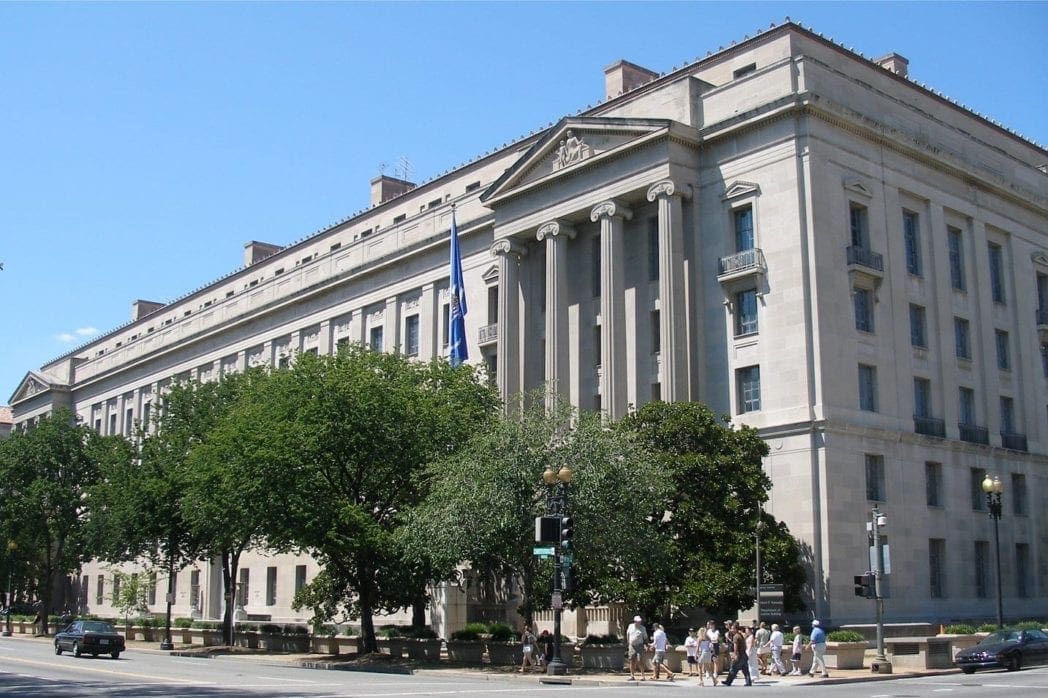
This article was featured in our weekly newsletter, the Liberator Online. To receive it in your inbox, sign up here. Two years ago, Microsoft refused to comply with a warrant concerning information hosted in Ireland, and the case was brought to court where justices ruled against the tech giant. Recently, however, the 2nd Circuit appeals court ruled in favor of Microsoft, claiming that the US government warrants do not apply to data stored outside of the country. DOJDespite the ruling, the Department of Justice (DOJ) is now proposing a piece of legislation that would affect Mutual Legal Assistance Treaties (MLATs), allowing the US government to force companies like Microsoft to unlock a server abroad. According to the proposed legislation documents, Assistant Attorney General Peter J. Kadzik claims that the ideas proposed by the DOJ would help the US government investigate foreigners suspected of being involved in terrorism, urging Vice President Joe Biden to consider having Congress look at the DOJ’s solution. In a post crafted by a former DOJ lawyer, the proposed legislation would allow the US government to have access to communication from non-US citizens who are located in foreign countries. Pieces of communication subject to the proposed rules would only be available for what the DOJ calls “criminal investigations,” which legalists claim to be helpful, since this restriction could help prevent current MLATs from being used with the purpose of gathering intelligence. Despite the carefully crafted piece of legislation, concessions aren’t enough to cover up for the DOJ’s goals to expand the agency’s reach. According to Tech Dirt, the DOJ is using this proposed legislation to target laws and statutes that the agency has been abusing for years. Is the DOJ trying to make its work easier? Take the Wiretap Act for instance, a law that has been rendered toothless ever since the Drug Enforcement Administration (DEA) used a single state judge in California to build a massive wiretapping operation in the Los Angeles suburbs. If the DOJ’s proposed rules are considered and signed into law, remaining restrictions imposed by the Wiretap Act would be lifted for good, making incidents like the one that took place in California more common across the country. But that’s not all, restrictions imposed by the Stored Communications Act, which was used by the DOJ in its fight against Microsoft, as well as the criminal Pen Register statute would also be lifted under the proposed rules, Tech Dirt reports. If the DOJ is lucky and Congress goes along with its plan, the dubious wording in the proposed rules would give officials authority to carry searches related to the “prevention, detection, investigation, or prosecution of serious crime, including terrorism.” Targets of investigations would have to be in countries that have executive agreements with the United States. According to Tech Dirt, the proposal may superficially seem to cater to privacy advocates, but “The self-written loopholes allow for plenty of ‘search first, ask permission later’ action.” If Tech Dit’s assessment is correct, the proposal rules’ dubious wording could further entrap US citizens, helping the authorities to destroy even more of our liberties in the name of security, while targeting foreign servers in the meantime.

Self-Government Goes To Those Who Show Up

Self-Government Goes To Those Who Show Up

This article was featured in our weekly newsletter, the Liberator Online. To receive it in your inbox, sign up here. As libertarians, we understand that personal responsibility is the price we are to pay for individual liberty. Show UpWe discuss it at length when persuading others about how liberty works. We talk about how we (yes, you and I) will be responsible for one another in the absence of government programs that currently attempt to act as a safety net. We offer examples of our charity and entrepreneurship to prove that our fellow man will not go hungry, sleep in the streets, or be unable to read and write. We know that our ideas and principles are the right ones to lead to a prosperous, peaceful, and harmonious society, so why aren’t we there yet? Because, like those we’re trying to persuade, we’ve outsourced responsibility. Except that we have not outsourced responsibility to government. We’ve outsourced our responsibility to other libertarians. We’ve outsourced that responsibility to libertarian candidates for office, their staff and volunteers, thinking that it’s their “turn” to spread the message, not ours. We’ve outsourced that responsibility to libertarian think tanks, who work to deliver quality research, and statistics, and facts necessary to equip us with the right information. We’ve outsourced that responsibility to libertarian activists, as they wave signs, work outreach booths, and persuade their friends, family, and neighbors about the beauty of a free society. We’ve outsourced that responsibility to libertarian entrepreneurs, toiling to create the next Uber, AirBnB, or PayPal. The price of personal responsibility is set, it’s non-negotiable, and it’s due every day. That price is showing up. Whether it is supporting candidates for office, sharing the mountains of data offered by our friends in think tanks and organizations in the libertarian sphere, attending an event, or using the goods and services that meet our needs, we need to pay the price daily. If we don’t pay it, we fall behind. When we fall behind, we have to pay even more to catch up. Authoritarians count on us missing a payment, because they have their solution ready to go. They have the latest cure for society’s ills, and that intervention is government. We ALL have busy lives, families, and hobbies calling for our time, attention, and effort, but we have to take responsibility for what we want in our lives. Much like the authoritarian way of outsourcing responsibility to government, we’ve outsourced it to other libertarians with the hope that their efforts will make up for a lack of them on our part. Accept the call and take responsibility for a free society. You can’t wait for someone else to give you the freedom you deserve. You have to stop outsourcing responsibility and show yourself and others that we can do it. If you aren’t going to show up to stake a claim for your life, liberty, and the pursuit of happiness, who will?

It’s BOTH What You Say AND How You Say It

It’s BOTH What You Say AND How You Say It

This article was featured in our weekly newsletter, the Liberator Online. To receive it in your inbox, sign up here. Over the weekend, I happened to interact with a young lady who complained about a couple in front of her at the grocery store using EBT, AKA food stamps, saying something to the effect of “Tonight, I bought my dinner at the grocery store and the couple in front of me used their EBT card, and they are eating better than my family. Sigh.” UGH! WordsAs a libertarian, I abhor the idea of a government-run “safety net” to help those who find themselves in need. I think that we can provide that safety net for our family, friends, and neighbors without the use of force by no longer outsourcing that responsibility to government and taking it on ourselves. After all, before The New Deal, that IS how we handled it. Why would we want to let a wasteful entity like government determine need, its distribution and method, and the administration and overhead necessary to make it happen? The main issue I took with this approach to discussing a safety net program was that it attacked the individual recipients’ choices and lifestyle, which is not how you would win over those who may be on the fence about the program or the idea that government should administer “charity” through force. It gives an impression of envy, a lack of compassion, and an uninformed statement about the lives of those recipients. Talking about this subject in terms of the individual program also hyper focuses the discussion on THAT program. Rather than discuss EBT specifically, you’ll likely be more persuasive by talking about the role government took in “charity.” Rather than get into the specifics and details of the program, talking about taking back the outsourced responsibility into our homes, neighborhoods, and communities has a far greater impact. We can discuss philosophy more broadly without getting caught up in a minute detail. It’s similar to how Governor Gary Johnson was pinned down to “baking the Nazi cake” by a fellow candidate seeking the Libertarian Party nomination, rather than focusing on the broader picture of freedom of association.  We can also ask thought-provoking questions about why they find it more important to prolong, preserve, and protect a program founded on the use of government force. By focusing the conversation this way, we can discuss how to end government’s shoddy performance to actually address those in need, while taking from others to pay for it. A more efficient government is not in our best interests. We know that individuals operating in a freed market and free society can better serve our community’s needs.  

After Dallas, People Are Being Arrested for Posting Inflammatory Comments Online

After Dallas, People Are Being Arrested for Posting Inflammatory Comments Online

This article was featured in our weekly newsletter, the Liberator Online. To receive it in your inbox, sign up here. Speech protections are being denied for those who harshly criticize law enforcement online, The Intercept has reported. EarsIn Detroit, four men were arrested this past week after posting allegedly inflammatory and “threatening” comments online. While we know that in one of the tweets that led to an arrest, Micah Johnson, or the sniper who shot and killed Dallas police officers, was praised as a hero, the authorities have yet to release the names of the men who were arrested. What’s troubling about these arrests, The Intercept report suggests, is that neither of the four men allegedly arrested over online posts were charged with a crime. Without acknowledging whether his wishes contradict the arrestees’ First Amendment protections, Detroit Police Chief James Craig said that he wants the men his team arrested “charged with crimes. … I’ve directed my officers to prepare warrants for these four individuals, and we’ll see which venue is the best to pursue charges.” But to Bruce Schneier, a security technologist at the Berkman Klein Center for Internet & Society at Harvard University who talked to The Intercept, “arresting people for speech is something we should be very careful about.” In Connecticut, Facebook user Kurt Vanzuuk was arrested after writing a post claiming that the Dallas sniper was a hero. Vanzuuk allegedly called for the police to be killed. He was later charged with inciting injury to persons over his post. Ronald Medina, a New Jersey resident, was charged with cyber harassment after allegedly posting that he would “destroy the Perth Amboy police headquarters” on an unidentified form of social media. Jenesis Reynolds, another Facebook user from Illinois, was also arrested for writing that she would “have no problem shooting a cop for simple traffic stop [because] they’d have no problem doing it to me.” Officers charged Reynolds with “disorderly conduct.” While “posting that kind of thing on social media is a bad thought,” professor Larry Dubin of the University of Detroit Mercy School of Law said, “having a bad thought isn’t necessarily a crime.” To professor of law at Northeastern University Daniel Medwed, “threats may seem more threatening to police officers around the country” after Dallas, which may cause law enforcement to go after inflammatory speech. “We might be seeing more arrests right now because the police will interpret that they have probable cause to make the arrest,” he continued, “But that doesn’t mean in the end that this will result in convictions.” Whether social media posts are public or not, it’s hard to justify the arrest of an individual over offensive comments. In an article for the Mises Institute, Andrew Syrios states that “when you’re popular, you don’t need freedom of speech.” He added that “resorting to the use of political force to silence adversaries is a sign of the weakness of one’s own position.” If law enforcement leadership is serious about regaining the trust of the public, officers should act like the adults in this conversation. Resorting to force to restrain alleged enemies will only continue to hurt the reputation of US police. ​

Arizona Court Rules that Weed Smell Enough Justification for Search Warrant

Arizona Court Rules that Weed Smell Enough Justification for Search Warrant

This article was featured in our weekly newsletter, the Liberator Online. To receive it in your inbox, sign up here. In current-day America, the Constitution’s protections against unreasonable searches and seizures by the government is nothing but a suggestion. In Arizona, the careless approach to the law of the land is now even backed by lady Justice. WeedAccording to an NBC affiliate, a recent ruling supports that officers are allowed to have access to a warrant to search a person’s property over the smell of marijuana. The decision came after the state Supreme Court ruled that the enactment of the medical marijuana law does not eliminate a legal doctrine that supports that the smell of marijuana is sufficient to establish probable cause for a search. The Arizona Supreme Court ruling added that only with the “person’s presentation of a valid [medical marijuana] registration card” attorneys would be able to challenge the legal foundation for a search based on the smell of marijuana alone. The case that resulted in this ruling involved an officer who noticed the odor of marijuana while contacting an individual. The encounter led him and other officers to discover a marijuana operation that counted with hundreds of marijuana plants. To medical marijuana users in the state, this ruling is concerning. Rebecca Calloway, a local dispensary worker and college graduate with a medical marijuana card, says that this ruling makes matters worse since “a lot of pedestrians [already] feel they are being harassed by cops with nothing better to do.” To privacy advocates, the ruling gives officers a loophole, giving them the freedom to use smell as a reasonable cause for searches in different occasions. Instead of looking at the Constitution for guidance, the Arizona justices decided to continue giving drug warriors legal justifications to send more non-violent “criminals” to taxpayer-funded prisons, managing to step on the 4th Amendment rights of citizens who do not happen to be marijuana users in the process. But this is not the first time Arizona justices stand with drug warriors. In May, Arizona Supreme Court ruled that the state’s medical marijuana laws do not give physicians immunity against prosecution in case doctors claim to have reviewed a patient’s medical records from the previous 12 months before issuing a written statement allowing for the use of medical marijuana. While the state has come a long way by passing a medical marijuana law that helps residents suffering from a series of conditions including Alzheimer’s disease, cancer, chronic pain, glaucoma, and others, anti-drug war advocates in the state are hoping to get an initiative added to the November ballot that would legalize marijuana for recreational use. In early July, the Campaign to Regulate Marijuana Like Alcohol submitted 258,582 signatures to secretary of state officials. To quality for Arizona’s statewide ballot, the campaign must have 150,642 valid signatures from registered voters. If passed, the Regulation and Taxation of Marijuana Act would legalize marijuana for recreational use and establish a network of licensed cannabis shops that would collect taxes on the sales of marijuana and marijuana-related products. The proposal resembles the model used in Colorado.