

















Education Must Put Parents and Children First, Not Government Control
Children and society’s future are at stake when setting education policy. That makes it among the most intense political issues, but there’s no reason disagreements should rise to the level of involving the criminal justice system.
 A recent column in Harvard Magazine highlighted Harvard law professor Elizabeth Bartholet’s support for a “presumptive ban” on homeschooling. That is very close to presuming guilt before innocence, and it certainly risks tearing families apart as we all know how bans are enforced.
Bartholet might be on the extreme end of the anti-homeschooling position, but she isn’t alone. Did I mention she’s a Harvard law professor?
For those in favor or neutral on the question of homeschooling, she might come off ignorant, cruel, or crazy. It’s fair to argue how such a policy would be those things, but this is obviously a well-educated woman who cares about what she calls a child’s right to “meaningful education.”
To begin a fruitful discussion on childhood education, one fundamental question needs to be answered.
Who is principally responsible for the child? The parents brought him into the world, so it starts with them. Any other trustee-guardianship claim on the child would have to go through them first, wouldn’t it?
According to Bartholet, parents have “very significant rights to raise their children with the beliefs and religious convictions that the parents hold.”
Sounds like there’s a but in there somewhere.
“The issue is, do we think that parents should have 24/7, essentially authoritarian control over their children from ages zero to 18? I think that’s dangerous,” Bartholet adds. “I think it’s always dangerous to put powerful people in charge of the powerless, and to give the powerful ones total authority.”
Total authority is a dangerous concept indeed. Thankfully, parents don’t have total authority over their children, or else there would be no laws against neglect, abuse, etc. The libertarian position makes it clear that no person has total authority over another, and children are no exception.
Unfortunately, it is Bartholet’s solution that requires total authority in the government over parents and their children in the final analysis. Shared or delegated authority would mean a voluntary association with the parents, but the state does not work that way.
Under Bartholet’s proposal of a presumptive ban, parents would have to seek state permission to exercise responsibility for their child’s education. What this amounts to is an application to lease government property, in this case, the child.
If the parents were denied the privilege but chose to ignore the government’s wishes, the child would be forcefully placed in a school or dealt with however the government deemed appropriate. It need not be theorized what would happen to the parents.
What should be learned? Academics, social values, sports, religion, self-realization? Who should teach it, and how?
For nearly a century, the trend in the current education system has been to centralize authority on these matters.
Kevin Ryan, founder and director emeritus of the Center for Character and Social Responsibility at Boston University, notes that in 1932, there were some 128,000 school districts in America. Today, there’s about 13,500, effectively a consolidation of 90 percent of districts in about as many years.
Parallel to that pattern has been the ceding of power from local school boards to state and federal boards. These producers of the curriculum are detached from their consumers, the parents, and children, more and more. At the same time, administrative jobs and costs have exploded.
One local school board member in Nashville, Tennessee, recently revealed their priorities after Covid-19 lockdowns forced steep budget cuts.
“We have to prioritize where those funds go,” Amy Frogge said. “We can choose to open charter seats or we can choose to pay our teachers and our staff members.”
Needless to say, some 3,000 new charter school seats were denied in favor of sending checks to teachers and administrators.
With no incentive to lower pay to afford more teachers, it’s no wonder classroom sizes are still so big! That brings up another curiosity. If it’s good that classroom sizes shrink so that individual students can get one-on-one time with their instructor, doesn’t that make another good case for homeschooling or another custom alternative?
The U.S. Department of Education’s bureaucracy has grown substantially over its 40-year reign. The U.S. spends more per student than most of the rest of the world, yet it falls behind in math and science.
The American education system didn’t used to be this way. Its failure makes clear that the status quo can’t be relied upon to succeed in the long term.
An argument could easily be made to scrap the whole compulsory public school model. Abolish all government schools, and go back to what raised America’s founding generation to such high literacy that the Federalist Papers were considered easy reading by the masses.
How about a reasonable compromise at least? Create a level playing field between the public school system and the alternatives like homeschooling. Make the latter just as accessible by respecting parental rights and free enterprise.
This would mean more competition, but it wouldn’t be winner-take-all. Under political systems like centrally planned education, if a board votes 50 percent plus one for a curriculum, the other curricula are no longer available at all.
At least under free enterprise, the minority vote would still have options. Just as there are fewer consumers of some movies, cereals, and clothing, there would be more to choose from in learning and teaching services.
Hopefully, a silver lining in this period of COVID-19 lockdowns is that parents, teachers, and officials come to realize the value of freedom in determining the best education for children.
A recent column in Harvard Magazine highlighted Harvard law professor Elizabeth Bartholet’s support for a “presumptive ban” on homeschooling. That is very close to presuming guilt before innocence, and it certainly risks tearing families apart as we all know how bans are enforced.
Bartholet might be on the extreme end of the anti-homeschooling position, but she isn’t alone. Did I mention she’s a Harvard law professor?
For those in favor or neutral on the question of homeschooling, she might come off ignorant, cruel, or crazy. It’s fair to argue how such a policy would be those things, but this is obviously a well-educated woman who cares about what she calls a child’s right to “meaningful education.”
To begin a fruitful discussion on childhood education, one fundamental question needs to be answered.
Who is principally responsible for the child? The parents brought him into the world, so it starts with them. Any other trustee-guardianship claim on the child would have to go through them first, wouldn’t it?
According to Bartholet, parents have “very significant rights to raise their children with the beliefs and religious convictions that the parents hold.”
Sounds like there’s a but in there somewhere.
“The issue is, do we think that parents should have 24/7, essentially authoritarian control over their children from ages zero to 18? I think that’s dangerous,” Bartholet adds. “I think it’s always dangerous to put powerful people in charge of the powerless, and to give the powerful ones total authority.”
Total authority is a dangerous concept indeed. Thankfully, parents don’t have total authority over their children, or else there would be no laws against neglect, abuse, etc. The libertarian position makes it clear that no person has total authority over another, and children are no exception.
Unfortunately, it is Bartholet’s solution that requires total authority in the government over parents and their children in the final analysis. Shared or delegated authority would mean a voluntary association with the parents, but the state does not work that way.
Under Bartholet’s proposal of a presumptive ban, parents would have to seek state permission to exercise responsibility for their child’s education. What this amounts to is an application to lease government property, in this case, the child.
If the parents were denied the privilege but chose to ignore the government’s wishes, the child would be forcefully placed in a school or dealt with however the government deemed appropriate. It need not be theorized what would happen to the parents.
What should be learned? Academics, social values, sports, religion, self-realization? Who should teach it, and how?
For nearly a century, the trend in the current education system has been to centralize authority on these matters.
Kevin Ryan, founder and director emeritus of the Center for Character and Social Responsibility at Boston University, notes that in 1932, there were some 128,000 school districts in America. Today, there’s about 13,500, effectively a consolidation of 90 percent of districts in about as many years.
Parallel to that pattern has been the ceding of power from local school boards to state and federal boards. These producers of the curriculum are detached from their consumers, the parents, and children, more and more. At the same time, administrative jobs and costs have exploded.
One local school board member in Nashville, Tennessee, recently revealed their priorities after Covid-19 lockdowns forced steep budget cuts.
“We have to prioritize where those funds go,” Amy Frogge said. “We can choose to open charter seats or we can choose to pay our teachers and our staff members.”
Needless to say, some 3,000 new charter school seats were denied in favor of sending checks to teachers and administrators.
With no incentive to lower pay to afford more teachers, it’s no wonder classroom sizes are still so big! That brings up another curiosity. If it’s good that classroom sizes shrink so that individual students can get one-on-one time with their instructor, doesn’t that make another good case for homeschooling or another custom alternative?
The U.S. Department of Education’s bureaucracy has grown substantially over its 40-year reign. The U.S. spends more per student than most of the rest of the world, yet it falls behind in math and science.
The American education system didn’t used to be this way. Its failure makes clear that the status quo can’t be relied upon to succeed in the long term.
An argument could easily be made to scrap the whole compulsory public school model. Abolish all government schools, and go back to what raised America’s founding generation to such high literacy that the Federalist Papers were considered easy reading by the masses.
How about a reasonable compromise at least? Create a level playing field between the public school system and the alternatives like homeschooling. Make the latter just as accessible by respecting parental rights and free enterprise.
This would mean more competition, but it wouldn’t be winner-take-all. Under political systems like centrally planned education, if a board votes 50 percent plus one for a curriculum, the other curricula are no longer available at all.
At least under free enterprise, the minority vote would still have options. Just as there are fewer consumers of some movies, cereals, and clothing, there would be more to choose from in learning and teaching services.
Hopefully, a silver lining in this period of COVID-19 lockdowns is that parents, teachers, and officials come to realize the value of freedom in determining the best education for children.
A recent column in Harvard Magazine highlighted Harvard law professor Elizabeth Bartholet’s support for a “presumptive ban” on homeschooling. That is very close to presuming guilt before innocence, and it certainly risks tearing families apart as we all know how bans are enforced.
Bartholet might be on the extreme end of the anti-homeschooling position, but she isn’t alone. Did I mention she’s a Harvard law professor?
For those in favor or neutral on the question of homeschooling, she might come off ignorant, cruel, or crazy. It’s fair to argue how such a policy would be those things, but this is obviously a well-educated woman who cares about what she calls a child’s right to “meaningful education.”
To begin a fruitful discussion on childhood education, one fundamental question needs to be answered.
Who is principally responsible for the child? The parents brought him into the world, so it starts with them. Any other trustee-guardianship claim on the child would have to go through them first, wouldn’t it?
According to Bartholet, parents have “very significant rights to raise their children with the beliefs and religious convictions that the parents hold.”
Sounds like there’s a but in there somewhere.
“The issue is, do we think that parents should have 24/7, essentially authoritarian control over their children from ages zero to 18? I think that’s dangerous,” Bartholet adds. “I think it’s always dangerous to put powerful people in charge of the powerless, and to give the powerful ones total authority.”
Total authority is a dangerous concept indeed. Thankfully, parents don’t have total authority over their children, or else there would be no laws against neglect, abuse, etc. The libertarian position makes it clear that no person has total authority over another, and children are no exception.
Unfortunately, it is Bartholet’s solution that requires total authority in the government over parents and their children in the final analysis. Shared or delegated authority would mean a voluntary association with the parents, but the state does not work that way.
Under Bartholet’s proposal of a presumptive ban, parents would have to seek state permission to exercise responsibility for their child’s education. What this amounts to is an application to lease government property, in this case, the child.
If the parents were denied the privilege but chose to ignore the government’s wishes, the child would be forcefully placed in a school or dealt with however the government deemed appropriate. It need not be theorized what would happen to the parents.
What should be learned? Academics, social values, sports, religion, self-realization? Who should teach it, and how?
For nearly a century, the trend in the current education system has been to centralize authority on these matters.
Kevin Ryan, founder and director emeritus of the Center for Character and Social Responsibility at Boston University, notes that in 1932, there were some 128,000 school districts in America. Today, there’s about 13,500, effectively a consolidation of 90 percent of districts in about as many years.
Parallel to that pattern has been the ceding of power from local school boards to state and federal boards. These producers of the curriculum are detached from their consumers, the parents, and children, more and more. At the same time, administrative jobs and costs have exploded.
One local school board member in Nashville, Tennessee, recently revealed their priorities after Covid-19 lockdowns forced steep budget cuts.
“We have to prioritize where those funds go,” Amy Frogge said. “We can choose to open charter seats or we can choose to pay our teachers and our staff members.”
Needless to say, some 3,000 new charter school seats were denied in favor of sending checks to teachers and administrators.
With no incentive to lower pay to afford more teachers, it’s no wonder classroom sizes are still so big! That brings up another curiosity. If it’s good that classroom sizes shrink so that individual students can get one-on-one time with their instructor, doesn’t that make another good case for homeschooling or another custom alternative?
The U.S. Department of Education’s bureaucracy has grown substantially over its 40-year reign. The U.S. spends more per student than most of the rest of the world, yet it falls behind in math and science.
The American education system didn’t used to be this way. Its failure makes clear that the status quo can’t be relied upon to succeed in the long term.
An argument could easily be made to scrap the whole compulsory public school model. Abolish all government schools, and go back to what raised America’s founding generation to such high literacy that the Federalist Papers were considered easy reading by the masses.
How about a reasonable compromise at least? Create a level playing field between the public school system and the alternatives like homeschooling. Make the latter just as accessible by respecting parental rights and free enterprise.
This would mean more competition, but it wouldn’t be winner-take-all. Under political systems like centrally planned education, if a board votes 50 percent plus one for a curriculum, the other curricula are no longer available at all.
At least under free enterprise, the minority vote would still have options. Just as there are fewer consumers of some movies, cereals, and clothing, there would be more to choose from in learning and teaching services.
Hopefully, a silver lining in this period of COVID-19 lockdowns is that parents, teachers, and officials come to realize the value of freedom in determining the best education for children.



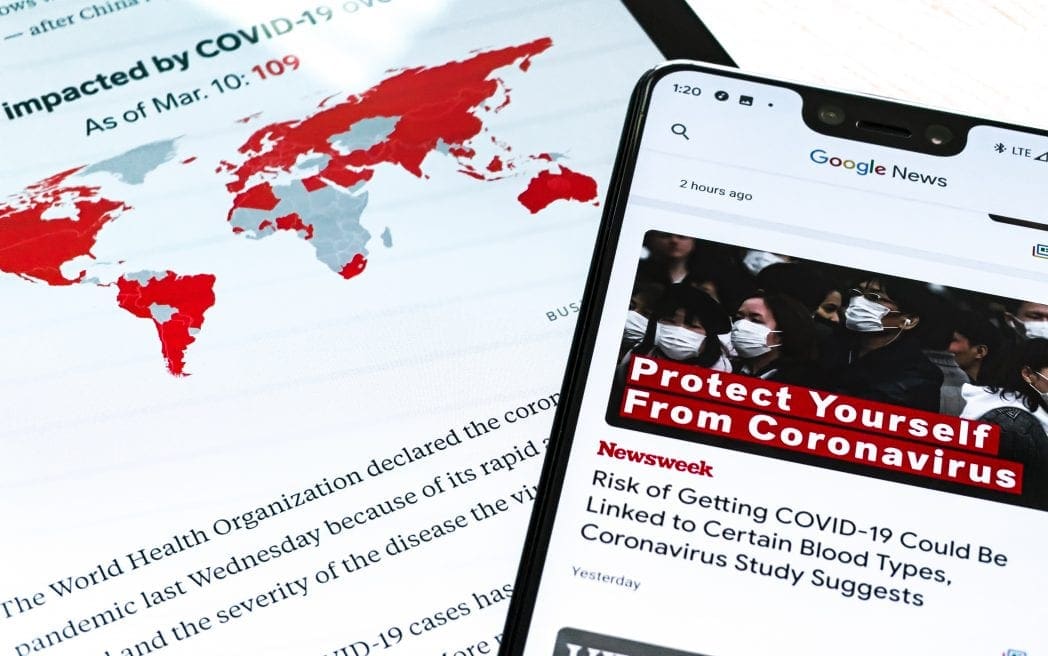 The key differences between the two groups become more evident in a crisis. In fact, the insights described in this article were developed during past crises including 9/11, weapons of mass destruction in Iraq, the bank crisis/housing crash, and several mass shootings. This article was written during a global pandemic.
Reasonable libertarians believe that their ideology is a helpful guide, but they gobble up and consume reported facts to arrive at a more scientific conclusion. Educated libertarians are suspicious of first through door “facts” because experience has taught them that future information – which appears long after the drive-by media has moved on – undermines and even contradicts the earliest reported facts. To state the difference more bluntly, reasonable libertarians are reading today’s New York Times, and educated libertarians are reading history books.
The two groups also look at authority figures differently. The reasonable libertarian wants to seem, well, “reasonable,” given that all the news seems to point in a given direction. They’re worried that doctrinaire libertarianism will leave a bad taste in most people’s mouths. The educated libertarian often doesn’t enjoy going against the tide, but they’ve learned that libertarianism has predictive power to see what the media isn’t telling us. Eventually, everyone comes around. When that happens, the educated libertarian wants their friends and family to ask, “How did you know?” To sum up the difference, as news breaks, the reasonable libertarian is more likely to cite establishment authorities, while the educated libertarian is more likely to be suspicious of them.
Both reasonable libertarians and educated libertarians are capable of nuance, and they each value precision. But the reasonable libertarian is a bit more likely to cite a statistic while the educated libertarian is a bit more likely to lean on logic. And this gets directly to how they analyze a societal challenge.
The reasonable libertarian will say that facts are your friend. They are willing to accept those facts as evidence that government action is valid. But they would insist that the resulting policies be narrowly tailored to make them as libertarian as possible. Their research shapes their response.
The educated libertarian will say that principles are your pal. They would instinctively reject any State interventions as fear-based power plays with damaging consequences. Their libertarian response shapes their research.
I happen to be an educated libertarian. I truly love my reasonable libertarian brothers and sisters. The reasonable libertarians tend to have advanced degrees and tremendous intellects. They are part of the expert class. They use their scholarly skills to make me think. During normal times, I spend a great deal of time absorbing their thinking because it’s so rational and sound. But in a crisis, in the dark alley of doubt, I want an educated libertarian at my side who won’t succumb to the hysterical hype of the moment.
Postscript: The Educated Libertarian is confident that the Reasonable Libertarians will find evidence that the State actually failed after the crisis has passed. As a complement to this editorial, the author recommends
The key differences between the two groups become more evident in a crisis. In fact, the insights described in this article were developed during past crises including 9/11, weapons of mass destruction in Iraq, the bank crisis/housing crash, and several mass shootings. This article was written during a global pandemic.
Reasonable libertarians believe that their ideology is a helpful guide, but they gobble up and consume reported facts to arrive at a more scientific conclusion. Educated libertarians are suspicious of first through door “facts” because experience has taught them that future information – which appears long after the drive-by media has moved on – undermines and even contradicts the earliest reported facts. To state the difference more bluntly, reasonable libertarians are reading today’s New York Times, and educated libertarians are reading history books.
The two groups also look at authority figures differently. The reasonable libertarian wants to seem, well, “reasonable,” given that all the news seems to point in a given direction. They’re worried that doctrinaire libertarianism will leave a bad taste in most people’s mouths. The educated libertarian often doesn’t enjoy going against the tide, but they’ve learned that libertarianism has predictive power to see what the media isn’t telling us. Eventually, everyone comes around. When that happens, the educated libertarian wants their friends and family to ask, “How did you know?” To sum up the difference, as news breaks, the reasonable libertarian is more likely to cite establishment authorities, while the educated libertarian is more likely to be suspicious of them.
Both reasonable libertarians and educated libertarians are capable of nuance, and they each value precision. But the reasonable libertarian is a bit more likely to cite a statistic while the educated libertarian is a bit more likely to lean on logic. And this gets directly to how they analyze a societal challenge.
The reasonable libertarian will say that facts are your friend. They are willing to accept those facts as evidence that government action is valid. But they would insist that the resulting policies be narrowly tailored to make them as libertarian as possible. Their research shapes their response.
The educated libertarian will say that principles are your pal. They would instinctively reject any State interventions as fear-based power plays with damaging consequences. Their libertarian response shapes their research.
I happen to be an educated libertarian. I truly love my reasonable libertarian brothers and sisters. The reasonable libertarians tend to have advanced degrees and tremendous intellects. They are part of the expert class. They use their scholarly skills to make me think. During normal times, I spend a great deal of time absorbing their thinking because it’s so rational and sound. But in a crisis, in the dark alley of doubt, I want an educated libertarian at my side who won’t succumb to the hysterical hype of the moment.
Postscript: The Educated Libertarian is confident that the Reasonable Libertarians will find evidence that the State actually failed after the crisis has passed. As a complement to this editorial, the author recommends 
 What has been particularly controversial about this episode is how state governments have tackled the matter. Several state governments have issued mandatory “stay-at-home” orders, which have restricted people’s movements and in some cases, have led to wholesale shutdowns of many small businesses and peaceful gatherings across the nation. The disruption has been so great that over
 According to reports from
 The rankings used in the report detailed the cities’ taxpayer burden or surplus. In other words, this is the amount each taxpayer would have to cough up for “municipal debt with nothing, such as benefits and services, in exchange.” For example, New York City only had $62.7 billion in order to pay for $249.4 billion in expenses. In turn, it has a $186.7 billion shortfall, which totals to a burden of $63,100 per taxpayer.
In Chicago, which is in second place as far as tax burden is concerned, each taxpayer would have to pay $37,100 in future taxes without receiving any service in return. Similarly, Honolulu found itself in third place at $26,400. On the other hand, some cities like Irvine, California, and Washington, D.C., were much better at keeping their finances straight. The former netted a surplus of $4,100 per taxpayer while D.C. has a surplus of $3,500.
From the looks of it, America is starting to become cash-strapped at all levels. Just look at the federal government. It finished 2019 with a
The rankings used in the report detailed the cities’ taxpayer burden or surplus. In other words, this is the amount each taxpayer would have to cough up for “municipal debt with nothing, such as benefits and services, in exchange.” For example, New York City only had $62.7 billion in order to pay for $249.4 billion in expenses. In turn, it has a $186.7 billion shortfall, which totals to a burden of $63,100 per taxpayer.
In Chicago, which is in second place as far as tax burden is concerned, each taxpayer would have to pay $37,100 in future taxes without receiving any service in return. Similarly, Honolulu found itself in third place at $26,400. On the other hand, some cities like Irvine, California, and Washington, D.C., were much better at keeping their finances straight. The former netted a surplus of $4,100 per taxpayer while D.C. has a surplus of $3,500.
From the looks of it, America is starting to become cash-strapped at all levels. Just look at the federal government. It finished 2019 with a 
 I bet you’ve used the WSPQ (World’s Smallest Political Quiz) — a.k.a., “The Quiz.” You helped someone plot their results on the Nolan Chart as the kick-off to a libertarian conversation. That’s why…

 National Public Radio recently

 The coronavirus crisis and the government’s response are not going away anytime soon. Everyday that is becoming clearer.
Last week in Knox County, Tennessee, within a 48-hour period, eight suspected suicides were reported. That amounts to nearly 10 percent of 2019’s total of 83 for the county.
“That number is utterly shocking,” Jacobs said in a weekly
The coronavirus crisis and the government’s response are not going away anytime soon. Everyday that is becoming clearer.
Last week in Knox County, Tennessee, within a 48-hour period, eight suspected suicides were reported. That amounts to nearly 10 percent of 2019’s total of 83 for the county.
“That number is utterly shocking,” Jacobs said in a weekly 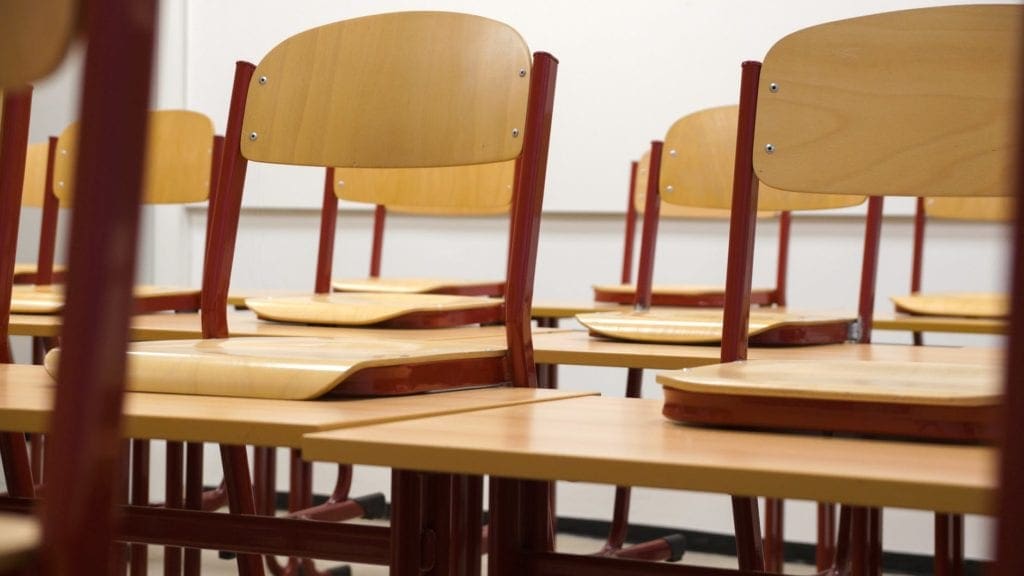 As a result of school closures nationwide, many students have seen their classes canceled indefinitely or moved online. In the midst of this shakeup, some parents are even entertaining homeschooling options now that they are home with their children. What seemed like a radical idea, homeschooling is now becoming more accepted as more people are willing to experiment with this method now that they’re at home for extended periods of time.