Beta

Password Reset Confirmation

If an account matching the email you entered was found, you will receive an email with a link to reset your password.

Welcome to our Beta

The Advocates of Self-Government is preparing a new experience for our users.

User Not Found

The username/email and password combination you entered was not found. Please try again or contact support.

Skip to main content

Quizzes & Apps

Articles

Month: June 2020

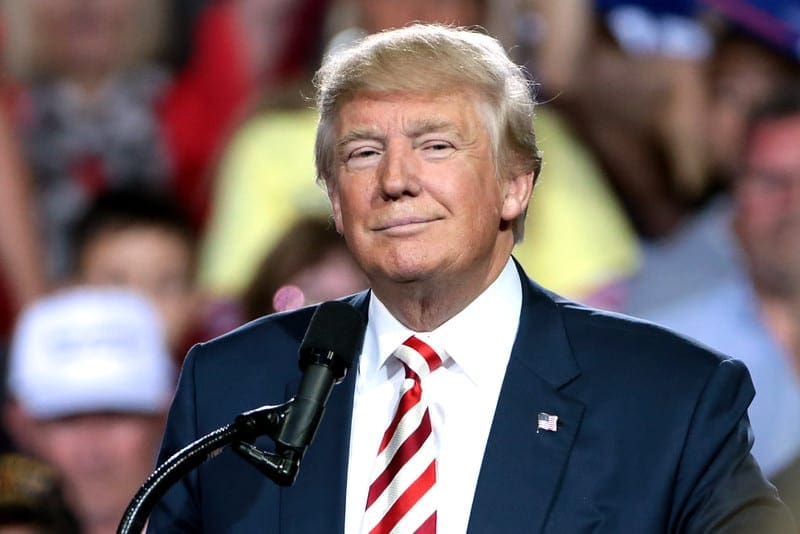
Donald Trump Doesn't Understand Riots

Image credit: Gage Skidmore, Flickr
Do you understand how to prevent a riot? Do you recognize why social harmony is frayed, and property damage is suddenly rampant?    Donald Trump demonstrates he doesn’t know the answer to those questions. More than once, in June, the president announced his intention to send federal troops to occupy U.S. cities.  The president is not unique. Hardly any Americans know the actual source of domestic tranquility.  Instead, most people are convinced that we need strong shows of force by armed authorities. Otherwise, we’ll have chaos and mass victimization at the hands of a rampaging mob. Riots are not normal. Agitators cannot build critical mass necessary. To get the numbers needed for a riot, they need to tap into an existing rage. Human Respect is already lost as soon as vandalism, looting, and arson begin. Human Respect is a philosophy based on the recognition that using violence to “get things done” undermines happiness, reduces harmony, and damages prosperity.  So here’s what the president and others don’t understand…  Societal harmony is due to the fact that most people, most of the time, practice Human Respect. Your neighbors, even strangers on the street, don’t rely on violence to get things done. They choose tolerance, persuasion, and cooperation instead. Happiness & Harmony Undermined By now, we all know that George Floyd was killed, likely due to the actions of Minneapolis police officers. The cops involved, especially the one with his knee on Floyd’s neck for over eight minutes, knew they were being filmed. They heard objections from people at the scene.  These officers apparently believed they were just doing their jobs, simply containing a suspect.  Right now, there are discussions about the merits of various types of police force such as chokeholds. These discussions miss a big point! Every law – EVERY single one – is backed by violence.  The State’s primary tactic and actual purpose is force. That’s why laws require enFORCErs. The subject of that force might object. That’s why the Enforcers are armed. Chairman Mao was right: Political power grows out of the barrel of a gun. But why does that subject objection? He or she does so because their happiness has been reduced. It’s automatic, therefore, that harmony will decline, and in some cases, be replaced by outright conflict when the enforcers come calling.  If, instead, our society prioritized and practiced Human Respect, then… 
  • We would reserve the use of force to self-defense and to arrests for antisocial actions we universally agree are crimes. For example, everyone agrees that murder is wrong but pot possession is highly debatable. We should never initiate force simply to achieve a preferred social goal.
  • We would further agree that the amount of force used must be proportional. We must never permit excessive force.
But we, as a society, have REFUSED to agree on those things and to limit the use of law enforcement.  Instead, voters have made virtually every activity the subject of some law or regulation. Republicans and Democrats have noble or pet causes. They’ve asked the cops to do the dirty work. (And the cops willingly went along because they got greater power, bigger budgets, and overtime pay.)        Follow the steps…
  1. Law enforcement was tasked by the voters and their favorite politicians to use force.
  2. Police, doing their job, took actions that robbed human happiness. 
  3. When happiness is harmed, harmony disintegrates. 
  4. Eventually, the loss of prosperity shows up in the form of riots. 
Doubling Down Once again, every time someone deploys initiated or excessive force they undermine happiness, reduce harmony, and damage prosperity.  That’s a natural principleyou can count on it.    Sending cops in riot gear, or worse, sending the military to American cities, adds more force. That might, temporarily, restore “order.” But suppressing the crowds can create pressures that burst forth in the future because nothing was done to address the root problem. Expanding the role of violence does nothing to address the loss of human happiness. The problem might get buried for now, but it isn’t solved.  No Values, No Peace Rioting mobs damage property, injure people, and sometimes kill people. We can trace the rioting mob back to a collapse of values.  Practicing the values of Human Respect is the only way we can provide true and lasting harmony and prosperity.  Strong shows of force do not make us safer. The superior approach is maximizing Human Respect. We do this by developing an appreciation for the fact that everyone is trying to pursue happiness, and that might look different from our version.  That’s not just fortune cookie advice. Politicians generate large stacks of taxes, laws, fines, and regulations. Practicing Human Respect means we prevent and end these disruptions of personal happiness.  This Human Respect approach would dramatically decrease the number of times cops would be called. The number of people shot or abused by police would plummet. And we could eliminate riots over cop conduct. Someone, please tell the president this solution to preventing riots.  ———- Jim Babka is the Editor-at-Large for Advocates for Self-Government and the co-creator of the Zero Aggression Project

Media Consolidation: Made Possible By Disingenuous Deregulation

Image credit: AbsolutVision, Unsplash
Since the establishment of the Gutenberg press, Western societies have made impressive leaps in the dissemination of information. Information that was once only accessible to the priesthood and political elites can now be accessed by laypeople of all backgrounds. As the television arrived in the 20th century, the news could be disseminated to millions. On top of that, people were able to access multiple channels of entertainment during their leisure time. Unprecedented to say the least.  However, markets don’t always develop in a clean or linear manner. There are always hiccups along the way. One troublesome trend that has emerged in the last 50 years is that of media consolidation. This refers to the increased concentration of news ownership in the hands of a small group of corporations. According to the late journalist Ben Bagdikian, about forty years ago, the majority of U.S. media was in the hands of 50 corporations. In present times, six corporations — GE/Comcast, The Walt Disney Company, News Corporation, Time Warner, Viacom, and CBS— control 90 percent of the media. This marks a rapid consolidation of the media sector during the last few decades.  Many media critics attribute this consolidation to the passage of the Telecommunications Act of 1996, which allegedly deregulated the media sector and allowed corporations to consolidate more easily. However, the deregulatory nature of this legislation is perhaps overstated. Critics like consumer advocate Ralph Nader contended that the legislation represented one of the grossest examples of corporate welfare at the time. In a testimony before the U.S. House Committee on the Budget in 1999, Nader asserted that “the government wrote a $70 billion check to the broadcast industry,” in accordance with the Telecommunications Act of 1996, which “handed over the digital television spectrum to existing broadcasters.” As Nader explained, “the broadcasters will pay nothing for the exclusive right to use the public airwaves, even though the FCC itself estimated the value of the digital licenses to be worth $11 billion to $70 billion.” In his testimony, Nader also called attention to the following:
The giveaway was mandated, in part, by the 1996 Telecommunications Act, which prohibited, under demands by the broadcaster lobby, the FCC from auctioning off the airwaves. The Telecommunications Act also required the FCC, if it decided to allocate the licenses, to give them only to incumbent broadcasters.
Back in 2001, five years after the Telecommunications Act was passed, Adam Thierer of the Cato Institute aptly noted, “The notion that the telecom industry has been deregulated is a fairy tale.” Thierer described the legislation as “Deregulation Lite,” with “some minor rules and restrictions relaxed.”  Thierer noted three developments that should call into question any assertion that there has been wholesale deregulation:  
  • In August 1996, the Federal Communications Commission (FCC) issued its mammoth 737‐​page, 3,200-footnote “Interconnection Order.” The edict, which ranks as one of the longest and most convoluted rules in the history of regulatory policy making, produced a stream of litigation. In fact, the Supreme Court recently decided to hear another round of cases dealing with ambiguous and controversial Telecom Act regulations.
  • In May 1997, the agency created the “E‐​Rate” program (known in most circles as the “Gore tax”), which unilaterally established a new government bureaucracy to help wire schools and libraries to the Internet. The FCC then decided the American people would pick up the $2.25 billion per year tab for the program by imposing a hidden tax on everyone’s phone bills.
  • Finally, since the Telecom Act became law, FCC spending and staffing grew to all‐​time highs. Last year, the FCC requested a gross budget of almost $280 million and total staffing of 1,975 people. By comparison, 10 years ago FCC spending stood at $108 million and staffing at 1,734 people. In other words, the FCC’s budget has doubled over the past decade and the agency has hired roughly 250 additional bureaucrats.
What the Telecommunications Act of 1996 shows is that partial privatization is a mixed bag. More often than not, partial privatization keeps several flawed regulatory provisions that protect incumbent business interests. In such circumstances, market advocates should call for further deregulation and other measures that strip established corporations of their crony privileges. In sum, it’s intellectually dishonest to suggest that telecommunications have been fully deregulated. Starting up a TV or radio station is still no walk in the park. Anyone who wants to start up traditional media endeavors has to pay substantial fees for FCC licenses and go through the typical bureaucratic rigmarole of paperwork just to stay in the government’s good graces. Even with the government’s regulatory constraints, groups of individuals have come together voluntarily on the Internet to create blogs and alternative media to counter mainstream media. There was no need to pass laws or regulations for this to come about. Although there are some understandable concerns regarding Big Tech’s consolidation, the Internet still offers relatively low barriers to entry compared to traditional broadcast media. With the internet, there is still a sliver of hope for new entrants to innovate. The beauty of markets is their ability to adapt to circumstances and solve problems that everyday people face. People have routinely complained about the vacuous and corrupt nature of mainstream media. In a recent podcast of the Joe Rogan Experience, journalists Saagar Enjeti and Krystal Ball — who are in divergent ideological camps — brought an interesting perspective on the nature of mainstream media. They called attention to the excessive gatekeeping and credentialism that the field is filled with. Even more intriguing is the nature of relying on talking points to deliver political messages. This makes sense when taking into account the limited airtime commentators have when discussing policy topics. Such a constrained environment for political discussion has left many viewers somewhat disappointed. However, there is a reason for rational optimism. In the last decade, the demand for Internet-based alternative media that is more factual than agenda-driven has soared in popularity. Now, more people are getting the news from the Internet, namely from blogs and niche websites that cater to specific news preferences. Again, part of the beauty of markets is their problem-solving nature. Indeed, many people are fed up with the legacy media and desire a new outlet for information that is free of political spin. The advent of social media has alleviated some of these problems to an extent. Big Tech has numerous problems of its own though. Sadly, like with many other industries, there exists a trend towards centralization and consolidation. Additionally, the tech sector has embraced some of the most obnoxious aspects of woke culture and has engaged in thought-policing of political expression through deplatforming. Markets are not a panacea, but they’re generally the best option when dealing with how people interact. As users of services, we still have power in terms of our consumption habits and holding companies accountable. When traditional media or social outlets don’t deliver the goods, we have every right to complain and push for alternatives. Furthermore, we are justified in questioning regulations and policies that enable consolidation and protect established corporations from the competition. We live in the 21st century, where new technologies are constantly being formed and uprooting dinosaur institutions. Instead of looking for top-down solutions to media consolidation, we can channel the existing trend of decentralization and use it to break up the old order. Like any institution in the market, traditional media’s existence is not guaranteed. It’s only a matter of time before new, game-changing methods of disseminating information enter the picture and totally upend legacy media for good.  

Intellectual Property is Destroying Magic; Only Freedom Can Save It

As a performer of magic, Intellectual Property (IP) has always been a contentious issue. Many of my fellow performers believe that IP protects their creations. They believe that it ensures no one uses the effect without paying the proper price to gain access to the secrets of the illusions. I never shared that perspective, and now the magic community is seeing why. The United States Playing Card Company (USPCC), situated a mere twenty minutes from my house, has recently announced a crackdown on the lifeblood of many magicians. The USPCC has decided that no alterations to their cards shall be permitted any longer. As an email from Ellusionist, a notable magic retailer, states: “No gaffing, no staining, no shadows, fades or alterations of any kind.” These cards the USPCC has banned are not necessarily “trick cards.” Rather, they are creative takes on the classic Bicycle playing cards. In other words, the USPCC has just stunted performative creativity among all magicians.

How Intellectual Property Ruins Magic

It is certainly possible to continue performing with these restrictions. But stringent IP enforcement has made it to where a magician’s imagination is no longer the limit of card magic. Rather, the limit is now up to USPCC, which has decided that any and all alterations of their cards makes it more difficult for them to spot bootlegs and other IP violations, even though every mass-produced novelty deck using the Bicycle framework has been made in partnership with the USPCC. Twilight Angels, a beautiful effect, allows for the magician to alter the back of a signed card. The audience reactions are typically nothing short of pure joy. The USPCC’s new policy effectively bans the production of this effect. Only current owners will be able to do this trick. Twilight Angels is only one of thousands, if not millions of effects that the USPCC’s new IP enforcements will ban. In addition, the creation of new visual effects to dazzle a magician’s audience is all but impossible. Most magicians believed that Intellectual Property would protect their creations. They thought it would ensure that unauthorized teaching of their tricks did not occur. Perhaps it has done so, but I must ask if it was worth it. It is harder now more than ever for small-time magicians to create their own effects in an effort to make a name for themselves. Off the top of my head, I can think of several creations of my own that, had they not been created before this ban, would now be a violation of the USPCC’s Intellectual Property rights. For magicians, the USPCC has artificially created a roadblock to innovation. It simply isn’t worth it to me that my creations be protected from unauthorized reproduction if that same system has the ability to stop me from creating the illusions to begin with. The fact is Intellectual Property has failed to protect magicians and is actively harming our ability to make new creations that enable our performances to continue. Magicians don’t need Intellectual Property.

How Freedom Can Save Magic

Magic creators rely on people paying money to learn how to perform effects they create. Of course, Intellectual Property is an easy way to protect said product. That neither makes it the best way nor the only way to protect their bottom line. Every benefit creators gain through IP can just as easily be attained through contracts. For example, if I purchase the instructions on performing Twilight Angels, the creator can create a contract that states that I agree not to expose this secret to other performers. How do I agree to the contract? I agree to it by purchasing the product. This simple alternative would not only protect creators, but it would also protect creators from the IP abuse we are seeing today. Not only would this system do that, but it would also empower magicians to improve upon each other’s product. In magic, no illusion is truly original. Every creation I have seen carries with it inspiration from other performers. Intellectual Property has not helped the art of magic to expand and develop new creations. Rather, it has precluded magicians from a world in which magic is as popular as music and as well-viewed as sports. Magic needs an injection of new blood, not a protection of the monoliths like the United States Playing Card Company who don’t have the best interests of the art form at heart. We should be thankful that the only restrictions the USPCC can place on other magicians is their card designs and various visual effects one can perform by altering the appearance of the cards. But this incident shows that the art of magic is not safe. At any moment, any other product, such as coins, may fall victim to IP and there goes even more of the magic industry. Imagine, if you will, if the USPCC decides to say that their cards and their designs are inherently for gambling. Therefore, the USPCC will only allow casinos to use their products. Just like that, all card magic and all the small time card games are gone. This is completely possible within the grand scheme of things. Fortunately, the USPCC would lose more money than they would gain through a move like this. I have been a magician for around ten years. When I got to the point that I was creating my own illusions, it was a beautiful thing. Many magicians will now never know the joy of creating your own effects due to strict Intellectual Property rules such as the new restrictions from the United States Playing Card Company. Magic and Magicians alike deserve better. We can be better. Without intellectual property, magicians can enter a new era of innovation. The illusions would be truly beautiful. Only freedom can create this magical future.


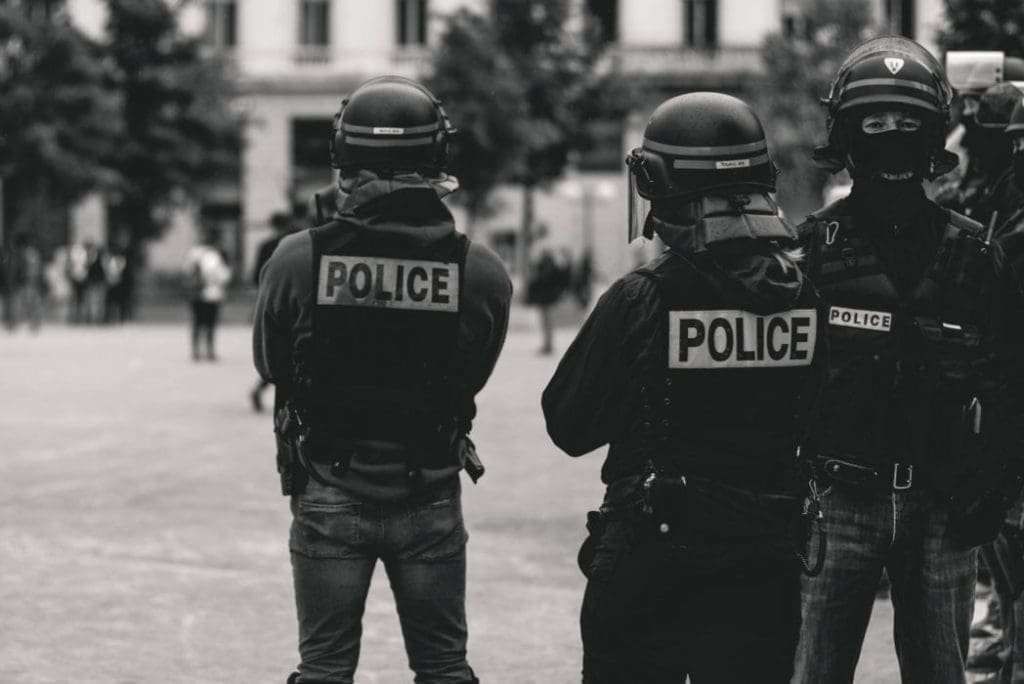
After The Police Are Dismantled, Will Private Security Services Save the Day?

Will Minneapolis be safer after its police force is disbanded? Only if the city follows a libertarian approach will the people be guaranteed greater protection for themselves and their property. All other methods jeopardize resistance to a police state.  A veto-proof majority of the Minneapolis City Council promises to “dismantle” their city’s police department in response to the May 25th death of George Floyd, who died after suffering for over eight minutes from an officer’s knee pressed into his neck. That incident, caught on video, spurred protests and riots nationwide as well as globally. Needless to say, a lot is at stake here if Minneapolis follows through. It is the country’s 46th largest city and part of the 16th largest metropolitan area. The immediate and long-term consequences would be studied by communities worldwide, perhaps for generations to come. In the run-up to the City Council’s decision, over 600 people have been arrested in connection to the Minneapolis protests and riots. Together with St. Paul, the Twin Cities have seen nearly as many buildings looted or vandalized, and at least 67 were completely destroyed by fire, while still others had serious water and fire damage, according to the Star-Tribune. Libertarians, especially those of an anarcho-capitalist bent, have long called for abolishing the police or at least severely downsizing or decentralizing them. However, there are reasons for them to be apprehensive about what Minneapolis appears to be spearheading. The libertarian understanding of police is that they are not just the government’s law enforcers but more fundamentally a state response to the market demand for security of persons and property.  Like all government “services,” policing is financed through compulsory taxation backed by the threat of force. The moral and logical implications of this should be obvious, but the libertarian is also aware of the economic impacts when only one side of a transaction is voluntary. Thankfully, it is easy to visualize what policing or protection services would look like under a totally voluntary arrangement. Most of what the police provide is already largely available on the open, voluntary market. In fact, what’s difficult is quantifying all of the products and services that go into this field, from cameras to alarm systems to weapons and security guards. Now, when it comes to some powers like making arrests and incarcerating, police have more of a monopoly. Might that exclusivity be a contributing factor to unaccountability for police brutality and the troubling facts surrounding criminal justice and record prison populations? In a libertarian order, where private property rights are secured through voluntary means, there is the benefit of economic signals in the form of prices. Under the status quo, governments may calculate some costs, but there is no sales revenue feedback, due to their “customers” being coerced into “buying” whatever is “offered.”  If police answered to customers just as grocers and hairdressers do, they wouldn’t be wasting time doing things that customers wouldn’t pay for, like pursuing the failed War on Drugs or petty rule infractions that generate revenue for governments. Many police officers want to serve the public, and they nobly try their best to do so. But they’re up against a system that actually serves the government, as it makes the call on what is deemed a security threat. Police militarization is a consequence of this. A brief sidenote to better illustrate the point, consider the TSA’s role at airports. The agency just rolled back its rule on larger bottles of hand sanitizer due to Covid-19, effectively admitting its rules are as dumb as they’ve always seemed. Or, remember when then-Congressman Ron Paul counted nearly 100,000 federal agents who carried guns, including for OSHA and the EPA. Considering how much technological research and development is steered by government grants and contracts, it’s startling to think of the potential there is for truly private production of security.  The malinvestment is seen, but the unseen is how those resources would be better directed by businesses, neighborhood associations, and mutual aid groups that care about the communities they serve.  In Minneapolis, unfortunately, it does not seem that a libertarian path is being taken to arrive at a “police-free future” as their City Council statement puts it. The statement fails to detail how the city will develop a “new transformative model for cultivating safety.” “We recognize that we don’t have all the answers about what a police-free future looks like, but our community does,” the statement continues, adding that the City Council will dialog with residents over the coming year. That may sound good, but it really doesn’t say much of anything. More can be derived from what is not being said.  There is no indication that the taxpayers who footed the bill for the police department will see any refund, nor taxes being lowered. And there is absolutely no talk of undoing any gun control restrictions or pressuring the state to do so. Unsurprisingly, the Minneapolis City Council isn’t poised to give up any power, but instead grab more. City Council president Lisa Bender has appeared on CNN, saying that worrying about who to call about a house break-in in the middle of the night “comes from a place of privilege.”  “I think we need to step back and imagine what it would feel like to already live in that reality where calling the police may mean more harm is done,” Bender added. So, now “privilege” is the latest bogeyman, not unlike the concocted threats mentioned earlier, like terrorism, drugs, etc. Bender’s words do not reflect a good philosophical foundation to ensure public safety going forward. They reflect a political class that feels emboldened to centrally plan the allocation of public safety resources, and that’s no transformation from what existed beforehand. The libertarian way is the only “transformative” one, because it strikes at the root of the problem. That is, the coercion, the legalized violence the state has reserved for itself in the name of protection. Only when peaceful means are deployed will there be a peaceful end, the end of unaccountable police.