The standard objection to a society without a state monopoly on force runs something like this:
Without legislatures defining crimes and prisons warehousing offenders, the violent and the predatory would run riot. Neighbors would feud, all disagreements would escalate to violence, insurers would refuse to get involved, and the only people left with any order would be those rich enough to hire private guards. The rest of us would be stuck choosing between vigilantes and being victims.
Part of the mistake with this view is imagining that the current system is some sort of inevitable, “grown-up” baseline. This generally results from a combination of recency bias and status quo bias. Yet consider how archaic our present system actually is.
Statism anachronistically defines crime primarily as an affront to the sovereign — an inheritance from the idea that the king’s peace, not the victim’s well-being, is the thing that has been broken. A victim may pursue a civil case to recover some damages, but first and foremost, the offender must “pay his debt to society.”
Society, conveniently, is represented by the same organization that extracts the taxes to pay the cops, prosecutors, and prison staff — in other words, to pay itself.
Right at the start, the incentives are misaligned away from a focus on justice. The victim is a witness at best and an afterthought at worst. Medical bills, lost wages, and the plain fact of having been hurt are somebody else’s problem — perhaps an insurance company’s. But by then, the state has already taken its cut in the form of fines and taxes to pay for its version of justice. Compensation rarely reaches the person who was actually harmed.
The results are familiar and depressing. American prisons and jails hold a population large enough to rank as a mid-sized city, at enormous expense, with recidivism rates that remain stubbornly high. In jail, offenders learn (if they learn anything) how to become better criminals. They also learn how to navigate a bureaucracy whose residual claimant is the bureaucracy itself, not “society.”
The system optimizes for procedural regularity and political visibility, not for making the harmed party whole or keeping society safe. Such a system also has no way to price and mitigate future risk accurately. What the Kane family sees at Verdant, and with Jake’s situation, is a market attempt to realign justice with the needs of people, not those of any sovereign, be it monarchical or democratic. It is a system actually interested in helping the party who was harmed and incentivizing Jake to better himself. There is no monopolist to get in the way.
So How Should We Prevent Crime and Make Victims Whole?
Jake is not at Verdant because a statute assigned him a prison term. He is there because he had already bound himself to this outcome. Protection policies, bonding agreements, covenant memberships, and the arbitration clauses inside all of these are just ordinary contracts. They specify the forum, the remedy, and the methods of collection if Jake does harm.
When he broke the peace he had agreed to keep, the result followed from terms he (directly or through prior sponsors and insurers) had accepted. If applicable, his labor reimburses an insurer that had made the victim whole immediately following the crime. The file is public because future counterparties — sponsors, agencies, communities — value that transparency and contracted for it in advance, and so did Jake.
Ostracism is an exercise of free association via the refusal of new contracts, not some extra punishment invented after the fact. Unlike our current statist system, no one is forced to socialize the costs of bad behavior forever. In other words, the state doesn’t get to decide these things — actual people do.
These kinds of prior agreements are important, and we all use them reflexively in our normal lives. A restaurant that posts its rules on the door does not need a separate negotiation with every entrant; walking in is acceptance of the posted terms, including the consequences for violating them — a fact we all know and accept when it comes time to pay the bill for our meal. Covenant gates, policy applications, and residency contracts work the same way. Jake knew the rules. The labor center, the wage assignment, and the reputation hit are what he contracted for ahead of time.
And what of those who don’t agree to such terms? Simple: They aren’t invited in. Remember, absent a state, all property is private. If people come in anyway and begin aggressing, we are free to use private security to repel them.
Conflict with an unwelcome invader is a well-known human problem and market anarchism has all the tools to handle it: the defensive use of force, followed by whatever settlement or separation the parties (and their agencies) can impose or negotiate. Defense remains legitimate, of course, and victims can still demand restitution.
The much cleaner mechanisms in the Kane story (arbitration both sides have already accepted, automatic wage claims, sponsor liability) do not apply unless the outsider contracts into them or is subdued and then dealt with under the defender’s own rules. Most people avoid that mess by staying inside networks that already coordinate. The residual cases are far fewer, and they are not laundered into the lazy claim that everyone owes a debt to some abstraction called “society.”
There is a core economic claim here. Once protection and compensation are unbundled from a territorial monopolist, the people making the decisions have skin in the game. In a condition of market anarchy, the people who make contracts with one another become what economists call “residual claimants” (owners who receive the leftover profits). They gain when harm is prevented and lose when it is not. The managers of a monopoly state lack these incentives, and our current system reflects that unfortunate fact.
A defense agency that lets its clients be preyed upon loses renewals. An insurer that misprices aggression either loses clients or loses people’s trust in its financial guarantees. Firms that excel at this increase their market share while the rest shrink and exit the field.
In Jake’s case, his contractual obligations forced him into a place like Verdant, but in a competitive market, Verdant was just one of many such options. A restitution firm that warehouses people cruelly or offers labor options that don’t generate competitive wages loses contracts to competitors.
The final piece after restitution is transparency. We are already familiar with private reputation systems: credit scores, insurance claims histories, professional licensing databases, customer reviews, and many more. These can extend naturally to records about criminals and restitution.
David Friedman’s treatment of private law and Bruce Benson’s similar historical work both emphasize the same mechanism, which humans keep employing across time and place because it works. People who regularly deal with one another converge on predictable rules because unpredictability is expensive, and exclusion from future dealings enforces the rules more cheaply than continuous surveillance.
Murray Rothbard’s restitution principle makes explicit the kinds of norms most actors would find reasonable and economical, and Hans-Hermann Hoppe nicely describes various private mechanisms of organization and enforcement. A crime violates the rights of a particular self-owner or their properly acquired property. The remedy seeks to make the victim whole through damages and compensation. Some harms cannot be fully compensated with money, but a system of restitution gets us a lot closer than forcing victims to pay for the apprehension, trial, and incarceration of their victimizers.
Notice that AnCapville doesn’t require anything like a single criminal code. The Kane visit shows one mid-tier result (an offender paying down the damages he caused under rules he had already accepted), not a universal blueprint. There are as many possibilities as humans can imagine — provided all parties consent.
What’s your political type?
Find out right now by taking The World’s Smallest Political Quiz.
Take the Political QuizSome networks will be loose and trusting and de-emphasize punishment; others will suspiciously prefer surety and exclusion. Some insurers will underwrite only low-risk agreements or price their guarantee so high that people will choose to go without. We cannot predict the exact order that emerges under market anarchy — just that it will be the order all parties choose, not one that was forced on them.
How Would Anarchocapitalism Deal with Criminals, Cartels, and the Poor?
What of the hard case of a person who will not sign any contracts, will not work, will not accept terms offered by any work program, and remains dangerous? These are literal outlaws and will find most doors closed to them. They will not be allowed on (most) private property and among civilized people. The damage they cause (before being expelled by force) is priced into security costs like any other environmental risk. Uncivilized, violent, and unwelcome humans are somewhat like wild animals in a shopping mall. Not welcome, and to be dealt with if they intrude.
Gray zones and frontier settlements, as Jake notes, remain available options precisely because not every community will price the risk the same way. Sorting is a feature. People who want higher walls and stricter surety requirements buy them; people who prefer looser terms accept the local insurance consequences. People who want no rules at all? Well, off to the wildlands with ye, along with the rest of the miscreants who share your values. Private property allows for wretched hives of scum and villainy, but the rest of us civilized folk need not be bothered.
Another worry is capture or collusion: agencies might frame the innocent or go soft on the guilty if the money is right. But absent monopoly, this is unlikely to persist. An agency that convicts the wrong person is liable and owes restitution itself; its own insurers will demand evidence standards and audit rights, or they will raise the agency’s premiums to unsustainable levels. False positives are costly when the agency can be sued and when clients can switch. In extreme cases, a rogue agency might become an outlaw itself, to be dealt with appropriately. A monopolist faces none of those market tests.
What of victims who are poor or uninsured? Fair question, but the comparison has to be honest. How are the poor faring under statism? In the present system, the economically disadvantaged are poorly protected, underserved, and often treated harshly by agents of the state. Worse, poor victims with no insurance wait on public compensation funds that are underfunded and slow (if they exist at all), while the offender’s upkeep is socialized through taxes that are themselves regressive. (In other words, poor people bear a disproportionate share of the costs of incarcerating their victimizers.)
Charities, mutual-aid associations, and litigation funders that specialize in high-probability awards already exist at the margins. All these would become more prevalent, not less, if the state were no longer crowding out private solutions.
And again, in AnCapville, all property is private. Employers, landlords, businesses, and road operators that want customers have incentives to keep predation low in the zones they control, much as mall owners pay for private security because they want customers to keep coming back. The household that cannot afford a gold-plated policy can still buy a narrower one, rely on a covenant’s collective coverage, or accept higher personal vigilance in exchange for lower premiums.
As Thomas Sowell always reminds us: there are no solutions, only tradeoffs. But in a market anarchist system, those tradeoffs are no longer hidden inside a monopolist’s budget and extracted from everyone through coercive taxation.
Time to Grow Up
Proponents of market anarchy make a radical claim, but it also makes perfect sense. Removing “the sovereign’s peace” as the legal object of justice reorients our aims where they belong: on the people, not the state. Voluntary coordination takes seriously the relationship between offender, victim, and the insurers who stand behind each; remediates the harm done; and then lets reputation and refusal do most of the ongoing enforcement.
Our current statist system asks everyone to keep paying for the pretense that harm to a person is really harm to an abstraction, and that years in a cage somehow balance that ledger. The arrangement Jake and the Kanes live under drops that pretense. When people have agreed to civilized terms, violations have consequences: restitution, collection, and perhaps refusal of further dealings. Between people who have not, it is conflict and separation, without the pretense of a debt to society.
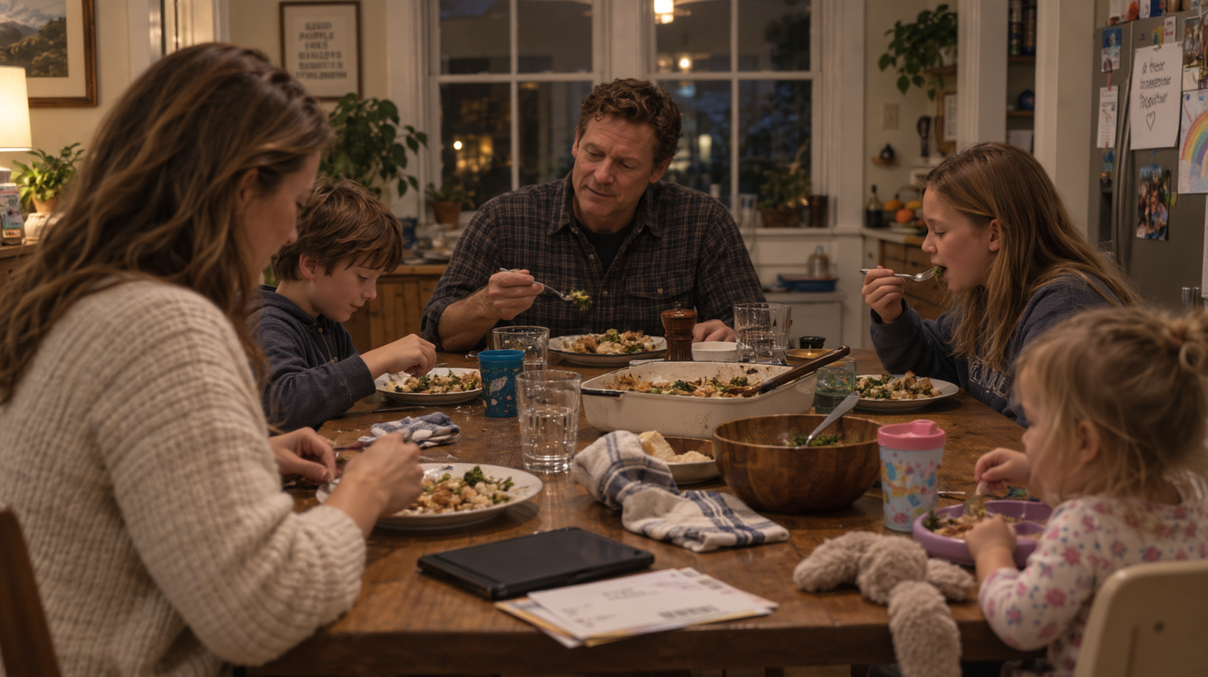
The Kanes drive home under covenants they chose, carrying neither Jake’s debt nor the illusion that a monopoly has solved it for them. Their system is much more honest than a statist one. It’s also cheaper and safer.
Monopoly provision of goods and services is famously inefficient in both theory and practice — especially for things as important as law and order.