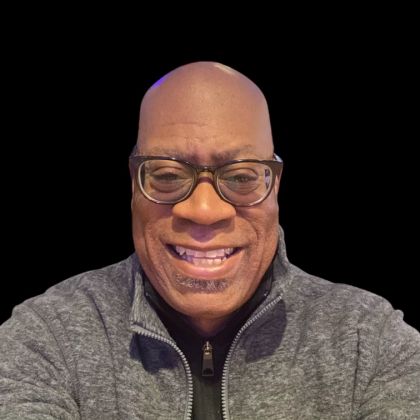

I arrived at Ohio State in the early 1980s the way a lot of freshmen do, unsure of exactly how this new undergraduate adventure would take shape. My father had graduated from the same university in 1958 with a degree in political science, so, without giving it much thought of my own, I declared that same degree too.
Well, that didn’t last long.
Biology was my love in high school, so I switched majors. That was before I discovered the rigorous math, chemistry, and physics requirements standing between me and a biology degree. Suddenly, biology didn’t look quite as appealing. So I switched again, this time to something I imagined would be a gentler cousin of biology which was nutrition.
I drifted through a few quarters studying everything from vitamin C to peptides, restless and increasingly unsure that I had made the right choice.
Mind you, this was an era when business, computer science, and engineering were considered the smart bets, credentials that seemed to come with an obvious payoff. But my father encouraged me to pursue a liberal arts degree instead.
Then my father said something I didn’t expect. He believed the world would always need people who could think critically, write clearly, communicate under pressure, evaluate situations honestly, and read a book with real comprehension. Those abilities, he told me, would outlast any single job title.
So that year I became a sociology major. With this, I found myself immersed in social and political theory, languages, philosophy, and logic, along with a healthy dose of composition and English literature. None of it pointed toward an obvious career in the way an accounting or engineering degree might have.
And yet, that same education eventually led me into the field of healthcare human resources, where I discovered that writing policy, conducting interviews, drafting recruitment materials, navigating employee conflict, and making sense of complicated human situations were all, in their own way, liberal arts exercises wearing a business suit.
By the summer of 1985, I was interning in human resources at a hospital outside Chicago. A year later, I landed my first full-time role at the Ohio State University Hospital and Medical Center.
The degree that seemed to prepare me for nothing in particular turned out to prepare me for almost everything.
What Liberal Actually Meant
It’s worth remembering that the phrase “liberal arts” did not originally describe a college major with uncertain job prospects. It reflected the kind of education considered appropriate for a free-thinking, intellectually curious individual. The Latin root, liberalis, carried that distinction directly, referring to what was fitting for a free person.
The classical triplet of grammar, logic, and rhetoric, followed by the quadrivium of arithmetic, geometry, music, and astronomy, are not vocational tracks designed to funnel someone toward a particular occupation. They serve as intellectual equipment that teaches people how to reason, communicate, question, calculate, observe, and make sense of the world around them.
In other words, a liberal arts education was not originally about preparing someone for a job. It was designed to prepare someone to remain free and self-sovereign in their thinking.
That is a striking diversion from how we tend to talk about education today. The more common narrative is to ask what a major prepares someone to do for a living. The older tradition asked a more fundamental question. What does a person need to know in order to think and act without being governed by someone else’s mind?
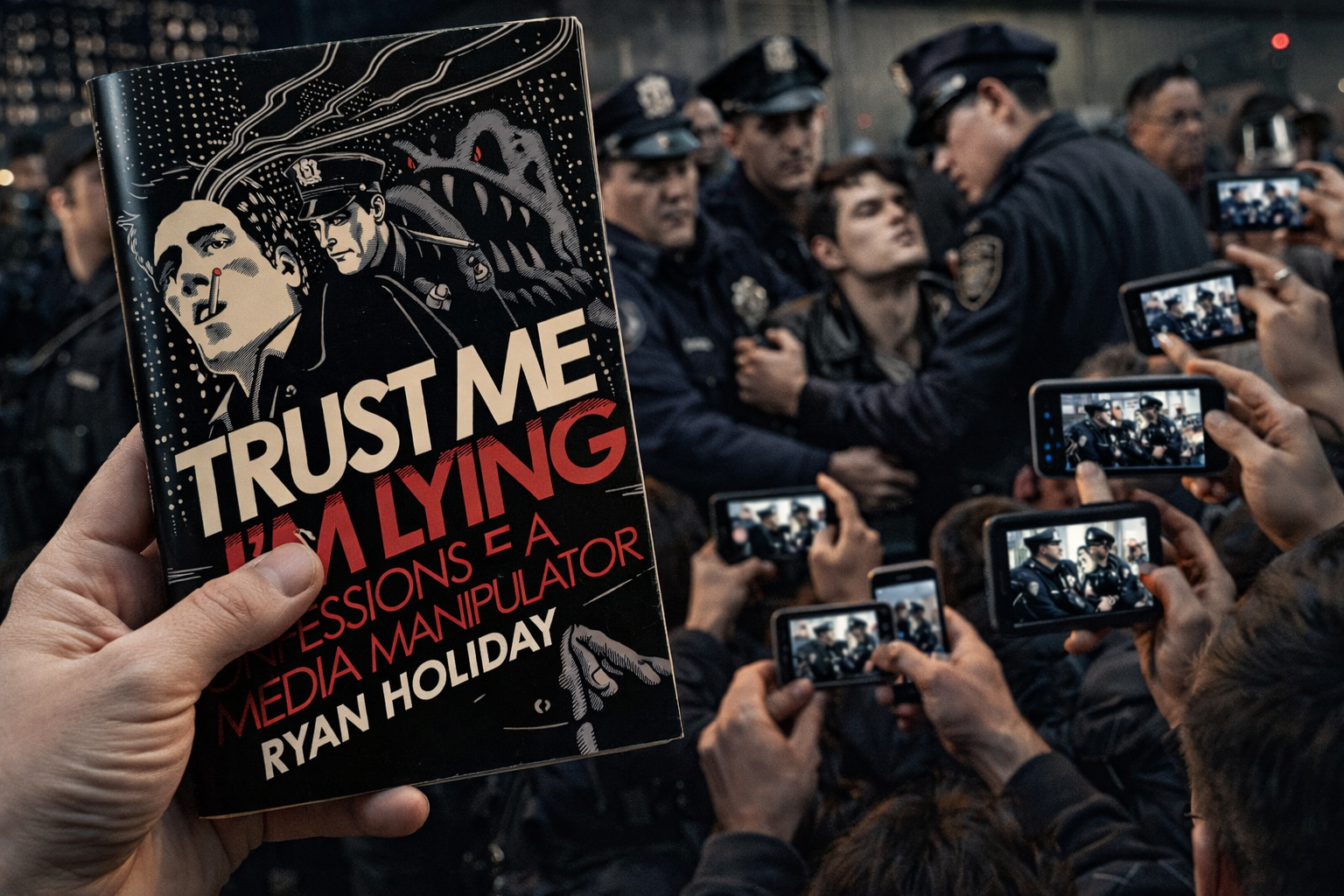
A person who cannot distinguish an argument from propaganda is easy to govern. Someone who cannot put an idea into words is easy to speak for. Someone with little sense of history can be persuaded that every crisis is unprecedented and every proposed remedy urgently necessary.
A person untrained in philosophy can inherit an entire set of moral assumptions without ever realizing there was an inheritance. And someone educated solely to perform one narrow economic function can become remarkably skilled while remaining strangely dependent on the institutions that assign value to that skill.
This is what makes liberal learning quietly rebellious. Its purpose was never to tell a person what to conclude but to give that person the intellectual tools to question, discern, and decide for themselves.
Of course, the modern university has not always lived up to that ideal. Over the past century, and particularly in recent decades, many American colleges and universities have developed intellectual cultures that tilt decidedly left, sometimes leaving conservative, libertarian, classical liberal, and other dissenting perspectives underrepresented.
This does not mean every campus is an indoctrination factory or every professor is some réchauffé Marxist. Far from it. A rigorous and genuinely pluralistic liberal arts education remains available. But when education becomes disproportionately weighted toward one ideological vocabulary, liberal learning risks becoming the very thing it was meant to resist: instruction in what to think rather than preparation for how to think. At its best, the liberal arts teach us how to recognize when someone else is trying to do the thinking for us and, perhaps more importantly, how to say no to that invitation.
Thoreau’s Audit
I remember studying Henry David Thoreau in college. His experiment at Walden Pond is often remembered as a retreat into simplicity, but I think it reads better as an audit. He deliberately reduced his material requirements so he could expand his intellectual and spiritual ones. That trade is instructive because modern life so often moves in precisely the opposite direction.
We expand our material requirements first through the pursuit of a larger home, higher salary, or nicer car — a growing pile of possessions and obligations. Then we spend most of our waking hours maintaining the machinery required to sustain them.
Eventually, that machinery begins making decisions for us.
It determines which jobs we can’t afford to leave, which opinions we can afford to voice, which risks we can afford to take, and how much uncertainty we can tolerate before panic sets in. A person can become remarkably prosperous while becoming remarkably unfree.
Thoreau’s question, stripped to its essence, is deceptively simple.
What do I actually need?
Beneath it sits another, more unsettling question. How many institutions have leverage over me only because I have constructed a life that requires their continued cooperation?
What’s your political type?
Find out right now by taking The World’s Smallest Political Quiz.
Take the QuizThat is where simplicity stops being merely an aesthetic choice and becomes an exercise in freedom.
Mill and the Tyranny of the Ordinary
John Stuart Mill worried about a form of oppression that libertarians sometimes overlook, which is that government is not the only force capable of restricting individual freedom. Public opinion can exert its own kind of tyranny by pressuring people to conform, remain silent, or suppress beliefs and ways of living that fall outside accepted norms. That pressure can come from your neighbors, your profession, your political tribe, your church congregation, your employer, your social circle, or even your closest friends.
In On Liberty, Mill’s defense of individuality was therefore about more than protecting people from government coercion. It was also about shielding the individual mind from the enormous social pressure to think, speak, and live as everyone else expects.
Anarchism as an Unfinished Liberal Arts Project
There is a natural kinship between the liberal arts tradition and the questions raised by anarchist and libertarian thinkers such as Lysander Spooner, Benjamin Tucker, and Emma Goldman. Whatever their considerable disagreements, they kept circling back to the same fundamental problem: unquestioned authority.
Why does this institution have power over me? Where did that authority come from? Did I ever consent to it? If I did, can I withdraw that consent? Why is an act condemned when a private individual commits it but accepted, or even celebrated, when a government does essentially the same thing?
These are philosophical questions before they are political ones. That distinction matters because anarchism without genuine intellectual independence can easily become just another tribe with its own orthodoxies, sacred texts, and approved answers.
It is entirely possible to escape one set of unquestioned authorities only to surrender yourself to another. You can memorize Rothbard or Kropotkin the same way I remember memorizing the catechism during my Catholic school years, repeating all the correct answers without ever examining the questions underneath them.
A genuinely self-governing mind must preserve the right to question its own side as vigorously as it questions the side it has rejected. Otherwise, rebellion becomes another form of conformity, and the person who thought they had escaped authority discovers that they have merely given it a different name.
Zhuangzi’s Useless Tree
The Taoist tradition, from which I draw much of my philosophical orientation, adds something that the Western liberal arts tradition sometimes misses. Thinking for yourself is not enough if you remain imprisoned by the need to always be right, productive, important, successful, or even free. You can reject society’s orthodoxies and still become captive to your own.
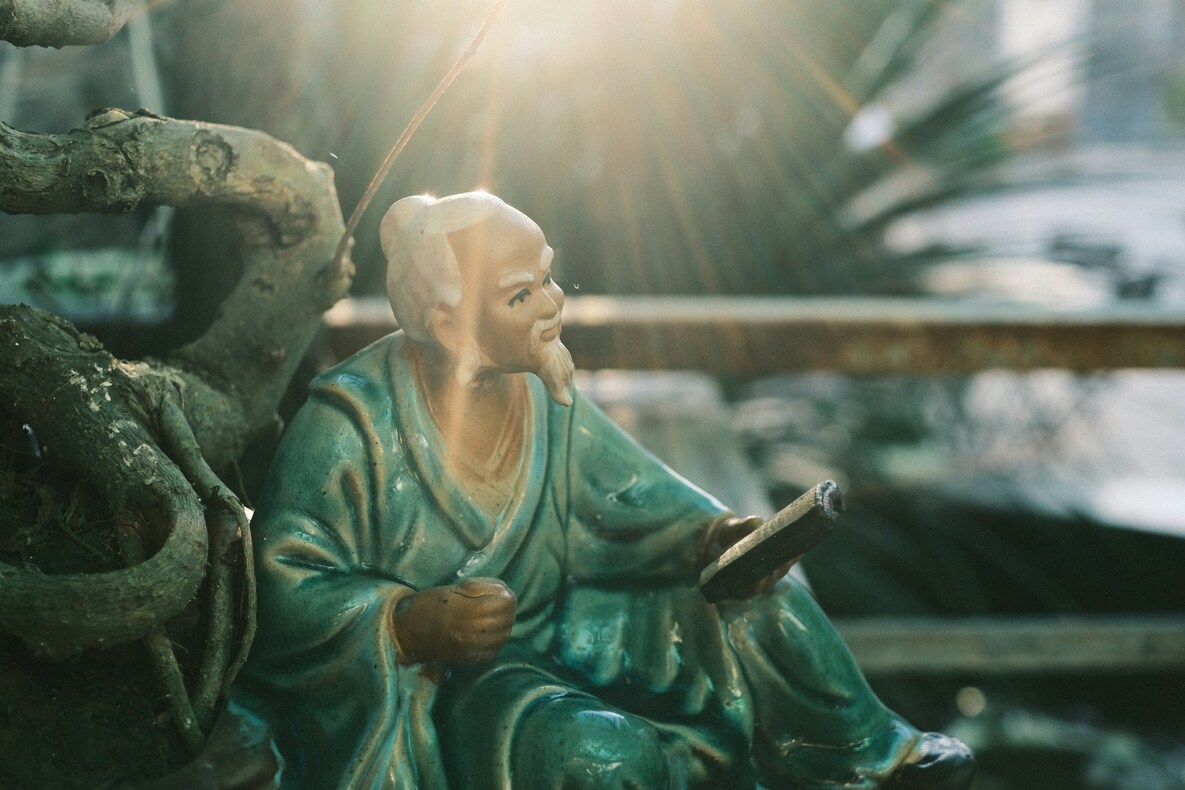
Zhuangzi’s parable of the useless tree makes the point beautifully. The tree survives precisely because its crooked branches make poor lumber. No carpenter considers it worth cutting down. What appears useless from one perspective becomes the very source of the tree’s freedom.
Modern education relentlessly asks what a subject is for. What job can you get with a degree in philosophy? What salary progression follows a history degree? What is the return on investment from studying literature, anthropology, or ancient civilizations?
The Taoist answer is wonderfully irritating. Perhaps a subject’s lack of immediate usefulness is actually part of its usefulness. Maybe what cannot easily be converted into productivity, credentials, status, or income protects a part of us from becoming merely another productive asset.
Some portion of a human life should remain uncolonized by utility. And perhaps sovereignty grows precisely in that uncolonized space.
Lao Tzu’s suspicion of excessive cleverness points in a similar direction. The Taoist tradition is not necessarily hostile to learning. It is suspicious of knowledge that hardens into certainty and begins separating us from direct experience. There is a difference between knowing something and becoming so attached to what we know that we can no longer see what is actually in front of us.
A Taoist liberal education, then, would encourage us to learn widely, question deeply, and hold our conclusions lightly. Education should multiply the ways we are capable of seeing the world without persuading us that any single way of seeing is the ultimate reality.
Perhaps that is the deeper purpose of becoming educated. Not accumulating enough knowledge to have an answer for everything, but developing enough intellectual freedom to remain genuinely curious about almost anything.
The Quiet Revolution
Self-government is often discussed as a political arrangement, yet I have come to believe that it begins somewhere far more personal.
Can you govern your own attention?
Examine your beliefs without flinching?
Tolerate the uncomfortable discovery that you were wrong?
Remain curious about someone whose politics you despise?
Distinguish a genuine conviction from something your tribe simply expects you to believe?
Those are liberal arts questions as much as they are anarchist ones.
The sovereign individual is not simply someone who wants the government to leave them alone. That is only part of the equation. Self-government also requires becoming less governed by inherited assumptions, social expectations, ideological loyalties, and the relentless need for other people’s approval.
Put liberal learning, anarchist inquiry, and Taoist humility together, and education stops functioning merely as preparation for employment. It becomes fodder for something far more dangerous to any institution, movement, or ideology that depends upon managed opinion.
Looking back, that may be the greatest gift my father gave me when he pointed me toward the liberal arts years ago. At the time, I thought he was helping me choose a college major. I can see now that he was offering me something much larger.
I can now see that he was steering me not towards a career but rather the ability to be expansive in my thinking. The capacity to read widely, question deeply, change my mind, distrust easy answers, wander beyond the boundaries of my own tribe, and ultimately decide for myself what kind of life is worth living.
Perhaps that is what a liberal education was always supposed to do. Not teach us how to make a living, but teach us how to flourish while making one.