










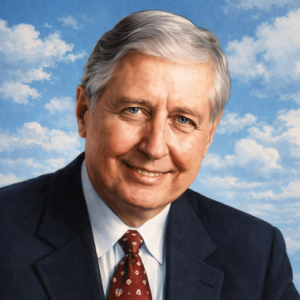








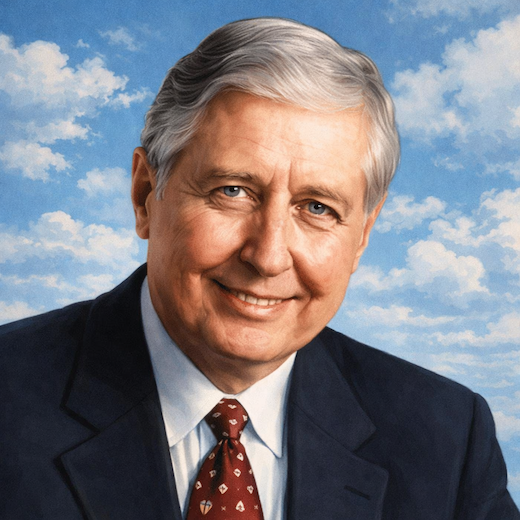
Today, we’re remembering Harry Browne, who passed away on March 1, 2006.
Life goes by fast. I’ve noticed this most when an anniversary of the death of a loved one comes around.
Note: You might also see this article via Agenda Setters by Downsize DC or the Zero Aggression Project.
For those who do not recall or know, Harry Browne was the greatest Libertarian candidate ever. He was sharp. He was prepared. He looked the part.
Harry Browne was a #1 New York Times best-selling author. In his 1970 book How You Can Profit From The Coming Devaluation, Browne provides one of the clearest descriptions of money – what it is and what it does – that has ever been written. He was the inventor of the Permanent Portfolio strategy.
How I Found Freedom In An Unfree World (1973), had a profound and lasting impact on the lives of those who read and embraced it, so that it was reissued in a 25th anniversary edition.
One day, I told then-Advocates for Self-Government President, Sharon Harris, that Harry’s soundbites were in an issue-categorized collection – that there were over 1,100 of them in a file. The result was Harry’s last book: Liberty A to Z: 872 Libertarian Soundbites You Can Use Right Now!
In 1996, Harry answered the call to run for president. I discovered Harry and libertarianism as he won and accepted the Libertarian Party nomination. I read his first campaign book, Why Government Doesn’t Work. As a result of that campaign, I became a party member, almost immediately a county chair, then quickly a state chair.
That could’ve been the end of the story, and Harry Browne still would’ve made an indelible impression on my life. But then I was hired to be his 2000 campaign press secretary.
I wasn’t qualified for the job. Harry’s campaign manager, Perry Willis, believed in my potential. I would find out years later that, several weeks after I’d joined the campaign, Harry even asked Perry if I was really qualified. I had a lot to learn.
After the campaign was over, I continued to work professionally with Harry. Perry Willis formed two groups out of Harry’s campaign. One, I managed. We took a lawsuit all the way to the U.S. Supreme Court. Eventually, these entities became the Downsize DC Foundation and DownsizeDC.org, Inc. Harry loved our Read the Bills Act and endorsed it on the radio.
After the campaign, three personal experiences with Harry still stay with me.
What’s your political type?
Find out right now by taking The World’s Smallest Political Quiz.
First…
The day after 9/11, Harry published When Will We Learn. It became the most-widely published column he ever wrote. It was translated into other languages and published globally. Then, Harry turned it into a three-part series, followed by another series of editorials. Thanks to Dave Smith and others, many Harry Browne fans have heard this story of Harry’s principled courage, but I am the original source for this information. It remains vivid because that was also my first week as the CEO of our post-campaign non-profits. Plus, we received a lot of hate email and donation cancellations because of Harry’s principled stand.
At the time, I recognized that Harry had predicted a “blowback” event was coming. None of us, not even Harry, expected it to be that bad! But it was in the crucible of that September, where my donors were fleeing us for “siding with terrorists,” that I really understood what it meant to be a libertarian. Keeping our organizations alive was tougher than I can describe here, but we pulled through.
Second…
I was something akin to Harry’s agent. Post-campaign, I negotiated speaking events, publishing opportunities, and radio shows. Indeed, we set up two syndicated radio shows. The first was Saturday nights and was mostly libertarian-political. The second was Sunday afternoon and was mostly investment advice. Apparently, I did such a good job that the network wanted to give me a syndicated radio show of my own. It followed Harry’s show on Sundays. Some weeks, Harry would stick around after his show and listen to my latest episode.
Around mid-2005, Harry became quite sick. For stretches of months at a time, he couldn’t do his shows. Harry and his wife Pamela selected me to fill in on the Saturday political show.
In my last call with Harry, he didn’t just thank me; he gave me some highly specific bits of praise on the job I was doing as a host. While the honor was all mine, it was extremely satisfying to have gone from, “Is he the right guy for the job?” to “Yes, he’s the right guy for the job!”
Third…
A mutual friend, Michael Cloud, had launched a training seminar. Harry was one of the three teachers. By coincidence, a consulting client, Marshall Fritz, needed me in Indianapolis a day later. This was June 2004. I’d talked to Harry, on the phone or in person, hundreds of times. But that night, after Michael’s seminar, Harry and I ended up both face-to-face and one-on-one. It was the first and only time that ever happened. We had a couple of drinks and just talked for a couple hours, like friends do.
What did we talk about? Well, for one thing, Harry always admired good salesmen. Essentially, even as he ran for President, he saw himself more as a salesman than a candidate. Even his editorials were really sales letters. Looking back, I think that’s actually a wise way to view the role of a third-party candidate. But his admiration of salespeople included an almost forbidden quirk of appreciation…
Harry liked watching televangelists. He was a nocturnal worker, and when he was done, he often watched a bit of TV. At that time of night, the airwaves were dominated by televangelists. He didn’t watch them routinely, but that didn’t mean he hadn’t seen quite a few sermons. He wasn’t into the message or even the character of the men; he gleaned lessons from their oratorical skills. He wanted to understand how they used their abilities to sell their message – so effectively that they kept their shows on air.
Since we had veered into the topic of religion, it seemed natural to slide into Harry’s views on God and even death. I’m a believer, so I was curious. Harry, on the other hand, was not a believer. He had been exposed to religion throughout his youth; his uncle was the national president of a religious denomination while he was in his teens. And he wanted to be clear: He wasn’t hostile to the notion of God.
I posed a hypothetical question: “What would you say if, after you die, you found yourself standing before God, and he asked, ‘Why should I let you into heaven?’” Harry responded that he’d instantly believe and worship. But until then, there just wasn’t enough evidence.
I thought about that answer, a lot, in the months and immediate years after Harry’s passing. It caused me to question the existence of an eternal, persistently tormenting hell. I had a hard time imagining Harry there and God wanting it that way. With my mind opened that much, I examined the case and found it wasn’t as certain as many Bible teachers claimed. Even after this great communicator was no longer writing or speaking, here, on a completely separate subject, Harry was changing my mind and my life.
Oh, but for sure … Hell exists. And Harry and I would agree that it’s called War. His favorite movie was an anti-war movie: The Americanization of Emily. He also loved Dr. Strangelove. He was writing a book on the subject, potentially titled The War Racket, at the time of his passing.
But war, as terrible as it is, is also a metaphor and heuristic filter. Harry not only pointed out that war is the health of the State, but also that the State is itself a war. Whether it was a war on drugs, a war on poverty or illiteracy, or a global war on terror, politicians are always inviting us to aggress against our neighbors, allegedly to solve social problems. But as Harry consistently explained, “government doesn’t work.”
I’ve missed Harry for two decades. Pamela Browne sent me a framed photo of him. As if he’s a relative, it still stands in my office. I’ve stared at that picture many times, wishing he could share his thoughts about things like Ron Paul’s campaigns or the 2008 Wall Street bailouts. While the pandemic was happening, I repeatedly felt the urge to write, just as he might’ve. In fact, I’ll leave you with a bit of advice Harry would give you on how to do that.
There’s always a path less traveled. Most writers and spokespersons travel in the same direction, on the same highway, saying variations of the same things. They are competing for the attention of the very same large mob of people.
Now, call it a niche if you want, but there is always a smaller group of people who are underserved. They will be attracted to a thinker who provides insights they’ll get nowhere else. Instead of shouting louder or trying to be more ostentatious in an effort to be heard above the din, develop thinking tools that help you more quietly and reasonably serve those special, thoughtful people.
Then, think of Harry Browne, when you do.

Jim Babka is Senior Advisor to The Advocates of Self-Government. He's best-known as the President of Downsize DC. He is the host of Gracearchy with Jim Babka.
What do you think?
Did you find this article persuasive?