Beta

Password Reset Confirmation

If an account matching the email you entered was found, you will receive an email with a link to reset your password.

Welcome to our Beta

The Advocates of Self-Government is preparing a new experience for our users.

User Not Found

The username/email and password combination you entered was not found. Please try again or contact support.

Skip to main content

Quizzes & Apps

Articles

Tag: Black Lives Matter

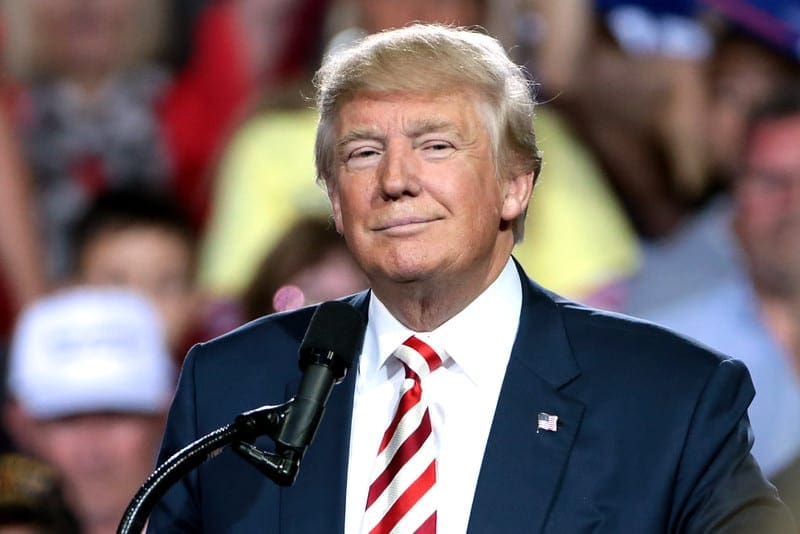
Donald Trump Doesn't Understand Riots

Image credit: Gage Skidmore, Flickr
Do you understand how to prevent a riot? Do you recognize why social harmony is frayed, and property damage is suddenly rampant?    Donald Trump demonstrates he doesn’t know the answer to those questions. More than once, in June, the president announced his intention to send federal troops to occupy U.S. cities.  The president is not unique. Hardly any Americans know the actual source of domestic tranquility.  Instead, most people are convinced that we need strong shows of force by armed authorities. Otherwise, we’ll have chaos and mass victimization at the hands of a rampaging mob. Riots are not normal. Agitators cannot build critical mass necessary. To get the numbers needed for a riot, they need to tap into an existing rage. Human Respect is already lost as soon as vandalism, looting, and arson begin. Human Respect is a philosophy based on the recognition that using violence to “get things done” undermines happiness, reduces harmony, and damages prosperity.  So here’s what the president and others don’t understand…  Societal harmony is due to the fact that most people, most of the time, practice Human Respect. Your neighbors, even strangers on the street, don’t rely on violence to get things done. They choose tolerance, persuasion, and cooperation instead. Happiness & Harmony Undermined By now, we all know that George Floyd was killed, likely due to the actions of Minneapolis police officers. The cops involved, especially the one with his knee on Floyd’s neck for over eight minutes, knew they were being filmed. They heard objections from people at the scene.  These officers apparently believed they were just doing their jobs, simply containing a suspect.  Right now, there are discussions about the merits of various types of police force such as chokeholds. These discussions miss a big point! Every law – EVERY single one – is backed by violence.  The State’s primary tactic and actual purpose is force. That’s why laws require enFORCErs. The subject of that force might object. That’s why the Enforcers are armed. Chairman Mao was right: Political power grows out of the barrel of a gun. But why does that subject objection? He or she does so because their happiness has been reduced. It’s automatic, therefore, that harmony will decline, and in some cases, be replaced by outright conflict when the enforcers come calling.  If, instead, our society prioritized and practiced Human Respect, then… 
  • We would reserve the use of force to self-defense and to arrests for antisocial actions we universally agree are crimes. For example, everyone agrees that murder is wrong but pot possession is highly debatable. We should never initiate force simply to achieve a preferred social goal.
  • We would further agree that the amount of force used must be proportional. We must never permit excessive force.
But we, as a society, have REFUSED to agree on those things and to limit the use of law enforcement.  Instead, voters have made virtually every activity the subject of some law or regulation. Republicans and Democrats have noble or pet causes. They’ve asked the cops to do the dirty work. (And the cops willingly went along because they got greater power, bigger budgets, and overtime pay.)        Follow the steps…
  1. Law enforcement was tasked by the voters and their favorite politicians to use force.
  2. Police, doing their job, took actions that robbed human happiness. 
  3. When happiness is harmed, harmony disintegrates. 
  4. Eventually, the loss of prosperity shows up in the form of riots. 
Doubling Down Once again, every time someone deploys initiated or excessive force they undermine happiness, reduce harmony, and damage prosperity.  That’s a natural principleyou can count on it.    Sending cops in riot gear, or worse, sending the military to American cities, adds more force. That might, temporarily, restore “order.” But suppressing the crowds can create pressures that burst forth in the future because nothing was done to address the root problem. Expanding the role of violence does nothing to address the loss of human happiness. The problem might get buried for now, but it isn’t solved.  No Values, No Peace Rioting mobs damage property, injure people, and sometimes kill people. We can trace the rioting mob back to a collapse of values.  Practicing the values of Human Respect is the only way we can provide true and lasting harmony and prosperity.  Strong shows of force do not make us safer. The superior approach is maximizing Human Respect. We do this by developing an appreciation for the fact that everyone is trying to pursue happiness, and that might look different from our version.  That’s not just fortune cookie advice. Politicians generate large stacks of taxes, laws, fines, and regulations. Practicing Human Respect means we prevent and end these disruptions of personal happiness.  This Human Respect approach would dramatically decrease the number of times cops would be called. The number of people shot or abused by police would plummet. And we could eliminate riots over cop conduct. Someone, please tell the president this solution to preventing riots.  ———- Jim Babka is the Editor-at-Large for Advocates for Self-Government and the co-creator of the Zero Aggression Project

After The Police Are Dismantled, Will Private Security Services Save the Day?

Will Minneapolis be safer after its police force is disbanded? Only if the city follows a libertarian approach will the people be guaranteed greater protection for themselves and their property. All other methods jeopardize resistance to a police state.  A veto-proof majority of the Minneapolis City Council promises to “dismantle” their city’s police department in response to the May 25th death of George Floyd, who died after suffering for over eight minutes from an officer’s knee pressed into his neck. That incident, caught on video, spurred protests and riots nationwide as well as globally. Needless to say, a lot is at stake here if Minneapolis follows through. It is the country’s 46th largest city and part of the 16th largest metropolitan area. The immediate and long-term consequences would be studied by communities worldwide, perhaps for generations to come. In the run-up to the City Council’s decision, over 600 people have been arrested in connection to the Minneapolis protests and riots. Together with St. Paul, the Twin Cities have seen nearly as many buildings looted or vandalized, and at least 67 were completely destroyed by fire, while still others had serious water and fire damage, according to the Star-Tribune. Libertarians, especially those of an anarcho-capitalist bent, have long called for abolishing the police or at least severely downsizing or decentralizing them. However, there are reasons for them to be apprehensive about what Minneapolis appears to be spearheading. The libertarian understanding of police is that they are not just the government’s law enforcers but more fundamentally a state response to the market demand for security of persons and property.  Like all government “services,” policing is financed through compulsory taxation backed by the threat of force. The moral and logical implications of this should be obvious, but the libertarian is also aware of the economic impacts when only one side of a transaction is voluntary. Thankfully, it is easy to visualize what policing or protection services would look like under a totally voluntary arrangement. Most of what the police provide is already largely available on the open, voluntary market. In fact, what’s difficult is quantifying all of the products and services that go into this field, from cameras to alarm systems to weapons and security guards. Now, when it comes to some powers like making arrests and incarcerating, police have more of a monopoly. Might that exclusivity be a contributing factor to unaccountability for police brutality and the troubling facts surrounding criminal justice and record prison populations? In a libertarian order, where private property rights are secured through voluntary means, there is the benefit of economic signals in the form of prices. Under the status quo, governments may calculate some costs, but there is no sales revenue feedback, due to their “customers” being coerced into “buying” whatever is “offered.”  If police answered to customers just as grocers and hairdressers do, they wouldn’t be wasting time doing things that customers wouldn’t pay for, like pursuing the failed War on Drugs or petty rule infractions that generate revenue for governments. Many police officers want to serve the public, and they nobly try their best to do so. But they’re up against a system that actually serves the government, as it makes the call on what is deemed a security threat. Police militarization is a consequence of this. A brief sidenote to better illustrate the point, consider the TSA’s role at airports. The agency just rolled back its rule on larger bottles of hand sanitizer due to Covid-19, effectively admitting its rules are as dumb as they’ve always seemed. Or, remember when then-Congressman Ron Paul counted nearly 100,000 federal agents who carried guns, including for OSHA and the EPA. Considering how much technological research and development is steered by government grants and contracts, it’s startling to think of the potential there is for truly private production of security.  The malinvestment is seen, but the unseen is how those resources would be better directed by businesses, neighborhood associations, and mutual aid groups that care about the communities they serve.  In Minneapolis, unfortunately, it does not seem that a libertarian path is being taken to arrive at a “police-free future” as their City Council statement puts it. The statement fails to detail how the city will develop a “new transformative model for cultivating safety.” “We recognize that we don’t have all the answers about what a police-free future looks like, but our community does,” the statement continues, adding that the City Council will dialog with residents over the coming year. That may sound good, but it really doesn’t say much of anything. More can be derived from what is not being said.  There is no indication that the taxpayers who footed the bill for the police department will see any refund, nor taxes being lowered. And there is absolutely no talk of undoing any gun control restrictions or pressuring the state to do so. Unsurprisingly, the Minneapolis City Council isn’t poised to give up any power, but instead grab more. City Council president Lisa Bender has appeared on CNN, saying that worrying about who to call about a house break-in in the middle of the night “comes from a place of privilege.”  “I think we need to step back and imagine what it would feel like to already live in that reality where calling the police may mean more harm is done,” Bender added. So, now “privilege” is the latest bogeyman, not unlike the concocted threats mentioned earlier, like terrorism, drugs, etc. Bender’s words do not reflect a good philosophical foundation to ensure public safety going forward. They reflect a political class that feels emboldened to centrally plan the allocation of public safety resources, and that’s no transformation from what existed beforehand. The libertarian way is the only “transformative” one, because it strikes at the root of the problem. That is, the coercion, the legalized violence the state has reserved for itself in the name of protection. Only when peaceful means are deployed will there be a peaceful end, the end of unaccountable police.

Will NYPD Finally Punish The Cops Responsible For Eric Garner’s Death?

The horrific murder of Eric Garner over the sale of some loose cigarettes shocked the country four years ago. And yet, none of the New York Police officers involved in the well-documented attack were held accountable.

Until now?

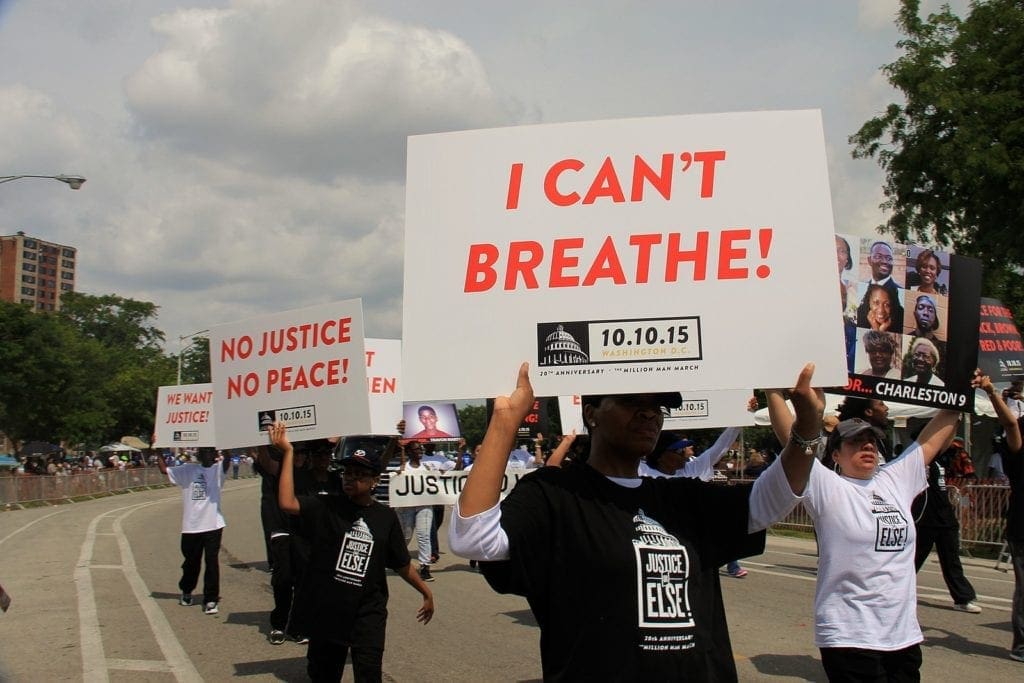
Garner’s call for clemency, in the shape of the now iconic “I can’t breathe” line, became a symbol of the struggle the African-American community experiences while trying to navigate the suffocating restrictions imposed by the government. But despite the public outcry, the city did little to hold the cops who perpetrated the crime responsible.

Now, the Department of Justice is looking into whether the police violated Garner’s civil rights. And the announcement came after the New York Police Department (NYPD) said it would put Officer Daniel Pantaleo, the cop who choked Garner, and his supervisor, Sgt. Kizzy Adonis, under an administrative trial next year.

Needless to say, both Garner’s family and critics of the NYPD and police brutality as a whole are disappointed that it took the city four years to act. Still, the police department’s decision may amount to very little, such as the men losing their jobs. And as we can all agree, holding individuals accountable for their own actions is the best way of explaining to other officers that it’s no longer OK to just use the “I was just doing my job” excuse.

While it’s clear that the NYPD was just hoping the federal government would take over this case so they wouldn’t have to stand up to the police unions that dominate New York, it’s also clear that no administrative action would be enough to send a message to officers that unjustifiable killing is not part of their jobs.

Enforcing The Law Calls For Violence

When we call for laws to be passed, whether it’s a piece of legislation meant to inhibit the use of certain products such as cigarettes or a law meant to criminalize the use of scooters, we must ask ourselves whether we’re willing to see police officers using deadly force to enforce them.

As Yale professor Stephen L. Carter wrote, “Every law is violent. We try not to think about this, but we should.”

He’s so serious about this that on his first day of class, he tells his students “never to argue for invoking the power of law except in a cause for which they are willing to kill.”

His point is simple. Government-backed enforcement of laws gives officers the blanket power to kill in order to enforce these laws. Officers, then, could argue that the buck doesn’t stop with them. And so far, they have been successful at making that point. After all, not many officers are held personally responsible for murder.

When thinking about what happened to Garner, it’s important to look at the cops’ actions both as irresponsible and as a symptom of a greater problem.

In a country where overcriminalization is a reality, we should be thinking long and hard about getting rid of laws, not giving cops more reasons to use deadly force to enforce them.

What Lives Matter?

During Thanksgiving dinner the NFL protests came into the conversation, unsurprisingly many around the table thought the players were “unpatriotic” and they should be fired. Naturally, I defended the NFL player’s freedom to not stand and mentioned that we should all support their freedom to do so. Ten minutes later the conversation went from the NFL, Black Lives Matter, Blue Lives Matter, to a subject which had true significance American life vs “other” life. Happiness A family member of mine mentioned we should all be grateful for the troops protecting us overseas (as though a rural Afghani 8,000 miles away poses a significant threat to the U.S. population). Rather than dismiss my family members passion I tried to understand her point of view. I asked her to explain to me what she thinks is the driving motive behind the terrorist actions? She didn’t have an answer, so I asked a few more questions. I asked her how she would feel towards Mexican citizens and the Mexican government if in an effort to stop the drug lords, Mexico had for the last 16 years been flying drones over the USA and randomly dropping bombs which could kill her, her family, friends, and other innocents? Would she feel warmth towards Mexico and respect the Mexican citizens who vote for and fund that murderous government? In an odd act to double down on her America first philosophy, she mentioned that the civilians in the Middle East aren’t Americans so they don’t have our rights. I pointed out that those innocent civilians are no different than her, neither she nor anyone else gets to choose where they’re born. Why should a birthplace determine the value of a life? The conversation ended with her asking “so you think they want to kill us because we’ve been killing them?” Now I can’t speak for why someone else feels the needs to kill Americans. What I can say is if foreign people were dropping bombs over my head and killing my family and friends that might be all the motivation I need to respond with “terrorism.” In 2016 the USA dropped 26,000 bombs on the primarily Muslim countries of Syria, Iraq, Afghanistan, Libya, Yemen, Somalia and Pakistan. How much murder has the United States government dished out in the Middle East over the last 16 years? It’s hard to quantify all innocent deaths in all countries affected by the United States bombings over the last 16 years, so we’ll just look at the state of Iraq. 1.2 million (3.2% of the Iraq population) citizens have been killed as a result of the war on terror. Using the aforementioned analogy with the Mexican government, what do you think would be the typical American response to the Mexican government killing ten million (3.2% of America’s population) innocent Americans? Do you think your average farmer, soccer mom, banker, teacher, lawyer, doctor, etc. will have a favorable opinion of Mexico and the Mexican people? Do you think out of the ten million innocent deaths there might arise 100,000 passionate Americans who will undergo a mission to terrorize the Mexican government and the Mexican people? Would you consider those Americans fighting back terrorists? I bet the average American wouldn’t see the retributive actions towards Mexico as terrorism, rather it would be viewed as patriotism, heroism, and self-defense. It’s time to wake up and realize that all lives matter. Blue lives matter and so do black lives, however, a person’s life isn’t more or less valuable because of a chosen profession or skin color. Likewise, all life matters regardless of one’s birthplace. America there is a fundamental truth you need to embrace if this world is to see peace and that is “American” lives aren’t more precious than other lives. It doesn’t matter if that life has the random accident of being politically labeled an American life or not. A person cannot choose where to be born, but a people can choose where to drop bombs. Choices matter, make the right one and let’s stop voting for politicians who see non-intervention as weakness and the murder of millions as diplomacy.

After Dallas, People Are Being Arrested for Posting Inflammatory Comments Online

After Dallas, People Are Being Arrested for Posting Inflammatory Comments Online

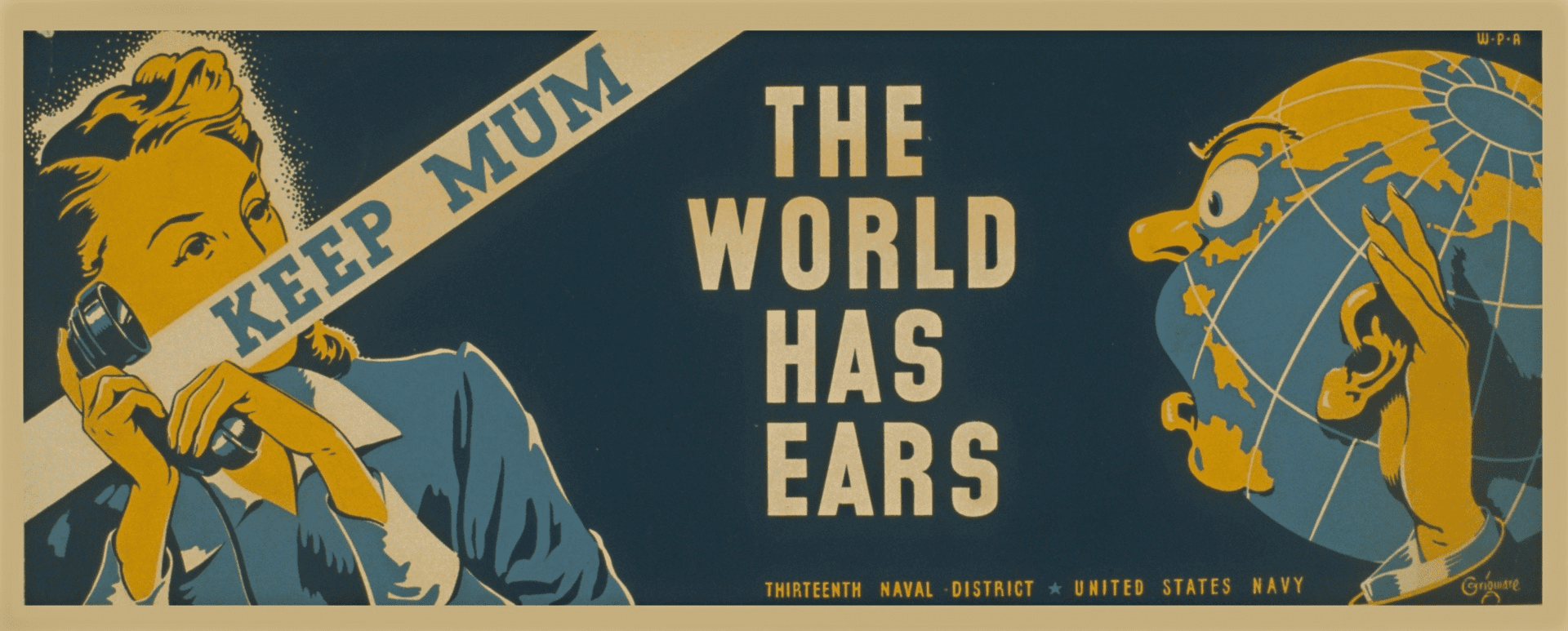
This article was featured in our weekly newsletter, the Liberator Online. To receive it in your inbox, sign up here. Speech protections are being denied for those who harshly criticize law enforcement online, The Intercept has reported. EarsIn Detroit, four men were arrested this past week after posting allegedly inflammatory and “threatening” comments online. While we know that in one of the tweets that led to an arrest, Micah Johnson, or the sniper who shot and killed Dallas police officers, was praised as a hero, the authorities have yet to release the names of the men who were arrested. What’s troubling about these arrests, The Intercept report suggests, is that neither of the four men allegedly arrested over online posts were charged with a crime. Without acknowledging whether his wishes contradict the arrestees’ First Amendment protections, Detroit Police Chief James Craig said that he wants the men his team arrested “charged with crimes. … I’ve directed my officers to prepare warrants for these four individuals, and we’ll see which venue is the best to pursue charges.” But to Bruce Schneier, a security technologist at the Berkman Klein Center for Internet & Society at Harvard University who talked to The Intercept, “arresting people for speech is something we should be very careful about.” In Connecticut, Facebook user Kurt Vanzuuk was arrested after writing a post claiming that the Dallas sniper was a hero. Vanzuuk allegedly called for the police to be killed. He was later charged with inciting injury to persons over his post. Ronald Medina, a New Jersey resident, was charged with cyber harassment after allegedly posting that he would “destroy the Perth Amboy police headquarters” on an unidentified form of social media. Jenesis Reynolds, another Facebook user from Illinois, was also arrested for writing that she would “have no problem shooting a cop for simple traffic stop [because] they’d have no problem doing it to me.” Officers charged Reynolds with “disorderly conduct.” While “posting that kind of thing on social media is a bad thought,” professor Larry Dubin of the University of Detroit Mercy School of Law said, “having a bad thought isn’t necessarily a crime.” To professor of law at Northeastern University Daniel Medwed, “threats may seem more threatening to police officers around the country” after Dallas, which may cause law enforcement to go after inflammatory speech. “We might be seeing more arrests right now because the police will interpret that they have probable cause to make the arrest,” he continued, “But that doesn’t mean in the end that this will result in convictions.” Whether social media posts are public or not, it’s hard to justify the arrest of an individual over offensive comments. In an article for the Mises Institute, Andrew Syrios states that “when you’re popular, you don’t need freedom of speech.” He added that “resorting to the use of political force to silence adversaries is a sign of the weakness of one’s own position.” If law enforcement leadership is serious about regaining the trust of the public, officers should act like the adults in this conversation. Resorting to force to restrain alleged enemies will only continue to hurt the reputation of US police. ​

Mizzou Professor Faces Assault Charge, Suspended

Mizzou Professor Faces Assault Charge, Suspended

This article was featured in our weekly newsletter, the Liberator Online. To receive it in your inbox, sign up here. On Nov. 9, 2015, the nation paid close attention to massive protests on the University of Missouri’s campus following the resignation of President Tim Wolfe for his failure to adequately address a series of racial incidents on campus. Later that afternoon, assistant communications professor, Melissa Click, was filmed by student journalist Mark Schierbecker, in a video that has since gone viral. In the video, Click is seen having a verbal and physical altercation with another student journalist, Tim Tai, who was trying to photograph student protesters who had formed a large circle in the middle of campus. Click Claiming that it was a “safe space” for protesters, Click is seen trying to push Schierbecker and Tai away. At one point, Click calls for “some muscle” to remove them both from the protest area. Then, she appears to grab Schierbecker’s camera. This week, the Columbia, Mo. city prosecutor’s office announced it had filed a Class C misdemeanor assault charge against the professor, which carries a maximum sentence of 15 days in jail. Two days later, the University of Missouri Board of Curators formally suspended her of her teaching duties. “MU Professor Melissa Click is suspended pending further investigation,” said Pam Henrickson, chairwoman of the University of Missouri Board of Curators. “The Board of Curators directs the General Counsel, or outside counsel selected by General Counsel, to immediately conduct an investigation and collaborate with the city attorney and promptly report back to the Board so it may determine whether additional discipline is appropriate.” This suspension is appropriate because Click was overly driven to squash the First Amendment rights of the student journalists. As Tai said in the video, he and his colleague had just as much of a right to be there reporting as did the protesters. It is alarming that Click did not seem to understand the basic principle of free speech that she, and members of her former department, were entrusted to teach to budding journalists.

“Safe Spaces” Used to Silence Political Speech

“Safe Spaces” Used to Silence Political Speech

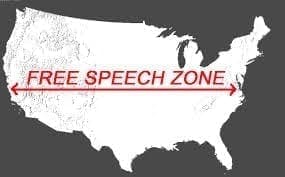
This article was featured in our weekly newsletter, the Liberator Online. To receive it in your inbox, sign up here. In the last year, dozens of protests on college campuses have called for everything from supporting the #BlackLivesMatter movement to demanding that school administrators address racial microaggressions on campus. These protesters and students alike call for “safe spaces” on campuses so that they can have an open dialogue about these issues. But what they don’t realize is that these “safe spaces” are being used to silence political speech – especially speech that they don’t agree with. Free Speech For example, George Washington University police ordered a student to take down a Palestinian flag that was hanging from his dorm window because it was not “respectful of your peers,” according to an administrator. Ramie Abounaja, a 20-year-old pre-med student, was visited by a GWU police officer in October. The officer claimed he had received “numerous complaints” about the flag and wouldn’t leave the room until it was removed. Abounaja complied, but later questioned whether he had actually violated any university policies. According to Abounaja:
Then, on Tuesday, to my alarm, I received an email from the Graduate Fellow Office of Student Rights and Responsibilities stating that they “received a report from the GW University Police Department regarding [my] behavior” that I was “found to have had a flag out [my] window” and that the letter “serves as a warning that this behavior is a violation of the ‘Code of Student Conduct and/or the Residential Community Conduct Guidelines.’” The letter also warned me to be “respectful” of my “peers” that “my behavior had the potential to leave a profound impact on the community.” The letter (attached) did not provide any details as to which provision, article or rule I violated.
According to The Intercept’s Andrew Fishman, GWU has no policy barring flags on the inside of dorm rooms, but it does prohibit flags hanging outside of the dorms – even though numerous amounts of flags have been seen flying outside of GWU dorm windows. It seems as if the police are only called to remove flags that have offended others. Certainly, Abounaja is a victim of viewpoint discrimination. This kind of censorship—censorship of pro-Palestinian speech—is common according to Fishman:
Campus free speech and so-called “political correctness censorship” have been vigorously debated over the last two decades. That topic received particularly intense attention from journalists and pundits this year in response to controversies at the University of Missouri, Yale and other campuses.
In the first half of 2015 alone, Palestine Legal, a U.S. civil rights advocacy organization, has reported 140 instances of suppression of Palestine advocacy, 80 percent of which has happened on college campuses. A Jewish student at the University of Michigan was recently investigated by a student government ethics commission after Palestinian students took offense at him aggressively criticizing a pro-Palestinian display. According to The College Fix, the commission affirmed that the student had a First Amendment right to question the demonstrators. The University of Illinois at Urbana-Champaign fired Professor Steven Salaita for his anti-Israel tweets and his lawsuit is currently moving forward in a federal court. The University of California is attempting to label all criticism of the state of Israel as anti-Semitic hate speech and Occidental College may institute a microaggression reporting system. The First Amendment rights of everyone are in danger if one person’s freedom of expression can be diminished by an administrator, campus police officer, or an emotional student. The words “hateful” and “offensive” are relative terms. We cannot protect the kinds of speech we find to be agreeable unless we can also protect the kinds of speech we find disagreeable.

Unrest at Mizzou: A Timeline

Unrest at Mizzou: A Timeline

This article was featured in our weekly newsletter, the Liberator Online. To receive it in your inbox, sign up here. **Editor’s Note: Tim Wolfe’s resignation as president of the University of Missouri prompted us to take a look at the events surrounding his resignation. We have complied them in a timeline here.  September 12: Student Government President Payton Head posts on Facebook his frustrations after people riding in the back of a pickup truck screamed racial slurs at him. “For those of you who wonder why I’m always talking about the importance of inclusion and respect, it’s because I’ve experienced moments like this multiple times at THIS university, making me not feel included here,” he wrote in the widely shared post. September 17: Missouri Chancellor R. Bowen Loftin, the top resident official on the Missouri campus, issues a statement deploring “recent incidents of bias and discrimination.” He calls them “totally unacceptable.”
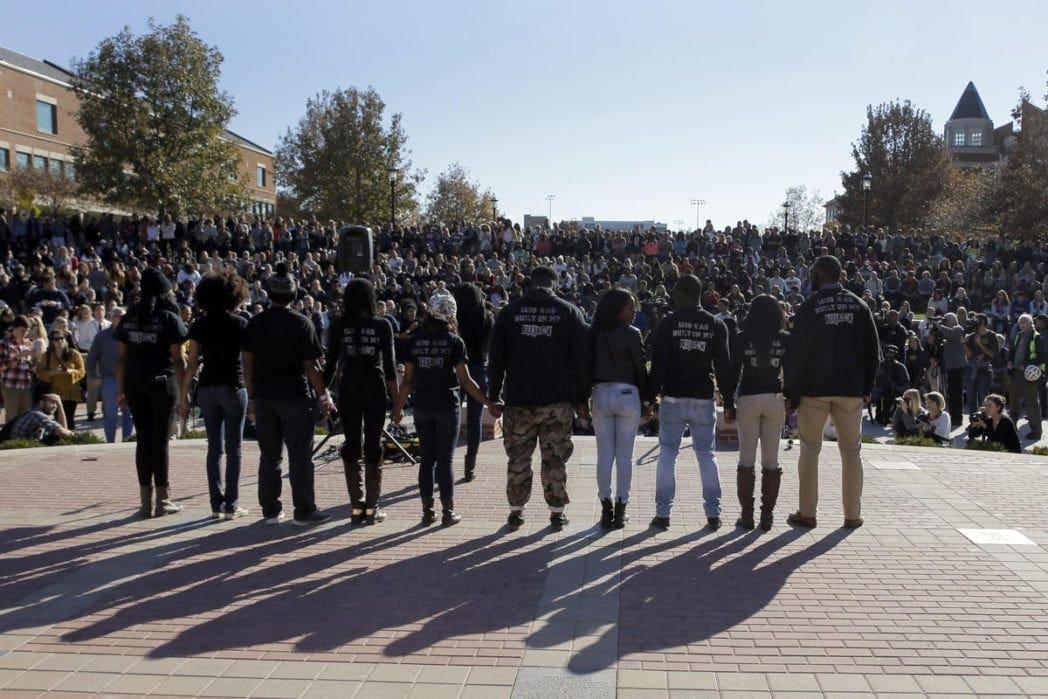
Mizzou

October 1: A “Racism Lives Here rally” is held on campus. “White silence is violence, no justice no peace,” protesters chanted, according to a report by the Columbia Missourian newspaper. October 4: A drunken white student disrupts an African American student group, the Legion of Black Collegians, preparing for homecoming activities and uses a racial slur when they asked him to leave. “Not only did this individual disrupt our rehearsal, but we were also made victims of blatant racism in a space that we should be made to feel safe,” the group said. Loftin issues a statement the next day, saying “racism is clearly alive at Mizzou.” “What we have done is not enough. Every member of our community must help us change our culture,” he said. October 8: Loftin orders diversity and inclusion training for students and faculty in 2016. “This training will inform all of us about the diversity of our campus and the organizations present on campus and make us conscious of how to be inclusive in our words and behaviors,” he wrote. In an open letter to Loftin in the campus newspaper, student leader Jonathan Butler welcomes the announcement as “a step in the right direction,” but criticizes the chancellor for not acknowledging the work of African American students in developing diversity programs and for failing to acknowledge the breadth of racial issues on the campus. October 10: Protesters block university President Tim Wolfe’s car during the Missouri homecoming parade to voice their concerns. Wolfe doesn’t respond to their complaints, something he later apologizes for, and his car taps a protester, which angered the group. No one was hurt, but protesters later accused police of using excessive force to clear the street. October 20: The student group Concerned Student 1950, named for the year African-American students were first admitted to the university, issues a list of demands: an apology from Wolfe, his removal from office and a more comprehensive racial awareness and inclusion curriculum overseen by minority students and faculty. There is no immediate response from administration. October 24: Another incident roils the campus. Someone uses feces to draw a swastika on the wall of a residence hall. A similar incident had occurred in April, but with ashes, according to the Columbia Daily Tribune. October 26: Wolfe meets privately with Concerned Student 1950 members, but doesn’t agree to meet their demands, according to the Missourian. November 3: Butler launches a hunger strike, saying “Mr. Wolfe had ample opportunity to create policies and reform that could shift the culture of Mizzou in a positive direction but in each scenario he failed to do so.” November 4: A student boycott in support of Concerned Student 1950 begins. November 6: Wolfe issues an apology to Concerned Student 1950. “Racism does exist at our university and it is unacceptable. It is a long-standing, systemic problem which daily affects our family of students, faculty and staff,” he says. November 8: Black football players announce they won’t practice or play until Wolfe is removed. The Athletic Department, Coach Gary Pinkel and many white players announce their support for the protest. November 9: The Missouri Students Association’s executive cabinet calls for Wolfe’s ouster, saying the system’s administration “has undeniably failed us.” Soon afterwards, Wolfe announces his resignation. November 10: Threats begin to circulate online towards the safety of minority students. The author of the posts on the anonymous location-based messaging app YikYak and other social media, threatened to “shoot every black person I see.” November 11: Hunter M. Park, a 19-year-old sophomore studying computer science at a sister campus in Rolla, was arrested shortly before 2 a.m. at a residence hall for the anonymous social media posts. Some professors cancel classes, others do not, which sparks outrage from students and in one instance, resignation.