


















Tag: community


The Family and the Government are Oil and Water
Many traditionalists believe that the government must subsidize families and traditional morality. They will call for the state to support their ideas through forced morality or other incentives. Where traditionalists go wrong, however, is that they ignore the fact that any government is inherently harmful to the family.
 There is no government policy that can truly aid the traditional conception of the family. If one truly supports the family as fundamental to society, then they would support keeping the government as far from it as possible.
Governments Grow at the Expense of Families
In Robert Nisbet’s The Quest for Community, Nisbet argues that as the community declines, a hole opens in the heart of humanity. This is particularly true as families decrease in social relevance. Because of this sudden loss of necessary social structures, governments take its place.
Andrew Breitbart is correct: politics is downstream from culture. What Nisbet miss out on, however, is that the growth of government is a self-fulfilling prophecy. Whereas family, church, and community was the support system in the past, the government has tried to take that place in modernity.
In order to do this, the government must destroy these institutions. By establishing a massive welfare state, people believe that the need for family, church, and community is no more. Why have families when you can have welfare? Why have a community when the state defines who you are? A national identity is a direct attack on a family identity. The goal of the state is to make you one of theirs. This means that they must take you from your other social institutions.
The Family as a Defense Against the State
If Marx was right about one thing, it is that the family is a necessary aspect of capitalism. Marx, of course, means this in as negative of a light as possible, but why would anyone believe that to be a bad thing? Instead of relying on the state, families encourage people to provide for themselves and for those that mean everything to them. The family, in fact, is the first source of loyalty we as human beings will ever feel. This institution of civil society prevents us from giving our entire hearts to politicians. Whereas the government can provide material happiness, families do so much more.
Families provide an emotional backbone. They empower people to discover themselves – to be the best they could possibly be.
But as Jeff Deist points out: “But government wants us atomized, lonely, broke, vulnerable, dependent, and disconnected. So of course it attempts to break down families by taking kids away from them as early as possible, indoctrinating them in state schools, using welfare as a wedge, using the tax code as a wedge, discouraging marriage and large families, in fact discouraging any kind of intimacy not subject to public scrutiny, encouraging divorce, etc. etc.”
This is why families are so important. The Family is our first line of defense against the alienating forces of government. They give you somewhere you belong. But social conservatives get it so wrong when they claim that governments must support the family.
Since the dawn of government, the state has oppressed the family. Politics has every incentive to destroy the family. By doing so, the government alienates you from civil society so that you need the government.
The single best way to oppose the government is to support the family, for it helps empower independence from the state; and the single best way to support the family is to oppose the government.
There is no government policy that can truly aid the traditional conception of the family. If one truly supports the family as fundamental to society, then they would support keeping the government as far from it as possible.
Governments Grow at the Expense of Families
In Robert Nisbet’s The Quest for Community, Nisbet argues that as the community declines, a hole opens in the heart of humanity. This is particularly true as families decrease in social relevance. Because of this sudden loss of necessary social structures, governments take its place.
Andrew Breitbart is correct: politics is downstream from culture. What Nisbet miss out on, however, is that the growth of government is a self-fulfilling prophecy. Whereas family, church, and community was the support system in the past, the government has tried to take that place in modernity.
In order to do this, the government must destroy these institutions. By establishing a massive welfare state, people believe that the need for family, church, and community is no more. Why have families when you can have welfare? Why have a community when the state defines who you are? A national identity is a direct attack on a family identity. The goal of the state is to make you one of theirs. This means that they must take you from your other social institutions.
The Family as a Defense Against the State
If Marx was right about one thing, it is that the family is a necessary aspect of capitalism. Marx, of course, means this in as negative of a light as possible, but why would anyone believe that to be a bad thing? Instead of relying on the state, families encourage people to provide for themselves and for those that mean everything to them. The family, in fact, is the first source of loyalty we as human beings will ever feel. This institution of civil society prevents us from giving our entire hearts to politicians. Whereas the government can provide material happiness, families do so much more.
Families provide an emotional backbone. They empower people to discover themselves – to be the best they could possibly be.
But as Jeff Deist points out: “But government wants us atomized, lonely, broke, vulnerable, dependent, and disconnected. So of course it attempts to break down families by taking kids away from them as early as possible, indoctrinating them in state schools, using welfare as a wedge, using the tax code as a wedge, discouraging marriage and large families, in fact discouraging any kind of intimacy not subject to public scrutiny, encouraging divorce, etc. etc.”
This is why families are so important. The Family is our first line of defense against the alienating forces of government. They give you somewhere you belong. But social conservatives get it so wrong when they claim that governments must support the family.
Since the dawn of government, the state has oppressed the family. Politics has every incentive to destroy the family. By doing so, the government alienates you from civil society so that you need the government.
The single best way to oppose the government is to support the family, for it helps empower independence from the state; and the single best way to support the family is to oppose the government.
There is no government policy that can truly aid the traditional conception of the family. If one truly supports the family as fundamental to society, then they would support keeping the government as far from it as possible.
Governments Grow at the Expense of Families
In Robert Nisbet’s The Quest for Community, Nisbet argues that as the community declines, a hole opens in the heart of humanity. This is particularly true as families decrease in social relevance. Because of this sudden loss of necessary social structures, governments take its place.
Andrew Breitbart is correct: politics is downstream from culture. What Nisbet miss out on, however, is that the growth of government is a self-fulfilling prophecy. Whereas family, church, and community was the support system in the past, the government has tried to take that place in modernity.
In order to do this, the government must destroy these institutions. By establishing a massive welfare state, people believe that the need for family, church, and community is no more. Why have families when you can have welfare? Why have a community when the state defines who you are? A national identity is a direct attack on a family identity. The goal of the state is to make you one of theirs. This means that they must take you from your other social institutions.
The Family as a Defense Against the State
If Marx was right about one thing, it is that the family is a necessary aspect of capitalism. Marx, of course, means this in as negative of a light as possible, but why would anyone believe that to be a bad thing? Instead of relying on the state, families encourage people to provide for themselves and for those that mean everything to them. The family, in fact, is the first source of loyalty we as human beings will ever feel. This institution of civil society prevents us from giving our entire hearts to politicians. Whereas the government can provide material happiness, families do so much more.
Families provide an emotional backbone. They empower people to discover themselves – to be the best they could possibly be.
But as Jeff Deist points out: “But government wants us atomized, lonely, broke, vulnerable, dependent, and disconnected. So of course it attempts to break down families by taking kids away from them as early as possible, indoctrinating them in state schools, using welfare as a wedge, using the tax code as a wedge, discouraging marriage and large families, in fact discouraging any kind of intimacy not subject to public scrutiny, encouraging divorce, etc. etc.”
This is why families are so important. The Family is our first line of defense against the alienating forces of government. They give you somewhere you belong. But social conservatives get it so wrong when they claim that governments must support the family.
Since the dawn of government, the state has oppressed the family. Politics has every incentive to destroy the family. By doing so, the government alienates you from civil society so that you need the government.
The single best way to oppose the government is to support the family, for it helps empower independence from the state; and the single best way to support the family is to oppose the government.
Muslims Warming Up to the 2nd Amendment? One Can Only Hope
Muslims Warming Up to the 2nd Amendment? One Can Only Hope
This article was featured in our weekly newsletter, the Liberator Online. To receive it in your inbox, sign up here. The country has been on fire ever since the presidential election. But as speculation surrounding the President-elect’s picks for important positions within the new administration grows, Americans begin to worry about the potential ramifications of picking certain immigration and foreign policy hardliners. As the fear surrounding a possible “registry” of Muslims grows, however, individuals across the country who believe they could be singled out for their religion begin to look at their options.
To many, leaving the country is farfetched. After all, many of them are as American as apple pie. But to some, the solution is simple. All they have to do is to look at the U.S. Constitution.
Recently, a Pakistani satire newspaper mocked American Muslims who are now prepping up to live under the new administration, claiming Americans who subscribe to Islam are starting to warm up to firearm ownership.
But when it comes to individuals feeling pressure from the authority, the idea that self-defense becomes even more important is a reality.
It’s when we finally understand that centralized governments pose a threat to our liberties that the appreciation for the wisdom behind the 2nd Amendment settles in, bringing us closer to understanding that, no matter who gets to live in the White House for the next four years, nothing should stand between you and your right to stand up for yourself.
To the founder of the gay Los Angeles gun club Pink Pistols, hate crimes shouldn’t be on the rise just because a new president has been elected. Instead of sitting in a corner, asking for compassion, what the LGBT community should do to protect themselves is to “arm themselves.”
He told the Los Angeles Times that, while these crimes are “sickening to watch,” the LGBT community “should arm themselves in a way that’s legal to do so around the country.”
Nobody should believe they are too small to stand up and protect their own, but they should also not delude themselves into thinking that society as a whole owes them protection.
Whether you’re a Muslim, LGBT, Christian, or Jewish, your status as part of a minority group does not make you more or less special. It just makes you who you are, and believing that you’re vulnerable for being you is a fantasy.
So even if reports of Muslims warming up to the 2nd Amendment are nothing but a parody, we should at least consider the importance of embracing this rhetoric. After all, all individuals have a right to defend themselves, and in the United States, the federal government is restricted by the U.S. Constitution, guaranteeing individuals are free to exercise their rights to own and bear arms with the peaceful pursuit of defending their property and life, and we should all be coming together to make sure it stays that way.
As the fear surrounding a possible “registry” of Muslims grows, however, individuals across the country who believe they could be singled out for their religion begin to look at their options.
To many, leaving the country is farfetched. After all, many of them are as American as apple pie. But to some, the solution is simple. All they have to do is to look at the U.S. Constitution.
Recently, a Pakistani satire newspaper mocked American Muslims who are now prepping up to live under the new administration, claiming Americans who subscribe to Islam are starting to warm up to firearm ownership.
But when it comes to individuals feeling pressure from the authority, the idea that self-defense becomes even more important is a reality.
It’s when we finally understand that centralized governments pose a threat to our liberties that the appreciation for the wisdom behind the 2nd Amendment settles in, bringing us closer to understanding that, no matter who gets to live in the White House for the next four years, nothing should stand between you and your right to stand up for yourself.
To the founder of the gay Los Angeles gun club Pink Pistols, hate crimes shouldn’t be on the rise just because a new president has been elected. Instead of sitting in a corner, asking for compassion, what the LGBT community should do to protect themselves is to “arm themselves.”
He told the Los Angeles Times that, while these crimes are “sickening to watch,” the LGBT community “should arm themselves in a way that’s legal to do so around the country.”
Nobody should believe they are too small to stand up and protect their own, but they should also not delude themselves into thinking that society as a whole owes them protection.
Whether you’re a Muslim, LGBT, Christian, or Jewish, your status as part of a minority group does not make you more or less special. It just makes you who you are, and believing that you’re vulnerable for being you is a fantasy.
So even if reports of Muslims warming up to the 2nd Amendment are nothing but a parody, we should at least consider the importance of embracing this rhetoric. After all, all individuals have a right to defend themselves, and in the United States, the federal government is restricted by the U.S. Constitution, guaranteeing individuals are free to exercise their rights to own and bear arms with the peaceful pursuit of defending their property and life, and we should all be coming together to make sure it stays that way.

WE Will Build the Roads
WE Will Build the Roads
This article was featured in our weekly newsletter, the Liberator Online. To receive it in your inbox, sign up here. I’m trying something new with the From Me to You column this week, and I’d love to get your feedback on it. Please send me an e-mail to let me know if you like this, hate this, or even if you’re indifferent.BREED LOVE: What the Country’s First Female Self-Made Millionaire Taught Us About Free Markets
BREED LOVE: What the Country’s First Female Self-Made Millionaire Taught Us About Free Markets
This article was featured in our weekly newsletter, the Liberator Online. To receive it in your inbox, sign up here.“Don’t sit down and wait for the opportunities to come. Get up and make them!” Sarah Breedlove Walker
Sarah Breedlove, also known as Madam C. J. Walker, had a tough but incredibly fulfilling life.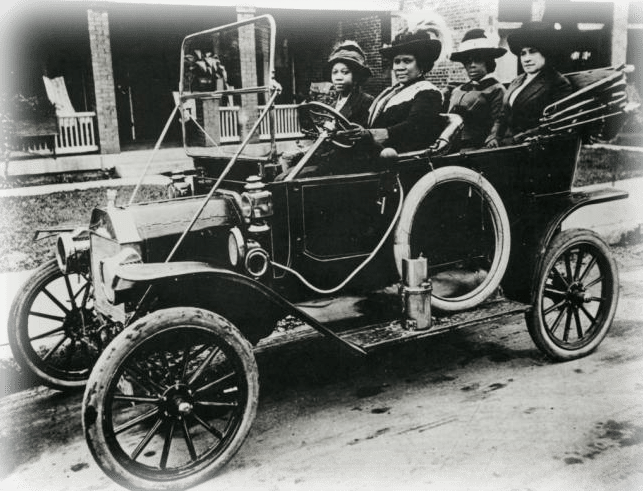 The African American entrepreneur, philanthropist, and political activist became one of the wealthiest black women in the country by launching Madame C.J. Walker Manufacturing, a company created to meet her communities’ cosmetic needs.
Born to enslaved parents in 1867, Breedlove was the first child in her family to be born as a free woman. As a young woman, Breedlove went through severe financial hardships, but once she moved to Saint Louis, Missouri, she became aware of some of the health difficulties people in her community suffered.
Some of the issues Breedlove saw other black women experiencing included severe dandruff and other scalp ailments associated with skin disorders caused by the lye added to the soap of the era, as well as other socio-economic factors. Seeing so many women like her suffer from these ailments prompted her to act. Once Breedlove saw a demand for better cosmetic products designed for different types of skin, she first sought more information on hair care with her brothers, who were barbers. In no time, she became a commission saleswoman for Annie Turnbo Malone, the owner of the Poro Company. As the time passed, Breedlove used what she learned from her work along with the knowledge she had gathered as a result of her own research, developing her product line. In 1905, Breedlove moved to Colorado where she and her daughter launched their business. The door-to-door saleswoman would teach other young black women how to style and care for their hair locally until 1910, when Breedlove established her business in Indianapolis, training other women to use “The Walker System,” her own method of grooming that promoted hair growth and scalp conditioning. For about a decade, Breedlove employed several thousands of black women as sales agents. By 1917, Madame C.J. Walker Manufacturing had employed nearly 20,000 women. Breedlove took pride in her system, but she also wanted to see others like her flourish. Instead of just training employees, Breedlove started teaching others about finances and entrepreneurship, empowering an entire generation of black women through the establishment of the National Beauty Culturists and Benevolent Association of Madam C. J. Walker Agents. During the National Negro Business League (NNBL) annual meeting in 1912, Breedlove celebrated her individuality and self-empowerment by stating: “I am a woman who came for the cotton fields of the South. From there I was promoted to the washtub. From there, I was promoted to the cook kitchen. And from there, I promoted myself into the business of manufacturing hair goods and preparations. I have built my own factory on my own ground.” Breedlove was special because she never complained. Instead, she looked around and saw an issue that she could solve. Through markets, she learned to compete by offering a product that met the demands of people in her community. As she grew as a businesswoman, she also gave back, teaching others that hard work and dedication pay off in the end. Sarah Breedlove Walker may have not always seen her own story as an example of how markets help empower the individual. But this generation of young women could learn a great deal from her. Not just because of her defiance in the face of difficulties, but also because of her vision. Instead of simply demanding attention to her cause, Breedlove made her mark in the world by helping others (while helping herself). As the F. A. Hayek character says in The Fight of the Century: “Give us a chance so we can discover/The most valuable ways to serve one another.”
Free State of Jones: Libertarianism in Pop Culture
Free State of Jones: Libertarianism in Pop Culture
This article was featured in our weekly newsletter, the Liberator Online. To receive it in your inbox, sign up here. Recently, I had the opportunity to see the film, “Free State of Jones.” It is the story inspired by the Civil War era actions in southeastern Mississippi led by a farmer, Newton Knight. A nurse in the Confederate Army, Knight deserts after the Confederate Congress amends its conscription policy to exclude those who owned 20 or more slaves. This exemption allowed many wealthy men to not serve the three years the Confederacy held them responsible to serve. As libertarians, we understand the principle that a man owns himself and is not “responsible” to give over part of his life to anyone else. Just prior to desertion, he comes across a teenager from near Knight’s home drafted after the boy’s family’s assets were seized by the local government officials and the boy was sent to war. As if conscription weren’t enough, the taking of property and food from the people is a bridge too far. As libertarians, we also value the principle of private property, and the stories from home, coupled with the boy’s death on the battlefield send Knight home to Jones County, Mississippi. Upon his return, he learns of another family whose animals are seized by Confederate soldiers and stands armed with the woman and her daughters against a trio of cavalry officers, turning them away. The officers then target Knight and his family, forcing him to flee ahead of dogs to the swamp to live as a fugitive. As libertarians, we hold dear the ability to defend one’s life, liberty, and property from an unjust taking. While hiding out in the swamp, Knight befriends runaway slaves also living there in exile and other individuals afflicted by the Confederacy’s actions. They build a self-sustaining militia community of army deserters and runaway slaves, living, working, and fighting together against the oppression of the local military officials.
As libertarians, we fight oppression and tyranny on a daily basis.
The militia eventually overpowers the soldiers in the nearby town, taking over and asking the Union forces for support. The support never arrives, forcing the militia to fight off the Confederate regiments, holding out until the end of the war. They not only survive, but thrive, in the absence of both Confederate and Union forces in the area.
As libertarians, we are often “in between” one side and the other. Both evil, we continue to stand for freedom.
The freed slaves are promised “40 acres and a mule,” but see that promise rescinded by the conquering forces that occupy the South after the war, even the “Free State of Jones.” Regardless, the community grows, as white and black work, live, and grow together in a voluntary society where their bonds are those they choose.
As libertarians, we see the prosperity and harmony that come from a voluntary society without, and often in spite of, the force of government
While hiding out in the swamp, Knight befriends runaway slaves also living there in exile and other individuals afflicted by the Confederacy’s actions. They build a self-sustaining militia community of army deserters and runaway slaves, living, working, and fighting together against the oppression of the local military officials.
As libertarians, we fight oppression and tyranny on a daily basis.
The militia eventually overpowers the soldiers in the nearby town, taking over and asking the Union forces for support. The support never arrives, forcing the militia to fight off the Confederate regiments, holding out until the end of the war. They not only survive, but thrive, in the absence of both Confederate and Union forces in the area.
As libertarians, we are often “in between” one side and the other. Both evil, we continue to stand for freedom.
The freed slaves are promised “40 acres and a mule,” but see that promise rescinded by the conquering forces that occupy the South after the war, even the “Free State of Jones.” Regardless, the community grows, as white and black work, live, and grow together in a voluntary society where their bonds are those they choose.
As libertarians, we see the prosperity and harmony that come from a voluntary society without, and often in spite of, the force of government

Cop Fired for Doing the Right Thing
Cop Fired for Doing the Right Thing
This article was featured in our weekly newsletter, the Liberator Online. To receive it in your inbox, sign up here. Jay Park was following a recently passed Georgia law extending amnesty to those who seek medical attention for others in need when he refused to arrest two underage college students who had far too much to drink. The Georgia General Assembly passed the 9-1-1 Medical Amnesty Law in March 2014. Gov. Nathan Deal, R-Ga., put his signature on the bill not long after. The bill extends amnesty to people who seek medical attention to those who may have overdosed on illegal drugs and underage individuals who were consuming alcohol.
The idea is that amnesty may save the lives of those who may have otherwise died because those who they were with were scared of being prosecuted. As of August 2015, 32 states have passed a 9-1-1 “Good Samaritan” law, according to the Drug Policy Alliance.
In September 2014, Park was called to a scene where two underage female students had been drinking. The University of Georgia wrongly believed amnesty applied if the intoxicated person was the one who made the call. After speaking to state lawmakers who worked on the law and a judge, he believed the university had gross misinterpreted the law.
Park, who served for four years as a police officer for the University of Georgia, was fired for refusing to arrest two underage students who fell under the protections of Georgia’s 9-1-1 Medical Amnesty Law.
University of Georgia Police Chief Jimmy Williamson recorded the firing of Park. “You went outside the chain of command,” Williamson told the dismissed officer. “You’re an embarrassment to this agency.”
Current and former students have petitioned Williamson to reinstate Park, without success. An online petition has gained nearly 5,000 signatures. “In the interest of preserving the safe environment within the University of Georgia community,” the petition states, “I ask that you reinstate Officer Jay Park, expunge his most recent personnel record for insubordination, and commit your officers to serving and protecting in a legal and ethical manner.”
Park, who has been unable to find work in law enforcement as a result of his firing from the University of Georgia, has filed a lawsuit against the Georgia Board of Regents, which governs the state’s university system; the University of Georgia Police Department; and others, including Williamson.
Frankly, it’s discouraging to see so many instances of police officers getting away with abusing their authority and not face any repercussions, and finally see one who did the right thing lose his job because of it. Here’s hoping Park either wins his suit and is awarded monetary damages for the harm to his reputation.
The Georgia General Assembly passed the 9-1-1 Medical Amnesty Law in March 2014. Gov. Nathan Deal, R-Ga., put his signature on the bill not long after. The bill extends amnesty to people who seek medical attention to those who may have overdosed on illegal drugs and underage individuals who were consuming alcohol.
The idea is that amnesty may save the lives of those who may have otherwise died because those who they were with were scared of being prosecuted. As of August 2015, 32 states have passed a 9-1-1 “Good Samaritan” law, according to the Drug Policy Alliance.
In September 2014, Park was called to a scene where two underage female students had been drinking. The University of Georgia wrongly believed amnesty applied if the intoxicated person was the one who made the call. After speaking to state lawmakers who worked on the law and a judge, he believed the university had gross misinterpreted the law.
Park, who served for four years as a police officer for the University of Georgia, was fired for refusing to arrest two underage students who fell under the protections of Georgia’s 9-1-1 Medical Amnesty Law.
University of Georgia Police Chief Jimmy Williamson recorded the firing of Park. “You went outside the chain of command,” Williamson told the dismissed officer. “You’re an embarrassment to this agency.”
Current and former students have petitioned Williamson to reinstate Park, without success. An online petition has gained nearly 5,000 signatures. “In the interest of preserving the safe environment within the University of Georgia community,” the petition states, “I ask that you reinstate Officer Jay Park, expunge his most recent personnel record for insubordination, and commit your officers to serving and protecting in a legal and ethical manner.”
Park, who has been unable to find work in law enforcement as a result of his firing from the University of Georgia, has filed a lawsuit against the Georgia Board of Regents, which governs the state’s university system; the University of Georgia Police Department; and others, including Williamson.
Frankly, it’s discouraging to see so many instances of police officers getting away with abusing their authority and not face any repercussions, and finally see one who did the right thing lose his job because of it. Here’s hoping Park either wins his suit and is awarded monetary damages for the harm to his reputation.

