













Tag: freedom


Intellectual Property is Destroying Magic; Only Freedom Can Save It
As a performer of magic, Intellectual Property (IP) has always been a contentious issue. Many of my fellow performers believe that IP protects their creations. They believe that it ensures no one uses the effect without paying the proper price to gain access to the secrets of the illusions. I never shared that perspective, and now the magic community is seeing why.
 The United States Playing Card Company (USPCC), situated a mere twenty minutes from my house, has recently announced a crackdown on the lifeblood of many magicians. The USPCC has decided that no alterations to their cards shall be permitted any longer. As an email from Ellusionist, a notable magic retailer, states: “No gaffing, no staining, no shadows, fades or alterations of any kind.” These cards the USPCC has banned are not necessarily “trick cards.” Rather, they are creative takes on the classic Bicycle playing cards. In other words, the USPCC has just stunted performative creativity among all magicians.
The United States Playing Card Company (USPCC), situated a mere twenty minutes from my house, has recently announced a crackdown on the lifeblood of many magicians. The USPCC has decided that no alterations to their cards shall be permitted any longer. As an email from Ellusionist, a notable magic retailer, states: “No gaffing, no staining, no shadows, fades or alterations of any kind.” These cards the USPCC has banned are not necessarily “trick cards.” Rather, they are creative takes on the classic Bicycle playing cards. In other words, the USPCC has just stunted performative creativity among all magicians.
How Intellectual Property Ruins Magic
It is certainly possible to continue performing with these restrictions. But stringent IP enforcement has made it to where a magician’s imagination is no longer the limit of card magic. Rather, the limit is now up to USPCC, which has decided that any and all alterations of their cards makes it more difficult for them to spot bootlegs and other IP violations, even though every mass-produced novelty deck using the Bicycle framework has been made in partnership with the USPCC. Twilight Angels, a beautiful effect, allows for the magician to alter the back of a signed card. The audience reactions are typically nothing short of pure joy. The USPCC’s new policy effectively bans the production of this effect. Only current owners will be able to do this trick. Twilight Angels is only one of thousands, if not millions of effects that the USPCC’s new IP enforcements will ban. In addition, the creation of new visual effects to dazzle a magician’s audience is all but impossible. Most magicians believed that Intellectual Property would protect their creations. They thought it would ensure that unauthorized teaching of their tricks did not occur. Perhaps it has done so, but I must ask if it was worth it. It is harder now more than ever for small-time magicians to create their own effects in an effort to make a name for themselves. Off the top of my head, I can think of several creations of my own that, had they not been created before this ban, would now be a violation of the USPCC’s Intellectual Property rights. For magicians, the USPCC has artificially created a roadblock to innovation. It simply isn’t worth it to me that my creations be protected from unauthorized reproduction if that same system has the ability to stop me from creating the illusions to begin with. The fact is Intellectual Property has failed to protect magicians and is actively harming our ability to make new creations that enable our performances to continue. Magicians don’t need Intellectual Property.How Freedom Can Save Magic
Magic creators rely on people paying money to learn how to perform effects they create. Of course, Intellectual Property is an easy way to protect said product. That neither makes it the best way nor the only way to protect their bottom line. Every benefit creators gain through IP can just as easily be attained through contracts. For example, if I purchase the instructions on performing Twilight Angels, the creator can create a contract that states that I agree not to expose this secret to other performers. How do I agree to the contract? I agree to it by purchasing the product. This simple alternative would not only protect creators, but it would also protect creators from the IP abuse we are seeing today. Not only would this system do that, but it would also empower magicians to improve upon each other’s product. In magic, no illusion is truly original. Every creation I have seen carries with it inspiration from other performers. Intellectual Property has not helped the art of magic to expand and develop new creations. Rather, it has precluded magicians from a world in which magic is as popular as music and as well-viewed as sports. Magic needs an injection of new blood, not a protection of the monoliths like the United States Playing Card Company who don’t have the best interests of the art form at heart. We should be thankful that the only restrictions the USPCC can place on other magicians is their card designs and various visual effects one can perform by altering the appearance of the cards. But this incident shows that the art of magic is not safe. At any moment, any other product, such as coins, may fall victim to IP and there goes even more of the magic industry. Imagine, if you will, if the USPCC decides to say that their cards and their designs are inherently for gambling. Therefore, the USPCC will only allow casinos to use their products. Just like that, all card magic and all the small time card games are gone. This is completely possible within the grand scheme of things. Fortunately, the USPCC would lose more money than they would gain through a move like this. I have been a magician for around ten years. When I got to the point that I was creating my own illusions, it was a beautiful thing. Many magicians will now never know the joy of creating your own effects due to strict Intellectual Property rules such as the new restrictions from the United States Playing Card Company. Magic and Magicians alike deserve better. We can be better. Without intellectual property, magicians can enter a new era of innovation. The illusions would be truly beautiful. Only freedom can create this magical future.
When "Experts" Set Policy, Citizens Lose Control of Their Own Government
It is tempting to have faith in “science” when it comes to public policy during an emergency. However, as the coronavirus pandemic episode shows us, “experts” can be just as wrong and harmful as the politicians hiding behind them.
 Type into a search engine “trust science.” Check news and op-ed results. You’ll be hard-pressed to find any counterpoint to the notion that America and its government must unite in submission to the experts.
Perhaps what’s driving this prevalent attitude is not just fear of Covid-19. Amid a presidential election year, our society is more hyper-politicized than ever. What could be more non-political than science itself? Its cold calculations offer a comforting escape from the hot air.
However, there is a catch. That is, living under a technocracy and sacrificing self-government in the process. Indeed, this has been a trend in American governance for a long time.
There are experts advising or running unelected boards, commissions, bureaucracies, and agencies all around us. Think of the Federal Reserve or the Office of the Surgeon General, both created in the Progressive Era.
In a technocracy, there’s no representation or accountability. The politicians simply yield to the health specialists or some guru who has looked at the data. Even if this solves some problems, the sterilization of the people and their democratic processes isn’t worth it in the long run.
The truth is the experts often get it wrong, not to mention they are still only human, subject to political or ideological biases or other interests like ambition. If they’re making decisions for the country, and likely pulling in a decent tax-subsidized salary, shouldn’t they earn the support of the people or otherwise be held to account for failure?
Take the current surgeon general, Jerome Adams, for instance. On February 29th, the day after the first U.S. death from Covid-19, he tweeted, “STOP BUYING MASKS!” and urged Americans to stay home.
That tweet didn’t age well. Masks are now required for virtually all people in some areas of the country, or in some retail chains like Costco. Staying at home was what 66 percent of New Yorkers hospitalized with coronavirus were doing.
As science fiction writer Arthur C. Clarke wrote, “For every expert there is an equal and opposite expert.”
The Trump administration’s coronavirus task force head, Dr. Deborah Birx, reportedly told the director of the U.S. Centers for Disease Control and Prevention (CDC) that there is “nothing from the CDC that I can trust,” according to the Washington Post.
It’s possible that some scientists skew their research for financial gain or political prestige. That isn’t known to be the case during this pandemic so far, but it’s not exactly an exercise in mere hypotheticals either.
In November 2015, Stanford News reported that a “pattern” of scientists fabricating their data spurred the development of a sort of lie detector for research publishing.
Even with good intentions, basing public policy purely on “science” can have disastrous effects. It’s estimated some 75,000 people will die “deaths of despair” as a result of the lockdowns.
That doesn’t include those who will die for lack of important surgeries or cancer treatment and screening, as a result of the lockdowns.
In America, do we still hold to the belief that our government is of, by, and for the people? At the very least, the second category, by the people, seems unpopular during the spread of Covid-19.
Government by the experts is more comforting these days. But what about tomorrow? We may regret it.
Type into a search engine “trust science.” Check news and op-ed results. You’ll be hard-pressed to find any counterpoint to the notion that America and its government must unite in submission to the experts.
Perhaps what’s driving this prevalent attitude is not just fear of Covid-19. Amid a presidential election year, our society is more hyper-politicized than ever. What could be more non-political than science itself? Its cold calculations offer a comforting escape from the hot air.
However, there is a catch. That is, living under a technocracy and sacrificing self-government in the process. Indeed, this has been a trend in American governance for a long time.
There are experts advising or running unelected boards, commissions, bureaucracies, and agencies all around us. Think of the Federal Reserve or the Office of the Surgeon General, both created in the Progressive Era.
In a technocracy, there’s no representation or accountability. The politicians simply yield to the health specialists or some guru who has looked at the data. Even if this solves some problems, the sterilization of the people and their democratic processes isn’t worth it in the long run.
The truth is the experts often get it wrong, not to mention they are still only human, subject to political or ideological biases or other interests like ambition. If they’re making decisions for the country, and likely pulling in a decent tax-subsidized salary, shouldn’t they earn the support of the people or otherwise be held to account for failure?
Take the current surgeon general, Jerome Adams, for instance. On February 29th, the day after the first U.S. death from Covid-19, he tweeted, “STOP BUYING MASKS!” and urged Americans to stay home.
That tweet didn’t age well. Masks are now required for virtually all people in some areas of the country, or in some retail chains like Costco. Staying at home was what 66 percent of New Yorkers hospitalized with coronavirus were doing.
As science fiction writer Arthur C. Clarke wrote, “For every expert there is an equal and opposite expert.”
The Trump administration’s coronavirus task force head, Dr. Deborah Birx, reportedly told the director of the U.S. Centers for Disease Control and Prevention (CDC) that there is “nothing from the CDC that I can trust,” according to the Washington Post.
It’s possible that some scientists skew their research for financial gain or political prestige. That isn’t known to be the case during this pandemic so far, but it’s not exactly an exercise in mere hypotheticals either.
In November 2015, Stanford News reported that a “pattern” of scientists fabricating their data spurred the development of a sort of lie detector for research publishing.
Even with good intentions, basing public policy purely on “science” can have disastrous effects. It’s estimated some 75,000 people will die “deaths of despair” as a result of the lockdowns.
That doesn’t include those who will die for lack of important surgeries or cancer treatment and screening, as a result of the lockdowns.
In America, do we still hold to the belief that our government is of, by, and for the people? At the very least, the second category, by the people, seems unpopular during the spread of Covid-19.
Government by the experts is more comforting these days. But what about tomorrow? We may regret it.
Type into a search engine “trust science.” Check news and op-ed results. You’ll be hard-pressed to find any counterpoint to the notion that America and its government must unite in submission to the experts.
Perhaps what’s driving this prevalent attitude is not just fear of Covid-19. Amid a presidential election year, our society is more hyper-politicized than ever. What could be more non-political than science itself? Its cold calculations offer a comforting escape from the hot air.
However, there is a catch. That is, living under a technocracy and sacrificing self-government in the process. Indeed, this has been a trend in American governance for a long time.
There are experts advising or running unelected boards, commissions, bureaucracies, and agencies all around us. Think of the Federal Reserve or the Office of the Surgeon General, both created in the Progressive Era.
In a technocracy, there’s no representation or accountability. The politicians simply yield to the health specialists or some guru who has looked at the data. Even if this solves some problems, the sterilization of the people and their democratic processes isn’t worth it in the long run.
The truth is the experts often get it wrong, not to mention they are still only human, subject to political or ideological biases or other interests like ambition. If they’re making decisions for the country, and likely pulling in a decent tax-subsidized salary, shouldn’t they earn the support of the people or otherwise be held to account for failure?
Take the current surgeon general, Jerome Adams, for instance. On February 29th, the day after the first U.S. death from Covid-19, he tweeted, “STOP BUYING MASKS!” and urged Americans to stay home.
That tweet didn’t age well. Masks are now required for virtually all people in some areas of the country, or in some retail chains like Costco. Staying at home was what 66 percent of New Yorkers hospitalized with coronavirus were doing.
As science fiction writer Arthur C. Clarke wrote, “For every expert there is an equal and opposite expert.”
The Trump administration’s coronavirus task force head, Dr. Deborah Birx, reportedly told the director of the U.S. Centers for Disease Control and Prevention (CDC) that there is “nothing from the CDC that I can trust,” according to the Washington Post.
It’s possible that some scientists skew their research for financial gain or political prestige. That isn’t known to be the case during this pandemic so far, but it’s not exactly an exercise in mere hypotheticals either.
In November 2015, Stanford News reported that a “pattern” of scientists fabricating their data spurred the development of a sort of lie detector for research publishing.
Even with good intentions, basing public policy purely on “science” can have disastrous effects. It’s estimated some 75,000 people will die “deaths of despair” as a result of the lockdowns.
That doesn’t include those who will die for lack of important surgeries or cancer treatment and screening, as a result of the lockdowns.
In America, do we still hold to the belief that our government is of, by, and for the people? At the very least, the second category, by the people, seems unpopular during the spread of Covid-19.
Government by the experts is more comforting these days. But what about tomorrow? We may regret it.

Mayor ‘Kane’ Questions Covid-19 Lockdown After ‘Utterly Shocking’ Suicide Spike
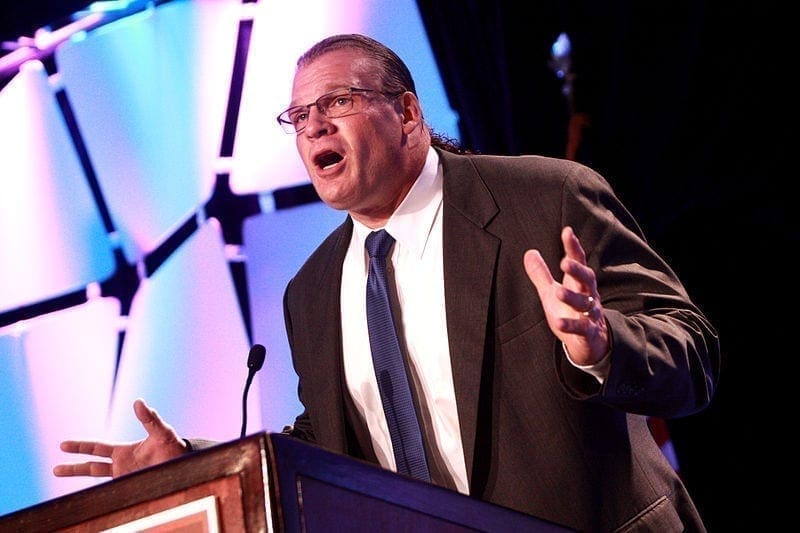
Knox County Mayor Glenn Jacobs, known worldwide as Kane, recorded a heartfelt video message for his constituents after eight committed suicide within 48 hours. His sober take on the human cost of the Covid-19 lockdown is too rare in today’s politics.
 The coronavirus crisis and the government’s response are not going away anytime soon. Everyday that is becoming clearer.
Last week in Knox County, Tennessee, within a 48-hour period, eight suspected suicides were reported. That amounts to nearly 10 percent of 2019’s total of 83 for the county.
“That number is utterly shocking,” Jacobs said in a weekly video update. “It makes me wonder, is what we are doing now really the best approach?”
“How can we respond to Covid-19 in a way that keeps our economy intact, keeps people employed, and empowers our people with the feeling of hope and optimism, not desperation and despair?” he asked.
Jacobs, who has libertarian tendencies and a very impressive grasp of Austrian economics, explained to his constituents that many so-called experts are offering them a false choice: healthy people or an open economy.
“In fact, we must have a healthy economy if we expect to have healthy people,” Jacobs said. “We don’t have a choice.”
In the same week that Knox County experienced its uptick in suicide, the jobless claims across America reached a record-shattering 6.6 million. That broke the previous record by a factor of five.
Flattening the curve may (or may not) be preserving hospital beds and resources, but as Jacobs keenly observes, “The unintended consequence is that we are creating another massive curve, a tidal wave that will overwhelm social services.”
Jacobs may be the most well-spoken politician on this impending national tragedy. In a saner society, he would be heralded as “America’s mayor.” Maybe one day he’ll have a bigger influence on Washington, D.C.
Unfortunately, there is a growing stereotype regarding who would be against the lockdowns around the world. Such a person must not care about the elderly or sick, but only about economic growth. This caricature is based in some truth, sadly, but not at all in the case of Jacobs.
Jacobs does not conceive of the economy as figures on a graph or mere busybodyness to keep dollars circulating. Rightly understood, the economy is about people, complete with their hearts and free will.
Two social commentators who get this are Brendan O’Neill and Peter Hitchens, both of the United Kingdom, where a similarly extreme stay-at-home order is in place.
“The problem with catastrophe is actually that you survive it,” Hitchens told O’Neill on the latter’s podcast. “It’s not like nuclear war where everybody’s dead. Economic catastrophe leaves people alive, staring into space, ghosts of their former selves wondering what on earth has happened.”
O’Neill remarked that the economy isn’t about a line going up, but how people live, and whether or not they live sometimes.
“What they say is that this is a question of lives versus the economy, and they talk about the economy as if it’s just some kind of abstract machine, just numbers and money and profits, when in fact, the economy is people’s lives,” he said.
Killing the economy is killing people. Those who insist on social distancing and closing down everything “nonessential” should no longer be allowed to defend their position from an untouchable moral high ground.
The coronavirus crisis and the government’s response are not going away anytime soon. Everyday that is becoming clearer.
Last week in Knox County, Tennessee, within a 48-hour period, eight suspected suicides were reported. That amounts to nearly 10 percent of 2019’s total of 83 for the county.
“That number is utterly shocking,” Jacobs said in a weekly video update. “It makes me wonder, is what we are doing now really the best approach?”
“How can we respond to Covid-19 in a way that keeps our economy intact, keeps people employed, and empowers our people with the feeling of hope and optimism, not desperation and despair?” he asked.
Jacobs, who has libertarian tendencies and a very impressive grasp of Austrian economics, explained to his constituents that many so-called experts are offering them a false choice: healthy people or an open economy.
“In fact, we must have a healthy economy if we expect to have healthy people,” Jacobs said. “We don’t have a choice.”
In the same week that Knox County experienced its uptick in suicide, the jobless claims across America reached a record-shattering 6.6 million. That broke the previous record by a factor of five.
Flattening the curve may (or may not) be preserving hospital beds and resources, but as Jacobs keenly observes, “The unintended consequence is that we are creating another massive curve, a tidal wave that will overwhelm social services.”
Jacobs may be the most well-spoken politician on this impending national tragedy. In a saner society, he would be heralded as “America’s mayor.” Maybe one day he’ll have a bigger influence on Washington, D.C.
Unfortunately, there is a growing stereotype regarding who would be against the lockdowns around the world. Such a person must not care about the elderly or sick, but only about economic growth. This caricature is based in some truth, sadly, but not at all in the case of Jacobs.
Jacobs does not conceive of the economy as figures on a graph or mere busybodyness to keep dollars circulating. Rightly understood, the economy is about people, complete with their hearts and free will.
Two social commentators who get this are Brendan O’Neill and Peter Hitchens, both of the United Kingdom, where a similarly extreme stay-at-home order is in place.
“The problem with catastrophe is actually that you survive it,” Hitchens told O’Neill on the latter’s podcast. “It’s not like nuclear war where everybody’s dead. Economic catastrophe leaves people alive, staring into space, ghosts of their former selves wondering what on earth has happened.”
O’Neill remarked that the economy isn’t about a line going up, but how people live, and whether or not they live sometimes.
“What they say is that this is a question of lives versus the economy, and they talk about the economy as if it’s just some kind of abstract machine, just numbers and money and profits, when in fact, the economy is people’s lives,” he said.
Killing the economy is killing people. Those who insist on social distancing and closing down everything “nonessential” should no longer be allowed to defend their position from an untouchable moral high ground.
The coronavirus crisis and the government’s response are not going away anytime soon. Everyday that is becoming clearer.
Last week in Knox County, Tennessee, within a 48-hour period, eight suspected suicides were reported. That amounts to nearly 10 percent of 2019’s total of 83 for the county.
“That number is utterly shocking,” Jacobs said in a weekly video update. “It makes me wonder, is what we are doing now really the best approach?”
“How can we respond to Covid-19 in a way that keeps our economy intact, keeps people employed, and empowers our people with the feeling of hope and optimism, not desperation and despair?” he asked.
Jacobs, who has libertarian tendencies and a very impressive grasp of Austrian economics, explained to his constituents that many so-called experts are offering them a false choice: healthy people or an open economy.
“In fact, we must have a healthy economy if we expect to have healthy people,” Jacobs said. “We don’t have a choice.”
In the same week that Knox County experienced its uptick in suicide, the jobless claims across America reached a record-shattering 6.6 million. That broke the previous record by a factor of five.
Flattening the curve may (or may not) be preserving hospital beds and resources, but as Jacobs keenly observes, “The unintended consequence is that we are creating another massive curve, a tidal wave that will overwhelm social services.”
Jacobs may be the most well-spoken politician on this impending national tragedy. In a saner society, he would be heralded as “America’s mayor.” Maybe one day he’ll have a bigger influence on Washington, D.C.
Unfortunately, there is a growing stereotype regarding who would be against the lockdowns around the world. Such a person must not care about the elderly or sick, but only about economic growth. This caricature is based in some truth, sadly, but not at all in the case of Jacobs.
Jacobs does not conceive of the economy as figures on a graph or mere busybodyness to keep dollars circulating. Rightly understood, the economy is about people, complete with their hearts and free will.
Two social commentators who get this are Brendan O’Neill and Peter Hitchens, both of the United Kingdom, where a similarly extreme stay-at-home order is in place.
“The problem with catastrophe is actually that you survive it,” Hitchens told O’Neill on the latter’s podcast. “It’s not like nuclear war where everybody’s dead. Economic catastrophe leaves people alive, staring into space, ghosts of their former selves wondering what on earth has happened.”
O’Neill remarked that the economy isn’t about a line going up, but how people live, and whether or not they live sometimes.
“What they say is that this is a question of lives versus the economy, and they talk about the economy as if it’s just some kind of abstract machine, just numbers and money and profits, when in fact, the economy is people’s lives,” he said.
Killing the economy is killing people. Those who insist on social distancing and closing down everything “nonessential” should no longer be allowed to defend their position from an untouchable moral high ground.

South Korea Considers Deregulation to Boost Its Economy
Last month, South Korea’s finance ministry announced that it has identified 10 industrial sectors that it wants to see privatization take place in. Among the sectors included in the reforms are artificial intelligence, biotechnology, e-commerce, fintech, new medical technologies, and tourism. The main purpose of the reforms is to develop services and technology with fewer regulatory constraints. Under these proposals, companies in the aforementioned sectors will be allowed to operate more freely.
 South Korea has been a regional leader in terms of economic development and one of the most high profile economic miracles of the past 50 years. It is currently ranked as the 29th most economically free country in the world. It joins the other Asian Tigers — Taiwan, Singapore, and Hong Kong, as an economic juggernaut in the region.
South Korea still has work to do in regards to labor freedom and government integrity, but it’s light years ahead of its neighbor North Korea. This is quite possibly the starkest country A versus country B comparison you will find out there. South Korea is a paragon of modernity and social cohesion. On the other hand, North Korea is a communist garrison state whose people and even soldiers are starving to death, thanks to the collectivist reforms set in place by the nation’s first leader Kim Il-sung and his successors, Kim Jong-il and Kim Jong-un.
Even China, a country that transitioned from Maoist authoritarianism to a more rational economic approach under reformist leader Deng Xiaoping, still lags behind South Korea on development indicators. Not coincidentally, China is ranked in a sub-par 100th place in the Heritage Foundation’s Index of Economic Freedom.
This success story did not happen overnight. South Korea was one of Asia’s most destitute countries beginning in the 1950s. In fact, its standard of living was comparable to many underdeveloped nations in Africa at the time — per capita income stood at less than $100 in South Korea. However, this did not discourage South Korean leaders. Instead of buying into Keynesian or radically redistributionist dogmas, the country opted for a middle-of-the-road approach that was relatively business friendly, promoted high savings, and protected property rights. The second factor —savings — is one of the pillars of a modern economy and how civilizations are able to perpetuate themselves.
It’s only fitting that South Korean leaders take these logical next steps and continue to liberate South Korea’s economy so that the country can reach its full potential.
South Korea has been a regional leader in terms of economic development and one of the most high profile economic miracles of the past 50 years. It is currently ranked as the 29th most economically free country in the world. It joins the other Asian Tigers — Taiwan, Singapore, and Hong Kong, as an economic juggernaut in the region.
South Korea still has work to do in regards to labor freedom and government integrity, but it’s light years ahead of its neighbor North Korea. This is quite possibly the starkest country A versus country B comparison you will find out there. South Korea is a paragon of modernity and social cohesion. On the other hand, North Korea is a communist garrison state whose people and even soldiers are starving to death, thanks to the collectivist reforms set in place by the nation’s first leader Kim Il-sung and his successors, Kim Jong-il and Kim Jong-un.
Even China, a country that transitioned from Maoist authoritarianism to a more rational economic approach under reformist leader Deng Xiaoping, still lags behind South Korea on development indicators. Not coincidentally, China is ranked in a sub-par 100th place in the Heritage Foundation’s Index of Economic Freedom.
This success story did not happen overnight. South Korea was one of Asia’s most destitute countries beginning in the 1950s. In fact, its standard of living was comparable to many underdeveloped nations in Africa at the time — per capita income stood at less than $100 in South Korea. However, this did not discourage South Korean leaders. Instead of buying into Keynesian or radically redistributionist dogmas, the country opted for a middle-of-the-road approach that was relatively business friendly, promoted high savings, and protected property rights. The second factor —savings — is one of the pillars of a modern economy and how civilizations are able to perpetuate themselves.
It’s only fitting that South Korean leaders take these logical next steps and continue to liberate South Korea’s economy so that the country can reach its full potential.
South Korea has been a regional leader in terms of economic development and one of the most high profile economic miracles of the past 50 years. It is currently ranked as the 29th most economically free country in the world. It joins the other Asian Tigers — Taiwan, Singapore, and Hong Kong, as an economic juggernaut in the region.
South Korea still has work to do in regards to labor freedom and government integrity, but it’s light years ahead of its neighbor North Korea. This is quite possibly the starkest country A versus country B comparison you will find out there. South Korea is a paragon of modernity and social cohesion. On the other hand, North Korea is a communist garrison state whose people and even soldiers are starving to death, thanks to the collectivist reforms set in place by the nation’s first leader Kim Il-sung and his successors, Kim Jong-il and Kim Jong-un.
Even China, a country that transitioned from Maoist authoritarianism to a more rational economic approach under reformist leader Deng Xiaoping, still lags behind South Korea on development indicators. Not coincidentally, China is ranked in a sub-par 100th place in the Heritage Foundation’s Index of Economic Freedom.
This success story did not happen overnight. South Korea was one of Asia’s most destitute countries beginning in the 1950s. In fact, its standard of living was comparable to many underdeveloped nations in Africa at the time — per capita income stood at less than $100 in South Korea. However, this did not discourage South Korean leaders. Instead of buying into Keynesian or radically redistributionist dogmas, the country opted for a middle-of-the-road approach that was relatively business friendly, promoted high savings, and protected property rights. The second factor —savings — is one of the pillars of a modern economy and how civilizations are able to perpetuate themselves.
It’s only fitting that South Korean leaders take these logical next steps and continue to liberate South Korea’s economy so that the country can reach its full potential.

Barbara Streisand: Patriot or Funny Girl? She’s Right to Say ‘We Need a New America’
Americans should heed Barbara Streisand’s 2020 warning. The singer’s plea that “we can’t go on like this. It’s too dangerous,” doesn’t overstate the urgency needed to overcome the reckless politics steering our country to ruin.
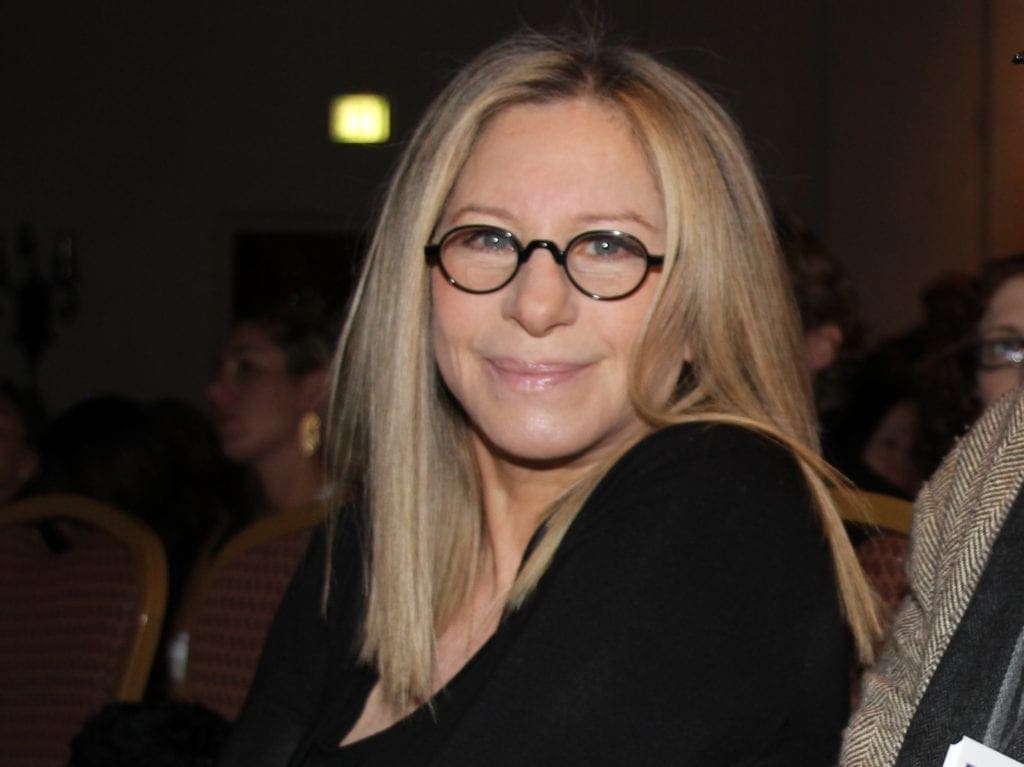 Last week, Streisand wrote a column for Vanity Fair calling on Americans to “bring back dignity and grace” by voting out President Donald Trump in November.
Yawn, right? Not so fast.
Revealed in her reasoning, as well as who she is to make such an argument, is a sign that better prospects for liberty may be closer than we think.
Of course, libertarians understand that America’s problems didn’t begin with Trump. It’s easy to laugh off Streisand’s gripes when she admits she wakes up every morning “holding my breath while I turn on my phone to see the latest news.”
Perhaps one morning she’ll exhale normally and ask how we got here so that we don’t fall into repeating the same mistakes.
It is true, however, that “we can’t go on like this,” as Streisand says, “It’s too dangerous.”
As the state becomes more centralized, social cohesion is declining. Institutions and traditional centers of community life are failing to give younger Americans meaning, turning more of them toward the activist street mobs clashing in the streets for a sense of purpose.
To her credit, Streisand nobly pushes for change at home as opposed to moving to Canada or Europe as other elite voices in her industry do. But what if change in this country could occur voluntarily and organically, as opposed to a bitter national fight over an all-powerful president?
Decentralization, by means of nullification and secession, is the grand policy prescription for a more cohesive, peaceful, and prosperous America. To achieve this libertarian goal, however, political organizing won’t be enough.
For too long, libertarians have made the same mistake as Streisand: accepting the premise that the majority can be swayed toward restoring dignity and grace to the political order.
In her 1910 essay “Minorities versus Majorities,” anarchist Emma Goldman condemned mass democracy, observing that “the multitude, the mass spirit” can be summarized as “quantity” and thus “destroying quality.”
“Today, as then, public opinion is the omnipresent tyrant; today, as then, the majority represents a mass of cowards, willing to accept him who mirrors its own soul and mind poverty,” she said.
Streisand naturally serves the “mass spirit” as a pop singer and actress, but her wealth also attaches her to the intellectual elite, or establishment, which is an arm of the state. This is how she fancies herself a moralizing political commentator.
In 2016, Trump disrupted the intellectual established order, shocking the media, academia, and political kingmakers. His reelection, however, will be insufficient to continue this rupture.
“The rule of public intellectuals can only be broken by anti-intellectual intellectuals,” economist and philosopher Hans-Hermann Hoppe said in his essay “Natural Elites, Intellectuals, and the State.”
The counter-intellectuals, Hoppe insists, must be of sound moral character, even above their intellectual pursuits. Some counter-intellectuals may compromise or sell out on their way to prominence, never returning to principled form even when they’d supposedly hold more influence.
Remember economists Murray Rothbard and Ludwig von Mises as examples of counter-intellectuals who never diluted their position in exchange for prestige, which they could have quite easily done.
Streisand’s article proves that unease with the status quo is reaching a critical mass. It is the job of the libertarian to not only stave off further statist peril but also to allow those who insist on the opposite view to go their own way.
Let the Streisands try their way, but never yield in the pursuit of a free society, even if it means leaving part of declining America behind.
Last week, Streisand wrote a column for Vanity Fair calling on Americans to “bring back dignity and grace” by voting out President Donald Trump in November.
Yawn, right? Not so fast.
Revealed in her reasoning, as well as who she is to make such an argument, is a sign that better prospects for liberty may be closer than we think.
Of course, libertarians understand that America’s problems didn’t begin with Trump. It’s easy to laugh off Streisand’s gripes when she admits she wakes up every morning “holding my breath while I turn on my phone to see the latest news.”
Perhaps one morning she’ll exhale normally and ask how we got here so that we don’t fall into repeating the same mistakes.
It is true, however, that “we can’t go on like this,” as Streisand says, “It’s too dangerous.”
As the state becomes more centralized, social cohesion is declining. Institutions and traditional centers of community life are failing to give younger Americans meaning, turning more of them toward the activist street mobs clashing in the streets for a sense of purpose.
To her credit, Streisand nobly pushes for change at home as opposed to moving to Canada or Europe as other elite voices in her industry do. But what if change in this country could occur voluntarily and organically, as opposed to a bitter national fight over an all-powerful president?
Decentralization, by means of nullification and secession, is the grand policy prescription for a more cohesive, peaceful, and prosperous America. To achieve this libertarian goal, however, political organizing won’t be enough.
For too long, libertarians have made the same mistake as Streisand: accepting the premise that the majority can be swayed toward restoring dignity and grace to the political order.
In her 1910 essay “Minorities versus Majorities,” anarchist Emma Goldman condemned mass democracy, observing that “the multitude, the mass spirit” can be summarized as “quantity” and thus “destroying quality.”
“Today, as then, public opinion is the omnipresent tyrant; today, as then, the majority represents a mass of cowards, willing to accept him who mirrors its own soul and mind poverty,” she said.
Streisand naturally serves the “mass spirit” as a pop singer and actress, but her wealth also attaches her to the intellectual elite, or establishment, which is an arm of the state. This is how she fancies herself a moralizing political commentator.
In 2016, Trump disrupted the intellectual established order, shocking the media, academia, and political kingmakers. His reelection, however, will be insufficient to continue this rupture.
“The rule of public intellectuals can only be broken by anti-intellectual intellectuals,” economist and philosopher Hans-Hermann Hoppe said in his essay “Natural Elites, Intellectuals, and the State.”
The counter-intellectuals, Hoppe insists, must be of sound moral character, even above their intellectual pursuits. Some counter-intellectuals may compromise or sell out on their way to prominence, never returning to principled form even when they’d supposedly hold more influence.
Remember economists Murray Rothbard and Ludwig von Mises as examples of counter-intellectuals who never diluted their position in exchange for prestige, which they could have quite easily done.
Streisand’s article proves that unease with the status quo is reaching a critical mass. It is the job of the libertarian to not only stave off further statist peril but also to allow those who insist on the opposite view to go their own way.
Let the Streisands try their way, but never yield in the pursuit of a free society, even if it means leaving part of declining America behind.
Last week, Streisand wrote a column for Vanity Fair calling on Americans to “bring back dignity and grace” by voting out President Donald Trump in November.
Yawn, right? Not so fast.
Revealed in her reasoning, as well as who she is to make such an argument, is a sign that better prospects for liberty may be closer than we think.
Of course, libertarians understand that America’s problems didn’t begin with Trump. It’s easy to laugh off Streisand’s gripes when she admits she wakes up every morning “holding my breath while I turn on my phone to see the latest news.”
Perhaps one morning she’ll exhale normally and ask how we got here so that we don’t fall into repeating the same mistakes.
It is true, however, that “we can’t go on like this,” as Streisand says, “It’s too dangerous.”
As the state becomes more centralized, social cohesion is declining. Institutions and traditional centers of community life are failing to give younger Americans meaning, turning more of them toward the activist street mobs clashing in the streets for a sense of purpose.
To her credit, Streisand nobly pushes for change at home as opposed to moving to Canada or Europe as other elite voices in her industry do. But what if change in this country could occur voluntarily and organically, as opposed to a bitter national fight over an all-powerful president?
Decentralization, by means of nullification and secession, is the grand policy prescription for a more cohesive, peaceful, and prosperous America. To achieve this libertarian goal, however, political organizing won’t be enough.
For too long, libertarians have made the same mistake as Streisand: accepting the premise that the majority can be swayed toward restoring dignity and grace to the political order.
In her 1910 essay “Minorities versus Majorities,” anarchist Emma Goldman condemned mass democracy, observing that “the multitude, the mass spirit” can be summarized as “quantity” and thus “destroying quality.”
“Today, as then, public opinion is the omnipresent tyrant; today, as then, the majority represents a mass of cowards, willing to accept him who mirrors its own soul and mind poverty,” she said.
Streisand naturally serves the “mass spirit” as a pop singer and actress, but her wealth also attaches her to the intellectual elite, or establishment, which is an arm of the state. This is how she fancies herself a moralizing political commentator.
In 2016, Trump disrupted the intellectual established order, shocking the media, academia, and political kingmakers. His reelection, however, will be insufficient to continue this rupture.
“The rule of public intellectuals can only be broken by anti-intellectual intellectuals,” economist and philosopher Hans-Hermann Hoppe said in his essay “Natural Elites, Intellectuals, and the State.”
The counter-intellectuals, Hoppe insists, must be of sound moral character, even above their intellectual pursuits. Some counter-intellectuals may compromise or sell out on their way to prominence, never returning to principled form even when they’d supposedly hold more influence.
Remember economists Murray Rothbard and Ludwig von Mises as examples of counter-intellectuals who never diluted their position in exchange for prestige, which they could have quite easily done.
Streisand’s article proves that unease with the status quo is reaching a critical mass. It is the job of the libertarian to not only stave off further statist peril but also to allow those who insist on the opposite view to go their own way.
Let the Streisands try their way, but never yield in the pursuit of a free society, even if it means leaving part of declining America behind.

Higher Education Needs a Market Facelift
No matter how we look at it, the higher education affordability question will have to be addressed. At the American Spectator, Rachel Tripp offered a sober analysis of the state of higher education in America. It’s no secret that the cost of a college education is one of the most pressing issues for young American adults.
 According to the National Bureau of Education Research (NBER), tuition prices skyrocketed by 102 percent from 1987 to 2010. By 2019, 45 million people borrowed for school. Total student debt has ballooned to $1.5 trillion as of 2019.
These are clear signs that higher education is starting to become a financial burden for many. As a result, politicians have looked to exploit this dilemma. Democratic presidential candidates Bernie Sanders and Elizabeth Warren have positioned themselves as the “pro-student” candidates by pushing for student loan forgiveness.
Warren’s plan specifically calls for $50,000 of debt cancellation for all households earning less than $100,000. Tripp is correct in noting that this plan “essentially amounts to a $50,000 government voucher” and “it will incentivize students to view a $100,000 debt as a $50,000 debt, making them more willing to apply to pricier colleges and take out higher loans.”
Given these incentives, universities would respond accordingly by raising their prices. To add insult to injury, American taxpayers would be forced to foot a $1.2 trillion bill during the next 10 years to pay off this debt. We are not living in a vacuum, folks. The national debt already stands at $23 trillion, and adding another big-spending scheme will just shackle future generations with even more debt.
Although these plans are likely rooted in good intentions, they do not make for good policy. Undoubtedly, the students saddled in debt did voluntarily choose to go to college and take on whatever risk is associated with the decision. There is a degree of personal responsibility they must assume when making these decisions. As Tripp noted, “Community colleges, state schools, work-study programs, and vocational programs are viable options that incur much less debt.”
Nevertheless, it’s not productive to just scoff at an indebted student’s decision to major in a relatively unproductive field and label it as a foolish mistake. We should have a degree of empathy when considering some of the institutional rot in the background — such as government intervention in education — which caused this mess in the first place. That being said, student loan forgiveness should not be the policy used to address this problem.
Firstly, student loan forgiveness would reward students who were negligent about borrowing thousands of dollars in loans without taking into consideration their future capacity to pay off those loans. Those who actually paid their loans off responsibly would receive the short end of the stick.
It’s also worth noting the true factors behind this problem. Although it’s fashionable to demonize banks and launch attacks against the “free market,” these critiques ignore the real culprit behind the current financial pickle students find themselves in — government involvement in the education sector. Thanks to government encroachments in the student loan sector beginning in the 1960s and subsequent decades, there has been unprecedented state involvement in promoting student loans to people who may lack the ability to pay them off once out of college. The guaranteed loans artificially boost demand, which allows universities to take advantage of this economic distortion by hiking tuition rates.
Not often mentioned in higher education discussions is the role of legal barriers to the number of academic institutions in the country. Economist Gary North noted that university accreditation used to be conducted in a private manner through the use of private associations. Nowadays, there are state laws that regulate the use of the word “university” and mandate that these institutions be accredited. These institutional barriers prevent new academic services from entering the market and result in higher overall prices for educational services.
The state of higher education is a microcosm of the U.S. political economy, which is shackled by excessive regulation. Interestingly, the deregulation of education is not a pie-in-the-sky policy proposal. Historically, civil society and market institutions have provided a broad basket of educational services. So, it’s not unrealistic to suggest some liberalization for this sector. The question is, will politicians actually consider an alternative? Recent history shows otherwise.
According to the National Bureau of Education Research (NBER), tuition prices skyrocketed by 102 percent from 1987 to 2010. By 2019, 45 million people borrowed for school. Total student debt has ballooned to $1.5 trillion as of 2019.
These are clear signs that higher education is starting to become a financial burden for many. As a result, politicians have looked to exploit this dilemma. Democratic presidential candidates Bernie Sanders and Elizabeth Warren have positioned themselves as the “pro-student” candidates by pushing for student loan forgiveness.
Warren’s plan specifically calls for $50,000 of debt cancellation for all households earning less than $100,000. Tripp is correct in noting that this plan “essentially amounts to a $50,000 government voucher” and “it will incentivize students to view a $100,000 debt as a $50,000 debt, making them more willing to apply to pricier colleges and take out higher loans.”
Given these incentives, universities would respond accordingly by raising their prices. To add insult to injury, American taxpayers would be forced to foot a $1.2 trillion bill during the next 10 years to pay off this debt. We are not living in a vacuum, folks. The national debt already stands at $23 trillion, and adding another big-spending scheme will just shackle future generations with even more debt.
Although these plans are likely rooted in good intentions, they do not make for good policy. Undoubtedly, the students saddled in debt did voluntarily choose to go to college and take on whatever risk is associated with the decision. There is a degree of personal responsibility they must assume when making these decisions. As Tripp noted, “Community colleges, state schools, work-study programs, and vocational programs are viable options that incur much less debt.”
Nevertheless, it’s not productive to just scoff at an indebted student’s decision to major in a relatively unproductive field and label it as a foolish mistake. We should have a degree of empathy when considering some of the institutional rot in the background — such as government intervention in education — which caused this mess in the first place. That being said, student loan forgiveness should not be the policy used to address this problem.
Firstly, student loan forgiveness would reward students who were negligent about borrowing thousands of dollars in loans without taking into consideration their future capacity to pay off those loans. Those who actually paid their loans off responsibly would receive the short end of the stick.
It’s also worth noting the true factors behind this problem. Although it’s fashionable to demonize banks and launch attacks against the “free market,” these critiques ignore the real culprit behind the current financial pickle students find themselves in — government involvement in the education sector. Thanks to government encroachments in the student loan sector beginning in the 1960s and subsequent decades, there has been unprecedented state involvement in promoting student loans to people who may lack the ability to pay them off once out of college. The guaranteed loans artificially boost demand, which allows universities to take advantage of this economic distortion by hiking tuition rates.
Not often mentioned in higher education discussions is the role of legal barriers to the number of academic institutions in the country. Economist Gary North noted that university accreditation used to be conducted in a private manner through the use of private associations. Nowadays, there are state laws that regulate the use of the word “university” and mandate that these institutions be accredited. These institutional barriers prevent new academic services from entering the market and result in higher overall prices for educational services.
The state of higher education is a microcosm of the U.S. political economy, which is shackled by excessive regulation. Interestingly, the deregulation of education is not a pie-in-the-sky policy proposal. Historically, civil society and market institutions have provided a broad basket of educational services. So, it’s not unrealistic to suggest some liberalization for this sector. The question is, will politicians actually consider an alternative? Recent history shows otherwise.
According to the National Bureau of Education Research (NBER), tuition prices skyrocketed by 102 percent from 1987 to 2010. By 2019, 45 million people borrowed for school. Total student debt has ballooned to $1.5 trillion as of 2019.
These are clear signs that higher education is starting to become a financial burden for many. As a result, politicians have looked to exploit this dilemma. Democratic presidential candidates Bernie Sanders and Elizabeth Warren have positioned themselves as the “pro-student” candidates by pushing for student loan forgiveness.
Warren’s plan specifically calls for $50,000 of debt cancellation for all households earning less than $100,000. Tripp is correct in noting that this plan “essentially amounts to a $50,000 government voucher” and “it will incentivize students to view a $100,000 debt as a $50,000 debt, making them more willing to apply to pricier colleges and take out higher loans.”
Given these incentives, universities would respond accordingly by raising their prices. To add insult to injury, American taxpayers would be forced to foot a $1.2 trillion bill during the next 10 years to pay off this debt. We are not living in a vacuum, folks. The national debt already stands at $23 trillion, and adding another big-spending scheme will just shackle future generations with even more debt.
Although these plans are likely rooted in good intentions, they do not make for good policy. Undoubtedly, the students saddled in debt did voluntarily choose to go to college and take on whatever risk is associated with the decision. There is a degree of personal responsibility they must assume when making these decisions. As Tripp noted, “Community colleges, state schools, work-study programs, and vocational programs are viable options that incur much less debt.”
Nevertheless, it’s not productive to just scoff at an indebted student’s decision to major in a relatively unproductive field and label it as a foolish mistake. We should have a degree of empathy when considering some of the institutional rot in the background — such as government intervention in education — which caused this mess in the first place. That being said, student loan forgiveness should not be the policy used to address this problem.
Firstly, student loan forgiveness would reward students who were negligent about borrowing thousands of dollars in loans without taking into consideration their future capacity to pay off those loans. Those who actually paid their loans off responsibly would receive the short end of the stick.
It’s also worth noting the true factors behind this problem. Although it’s fashionable to demonize banks and launch attacks against the “free market,” these critiques ignore the real culprit behind the current financial pickle students find themselves in — government involvement in the education sector. Thanks to government encroachments in the student loan sector beginning in the 1960s and subsequent decades, there has been unprecedented state involvement in promoting student loans to people who may lack the ability to pay them off once out of college. The guaranteed loans artificially boost demand, which allows universities to take advantage of this economic distortion by hiking tuition rates.
Not often mentioned in higher education discussions is the role of legal barriers to the number of academic institutions in the country. Economist Gary North noted that university accreditation used to be conducted in a private manner through the use of private associations. Nowadays, there are state laws that regulate the use of the word “university” and mandate that these institutions be accredited. These institutional barriers prevent new academic services from entering the market and result in higher overall prices for educational services.
The state of higher education is a microcosm of the U.S. political economy, which is shackled by excessive regulation. Interestingly, the deregulation of education is not a pie-in-the-sky policy proposal. Historically, civil society and market institutions have provided a broad basket of educational services. So, it’s not unrealistic to suggest some liberalization for this sector. The question is, will politicians actually consider an alternative? Recent history shows otherwise.

Why Are More Young People Embracing Socialism?
Another day, another survey showing increased support among the youth for totalitarian ideas.
 According to a new survey from the Washington, D.C., nonprofit Victims of Communism Memorial Foundation, America’s younger generation is becoming more receptive to the destructive ideas of socialism and its tyrannical cousin, communism.
A poll run by YouGov, a British market research firm, found that only one out of two millennials — aged 23 to 38 — supporting capitalism. On the other hand, 36 percent of millennials polled shockingly stated that they approve of communism.
“The historical amnesia about the dangers of communism and socialism is on full display in this year’s report,” remarked Marion Smith, executive director of the Victims of Communism Memorial Foundation, in a statement on Monday. “When we don’t educate our youngest generations about the historical truth of 100 million victims murdered at the hands of communist regimes over the past century, we shouldn’t be surprised at their willingness to embrace Marxist ideas.”
Some other shocking revelations in this report include that 22 percent of millennials believe that “society would be better if all private property was abolished,” and 45 percent of Generation Z members and millennials believe that “all higher education should be free.”
It is alarming that even after a genocidal 20th century of socialist experiments, people still view the ideology in such a glowing manner. Massive socialization via public schools, media, and general culture has progressively created a broader acceptance of the ideas, and it is now potentially turning into a solid voting block for generations to come.
The U.S. will likely not descend down the same path of destruction like previous socialist governments. Nevertheless, these changing views will reinforce existing trends of government growth, which include the continued expansion of the managerial state, a stronger surveillance state, state-dominated education, and more centralized power in Washington, D.C.
Politics doesn’t just take place in the voting booth, it’s present at city halls, churches, schools, civic organizations, businesses, and pop culture. The overtly political nature of everyday life is indeed concerning but those are the cards we’ve been dealt with.
If we want to reverse this trend of the growing radicalization of the youth, free-market advocates and their allies will need to confront the spread of these ideas wherever they are being disseminated. Complaining is easy, but taking action is a different matter. We can no longer afford to lament the state of the youth if we want to stop the growing popularity of collectivism.
According to a new survey from the Washington, D.C., nonprofit Victims of Communism Memorial Foundation, America’s younger generation is becoming more receptive to the destructive ideas of socialism and its tyrannical cousin, communism.
A poll run by YouGov, a British market research firm, found that only one out of two millennials — aged 23 to 38 — supporting capitalism. On the other hand, 36 percent of millennials polled shockingly stated that they approve of communism.
“The historical amnesia about the dangers of communism and socialism is on full display in this year’s report,” remarked Marion Smith, executive director of the Victims of Communism Memorial Foundation, in a statement on Monday. “When we don’t educate our youngest generations about the historical truth of 100 million victims murdered at the hands of communist regimes over the past century, we shouldn’t be surprised at their willingness to embrace Marxist ideas.”
Some other shocking revelations in this report include that 22 percent of millennials believe that “society would be better if all private property was abolished,” and 45 percent of Generation Z members and millennials believe that “all higher education should be free.”
It is alarming that even after a genocidal 20th century of socialist experiments, people still view the ideology in such a glowing manner. Massive socialization via public schools, media, and general culture has progressively created a broader acceptance of the ideas, and it is now potentially turning into a solid voting block for generations to come.
The U.S. will likely not descend down the same path of destruction like previous socialist governments. Nevertheless, these changing views will reinforce existing trends of government growth, which include the continued expansion of the managerial state, a stronger surveillance state, state-dominated education, and more centralized power in Washington, D.C.
Politics doesn’t just take place in the voting booth, it’s present at city halls, churches, schools, civic organizations, businesses, and pop culture. The overtly political nature of everyday life is indeed concerning but those are the cards we’ve been dealt with.
If we want to reverse this trend of the growing radicalization of the youth, free-market advocates and their allies will need to confront the spread of these ideas wherever they are being disseminated. Complaining is easy, but taking action is a different matter. We can no longer afford to lament the state of the youth if we want to stop the growing popularity of collectivism.
According to a new survey from the Washington, D.C., nonprofit Victims of Communism Memorial Foundation, America’s younger generation is becoming more receptive to the destructive ideas of socialism and its tyrannical cousin, communism.
A poll run by YouGov, a British market research firm, found that only one out of two millennials — aged 23 to 38 — supporting capitalism. On the other hand, 36 percent of millennials polled shockingly stated that they approve of communism.
“The historical amnesia about the dangers of communism and socialism is on full display in this year’s report,” remarked Marion Smith, executive director of the Victims of Communism Memorial Foundation, in a statement on Monday. “When we don’t educate our youngest generations about the historical truth of 100 million victims murdered at the hands of communist regimes over the past century, we shouldn’t be surprised at their willingness to embrace Marxist ideas.”
Some other shocking revelations in this report include that 22 percent of millennials believe that “society would be better if all private property was abolished,” and 45 percent of Generation Z members and millennials believe that “all higher education should be free.”
It is alarming that even after a genocidal 20th century of socialist experiments, people still view the ideology in such a glowing manner. Massive socialization via public schools, media, and general culture has progressively created a broader acceptance of the ideas, and it is now potentially turning into a solid voting block for generations to come.
The U.S. will likely not descend down the same path of destruction like previous socialist governments. Nevertheless, these changing views will reinforce existing trends of government growth, which include the continued expansion of the managerial state, a stronger surveillance state, state-dominated education, and more centralized power in Washington, D.C.
Politics doesn’t just take place in the voting booth, it’s present at city halls, churches, schools, civic organizations, businesses, and pop culture. The overtly political nature of everyday life is indeed concerning but those are the cards we’ve been dealt with.
If we want to reverse this trend of the growing radicalization of the youth, free-market advocates and their allies will need to confront the spread of these ideas wherever they are being disseminated. Complaining is easy, but taking action is a different matter. We can no longer afford to lament the state of the youth if we want to stop the growing popularity of collectivism.