Experience New Things Experience New People
This article was featured in our weekly newsletter, the Liberator Online. To receive it in your inbox, sign up here.
So, you’ve likely noticed that this week’s From Me to You is going to be a little bit different.
I’m not in my office. There’s not a bookshelf full of books behind me. In fact, it’s a little chilly, definitely overcast, and I’m pretty sure it’s going to rain on me at any second.
But this different experience is what we’re talking about today. We’re talking about experiencing new things, experiencing new people, as we become more effective communicators of libertarian ideas and libertarian philosophy.
I believe that you experiences determine the decisions that you make. Those decisions drive the actions that you take. Those actions lead to outcomes, whether good or bad.
As a libertarian, I want you to make those decisions for yourself, rather than having them centrally-planned from hundreds or thousands of miles away. I believe that YOU are going to make the best decision for yourself.
How am I going to know that though? I really only have my own experiences to draw from.
If I’m not out there experiencing what others are, and not experiencing what others struggle with, or how they succeed, how am I really going to be a proper advocate for making decisions for ourselves?
Libertarianism is not only about freedom and liberty for me, but it’s about freedom and liberty for everyone.
If I’m not experiencing what other people do, and I’m not able to empathize with their situations, how can I really be a proper advocate for liberty?
So, what I’m suggesting to you is that you go out and experience new things. Experience new people.
Find a different perspective. Step outside of your comfort zone.
We have an opportunity to really make a difference, as we learn about others, and they learn about us.
As you’re experiencing what other people have, and you’re finding out more about their lives and their stories, you’re going to be able to build rapport. You’ll then be able to influence their lives in a more libertarian way.
They may adopt some of the ideas and philosophy that we hold.
So, what’s going to be your first new experience?



















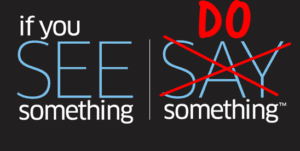 The Department of Homeland Security’s “If you see something, say something” campaign has become the unofficial slogan of post-9/11 America.
It’s been the butt of jokes by libertarians since its launch, and DHS re-launched the effort with new videos earlier this year.
This campaign is the epitome of Big Government “solutions.” It reinforces the idea that we should outsource responsibility to them, rather than looking out for ourselves. As libertarians, we understand that the price of individual liberty is the personal responsibility that comes with it.
While this slogan is directed to guide us to act when faced with suspicious terrorism-related activity, we can slightly alter it to direct our own lives away from Big Government and toward a free society.
When we see something that needs to be addressed, something should be DONE about it.
When we see an area of need, there is no reason to push that responsibility toward someone else, especially toward Big Government. Rather than outsourcing to them, we can address them ourselves by working with one another to solve the problems we face, without using the force of government.
We can strengthen our connections with our neighbors as we work together to reach the best solutions, instead of pushing one another away by bringing in a bully. Not only can we cut out the intrusion of Big Government, but we will likely find ourselves in a better situation than if we invited them in.
By taking charge of our own lives and working with those around us, rather than asking for action (and often permission), we can show others what a free society looks like. We can show how we would operate, and most importantly, show the lack of a need for government involvement in our lives.
We reduce the government’s influence over others when we don’t get the government involved in the first place.
The Department of Homeland Security’s “If you see something, say something” campaign has become the unofficial slogan of post-9/11 America.
It’s been the butt of jokes by libertarians since its launch, and DHS re-launched the effort with new videos earlier this year.
This campaign is the epitome of Big Government “solutions.” It reinforces the idea that we should outsource responsibility to them, rather than looking out for ourselves. As libertarians, we understand that the price of individual liberty is the personal responsibility that comes with it.
While this slogan is directed to guide us to act when faced with suspicious terrorism-related activity, we can slightly alter it to direct our own lives away from Big Government and toward a free society.
When we see something that needs to be addressed, something should be DONE about it.
When we see an area of need, there is no reason to push that responsibility toward someone else, especially toward Big Government. Rather than outsourcing to them, we can address them ourselves by working with one another to solve the problems we face, without using the force of government.
We can strengthen our connections with our neighbors as we work together to reach the best solutions, instead of pushing one another away by bringing in a bully. Not only can we cut out the intrusion of Big Government, but we will likely find ourselves in a better situation than if we invited them in.
By taking charge of our own lives and working with those around us, rather than asking for action (and often permission), we can show others what a free society looks like. We can show how we would operate, and most importantly, show the lack of a need for government involvement in our lives.
We reduce the government’s influence over others when we don’t get the government involved in the first place.


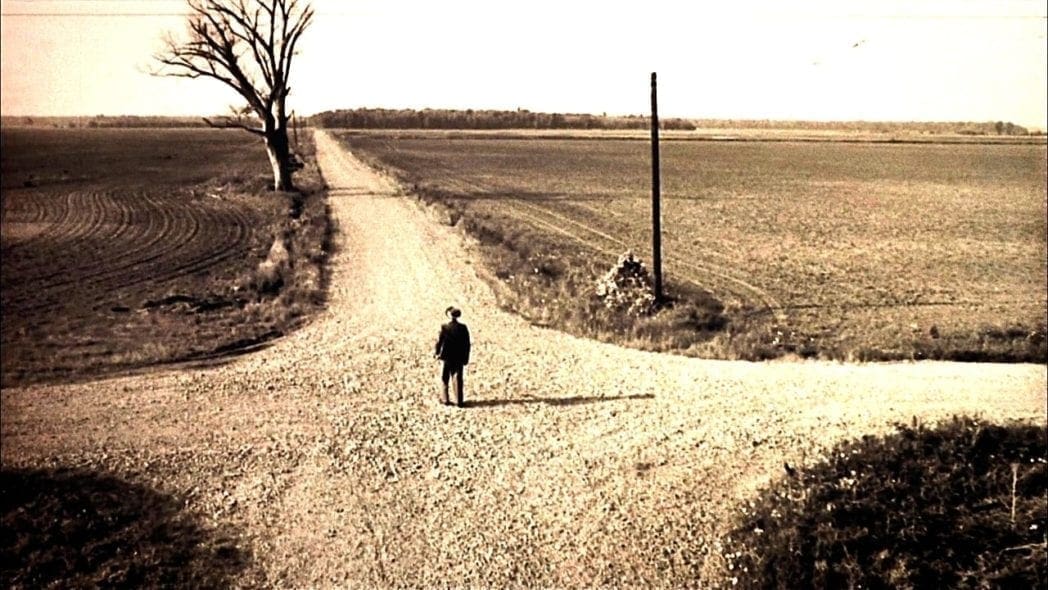
 With the ability to break news at any time, how people interact is changing. Today, we know more about what’s happening throughout the world, rather than a narrative that can be controlled.
The Arab Spring probably would not have made the news stateside, had it not been for the images, thoughts, and reporting performed by those on the ground, with the American audience demanding to know more. The dynamics of media are changing, and while the established corporate media tries to hang onto everything they can control, alternative media continues to grow in influence.
These changes also mean that ideas are spreading faster and with a farther reach. Even in some of the most remote areas of the world, a couple touches of a smartphone screen or clicks of a mouse can bring you up to speed on the latest happenings in minutes.
Because of how easy it is to get information, we now see a shift in how ideas spread, with virality, openness, and trust overcoming traditional advertising avenues and the power of vast sums of money. The dynamic is shifting, and greater exposure causes that shift to occur faster.
What does this change mean for libertarians? In this new decentralized dynamic, our voice can be just as prominent. The walls that stopped us before are crumbling, as we now have nearly equal footing.
So, let’s take advantage of this opportunity. The more we discuss our ideas, the moral case for freedom, and what a free society looks like, the greater influence we have on the direction our world moves. We can truly work to change hearts and minds without meeting the barriers of the past.
Knowing this, what will you do for liberty?
With the ability to break news at any time, how people interact is changing. Today, we know more about what’s happening throughout the world, rather than a narrative that can be controlled.
The Arab Spring probably would not have made the news stateside, had it not been for the images, thoughts, and reporting performed by those on the ground, with the American audience demanding to know more. The dynamics of media are changing, and while the established corporate media tries to hang onto everything they can control, alternative media continues to grow in influence.
These changes also mean that ideas are spreading faster and with a farther reach. Even in some of the most remote areas of the world, a couple touches of a smartphone screen or clicks of a mouse can bring you up to speed on the latest happenings in minutes.
Because of how easy it is to get information, we now see a shift in how ideas spread, with virality, openness, and trust overcoming traditional advertising avenues and the power of vast sums of money. The dynamic is shifting, and greater exposure causes that shift to occur faster.
What does this change mean for libertarians? In this new decentralized dynamic, our voice can be just as prominent. The walls that stopped us before are crumbling, as we now have nearly equal footing.
So, let’s take advantage of this opportunity. The more we discuss our ideas, the moral case for freedom, and what a free society looks like, the greater influence we have on the direction our world moves. We can truly work to change hearts and minds without meeting the barriers of the past.
Knowing this, what will you do for liberty?


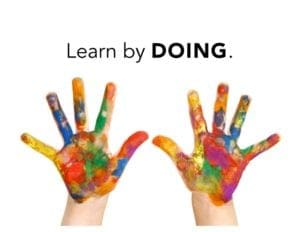 While reading books, watching videos, and listening to speeches can deliver a positive learning experience, I learn best by doing.
On top of that, there is nothing more motivating than my being told that I can’t do something. In that, I’m sure that I’m not alone.
Ten years ago, I’d never stuffed envelopes for a candidate or a political organization, let alone run for office (or won re-election). The majority of what I learned didn’t come from books, videos, speeches, or seminars. It came from “getting my hands dirty” in the actual work necessary to achieve something in the political realm.
Whether we’re talking about planning outreach events, executing political rallies, strategizing for campaigns, or general knowledge about politics beyond where to vote, I found the most useful knowledge came when I followed Nike’s advice and just did it.
Were there stumbles along the way? Sure.
Real-world experience, however, trumped anything I’d read, seen or heard, because I was learning by doing. I didn’t have the biases and handicaps of others, because as I worked to forge my own way, I researched best practices from a variety of sources. Often, those best practices found themselves at odds, depending on the source, so examining them without the distortion of a lens helped me find the best path.
As libertarians, we are often hear that we can’t win an election, influence public policy, or that we’ll move society in a libertarian direction. When I hear things like that, I’m motivated to prove them wrong. Thus far, I’ve done all three.
What can you accomplish if you just do it?
While reading books, watching videos, and listening to speeches can deliver a positive learning experience, I learn best by doing.
On top of that, there is nothing more motivating than my being told that I can’t do something. In that, I’m sure that I’m not alone.
Ten years ago, I’d never stuffed envelopes for a candidate or a political organization, let alone run for office (or won re-election). The majority of what I learned didn’t come from books, videos, speeches, or seminars. It came from “getting my hands dirty” in the actual work necessary to achieve something in the political realm.
Whether we’re talking about planning outreach events, executing political rallies, strategizing for campaigns, or general knowledge about politics beyond where to vote, I found the most useful knowledge came when I followed Nike’s advice and just did it.
Were there stumbles along the way? Sure.
Real-world experience, however, trumped anything I’d read, seen or heard, because I was learning by doing. I didn’t have the biases and handicaps of others, because as I worked to forge my own way, I researched best practices from a variety of sources. Often, those best practices found themselves at odds, depending on the source, so examining them without the distortion of a lens helped me find the best path.
As libertarians, we are often hear that we can’t win an election, influence public policy, or that we’ll move society in a libertarian direction. When I hear things like that, I’m motivated to prove them wrong. Thus far, I’ve done all three.
What can you accomplish if you just do it?