













Beta

Password Reset Confirmation

If an account matching the email you entered was found, you will receive an email with a link to reset your password.

Welcome to our Beta

The Advocates of Self-Government is preparing a new experience for our users.

User Not Found

The username/email and password combination you entered was not found. Please try again or contact support.

Skip to main content

Quizzes & Apps

Articles

Tag: state

Cutting off the Nation to Spite the State

Is libertarianism compatible with a more nationalist politics? Is it possible to have a free society that is largely closed to outsiders? The short answer is yes, but the way in which we (Americans specifically) conceive of the nation-state makes that question a little more complicated. Our rhetoric often revolves around the theme of shrinking (or eliminating) the State. But what of the Nation? What is the difference between a nation and a state? State These two words are often combined into “nation-state.” A quick search of Google Ngram suggests that this compound is relatively new. This construction is not helpful in understanding these distinct concepts. A nation is a people, irrespective of location: Cherokee, Swede, Palestinian. A state is a government. A nation may form a state, but a state cannot create a nation, at least not a true nation. There is numerous example in which states have attempted to draw boundaries that did not accurately reflect real national territories, and war usually follows. In some cases, you may have multiple nations creating the state; Canada is a good example. The English, Inuit, and Québécois show that nations precede the state. A government too is just people. The point is that common governance has never been sufficient to create a nation. If we do not understand this aspect of the current dialogue, libertarians risk losing the opportunity to message. Libertarianism (correctly) reduces many policy questions to interactions between individuals; we tend to shy away from discussing groups and tribes. Unfortunately for libertarians, most people tend to think in terms of group and tribal identities. Our perspective doesn’t typically square with the current dialogue. Trump, Brexit (UK), Geert Wilders (the Netherlands), Marine Le Pen (France), Viktor Orban (Hungary), and Lega Nord (Northern Italy) are examples of nationalist candidates in the West whose campaigns and parties have performed historically well in recent elections. Their rhetoric is not very libertarian. They have opened wider the Overton Window, with national sovereignty, protectionism, cultural diversity, and mass immigration suddenly back on the table for discussion. Many writers have commented on the nationalist sentiment that seems to be sweeping much of the world. Depending on the writer, it is nearly always framed as either: open society vs. isolationist, or as globalism vs. nationalism. How are we to persuade when most of our rhetoric only looks at individuals, with little room for larger, national conflicts? Let’s begin by listening to our friends. Are their positions based in fear? If so, do not dismiss their fears as insignificant. Why should they care about what we have had to say if we wholly reject their concerns or worldview? How can we hope to change hearts and minds if we don’t speak the same language? How can we reframe the conversation if we are not meaningfully involved in the discussion, to begin with? If we wish to influence, we must meet our friends and neighbors where they are at now.  

Texas Could Soon ‘Nullify’ Federal Gun Control Measures

Texas Could Soon ‘Nullify’ Federal Gun Control Measures

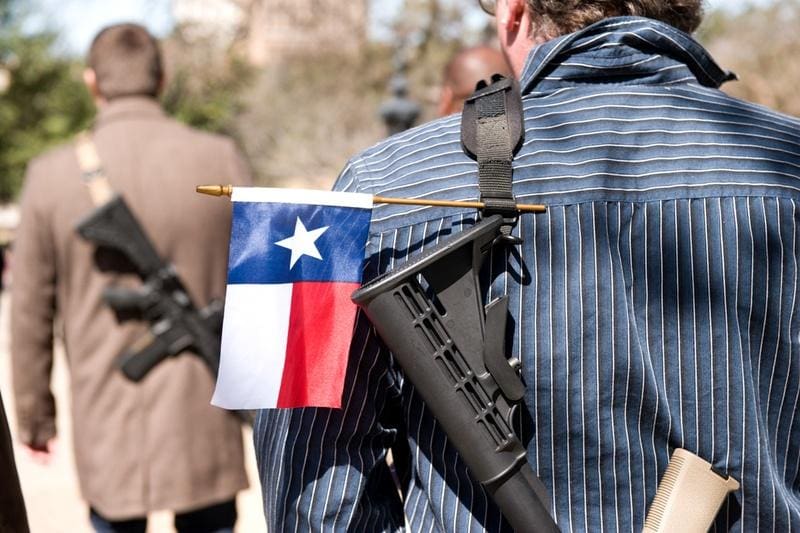
This article was featured in our weekly newsletter, the Liberator Online. To receive it in your inbox, sign up here. This week, a Texas state representative took a step that could effectively nullify any past or future federal gun control measures. According to the Tenth Amendment Center, Representative Matthew Krause, (R-Ft. Worth) prefiled House Bill 110, which would prohibit the state of Texas to offer any resources in support of several federal gun control measures, whether they have already become law or haven’t yet been discussed by Washington D.C. legislators. Open_Carry_March_Erika_Rich_03_1_jpg_800x1000_q100Since the federal government often relies on state governments to ensure its laws are being enforced, states that withdrawal their participation end up leaving the federal government empty-handed. As a result, enforcement is eliminated in practice. HB 110’s text makes it clear that any “agency of this state or a political subdivision of this state, and a law enforcement officer or other person employed by an agency of this state or a political subdivision of this state” is not allowed to provide any assistance to “a federal agency or official” upholding a rule or regulation that targets firearms, gun owners, firearm accessory, or firearm ammunition. If the regulation “does not exist under the laws” of the state of Texas, local agencies and officials would be barred from assisting the federal government with enforcement. As we all know, the federal government is running out of resources and nullification efforts explore this reality, making it difficult for federal officials to get their will imposed on states. By passing laws that ensure states refuse to participate in tyrannical policies embraced by the federal government, states send a clear message to Washington, D.C., letting federal bureaucrats know that local governments are, in a way, more powerful than a centralized administration will ever be. But this is not the only benefit of seeing similar efforts being embraced nationwide. Taxpayers are also spared millions, since state agencies will not have to bend backwards to follow the federal government’s orders. While many believe that a Republican White House won’t attempt to pursue any restrictive gun control regulations anytime soon, Texas doesn’t have any assault weapon law. Locals are also allowed to own firearms without registering their guns, purchase them without a permit, and able to purchase magazines without having to worry about capacity restrictions and they like it that way.

Brewery Forced to Drop ‘LSD’ From Label—In America!

Brewery Forced to Drop ‘LSD’ From Label—In America!

This article was featured in our weekly newsletter, the Liberator Online. To receive it in your inbox, sign up here. The war on drugs has finally gone too far. LSDAleIndeed Brewing, a Minneapolis-based brewery, was recently forced to change the name of their LSD Ale after federal regulators thought it sounded too offensive. Everything had been going alright for Indeed Brewing while it was only selling its products in Minnesota. But the moment the company decided to start selling LSD Ale across state lines, things went sour. Once the company started working on the licenses needed to expand and start selling outside of the state, federal regulators realized the beer presented a “threat.” The result? Indeed Brewing had to drop the name or stop expansion. In an attempt to comply without having to drop the product’s name altogether, Indeed Brewing decided to try different hippie-themed labels that kept the beer’s name somewhat under the radar. That didn’t work. “Unfortunately,” Indeed Brewing co-founder Thomas Whisenand said, “we sell a regulated product and there’s not much you can do when the feds say no.” To appease federal regulators, the company had to change the ale’s name to Lavender, Sunflower Honey, Date Honey, dropping the terrifying LSD from its labels. While the name may sound terrifying to some, it does not indicate that the beer is indeed made with LSD. Watchdog.org reports that, if the beer was, indeed, made with LSD, federal regulators would be concerned with things other than the ale’s name. So why are the feds so invested in how the manufacturers chose to advertise the beer? In the past, multiple states banned the sale of Founders Brewery’s Oatmeal Breakfast Stout because of the baby that appears on the label. According to the Michigan Liquor Control Commission, the advertisement of alcoholic beverages “shall not depict or make reference in any manner to minors,” which prompted the state to ban the sale of the product locally. But what exactly is Indeed Brewery doing wrong? Nothing, really. According to research carried out by the Mercatus Center, barriers raised by the federal and state governments are hurting small breweries more than ever, which hurts consumers as a result. Even if the problem is not drug-related, governments will always find something to pick on. It might be a drug-sounding name, or that you do not have a hood for a food oven in your brewery, even though you do not produce food. Or perhaps the fact that your small craft brewery does not have the equipment to handle raw chicken, even though poultry is not an ingredient to any of your products. According to Mercatus researchers, brewers often face high costs and long waiting times when attempting to obtain a seal of approval from state and federal governments. As associated costs also rise, brewers are often barred from entering the market simply because they cannot afford to meet the unreasonable standards provided by regulators. In Virginia, for instance, regulators are authorized to deny a small brewer a license because he or she is “physically unable to carry on the business,” or is incapable of speaking, understanding, reading, and writing “the English language in a reasonably satisfactory manner.” What that even means is beyond reason.

White House Sacks the Treasury in the Name of Corporate Welfare

White House Sacks the Treasury in the Name of Corporate Welfare

This article was featured in our weekly newsletter, the Liberator Online. To receive it in your inbox, sign up here. Friday, one day before the President’s day holiday weekend, the Barack Obama Administration announced that $7.7 billion of taxpayer dollars would be allocated to Affordable Care Act insurers through the law’s reinsurance program. From the Americans for Tax Reform website:
“For 2015 Obamacare reinsurance, the administration will pay out $6 billion raised from a fee on private health insurance and an additional $1.7 billion that under federal law belongs to the Treasury department.”
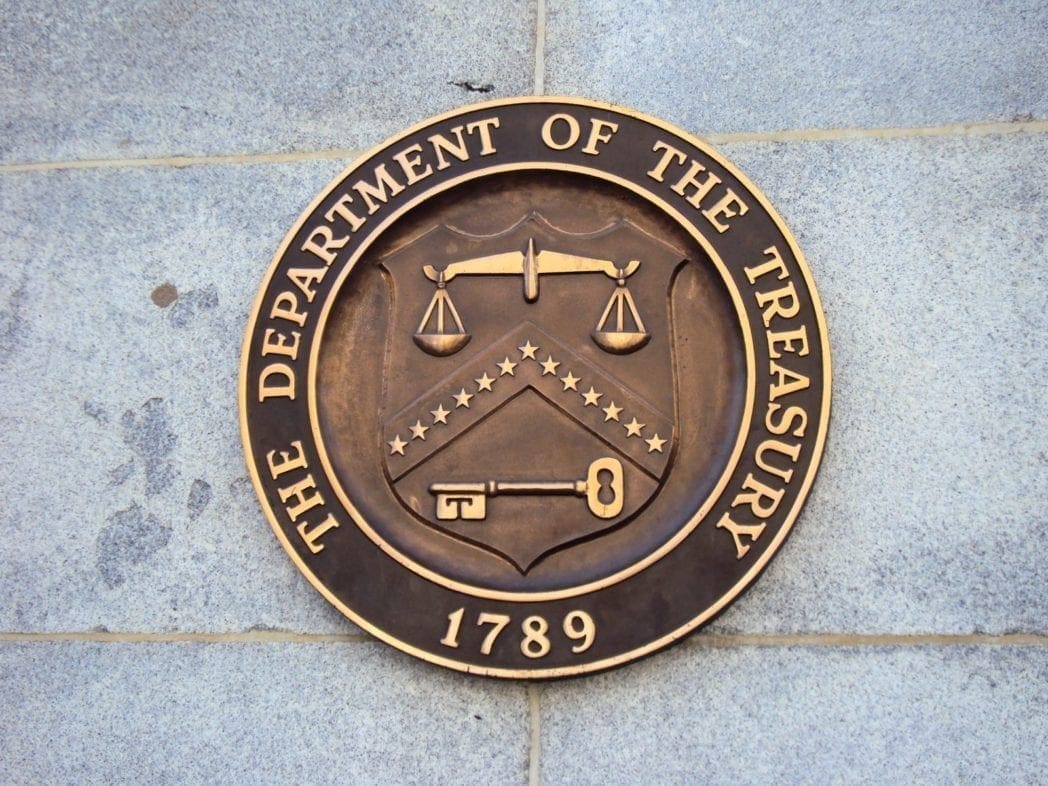
Seal According to pro-taxpayer organization, at least $1.7 billion of the $7.7 being used to cover insurers is being funneled illegally. Doug Badger of the Galen Institute explains that ACA’s reinsurance program works by silently taxing every individual in America with health insurance. In 2015 and 2016, each individual with insurance is being allegedly taxed a total of $107. According to Badger, the program is designed to “prop up insurers that have agreed to sell Obamacare policies in the individual market.” While the administration continues to claim that ACA is working, insurers that participate are losing money. But since the reinsurance program exists to cover the losses of the insurers, the administration seems to think keeping corporations happy with the deal is more important than following the law. With the failure of the system, and with a growing number of consumers referring to alternative methods to have access to care, the administration is having to get creative. According to the New York Post, not one dollar out of the $7.7 billion being promised to insurers should be taken from the Treasury under ACA law. From the New York Post:
“The law states a fixed share ‘shall be deposited into the general fund of the Treasury of the United States and may not be used’ to offset insurance companies’ losses. But the administration gave all of it to the insurance companies last year, and got away with that heist. So now they’re trying it again.”
While the administration projected it would be raising $12 billion for the ACA reinsurance program in 2014, it was $2 billion short. In order to handle the situation, the administration decided to keep the money from the Treasury, using it instead to hand it over to the participating companies. The administration isn’t a stranger to this type of move. According to the House Energy and Commerce Committee, at least $8.5 billion in taxpayer money has already been illegally funneled to ACA’s corporate welfare programs. Another initiative designed to shield insurers enshrined in ACA also seeks to secure the investment of insurers. The initiative is known as the Risk Corridor program, and it has also been tied to scandals in the past. In 2014, insurers requested $2.87 billion in “risk corridors” payments, but the administration only offered 12.6 percent of that value. The risk corridor program works by redistributing funds from insurers that make money with the Obamacare exchange to insurers that don’t. Not knowing how sick their customers were going to be due to the new healthcare law and its mandates, insurers were not being able to set premiums realistically, making it hard for companies to turn a profit. Despite falling short on the risk corridor payments, the administration decided to bail out insurers that weren’t making money off the exchanges last year. ACA chief Andy Slavitt, who’s also the former Vice-President for United Health, made the announcement in December of 2015, saying the federal government was going to bail out insurers and offer them the amount they had previously asked. Later, however, Congress blocked the $2.5 billion “risk corridor” payment. The effort was championed by several conservative and libertarian organizations that came together to urge Congress to act. If nothing is done this time around, taxpayers will have to foot the bill and cover the $7.7 billion the administration has vowed

No, Violent Crime is Not Getting Worse

No, Violent Crime is Not Getting Worse

This article was featured in our weekly newsletter, the Liberator Online. To receive it in your inbox, sign up here. One wouldn’t know it if they read what some news outlets are reporting or listened to the words of some Republican hopefuls and pundits on television, but there isn’t any real evidence that crime is getting worse. The Pew Research Center, in May 2013, noted that the gun homicide rate was down 49 percent since 1993, when it peaked. What’s more, non-fatal gun violence dropped by 75 percent over the same period analyzed. The Bureau of Justice Statistics, an agency in the Department of Justice, found similar figures, a 39 percent drop in gun homicides and a 70 percent drop in non-fatal gun violence, between 1993 and 2011. Police-Car-Lights-GOOD.JPG Although instances of gun violence were falling, according to the Pew Research Center, 56 percent of Americans believed gun-related crimes were on the rise compared to 20 years before. The causes of this belief are certainly up for debate, but the media’s focus on shootings and coverage of politicians’ reactions could be a cause. After all, bad news sells. At the end of August, The New York Times reported that “[c]ities across the nation are seeing a startling rise in murders after years of declines.” The Times offers data from several U.S. cities that have seen spikes in homicides. Some have interpreted the story as a nationwide spike in violent crime attributed to the so-called “Ferguson effect.” Heather Mac Donald pushed this theory in a May editorial at the Wall Street Journal. “Since last summer, the airwaves have been dominated by suggestions that the police are the biggest threat facing young black males today,” Mac Donald wrote. “Almost any police shooting of a black person, no matter how threatening the behavior that provoked the shooting, now provokes angry protests.” Others, including Bruce Frederick of the Vera Institute and John Lott of the Crime Prevention Research Center, have taken a more reasoned approach to the perceived spike in violent crime. “[N]ot all of the increases cited by the Times are statistically reliable; that is, some of them are small increases, or are based on small numbers of cases, such that the observed increases could have occurred by chance alone. Among the 16 top-20 cities for which I found publically available data, only three experienced statistically reliable increases,” Frederick explained. “Only one of the top-20 cities included in the Times’ sample, Chicago, experienced an increase that was statistically significant.” “Even where a statistically reliable increase has been experienced,” he noted, “a single year-to-year increase does not necessarily imply a meaningful trend.” Writing in response to Mac Donald at the end of May, Lott pointedly contested her narrative, writing, “The bottom line is that across the largest 15 cities in the US the murder rate has fallen by by 12 from 749 to 737 (a 2% drop) or from 43 from 871 to 828 (a 5% drop).” And while many are insisting that violence against police is becoming a trend, the Associated Press recently noted that shooting deaths of police officers are actually down by 13 percent. “There were 30 shootings last year and 26 this year,” the report explained. “Those figures include state and local officers, as well as federal agents.” The data used in the report came from the National Law Enforcement Officers Memorial Fund. Each shooting, whether of an innocent person or a police officer, is a tragedy, but everyone needs to calm down about this supposed uptick in violent crime because the data suggest that 2015 is consistent with recent years. Even if by year’s end there’s an increase in violent crime, it’s far too early to call it a trend.

Cost of Government Day: You Worked More Than Half This Year for Gov’t

(From the Intellectual Ammunition in Volume 18, No. 15 of the Liberator Online. Subscribe here!) Did you notice? Sometime in mid-July, you stopped working for the government — and were finally allowed to start keeping the money you earn. Each year the Cost of Government Center, in partnership with Americans for Tax Reform Foundation, calculates Cost of Government Day. Cost of Government Day is the day on which the average American has earned enough income to pay off his or her share of the spending and regulatory burdens imposed by government at the federal, state and local levels. This year Cost of Government Day arrived — finally! — on Saturday, July 13. In other words, this year American workers are forced to labor 194 days out of the year just to meet all the costs imposed upon them by government. And that’s just the average. Taxpayers in many states will have to work well past July 13 to pay for costs imposed by their bloated state governments. Notoriously high-tax, big-spending states such as California, Illinois and New York have some of the latest-arriving Cost of Government Days in the nation. Worst of all is Connecticut — where residents must labor for the state until… August 31. And if you feel that the burden has gotten worse during the past few years, you’re right.  This year marks the fifth consecutive year that Cost of Government Day has fallen in July. Prior to the Obama Administration, the latest-arriving Cost of Government Day recorded was June 27.