













Beta

Password Reset Confirmation

If an account matching the email you entered was found, you will receive an email with a link to reset your password.

Welcome to our Beta

The Advocates of Self-Government is preparing a new experience for our users.

User Not Found

The username/email and password combination you entered was not found. Please try again or contact support.

Skip to main content

Quizzes & Apps

Articles

Tag: The Advocates for Self-Government

Minnesota is Making a Killing Off of Civil Asset Forfeiture

Civil asset forfeiture is getting out of control in the Gopher State. A new report from the West Central Tribune indicates that the Minnesota state government seized 3 percent more property involved in crimes in 2018 than the year prior. Even though the increase in the amount of property seized was not that large, the money the state took in cash and sale of forfeitures rose by 18 percent according to a report from the State Auditor’s Office. 317 law enforcement agencies in Minnesota conducted 8,091 forfeitures in 2018, while 7,852  of these were conducted in 2017. The net receipts from the sales of 4,895 forfeitures approximated $8.3 million in 2018. The rest of the 3,196 forfeitures were returned, destroyed or not factored in the latest statistics. As of 2014, asset forfeitures have been on the rise in Minnesota. The number of completed forfeitures increased by 18 percent and the largest category of items seized fell in the range of $100 to $499 during this time-frame. Forfeitures dealing with controlled substances and DUI offenses made up 90 percent of forfeitures last year. Drug seizures have risen by 13 percent since 2014. Putting it bluntly, civil asset forfeiture is a racket.  Law enforcement agencies seized $4.5 billion in assets in 2014 alone. From 2001 to 2014, they seized $29 billion in assets. On top of that, this practice has dubious constitutionality. In most states, civil asset forfeiture is conducted without the accused in question receiving a conviction—a clear violation of due process.

Minnesota is one state that needs to boost its protections against unjust asset forfeiture practices. According to the Institute for Justice’s Policing for Profit index, Minnesota has a D+ rating as far as its civil asset forfeiture laws are concerned. Instead, Minnesota should take after states like Nebraska and New Mexico by strengthening due process standards during these procedures. It can also go a step further by refusing to prosecute non-violent drug cases, thus removing asset forfeiture out of the equation. Civil asset forfeiture reform is a winnable battle, and Minnesota is another place that liberty activists should target for civil asset forfeiture reform.

What I Learned From an Anti-Gun Rally

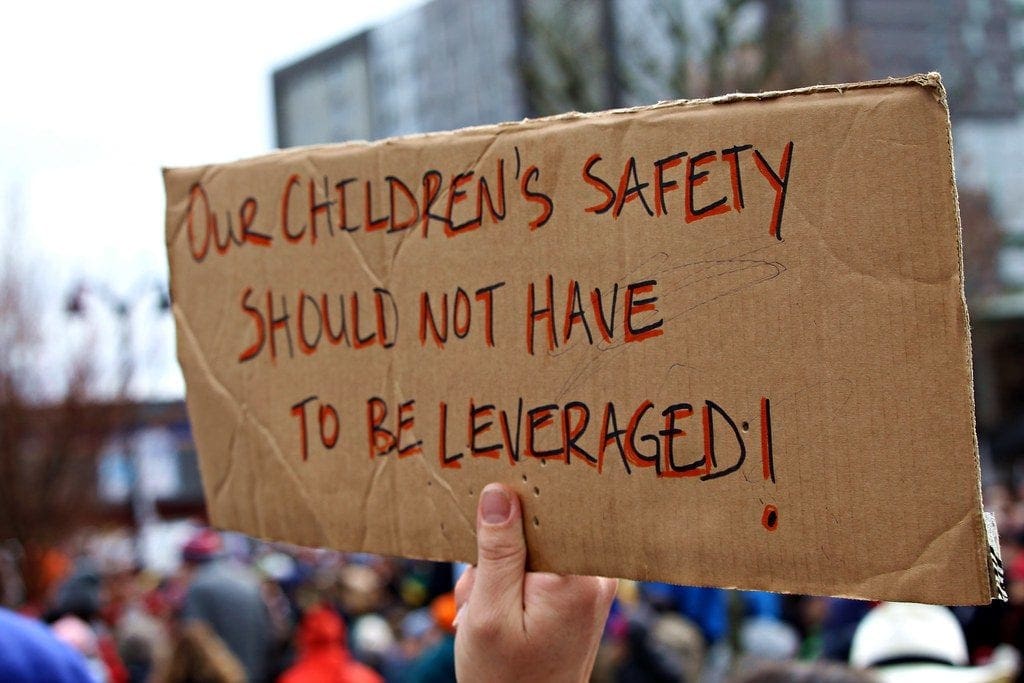
There is no honest way to explain a peculiar gathering of people unless you go and walk among them yourself. Trying to report on their gathering without doing so is simply relying on your own prejudice and base instinct. To write about something you don’t want to see is like asking a blind person to describe a painting they know nothing about, yet this is how much of the news media is generated. So when a Moms Demand Action rally rolled into town, I took it upon myself to see what was actually going on. I walked to the rally location, and the first thing I noticed was that there were mostly families. I had to keep this in mind because these people are obviously thinking of issues beyond themselves. This is key to understanding political discourse, as we should never forget the humanity of others. I spoke with people ranging from teachers to photographers and to folks from all occupations in between. The general consensus was that they weren’t as gung-ho about banning all guns as some in the media will claim they are. They were just trying to find a way to end gun violence. These people may have been at a Moms Demand Action rally, but seeing them as individuals instead of anti-liberty activists helped me benefit from the genuine conversations I had with them. The biggest takeaway I had from the conversations is that these people are part of social circles that generally don’t know much about guns or firearms in general. They take most of what they know from other people they associate with who know as little as they do. When talking with these folks, I tried my hardest to just ask them why they believed the things they did and whether they knew what they were really advocating for. That way I could understand them instead of just trying to lecture them, or worse, shout at them and tell them why they were wrong about everything. The key to constructive political discussion isn’t to just beat people in a debate but to genuinely convince them to change their minds. As is often said in the sales world- no one wants to be sold but everyone wants to buy. By showing these folks I genuinely wanted to learn about their stances, I even managed to change some of their views on firearms and gun owners instead of intensifying the anti-gun views they already held. Pursuing civil and respectful discourse may seem like a tall order when the world around you appears to be going crazy, yet people generally just want to be treated like adults, so remember that the next time you are out of your element with people who think differently than you.

Without Government, Who Would Drop Off Our Kids at the Wrong Stop?

A 7-year-old boy from Arkansas is probably now famous around town after his school bus driver dropped him off at the wrong stop. But now that his father is demanding answers, all that the school district has managed to do was to issue a statement saying they are looking into the matter. According to a local news outlet, DeMarcus Watkins Sr. learned his son was dropped off more than a mile away from where the school bus should have dropped him off, leaving the child on the side of the road as the area had no sidewalks. The incident could have turned out dramatic if not for a Good Samaritan who saw the lonely boy and took him to the correct stop. “A stranger picked him up, and luckily a good-hearted person took him back to his grandmother’s house,” he told reporters. Unfortunately for Watkins, the Marion School District has yet to issue an apology for what its school bus driver did, even after the 7-year-old insisted he wasn’t being dropped off at the right location. “My biggest problem was when he got to this point and he was telling the driver and the driver’s aid that this is not his right stop, no one really paid attention,” the angry father explained. But since this is a public school district and the two people responsible for this incident are public employees, it’s safe to say Watkins won’t be getting much of an apology in the future. As a matter of fact, the district’s superintendent said they are still reviewing the bus footage to determine whether the driver and driver’s aid followed proper procedures.

Taxpayer-Backed Negligence

Considering that school buses send an average of 17,000 children to the hospital yearly, they are far from a safe transportation option for children. Unfortunately, over 23 million school-aged children ride these buses every year in the United States. And while this particular incident in Arkansas may seem like an oddity, it’s far from an isolated occurrence. As highlighted by NJ.com, a child is forgotten inside of a school bus every two weeks during the school year. And while state laws require that school bus drivers check their buses before exiting, “students keep being left behind,” the report explained. Needless to say, bus drivers aren’t being reprimanded. But being forgotten inside of a bus isn’t the end of the world, right? How about dropping off a 5-year-old girl two miles away from her destination? In New York state, a mom is suing the contractor that runs the district’s school buses after her 5-year-old was dropped off at the wrong stop and after her public charter school failed to contact her when the child didn’t arrive. After finding her crying daughter alone more than 10 blocks away from her home at a busy intersection, the mom filed a $7 million lawsuit. And why didn’t she sue the school district instead? Probably because government agencies can’t be held liable. With records showing that between late 2015 and July 2017 at least 281 drivers and escorts put children in danger in New York City alone but only 32 were fired, it’s clear that even when incidents are thoroughly investigated, the school district does little to protect children. With this in mind, it’s not far-fetched to believe that what happened to Watkins’ child will continue to happen across the country. After all, bureaucrats have absolutely no incentives to keep their customers, in this case, the students and their parents, happy.
NSA surveillance privacy

Mass Surveillance Is Coming to Public Venues in America

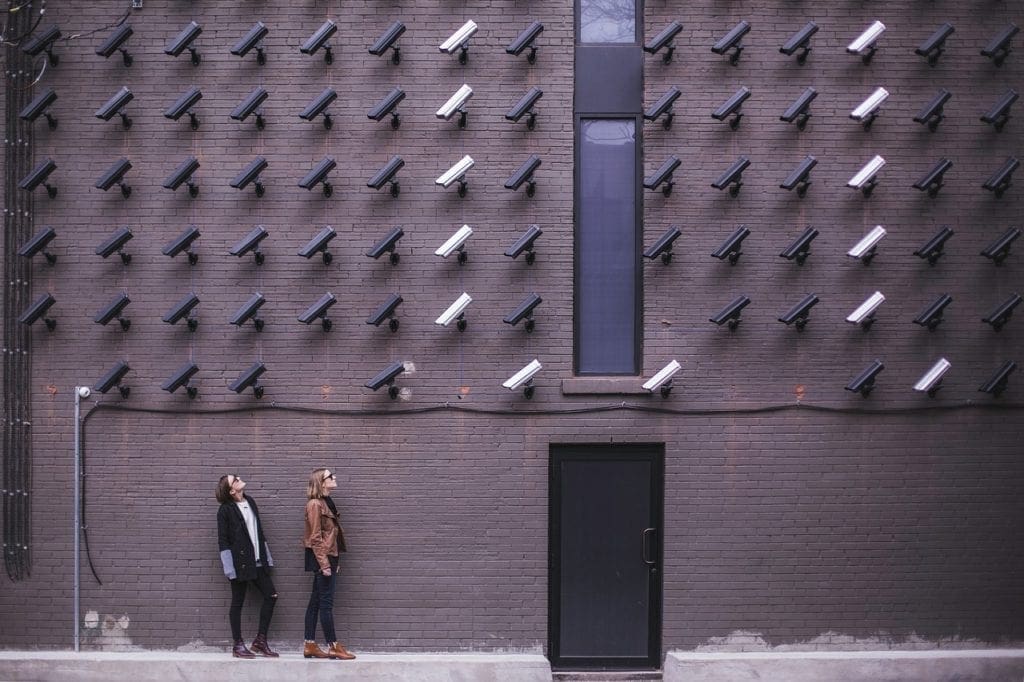
With how much outrage politics consumes the media cycle, issues like the growing surveillance state tend to be overlooked. Now, the TSA-style body scanners that everyone loves (sarcasm intended) could be coming to public venues. The Salt Lake Tribune notes that the Utah Attorney General and law enforcement are teaming up with Liberty Defense, a 3D image scanning company whose business model is largely predicated on spying on people. A Fox 13 report indicates that police will use Liberty Defense’s HEXWAVE to spy on people at public events such as concerts, malls, and stadiums. NSA surveillance privacy It’s no secret that the U.S. has embraced a much larger surveillance state since 9/11. Not only has the government spearheaded such efforts, but there have been a substantial number of private actors that have joined along to violate civil liberties.   When we think about it, the name of the company in this case, Liberty Defense, is quite ironic. Its motto is, “Protecting Communities and Preserving Peace of Mind.” Nothing promotes peace of mind like having an all-seeing government spy on your private affairs. Sadly, most of the populace has accepted these types of government intrusions. Liberty Defense’s CEO Bill Riker announced that, “HEXWAVE could be deployed at mass gatherings like concerts, malls, stadiums, public transit stops and government buildings.” It’s becoming abundantly clear that the political establishment wants to take the same airport security model provided by the TSA and use it to target suspicious people. The Utah Attorney General’s office rolled out a “Memorandum of Understanding” which explains how HEXWAVE would be used in surveillance plans:
  1. Sporting & Concert Arenas, Stadiums and Olympic Venues;
  2. Primary, Secondary and Higher Education Facilities;
  3. Places of Worship, Facilities and Property Owned by or Affiliated with Faith Entities;
  4. Government Offices, Buildings and Facilities;
  5. Amusement Parks; and
  6. Entertainment Events, Conventions, Shows & Festivals
Police intend to use HEXWAVE to spy on the public during “non-business hours to get system exposure to the full range of potential operating conditions to include environmental, frequency/volume of use or other operating conditions to which HEXWAVE would be subjected.” There have been rumblings that Liberty Defense is a Homeland Security or Department of Defense front group. Speculations and rumors aside, this business is becoming a willing participant in the mass surveillance state. Just like its cousins in the defense industry, Liberty Defense shows that opportunistic private actors will easily sell their soul to the state and work with it to advance anti-liberty schemes. These new forms of surveillance are expensive forms of security theater, and in worst-case scenarios, springboards for massive civil liberties violations. Instead, we should focus more on changing our foreign policy so that it does not generate as much blowback in the form of terror attacks. Additionally, America should scale down its vast military presence and focus more on defense at home. We don’t need an Orwellian bureaucracy to make our communities safe. 

Government Wants a Piece of Facebook’s Digital Currency

Facebook is entering the cryptocurrency market, hoping to beat bitcoin at its game. And if the government has anything to say about it, the tech firm might as well develop a stablecoin that will do exactly what bitcoin didn’t: become the standard in the global financial market.

After Facebook announced it would launch its cryptocurrency, Libra, Rep. Maxine Waters (D-CA) said the company should suspend plans to launch it until regulators can look at the digital coin more closely. As the head of the House Financial Services Committee, she wants the company to succumb to regulations before releasing its currency, claiming that the tech firm “is continuing its unchecked expansion and extending its reach into the lives of its users.”

Perhaps, Facebook already expected this treatment and as such, was quick to explain in its announcement that Libra would not be maintained by the firm but by a non-profit collective of companies.

According to the social media network, Libra will be backed by fiat currencies such as the U.S. Dollar, and it will be available to the tech giant’s 2.4 billion members as well as anyone with a smartphone.

The Libra Association, the firm stated, was founded by companies like Lyft, Uber, eBay, PayPal, Visa, Mastercard, and even Spotify. And according to Facebook, the stablecoin hopes to bring the financial system to the hands of the 1.7 billion individuals across the globe who do not have access to banks.

Considering that credit card companies are directly involved in this effort, it might be fair to say that Libra could be easily accepted as payment across the board. As such, lawmakers might be particularly concerned, as that would set Libra apart from bitcoin right off the bat.

“We need to go beyond the rumors and speculations and provide a forum to assess this project and its potential unprecedented impact on the global financial system,” Rep. Patrick McHenry (R-NC) said, supporting Waters’ call for regulation.

Sen. Sherrod Brown (D-OH) agreed, saying that “Facebook is already too big and too powerful,” why let it run its own currency as well?

Unsurprisingly, Facebook said in a statement that it was more than willing to respond to their questions.

From the company’s perspective, it is easier for it to cooperate and even suggest regulations than let the state develop rules on its own. After all, if Facebook doesn’t step up, other financial institutions will.

Will Libra Go Mainstream?

As explained by ZeroHedge, Libra isn’t “a cryptocurrency in the traditional sense.” For one, its supply will be dictated by a central authority.

Furthermore, the digital coin is backed by major players in the global financial industry, meaning that it enters the cryptocurrency game willing to compete with digital coins that exist precisely as a response to the banking system. In other words, Libra is a mainstream competitor to bitcoin and the like.

The fact that lawmakers were so quick to hit back shows that Washington is paying attention. And as explained by countless other news outlets, Libra is designed to be used in transactions, bringing the banking system to those without access to it — just the type of thing that would make the stablecoin a leader in the financial industry. But instead of going to competitors of the industry for help, Facebook tapped into a project run by giants such as Mastercard and Visa. This might be a sign that Libra won’t be regulated out of existence by Washington.

Still, there are risks that regulators will actually help Libra.

If Washington does work with Facebook and the Libra Association, it might set up a regulatory framework that could prevent other tech companies from creating their own digital currencies. That would ultimately benefit Libra, Facebook, and the major players behind the currency. The ones who would suffer would be the very digital currency users who are meant to benefit from Libra.

Facebook, as well as the other firms behind Libra, might be truly willing to provide a digital coin system that will help lift the world’s poorest. But if the government is involved in the process, it might just do the opposite, by stifling competition.

Are Libertarians Just Moderates?

What is a moderate in today’s political environment? When someone describes themselves as “fiscally conservative and socially liberal,” they are often seen as just being moderates. However, this conclusion couldn’t be farther than the truth. The term “moderate” is as loose and ambiguous as defining one’s political views as “independent.” The issue at hand is that one person who identifies themselves as a moderate could be completely different than another person who identifies themselves as a moderate. One moderate could be pro-life and another could be pro-choice. Another independent could be a split ticket voter every election and another independent could vote Republican for reasons other than a regular conservative. Perhaps the best way to define moderates and independents is as being part of a broad, undefined group of individuals without a guiding political ideology. Libertarians could potentially be independents if we are talking specifically in partisan terms, especially when you take into account there are libertarians Democrats, Republicans, and members of the Libertarian Party itself. However, you cannot justly define libertarians and libertarianism as being a moderate ideology whatsoever. Libertarianism is based on the concepts of natural rights, non-aggression, and voluntary cooperation. Libertarians view individual rights as inalienable and private property rights as the bedrock to a civil and a free society. Libertarian thought amongst those who believe fully in individual liberty and economic freedom is consistent in their views on certain matters regardless as to what party is in power and who sits in the White House. The fact is, public institutions wish and actively shut out libertarianism from civics courses and U.S. Government classes since the ideals of liberty go directly against our civil religion’s views of the omnipotent state. Therefore, politicians in both parties and progressive academics would rather most voting Independents consider themselves politically moderate so that they are directionless and therefore more easily swayed to make drastic decisions based out of sheer emotion each time a tragedy or severe challenge upsets the status quo. The next time someone defines you as a moderate for your fiscally conservative, socially liberal views, you can smile and tell them that your guiding principles are life, liberty, property, and the freedom for individuals to define and pursue their own definition of happiness in a world without force or coercion by any monopoly of power.

Stop Blaming Amazon for Everything

It’s easy to blame the demise of small brick-and-mortar shops on the rise of e-commerce, just as it is easy to accuse Amazon of taking unfair advantage of the postal office to boost its bottom line. But despite what critics on both left and right might think, markets in a crony capitalist setting aren’t as black and white. In order to better understand what’s at stake for both the consumer and the retailer, and in order to know why the USPS is a deterrent and not an enabler of both e-commerce and brick-and-mortar firms, one must look beyond the mainstream media’s talking points.

A Government-Created Mess

It doesn’t take long to find dozens of sources online explaining how Amazon killed small business. However, it isn’t as easy to find sources talking about the more than one million of small businesses that are actually flourishing thanks to Amazon. By the same token, it’s quite easy to find critics online (and in the White House) saying that Amazon is taking advantage of the USPS, and that our tax dollars are subsidizing Amazon shipments across the country. They often contend that the firm wouldn’t be as successful if it wasn’t for the tax-backed carriers, and urge lawmakers to force the company to pay the difference for using the postal service. When it comes to the demise of small businesses, many of these critics complain that Amazon created a convenient shopping service that gives consumers nationwide access to products they might not find in their local retailers. That is unfair, they say. However, it isn’t Amazon that is to blame for the rising costs of doing business, but government itself. And when costs are high, small retailers just can’t compete with large firms. It is government entities, both local and federal, that “fawn over large firms,” Mises Institute’s Ryan McMaken explains, “creating special programs for tax breaks and subsidies” just for them, not for entrepreneurs trying to open up shop. If small firms and individuals were given the same kind of breaks to start their businesses, they, too, would be creating jobs. Unfortunately, giving corporations like Amazon breaks to produce a “large number of jobs” sounds better than proposing tax breaks that will benefit retailers across the board. Unfortunately, these small firms can only compete with e-commerce giants if government-imposed barriers aren’t in place. And we never hear Amazon critics say that much. The same goes for the postal service. The USPS has been in the red for quite some time, struggling to cover billions in fixed costs. But while many say that the problems of the partial government-backed monopoly stem from the agency’s “corporate” mentality, the reality is that the organization fails to respond to market signals. Instead, it ignored the growth of the Internet and decided to expand its presence nationwide. As the number of letters continues to drop, the agency’s costs continue to go up. Because the postal service has a virtual monopoly over the delivery of letters, it has almost no incentives to control its costs. And while Amazon does use the service, enjoying the low costs of shipment to remote areas in the process, it does so because the government-backed system is there. It is because government has failed to unleash the mail carrying market that consumers and companies like Amazon are stuck. But if freedom were to prevail, the free and open competition of different carriers would lower and not increase the cost of shipping goods across the nation. It’s time we finally stopped scapegoating Amazon to focus our energy on what can truly change things for the better: freedom.

This County Has A ‘Bail Machine’ & It’s Forcing People To Plead Guilty

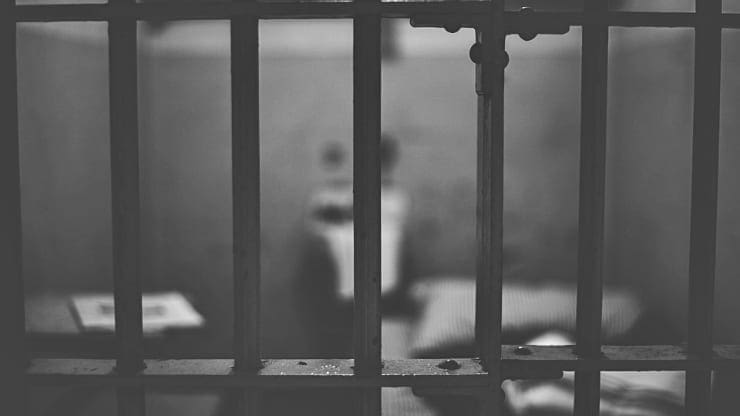
According to the Supreme Court, the public has “a first amendment right of access” to preliminary hearings in criminal cases. However, certain counties don’t follow this rule, setting their bail hearings behind closed doors, and criminal justice groups are accusing them of trying to skirt the U.S. Constitution.

The county under the activists’ scrutiny is Dallas County in Texas, where family, lawyers, the press, or social workers are not allowed to enter bail hearings.

bail

In order to learn what was happening behind closed doors, activists such as Texas Organizing Project and Faith in Texas filed a class action lawsuit with the American Civil Liberties Union of Texas and Civil Rights Corps representing the plaintiffs. The district court judge eventually ordered video footage released after the January lawsuit, but only footage of three days of hearings was made available.

The material proved that the court was doing exactly what activists were afraid of: Giving defendants no recourse.

In the footage, the accused often saw the judge for no more than 15 seconds, the time frame in which the judge would set the defendant’s bail amount, verify their citizenship status, and then send them to jail. In such a short period, it’s clear that neither party manages to bring up the facts of the case or whether the accused could pay the stipulated sum.

In February, perhaps thanks to the pressure from the suit, the county changed its approach, but not by making hearings public. Instead, it started offering arrestees an assessment, however brief, of their financial resources before declaring what their bail amount would be. Still, this change alone isn’t enough, as plaintiffs in the suit claim the Dallas County jails impoverished people without inquiring whether they can afford bail.

Shannon Daves, a 47-year-old homeless transgender woman, was one of the plaintiffs. Daves was arrested in January on a shoplifting charge. At the Dallas County Jail, the judge set her bail at $500 during a hearing that lasted 20 seconds.

Like Daves, thousands of people who are brought to the Dallas County jail are unable to afford their bail. As a result, only 23 percent of arrestees brought in 2018 were able to wait for their court dates in freedom.

“Bail hearings feel like calling customer service where the employees have charts with set instructions,” she said. “Judges are only concerned with getting you booked into the system. It’s all so impersonal.”

Because of the high bail costs, the system becomes overwhelmingly hard to fight. As a result, arrestees oftentimes prefer to plead guilty on their first court dates, as they already spent weeks in jail and might be tired of dealing with the justice system, lead attorney from Civil Rights Corps Elizabeth Rossi said. In many cases, innocent individuals who simply cannot afford to remain in jail one more day take sentences of time served, going home with a criminal record.

In other words, Dallas County authorities seem to be responding to the perverse incentives of running a government prison. By setting bails too high, they trap the poorest suspects, whether they are, indeed, guilty or not. By keeping them in jail for long periods of time, they end up breaking and finally giving up on clearing their name. The result is big, bold success cases for the county at the expense of the county’s poor residents. But are they real? Do they prove that Dallas officials are “doing their job?”

If their job is to serve the state’s needs then yes, they are performing as expected.

What attracted you to the liberty movement?

This is a question I enjoy asking people, for several reasons. One, it’s an ice breaker when meeting new folks at libertarian events, and people usually like to tell their story to other libertarians. Another is that I learn something about the person with whom I’m speaking. For me, their story is another data point that informs me how I might more effectively persuade others to become libertarian. liberty Like many Gen Y libertarians, my view of how the world operates was fundamentally and irrevocably altered by Congressman Ron Paul following his 2008 presidential campaign and the Campaign For Liberty. It is likely that I would never have been exposed to the libertarian ideas he was presenting were it not for the internet—specifically Youtube and social media. After watching every “Ron Paul destroys…” Youtube video I could find, I decided to take action and seek out some real-life libertarians in Sacramento. My online search connected me with Dr. Jim Lark, who was listed as the national LP’s student outreach contact. It so happens that Dr. Lark was also serving as Chairman of the Advocates for Self-Government. He graciously helped connect me with other libertarians in my community and also introduced me to Sharon Harris, the Advocates’ former and longest serving president. Upon deciding to start a Students For Liberty club on my college campus at CSU Sacramento, it was not long before my Operation Politically Homeless kit from the Advocates arrived in the mail. With the help of a few student volunteers I had already recruited, we proceeded to conduct several on campus OPH events over the next two years and further identified and recruited many more libertarians. I have heard it said that libertarians are not community-oriented and lack empathy and concern for their fellow citizens and neighbors. My experience coming into the movement and since has run completely counter to this narrative, and I attribute my sustained activism and commitment to libertarian principles over the last eight years to people like Dr. Lark, Sharon Harris, and the countless other passionate and caring people I have since met in the liberty movement. Social movements are as much about advancing political ideals and policies as they are about attraction to the people who promote them. In hindsight, it was the personal integrity to his political philosophy that initially attracted me to Dr. Paul—something that I had not seen from a politician before. It is an honor for me to able to work to attract and persuade people to embrace libertarian principles and to empower libertarians to be highly successful at presenting the ideas of liberty to the world. So, what attracted you to the liberty movement? Please write as and let us know at liberator@theadvocates.org. We’d love to hear from you.

23 Million!

23 Million!

This article was featured in our weekly newsletter, the Liberator Online. To receive it in your inbox, sign up here. Add Friday, March 11, 2016 to the history books! 23 Million!The World’s Smallest Political Quiz broke the 23 million mark for the number of times it’s been taken online since its placement on the Internet in 1995. While the Quiz has seen many iterations, both analog and digital, it is still the best tool out there to quickly and accurately examine the political tendency of its takers. The results give you a great place to start discussing issues as you work to persuade them to embrace a more libertarian philosophy and outlook. A bit of history about the Quiz:
  • 1969 – David Nolan created the “Nolan Chart,” at the time, a new look at the political spectrum beyond the “Left–Right” line, which measures political thought along a one-dimensional line, into a two-dimensional graph, measuring degrees of economic and personal freedom.
  • 1971 – Nolan introduced the chart in an article for the January issue of The Individualist entitled “Classifying and Analyzing Politico-Economic Systems.”
  • 1987 – Advocates founder, Marshall Fritz, designed the 10 question quiz to accompany the Nolan Chart, along with other refinements. The Quiz originally appeared in card form, and is still available in that form today.
  • 1993 – Brian Towey produced a full-color, instant-scoring computer Quiz on disk, for DOS and Windows. Shortly thereafter, programmer Jon Kalb created a similar version for Macs.
  • 1995 – Our first website Self-Gov.org, hits the Internet, with an interactive version of the World’s Smallest Political Quiz. To our knowledge, this is the first political quiz online.
  • 2004 – Printed versions of the Quiz topped 7 million.
  • 2013 – The Quiz reached 20 million online administrations.
  Do you have a favorite aspect of the Quiz? Have you done something neat with it (Did you know I once gave it to a panda?)? Share your outreach and Quiz stories with us.