











In #MeToo Era, A Kiss Offends More Than War
A drunk sailor, overjoyed that World War II was over, ran to Times Square alongside his soon-to-be wife to celebrate the news. Seeing a woman in what he thought was a nurse uniform, he couldn’t contain himself. Right then and there, the thankful young survivor of the USS Bunker Hill attack, which had happened just three months earlier, spun the young woman around, held her in his arms, and planted a kiss on her lips.
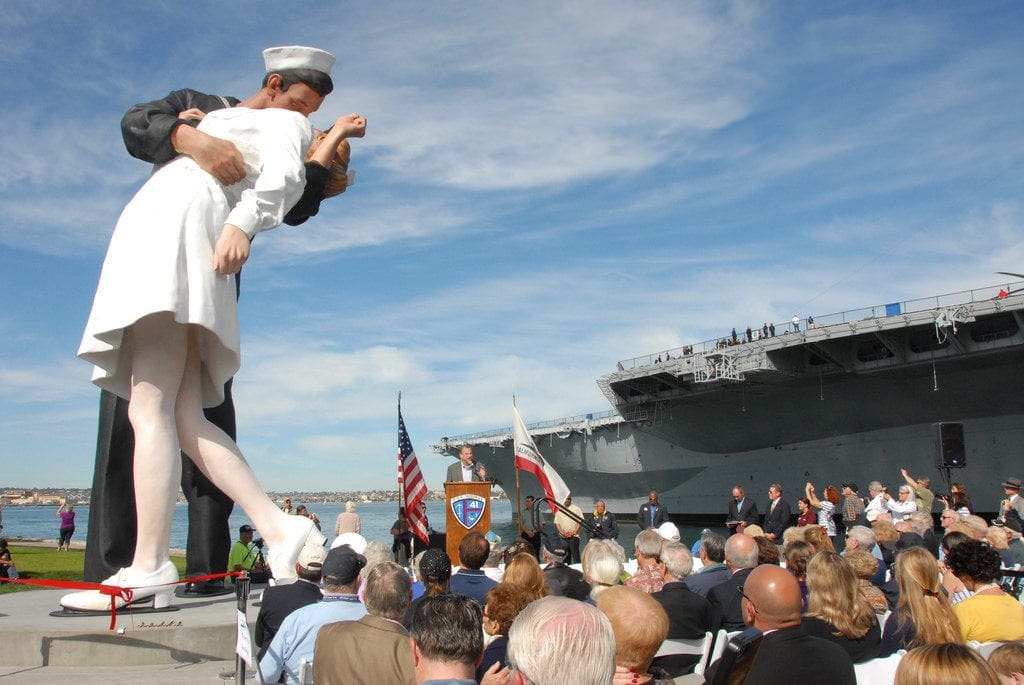
The iconic photograph of that brief encounter is now part of history, and a statue of that kiss stands undisturbed in Sarasota, Florida. Until now.
Early Tuesday, police encountered the statue known as “Unconditional Surrender” defaced with #MeToo spray-painted over the woman’s leg.
 At the time of the kiss that “ended” World War II, the sailor, George Medonsa, had been drinking and celebrating with Rita, his soon-to-be-wife, after the couple heard the news the war was over. As he headed to Times Square where many were gathered, Greta Zimmer Friedman, the dental assistant mistaken for a nurse, did the same.
Greta had arrived in the U.S. in 1939 from Austria. Her parents sensed danger and insisted she should leave. As she learned the war had ended, the young woman ran to the square, perhaps wondering what had happened to her parents. She later found out they were killed.
Still, in the moment of celebration and ecstasy that enveloped everyone gathered in Times Square, George saw Greta and only one thought crossed his mind: “I ought to thank her for her service.” But Greta had no idea of what was happening.
She was standing there for a few minutes, she told reporters, and “then I was grabbed.”
“That man was very strong. I wasn’t kissing him. He was kissing me.”
As soon as the kiss was over, both of them went their own separate ways, never seeing each other again until much later.
While Greta was clearly caught by surprise and obviously tense due to this incident, the drunken George didn’t mean any harm. And while Greta could have fought him, slapped him, or made a scene, she walked away. Perhaps thankful that that had been it. Now, that scenario is unthinkable. After all, women are taught that if a man even asks them out, it could be an assault.
At the time of the kiss that “ended” World War II, the sailor, George Medonsa, had been drinking and celebrating with Rita, his soon-to-be-wife, after the couple heard the news the war was over. As he headed to Times Square where many were gathered, Greta Zimmer Friedman, the dental assistant mistaken for a nurse, did the same.
Greta had arrived in the U.S. in 1939 from Austria. Her parents sensed danger and insisted she should leave. As she learned the war had ended, the young woman ran to the square, perhaps wondering what had happened to her parents. She later found out they were killed.
Still, in the moment of celebration and ecstasy that enveloped everyone gathered in Times Square, George saw Greta and only one thought crossed his mind: “I ought to thank her for her service.” But Greta had no idea of what was happening.
She was standing there for a few minutes, she told reporters, and “then I was grabbed.”
“That man was very strong. I wasn’t kissing him. He was kissing me.”
As soon as the kiss was over, both of them went their own separate ways, never seeing each other again until much later.
While Greta was clearly caught by surprise and obviously tense due to this incident, the drunken George didn’t mean any harm. And while Greta could have fought him, slapped him, or made a scene, she walked away. Perhaps thankful that that had been it. Now, that scenario is unthinkable. After all, women are taught that if a man even asks them out, it could be an assault.
At the time of the kiss that “ended” World War II, the sailor, George Medonsa, had been drinking and celebrating with Rita, his soon-to-be-wife, after the couple heard the news the war was over. As he headed to Times Square where many were gathered, Greta Zimmer Friedman, the dental assistant mistaken for a nurse, did the same.
Greta had arrived in the U.S. in 1939 from Austria. Her parents sensed danger and insisted she should leave. As she learned the war had ended, the young woman ran to the square, perhaps wondering what had happened to her parents. She later found out they were killed.
Still, in the moment of celebration and ecstasy that enveloped everyone gathered in Times Square, George saw Greta and only one thought crossed his mind: “I ought to thank her for her service.” But Greta had no idea of what was happening.
She was standing there for a few minutes, she told reporters, and “then I was grabbed.”
“That man was very strong. I wasn’t kissing him. He was kissing me.”
As soon as the kiss was over, both of them went their own separate ways, never seeing each other again until much later.
While Greta was clearly caught by surprise and obviously tense due to this incident, the drunken George didn’t mean any harm. And while Greta could have fought him, slapped him, or made a scene, she walked away. Perhaps thankful that that had been it. Now, that scenario is unthinkable. After all, women are taught that if a man even asks them out, it could be an assault.
War And The Freedom To Make Mistakes
Had the war never happened, George would have never witnessed nurses rushing to save hundreds of sailors injured and killed as a result of World War II. He would have never watched in awe as women dressed much like Greta ran to help men, some horribly burned, after two Japanese kamikaze planes smashed into USS Bunker Hill. By the same token, the world wouldn’t have witnessed the moment the U.S. dropped the atomic bombs on Hiroshima and Nagasaki, murdering over 200,000 Japanese people, many of whom were civilians, and hurting countless others over time thanks to the exposure to radiation. And if it hadn’t been for the war, 120,000 people of Japanese ancestry wouldn’t have been sent to concentration camps on U.S. soil, proving just how pitiful, disgraceful, and immoral government can be. Yet, what triggers today’s “activists” is a kiss coming from a drunken sailor who saw the realities of war unravel right before his eyes. That, a Facebook user wrote on the police’s official page reporting on the vandalism incident, is “oppression.” “Stop glorifying sexual assault,” another commentator suggested. In a time lawmakers get wide support from young voters for promoting pieces of legislation giving the federal government sweeping powers and reporters and left-leaning Americans bemoan the president for wanting to leave Syria, it isn’t shocking to see that a kiss, and not war, is what horrifies and offends people. With so many ready to use government force to impose their own cultural paradigms on those are unwilling to toe the line, it’s clear that giving government more excuses to expand its power is part of the agenda. And in no time, we won’t even be free to make mistakes — even innocent ones, like the one George made in 1945.Image credit: Port of San Diego.




 With annual deficits set to top $1 trillion within the next three years, the Journal warns that U.S. debt will total 93 percent of gross domestic product before 2030. But as America rakes in debt, investors don’t seem too worried. The Journal makes this argument by explaining that despite the high debt levels, interest rates remain low. As a matter of fact, as debt rose from 34 to 78 percent of the share of the GDP, treasury yields dropped from 4 to 2.7 percent. It’s almost as if the U.S. could do no wrong in the eyes of investors, and the greater the debt, the more confident they feel.
This reality, however, is a sham.
With annual deficits set to top $1 trillion within the next three years, the Journal warns that U.S. debt will total 93 percent of gross domestic product before 2030. But as America rakes in debt, investors don’t seem too worried. The Journal makes this argument by explaining that despite the high debt levels, interest rates remain low. As a matter of fact, as debt rose from 34 to 78 percent of the share of the GDP, treasury yields dropped from 4 to 2.7 percent. It’s almost as if the U.S. could do no wrong in the eyes of investors, and the greater the debt, the more confident they feel.
This reality, however, is a sham.



 Universal Basic Income Has Destructive Effects
While the study indicates that the unemployed were happier, this does not demonstrate that the experiment is a good idea. Universal Basic Income discourages innovation whereas it has the capacity to remove people from the workforce. It leads to a chilling effect. If I am satisfied by the monthly UBI, I then have no incentive to contribute to the market, which makes not only my life better, but also improves the lives of the people at large.
Universal Basic Income Drives up Prices
If a UBI is implemented among everyone, prices would skyrocket. Consider the incentives: if I am a landlord and I know everyone is making a certain amount of money per month, then I have every incentive to increase rent. This would make housing even less accessible to those in need. Decreasing prices, not a guaranteed income, has led to
Universal Basic Income Has Destructive Effects
While the study indicates that the unemployed were happier, this does not demonstrate that the experiment is a good idea. Universal Basic Income discourages innovation whereas it has the capacity to remove people from the workforce. It leads to a chilling effect. If I am satisfied by the monthly UBI, I then have no incentive to contribute to the market, which makes not only my life better, but also improves the lives of the people at large.
Universal Basic Income Drives up Prices
If a UBI is implemented among everyone, prices would skyrocket. Consider the incentives: if I am a landlord and I know everyone is making a certain amount of money per month, then I have every incentive to increase rent. This would make housing even less accessible to those in need. Decreasing prices, not a guaranteed income, has led to 
 Manufacturing in the United States has been in




 Shutting Down Waze: Power over Freedom, Money Over Safety
As mentioned above, Waze’s police notification makes drivers safer. There are dangerous speeds at which people do drive. If a GPS, however, notifies them that there is a law enforcement officer nearby, it encourages them to reduce their speed, thus putting them and other drivers in less danger. This also benefits individual officers as well. As people lower their speeds, the need for traffic control lessens. This frees up law enforcement’s time to pursue cases that have actual victims.
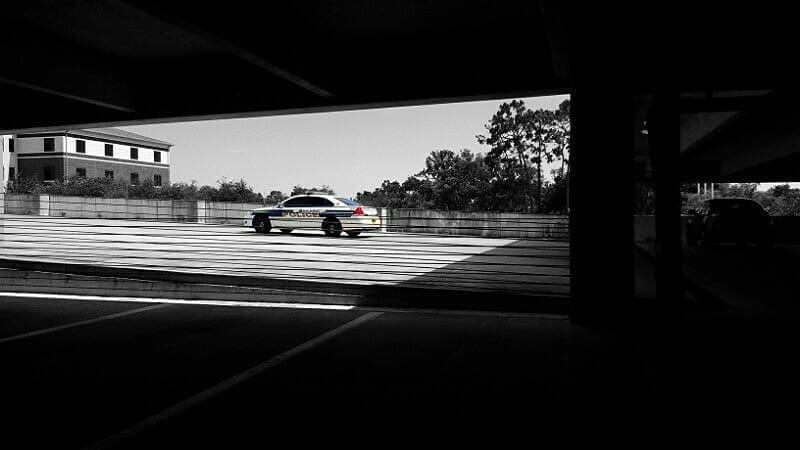
If the police really wanted to make the streets safer and allow for their officers to ensure that justice is served where it is most needed, they would spam Waze. NYPD would report that police were on every street corner. This would encourage people to slow down, drive sober, and drive as if their life and liberty depended upon it. This, however, is clearly not what NYPD wants.
Rather than protect the lives and liberty of the public, NYPD wants to make money. They want to meet quotas. Waze makes checkpoints and speed traps irrelevant to the intelligent driver. This is why they want to ban them. If the police trap someone in a checkpoint, the driver may fall victim to warrant-less searches and inspections. This leads to fines and other legal penalties. This is what NYPD actually wants. They want to shut down Waze because it makes it more difficult for them to generate revenue for the state.
The State: The Ultimate Fearmonger
Perhaps the bright side of this lawsuit is that the state is showing its true colors. “Protect and Serve” is a mantra to which NYPD seems to hold no dedication. While Waze has a function that keeps drivers free and makes them safer, the state wants to shut it down because they value power and revenue over life and liberty. While NYPD preaches fire and brimstone, claiming that Waze is allowing for drunk drivers to get away, the exact opposite is true. When an intoxicated individual knows that cops are present in highly populated areas, they tend to stay away.
It cannot be denied that Waze saves the people money. They save people time. They save people’s lives. The desire to shut such a service down is a blatant power grab that holds no logical bearing. One cannot support NYPD in this lawsuit while simultaneously claiming to be against big government.
If NYPD succeeds, they will not only trample upon the idea of “Protect and Serve,” they will also decimate the freedom of expression for drivers. Regardless of the consequences, I can tell other people about the location of police on the road, and no one has the right to stop me.
Shutting Down Waze: Power over Freedom, Money Over Safety
As mentioned above, Waze’s police notification makes drivers safer. There are dangerous speeds at which people do drive. If a GPS, however, notifies them that there is a law enforcement officer nearby, it encourages them to reduce their speed, thus putting them and other drivers in less danger. This also benefits individual officers as well. As people lower their speeds, the need for traffic control lessens. This frees up law enforcement’s time to pursue cases that have actual victims.
If the police really wanted to make the streets safer and allow for their officers to ensure that justice is served where it is most needed, they would spam Waze. NYPD would report that police were on every street corner. This would encourage people to slow down, drive sober, and drive as if their life and liberty depended upon it. This, however, is clearly not what NYPD wants.
Rather than protect the lives and liberty of the public, NYPD wants to make money. They want to meet quotas. Waze makes checkpoints and speed traps irrelevant to the intelligent driver. This is why they want to ban them. If the police trap someone in a checkpoint, the driver may fall victim to warrant-less searches and inspections. This leads to fines and other legal penalties. This is what NYPD actually wants. They want to shut down Waze because it makes it more difficult for them to generate revenue for the state.
The State: The Ultimate Fearmonger
Perhaps the bright side of this lawsuit is that the state is showing its true colors. “Protect and Serve” is a mantra to which NYPD seems to hold no dedication. While Waze has a function that keeps drivers free and makes them safer, the state wants to shut it down because they value power and revenue over life and liberty. While NYPD preaches fire and brimstone, claiming that Waze is allowing for drunk drivers to get away, the exact opposite is true. When an intoxicated individual knows that cops are present in highly populated areas, they tend to stay away.
It cannot be denied that Waze saves the people money. They save people time. They save people’s lives. The desire to shut such a service down is a blatant power grab that holds no logical bearing. One cannot support NYPD in this lawsuit while simultaneously claiming to be against big government.
If NYPD succeeds, they will not only trample upon the idea of “Protect and Serve,” they will also decimate the freedom of expression for drivers. Regardless of the consequences, I can tell other people about the location of police on the road, and no one has the right to stop me.