












Beta

Password Reset Confirmation

If an account matching the email you entered was found, you will receive an email with a link to reset your password.

Welcome to our Beta

The Advocates of Self-Government is preparing a new experience for our users.

User Not Found

The username/email and password combination you entered was not found. Please try again or contact support.

Skip to main content

Quizzes & Apps

Articles

Month: September 2019

Can Bitcoin Keep Central Banks in Check?

Is Bitcoin the antidote to fiscal and monetary irresponsibility? Certain individuals in the financial space, like cryptocurrency fund executive Travis Kling, believe that Bitcoin is one of the biggest game-changers in monetary economics. In his view, Bitcoin has developed into a hedge that could protect people’s wealth in the current economic climate which looks increasingly unstable heading into 2020 and beyond. During a CNN interview, Kling argued that Bitcoin’s properties, such as its decentralized structure and limited supply, make it an innovative insurance policy against the volatile fiscal and monetary policies of governments. Kling sees Bitcoin’s importance in the context of current events. He explains:
Now is an incredibly interesting time from a global macro perspective and […] it appears that crypto has been created for such a time as this. With what we have in terms of monetary and fiscal policies from central banks and governments, big tech overreach, government overreach, data privacy issues that are coming to the center of the collective consciousness.
As a “non-sovereign, hard cap supply, global, immutable, decentralized digital store of value,” he believes Bitcoin shines above other crypto assets, which makes its value proposition rather strong in a time when digital currencies are gaining more interest from the public. Indeed, Bitcoin provides a unique opportunity for those interested in monetary economics. Only ten years old, the cryptocurrency is changing the way people view the concept of money. The jury is still out on whether Bitcoin will succeed and become a legitimate competing currency against fiat currencies. Nevertheless, the beauty of this experiment is that it will sink or swim based on the decisions of private actors, and not government coercion. The 20th century was notorious for government power grabs, from matters of taxation to bureaucratic overreach. It was no coincidence that central banking arose during this time period, enabling unprecedented growth of the state, which was most apparent during the New Deal and the Great Society. When politicians had the power of inflating the money supply, they could finance extravagant government programs without having to turn to the politically unpopular means of direct taxation. Interestingly enough, money-printing eventually leads to the hidden tax of inflation, which can become devastating once it fully surfaces. Just ask a country like Venezuela — who hasn’t witnessed inflation below the double digits since 1983 — what it’s capable of doing to an economy. This is why cryptocurrencies are so important. Their introduction can help educate people on why money should be kept out of the state’s hand. At the very least, this dynamic could guide people back to embracing gold— a commodity that has historically served as sound money for centuries. Time will tell if cryptocurrencies become commonly accepted. Their arrival has at least gotten people asking questions about what constitutes sound money and why governments should have a monopoly on the issuance of money. We can only hope that these currencies succeed and correct the many political and economic errors of the 20th century.


America Needs More Competition in Schooling

The nomination of Betsy DeVos as Secretary of Education during the Trump administration has opened up the school choice conversation like never before. Although there hasn’t been much reform made at the federal level, state and local level governments are still on the move. John Stossel highlighted this in the case of Philadelphia. He is correct that with most goods and services “you get to shop around, but rarely can you do that with government-run schools.” The case he covered dealt with Elaine Wells, a Philadelphia mom who was concerned about her son’s safety at the public school he was currently attending. To improve her son’s education experience, Wells tried to enroll him at a charter school through a school lottery. According to her, the city of Philadelphia “rejected 75% of the applicants.” Thankfully for Wells, she was able to get her son into a charter school. However, for many inner-city parents, these kinds of choices are not available. Public schools in inner cities often present very dangerous scenarios for young students. From gang violence to the illicit drug trade, these environments can put otherwise promising students on the wrong path. Much to the dismay of students, education bureaucrats don’t realize this. Instead, they believe in throwing more money at the problem in order to fix it. For example, Stossel notes that “Philadelphia schools already spend $18,400 per child” which totals out to approximately a half a million dollars being spent in the average classroom. Despite such spending, not much of it goes towards teachers. Instead, it winds up in the bureaucracies’ pockets. Similar dynamics are witnessed in the Baltimore City Public Schools, which spends about $16,187 per pupil, yet only 15 percent of students were able to pass the state’s English test. Even with these facts considered, public schools around the nation will continue to receive boatloads of money irrespective of their lackluster performance. In 2017 alone, all states and the District of Columbia spent $12,201 per student, representing a 3.7 percent increase from 2016 when spending per pupil was $11,763. What we’re witnessing here is the product of our society treating education like a human right, thereby making the state the principal organization that provides this service. By using a flawed understanding of what rights actually are, the government has appropriated a function that best belongs in the market.  It should be the market and its profit and loss system that determines how a service like education is provided. By distorting this system through state control, consumers are denied quality services and producers have no real incentive to provide a service that is in line with consumer demands. This is a lose-lose for all parties involved…well, unless you’re part of a teachers union or a bureaucrat — someone who still gets paid big bucks regardless of performance. Charter schools and other school choice policy variants are solid first steps in introducing some form of competition into the education sector. Ideally, the entire education system would be privatized and subject to market forces — just like every other good and service in the economy. When people’s mindsets on education policy change, we can then move towards a market-based system that harmonizes teacher and student interests.

Millennials & Gen Z Mired in Debt, Oblivious to Reasons Why

Millennials are blamed for a lot these days. But when it comes to debt, they are not the only group of young Americans suffering. They are also not the only group negatively impacted by the government’s actions. Data released by Northwestern Mutual shows that both millennials and young Americans known as Generation Z carry large amounts of personal debt. While millennials owe an average of $27,800, members of Generation Z owe $14,000 on average. Millennials also have less accumulated wealth than baby boomers did at the same age, despite being better educated than their elders.  But while young Americans feel guilty about their debt, and many believe they have no choice due to the high cost of higher education, they might not be aware of all the factors contributing to their situation. Starting on the Wrong Foot Millennials came of age during a time of intense government involvement in the economy. As many were being born in the early 1990s, the federal government was increasing the amount of money students could borrow from the federal loan program. Additionally, students categorized as “in need” were also given greater access to college funding. This helped boost the cost of higher education, as it created a greater, yet artificial, demand for college. By the time millennials reached college age, the cost of higher education skyrocketed. But while student debt accounts for the majority of debt held by millennials, that’s not the only issue keeping them from becoming richer. With the Great Recession, the Federal Reserve took steps to warm up a crumbling economy with cheap credit and the expansion of its balance sheet. This created a greater supply of cash that, over a very short period of time, helped to further devalue U.S. currency. And it is this devaluation that helped to “[squander] real wealth” in America, as economist Frank Shostak explained. Furthermore, as these young Americans were entering the workforce, America had already gone through years of slow income growth brought about by the recession. This set up an environment that made wealth accumulation difficult. As you can see, millennials and members of Generation Z had the odds stacked against their favor from the very beginning. While it is important for young Americans to learn about the dragging effect of debt over time, and to take steps to lower the amount they need to borrow to get on with their education, it is also true that actions taken by the government made their lives harder. Unfortunately, we see few if any young people discussing these matters. Many even urge the federal government to become more involved in the process so that more young people can access higher education. Others support policies that effectively price out young and unskilled workers from the job market. It is high time that those who are more harshly impacted by the government’s mindless meddling in the economy become advocates for sound markets.

Africa Needs Free Markets to Grow

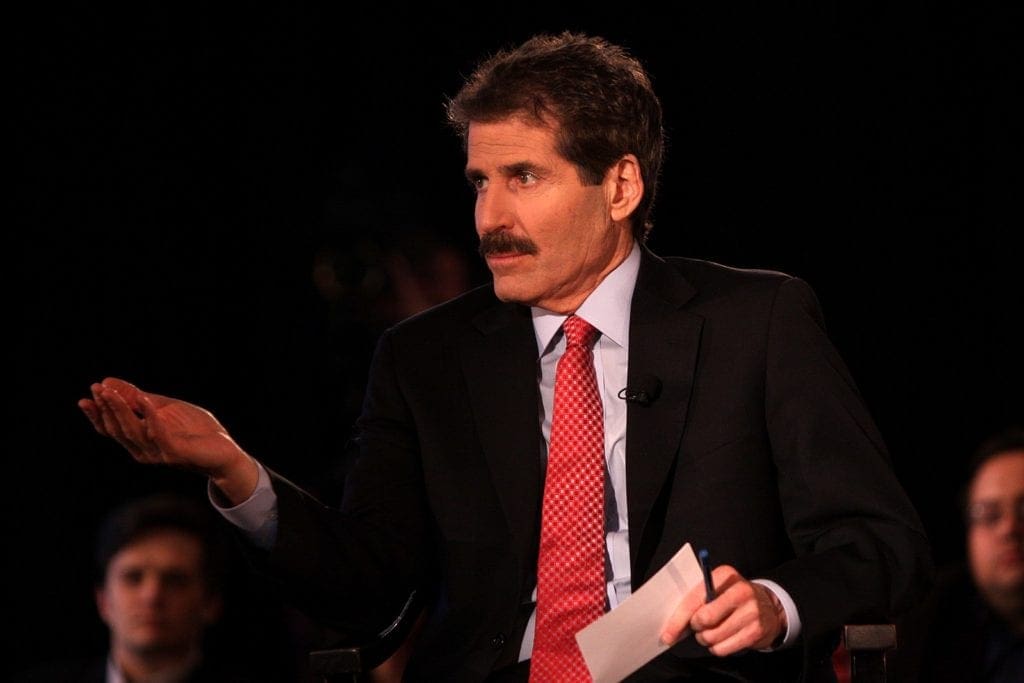
Renowned TV pundit and staunch libertarian John Stossel recently wrote an excellent column about Africa and poverty. He asked a very important question that most economists have long had trouble answering:

“Why does most of Africa stay poor while other parts of the world prosper?”

Common arguments for Africa’s poverty include climate, colonialism, and racism. While these factors may contribute to Africa’s underdevelopment, they don’t touch on the elephant in the living room — government intrusion in the economic activities of individuals — a factor present throughout Africa that persists even into the present. Magatte Wade, a Senegalese businesswoman, understands this. Wade believes that there is too much regulation in African countries such as Senegal. “Once you hire someone, good luck getting rid of them for any reason,” Wade stated. The Senegalese government must approve every firing. Wade adds that “the tax code is so complicated … worth at least two or three truckloads of paper.” The African entrepreneur set up a lip balm company that uses certain ingredients that are not made in Senegal. In turn, they must be imported. However, the Senegalese government imposes tariffs to supposedly “protect” these industries. What actually happens is that these products become more expensive for consumers. “Some have a 70 percent import tariff on them!” she exclaimed. To escape such taxes and regulations, people end up bribing public officials, which is commonplace in many developing countries. Corruption should be condemned, but it’s not the root cause of the problems in Africa. Wade correctly asserts that “corruption is a natural consequence of stupid, senseless, idiot laws.” She even argued that there would be as much corruption in America if taxes and regulations were similar to those of Senegal. Thankfully, America still has a simple institutional framework that favors private property and basic individual freedoms like the freedom of association. This is what allows America to prosper, while other institutionally flimsy countries flounder. In her view, the “only way to fix corruption is to simplify.” Wade has a point. Senegal is currently ranked in 117th place according to the Heritage Foundation’s Index of Economic Freedom. The country receives especially low marks on property rights, labor freedom, business freedom, and financial freedom. Given Senegal’s abysmal scores on this index, it’s small wonder why Wade is complaining. Countries like Senegal are not necessarily condemned to economic stagnation and corruption. They do have viable alternative models on the continent that can serve as sources of inspiration. Take, for example, Botswana. Unlike other African countries, it rejected foreign aid and did not implement domestic redistributionist schemes. Instead, it focused on free trade, strengthened its support of property rights, and built sound institutions based on the rule of law. This allowed it to exploit its vast diamond resources and become one of the most dynamic economies during the 1960s and beyond. Africa should avoid the conventional wisdom coming out of organizations like the IMF, OECD, or U.N. Most of their proposals involve some form of government dominance over the economy and reliance on foreign aid. Instead, they should emulate Botswana and liberate their economies from government bondage. At the end of the day, most countries’ problems come from within. Free people acting voluntarily in the market, not sheltered bureaucrats, are what propel countries toward economic prosperity.

Bill Weld Demands Trump Face Death Penalty, Proving Libertarian Comedian’s Point

Bill Weld, the ex-Libertarian Party vice presidential candidate, is pushing for President Trump to face the death penalty over a phone call to Ukraine’s president. But all Weld will accomplish is prove comedian Dave Smith right about libertarian strategy. In a recent debate, Smith vanquished the Libertarian Party chairman, who defended the 2016 Gary Johnson and Weld ticket. Smith argued the Libertarian Party should never again nominate such milquetoast candidates, but rather stick to principled convictions even if that means losing access to mainstream media outlets. However, despite his clarity of political thought, Smith could not have foreseen that in less than two weeks time, Weld himself would make Smith’s case even stronger. Weld, now running a primary challenge against Trump, said on Monday that Trump committed “treason pure and simple.” “The penalty for treason under the U.S. code is death,” he continued, in an appearance on MSNBC’s “Morning Joe”. The MSNBC hosts giggled at the prospect when he doubled down on it as “the only penalty.” Now, just for a moment, let’s assume Weld is correct that Trump committed treason during a phone call to Ukrainian president Volodymyr Zelensky. Isn’t it a little transparent here that Weld is whipping up support for himself while goading viewers into bloodthirst? Weld continued to devilishly play up the fantasy drama, allowing Trump the possibility of a “plea deal.” In the same breath, Weld would assure us that Trump is the unpresidential one. On Wednesday, the full transcript of Trump’s call with Zelensky was released. Trump is accused of withholding military aid to Ukraine, on the condition that Democratic presidential candidate Joe Biden be investigated by the country. As vice president, Biden pushed Ukraine to fire their top prosecutor, who had been investigating an energy company headed by Biden’s son, Hunter. As Weld broods over how to once again get his face on TV, House Speaker Nancy Pelosi (D-California) has approved an impeachment inquiry into President Trump. Perhaps Weld should listen to Smith and take as strong a stand against the Federal Reserve or forever wars. But, he won’t, because even if it got him on TV and a few extra votes, it would mean having to admit he was wrong about so much for so long. Weld, the “libertarian” who all but endorsed Hillary Clinton, “the butcher of Libya,” used the Libertarian Party in 2016 to cling to any semblance of relevance. He’s not exactly being innovative in 2019, jumping back in with the Republicans as he pursues the same vanity. The Welds of the world will always exist, but they don’t deserve to carry the banner of libertarianism.

John Stossel Commends Trump for Deregulation

Probably one of the more underrated aspects of the Trump administration has been his deregulation agenda. His efforts to scale back the administrative state have even earned him praise from TV pundit John Stossel. Stossel has been a staunch libertarian for decades and one of the strongest advocates for small government in America. Receiving praise from him is no small feat. He correctly noted in one of his latest columns that Trump’s experience as a developer makes him sympathetic to deregulation. Businessmen, big and small, must put up with the U.S.’s burdensome regulatory state. With Trump in office, there was at least a chance to hack away at these barriers. However, politics has shown time after time that talk is cheap. Stossel was right to be skeptical at first. The journalist aptly highlighted that “Republicans often talk deregulation but then add rules. People called President George W. Bush an “anti-regulator.” But once he was president, he hired 90,000 new regulators!” Nevertheless, Trump hired numerous officials who were skeptical of regulation such as Mark Calabria to help reform certain aspects of housing regulations. Trump also scored some notable deregulation victories by repealing an Obama-era plan to place franchise businesses like McDonald’s as single businesses. Grover Norquist noted that this policy was a boon for trial lawyers. “The trial lawyers want to be able to sue all of McDonald’s, not just the local McDonald’s if they spill coffee on themselves,” claimed Norquist. “And the labor unions want to unionize all McDonald’s, not just the one store. That would have been a disaster.” The President’s FCC also repealed the Obama administration’s “net neutrality” policies which would have greatly restricted internet providers’ freedom to charge prices at market rates. Despite marketed as a way to protect the Internet from predatory companies, the regulations that “net neutrality” entailed would have actually hurt smaller internet service providers and limit competition. A bad situation overall for consumers. Trump’s most notable reform during his administration was his executive order which eliminated regulations at a 2:1 ratio. This has helped businesses of all sizes in America get some breathing room to operate. Like the current tax system, the administrative state is all-encompassing in its reach and curtails the formation of new businesses and investment opportunities that America needs to grow more prosperous. Estimates from the Competitive Enterprise Institute (CEI) put th ecost of federal regulations at $1.9 trillion— a steep cost that American consumers and businesses must bear in the boardroom and at the store counter. These de-regulatory reforms are good first steps. For that reason, Trump should continue breaking the shackles of the administrative state by cutting off funding to bureaucracies and repealing bad laws. Our bloated government is in desperate need of a die

Weed Does Not Need to be Heavily Regulated by the State

Marijuana reform has been one of the bright spots for liberty advocates over the last decade. Now over 90 million Americans live in states with legal marijuana. Some red states like Texas are witnessing various urban counties de-emphasize the enforcement of cases involving the possession of small amounts of drugs. The U.S. government has even demonstrated reluctance in prosecuting and incarcerating people using marijuana in states with legal or medicinal marijuana policies. This leaves many hopeful that the federal government will eventually craft policies that allow states and municipalities to handle drug-related matters instead of D.C. agencies. With all these developments considered, it’s becoming clear that marijuana legalization is an idea whose time has come. However, there are still some obstacles to true drug liberalization. And they’re ironically coming from marijuana legalization advocacy organizations themselves. In a recent statement, the executive director of the National Organization for the Reform of Marijuana Laws (NORML), Erik Altieri, criticized several comments from the U.S. Surgeon General regarding marijuana use. He then proceeded to make a recommendation:
The Surgeon General’s time would be better spent advocating for a legally and tightly regulated cannabis market – one in which we educate Americans about the potential harms and benefits of cannabis through evidence-based public education campaigns – rather than through fear-mongering.
This confirms many of the fears that liberty advocates have had about the drug reform movement. Although political reality dictates that we can’t have a fully liberalized drug market right off the bat, we should remain steadfast in our efforts to push for full-fledged liberalization. After all, most marijuana taxes are quite high and give many fiscally irresponsible state governments excessive funds. On top of that, many of the regulations imposed on the marijuana industry favor the first movers in the sector who tend to have more capital and funds to help shoulder the costs of regulatory compliance. Nevertheless, we should still be thankful we’re moving away from the prohibitionist mindset. Far too many people have become casualties of the prison-industrial complex thanks to the drug war. On top of that, so much money has been spent (approximately $1 trillion) fighting a war that has produced no victory except for those who are in charge of the drug enforcement bureaucracy. But we should never lose sight of our ultimate goal for drug reform — the separation of drugs and state. Civil society and market mechanisms will bring more humane solutions to drug use and some of its negative consequences. The past century of drug policy clearly shows that the state is not the entity to tackle drug-related problems. If anything, it actually makes things worse.

Why The Climate Strike Movement Will Fail Just Like the Women’s March

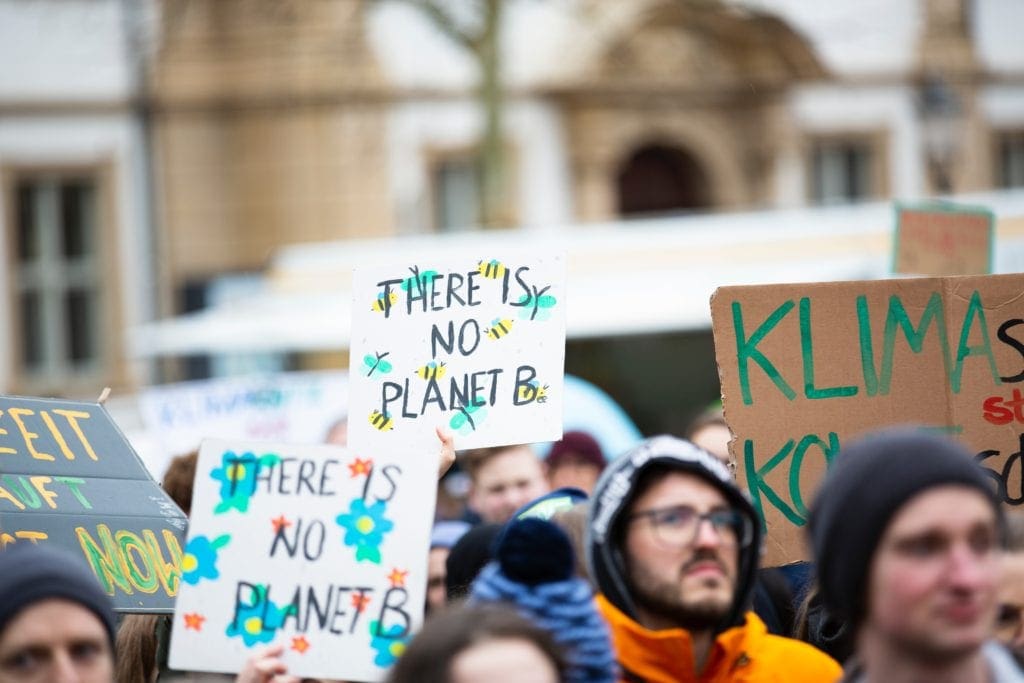
The climate strike movement is a facade built on a scam built on a fraud. Beyond giving school children a get-out-of-jail free card, it will not accomplish anything except show how not to do politics. Does anyone even remember the Women’s March at this point? They just couldn’t keep it together at their third-anniversary march in January 2019. Not just because they excluded pro-life women, but largely due to charges of anti-Semitism within the national leadership. Of course, the animating principle of hatred for President Donald Trump could only take them so far anyway. History will repeat itself for the climate strike movement, although this history will likely be much shorter. But the climate change issue attracts young people! It’s based in science and transcends conventional politics! …These are lies, and they are only the tip of the iceberg (too soon?) that will melt and swallow this movement. Regrettably, kids will have to stay in school until they come up with a better excuse to ditch. Godspeed to them. Seriously, though, don’t be fooled by their feigned passion for protest. The gun control walkouts are at least based on school shootings, whereas in this case, there’s nothing organic about the so-called strikes. For a truly grassroots protest at school, check out these students who called out the gun control grifters exploiting their candlelight vigils for shooting victims. Now, it should be noted that a May 2019 poll of 18-36 year olds found that climate change was the top issue for 14 percent of Democrats. Health care and income inequality trailed by 3-4 points. The problem, however, is that this ranking closely reflects what white respondents said. Young African Americans ranked climate change much lower than their top issue— racism. Young “Latinxs”, the poll’s term for Latinos, put immigration as their top issue. This is significant under the current conditions of left-leaning politics. Minority voices may gain more support for their issues, limiting the growth potential of support for climate change activism. Moving past the youth front, consider the mixed messages and even latent infighting during the climate strikes on Friday. Witness the carnivore shaming from vegans. How about those glomming on to the protests who have different agendas? Some raise the Antifa flag, others blame white supremacy, or promote total socialism as the only solution. Greta Thunberg, the face of the movement, isn’t much of a voice for it. At the climate strike in Lower Manhattan’s Battery Park, she warned, “If you belong to that small group of people who feel threatened by us then we have some very bad news for you, because this is only the beginning. Change is coming whether they like it or not.” She used harsher language at the United Nations on Monday. She’s boasted that the protest across the globe drew 4 million participants. This is, to borrow an overused term, unsustainable. No word as of this reporting on how much cardboard, ink, and paint were trashed as a result. Former director of the Danish government’s Environmental Assessment Institute, Bjørn Lomborg, who is also the president of the think tank Copenhagen Consensus Center, helps show why. Lomborg points out that the Paris climate accord, which Trump exited, would cost the U.S. between $1 trillion and $2 trillion. Electricity prices would go up, hurting the poor, increasing poverty. All for what? Carbon emissions would be reduced by “just 1 percent of what politicians have promised,” Lomborg writes. Libertarians and conservatives frustrated with the climate change issue should dismiss the protesters and, of course, reject the empty political promises. But more importantly, they ought to illustrate the issue as one driven by global corporate elites, and remind the leftists that the biggest polluters, China and the U.S. military, aren’t being pressured to change their actions.

Bernie Sanders’ Workplace Democracy Plan is a Power Grab for Big Labor

Bernie Sanders wants to bring democracy to the workplace. Well, at least that’s what his new labor plan intends to do. Labor Day is past us, but 2020 presidential candidates used the lead-up to this holiday to put forward their demagogic labor plans. Like his presidential campaign in 2016, Bernie Sanders is using his current presidential run to advance his ideas of activist government. After rolling out his Workplace Democracy Plan, Sanders has positioned himself as the pro-worker candidate of the 2020 elections. This plan has earned him praise from Barry Eidlin, a writer at  Jacobin Magazine, who described Sanders’s labor platform as “the most serious, comprehensive, and equitable plan for promoting workers’ rights ever proposed by a major US presidential candidate.” What makes many labor activists enthused about Sanders’ plan is its abolition of right-to-work laws and the consolidation of public sector unions. Let’s begin with right-to-work. In an ideal world, the National Labor Relations Board and the many labor laws it enforces would not exist. Instead, employees and employers would be free to associate and negotiate working conditions on a voluntary basis. However, the NLRB isn’t going anywhere and the federal government has not made any effort to get out of the business of regulating labor. Faced with these realities, certain states have taken matters into their own hands by passing right-to-work laws, which gets rid of the payment of union dues as a condition of employment. These laws are present in 27 states. This reaffirms the time-honored principle of freedom of association and allows workers to make their own choices without being coerced by unions. Such policies not only deny politically-connected unions funds but also tend to create more dynamic economic environments for workers. Right-to-work states tend to outperform union states in areas related to private-sector job growth and the increase in disposable income for workers. However, under Sanders, all of this could come crashing down like a pile of bricks. But that’s not all. Sanders wants to reinvigorate public sector unionization by signing the Public Service Freedom to Negotiate Act of 2019 which would “guarantee the right of public employees to organize and bargain collectively for better wages, benefits, and working conditions.” This sounds great and all, but public-sector unions are a totally different animal. Unlike their private-sector union counterparts, public sector union negotiations always involve a third-party—taxpayers. Their standard operating procedure is to hold taxpayers hostage with the sole intent of raking in as many government benefits as possible. All at the taxpayer’s expense. States like California have already been brought to near fiscal collapse because of these policies. A national public-sector unionization plan would only magnify this problem and put more taxpayers on the hook for billions of dollars in unfunded liabilities. In a time when American workers have witnessed major labor freedom victories such as Janus v. AFSCME — which re-asserted First Amendment rights by protecting non-union government workers from having to pay union fees as a condition of working in public service — Sanders’ labor plan would be a step backward for American workers. The key to enhancing the prosperity of America’s working classes is by increasing economic freedom, not government control.

Beto O’Rourke Threatened the Rights of All

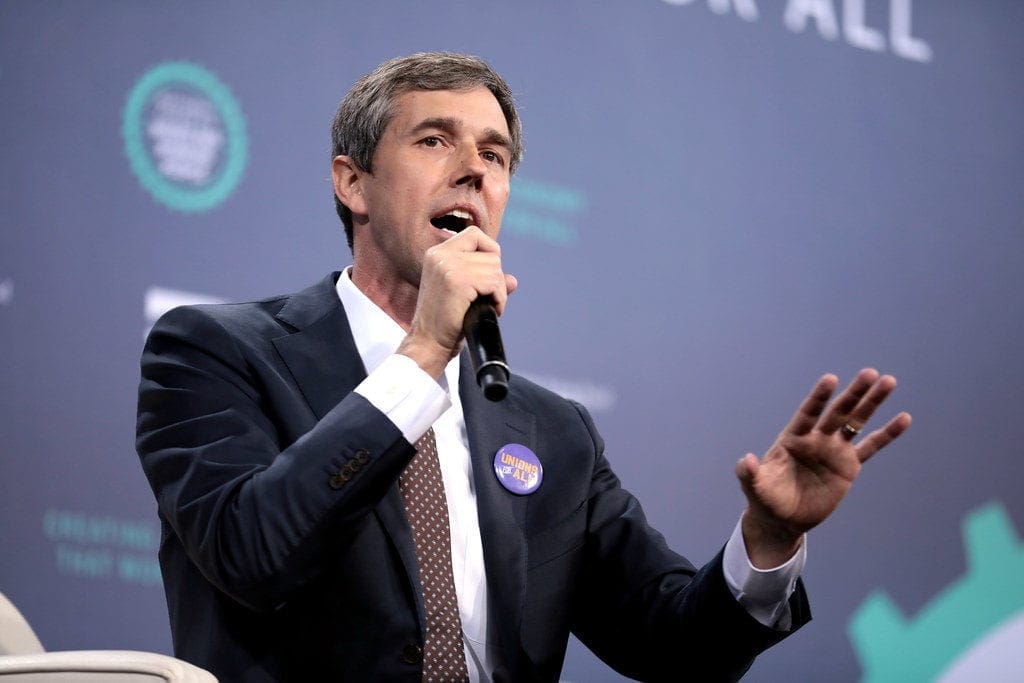
Presidential hopeful Beto O’Rourke explicitly called for confiscating guns in the democratic debates. Briscoe Cain, a Texas lawmaker, sent a tweet in response that said, “My AR is ready for you Robert Francis.” O’Rourke interpreted this as a death threat, but he sent out his own threat that night. When O’Rourke said he will take the justly acquired property of others, there was an implicit threat of death in that statement.

Death Threats Most Frequently Come from Government

There is an ultimate facet of enforcement to every law. Every edict of the state comes with a death threat. If you resist the government and its edicts, the government will retaliate either violently or with the threat of violence. This is the nature of government. It is inherently a monopoly on the use of force. IfO’Rourke insists on taking your guns, he insists on killing those who resist. Government agents play the victim card quite well. By having the mindless masses cheer for him, O’Rourke is claiming to have a license to do this. The fact is, however, the government has no different moral code from the people. If I attempt to forcibly take your guns and you shoot me in that struggle, you are acting in self-defense. The person making the threat, in this example, is me. If I try to take your car, and you defend yourself, that does not make you a criminal. Rather, it makes the carjacker a criminal.

A Word on Hypocrisy

Beto O’Rourke has openly called Donald Trump a white supremacist. Whether President Trump is or is not a white supremacist is of no concern to this article, but let’s just suppose he is, for the sake of argument. If Donald Trump is a white supremacist, then O’Rourke is openly advocating for revoking the ability of minorities to defend themselves from the government that is run by a white supremacist. Remember, the government is force. If a white supremacist is at the helm of the state, then nonwhites are a likely target of government force. Any gun law, even “Red Flag“ confiscations, is especially dangerous for minorities when a white supremacist in power. While abhorrent, hate has no inherent power. When a hateful person is the president, however, it has enough power to ruin the lives of the marginalized. If O’Rourke truly believes Trump is a white supremacist, then he is actively encouraging him to oppress minorities by disarming them. So no, the Texas lawmaker did not send O’Rourke a death threat. Rather, O’Rourke’s policy carries an implicit threat of violence against all gun owners. He also sent a death threat to every individual in the country who owns an AR-15 or AK-47, two of the most common rifles in the U.S. Since government action is backed by the barrel of a gun, O’Rourke is far more pro-gun violence than gun rights.

Robert Mugabe’s Death Leaves Behind a Legacy of Economic Despotism

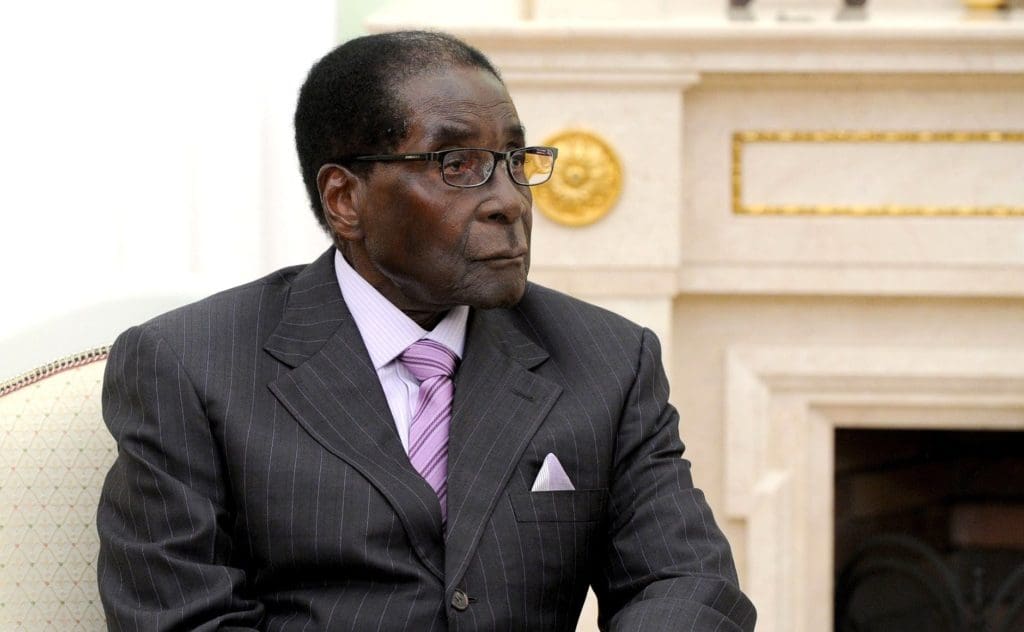
On September 6, 2019, Robert Mugabe died in Singapore — a rather ironic place of death considering Singapore’s economic freedom and Mugabe’s legacy as one of Africa’s most despotic leaders during the last three decades. From 1980 to 2007, he was the leader of Zimbabwe and established himself as an icon for third world socialist activists worldwide. Initially, Mugabe took his time establishing himself as an economic demagogue, making political consolidation of Zimbabwe his top priority during his early years in power. He started his radical redistributionist campaign in 2000 by seizing white farms to allegedly “correct” injustices that lingered from the colonial era. To say that these violations of basic property rights were a disaster would be an understatement. A report from the Commercial Farmers Union highlighted how agricultural production fell by $12 billion from 2000 to 2009. The economic distortions from these programs resulted in the collapse of Zimbabwe’s once illustrious agricultural sector. Furthermore, Mugabe politicized Zimbabwe’s central bank, which allowed him to pursue some of the most expansive easy money policies seen in the world at the time. As a result, hyperinflation rocked the country which prompted it to dollarize and use the American dollar as its main currency after the Zimbabwe dollar was turned into Monopoly money. Curiously, present-day Venezuela mirrors Zimbabwe in terms of its economic policies and episodes of hyperinflationary collapse that have resulted from them. Both of these countries serve as lurid examples of what happens when private property is not respected and excessive political centralization takes root. As a result of the economic wrecking ball that Mugabe applied to Zimbabwe, millions of Zimbabweans left the country for more stable economic environments. Even though Mugabe was deposed in 2017 and is now deceased, the future of Zimbabwe looks uncertain. Emmerson Dambudzo Mnangagwa, the current president of Zimbabwe, has not made any moves so far that indicate Zimbabwe will be moving toward a free market direction. Inflation still has not been tamed, with economist Steve Hanke claiming that inflation stood at a whopping 611 percent in August. The future looks quite bleak for Zimbabwe. However, it does not have to be condemned to misery. Its neighbor Botswana offers a positive example of how a market economy can generate economic growth. Starting in the 1960s, Botswana broke free from the misery that characterized the rest of sub-Saharan Africa by establishing solid property rights, maintaining the rule of law, and not depending on foreign aid. By relying on the comparative advantage of its diamond production, Botswana became one of the fastest-growing economies on the globe and established itself as arguably the most stable country in the African continent. For economic inspiration, Zimbabwe should look southward. There’s no reason for it to continue the errors of the past.

Thanks, Beto

In last Thursday night’s circus, Beto O’Rourke showed the left’s true colors about guns. During his performance, he said, “Hell yes, we’re going to take your AR-15s and your AK-47s.” This led to the crowd giving O’Rourke a standing ovation. This statement also gained mass support from the left. While any advocate for freedom is right to be alarmed by this sentiment, one must also be relieved. In fact, O’Rourke has done more for gun rights than so-called conservatives like Sen. Lindsey Graham and Rep. Dan Crenshaw ever could with their advocacy for “red flag” laws. As gun grabbers say “no one is coming for your guns,” they stood and cheered for an authoritarian call for taking our guns. They exposed themselves.

Beto O’Rourke: An Unintentional Hero for Gun Rights

While so-called moderates call for universal background checks (which is a form of gun registration), they claim that they wouldn’t support gun confiscations. These same people, however, cheered for O’Rourke’s call for just that. This shows how dishonest the left is. Know that when they say they just want “moderate” reforms, they want total control of your life. O’Rourke’s rhetoric, however, has an even more insidious goal. When he talks about full-blown confiscation, he is trying to make a new “assault weapons” ban seem like a moderate position. In politics, the extremes define the middle. Fortunately, O’Rourke’s sentiment will surely experience blowback. Gun rights advocates are now sure to realize exactly how important this fight is. With this new extreme from the left (and overwhelming public acceptance), the gun rights movement now has a golden opportunity to stand up and fight. Moderates now have the chance to see how dangerous any gun law truly is. It is incredibly obvious now that any attempt at reform is an effort to move toward confiscation.

Time to go on the Offensive!

Since O’Rourke wants to take our guns, it’s time we fight back. Not only should we stop his policies, we also must stop “red flag” laws. We must also stop fighting for the status quo. Advocates for gun rights must fight to repeal the current National Instant Criminal Background Check System (NICS). We need to secure the right to bear arms for people who have “lost” that right in the court system. We also need to repeal the entire National Firearms Act. Every current gun law has been a step in the direction of confiscation, and O’Rourke showed that in the most blatant way possible: calling for the ban of the most popular rifle in the United States. So Beto, thank you! Thank you for proving the gun rights movement all the ammo it needs to mobilize in the direction of freedom, not just stopping new tyranny.