















How Becoming a Father Made Me Rethink My Libertarianism
If an account matching the email you entered was found, you will receive an email with a link to reset your password.
The Advocates of Self-Government is preparing a new experience for our users.
The username/email and password combination you entered was not found. Please try again or contact support.


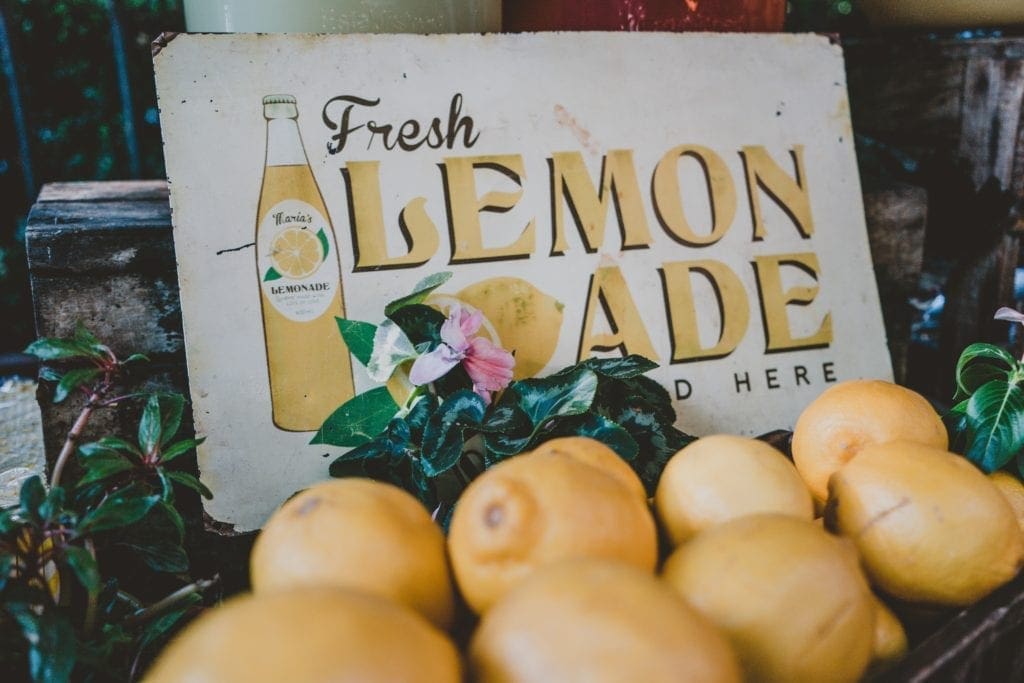 Shutting Down Lemonade Stands is an Insult to Freedom
As an individual, I have the right to own property. I have a right to start a business so people can voluntarily purchase my products/services, and I don’t need your permission to do so. This also applies to children. Young minds are quite creative so long as no one suppresses it. It only makes sense that children use their creativity to make some spare money.
When the state shuts down a child’s ventures, however, it shows the true cruelty of government. They say you have to teach them while they’re young, so the government teaches children to obey or pay the price. This is not freedom. Rather, this is the rule through fear. It is the government claiming ownership of children.
The Costs of Permits Exterminates Young Entrepreneurs
As the government tears down another child’s dreams, one must wonder what the course of action this child can make is. If they want to continue, they will need a permit that can cost them hundreds of dollars and hours of their time. For small ventures like lemonade stands, the child does not have enough money to buy the permit and would not make enough money to warrant paying for it even if the child could. In other words, the government is teaching your child that business is not worth it.
Shutting Down Lemonade Stands is an Insult to Freedom
As an individual, I have the right to own property. I have a right to start a business so people can voluntarily purchase my products/services, and I don’t need your permission to do so. This also applies to children. Young minds are quite creative so long as no one suppresses it. It only makes sense that children use their creativity to make some spare money.
When the state shuts down a child’s ventures, however, it shows the true cruelty of government. They say you have to teach them while they’re young, so the government teaches children to obey or pay the price. This is not freedom. Rather, this is the rule through fear. It is the government claiming ownership of children.
The Costs of Permits Exterminates Young Entrepreneurs
As the government tears down another child’s dreams, one must wonder what the course of action this child can make is. If they want to continue, they will need a permit that can cost them hundreds of dollars and hours of their time. For small ventures like lemonade stands, the child does not have enough money to buy the permit and would not make enough money to warrant paying for it even if the child could. In other words, the government is teaching your child that business is not worth it.
 Unfortunately for many children who now lack the opportunity to attend a school that meets their needs, many in America fail to see education as a market as well. Not because parents do not want to see results, but because special groups have, over the years, used education as a means to obtain political influence, oftentimes hurting the poorest among us. With their talk of making education a “right,” they helped to remove the market element, further hindering competition and, as a result, increasing the overall cost of education across the board.
In states like Arizona, where students have had the opportunity to experiment with the idea of school choice, even if just superficially, things seem to be getting better.
Because of the implementation of the charter school system in the state — a system that still relies on public funding — local public school students are able to “learn to speak Mandarin, study dance, [and even] become young engineers or delve into the medical sciences.”
Thanks in part to a more competitive educational environment, Arizona students have shown that adding private elements to the public school system helps to boost choice, creativity, and dedication, making the Grand Canyon state a leader in high school education.
One of the state’s charters is even among the country’s top 10 schools, according to the most recent “Best High School” ranking.
Recently, the Arizona Charter Schools Association celebrated the private element of the segment’s work, recognizing some of the best individuals involved in the private aspect of the charter school system.
During the event, President and CEO of the Arizona Charter Schools Association Eileen B. Sigmust gave a speech, claiming that what “these winners have in common is their innovative approach to education and committed focus to the success of their students.”
Unfortunately for countless students in less privileged areas of the country, public school teachers and leadership often fail to focus on these two factors, mostly because of a lack of incentives to ensure children excel — a problem often caused by teachers unions, whose main accomplishments often include providing teachers with paths to comfortable and unchallenged careers by basing their salary on seniority, failing to tie pay rate with performance.
During the Arizona Charter Schools Association’s 2016 Charter Awards event, teachers were praised for “[understanding and embracing the notion] that all students learn differently and [tailoring their] lessons to each child to ensure all students make growth in her classroom.”
While the system isn’t perfect, the clear differences of approach between the traditional schools and the charter system give us further proof of the importance of private ownership, and the role it plays in helping every single child have access to the education that better meets their needs.
Unfortunately for many children who now lack the opportunity to attend a school that meets their needs, many in America fail to see education as a market as well. Not because parents do not want to see results, but because special groups have, over the years, used education as a means to obtain political influence, oftentimes hurting the poorest among us. With their talk of making education a “right,” they helped to remove the market element, further hindering competition and, as a result, increasing the overall cost of education across the board.
In states like Arizona, where students have had the opportunity to experiment with the idea of school choice, even if just superficially, things seem to be getting better.
Because of the implementation of the charter school system in the state — a system that still relies on public funding — local public school students are able to “learn to speak Mandarin, study dance, [and even] become young engineers or delve into the medical sciences.”
Thanks in part to a more competitive educational environment, Arizona students have shown that adding private elements to the public school system helps to boost choice, creativity, and dedication, making the Grand Canyon state a leader in high school education.
One of the state’s charters is even among the country’s top 10 schools, according to the most recent “Best High School” ranking.
Recently, the Arizona Charter Schools Association celebrated the private element of the segment’s work, recognizing some of the best individuals involved in the private aspect of the charter school system.
During the event, President and CEO of the Arizona Charter Schools Association Eileen B. Sigmust gave a speech, claiming that what “these winners have in common is their innovative approach to education and committed focus to the success of their students.”
Unfortunately for countless students in less privileged areas of the country, public school teachers and leadership often fail to focus on these two factors, mostly because of a lack of incentives to ensure children excel — a problem often caused by teachers unions, whose main accomplishments often include providing teachers with paths to comfortable and unchallenged careers by basing their salary on seniority, failing to tie pay rate with performance.
During the Arizona Charter Schools Association’s 2016 Charter Awards event, teachers were praised for “[understanding and embracing the notion] that all students learn differently and [tailoring their] lessons to each child to ensure all students make growth in her classroom.”
While the system isn’t perfect, the clear differences of approach between the traditional schools and the charter system give us further proof of the importance of private ownership, and the role it plays in helping every single child have access to the education that better meets their needs.