












Beta

Password Reset Confirmation

If an account matching the email you entered was found, you will receive an email with a link to reset your password.

Welcome to our Beta

The Advocates of Self-Government is preparing a new experience for our users.

User Not Found

The username/email and password combination you entered was not found. Please try again or contact support.

Skip to main content

Quizzes & Apps

Articles

Tag: Fourth Amendment

Can the Government Claim ‘State Secret’ Privilege to Spy On You?

As news outlets report on Chinese hackers stealing the National Security Agency (NSA)’s hacking tools, it’s fair to say that most of the media completely ignored a late April court decision that justified NSA surveillance. Thanks to our friends at the Tenth Amendment Center, this piece of news did not go unnoticed. The April 25 decision was handed down by U.S. District Judge Jeffery White, who stated that the NSA can use state secrets privilege to prevent individuals from suing the agency over its warrantless mass-surveillance programs. The case, which is dated back to 2008, has been in the court system since then, bouncing back and forth between federal courts. And now, thanks to White, we know the justice system has simply accepted the Department of Justice’s arguments against the plaintiffs. During court hearings, officials stated that revealing whether the five plaintiffs had their data collected to the public would threaten national security, which White accepted, adding that “the court cannot issue a judgment without exposing classified information.” Furthermore, he added, the evidence submitted by the plaintiffs wasn’t enough to prove that the NSA violated the Wiretap Act and the Electronic Communications Privacy Act. Despite his claim, one piece of evidence brought forward by the plaintiffs included a 2003 document from a former AT&T technician that showed just how the firm routed private internet date through a secret room run by the NSA. The judge also declined to use a 2009 NSA draft report leaked by Edward Snowden, the former NSA contractor who vouched for the document’s legitimacy in a sworn declaration, by saying that because the government didn’t authenticate it, it was not a valid document. As explained by TAC’s Mike Maharrey, the NSA had provided the court with evidence regarding the plaintiffs’ claims while telling the judge that the evidence shouldn’t be used. Otherwise, the feds stated, the case would “jeopardize national security.” If anything, this serves as a great example of why we shouldn’t rely on the justice system to protect our rights and make sure federal agencies aren’t abusing their power. As Maharrey put it, “the federal government investigated the federal government and determined there was no way for the federal government to determine if the federal government did anything wrong without jeopardizing the federal government’s federally protected secrets.” While the plaintiffs’ lawyers, who are with the Electronic Frontier Foundation (EFF), called the case a “Catch-22,” there’s absolutely nothing contradictory about this situation. The NSA never used lawful methods to obtain private information, as the agency has long relied on obscure blanket authorizations to spy on Americans. This isn’t a bug in the system but the rule, as government and the bureaucracy that runs it always puts government first. Officials have no incentives to care for our privacy and property, as it will continue to justify its abuses through fear-based campaigns. Unfortunately, the only way around this is to break up and make the federal government increasingly less powerful.

DUI drunk driving Oklahoma legislature

OK Lawmakers Want To Penalize Uber Users For Not Drinking And Driving

The state of Oklahoma thinks Uber customers should be penalized for playing it safe. After all, if they are not drinking and driving, they should be giving more of their money to the state. A new Oklahoma House initiative seeks to increase prices on ride-sharing customers to pay for government programs claiming to be fighting drinking and driving. The proposed legislation, House Bill 1143, would “ask” companies such as Lyft and Uber to add a new charge during periods the apps are popular, known as “surge pricing” hours. The firms would then pass this added charge along to the state. DUI drunk driving Oklahoma legislature Hoping users will be completely OK with paying an extra 20 percent to find a driver in rush hour, state lawmakers hope to send the extra dough to the Department of Public Safety, which would then create drunk driving prevention programs. These “programs” include putting more cops on the streets so more checkpoints are put in place. But DUI checkpoints are practices that undoubtedly violate the Fourth Amendment to the U.S. Constitution, as officers are stopping all cars on the roadway whether or not they have a reason to believe drivers are breaking the law. Whether the U.S. Supreme Court ruled against this notion or not,  it’s clear DUI checkpoints are nothing but a systemic violation of Americans’ right “to be secure in their persons, houses, papers, and effects, against unreasonable searches and seizures.” And yet, OK lawmakers want Uber riders help pay for them.

Oklahoman Lawmakers Have No Right To Penalize Ride-Sharing Users

Whether lawmakers admit to it or not, adding an extra charge to an already costly ride is a way to penalize those who use the app instead of driving, whether because they don’t own their own cars or because they are intoxicated and prefer to follow the law. In the real world, this added cost will translate into fewer riders choosing to use the app on rush hour and fewer riders choosing to do the right thing. In other words, they will stop using Lyft or Uber when going out to drink. In Oklahoma, where locals are twice as likely to be killed in drunk driving accidents as folks in other states, creating a perverse incentive to put more drunk drivers in the street through legislation isn’t just dumb, it’s irresponsible. Unfortunately, lawmakers are seldom persuaded by reason. According to the bill’s author, Rep. Merleyn Bell (D-Norman), adding an extra charge would make Uber and Lyft “committed partner[s] in ensuring that more Oklahomans get home safely whether that’s during surge charge pricing or not.” But what’s more likely to happen is that these apps would be creating fewer incentives for Oklahomans to be safe. Will the lawmakers who support this bill ever admit they were mistaken when their brilliant idea doesn’t produce the desired results?

Like Obama, Trump Has No Respect For The Fourth Amendment

President Donald Trump signed the Foreign Intelligence Surveillance Act (FISA) Amendments Reauthorization Act of 2017 into law. Like his predecessor, the Republican president gave no consideration to the fact that FISA is a general warrant, which is the very type of blanket power that the Founding Fathers stood against when they put the Fourth Amendment into the U.S. Constitution. Judge Andrew Napolitano wrote in a piece for the Tenth Amendment Center that general warrants are meant to be illegal under the Constitution precisely because they come from the authority’s wish to have access to the privacy of all Americans. fourth At the time the Founders came up with the wording contained in the Fourth Amendment, England and its parliament saw national security as an excuse to invade everybody’s privacy. By looking at the sovereignty of the individual as the basis of private property law, the Founders went on to write that warrants were to be issued based only on probable cause of crime. By reauthorizing FISA, however, Trump showed the Constitution, the piece of paper he swore to uphold, nothing but contempt. As Napolitano explains, FISA “[added] another way for the government to invade privacy when its wish is to surveil people for national security purposes — a return to general warrants — as opposed to solely gathering evidence of crimes.” As a result, the government ends up collecting the haystack to look for the needle. Instead of looking at the crime and its causes first to find a culprit, these general warrants give the government more data than it can handle. Thanks to Trump, Washington’s secret court will continue to issue general warrants with the excuse of keeping us safe from those “dangerous” foreigners. But instead of non-citizens, it is us who pay the price. As Napolitano explains, FISA warrants authorize governments to surveil “all landlines, mobile devices and desktop computers in a given area or ZIP code … without any evidence of crime or even suspicion.” With 99 percent of the warrants the government requests being granted by FISA courts, one can only imagine how much data on all of us the government already has in its hands. Can you imagine how much more it’s about to collect now thanks to Trump? As libertarians, we’re aghast at the callous disrespect the FISA reauthorization shows toward our Fourth Amendment rights, but the truth is likely that most Americans will gladly give up some of these protections for a more effective surveillance state against foreign and domestic threats. People are becoming more afraid of terrorists and “dangerous” foreigners than the threat of tyranny.

Obama Era Rule Expansion Could Finally Kill The Fourth Amendment

Just before President Barack Obama left office, his administration gave President Donald Trump’s administration the best parting gift a power thirsty official could have asked for: More access to innocent Americans’ private information.

Fourth Amendment After Edward Snowden revealed that the National Security Agency (NSA) was spying on innocent Americans without due process, the country — and the world — learned that the U.S. government prefers to collect the haystack before looking for the needle. As the debate surrounding privacy rights heated up due to this revelation, others dismissed the reports, saying that those who have nothing to hide should have nothing to fear.

As a counterargument, privacy advocates pointed out that officials don’t need to do their jobs correctly to bust someone for a crime they didn’t commit if they have data.

With data, these advocates would explain, officials can tell a story, even if you had nothing to do with a certain crime.

Now, the Trump administration has the power to make use of the data collected by the NSA even more widely, since Obama gave sixteen federal agencies access to the agency’s database.

These agencies include the Central Intelligence Agency (CIA), the Department of Homeland Security, and the Federal Bureau of Investigation (FBI).

While the government says that the collected communications available via the NSA are “masked” to protect the identity of innocent Americans, several government officials have the authority to demand unrestricted access. And what’s worse, Congress is now working hard to expand this information sharing system with a series of other agencies.

Thanks to Rep. John Katko (R-NY), HR 2169, or the Improving Fusion Centers’ Access to Information Act, may change the rules so that more agencies under the DHS control have the same access to NSA’s database, such as the Transportation Security Administration (TSA). If flying hadn’t been made nearly unbearable thanks to the sexual harassment that comes along with going through airport security, the TSA is about to get even more invasive by combing through information provided by the NSA and doing what it pleases with it — unless HR 2169 gets booted.

To privacy advocates, this bill would only do more damage to America’s already fragile civil liberties protections. Instead of keeping government officials and workers from having more reasons to abuse their power, this new rule expansion would put more Americans at risk of having their rights violated for entirely new reasons.

If the Fourth Amendment still means anything in this country, it might as well die an agonizing and definite death if Katko’s bill gets to the president’s desk. Are we ready for more TSA and ICE scandals?

The Debate Over NSA Spying is Finished. Or is it?

The Debate Over NSA Spying is Finished. Or is it?

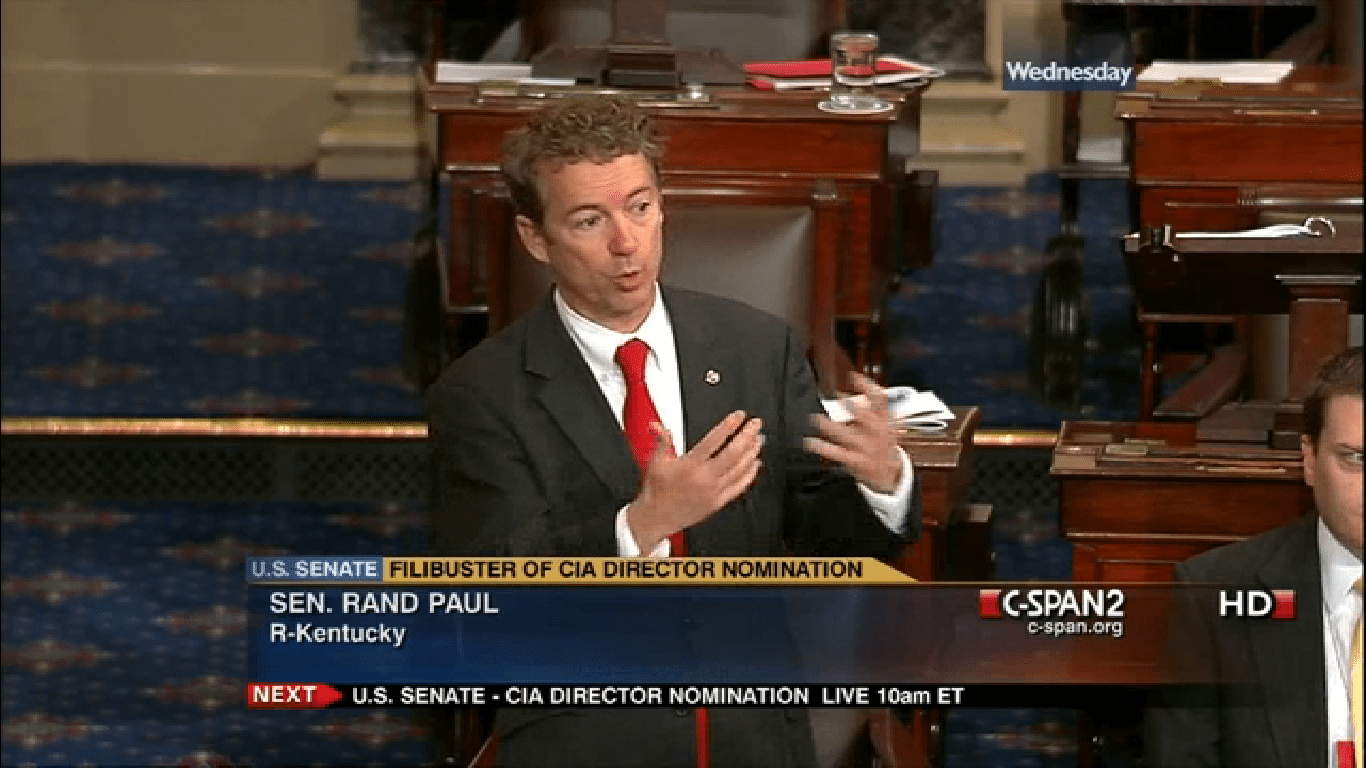
This article was featured in our weekly newsletter, the Liberator Online. To receive it in your inbox, sign up here. On Tuesday, the United States Senate gave final passage to the USA Freedom Act, but not without drama on the floor of the upper chamber. Majority Leader Mitch McConnell, R-Ky., offered three amendments that, if passed, would have weakened the bill. With the support of hawks in the Senate Republican Conference, McConnell proposed amendments that would have increased the transition period from three to six months, removed essential transparency requirements, and required private companies to notify the federal government if they changed their data retention policies. Each of the amendments failed, falling short of the majority needed for passage. After the USA Freedom Act passed with significant bipartisan support, a visibly irritated McConnell railed against the bill from the floor, lecturing his colleagues that the Fourth Amendment, which protects Americans against “unreasonable searches and seizures,” doesn’t cover phone records. uncle-sam-watching-you-feature “No content. No names. No listening to the phone calls of law-abiding citizens. We are talking about call data records,” said McConnell. “And these are the provider’s records, which is not what the Fourth Amendment speaks to. It speaks to: ‘The right of the people to be secure in their persons, houses, papers and effects.’” Part of the legal justification for bulk collection of Americans’ phone records is grounded in a little-known 1979 case, Smith v. Maryland, in which the Supreme Court ruled that the installation of the pen register on the phone of Michael Lee Smith without a warrant was not a violation of his Fourth Amendment rights. But as Jim Harper of the Cato Institute has explained, this interpretation of the case is wildly misleading. “It is not possible to argue honestly that the facts of Smith are anything like the NSA’s bulk data collection. The police had weighty evidence implicating one man. The telephone company voluntarily applied a pen register, collecting analog information about the use of one phone line by that one suspect,” Harper wrote in August 2013. “I can’t think of a factual situation that could be at a further extreme than NSA’s telephone calling surveillance program.” Add to Harper’s point that Section 215 of the USA Patriot Act allowed only the collection of records related to specific investigation into terrorism. It didn’t permit the bulk collection of all phone records of every American, a fact that was noted recently by the Second Circuit Court of Appeals. Although several organizations and tech companies backed the USA Freedom Act, the bill wasn’t without opposition because it didn’t go far enough to protect Americans’ privacy. Sen. Rand Paul, R-Ky., made his opposition clear because he wanted the ability to offer amendments to strengthen the bill. Others, like Rep. Justin Amash, R-Mich., believe the USA Freedom Act merely shifts the method of bulk collection from the National Security Agency to private phone companies. The USA Freedom Act, Amash said after it passed the House of Representatives in mid-May, “actually expands the statutory basis for the large-scale collection of most data.” But with debate on the USA Freedom Act now over, at least for now, President Barack Obama’s signature on the bill, some may be asking what’s next. The Guardian reported on Wednesday that the administration is seeking to restart the bulk collection program “temporarily” to transition “the domestic surveillance effort to the telephone companies that generate the so-called ‘call detail records’ the government seeks to access.” So, just to be clear, the administration will, according to The Guardian, “argue it needs to restart the program in order to end it.” Add that one to the growing list of Orwellian statements from this administration, and put it right under “if you like your health plan, you can keep it” and “never let a good crisis go to waste.”

Don’t be surprised when Garland is used as an excuse to renew the Patriot Act

Don’t be surprised when Garland is used as an excuse to renew the Patriot Act

This article was featured in our weekly newsletter, the Liberator Online. To receive it in your inbox, sign up here. Supporters of the NSA’s domestic spying programs say that a vast data collection effort is needed more than ever to prevent terrorist attacks in the United States, but they are unable to point to any specific example of foiled terrorist plots through these unconstitutional, privacy-violating programs. In June 2013, Gen. Keith Alexander, then the Director of the NSA, claimed that the spying programs prevented “potential terrorist events over 50 times since 9/11.” Testifying before a Senate committee in October of the same year, Alexander backtracked after Sen. Patrick Leahy (D-Vt.) grilled him for misleading the American public. Spy “There is no evidence that [bulk] phone records collection helped to thwart dozens or even several terrorist plots,” said Leahy. “These weren’t all plots and they weren’t all foiled. Would you agree with that, yes or no?” he asked the NSA chief. Alexander, realizing he had been put on the spot for peddling misinformation, simply replied, “Yes.” Of course Alexander was more honest than his colleague, Director of National Intelligence James Clapper, who lied about the NSA domestic surveillance program in a March 2013 Senate hearing. He was accused of perjury, although the allegation went nowhere in a Congress filled with pro-surveillance members. Two government panels – President’s Review Group on Intelligence and Communications Technologies and the Privacy and Civil Liberties Oversight Board – have since determined that NSA’s domestic spying programs have not played a role in thwarting terrorist attacks. The attack on Sunday evening in Garland, Texas at the “Draw Muhammad” event hosted by an anti-Islam organization will undoubtedly be used as a reason to reauthorize a soon-to-expire provision, Section 215, of the USA PATRIOT Act by which the federal government claims the vast authority to spy on Americans. But such claims should be met with a large dose of skepticism. One of the suspects involved in the attack had already come across the FBI’s radar. The United States’ top law enforcement agency began investigating him in 2006 on the suspicion that he wanted to join a terrorist group in Somalia. The alleged attacker lied to federal authorities. He was convicted in 2010 of making false statements and sentenced to three years of probation. He was, however, able to avoid being placed on the “no-fly” list. The alleged attackers in Garland are precisely are the needle for which the federal government claims that it needs the haystack, and intelligence and law enforcement officials failed to prevent what could have been a mass murder. The NSA’s resources are spread too thin. Collecting the phone calls of virtually every American – the proverbial “haystack” – even if the people on the call are not suspected of any terrorist involvement, not only betrays the constitutionally protected rights defined by the Fourth Amendment, but also makes Americans less safe because intelligence agencies may not be able to connect the dots efficiently and effectively. Rather than using the Garland attack as tool to further reauthorization of Section 215, which expires on June 1, lawmakers should seriously reexamine the approach to intelligence, requiring agencies like the NSA to focus on actual terrorism suspects as opposed to innocent Americans calling their families and friends.

Libertarians Cheer New “Surveillance State Repeal Act”

(From the Activist Ammunition section in Volume 20, No. 12 of the Liberator Online. Subscribe here!) Two congressmen have introduced bold bipartisan legislation that will fully repeal the police-state 2001 U.S. PATRIOT Act and substantially roll back the U.S. surveillance state that has metastasized in recent years. Repeal the Surveillance StateThe Surveillance State Repeal Act (H.R. 1466) was introduced on March 24 by Reps. Mark Pocan (D-WI) and Thomas Massie (R-KY), and it offers a great opportunity for Americans to restore lost liberty and privacy in one swoop. “The warrantless collection of millions of personal communications from innocent Americans is a direct violation of our constitutional right to privacy,” said Rep. Pocan. “Revelations about the NSA’s programs reveal the extraordinary extent to which the program has invaded Americans’ privacy. “I reject the notion that we must sacrifice liberty for security — we can live in a secure nation which also upholds a strong commitment to civil liberties. This legislation ends the NSA’s dragnet surveillance practices, while putting provisions in place to protect the privacy of American citizens through real and lasting change.” “The Patriot Act contains many provisions that violate the Fourth Amendment and have led to a dramatic expansion of our domestic surveillance state,” said Rep. Massie. “Our Founding Fathers fought and died to stop the kind of warrantless spying and searches that the Patriot Act and the FISA Amendments Act authorize. It is long past time to repeal the Patriot Act and reassert the constitutional rights of all Americans.” Libertarians and other defenders of civil liberties have cheered the bill. The Surveillance State Repeal Act will:
  1. Repeal the 2001 U.S. PATRIOT Act, which among other things contains the telephone metadata harvesting provision by which the NSA has justified collecting phone information on millions of Americans.
  2. Repeal the FISA Amendments Act (which contains the email harvesting provision), with the exception of the provisions regarding FISA court reporting and WMD intelligence collection.
  3. Protect whistleblowers: Make retaliation against federal national security whistleblowers illegal and provide for the termination of individuals who engage in such retaliation.
  4. Ensure that any FISA collection against a U.S. Person takes place only pursuant to a valid warrant based on probable cause (which was the original FISA standard from 1978 to 2001).
  5. Retain the ability for government surveillance capabilities to be targeted against a specific natural person, regardless of the type of communications method(s) or device(s) being used by the subject of the surveillance.
  6. Retain provisions in current law dealing with the acquisition of intelligence information involving weapons of mass destruction from entities not composed primarily of U.S. Persons.
  7. Prohibit the government from mandating that electronic device or software manufacturers build in so-called “back doors” to allow the government to bypass encryption or other privacy technology built into said hardware and/or software.
  8. Increase the terms of judges on the Foreign Intelligence Surveillance Court (FISC) from seven to ten years and allows their reappointment.
  9. Mandate that the FISC utilize technologically competent Special Masters (technical and legal experts) to help determine the veracity of government claims about privacy, minimization and collection capabilities employed by the U.S. government in FISA applications.
  10. Mandate that the Government Accountability Office (GAO) regularly monitor such domestic surveillance programs for compliance with the law, including responding to Member requests for investigations and whistleblower complaints of wrongdoing.
  11. Explicitly ban the use of Executive Order 12333 as a way of collecting bulk data, which pertains to the collection and storage of communications by U.S. Persons.
Make no mistake: The bill faces an uphill battle in Congress. FreedomWorks chair Matt Kibbe called upon its 6.9 million members to fight for the bill, and created a web page where supporters of the bill can easily email this message to their representatives. Libertarian Party chair Nicholas Sarwark called on all Americans who love liberty to create a grassroots campaign to support the Surveillance State Repeal Act, to contact their congressmen and women and urge them to support H.R. 1466, and to spread this message through social media and whatever other means possible. In fact, Sarwick’s only complaint was that the bill, sweeping though it is, doesn’t go far enough. “The Libertarian Party would like to see all aspects of government mass surveillance ended, including complete elimination of the secret FISA court whose work issuing warrants for terrorist and criminal suspects can be easily assumed by existing federal courts,” said Sarwark. “But this bill is a good first step.”

They Said It… With David Simpson, Matthew Fogg, and More!

(From the They Said It section in Volume 20, No. 11 of the Liberator Online. Subscribe here!) Matthew FoggFORMER DEA AGENT SAYS DRUG WAR IS AIMED AT POOR BLACKS: “What I began to see is that the Drug War is totally about race. If we were locking up everybody, white and black, for doing the same drugs, they would have done the same thing they did with Prohibition. They would have outlawed it. They would have said, ‘Let’s stop this craziness. You’re not putting my son in jail. My daughter isn’t going to jail.'” — Matthew Fogg, retired Chief Deputy U.S. Marshall and former DEA special agent, in  an interview with Brave New Films. Fogg says he and other agents were ordered by superiors not to enforce drug laws in prosperous white neighborhoods. THE FOURTH AMENDMENT VS. THE NSA: “The Fourth Amendment… is the law of the land. And the NSA is violating its letter and spirit, no matter how many times its defenders use dubious legal reasoning to argue otherwise. The right of the people to be secure in their ‘persons, houses, papers, and effects’ is meaningless if the NSA can seize and later search details about everyone’s communications. The requirements for probable cause and particularity cannot be squared with surveillance that implicates practically everyone. The Fourth Amendment’s historic attempt to end general warrants cannot be viewed as a success so long as the government is prying into the private affairs of tens of millions of people who are not even suspected of any wrongdoing.” — journalist Conor Friedersdorf, “The Surveillance State’s Greatest Enemy? The U.S. Constitution,” The Atlantic, March 3, 2015. ACTUALLY, IT’S A POLITICAL PROBLEM, TOO: “It’s not a political problem; it’s a math problem. … Everyone is looking at the model right now, asking how do we do math? Every [restaurant] operator I’m talking to is in panic mode, trying to figure out what the new world will look like.” — Anthony Anton, president and CEO of the Washington Restaurant Association, on the new difficulties restaurant owners face because of Seattle’s new $15 per hour minimum wage (i.e., tax on employers who hire workers). The law is expected to send labor costs skyrocketing, and is being blamed for a rash of restaurant closings. Quoted in “Why Are So Many Seattle Restaurants Closing Lately?” in Seattle magazine, March 4, 2015. ZERO WAGES FOR SEATTLE’S NEW JOBLESS: “As the implementation date for Seattle’s strict $15 per hour minimum wage law approaches, the city is experiencing a rising trend in restaurant closures. The tough new law goes into effect April 1st. The closings have occurred across the city, from Grub in the upscale Queen Anne Hill neighborhood, to Little Uncle in gritty Pioneer Square, to the Boat Street Cafe on Western Avenue near the waterfront. The shut-downs have idled dozens of low-wage workers, the very people advocates say the wage law is supposed to help. Instead of delivering the promised ‘living wage’ of $15 an hour, economic realities created by the new law have dropped the hourly wage for these workers to zero.” — Paul Guppy, Washington Policy Center blog, “Seattle’s $15 wage law a factor in restaurant closings” BEST RE-LEGALIZATION BILL EVER: Representative David Simpson (R - Longview)“I am proposing that this plant [marijuana] be regulated like tomatoes, jalapenos or coffee. Current marijuana policies are not based on science or sound evidence, but rather misinformation and fear. All that God created is good, including marijuana. God did not make a mistake when he made marijuana that the government needs to fix. Let’s allow the plant to be utilized for good — helping people with seizures, treating warriors with PTSD, producing fiber and other products — or simply for beauty and enjoyment. Government prohibition should be for violent actions that harm your neighbor — not of the possession, cultivation, and responsible use of plants.” — Texas Republican state representative David Simpson, who describes himself as a “constitutional conservative,” explaining his marijuana re-legalization bill, KETK NBC TV, Tyler, Texas.

Cut Military Spending by 60%: Libertarian Candidates Pledge

(From the Intellectual Ammunition section in Volume 19, No. 16 of the Liberator Online. Subscribe here!) Cut Military Spending by 60%As we noted last issue, scores of Libertarian Party candidates for federal office have pledged to downsize the bloated federal government — in four big and specific ways:
  • Eliminate the federal income tax
  • End the War on Drugs
  • Abolish the NSA
  • Cut military spending by 60%
We’re exploring each of these pledges in detail, one per issue, because the Libertarian Party has done a great job of showing that these bold proposals are not only possible, they are practical and enormously beneficial. (Of course, you can jump ahead of us and read about all four positions right now.) Let’s look at the pledge to cut military spending by 60% or more. The candidates pledge: “If elected, I will sponsor legislation to cut military spending by 60% or more and cut total federal spending accordingly; close all foreign U.S. military bases; withdraw completely from the Middle East; and bring our troops home.” Here are the benefits, according to the Libertarians: * A non-interventionist foreign policy will result in less hostility towards the United States and reduce the risk of a terrorist attack. * There is no justification for forcing U.S. taxpayers to fund the military defense of other nations, including wealthy countries such as France, Germany and Japan. * Cutting the U.S. military by 60 percent does not remove one cent of U.S. military defense spending — only military offense, defense of other countries, and waste. * An oversized military budget is a war waiting to happen. Needless war results in untold death and destruction — the greatest assault on human liberty. A lean, reasonably-sized military budget will save lives, avoid casualties, preserve personal property and community infrastructures, and foster peace. * Voters want to downsize the U.S. military. According to a survey by the Stimson Center, Democratic, Republican and independent voters all want to cut military spending “far more severely than the sequester would” and “far, far more severely than either party has proposed.” * Closing foreign bases and withdrawing from the Middle East means that U.S. troops stationed abroad can come home to their families. Kids will grow up with mom and dad at home. * Fewer casualties will reduce demand on the Veterans Administration, which will improve the care of America’s wounded soldiers. * Downsizing the military will force the reduction and consolidation of 18 separate spy agencies — the surest way to end the government’s spying on innocent citizens in violation of the Fourth Amendment. * A right-sized military will be auditable, will squeeze out its legendary waste and will put an end to overpriced and unneeded multi-billion-dollar procurements that politicians lobby for to “bring home the bacon” to their districts.* A non-interventionist policy will reduce trade barriers, resulting in greater prosperity for both Americans and our trading partners. * Cutting the military by 60 percent will enable substantial cuts in federal taxes and stop the growth of the national debt. If applied to the income tax, each American family will get back, on average, $4,100 — every year. If used to balance the budget, it will eliminate approximately 70 percent of the deficit and stop today’s rapid inflation of the dollar. This will stabilize prices on everyday goods and services and dramatically reduce the risk of an economic collapse. * Transferring wealth out of the government sector and into the private sector will create sustainable, productive jobs — approximately twice as many jobs as will be lost in the government sector. A net increase of millions of new jobs.

VIDEO: “Isn’t it Ironic”: Remy Rips Feinstein on Spying

(From the Intellectual Ammunition section in Volume 19, No. 6 of the Liberator Online. Subscribe here!) Okay, admit it: you had to laugh when Senator Diane Feinstein — long one of the Senate’s biggest defenders of NSA spying — was suddenly filled with outrage when she found out that SHE, too, was being spied on. Hey! That’s going too far! The irony is just too perfect. And who better to point this out than the great liberty-minded comedian Remy? In this 2-minute video from our friends at Reason TV, Remy updates the Alanis Morissette hit “Isn’t it Ironic” …with Feinstein in mind. You can read the lyrics here. Laugh along with lines like: Senator, this may surprise you and the irony bites but Congresspeople ain’t the only ones with 4th Amendment rights …oh, and we really like the quick dig at the Great Interner, FDR, too. Share it with friends! Credits: Written and performed by Remy. Video and animation by Meredith Bragg. Music performed, produced, recorded, mixed and mastered by Ben Karlstrom.