












Beta

Password Reset Confirmation

If an account matching the email you entered was found, you will receive an email with a link to reset your password.

Welcome to our Beta

The Advocates of Self-Government is preparing a new experience for our users.

User Not Found

The username/email and password combination you entered was not found. Please try again or contact support.

Skip to main content

Quizzes & Apps

Articles

Tag: policy

When "Experts" Set Policy, Citizens Lose Control of Their Own Government

It is tempting to have faith in “science” when it comes to public policy during an emergency. However, as the coronavirus pandemic episode shows us, “experts” can be just as wrong and harmful as the politicians hiding behind them. Type into a search engine “trust science.” Check news and op-ed results. You’ll be hard-pressed to find any counterpoint to the notion that America and its government must unite in submission to the experts.  Perhaps what’s driving this prevalent attitude is not just fear of Covid-19. Amid a presidential election year, our society is more hyper-politicized than ever. What could be more non-political than science itself? Its cold calculations offer a comforting escape from the hot air. However, there is a catch. That is, living under a technocracy and sacrificing self-government in the process. Indeed, this has been a trend in American governance for a long time.  There are experts advising or running unelected boards, commissions, bureaucracies, and agencies all around us. Think of the Federal Reserve or the Office of the Surgeon General, both created in the Progressive Era. In a technocracy, there’s no representation or accountability. The politicians simply yield to the health specialists or some guru who has looked at the data. Even if this solves some problems, the sterilization of the people and their democratic processes isn’t worth it in the long run. The truth is the experts often get it wrong, not to mention they are still only human, subject to political or ideological biases or other interests like ambition. If they’re making decisions for the country, and likely pulling in a decent tax-subsidized salary, shouldn’t they earn the support of the people or otherwise be held to account for failure?  Take the current surgeon general, Jerome Adams, for instance. On February 29th, the day after the first U.S. death from Covid-19, he tweeted, “STOP BUYING MASKS!” and urged Americans to stay home. That tweet didn’t age well. Masks are now required for virtually all people in some areas of the country, or in some retail chains like Costco. Staying at home was what 66 percent of New Yorkers hospitalized with coronavirus were doing. As science fiction writer Arthur C. Clarke wrote, “For every expert there is an equal and opposite expert.” The Trump administration’s coronavirus task force head, Dr. Deborah Birx, reportedly told the director of the U.S. Centers for Disease Control and Prevention (CDC) that there is “nothing from the CDC that I can trust,” according to the Washington Post It’s possible that some scientists skew their research for financial gain or political prestige. That isn’t known to be the case during this pandemic so far, but it’s not exactly an exercise in mere hypotheticals either.  In November 2015, Stanford News reported that a “pattern” of scientists fabricating their data spurred the development of a sort of lie detector for research publishing. Even with good intentions, basing public policy purely on “science” can have disastrous effects. It’s estimated some 75,000 people will die “deaths of despair” as a result of the lockdowns.  That doesn’t include those who will die for lack of important surgeries or cancer treatment and screening, as a result of the lockdowns. In America, do we still hold to the belief that our government is of, by, and for the people? At the very least, the second category, by the people, seems unpopular during the spread of Covid-19. Government by the experts is more comforting these days. But what about tomorrow? We may regret it.


Former Congressman Argues All Troops Should Be Withdrawn from Iraq

Ron Paul recently penned a thought-provoking piece on why the United States government should pull all troops out of Iraq. After 17 years, more than $1 trillion spent, thousands of American casualties — not to mention the over 200,000 Iraqi civilian victims — the U.S. has no clear vision for what it wants to do in Iraq. In the meantime, American soldiers get caught in the crossfire, our debt continues to pile up, and the Middle East spirals out of control, as it historically has. This is only the tip of the iceberg, however. Tension is growing in Iraq itself. Iraqis have grown restless over the continued American presence in their country. The pressure was so high that the Iraqi parliament unanimously voted to have Americans leave the country. Led by nationalist Shiite cleric Muqtada Al-Sadr, the protesters want both American and Iranian actors out of their country. The American government’s killing of Major General Qassem Soleimani sparked the unanimous vote by the Iraqi Parliament to scrap its agreement with the U.S. military to maintain American troops in the country. One would think that the U.S. leadership would get the memo after the resounding vote. However, when Iraqi Prime Minister Adil Abdul-Mahdi floated the issue with Secretary of State Mike Pompeo, the idea was instantly scrapped. U.S. political elites still think a military presence is a “force for good” in the Middle East to fight terrorist groups such as ISIS. However, countless Iraqis disagree with this. On January 24, 2020, nearly a million Iraqis protested the American government’s military occupation of the country. The protesters demanded the closure of all U.S. military bases and that a timetable is established for pulling out all U.S. military forces. Paul posed some interesting questions for nation-building zealots to consider. “How many billions of dollars have we sent to Iraq to help them build their democracy? Yet as soon as a decision of Iraq’s elected parliament goes against Washington’s wishes, the US government is no longer so interested in democracy. Do they think the Iraqis don’t notice this double-dealing?” Paul asked. Washington D.C. is becoming increasingly misinformed about what’s taking place in Iraq, and for that matter, in the Middle East on the whole. The region has been unstable for centuries and no amount of nation-building will change that. More importantly, such undertakings come at the expense of taxpayers and the blood of American troops. The only beneficiaries are the defense industry and the elites who America props up abroad. Policymakers will have to come to grips with the fact that the American government cannot save everyone abroad. Countries will ultimately have to fix themselves and find solutions to their own problems, as they have done so for millennia. Trying to socially engineer foreign countries into accepting American democracy is the height of American foreign policy arrogance.

Elizabeth Warren Wants to Empower Unions at Workers’ Expense

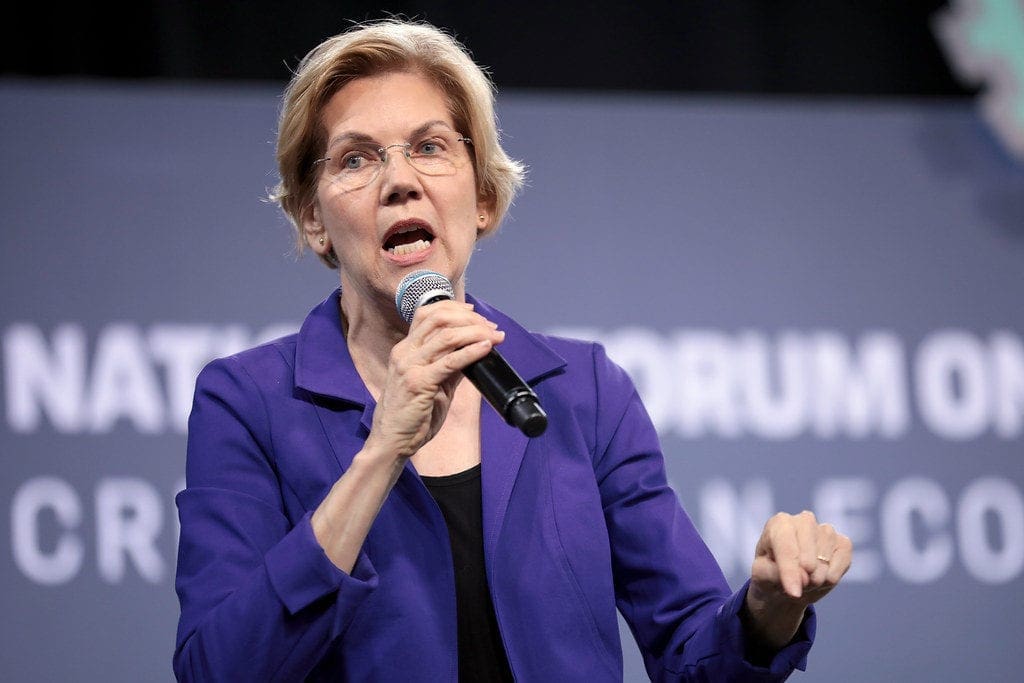
Last month 2020 Democratic presidential candidate Elizabeth Warren proposed an overhaul of federal laws that make it easier for unions to recruit more members and increase union dues. Unions are a big constituency within the Democratic Party and Warren needs all the help she can get. She argued that her union reforms would help workers and raise wages. It’s no secret that labor unions are big players in Democratic Party politics. During the last presidential election cycle, the Center for Responsive Politics reports that unions spent a hefty $219 million. 88 percent of that money was donated to Democrats or spent in support of their candidates. In contrast, a measly 12 percent of union spending benefited Republicans. Logically, Democratic contenders are already trying to court Big Labor’s support for 2020. Bernie Sanders and Beto O’Rourke(Before he ended his campaign) have presented similar legislative packages that would greatly strengthen labor unions. Warren’s plan consists of banning right-to-work laws, which force workers to join a union or pay union dues if their workplace is unionized. On top of that, her legislative package would allow unions to organize by the coercive “card check” method, mandate that drivers for rideshare companies such as Uber and Lyft become employees instead of independent contractors, and allow graduate students to unionize. The Massachusetts senator’s opposition to right-to-work laws makes sense due to Big Labor’s hatred of such policies, which usually result in reduced union membership and lower union dues collections. On the other hand, everyday citizens — the forgotten man — in these discussions, witness lower costs of living, better labor flexibility, and less of a tax burden thanks to the policies that make union membership voluntary. The card-check method would compel companies to accept unions if organizers present cards that demonstrate approval from more than 50 percent of the workforce. Current law allows companies to request the federal government to hold a secret ballot election to make sure that unions actually have worker support. The elimination of the secret ballot via card check would likely create incentives for false claims of support and even subject workers to potential intimidation from union members now that their privacy rights are effectively null. Warren also proposes a national version of a California law that mandates gig economy titans such as Uber and Lyft no longer classify their workers as contractors and instead categorize them as employees. Contractors are treated as an independent company and are not eligible for the majority of benefits and protections afforded to workers under federal law, such as minimum wage and mandatory overtime pay. Gig companies are correct in opposing these kinds of measures. The gig economy gives workers unprecedented flexibility in setting their schedules and working as much as they desire. Additionally, Warren wants to grant more privileges to federal government workers by granting them the ability to strike. Curiously, Democratic leaders such as Franklin Delano Roosevelt and Jimmy Carter have been opposed to unionizing federal workers because of the disruption they feared that would cause. Further, public sector unionization involves taxpayers being held hostage any time negotiation disputes arise between the government and unions. More often than not, these disputes end with unions extracting hefty benefits at the taxpayer’s expense. In short, Warren wants to use the federal government to empower unions. If people want to support unions in their private affairs, that is their prerogative. However, the state’s involvement in labor organization does create a series of second-order effects that infringe on the freedom of association and also impact everyday citizens in the form of poorer public services, higher costs of living, and increased taxes, among other things. A more practical approach to labor organization is to devolve power to the states and let policymakers in those jurisdictions decide how unions will be organized.

Trump Will Let States Craft Their Own Marijuana Policies

President Donald Trump will continue to allow states to legalize marijuana if they choose to do so. During a press briefing on Friday, August 30, 2019, a Washington Examiner reporter asked Trump if cannabis would be legalized at the federal level while he is still in office. Trump responded, “We’re going to see what’s going on. It’s a very big subject and right now we are allowing states to make that decision.” He added that “a lot of states are making that decision, but we’re allowing states to make that decision.” To his credit, Trump on the presidential campaign trail has said that he supports the legalization of medical marijuana and that the question of legalization “should be a state issue, state-by-state.” He recognizes that drug reform is here to stay and is part of the American populace’s recognition that the traditional drug war approach has failed. Moreover, President Trump supported Colorado Republican Senator Cory Gardner’s efforts to introduce bipartisan legislation that would protect states with legal marijuana from federal overreach. Trump declared that he “really” supports the bill. Attorney General William Barr has echoed Trump’s sentiment and supports the passage of legislation which would harmonize state and federal laws concerning marijuana. In April during a Senate hearing, Barr stated that he would like Congress to pass a law along the lines of Gardner’s bill instead of keeping the current system in place. With how prominent the opioid crisis has become in America, there’s reason to believe that drug reform could help combat it. Some studies indicate that states like Colorado with legal marijuana have experienced fewer opioid overdoses. This hints at a substitution effect of sorts where individuals who would traditionally turn to opioids end up using marijuana instead. Regardless of one’s stance on the issue of drug consumption, this is clearly a matter that state legislatures should handle. The Tenth Amendment, which is one of the pillars of political decentralization in the U.S. Constitution, has been a routine victim of federal government overreach. As a result, the federal government has turned into a massive administrative state that infringes upon the rights of millions of people nationwide, while also overriding the sovereign power of state government. Centralized government eventually becomes out of touch with the political jurisdictions at lower levels. This becomes even more magnified in a country of over 300 million people like the United States. In these times of political polarization, a more local approach to governance is preferable. The marijuana question is ultimately a matter that state legislatures and local municipalities, not Washington D.C., should decide.  

Trump is Decentralizing Refugee Resettlement Policies

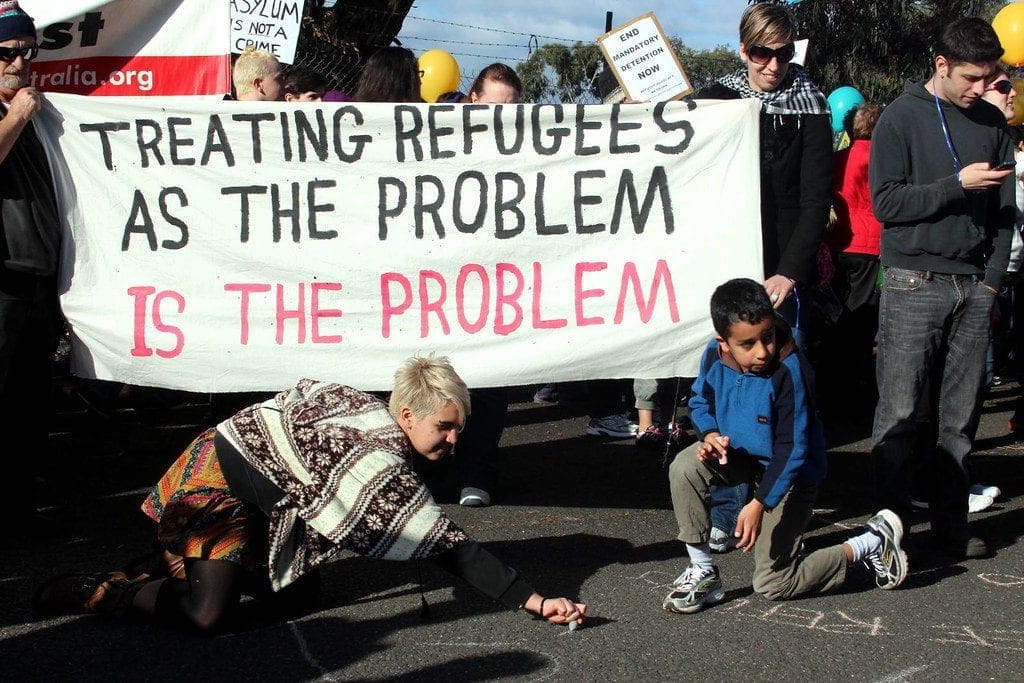
On extremely rare occasions when Washington, D.C., yields to the 50 states, panic inevitably ensues among the elite media and others who benefit from centralized power. Such is the case with refugee resettlement policy, now being reformed under the Trump administration. Of course, racism charges are part and parcel of the attacks on any person or policy that supports states’ rights over D.C. diktats. See for evidence the scary Washington Post article that calls this policy reform a “refugee ban” that “opens the door to more demagoguery by Trump.” Pot, meet kettle. President Donald Trump has proposed lowering the annual cap on refugees to 18,000, far below the all-time high of 110,000 in 2016 under President Barack Obama. Whatever metrics are used to arrive at either figure are obviously not free-market-oriented, as the federal government subsidizes so much of what constitutes refugee resettlement. However, decentralization can improve the quality of the signals showing demand for refugee supply. That is precisely what Trump is offering, allowing states to effectively nullify refugee resettlements imposed on them. It should be instructive to know next year whether there was a state-based clamoring for up to 18,000 refugees nationwide. The details of the policy change are yet unknown, as it goes through a 90-day period of rewriting. A pure private property solution would be appreciated if any bureaucrat is reading this. Politico, citing proposals circulating among lawmakers, reports that the 18,000 figure is actually the total for four separate caps, with 5,000 for those fearing religious persecution, 4,000 for Iraqis who helped U.S. forces, 1,500 for Guatemalans, Salvadorans, and Hondurans, and finally, 7,500 for a general pool. Funnily, the elite media spin on the story contains the very root of the problem that led to Trump getting elected. It parrots the platitude that “freedom” means America welcoming more refugees than all other countries combined, for decades on end, thanks to “bipartisanship.” “Make America Great Again” was about breaking the bipartisanship that invaded the world and invited the world. Nowhere in the article does the Post reflect on 2016, which is all the more convincing for this writer that 2020 will offer similar results. Besides indignant outrage, not much is offered by the elite media as an option available to critics. One humble suggestion would be to go abroad and do real charity work, not subsidized by the government. Or perhaps some of the tens of thousands of people who would feel tempted to leave their homelands might instead stay and help themselves find liberty.

The War on ‘Unwanted Behavior’ Hits the Sidewalks

The War on ‘Unwanted Behavior’ Hits the Sidewalks

This article was featured in our weekly newsletter, the Liberator Online. To receive it in your inbox, sign up here. Distracted driving has been this age’s boogeyman for quite sometime. Once the public campaign against the behavior gained traction, it ended up prompting state lawmakers across the country to pass distracted law bills and ordinances throughout most of the United States. But as studies prove that restrictive laws tied to phone use behind the wheel are actually making roads less safe, many carry on with the belief that things will only get better when we start passing even more laws. Phone In New Jersey, Democratic State Assemblywoman Pamela Lampitt has been under the spotlight for trying to penalize pedestrians who walk while looking at their phones. The ban on texting while walking would reportedly cost pedestrians $50 per citation. Offenders could also be required to attend classes on highway safety. Since the proposal was allegedly mocked by several publications in the state, Watchdog.org reports, Assemblywoman Lampitt was forced to pull the bill from consideration. The backlash was so powerful that it’s nearly impossible to find anything official on the bill in the state legislature’s website. But according to Watchdog, if the bill had seen the light of day, repeating offenders could end up in jail. In a statement reproduced by NJ.com, Assemblywoman Lampitt is quoted as saying that “like distracted drivers,” distracted walkers are endangering the lives of other drivers. But what is catching the attention of many skeptics, is how proponents of such ban believe that, because distracted walking presents a danger to those using their phones while walking, the enactment of a ban is justified. Is that good enough? To Doug Bandow, a senior fellow at Cato Institute, US lawmakers have embraced the tyranny of good intentions, creating generations of Americans who are dependent on the government for their every need. To Bandow, “emotion and intention seem to have become principal determinants of government policy,” and the results are tragic. When politicians claim to be acting for the public good, Bandow wrote, they often ignore the consequences. But “consequences are critical.” Ignoring how certain laws written to criminalize particular behaviors have unwanted consequences won’t make the potentially negative ramifications go away. Instead of creating a situation in which lawmakers have to address the negative consequences of bad policies down the road, politicians should focus on taking a closer look at how their current proposals may affect people in the long run before pushing new bills. Thankfully, laws targeting pedestrians with smartphones don’t seem popular in New Jersey. But such restrictions could become popular elsewhere over time, and the trend to push other states to join the prohibitionist mass will only increase. Being proactive about our safety doesn’t equal lobbying the government for further restrictions. Instead, responsible drivers and pedestrians must lead by example, showing others that they have chosen to put safety first. Passing laws against phone use will only force people to find new way of doing what they are already doing so law enforcers won’t catch them. Are we really willing to pretend we care by simply leaving it all up to the government and walking away, or are we willing to prove that only personal responsibility—and vigilance—will keep us safe by standing against this type of policy?

What Are Your Other Interests?

What Are Your Other Interests?

This article was featured in our weekly newsletter, the Liberator Online. To receive it in your inbox, sign up here. Football. Movies. Music. Food. Technology. Family. Cars. Family. Friends. hobbies word cloud There’s more to life than policy, meetings, and debate. As libertarians, we tend to be hyper-focused on those things. As people living in the real world, we need to have a well-rounded life. Freedom is of utmost importance, yet a life focused solely on Big Government, its growth, and its encroachment in our everyday lives can burn you out and bring down your morale. Personally, I’m involved in politics so that I don’t have to be. I’d much rather spend time with my family and friends, engaging in things I find fulfilling. If freedom were standard, I would invest more time and treasure in my interests of college football, auto racing, Broadway shows, movies, concerts, and rescuing dogs. I would also spend more time traveling and visiting with friends and family around the country and throughout the world. It is a defensive move on my part to prevent my time, treasure, and talents from being used in ways I do not approve. If you don’t have something to escape to, how can you rest your mind, body, and soul from the crushing concern that is politics? By balancing life and politics, we open our networks (and opportunities for persuasion) beyond the “echo chamber,” while simultaneously providing a refuge to prevent burnout. Burnout is probably the biggest hurdle I see to the spread of libertarian principles and ideas, as our best and brightest activists and communicators become consumed and overwhelmed with the grind of constantly battling authoritarianism. I’ve been at the brink of burning out myself. Between elections, outreach, media relations, and managing volunteers, exhaustion sets in. Had I not retreated to “rest” in some of the interests noted above, I may not be writing to you today. What interests you?

The Good and the Bad of Donald Trump’s White Paper on Guns

The Good and the Bad of Donald Trump’s White Paper on Guns

This article was featured in our weekly newsletter, the Liberator Online. To receive it in your inbox, sign up here. Republican presidential candidate Donald Trump has shifted away from his previous support of some gun control policies, including longer waiting periods and a ban on “assault weapons.” Although his campaign is general devoid of any meaningful or specifics on policy, Trump released a white paper last week that offers support for the Second Amendment. AK47 The white paper opposes restrictions on firearms, such as “assault weapons,” that are usually targeted by the anti-gun left. But this is a departure for Trump, who, in his 2000 book, The America We Deserve, expressed support for a ban on this type of firearm. “The Republicans walk the NRA line and refuse even limited restrictions,” Trump wrote. “I generally oppose gun control, but I support the ban on assault weapons and I also support a slightly longer waiting period to purchase a gun.” (Emphasis added.) Trump was, at the time, considering a bid for the Reform Party’s presidential nomination. Today, Trump, as he does on many different issues, sings a different tune. “Gun and magazine bans are a total failure. That’s been proven every time it’s been tried. Opponents of gun rights try to come up with scary sounding phrases like ‘assault weapons’, ‘military-style weapons’ and ‘high capacity magazines’ to confuse people. What they’re really talking about are popular semi-automatic rifles and standard magazines that are owned by tens of millions of Americans,” Trump’s white paper states. “Law-abiding people should be allowed to own the firearm of their choice. The government has no business dictating what types of firearms good, honest people are allowed to own.” He opposes expanded background checks and supports allowing the military to carry weapons on base and at recruiting centers. In the months after the Newtown tragedy, conservatives resisted a failed attempt to expand background checks, which wouldn’t have stopped that particular incident from occurring, and, after the recent shooting at a military recruiting center in Chattanooga, have expressed support for allowing recruiters to carry weapons on the job. One particular policy proposed by Trump is likely to strongly appeal to conservatives. He supports “national right to carry,” which would make concealed carry permits valid in every state and the District of Columbia, much like a driver’s license. “A driver’s license works in every state, so it’s common sense that a concealed carry permit should work in every state,” Trump says. “If we can do that for driving – which is a privilege, not a right – then surely we can do that for concealed carry, which is a right, not a privilege.” While this policy is attractive and worth of support – and at least three pieces of legislation have been introduced in the current Congress to achieve that goal – one aspect of Trump’s white paper is particularly troubling. He expresses support for a little known federal program, known as “Project Exile,” that existed in Richmond, Virginia in the 1990s. “Several years ago there was a tremendous program in Richmond, Virginia called Project Exile. It said that if a violent felon uses a gun to commit a crime, you will be prosecuted in federal court and go to prison for five years – no parole or early release. Obama’s former Attorney General, Eric Holder, called that a ‘cookie cutter’ program. That’s ridiculous. I call that program a success,” the white paper states. “Murders committed with guns in Richmond decreased by over 60% when Project Exile was in place – in the first two years of the program alone, 350 armed felons were taken off the street.” From 1993 to 2010, violent crime fell across the United States. The Pew Research Center found that the gun homicide rate fell by 49 percent from its peak level in 1993 and the victimization rate for other violent crimes committed with firearms, including rape, dropped by 75 percent. “Nearly all the decline in the firearm homicide rate took place in the 1990s,” Pew noted, “the downward trend stopped in 2001 and resumed slowly in 2007. “ Theories on what caused the decline in crime rates vary, but economist Steven Levitt, known for the best-selling book, Freakonomics, has written that changes in policing strategies and gun control didn’t have much of an impact. Project Exile was a federal program created in 1997 that targeted felons in possession of firearms. It brought these cases to federal court, where offenders faced a five-year mandatory minimum prison sentence. Trump’s praise of Project Exile may be misguided. A 2003 study called into question its effectiveness as a deterrent to violent crime. “Despite this widespread acclaim, some skeptics have questioned the effectiveness of Project Exile, pointing out that homicides increased in Richmond in the last ten months of 1997 following the program’s announcement,” the authors explained. “In fact, the Richmond homicide rate increased by 40 percent between 1996 and 1997.” Rep. Bobby Scott, D-Va., who represents part of Richmond and the surrounding area, blasted Project Exile in a speech on the House floor in April 2000. “The mandatory minimums associated with Project Exile show no better results. The proponents suggest that the violent crime rate has gone down 39 percent in the city of Richmond under Project Exile,” Scott said. “At the same time it went down 43 percent in Norfolk, 58 percent in Virginia Beach and 81 percent in Chesapeake without Project Exile.” Trump’s white paper may offer a good idea, national right to carry, combined with fluff in contradiction to his previous statements, but programs like Project Exile are bad policy that are better handled under state law. What’s more, it defies logic. Violent crime is at its lowest point in the last couple decades. Unfortunately, the politics of fear are politicians need to succeed to win support from people who simply don’t know better.

Whoa: Donald Rumsfeld Criticizes George W. Bush’s Iraq Policy

Whoa: Donald Rumsfeld Criticizes George W. Bush’s Iraq Policy

This article was featured in our weekly newsletter, the Liberator Online. To receive it in your inbox, sign up here. Hell may have just frozen over. Donald Rumsfeld, who served as Secretary of Defense from 1975 to 1977 and again from 2001 to 2006, says that President George W. Bush’s attempt to bomb Iraq into accepting “democracy” was “unrealistic.” Rumsfeld made the comments during an interview with The Times of London. “The idea that we could fashion a democracy in Iraq seemed to me unrealistic. I was concerned about it when I first heard those words,” Rumsfeld told the paper. “I’m not one who thinks that our particular template of democracy is appropriate for other countries at every moment of their histories.” The comments are surprising. Rumsfeld was one of the major figures promoting the Iraq War. In fact, he was one of prominent administration figures who tried to connect the Middle Eastern country’s dictator, Saddam Hussein, to al-Qaeda and the 9/11 attacks. In September 2004, Rumsfeld, who has since denied making the connection, said the ties were “not debatable.” President Bush announced Rumsfeld’s resignation November 8, 2006, a day after Republicans were shellacked at the ballot box in that year’s mid-term election and lost control of both chambers of Congress. In August 2006, only 36 percent of Americans supported the Iraq War while 60 percent, the highest number at the time, opposed it due to almost daily reports of violence in Iraq. By the end of that year, more than 3,000 American soldiers were killed in the line of duty, according to iCasualties.org. With the rise of the Islamic State and Levant, which has taken control of swaths of Iraq, Rumsfeld may have had a change of heart. The question is, will Republicans currently pushing for war with other countries heed his words? It’s not likely. Sen. Tom Cotton, R-Ark., has firmly supplanted himself as one of the top Republican war hawks in the upper chamber, which isn’t an easy task considering that he serves alongside Sens. John McCain, R-Ariz., and Lindsey Graham, R-S.C. Although Cotton is frequently touted as a fiscal conservative, his doesn’t seem to understand that perpetual war is inconsistent with limited government. Last week, Fred Boenig, an antiwar activist whose son, Austin, committed suicide in May 2010 while serving in the Air Force, confronted Cotton during an event at the Johns Hopkins University campus in Washington, DC. “When do we get to hang up the ‘mission accomplished’ banner,” Boenig said, referring to the May 2003 photo op and speech by President Bush, “and when do I get my kids to come home safe again?” “There’s no definite answer because our enemies get a vote in this process,” said Cotton. “In the end, I think the best way to honor our veterans…” “Is to have more killed?” asked Boenig, who interrupted Cotton. “[I]s to win the wars for which they fought,” the freshman Arkansas senator said.

Sen. Marco Rubio, R-Fla., is also trying to position himself as Bush-style foreign policy hawk. During a recent appearance on Fox News, obviously, Rubio gave an unusual answer to a question about Iraq. “I think we have a responsibility to support democracy. And if a nation expresses a desire to become a democratic nation, particularly one that we invaded, I do believe that we have a responsibility to help them move in that direction,” said Rubio. “But the most immediate responsibility we have is to help them build a functional government that can actually meet the needs of the people in the short- and long-term, and that ultimately from that you would hope that would spring democracy.”

When a host said that Rubio sounds like he backs nation-building, the freshman Florida Republican said: “Well, it’s not nation-building. We are assisting them in building their nation.” That’s a distinction without a difference, senator. Maybe Rumsfeld’s comments, which are only now getting traction in American media, will put Republican hawks on the defensive, forcing them to answer tough questions about the failed the failed foreign policy Republicans all too frequently promote. But don’t hold your breath.

Free the Hops: Sin Taxes Drive Up the Cost of Beer

Free the Hops: Sin Taxes Drive Up the Cost of Beer

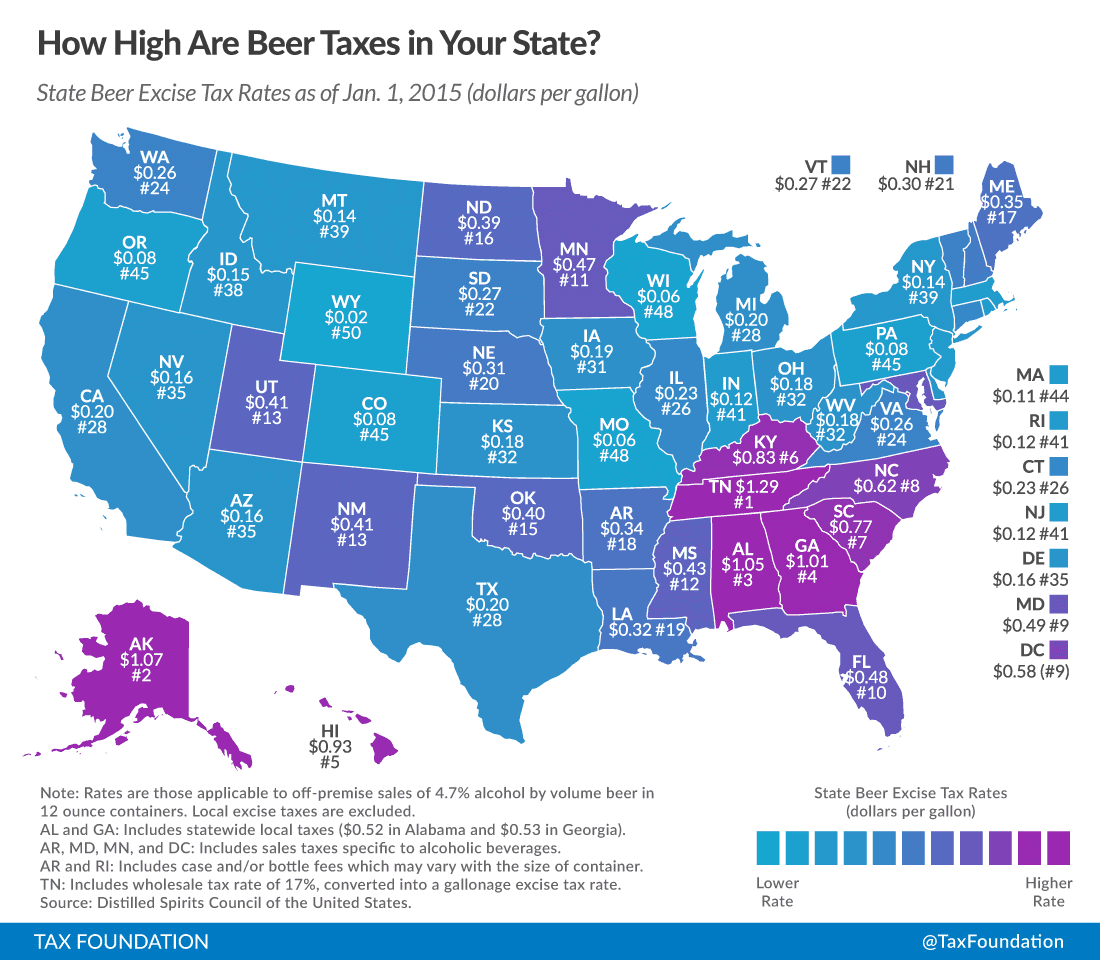
This article was featured in our weekly newsletter, the Liberator Online. To receive it in your inbox, sign up here. Your favorite frothy adult beverage would be a little cheaper if sin taxes were not part of the equation, according to a new report from the Tax Foundation, a nonpartisan policy research center. Each state taxes beer by the gallon, with the costs ranging from just 2 cents in Wyoming to $1.29 in Tennessee. “State and local governments use a variety of formulas to tax beer,” Scott Drenkard writes at the Tax Foundation. “The rates can include fixed per-volume taxes; wholesale taxes that are often a percentage of a product’s wholesale price; distributor taxes (sometimes structured as license fees as a percentage of revenues); case or bottle fees (which can vary based on size of container); and additional sales taxes (note that this measure does not include general sales tax, only those in excess of the general rate).” There is a trend to be found in the rates, as well. States in the Southeast tend to have the highest beer taxes. Seven of the top 10 states with the highest beer taxes are located in the area of the country known as the “Bible belt.” Northeastern states tend to have lower beer taxes.
Beer Tax
Beer Tax
The Beer Institute estimates that consumers pay $5.6 billion in federal and state excise taxes annually. “Surprisingly, taxes are the single most expensive ingredient in beer,” the beer centric think tank notes, “costing more than the labor and raw materials combined.” Although the Tax Foundation report does not touch on the cost of federal and state regulation of beer, which adds to the cost of production, particular of micro-breweries and small craft beer producers. In a June 2014 editorial at US News, Matthew Mitchell and Christopher Koopman, both research fellows at the Mercatus Center, explained that the excessive regulations, which are just another form of taxation, create burdensome barrier to entry for small brewers looking to take their product to market. “Once in business, brewers face more hurdles. Among the least efficient regulations are the ‘franchise laws’ that restrict their ability to sell beer directly to consumers, instead mandating that they sell through distributors. These rules can even dictate how brewers may contract with distributors,” wrote Mitchell and Koopman. “For example, some grant distributors exclusive territories, and others limit the ability of a brewer to choose to work with someone else. A recent survey found that in most cases, these rules make consumers worse off.” Beer taxes may be an easy target for lawmakers looking to raise revenue for big government programs and regulation may be a convenient way to protect big beer brewers, but these policies are keeping Americans from the frothy goodness that is their favorite brew. Raise a glass and tell your lawmakers to “free the hops!”

Four Great FREE EBOOKS on Liberty

(From the Activist Ammunition section in Volume 20, No. 9 of the Liberator Online. Subscribe here!) Students For Liberty (SFL), in partnership with the Atlas Network, has published four outstanding libertarian books — great reading for student and non-student libertarians alike. And you can download them for FREE as e-books or PDFs, or purchase paperback copies. (Note: if you’re not a student, ignore the “Expected year of college graduation” form box when downloading a PDF.) Here’s what SFL offers: The Economics of FreedomThe Economics of Freedom: Selected Works of Frédéric Bastiat features a truly delightful and enlightening collection of essays. Atlas scholar Tom Palmer notes that Bastiat is “the clearest, most sensible economist who ever wrote. Bastiat can be understood by a Nobel Prize winner, a taxi driver, a student, an entrepreneur… even a politician! Read this book and get set for a life-changing experience.” The Morality of CapitalismThe Morality of Capitalism edited by Tom G. Palmer: Outstanding short pieces by a fantastic line-up of philosophers, economists, Nobel Prize winners, and entrepreneurs, all making the case that not only are markets highly effective, a true free market system is a prerequisite for a just, prosperous, and cooperative society. Why LibertyWhy Liberty edited by Tom G. Palmer: A great collection of articles that focuses not just on political theory but also on liberty through the lens of culture, entrepreneurship, health, art, technology, philosophy, and the transformative power of freedom. The book features articles from experts in the fields of policy, academia, business, media, and student organizing. This collection makes it clear that liberty is a dynamic and liberating force with the power to change the world for the better. Peace, Love, & LibertyPeace, Love, & Liberty edited by Tom G. Palmer: Shows that libertarianism is the philosophy of peace — and how libertarian ideas are making the world a safer place. Drawing on the disciplines of history, philosophy, poetry, literature, and psychology, Peace, Love, & Liberty shows that peace is possible — and shows how we can achieve it. These books can also be purchased, either individual copies or in packs of 100 copies at very low cost, making them great for outreach. Thanks, SFL!