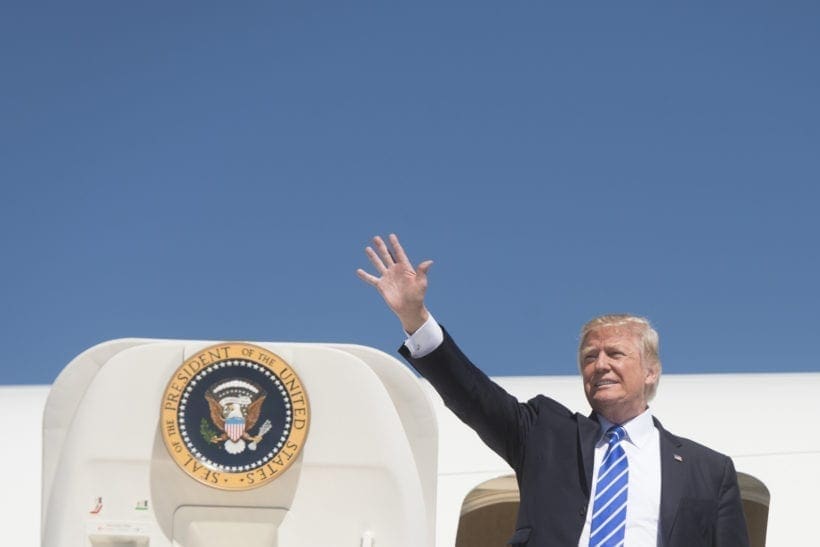
Negotiations and short-term deals are slightly cooling the Middle East hotspots of northeastern Syria and southern Yemen, ever since President Donald Trump broke off the US alliance with Syrian Kurds and refused to intervene over a suspected Iranian attack on Saudi oil facilities.President Donald J. Trump . (Official White House Photo by D. Myles Cullen)Trump isn’t bringing the troops home, but US involvement in endless wars certainly seems to be decreasing as the 2020 election starts to build up a head of steam. Libertarians need not drop their skepticism to appreciate this as a potential fortunate turnaround in foreign policy.There are solidly good stories coming out of northeastern Syria and southern Yemen. Beginning in the port city of Aden, the de-facto capital of southern Yemen, a power-sharing deal is taking shape as Saudi Arabia has taken over until a neutral defense force made up of warring sides is established, according to Antiwar.com. This temporary arrangement comes one month after an attack on Saudi oil facilities, which were blamed on Iran despite the Houthi rebels of Yemen claiming responsibility. The attack occurred days after the firing of Trump’s national security advisor John Bolton. Trump resisted the neocon pressure to retaliate militarily over this attack on Saudi property.The Saudis are also considering wider proposals from the Houthi rebels who seek “comprehensive national reconciliation.”Trump certainly can’t be accused of being too tough on Saudi Arabia, the country he hinted as being behind 9/11 while campaigning for the presidency. And yes, he’s sold them weapons, though not nearly the $112 billion worth under Obama. But it doesn’t appear the Saudis are willing to prolong this four-and-a-half year-long war and starvation blockade on Yemen for much longer.Moving over to Syria, the withdrawal of US troops from parts of the northeast has been exaggerated by Trump. The troops are still in Syria, just out of Turkey’s way. Nevertheless, the effect of the breakoff from the Kurdish fighters is that the Kurds are free to deal with Syrian President Bashar al-Assad, which should have happened long ago.In response to Turkey’s offensives in northeastern Syria, Trump announced sanctions on Turkish steel and an end to negotiations on a $100 billion trade agreement. He has also threatened further sanctions, while on the diplomatic front, Vice President Mike Pence is set to meet with Turkish President Recep Tayyip Erdogan this weekend to discuss ceasefire conditions.None of this is how Ron Paul would have done things, truly bringing the troops home in swift order. And Trump has always maintained that the US must have some presence in the Middle East to ensure against a reprisal of ISIS. But this is as good a position as any for the next non-interventionist presidential candidate to launch their campaign to finish the job.Perhaps if the Libertarian Party can avoid running weak candidates like last time, there will be a great opportunity for a peace candidate in 2020. Or maybe the Democrats will get wise and undercut Trump’s non-interventionist support, but I doubt it.
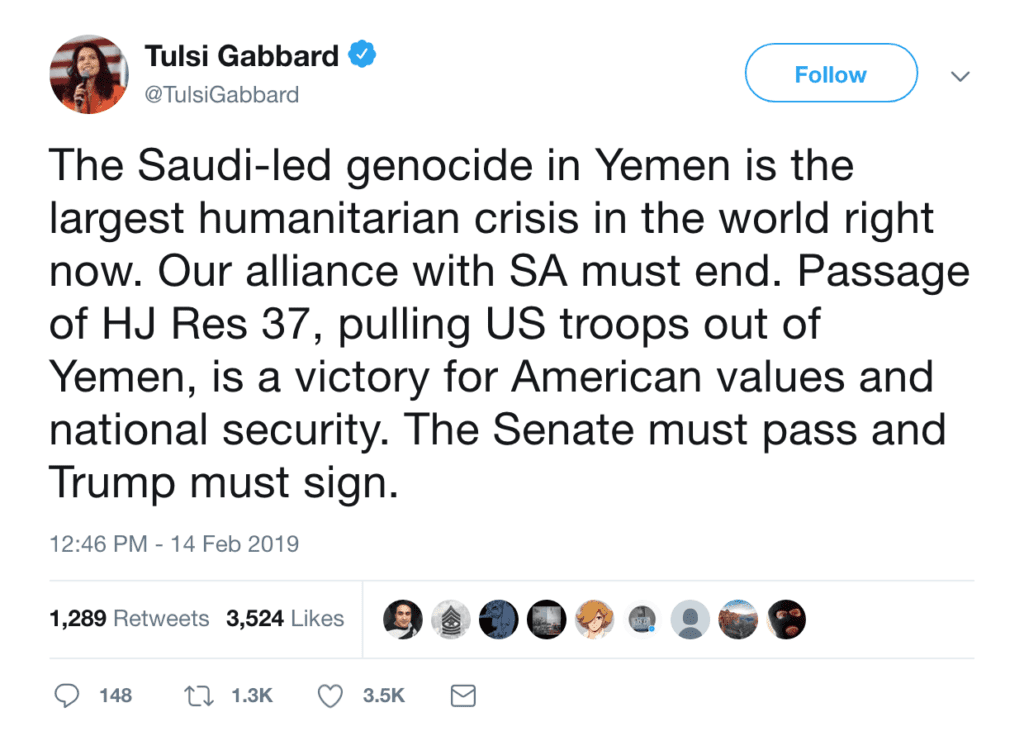
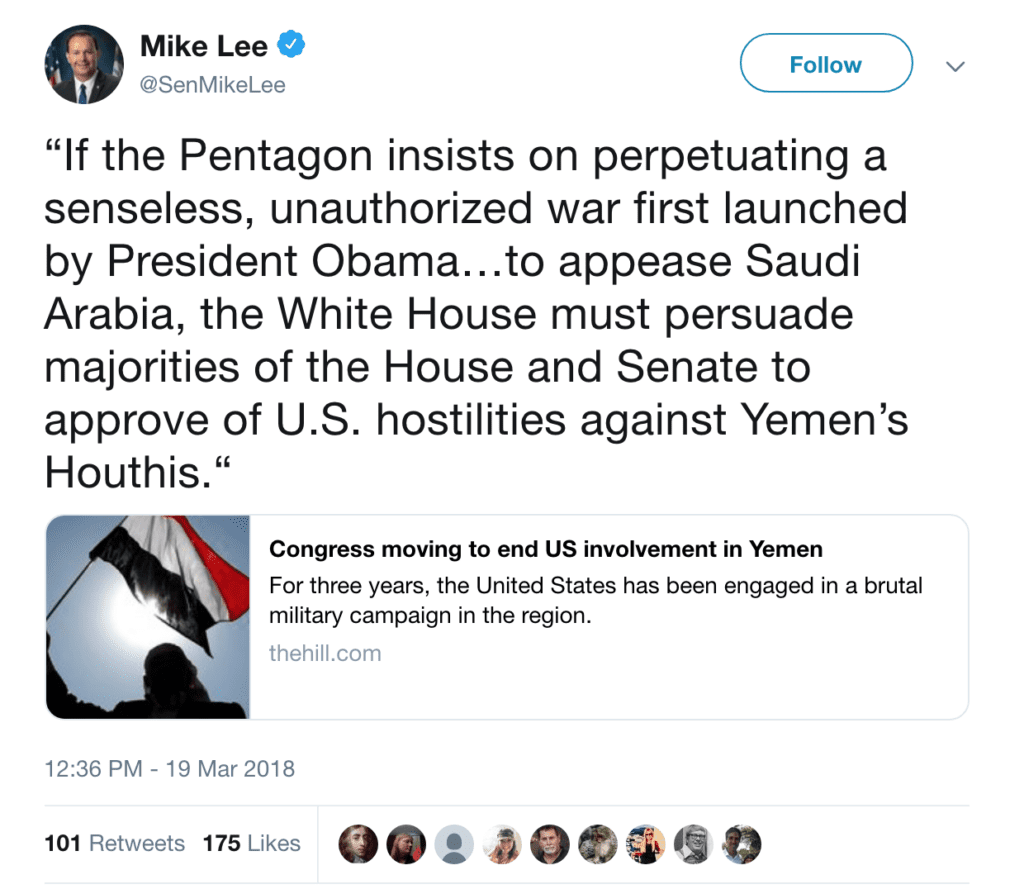
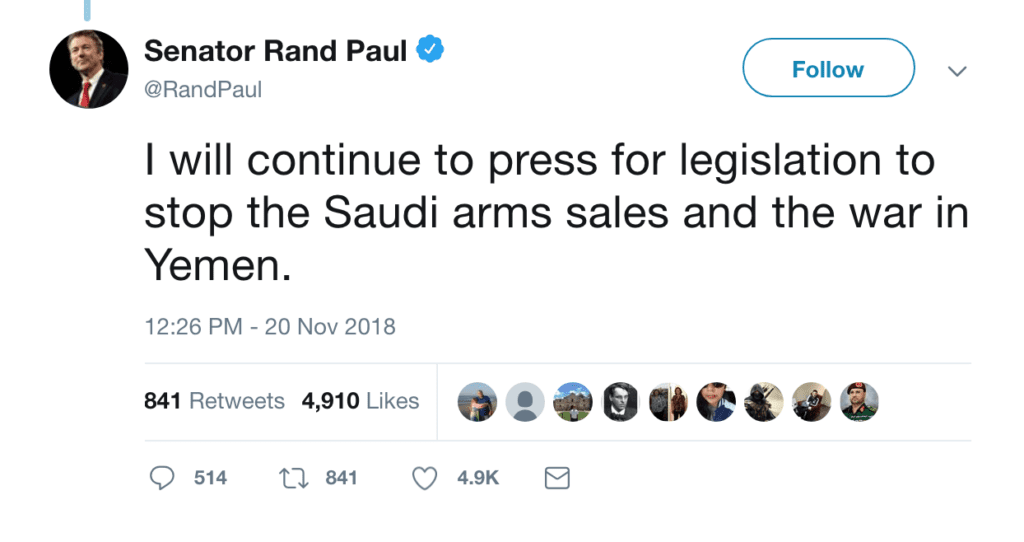
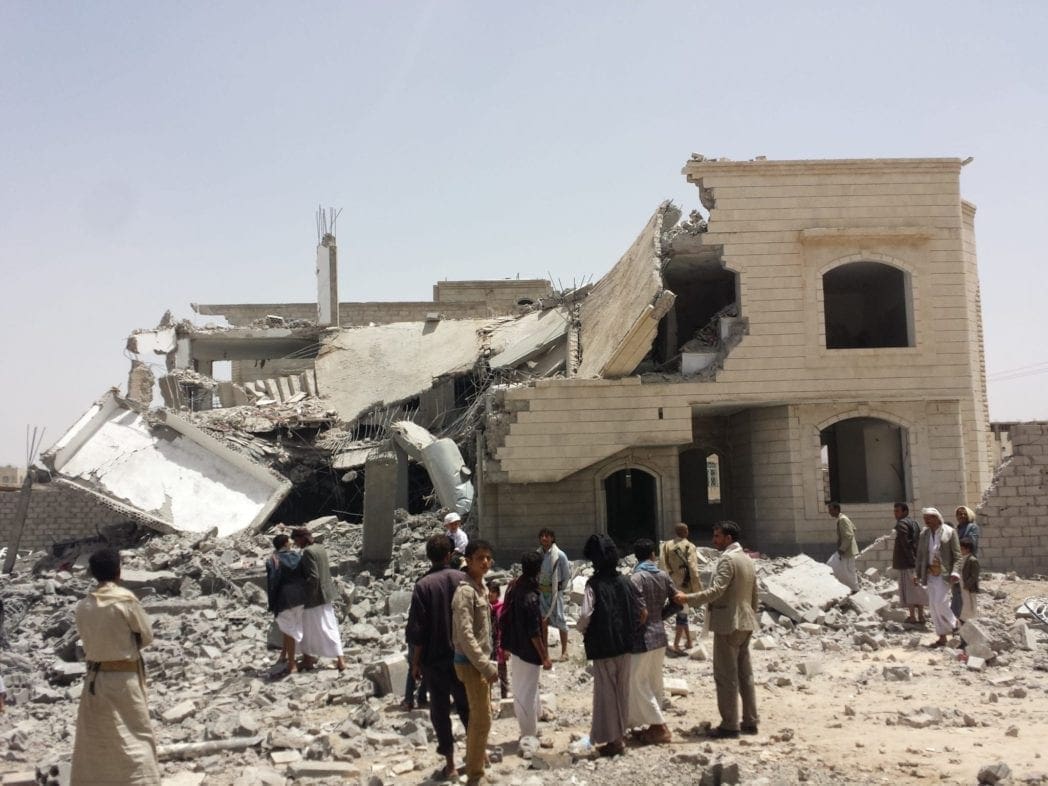
A United Nations report highlighted the death toll in the current Yemeni Civil War will reach 233,000 if it continues until the end of 2019.Of these deaths, 102,000 are expected to be combat-related and the remaining 131,000 will die because of malnutrition, cholera, and other diseases.ZeroHedge reported that 140,000 children are expected to be killed since the initiation of this conflict in March 2015. Should the conflict continue into the next five years, the death toll is expected to reach half a million people by 2022.What’s happening in Yemen is the standard operating procedure for the Middle East, a region plagued by religious violence and tribalism for the last thousand years. What makes this conflict more gut-wrenching is how the U.S. is subsidizing and providing military support to the Saudi-backed Yemeni government. Thankfully, the conversation is starting to shift towards a more non-interventionist approach towards Yemen Members of Congress such as Mike Lee, Rand Paul, and Tulsi Gabbard have championed an exit strategy out of Yemen. Gabbard, who’s a 2020 presidential candidate had the most vociferous critic of the Trump administration’s policies in Yemen:
“The Saudi-led genocide in Yemen is the largest humanitarian crisis in the world right now. Our alliance with SA must end. Passage of HJ Res 37, pulling US troops out of Yemen, is a victory for American values and national security. The Senate must pass and Trump must sign.”
Their efforts in denouncing the U.S. government’s support of the Yemeni government resulted in H.J. Res.37 passing out of both chambers of Congress, to later meet President Trump’s unfortunate veto. So much for an America First foreign policy.However, the fact that this bill passed both chambers is a good first step. The institutional inertia that the military-industrial complex has created is no joke, and it will take a considerable amount of pressure to reverse these kinds of foreign policy decisions. As more awareness of the shocking scenes of violence behind the Yemeni Civil War emerge, the more likely Americans will pressure their Congressmen to immediately pull out of Yemen. Let’s hope that the Trump administration comes to its senses and lives up to its America First campaign promises.
On April 16, 2016, President Donald Trump apparently yielded to neoconservative pressure when he vetoed a resolution that would stop U.S. military intervention in the Yemeni Civil War.This is yet another sign of the Trump Administration’s wavering foreign policy. A few weeks ago, the Trump administration declared the Islamic Revolutionary Guard Corps a terrorist group, and now the Trump administration is doing Saudi Arabia’s bidding.The Yemeni Civil War, a conflict between the Saudi-backed government of Abdrabbuh Mansur Hadi and the Iranian-backed Houthi rebels, is just another foreign policy quagmire in the making. Some reports say that this conflict could potentially leave 13 million Yemeni civilians in famine-like conditions. Starting in 2015, the Yemeni is just the latest in the line of never-ending conflicts that are typical of the Middle East. The bill in question, H,J, Res, 37, was able to make it out of the House and Senate, but then met Trump’s eventual veto earlier this week. It would have called upon the War Powers Resolution to put an end to all aid handed out to the Saudi coalition that is fighting off the Houthi rebels in Yemen.Trump defended the veto on the grounds that “This resolution is an unnecessary, dangerous attempt to weaken my constitutional authorities, endangering the lives of American citizens and brave service members, both today and in the future.” 2020 Presidential hopeful Tulsi Gabbard has been one of the most vocal critics of the U.S.’s involvement in this conflict. She said that “The Saudi-led genocide in Yemen is the largest humanitarian crisis in the world right now. Our alliance with SA must end.” She was one of the most notable elected officials to vote in favor of this resolution.Opposition to U.S. involvement in Yemen has cut across party lines. Senators Mike Lee and Rand Paul have been vocal proponents of pulling the U.S. out of Yemen. Both of them voted for the resolution alongside Gabbard in attempt to end this conflict. Any non-interventionist who saw the Trump administration as a potential avenue for a restrained foreign policy should be disappointed with Trump’s latest decision. Trump was originally elected on a platform that emphasized less nation-building and more military restraint in foreign affairs. However, the military-industrial complex and their representatives in the State Department have other things in mind. With its more hawkish approach to countries like Iran and Venezuela, the foreign policy establishment seeks to maintain the interventionist status quo of the past few decades.To add insult to injury, the promising North Korean negotiations have been largely derailed by national security adviser John Bolton according to several reports. The only silver lining is that no new wars have been carried out under Trump. However, as Commander-in-Chief, Trump can still set the record straight. Constitutionally, he has the final say in the deployment of military resources abroad. If he wants to live up to his America First rhetoric, he must give the neocons in his administration the cold shoulder.
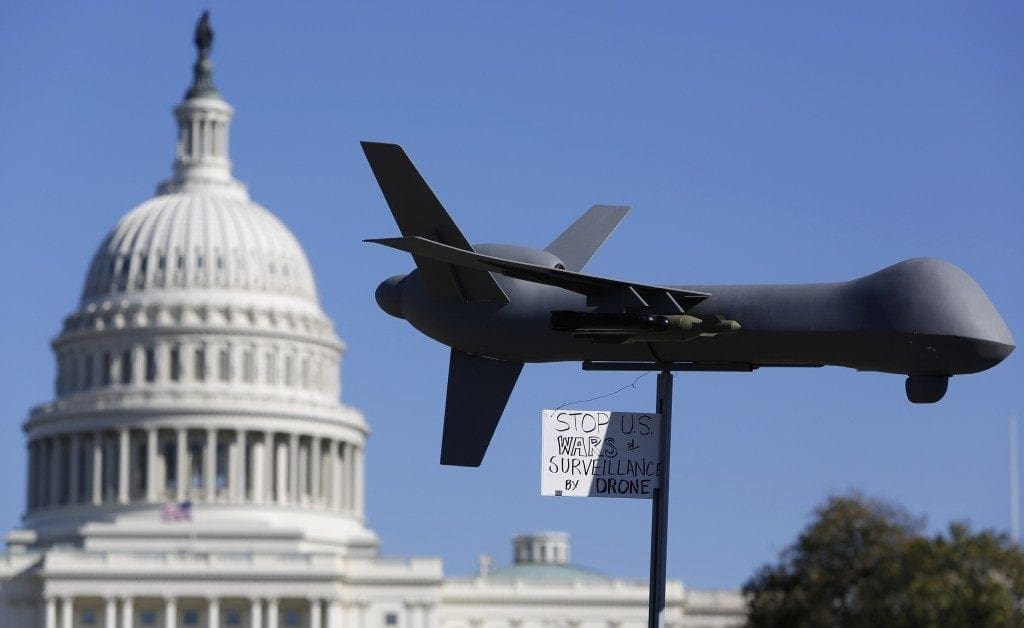
The United States is actively involved in the immoral and incredibly damaging Saudi military campaign in Yemen. And as millions of women and children die, the Donald Trump administration finds a way to aid Saudi Arabia by sending drones to the already devastated country.
But as Trump’s use (read abuse) of the executive branch’s drone program begins to troublesome well-meaning liberals who opposed him during the presidential campaign, one must wonder where were these same liberals with President Barack Obama also abused the drone program put in motion by President George W. Bush to kill innocent women and children in Pakistan, Afghanistan, and other parts of the Middle East.
After an American teenager was killed without due process under the orders of Obama, few, if any, progressives attacked the president for it. But now that we’re effectively using our drone fleet to aid the Saudis in the further destruction of an already-war torn land, people seem to be finally getting angry at the president.
As noted by Matt Taibbi in a recent Rolling Stone article, the “ability to kill by remote control without judicial review was one of the many gifts we bequeathed to Trump prior to his inauguration.” And that’s because the powers granted to Obama were never challenged when Bush was in power, and they were certainly seldom challenged with Obama lived in the White House.
While Sen. Rand Paul stood for 13 hours in a filibuster that went down in history for targeting Obama’s drone program and its unconstitutionality, few on the left helped to elevate the debate among their own circles, allowing the president to go virtually unchallenged for most of his presidency.
Now that Trump has inherited these powers, we are once again forced to ask ourselves if the federal government isn’t simply too powerful, and if there is anything we can do to put an end to this.
As we can see, there is no way we can shrink the power of the federal government by putting another president in Trump’s or Obama’s or Bush’s place. It’s also impossible to shrink the government and its power by pushing Congress to act. The only way to actually force the government to abandon its unlawful — and immoral — activities is to actually spread liberty.
The more people understand that liberty, and not a powerful federal government, is the only framework capable of giving us the proper environment to develop both economically and morally, the faster we will stop looking at the government for all answers, especially when it comes to foreign policy.
America’s Ally is Decimating the Yemeni Population, What’s Behind the Silence?
This article was featured in our weekly newsletter, the Liberator Online. To receive it in your inbox, sign up here.
Saudi Arabia, a United States ally in the Middle East, has been leading a heavily interventionist policy in Yemen for the past year. The war between factions claiming to represent the Yemeni people has led to a “catastrophic” crisis in the region, but Saudi Arabia, along with America, have played important roles.
So far, over two million people have been displaced from their homes while countless others lack access to basic services and necessities such as water and food. According to The American Conservative’s Daniel Larison, most of the damage caused by war over the last year in Yemen is due to Saudi Arabia and their allies.
Prior to the military intervention, most Yemenis depended on humanitarian aid. As the war deepened, their needs have only grown. As aid groups struggle to help in any way, they are also faced with challenges brought about the blockades placed and enforced by Saudi Arabia since 2015. While both the United States and the United Kingdom governments have allegedly attempted to persuade the Saudis by urging them to change their tactics, Saudi officials continue to have access to American weapons.
In 2015, the United States sold $33 billion in weapons to Gulf allies, including Saudi Arabia. According to the State Department, the deal between the US government and Saudi Arabia allows Saudi officials to purchase everything from attack helicopters to ballistic missile defense systems, despite the fact Saudi Arabia continues to uphold a blockade that is effectively decimating the Yemeni population.
At the moment, about 19 million people in Yemen lack access to water and sanitation while over 14 million Yemenis also require urgent health services. Out of the 14 million Yemenis requiring medical attention, at least 2 million are children, pregnant, and lactating women who are also malnourished.
As Saudi Arabia continues to uphold the blockade while targeting insurgents, Yemen slips into a much greater crisis. In the meantime, America remains complicit. Not only because it has been virtually silent over the past 12 months, but also because it continues to sell heavy weaponry to the Gulf state.
As the same administration that claimed to have a “responsibility” to protect Libyans turns a blind eye to the crisis in Yemen, the Saudis are effectively starving Yemenis to death.
In an article for the Cato Institute, A. Trevor Thrall and John Glaser argue that America should distance itself from Saudi Arabia, especially after the Yemen civil war began. “Yemen,” the authors begin the article, “is the latest U.S. foreign policy disaster.”
According to the Cato report, Saudi Arabia’s “ruthless” military campaign in Yemen has been enabled by the United States from the get-go.
The initial conflict started when Ali Abdullah Saleh, a long-time US-Saudi ally, was overthrown. Following the deposition, Abed-Rabbo Mansour Hadi became the president of the transitional government. Hadi was the only candidate on the ballot and he counted with the support of both the United States and Saudi Arabia. In 2014, however, Yemen’s Shiite Houthi rebels launched an insurgency, taking control of the capital city, Sanaa. Once Saudi Arabia started a bombing campaign in March of 2015 to contain the Houthis, Glaser and Thrall write, the civil war “morphed into an intractable proxy war.”
Since the Saudis see the Houthis as Iran proxies, the United States’ nuclear deal with Iran may seem as stab in the back to Saudi Arabia. According to the Cato scholars, “U.S. officials have apparently felt obliged to reassure Saudi Arabia by supporting its war in Yemen.” In light of these issues, we must ask ourselves: Why is America still supporting Saudi Arabia while also calling for the removal of Bashar al-Assad in Syria?
What About this Administrations’ Militaristic Policies and their Victims?
This article was featured in our weekly newsletter, the Liberator Online. To receive it in your inbox, sign up here.
During most of the day Tuesday, the day President Barack Obama gave his State of the Union Address, the Internet went ablaze with the White House’s announcements concerning empty gallery seats.
According to the White House, one seat will remain vacant during the entire address “for the victims of gun violence who no longer have a voice.” But to author James Bovard, seats should be left vacant to remind the public of the victims of the president’s militarism instead.
The Washington Post keeps a database of incidents involving police’s deadly use of force. According to its findings, 986 people were killed in 2015 alone during encounters with police officers. While the president has been pushing for tougher, more restrictive gun control measures to curb gun violence in America, the US Justice Department has been supporting officers every time the Supreme Court agrees to hear an excessive-force case.
Recently, Bovard noted, Attorney General Loretta Lynch claimed that federally-funded police agencies should keep the number of people killed in encounters with the police under wraps.
And despite the efforts of several US states willing to put an end to the drug war at home, Obama’s policy in Mexico continues to fuel the drug war in the neighboring country, increasing the number of victims abroad.
But this administrations’ militarism is not only responsible for death and destruction in the American continent.
To Bovard, a few seats should also stay vacant to remind us of the 30 French medical staff, patients, and other victims of the US attack against a Doctors Without Borders hospital in Kunduz, Afghanistan.
To Bovard, the twelve Yemenis killed during a US drone strike while celebrating nuptials on December 12, 2013 shouldn’t be ignored. But neither should the 30 people splattered to death during a 2012 drone strike in Afghanistan.
Prior to the deadly incident, a group of Taliban insurgents reportedly entered a house where a family was holding a wedding ceremony. As Afghan and American forces surrounded the house, firing broke out. As both sides struggled, the 18 members of a single extended family feared for their safety.
A few moments after US and Afghan troops were wounded in the fight, a jet was called to help, dropping a 500-pound bomb on the house.
At least nine of the innocent victims were children.
Other victims Bovard urges the White House to recognize include the four Americans killed in the 2012 Benghazi attack and the hundreds, or perhaps even thousands of Libyans who lost their lives during the civil war triggered by Hillary Clinton and Obama’s bombing campaign against Moammar Gadhafi.
Another seat should also remain vacant in the name of the 16-year-old Abdulrahman Anwar al-Awlaki, an American citizen who was killed in yet another US drone strike under this administration.
Due to the White Houses’ militaristic policies here and abroad, people are losing their lives.
Unnecessary conflicts produced by bad policies should require more attention not only because they are killing people, but because of the Obama administrations’ hypocritical stances show they have never been serious about living up to the expectations raised during the 2008 presidential campaign.
Something tells me the next Commander in Chief will have to tackle the same issues. Unsuccessfully, of course, since every single US president appears to focus on implementing the same bad policies.
(From the They Said It section in Volume 20, No. 14 of the Liberator Online. Subscribe here!)CORPORATE WELFARE, A LOVE STORY: “Michael Moore made a movie criticizing corporate welfare called ‘Capitalism: A Love Story’ and received $845,145 in corporate welfare from the Michigan Film Office.” — Michigan Capitol Confidential website, “The Irony of Michigan’s Film Incentive Program,” April 2, 2015. (Hat tip to Carpe Diem blog)
CLINT EASTWOOD’S SON ON GAY MARRIAGE AND LIBERTARIANISM: “I support gay marriage… I think everybody should be able to be with who they want to be with. My dad is the same way. He’s a total libertarian — everyone leave everyone alone. Everyone live their own private life.” — Scott Eastwood, interviewed by PrideSource.com, March 31, 2015.
WHO’S ON FIRST: “Our military is fighting in a tacit alliance with Iranian proxies in Iraq, even as it assists in a campaign against Iranian-backed forces in Yemen. We are formally committed to regime change in Syria, but we’re intervening against the regime’s Islamist enemies. Our strongest allies, officially, are still Israel and Saudi Arabia, but we’re busy alienating them by pushing for détente with Iran. And please don’t mention Libya or Al Qaeda — you’ll confuse everyone even more.” — New York Times columnist Ross Douthat, “The Method to Obama’s Middle East Mess,” March 28, 2015.
NEW IRS ATTACK ON FREE SPEECH:“The IRS is drafting a new regulation that would empower the agency to revoke an organization’s tax-exempt status if that organization sends out a communication to its members or the general public mentioning a candidate for office by name sixty days before an election or thirty days before a primary. By preventing groups from telling their members where candidates stand on issues like Audit the Fed and repeal of the PATRIOT Act, this anti-First Amendment regulation benefits those politicians who wish to hide their beliefs from the voters.” — Ron Paul, “The IRS and Congress Both Hold Our Liberty in Contempt,” Ron Paul Institute for Peace and Prosperity, April 5, 2015.
THEY’D NEVER DO THAT: “If you’ve used a landline to call an abortion clinic, a gun store, a suicide hotline, a therapist, an oncologist, a phone sex operator, an investigative journalist, or a union organizer, odds are the government has logged a record of the call. If your Congressional representative has a spouse or child who has made an embarrassing phone call, the executive branch may well possess the ability to document it, though government apologists insist that they’d never do so and are strangely confident that future governments composed of unknown people won’t either.” — journalist Conor Friedersdorf, “When Will the NSA Stop Spying on Innocent Americans?”, TheAtlantic.com., April 2, 2015
.
(From the They Said It section in Volume 20, No. 13 of the Liberator Online. Subscribe here!)U.S. COVERED UP GASSING OF AMERICAN TROOPS: “During and immediately after the first Gulf War, more than 200,000 of 700,000 U.S. troops sent to Iraq and Kuwait in January 1991 were exposed to nerve gas and other chemical agents. Though aware of this, the Department of Defense and CIA launched a campaign of lies and concocted a cover-up that continues today. A quarter of a century later, the troops nearest the explosions are dying of brain cancer at two to three times the rate of those who were farther away. Others have lung cancer or debilitating chronic diseases, and pain. More complications lie ahead. According to Dr. Linda Chao, a neurologist at the University of California Medical School in San Francisco, ‘Because part of their brains, the hippocampus, has shrunk, they’re at greater risk for Alzheimer’s and other degenerative diseases.'” — journalist Barbara Koeppel, “U.S. Nerve Gas Hit Our Own Troops in Iraq,” Newsweek, March 27, 2015.
BARACK OBAMA, PEACENIK-IN-CHIEF:“The world is starving for American leadership. But America has an anti-war president.” — U.S. Speaker of the House John Boehner (R-OH) during a Capitol Hill press conference, March 26. Apparently Obama’s ongoing U.S. military operations in Iraq, Afghanistan, Libya, Syria, Yemen, Somalia and Pakistan — not to mention covert operations around the world — slipped Rep. Boehner’s mind.
U.S. FOREIGN POLICY IN ONE TWEET: “US praises US ally for bombing US-equipped militia aligned with US foe who is partnering with US to fight another US-equipped militia.” — tweet by journalist/photographer Gregg Carlstrom, sent as Saudi Arabia began bombing Yemen, March 26, 2015.
YOU’RE ENTITLED (TO PAY FOR ENTITLEMENTS): “Your 2014 tax dollars — which are due [this] month — went primarily to pay for government benefits. Major entitlements (Medicare, Medicaid, Obamacare and Social Security) devoured more than half of the 2014 budget at 51 percent of spending. Other federal benefits took another 19 percent, meaning that 70 percent of government spending went to pay some sort of benefit to someone. These additional ‘income security’ and other benefits include federal employee retirement and disability, unemployment benefits, and welfare programs such as food and housing assistance.” — economist Romina Boccia, “The Breakdown of Where Your Tax Dollars Go,” Heritage Foundation, March 17, 2015.
THE MARIJUANA DISCONNECT: “Marijuana polls 60% in favor of legalization. Huge, insane, disconnect that the minority is maintaining criminal penalties for the majority!” — tweet by Gary Johnson, 2012 Libertarian Party presidential candidate, March 5, 2015.
LET THEM BAKE — OR NOT BAKE — CAKE: “Nobody should be forced to do something they don’t want to do, whether it’s bake cakes for gay weddings or decorate cakes with anti-gay slurs. To me, whether a person’s or a business’s decision is based in religion is immaterial.” — Nick Gillespie, “Everybody’s Lost Their Goddamn Mind Over Religious Freedom,” The Daily Beast, April 1, 2015.
(From the Activist Ammunition section in Volume 20, No. 2 of the Liberator Online. Subscribe here!)
The War Powers Resolution requires the President to report twice a year to Congress on U.S. military operations being conducted overseas without a congressional declaration of war.
President Obama filed his latest such report on December 11.
The report went virtually unmentioned in the mainstream press. Yet in it, Obama reports the startling, little-known fact that “the United States has deployed U.S. combat-equipped forces” in no less than… 14 countries.
As Daniel McAdams of the Ron Paul Institute for Peace and Prosperity summarizes: “In other words, the U.S. government is at war in 14 countries!”
Here’s the list:
Afghanistan
Iraq
Syria
Somalia
Yemen
Cuba
Niger
Chad
Uganda
Egypt
Jordan
Kosovo
Central African Republic
Tunisia
The list does not include countries in which the U.S. is engaged in covert activities, or where U.S. troops are stationed in non-combat positions, or where the U.S. has participated in joint exercises with military allies, which, together, would probably include most countries in the world.
Asks the Ron Paul Institute’s McAdams:
“Where else would the neocons have the U.S. military deployed for the next half-year report? Iran? Ukraine? Russia? North Korea? We can only imagine their wish list. Meanwhile, the $1 trillion spent annually on the military is quickly bankrupting the country, making us new enemies every day, and as a result making us less, not more, safe.”



























 “The world is starving for American leadership. But America has an anti-war president.” — U.S. Speaker of the House
  LET THEM BAKE — OR NOT BAKE — CAKE: “Nobody should be forced to do something they don’t want to do, whether it’s bake cakes for gay weddings or