












Beta

Password Reset Confirmation

If an account matching the email you entered was found, you will receive an email with a link to reset your password.

Welcome to our Beta

The Advocates of Self-Government is preparing a new experience for our users.

User Not Found

The username/email and password combination you entered was not found. Please try again or contact support.

Skip to main content

Quizzes & Apps

Articles

Month: September 2019

Will Big Tech Help the Government Undermine Gun Rights?

The Trump administration is flirting with the idea of creating a social credit system with help from Big Tech to use spy data collected from Amazon, Google, and Apple devices to see if certain individuals are fit to own a gun. What seemed like a distant threat confined to an authoritarian country like China may now be washing up on our shores. The Daily Caller reported that this “proposal is part of an initiative to create a Health Advanced Research Projects Agency (HARPA), which would be located inside the Health and Human Services Department.”  It added, “the new agency would have a separate budget and the president would be responsible for appointing its director.” HARPA would use “breakthrough technologies with high specificity and sensitivity for early diagnosis of neuropsychiatric violence”, which include Apple Watches, Amazon Echo, and Google Home. Simply put, the data that these devices gather would be used to strip law-abiding Americans of their basic rights. Chris Menahan of Information Liberation, an independent news site, nailed it when he said, “Though the proposal is starting as a voluntary data collection scheme allegedly aimed at finding warning signs of mental illness, we all know so-called “voluntary” government programs often become mandatory at the drop of a hat. ” If speculation holds true, this proposal could allow Big Tech to engage in neuro-surveillance of citizens through their smartphones and smart home devices. When talking about gun control in recent times, more than just the right to bear arms is at stake. With proposals like red flag laws and pre-crime legislation like the Threat Assessment, Prevention, and Safety (TAPS) Act being discussed, rights to self-defense and due process are under legitimate threat. This is a potential double whammy of civil liberties violations. We must remember that the fight for liberty is an all-inclusive package. Certain political debates may deal with a specific issue—in this case, gun violence — but they are often linked to other issues such as due process, free speech, etc. In other words, losing one fight on civil liberties could create a domino effect of further losses of liberties. Liberty is not an isolated concept. When one aspect is undermined, others follow. The outrage following these mass shootings is the perfect time for libertarians to calmly explain the implications of the gun control measures D.C. is putting forward. During debates like these, rational arguments and a staunch defense of liberty are desperately needed.


Bring them Home, It’s a Lot Easier Than You Think

Now that John Bolton is out as National Security Advisor, President Trump needs some advice on foreign policy. Bolton, being a hawk, would never give this advice. It is, however, the most important piece of advice one could give to the president right now. Regarding the troops, it’s time to Bring them Home. By this, I mean that we must bring every troop on foreign soil back to our country without exception.

The President DOES have the Power to Bring them Home

Some would immediately argue that “it isn’t that simple”, but it is. The president has the power and authority to bring every troop home with the stroke of a pen. Trump has possessed this ability since he took office in January 2017. Every day that the president hasn’t brought the troops home is a day that he has allowed these endless wars to continue. With this in mind, anyone who says the president can’t do this is wrong. As commander in chief, he possesses this power. Such power allows for the president to end these wars immediately. He has the power to bring the troops home. He just hasn’t. This, however, is not necessarily Trump’s fault alone.

Why Hasn’t the President Ended the Wars

First off, Trump is not a non-interventionist. At the very foundation, he is a Jacksonian. Jacksonians do not believe in intervention unless it is in the best interest of their own country. What is in the best interest of the U.S. is the topic of debate for President Trump. This is how one can reconcile the belief in ending the seemingly endless wars with Afghanistan, Iraq, etc. while also advocating increased hostility with Iran. If Trump believes that intervention is in the country’s best interest, he will intervene. This is why Senator Rand Paul is such an important figure in shaping Donald Trump’s foreign policy. While Rand Paul and Trump have differing core beliefs, Rand Paul’s non-interventionism stems from the idea that foreign intervention, unless the U.S. is attacked, is never in the best interest of the U.S. This is why Paul claims that Trump’s “instincts are in the right place.” He says he wants what is best for America.

Rand Paul Isn’t the Only Advisor

While Rand Paul has significantly influenced Trump’s foreign policy, so has Secretary of State Mike Pompeo and the now-former National Security Advisor, John Bolton. Neocon allies like Pompeo and Bolton are consistently trying to persuade Trump that intervention is always in the best interest of the U.S. and her allies. The facts simply are on the side of non-intervention. War has cost the U.S. trillions of dollars, decades of innovation, and thousands of American lives. Endless war is a road to squalor. What we, non-interventionists, must realize is that intervention is never in the best interest of the U.S. We must step up our efforts against these wars. We have a president whose instincts are in the right place; Rand Paul is right about that. We must increase our pro-peace efforts to end the currently existing wars and stop any effort to start a war with Iran. The president has the power to end the wars. What he lacks, however, is the motivation.

Senator Bernie Sanders Wants To Tax Your Juicy Steaks

On Friday, August 30, 2019, presidential hopeful Bernie Sanders declared that he was open to taxing meat and other animal products at the federal level. He justified this proposal on the grounds that it would preserve the planet’s resources and would help keep climate change at bay. This represents part of a growing anti-meat agenda that the political Left is embracing. Not too long ago, former congressman Beto O’Rourke was in agreement with an NPR interviewer who suggested that getting to net-zero emissions will require people to use electric cars, move into small houses, have fewer kids, and eat less meat. Political elites have been trying to wage a so-called “War on Meat” during the last few years by not only using arguments in favor of animal welfare but also linking meat consumption to global warming. The rollout of the Green New Deal has brought forth the idea that meat consumption must be curbed in order to fight global warming and promote sustainable development. When broken down, the aforementioned programs entail some form of government intrusion into people’s right to consume what they please. Such demands infringe on property rights and place the state as the chief social engineer of human behavioral patterns. Debates about the environment and health consequences of meat consumption can be made. But why do we immediately believe that there must be a government solution to solving this problem? Instead, people should look at solutions in civil society and the market as a means of addressing the problems that we face. That’s why research and debate are so important. Meat consumption may not be a problem in the first place. We may never know. For that reason, we should be hesitant about turning toward a government solution for a potentially non-existent problem. For nanny-state politicians like Sanders, however, this does not register. In their view, government responses for every perceived problem under the sun are the only means of addressing them. Any voluntary form of action is not up for consideration.

Racism a Top Issue at Democratic Debate, So How Should Libertarians Respond?

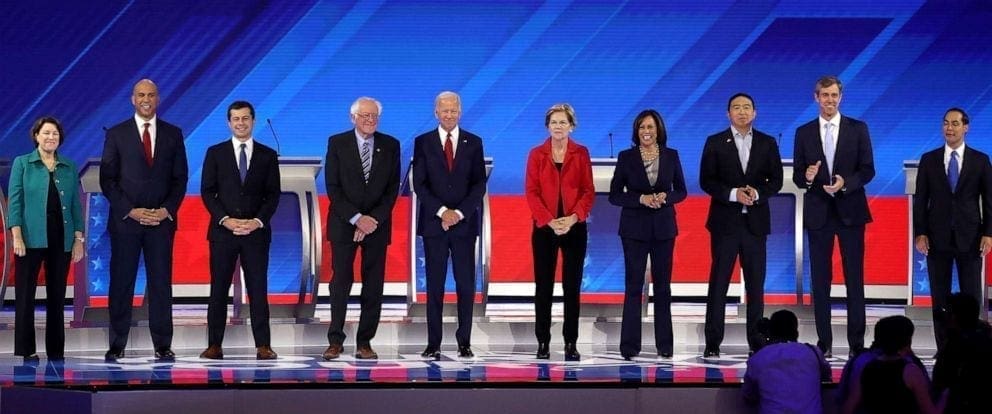
Race relations is now a political issue all its own at the highest level. Annoying as it may be for libertarians and Republicans, the 2020 Democratic presidential candidates are rapidly securing home-field advantage on this increasingly relevant topic. When a big government politician says, “We need to do something!” it’s a sure bet there will be bad policy. Add racial tension, and there’s a spicy recipe for chaos, just the sort of thing bureaucracies feed on. Libertarians and a few good Republicans understand this power dynamic. So, why does it seem like the Democrats are free to draw the parameters of any debate on race, most treacherously at the presidential level? Consider the premises laid out during the third Democratic debate. Racism is systemic, they say. It’s in gun violence, health care, education, the economy, the environment, the hospital, and the courtroom. White privilege is ingrained in society, we’re told. Is it really sufficient to rebut this ideology by telling black voters that Democrats founded the KKK and Republicans passed the Civil Rights Act? Obviously, that boomer argument will never work. Or how about the suggestions humbly offered by writers Tim Carney and Bonnie Kristian that conservatives and libertarians “create ecosystems that don’t welcome racists.” In fairness, their articles were written days before this latest Democratic debate. But just as the “no, actually, the left are the real racists” argument fails, so too do their pleas for movement soul-searching. The correct response matters. This issue is not going away and is no longer a fringe issue for liberals. Debate moderator Linsey Davis of ABC News said several recent polls indicate that the “number one concern” for young black Americans is racism. I found a May 2019 poll of young people, aged 18-36, that asked them what is the most important problem facing the country today. Fourteen percent of African-Americans said racism. That was a plurality, with gun control at 11 percent and health care at 10 percent, and every other issue at or below 7 percent. Among “Latinxs,” the poll’s word for Latinos, 14 percent said immigration, while 9 percent said racism. Presidential candidates are promising reparations for slavery in 2020. Is it not feasible that could be a mainstream proposal come 2024? The political consequences aren’t what they once were a generation ago, when it was only Jesse Jackson urging government payouts to descendants of slaves. Screaming “racist” or “white supremacist” is almost always about shutting down debate. It happens on the left and the right, but more often the right cedes ground to the left. But instead, we should remember Tom Woods. Does he try to rewrite or draw lines on the 3×5 card of allowable opinion? Of course not, he sets fire to it! Today’s primary debate is tomorrow’s general election debate. Libertarians ought to prepare now, while they still have time.

Why Are the Poor Leaving California?

The state preferred by millionaires and home to Silicon Valley and Hollywood is pushing its poor and working-class residents out. This reality will soon become a problem, not just because of the state’s economy but also because California is the favorite destination of unskilled immigrants. But as thousands flee because of the high cost of living, thousands of others arrive from other countries, balancing the number of residents and bringing it to 40 million. What doesn’t remain balanced, however, is the state’s budget, as the need for more welfare spending grows while working and tax-paying residents leave. This exodus, which became particularly strong following the Great Recession of the late 2000s and early 2010s, has already pushed 7 million born and raised Californians to neighboring states. The majority of those who leave, the IRS reports, are under the age of 35 and make less than $50,000 a year. So who’s left behind? The millionaires and the poor. And while the rich stay because they can afford to avoid all the problems the working class has to face, the poor can’t afford to live in the Golden State on their means alone. This puts an additional strain on social services and welfare systems. In the long run, this could mean two things. First, the state will no longer be able to afford the loss of tax-paying workers, and second, it will have to ask the federal government for more help. For a state that prides itself on being a sanctuary for people of all backgrounds, this has dire consequences. Especially as state regulators continue to implement rules that raise more artificial barriers across all industries. In the end, everything from housing to groceries becomes more expensive than in neighboring states. So what is California to do if it wants to be welcoming to all again? Sound economics says that it must put an end to policies that hurt the poor, especially the unskilled. Removing barriers such as minimum wage policies and licensing requirements for professionals could be a great first step. But will California’s legislators take this type of action before it’s too late? With a law that raises the minimum wage to $15 an hour by 2023 in effect, it’s hard to see legislators pushing for a change. Needless to say, this will continue to hurt unskilled workers who see their chances of obtaining work experience obliterated by the artificial barrier raised by the state. As economists have predicted, things will surely worsen for California before the state’s political class learns its lesson.

Brazil’s Senate Approves Deregulation Measures

Brazil’s Senate on Wednesday, August 21, 2019, voted in favor of measures that would remove red tape in business operations. Some of the reforms include an expedited process to open new businesses, waivers for some permit requirements, and a process that would allow for increased acceptance of digital documents. Naturally, interests groups connected to the state complained about how these reforms would hurt labor rights and environmental protections. After all, many pro-intervention groups cannot fathom the idea of a society that is able to organize itself voluntarily. Nonetheless, Brazil desperately needs such reforms. The World Bank’s Doing Business report puts Brazil in a mediocre 109th place out of 190 nations. Countries like Chile, Colombia, and Peru currently outrank Brazil in facilitating business.
According to a Wall Street Journal report, these new rules would allow small businesses such as hair salons and cafes to open shop before obtaining a host of previously mandatory permits. As a result, they will no longer need to wait as long as several months before starting up their businesses. These measures are crucial for a country like Brazil, which is known for its maze of bureaucracy and unstable monetary policies, in trying to achieve its full potential. Disparities in wealth are rampant in Brazil, and the country’s bureaucracy has prevented many Brazilians of lower economic means from being able to set up businesses. Small business creation is often a strong mechanism of social cohesion and a viable way for the working poor to better their lot. Many Americans take for granted the relative economic freedom they enjoy in contrast to countries like Brazil. The South American country never really had a classical liberal foundation and it has oscillated between decades of economic and political instability. Previous governments under Dilma Rousseff and Lula da Silva went on massive spending binges and pursued monetary policies that put inflation above 10 percent; moves which have played a major role in the country’s current economic malaise. Ideological flaws notwithstanding, Jair Bolsonaro’s election in 2018 has brought certain classical liberal ideas into the forefront of political discussion in Brazil. For these ideas to remain relevant beyond Bolsonaro’s administration, Brazil will need both political ground forces and an intellectual class that is willing to defend and spread these ideas effectively.

In a Twitter Outburst, President Trump Exposes the True Nature of Labor Unions

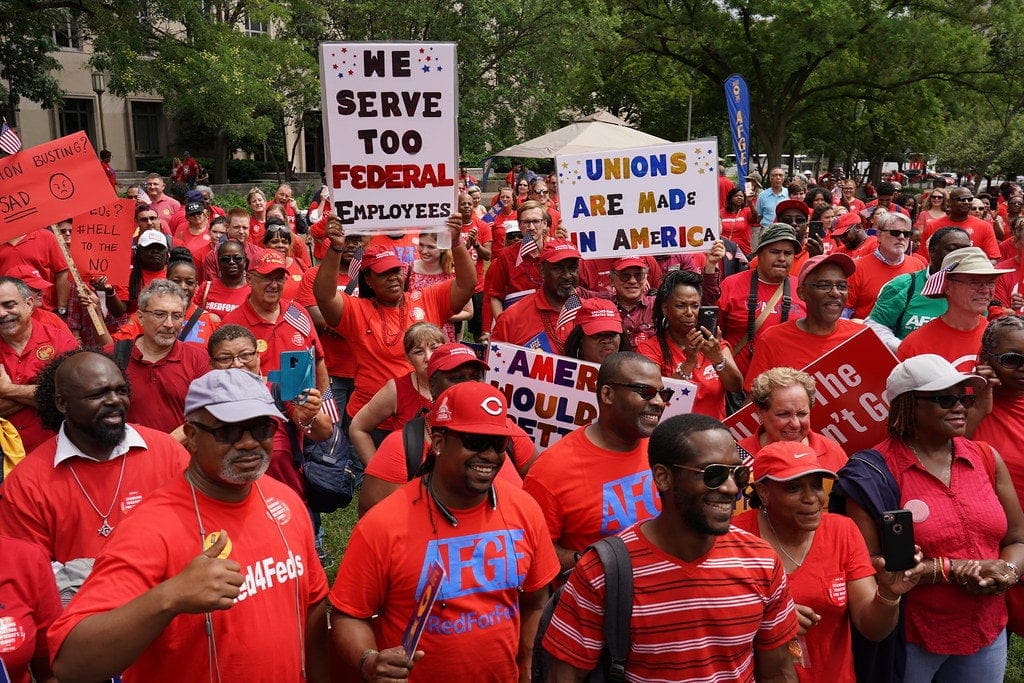
President Trump made noise on Labor Day by criticizing American Federation of Labor and Congress of Industrial Organizations (AFL-CIO) President Richard Trumka. Trump’s bombastic criticism of the labor leader came after Trumka slammed Trump’s trade deal with Mexico and Canada in a previous interview on Fox News. Although this attack may have seemed petty, Trump did raise a valid point about the political nature of unions in one of his tweets. Trump specifically said, “No wonder unions are losing so much. The workers will vote for me in 2020 (lowest unemployment, most jobs ever), and should stop paying exorbitant $Dues, not worth it!” The president is on the money about the “exorbitant” union dues. According to research from the National Right to Work Committee, 10 million workers are still forced to pay union dues in America. This totals out to $9 billion in forced due payments on an annual basis. These dues often fill up the coffers of Big Labor bosses and the politicians that they lobby to get elected.
The American worker is ultimately the one who gets the short end of the stick in this situation. Not only is forced unionization a form of political rent-seeking, but it also violates a cherished principle of American civil liberties — the freedom of association. For that reason, the right-to-work movement has endeavored to make compulsory union payments no longer a condition of employment. In doing so, workers would not be coerced into joining a union. On top of that, states where genuine labor freedom exists also tend to see improved economic outcomes in terms of increased employment, more affordable cost of living, and more disposable income. Ironically, the founder of the AFL-CIO, Samuel Gompers, stressed the value of voluntary action. He stated, “I want to urge devotion to the fundamentals of human liberty – the principles of voluntarism. No lasting gain has ever come from compulsion.” Where Gompers’ message of voluntarism has been followed, there has been greater economic prosperity. For America’s workers, labor freedom, not coercion, is the key to improving their standard of living. Trump is on the mark this time.

Beto O’Rourke’s Labor Plan is As Anti-Growth as it Gets

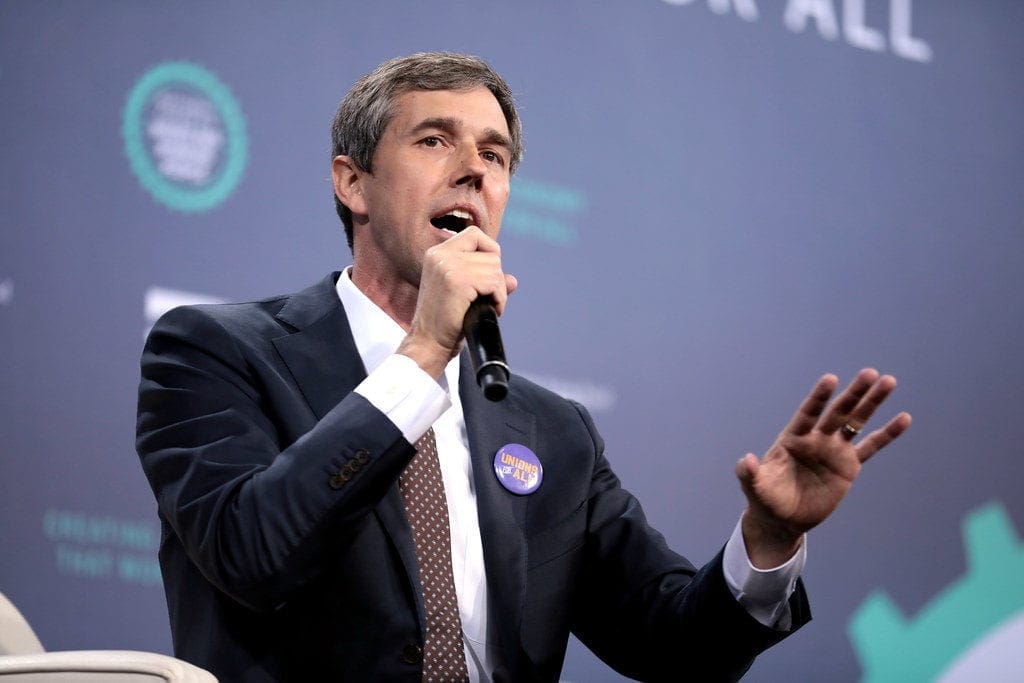
Beto O’Rourke recently unveiled his labor plan which consists of a $15 minimum wage and measures to increase compulsory unionization. The former El Paso congressman believes that no one in America should be living below the poverty line, hence his support for a $15 minimum wage. Similarly, O’Rourke contends that such a wage increase would boost worker productivity. The $15 minimum wage is in vogue among leftist elites, with states like California and Washington leading the way. In addition, O’Rourke laments the decline of labor unions in America. He believes that their declining membership is the reason behind stagnating worker wages in the United States. To solve this dilemma, he wants to recruit more union members and strengthen collective bargaining through legislation. The 2020 presidential hopeful’s vision on both of these issues is fundamentally flawed. It ultimately entails getting more government involved in areas which already have too much state interference to begin with. Let’s start with the increased minimum wage. O’Rourke’s desire for increasing the minimum wage will end up hurting workers; above all, the lower-skilled members of the labor force. Unemployment, reduced work hours, and companies accelerating their automation processes will be several of the results of these policies. It’s not exactly a pretty scenario for someone who claims to fight for workers’ interests like O’Rourke does. Similarly, O’Rourke’s aim for increased unionization is both economically damaging and morally questionable. Unionization is always an emotional topic. Many people praise unions for bringing the 8-hour workday, despite evidence showing that it was capitalist innovation and not government regulation that brought about greater leisure time starting in the early 20th century. Unions did serve a purpose in highlighting some of the questionable working conditions during the industrial age, but they’ve outlived their purpose in the 21st century. Nowadays, they function as thuggish appendages of politicians and violate the freedom of association of millions of workers nationwide. The right-to-work movement, which strives to make mandatory union dues no longer a condition of employment, has scored numerous victories across America. Right-to-work is present in 27 states and has helped create a more free and dynamic work environment for millions of workers. However, all this progress could go to waste if O’Rourke’s program were to go into effect. With all this talk about boosting worker productivity, we should first understand how this is actually achieved.  Capital accumulation is key in addressing this question. O’Rourke’s plan is chock-full of government intervention, which ultimately stifles capital accumulation, thus stagnating our standard of living. President Trump should receive some praise for his deregulatory efforts in matters of income taxation and cutting back arbitrary regulations. This has given businesses big and small some breathing room to operate during the last two years. Although Trump may not be going far enough, his efforts are going in the right direction. The same cannot be said about O’Rourke’s labor plan. If O’Rourke wants to actually help workers, he should look at Trump’s example and double down on deregulation. Government intervention is still the biggest obstacle towards increasing our standard of living. O’Rourke’s current labor plan only exacerbates that.

Kroger Follows Walmart’s Lead by Banning Open Carry at Stores

Corporate virtue signaling seems to be all the rage these days. On issues concerning gun policy, mass shootings provide corporations a golden opportunity to show their “woke” credentials and score brownie points with leftist activists.   After a series of mass shootings during the last month, Kroger decided to ban open carry in its stores that are located in states that allow open carry. The only individuals allowed to open carry at Kroger stores are authorized law enforcement. Kroger’s announcement echoes similar measures that Walmart implemented after a recent shooting in Midland, Texas. Both Kroger and Walmart have called for the federal government to strengthen its background check system and pass more gun control policies in order to curb gun violence. Indeed, Kroger’s decision is that of a private actor. As a business, they have every right to construct whatever policies they see fit. But as freedom-loving consumers, we also have the right to criticize business practices that are rooted in political outrage. It should be noted that there’s a much larger, related corporate dynamic taking place in America that is reflective of an overly-politicized culture. The political Left has taken advantage of this by trying to pressure corporations into adopting these policies. It’s no secret that the administrative state is massive in the United States. Because of how extensive government has become and how politicized the general culture is, many private institutions try to stay in the good graces of activists and politicians by crafting their own politically correct policies. Unfortunately, for the power-hungry politicians and their activist shock troops, some of these corporate policies do not go far enough. In many ways, these corporations are only emboldening statist politicians and making them demand even more punitive measures. What can be done to combat this? As consumers, we can still vote with our dollars and decide to not shop at establishments that hop on anti-freedom political bandwagons. In fact, liberty-loving individuals can keep these companies in check not only through our wallets but also through shareholder pressure. For example, Amazon shareholders previously rejected various employee-led proposals that contained plans to confront the issue of climate change. In the same vein, Google shareholders voted against a plan to tie executive compensation to diversity goals. These cases indicate that there are ways to challenge corporations who try to get overly political. It’s also another sign that liberty lovers should focus more time on business endeavors rather than fanatically obsess over electoral politics. Our dollars and financial decisions often go a long way toward impacting the world around us than mindlessly casting ballots every four years.

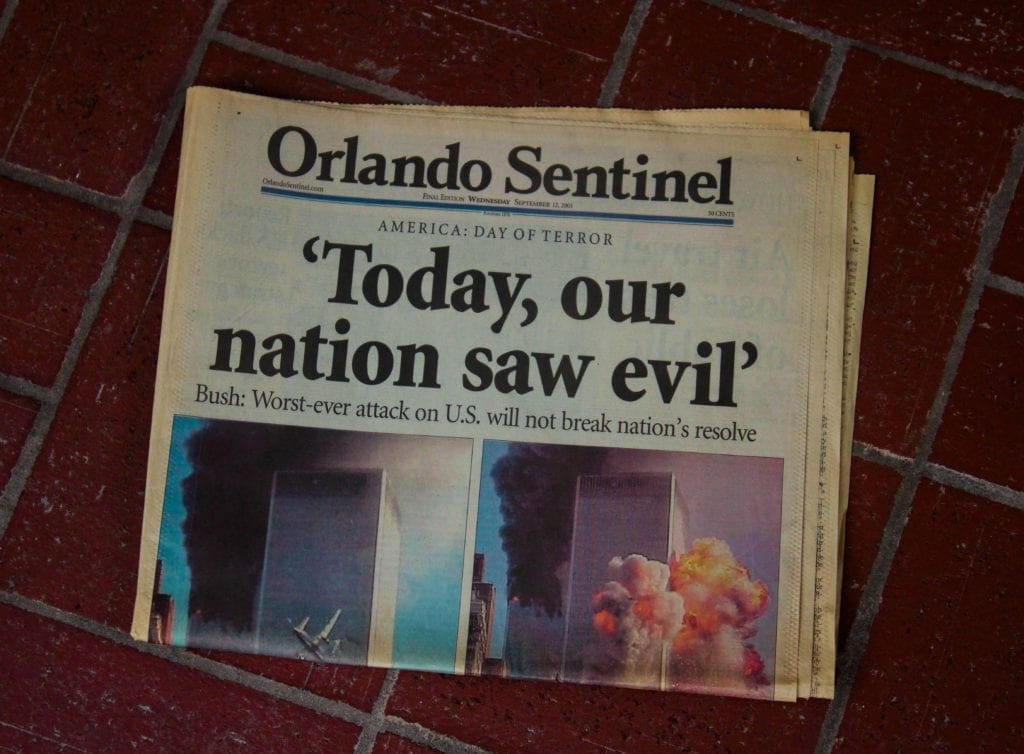
9/11 is Old Enough to Fight in the Resulting Wars

9/11 is a day that changed the course of history. As a result of US foreign intervention, groups radicalized. These groups attacked the US on our soil 18 years ago today. Now, the event that the power elites used as an excuse to strengthen their empire is old enough to fight in the wars of the US regime. If this doesn’t show you that 9/11 has become a political tool for warmongers, I don’t know what will. 9/11 is not an excuse to continue these wars To start, none of the wars in which the US is engaged is against countries that helped commit the September 11th attacks. The US killed most perpetrators of these attacks within months after the attacks. Now, everyone who was directly involved with the attacks is either dead or in prison. Any war that is justified by 9/11 ended years ago. When someone invokes 9/11 as an excuse for continuing the wars, they are lying to you. So-called “foreign policy experts” beg the public to support the Military-Industrial Complex on the corporate press. It is a pathetic display. These individuals are dedicated to indoctrinating you, and they are using an attack that would be able to fight in the US military were it a person. Any time someone criticizes a foreign policy of peace by invoking September 11th, know that they are not being honest. End the Wars to Stop the Next Attack Pearl Harbor and September 11th were both the result of blowback. US involvement has made us less safe and less free. Due to US engagement in the Middle East, the public has lost friends and family to the terror that inevitably results. As a result of 9/11, the Patriot Act annihilated the Bill of Rights. While the military “fights for our freedom” abroad, we are losing our rights by the day. We suffer from crippling debt. Ultimately, there is no fight for freedom in America that must be taken abroad. The true fight for freedom, however, is to end the wars. As the US continues to fight these wars, the risk of another blowback attack increases. If the US truly cared about safety and freedom, they would end the wars and bring the soldiers home. 9/11 was a great tragedy. It ended thousands of lives. This did not have to happen. We can and we must stop it from happening again.

Former Congressman Ron Paul Wants More Cryptocurrency Competition

Despite retiring from Congress, Dr. Ron Paul is still on top of political and economic affairs. Above all, Paul has kept up with the latest developments in the cryptocurrency space. In an interview with CNBC, Paul talked about some of the Federal Reserve’s policies, which he soundly criticized as he has done repeatedly in his multiple decades in Congress. When asked about cryptocurrencies, Paul had this to say about them:
“I like crypto coins and Blockchain because I like the different currencies competing. I want to make as little regulation as possible. I don’t know exactly what happens to the cryptocurrency. But I think the underlying idea is very good.”
For those who have followed Dr. Paul over the years, his statements shouldn’t come as a shock. After all, Paul has been the staunchest defender of sound money during his time in Congress. The former congressman understands how the Federal Reserve system has created the boom and bust cycles we currently see every decade. This is the result of the interest rate manipulations that the Fed conducts, which causes businesses to misallocate resources. This creates an illusory economy that eventually comes back to reality once the Fed-induced bubble pops. In the same token, one of the more insidious aspects of the Fed is its ability to perpetuate the warfare and welfare state. Easy money allows politicians to print money out of thin air to finance their profligate spending ventures both domestically and abroad. Direct taxation is often unpopular and can be immediately felt by taxpayers. For that reason, central banking is an alternative that power-hungry politicians turn to. Since the closing of the gold standard in the 1970s, America politicians have doubled down in their efforts to ratchet up spending. However, the introduction of cryptocurrencies like Bitcoin in 2009 has changed the way people think about money. Although the space is still very young and the technology still has many questions to answer, cryptocurrencies like Bitcoin do raise questions about central banking and allow people to get hands-on experience with coins that naturally emerge on the market. That’s the beauty of crypto. People, not politicians nor bureaucrats, ultimately decide which currencies succeed and which fail. Time will tell if cryptocurrencies will emerge as a viable alternative to the current monetary system. Nonetheless, these projects are welcome ventures in times when central banks have not curtailed their easy money policies and when welfare states around the world are on the verge of imploding. Now more than ever, the world needs sound money. Government-enforced monetary standards are simply too risky and the temptation is too strong for politicians to use them as a means of advancing all sorts of government intrusions. No matter how much demagogues try to spin their justifications for central banking, a free society is ultimately built on sound money.

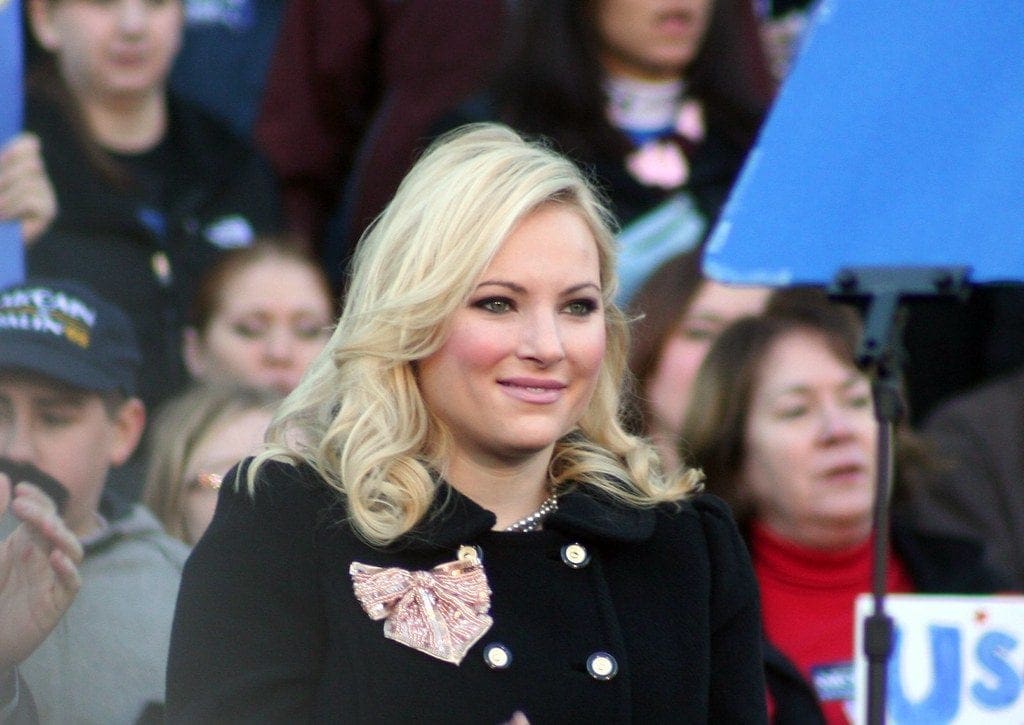
I Pity Meghan McCain

Pamela Anderson and Meghan McCain engaged in a heated discussion on The View last Friday. The two clashed over Julian Assange and the military. Throughout the exchange, Anderson called out McCain’s blatant lies about Assange’s heroism. To say the least, McCain was smearing Assange by calling him a “cyber-terrorist.” The crowd was on Anderson’s side, leading to an outburst from McCain. All in all, this exchange was an embarrassment for the War Party and its shills within the corporate press. But this exchange goes beyond Julian Assange. It goes beyond American foreign policy. Rather, one can see a horrifying problem with America’s heart in this exchange. As the conversation continued. It became increasingly obvious that McCain has no concept of society, even humanity, without the state. It is not, however, her fault. She has fallen victim of years of indoctrination that American children, but especially the children of the power elites, suffer. Meghan McCain Sees No Life Without Government At an especially testy part of the exchange, Anderson explained that the US Military has killed far more people than Wikileaks could ever imagine. After she said this, McCain responded to Anderson by asking, “So you think the military is putting the government at risk?” I didn’t notice this line at first. But when I saw this video again, I felt chills thinking about this quotation. Pamela Anderson just pointed out that the military has killed thousands, if not millions, of innocent people; and the only response you have is that the military doesn’t endanger the government? In order to believe this, you have to believe that there is no line dividing the people from the state. One does not come to think of the best interests of the state when the death of innocents come to mind unless they were conditioned to think that way. Simply put, Meghan McCain is just as much a victim of indoctrination as the average mainstream adherent of political thought. For McCain, however, it is ten times worse. The probable source of this radical indoctrination is her father, John McCain, and his associates. To be very clear, we are not the government. Until we realize this, the heart and soul of liberty and independence is at jeopardy. This is the real battle of our generation – autonomy vs. the absolute disintegration of a culture that separates us from the state. We must fight against our social conditioning to view all that is good as the state, and all that is outside the state as bad. Such a cultural disposition is the road to totalitarianism. So, condemn Meghan McCain’s sentiment, but don’t blame her for it. She is a victim as much as any other prisoner of government “education” is.