
My wife is traveling this week. Needless to say, it would be rude for me to skip ahead in the television series we're watching together, so I chose something of my own to watch during that brief, precious unwind-time between work and sleep.
I picked a film on Netflix called Uglies—about a futuristic society in which everyone undergoes a mandatory cosmetic surgery at age 16 that turns them from an "Ugly" to a "Pretty." If that sounds rather dystopian to you, well, you're on the right track, as the film's main character soon discovers.
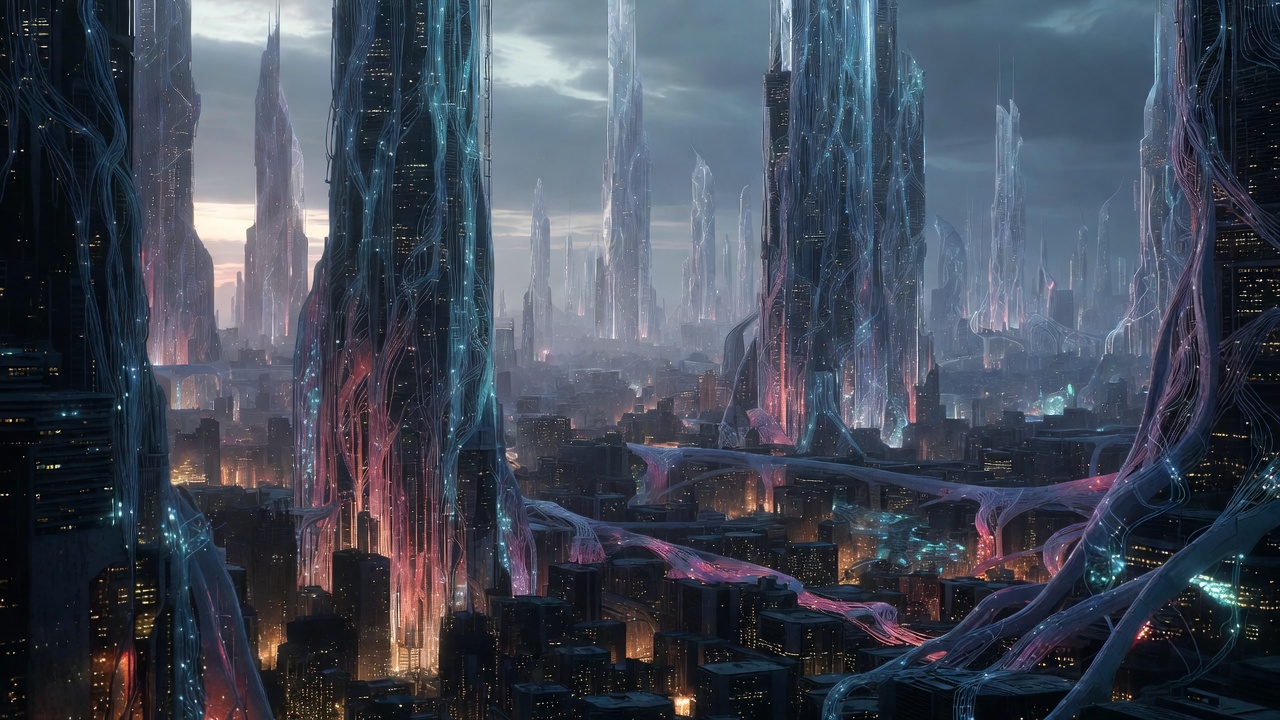
One thing many dystopian films have in common is that, at first glance, the societies they depict actually look pretty good. They are futuristic, modern, and clean. Crime appears to be a thing of the past. The leaders of these supposed utopias have apparently found a way to erase all contradictions and create paradise.
Needless to say, the rest of each film is spent with the protagonists discovering how not true that is.
The contradictions are still there. The paradisiacal peace we see on the surface is enforced by means of some sinister trick. A drug. Mind control. Enforced conformity. It's not much of a spoiler to say that in Uglies, it has something to do with the cosmetic operation that creates "Pretties."
There is much wisdom to be gleaned from stories, as they reflect real human archetypes and themes. These films share common threads that are very pertinent to our ongoing discussion. (Part 1 | Part 2)
The authors of dystopian stories in particular seem to grasp some fundamental human realities:
#1 Individualism cannot be erased
A common feature in most of these stories is that the heroes are individualistic. They are unique. Non-conformist. Quirky. No amount of engineering can take that away.
Audiences wouldn't have it any other way…and that tells us something important about human nature.
#2 People want freedom
The plots of these stories turn on the main characters' desire for freedom. They either want to fight tyranny or escape it.
We always root for them. We never root for the tyrants.
#3 Contradictions cannot be erased
Whatever sinister thing the leaders have done to create their false paradise isn't actually working. The heroes are case-in-point, as they have discovered the lie. The tricks don't work on them.
No matter how hard anyone tries, sameness cannot be enforced. Life is too messy to be centrally controlled or perfectly planned.
#4 The totalitarian temptation
This brings us to the core discovery of the 20th century: Every attempt to create "the new socialist man" … to restart society at Year Zero … to sweep away the contradictions and create paradise … fails. Every time.
It is impossible to equalize outcomes. It is impossible to change human nature. This enrages totalitarians, so they keep ramping up the amount of force they use to (attempt to) impose their paradise. Eventually, the whole operation becomes, as George Orwell so presciently noted, "A boot stamping on a human face forever."
Paradise simply cannot be engineered.
Though today's dystopian fiction (perhaps reflecting our current reality) is less Orwellian and more Huxleyan, most of it grasps the same inescapable truth: the totalitarian temptation produces horrors. Every. Single. Time.
#5 Consent
The final piece of the puzzle in these stories, as in reality, is the violation of individual consent. Things are done to people without their knowledge. Without their informed consent.
It's for their own good, say the overweening villains.
There is also no opt-out. Who would want to leave paradise? No one gets to leave.
EXIT is not allowed, even if all that is sought is a free life in the wasteland beyond the borders of the dystopian city. Exit, you see, proves that paradise isn’t really paradise.
So what can we learn from all this, in our quest to build a just world?
A just world is not imposed
First and foremost, people must be free to choose. As we have discussed at length, consent is the fundamental unit of moral concern. It is the non-negotiable prerequisite for any exchange, agreement, or authority. In a just world, people are free to choose the path their life takes…and that includes how, when, and if they are to be governed. Even if we disagree with their choices. So how does this inform our effort to create a just world? How do we craft our peaceful, futuristic utopia? Short answer: We don't. First, we do not "craft" anything. Attempting to engineer large-scale social outcomes does not work, and it produces great evils along the road to its inevitable failure. Second, there is no such thing as utopia. The word, from the Greek, means no place. Utopia cannot be made, at least not here on Earth. No voluntaryist, no consentist, no libertarian anarchist worth his salt claims that paradise is possible. There will always be tradeoffs. There will always be contradictions and difficult questions. There will always be messy human nature. Will utopia be possible 10,000 years from now? I don't know. But for the next 10,000 years at least…STOP TRYING. Every attempt in history has failed for a reason. All such attempts ever produce are tyrants, furious that reality is not complying with their noble goals.A just world is imperfect
We build a just world by accepting all of this. By accepting imperfection. By accepting that different people want different things. By allowing people to choose. A just world recognizes the core claim of the individual to steer the course of his or her own life. A just world leaves individuals the freedom to do so. In a just world, no one attempts to impose one-size-fits-all 'solutions' on anyone. This means respecting the jurisdictional rights of every individual. Doing so will produce a world in which- Some people will establish their own experiments in governance on their own property, or join in with the experiments of others,
- Some will choose from among jurisdictionally coterminous governance providers,
- Some will choose from among jurisdictionally coterminous private agencies providing security, justice, and other desirable services, and
- Some will do nothing at all, or choose some other course entirely.
A just world accepts many solutions
For millennia, the default assumption has been that the only way people can coexist is for everyone in a given area to be forced to live under the same system. This default assumption is wrong. Here in America, we figured out long ago that a Baptist can live next to a Methodist can live next to an atheist can live next to a Hindu, and they can all coexist just fine. We have also figured it out with insurance companies: you and I can be clients of different companies with different policies, yet if we have a dispute, it still gets worked out somehow. Imagine that. The results of single-solution thinking are there for all to see. We cram everyone under one umbrella. We give them the power to use the ballot box as a weapon against their fellows. Then, on the one hand, we act shocked and dismayed that there is so much resentment and friction. And on the other hand, we teach our children that democracy is wonderful, magical, and unquestionably sacrosanct. In spite of how utterly discredited the single-solution fallacy is, we just keep doing it. Believing it is the only way. Violating consent and calling it "the consent of the governed."A just world is not overseen by a 'world government'
And now, all of this mad failure has been translated up the chain to the idea of world government. We have global problems to solve, we are told by busybody billionaires, ideologues, and globalists. But individuals are far too fractious. You need to be directed for your own good. And so we are herded inexorably into bigger and bigger 'solutions,' each one imposed upon us whether we want it or not. Countries get bigger. Multinational institutions grow. Spheres of influence become hemispheric. Ironically, as the institutions grow larger, the number of people in charge inevitably shrinks. Ultimately, we will be told that the only way humans can possibly get along is if there is a single world government. Aaaaaaaaand we're right back to the nightmares of dystopian fiction. Except it won't be fiction.Common respect
There is another way. Another path we can walk. Instead of imposing a one-world order and dumping everyone into the same homogenizing meat grinder, we can let people do what they want. Experiment with their own ways of life. Form their own associations. And then we can invite them to participate in a common respect protocol that helps keep the peace. No world government. No imposed order. Just a simple, voluntary agreement. Nothing complicated—just the shortest possible agreement that makes coexistence feasible without eroding consent. And then beyond that, we accept that perfection is impossible, tradeoffs are inevitable, and human nature is not infinitely malleable. We accept that some people and polities will not want to participate. And we accept that building a just world must never, ever look like a boot stamping on a human face forever. Instead, it can be a hand offered in friendship. What would such a common respect protocol look like? We will try our hand at drafting one in Part 4.Questions? Input? Concerns? Feel free to email me at chriscook@theadvocates.org