













At some point in the not-so-distant future, I will apply for Medicare and Social Security.
That fact alone does not trouble me. What does is what comes with it.
Not care, not support, but entry into a sprawling administrative maze that converts a living, thinking, adaptable human being like me into a category, a threshold, a box to be checked.
Forms. Income cliffs. Eligibility corridors. Compliance rituals.
All designed to “help,” yet all requiring a quiet surrender of autonomy in exchange for approved security.
This is where the real tension begins. Not between left and right, but between human judgment and bureaucratic control. And it feels like the older I get, the clearer that distinction becomes.
When Order Becomes Obedience
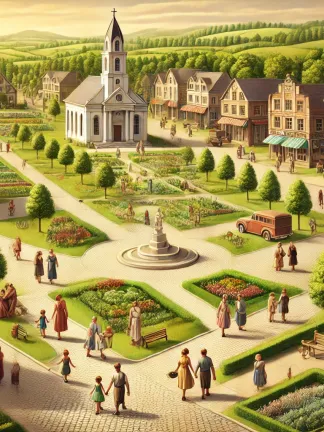
Many large systems strive to create some semblance of order while preventing harm and ensuring fairness.
But somewhere along the way, order hardens into rigidity. Rules multiply. Exceptions vanish. Discretion disappears. What remains is not safety, but obedience.
The paradox is simple: systems built to stabilize life often do so by stripping away flexibility, dignity, and local intelligence. They promise security, but demand submission.
This is not just about aging programs or healthcare. It is a broader pattern accelerating as we head into 2026. More data. More monitoring. More rulemaking. More compliance, all justified in the language of protection and equity.
The danger here is administrative arrogance. The belief that enough forms, credentials, and metrics can replace human judgment.
Order Without Orchestrators
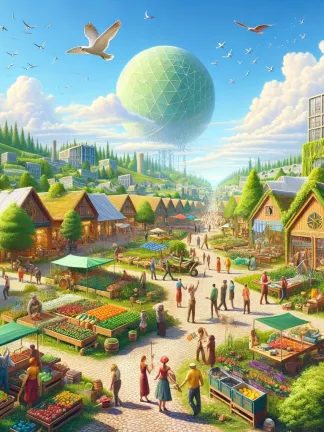
One of the most misunderstood insights of liberty-minded thinking is this: not all order needs to be designed.
Some of the most functional systems in human life emerge without central control. Markets adapt faster than agencies. Communities solve problems before legislation arrives. Individuals adjust in real time when they are not frozen by compliance anxiety.
This is not chaos. It is coordination without coercion.
The assumption that experts at the center can gather enough information to manage life from above ignores a basic reality. Knowledge lives locally. It lives in context, experience, improvisation. No spreadsheet captures that.
When systems try anyway, they slow everything down. They flatten nuance. They replace thinking with rule-following.
What’s your political type?
Find out right now by taking The World’s Smallest Political Quiz.
The Taoist Warning We Keep Ignoring
Long before modern economics, Taoist thinkers observed the same pattern by watching nature.
Rivers do not need instruction. Ecosystems do not require oversight committees. Life organizes itself when it is not over-managed.
Wu wei, often misunderstood as passivity, is actually disciplined restraint. Knowing when intervention helps and when it harms. Knowing when doing less produces more.
From this perspective, excessive administration is not just inefficient. It is misaligned with how reality actually works. When rules proliferate, people stop thinking. When life is micromanaged, vitality drains away.
The Tao governs by not over-governing. Modern systems increasingly do the opposite.
Where Bureaucracy Quietly Breaks Things
The damage from over-administration is no longer abstract.
Credential inflation filters competence through paperwork instead of ability. Jobs once learned through skill and mentorship now require degrees and certifications that often have little to do with performance.
Compliance costs crush small operators. Independent workers, caregivers, elders, and local entrepreneurs face rule sets designed for large institutions. The result is consolidation, not protection. Uniformity, not resilience.
Most corrosive of all is the disappearance of discretion. When judgment is removed, systems become brittle. Responsibility is outsourced to procedure. No one is accountable, yet everyone is constrained.
In healthcare and aging policy, this turns quietly cruel. Independence is penalized. Adaptation is discouraged. People are funneled into narrow eligibility lanes that reward dependency over creativity.
Freedom Is Not Rebellion. It Is Trust.
Freedom, as I see it, is not about defiance. It is about trust.
Trust in people to respond intelligently to their circumstances. Trust in voluntary coordination. Trust that most adults, when treated as such, behave accordingly.
Risk does not disappear in free systems. It is acknowledged. Managed locally. Learned from. Resilience comes from adaptation, not control.
The alternative is a world where safety is purchased at the cost of dignity. Where life is technically managed but spiritually diminished.
A Question Worth Sitting With
As we begin 2026, the question is not whether administrative systems will continue to expand. They will.
The real question is whether we notice where less control produces better outcomes.
Where in your life does flow replace friction when oversight retreats?
Where does creativity return when permission is no longer required?
Where does order arise naturally when trust replaces fear?
The Tao whispers this truth. Political liberty argues it openly.
Life does not want to be managed. It wants to be trusted.

Diamond Michael Scott is an independent journalist and an editor-at-large for Advocates for Self Government. You can find more of his work at The Daily Chocolate Taoist.
What do you think?
Did you find this article persuasive?