














“Capitalism destroys the environment,” tyrants, bureaucrats, and the mainstream
media are quick to proclaim.
Newspapers tout it:
destruction. (The Guardian)
Unless It Changes, Capitalism Will Starve Humanity By 2050. (Forbes)
U.S. Green Party leader Gloria Mattera summarizes the Left’s position:
The capitalist system oppresses workers and communities while destroying the planet.
Even some self-proclaimed proponents of free markets voice similar criticisms:
I am a capitalist … Capitalism requires a new operating system, and needs to be rebooted. (Peter Bakker, president of the World Business Council on Sustainable Development)
Everyone seems to agree. Yet, alarmist predictions are nothing new. They’ve surfaced for centuries. Human ingenuity, however, continues to improve the environment.
What is their proposed alternative to free markets? What does the record of communism, socialism, fascism, collectivism (all different labels for the same leftist top-down ideology) look like?
These ideologies caused over 100 million deaths in the last century. Under such regimes, people didn’t fare well. Did Mother Nature fare any better?
Privatized Benefits, Socialized Costs
Consider a student dorm with a shared kitchen. Chances are, you’ve at least visited one. No one owns the sink. No one is clearly responsible for the trash. Plates stack up. Dust and grime accumulate. I’ll leave this for now and take care of it later. Or someone else will. Eventually, the mold has its own ZIP code.
This is an all-too-common scenario known as the tragedy of the commons. If there is no clear owner, if everyone is responsible, no one takes care of maintenance. Privatized profits, socialized losses: Everyone tries to reap the maximum benefit, and no one wants to bear the costs.
People are simply acting according to rational self-interest. One might call it “greed,” but that is denying human nature. In such a publicly owned system, no one has an incentive to clean up the mess or think long-term.
We see this tragedy play out in many areas: overfished oceans, depleted groundwater, the overuse of antibiotics, littered public spaces, and even congested public Wi-Fi bandwidth, just to name a few.
In leftist systems, this situation is institutionalized, and it shows.
Moving the Desert
One early example unfolded in the late 1950s. The Soviet Union decided to grow cotton, “white gold,” in Central Asia. In Central Asia’s desert climate, however, conducting agriculture is difficult. Hence, the central planners diverted water from the Amu Darya and Syr Darya rivers for irrigation.
The plan worked. Uzbekistan eventually produced 61 percent of the USSR’s cotton, and by the mid-1990s, it was the world’s fourth-largest cotton producer.
However, the project had nasty side effects. Those two rivers fed the fourth-largest lake in the world, the Aral Sea. Little fresh water reached the sea after the irrigation canals had been built. They were leaky and wasteful, and to make matters worse, heavy use of pesticides and fertilizers polluted the lake.
By 1990, the Aral Sea’s surface area had shrunk from 67,500 km² in 1960 to just under 40,000 km², pushing shorelines tens of kilometers away from the former port towns. In fact, by 1987, the sea had split into two separate bodies of water. A large lake moderates the local climate. Once it was largely gone, summers grew hotter, winters turned colder, and the whole region became drier. Heavy use of fertilizers and pesticides caused a catastrophic spike in diseases and child mortality.
Officials, experts, and the media praised the success of “turning the desert green,” ignoring the fact that all that effort and money had simply created a new desert elsewhere. A plan had been made. It worked. But the side effects were disastrous.
What’s your political type?
Find out right now by taking The World’s Smallest Political Quiz.
Reliable Energy
From its inception in 1949, the East German government pursued a policy of energy self-sufficiency, hoping to avoid depending on global energy markets and prices. As a result, it had to rely on burning lignite, a soft brown coal abundant in the region. Seventy percent of East Germany’s primary energy and 85 percent of its electricity came from lignite.
Lignite has a low calorific value, meaning it releases relatively little heat even when fully burned. As a result, the German Democratic Republic (GDR) was the world’s third-largest energy consumer per capita. Running old, inefficient power plants on this dirty fuel was a recipe for disaster. Lignite is, as the Health and Environment Alliance describes it, “the most health-harming form of coal,” and a UN report identified the GDR as the “most polluted country in Europe.” This didn’t concern East Germany’s political leaders, however.
After West and East Germany reunified in 1989, the environmental situation improved. Although the government stepped back somewhat, it still heavily influences energy production, just as governments do everywhere. In 2023, Germany shut down its last nuclear power plants. By 2038, the German government plans to phase out coal as well. Together, coal and nuclear accounted for a third of the country’s energy consumption in 2000.
Shutting down reliable energy sources, including “green” nuclear power, comes with risks. When imports of oil, gas, and coal from Russia plummeted in 2022 after the start of the Russia-Ukraine conflict, German politicians finally took notice. Their solution to the energy shortage and price spike was to restart coal-fired power plants, including some that burn lignite.
Nonetheless, Germany continues its march toward a “green future.” German households already pay $0.4 USD per kWh, placing Germany firmly in the global top ten for household electricity prices. According to a 2024 survey by Germany’s DIHK (Chambers of Industry and Commerce), 37 percent of the country’s industrial firms are considering or already undertaking a shift of production abroad as a reaction to the country’s energy situation. Focusing on unreliable, expensive energy sources sets the stage for a nightmare. The “green future” looks dark.
A Southern Paradise
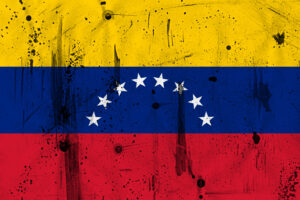
At first glance, Venezuela might look like an environmentalist’s dream. The country with the largest proven oil reserves today produces only 15% of what it used to 50 years ago.
It’s a tale of grievous mismanagement of an entire sector. In the 1970s, production was at 3.5 million barrels per day. Following a series of fluctuations in the 80s and 90s, production stabilized at 2.5 million barrels per day until 2015. After 2020, however, output plunged precipitously to a mere 400,000 barrels per day.
Of course, this collapse is not because decision-makers decided to “go green.”
Venezuela has a long history of state intervention in its oil industry. In 1943, the Hydrocarbons Law was passed, giving the state 50 percent of oil company profits. Still, until the oil sector was officially nationalized in 1976, foreign companies developed the infrastructure to extract oil. PDVSA, the new state oil company, took over, and production soon began to fall.
In the 1990s, politicians once again courted foreign investment in its oil sector, leading to a production upswing around the turn of the millennium. But heavy restrictions soon returned, and by 2007, the last foreign-run oil fields were nationalized.
While small oil spills remain common in the industry, improved technology has significantly reduced large spills from tankers in much of the world. PDVSA introduced a different way to ‘reduce’ oil spills in 2016: it stopped publishing the data. Because newer data are not available, we have to look at the early 2010s for an international comparison. Although oil spill volume is roughly similar between the US and Venezuela, the United States produces five times as much crude oil. Since then, this gap has only widened.
Oil-coated lakes are not the only ugly consequence of Venezuela’s dictatorship. Mineral mining has driven deforestation, and residents now face increased risks of natural disasters, water shortages, and toxic pollution. A political ideology has turned the wealthiest nation in Latin America into a place that 8 million people, a third of the population, have fled since 2014.
Stewardship
The free market isn’t perfect either. Accidents happen. Without accountability, some individuals and businesses will pollute. Fortunately, the free market has protective mechanisms. First and foremost, it provides proper incentives through private ownership. If you own a piece of land, you want it to maintain its value and protect it from pollution. Public property, by contrast, will always suffer from the tragedy of the commons. Second, the wealth generated by free exchange makes individuals care more about their environment. Prosperity changes people’s mindset.
You can call it (democratic) socialism, communism, fascism, collectivism, or any other form of leftism. Whatever the name, these ideologies lead to deterioration and environmental disasters, whereas capitalism improves conditions over time. Top-down central planning can occasionally achieve its immediate goals, but it invariably comes with nasty side effects. Long-term stewardship of the environment is only possible with private ownership.
Praying to the god of nature, “sustainability,” “green energy,” or “Mother Earth” will not save the environment—only self-interested individuals, operating under the right incentives, will.

With a background in business and tech, David brings clarity to ideas of individual freedom and Austrian Economics. He left Europe in search of liberty and he authors the Substack publication "In Pursuit of Liberty."
What do you think?
Did you find this article persuasive?