













Beta

Password Reset Confirmation

If an account matching the email you entered was found, you will receive an email with a link to reset your password.

Welcome to our Beta

The Advocates of Self-Government is preparing a new experience for our users.

User Not Found

The username/email and password combination you entered was not found. Please try again or contact support.

Skip to main content

Quizzes & Apps

Articles

Tag: gun violence

No Cory Booker, Gun Control Will Not Make Us Free

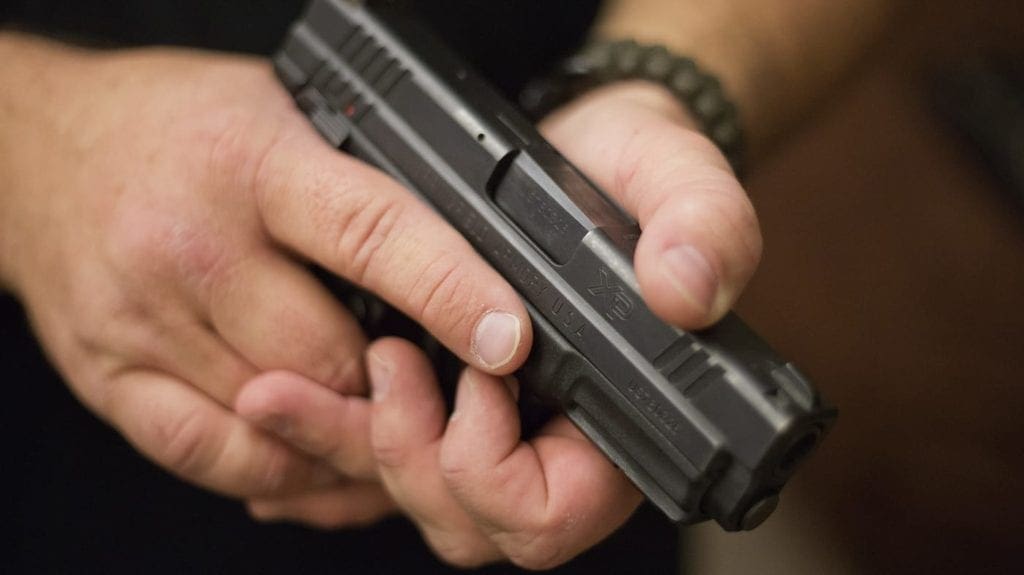
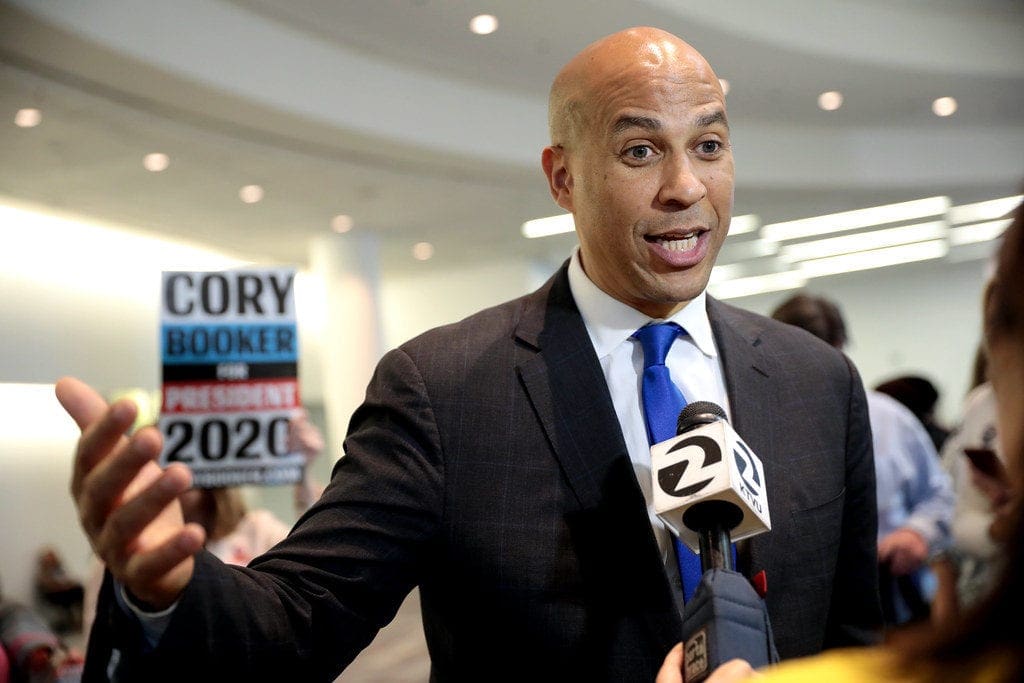
Channeling his inner Orwell, New Jersey Senator Cory Booker claims that gun control will make people “free.” On Rachel Maddow’s show, Booker told the MSNBC host that the gun violence taking place in Newark, New Jersey (the city he is formerly mayor of) is inspiring a “culture of fear.” For him, freedom can be restored in these areas by simply passing gun control. Booker has become the “gun control candidate” of the 2020 election cycle by unveiling a comprehensive gun control package. His bold gun control plan includes popular gun control schemes such as universal background checks, gun licensing, and opening up gun manufacturers to lawsuits. Booker has every right to be concerned about the violence taking place in cities like Newark. America’s urban centers still have many problems with issues of public security. However, government response to these problems is not necessarily the correct answer. Above all, one that involves curtailing the freedoms of countless law-abiding people should be a non-starter. Being denied the right to defend yourself and your loved ones are as anti-freedom as it gets. It leaves the law-abiding at the mercy of unscrupulous governments and criminals. Even when the government makes an effort to stay within its proper role, it cannot always be relied upon to adequately defend others. Often times the police are minutes away in situations which require split-second decision-making. In fact, under the Supreme Court decision Warren v. District of Columbia, police are not obligated to protect individuals. So, the solution cannot solely focus on the government. Truth be told, adding more laws should not be entertained in these scenarios. True freedom involves making autonomous decisions. Some people will arm themselves, some won’t. When we have actual freedom in matters of public security, certain forms of defense options will emerge such as personal defense, private security, or even community watches. Instead of turning towards more government, Booker should look at revitalizing civil society or building proactive non-state alternatives to addressing the issue of public security. For most problems, there’s usually a non-state solution. Gun violence is not exempt from this.
Red Flag Laws are Not a Magical Solution to Gun Violence

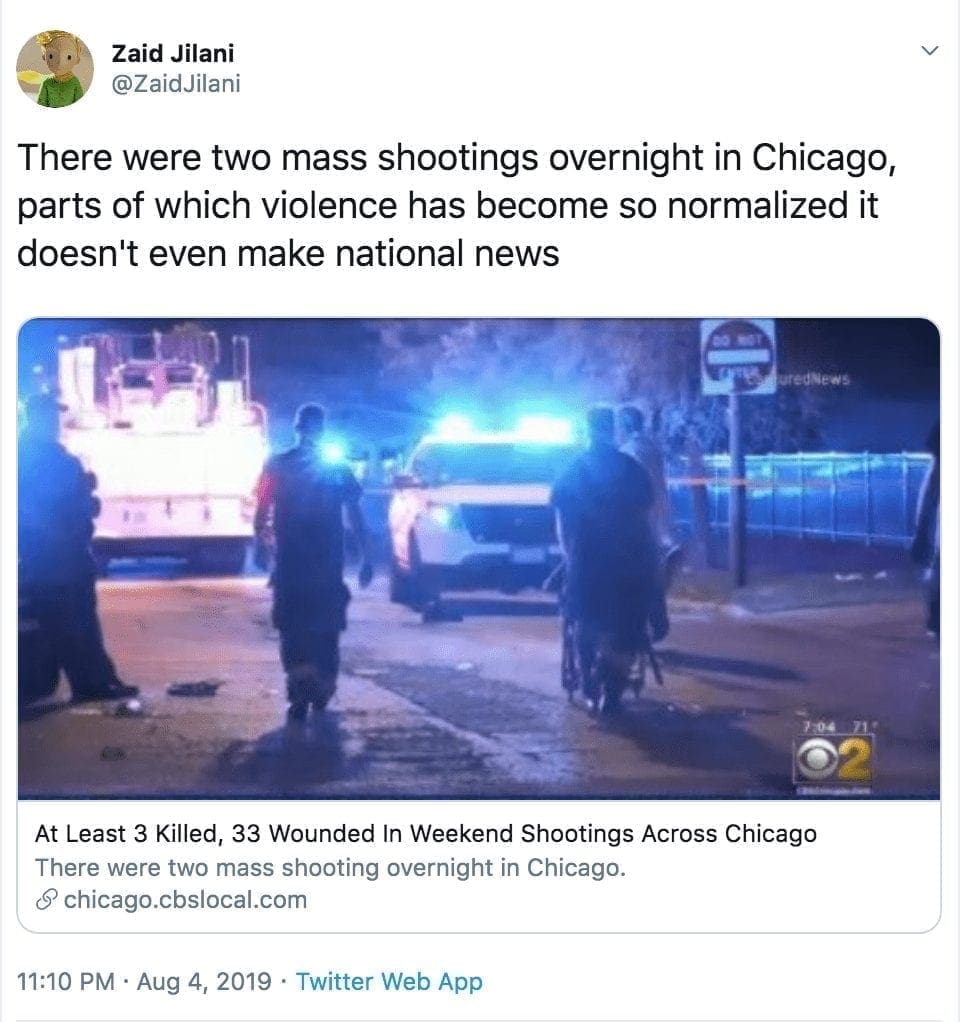
Last weekend’s spurt of mass shootings in Dayton, Ohio and El Paso, Texas has brought the dreaded gun control debate back into the mix. Combine that with identity politics, and we have all the makings for unproductive discussions on public policy. The media have been quick to blame white supremacy and associate President Donald Trump with this shooting. The shooter’s manifesto is filled with hateful language and anti-immigrant sentiment, which should be condemned. But there’s more to this story than meets the eye. First of all, white Americans are not the only group carrying out gun violence. Journalist Zaid Jilani pointed out that there were two mass shootings in Chicago on the night of August 3, 2019. This was the same day that the El Paso massacre took place. He argues that gun violence in Chicago “has become so normalized it doesn’t even make national news.” Reports from CBS Chicago indicate that three people were killed and 40 were wounded last weekend. Four shootings occurred on August 2, 12 shootings on August 3, and five shootings on August 4. CBS also reported that there were “two mass shootings overnight in Chicago — both in the West Side’s Lawndale neighborhood.” The state of Illinois has stringent gun controls which include red flag gun confiscation laws. Despite having these laws present, shootings take place regularly. Chicago is one of the urban centers that epitomizes the failure of gun control policies. While most mainstream conservatives get this at face value, they still are under the illusion that they can make certain gun control schemes work. GOP politicians like Congressman Dan Crenshaw and Senator Lindsey Graham ignore this at their own constituents’ peril as they champion red flag gun confiscation orders as the “solution” to America’s supposed gun violence “crisis.” In a debate that is filled with so much emotion, researcher John Lott brings cool-headed reasoning. His research has demonstrated that red flag laws are ineffective in hindering crime, let alone stopping mass shootings. After looking at data from 1970 through 2017, Lott determined that “Red Flag laws appear to have had no significant effect on murder, suicide, the number of people killed in mass public shootings, robbery, aggravated assault or burglary. There is some evidence that rape rates rise. These laws apparently do not save lives.” A more practical example would be the case in Connecticut. The state passed a red flag law in 1999, making it one of the first states in the country to advance such legislation. Gun control proponents would make us think that is the magical solution to gun violence. Well, it didn’t turn out to be that way. Adam Lanza was still able to carry out his massacre at Sandy Hook in 2012. All in all, there isn’t a legislative quick fix. More than just having every civilian armed, venues should start considering private security options in today’s increasingly polarized political climate. We must come grips with the fact that the government isn’t going to save us. Often times, it hurts us. On the other hand, there are plenty of solutions both in the market and civil society at our disposal to confront these problems. Let’s give those a try.

The Data Behind “Gun” Violence

The United States is an enormous country with different cultures, geographies, histories, climates, cuisines and many other aspects which differentiates a region from its neighbors. The media is quick to assert that America has a gun violence problem. The truth isn’t that simple.  Most areas of the United States do not have gun violence issues while some regions have murder rates akin to third-world countries. When looking at numbers on a state-by-state basis, homicide rates vary from 1.3 per 100,000 residents in New Hampshire to 11.8 per 100,000 residents in Louisiana. New Hampshire, Vermont, Idaho, and Oregon–all of which have among the lowest homicide rates in the United States despite have lax gun laws–earn Brady Campaign (a gun control advocacy group) scores of D-, F, F, and D+. gun The U.S. has a murder per capita rate of 5.3 deaths per 100,000 residents, Mexico has a murder rate of 20.5 per 100,000, despite the fact that on average Mexico has 15 guns per 100 residents and the U.S. has 101 guns per 100 residents. Last year in St. Louis, the murder rate was 50 per 100,000 residents — more than three times Chicago’s, ten times the national average and thirty-eight times that of New Hampshire’s. What all these metrics teach us is laws cannot prevent every atrocity, and the number of guns owned in society is not the most relevant factor for whether gun violence will occur. Rather, what matters is culture and the degree to which we chose to respect each other’s freedom and property. Culture is why Mexico has a murder rate that is four times that of the United States despite only having 15 guns per 100 residents compared to the United States’ 101 guns per 100 residents. Culture is why New Hampshire has a homicide rate that is only 2.6 percent of St. Louis’ murder rate. Cultures that promote human respect and the tolerance of differing values will find themselves more harmonious, more prosperous and with less violence than cultures which do not value basic civil principles of don’t harm, steal from, or defraud others. The very nature of government encourages men to destabilize peaceful civil principles and gradually move society into warring democratic factions.   It’s hard to tolerate others and live in harmony when most individuals are constantly trying to force their personal values on others by voting for a politician to control the actions of society. Just because one person doesn’t value gun ownership doesn’t mean everyone should be penalized for it. Peaceful and respectful individuals don’t hire mobsters, hitmen or politicians to force their personal values upon others. While I don’t love guns, I know that others do. Now think about what you love, how would you like it if a group of individuals were trying to use politicians and police to take from you what you love? Is this a recipe for peace, a nation of people in a constant battle over who gets to control arbitrary laws? I think we can all agree voting every two years to control one another through proxy politicians is not how society will achieve harmony and prosperity. Changing our culture to one which maximizes human respect, is tolerant of others, values the individual, respects persuasion and trade over democratic majority-rule will lead to a more flourishing, tolerant, and less violent society. Gun laws will never reduce the amount of violence in society, many countries have made it impossible or near impossible to own a gun (there is only one legal gun store in Mexico) which results in peaceful individuals ending up defenseless against those who do not care about laws. Laws for the most part do not stop deplorable people from committing acts of violence. It is naïve to believe a person who is willing to take innocent lives and murder as many people as possible even remotely cares about following the law. Gun control advocates must wake up and realize laws mean nothing to those who all willing to slaughter innocents. Americans, pointing guns or pointing votes at each other will never lead to the peaceful society we desire. While the damage and bloodshed caused by a bullet is easy to see and highlight on the news, yet the societal unrest resulting from the ballot box is not so measurable. The machinery of politics incentivizes people to try to coercively control others they don’t not agree with, and promotes a nasty tribalism in which the stakes are our most fundamental personal values. Political democracy moves us into never ending tribal political battles, battles which do not allow individuals to live their lives free from the coercion of others and with 100 percent autonomy. Pointing a gun or using the vote to strip others of their life, liberty or property is not a foundation from which a civilized and peaceful society will emerge.

What do libertarians think about government banning medical marijuana and gun violence research?

What do libertarians think about government banning medical marijuana and gun violence research?

Editor’s Note: This article originally appeared on Dr. Ruwart’s website The only way that research on gun violence can be “banned” is to have government use guns—and gun violence, if necessary—to stop it. Libertarians Researchrecognize the inherent contradiction in letting government use gun violence to ban research on it! Research on medical marijuana is banned for fear that the results wouldn’t support the Schedule I rating (high potential for abuse, no medical utility) on cannabis. This ban is reminiscent of the Catholic Church’s persecution of Galileo for pointing out that the earth revolves around the sun! Libertarians don’t support bans, which stop people—at gunpoint, if necessary—from doing enlightening research. Banning the growth of knowledge is a form of thought control.

Chicago Police ‘Intentionally Destroying’ Police Car Dashcams, Microphones

Chicago Police ‘Intentionally Destroying’ Police Car Dashcams, Microphones

This article was featured in our weekly newsletter, the Liberator Online. To receive it in your inbox, sign up here.

Chicago is notorious for gun-related violence. With some of the toughest anti-gun rights on its books, the city struggles to keep its residents safe. With pro gun control advocates making the case that the town’s gun-related violence is due to the fact most people purchase their guns illegally, it’s hard not to see how enacting more restrictive laws won’t make a difference.

But gun violence alone is not the only issue in Chicago.

Chicago

According to Washington Post’s Radley Balko, corruption among Chicago Police Department officers continues to expose countless of innocent residents to unconstitutional abuses.

DNA Info Chicago reviewed over 1,800 police maintenance logs of the city’s many police cars to learn why 80 percent of the footage captured by squad car dashboard cameras in the city is often silent.

Last month, Chicago officials blamed the absence of audio on two factors, error and “intentional destruction.” With the help of the maintenance records, researchers found that, in many cases, officers pulled out batteries of their microphones, stashed full microphones in their glove boxes, and even destroyed microphone antennas. Microphones have also disappeared in several occasions.

But the research team also wanted to discover why footage of a particular 2014 incident involving a Chicago officer and a teenager did not contain any audio. What DNA Info learned is nothing short of horrifying.

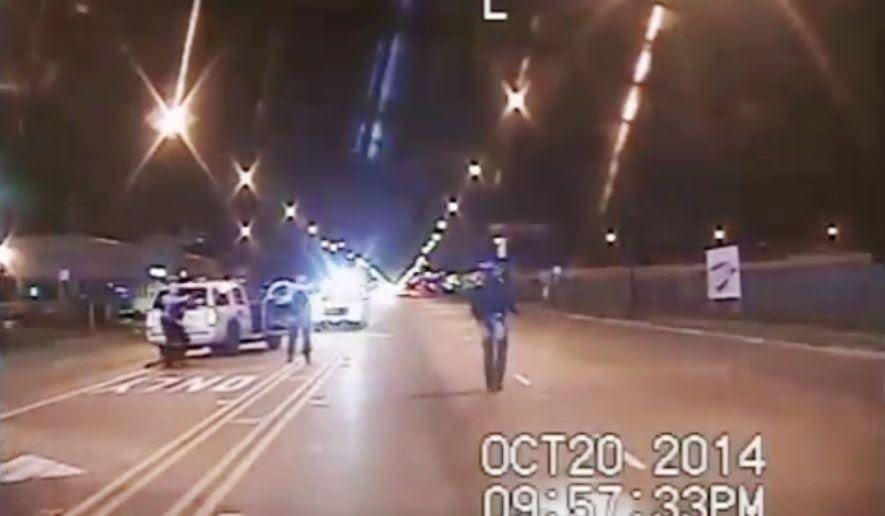
On October 20, 2014, 17-year-old Laquan McDonald was killed by officer Jason Van Dyke. The encounter’s footage was widely shared online. But while the video went viral, none of the patrol cars’ cameras present at the scene were able to capture any audio.

The dashcam attached to the patrol car used by Van Dyke had been sent to repair at least twice prior to the killing. According to DNA Info, police technicians reported on June 17, 2014 that a dashcam wiring issue had been fixed three months after the camera had been brought in for repair. But just one day later, the same dashcam was sent back to technicians.

According to the records obtained by DNA Info, technicians claimed that the issues presented the second time were due to “intentional damage.”

Twelve days after the camera came back from the technician’s desk, McDonald was killed.

Van Dyke’s patrol car camera did not register any audio of the incident. The video that went viral was recorded by another patrol car.

As the nation debates criminal justice reform, incidents like the one involving McDonald and officer Van Dyke should be part of the discussion.

Overcriminalization is a real issue. To Tim Lynch, the director of the Cato Institute’s Project on Criminal Justice, “too many officer-involved shootings receive little scrutiny.” Setting emotions aside and bringing these issues to light may give the public a better idea of what the solution is. But simply standing idly by as law enforcement, state officials, and lawmakers push for more laws, more restrictions, and more penalties won’t do.

What About this Administrations’ Militaristic Policies and their Victims?

What About this Administrations’ Militaristic Policies and their Victims?

This article was featured in our weekly newsletter, the Liberator Online. To receive it in your inbox, sign up here. During most of the day Tuesday, the day President Barack Obama gave his State of the Union Address, the Internet went ablaze with the White House’s announcements concerning empty gallery seats. According to the White House, one seat will remain vacant during the entire address “for the victims of gun violence who no longer have a voice.” But to author James Bovard, seats should be left vacant to remind the public of the victims of the president’s militarism instead. doctors without borders hospital bombed The Washington Post keeps a database of incidents involving police’s deadly use of force. According to its findings, 986 people were killed in 2015 alone during encounters with police officers. While the president has been pushing for tougher, more restrictive gun control measures to curb gun violence in America, the US Justice Department has been supporting officers every time the Supreme Court agrees to hear an excessive-force case. Recently, Bovard noted, Attorney General Loretta Lynch claimed that federally-funded police agencies should keep the number of people killed in encounters with the police under wraps. And despite the efforts of several US states willing to put an end to the drug war at home, Obama’s policy in Mexico continues to fuel the drug war in the neighboring country, increasing the number of victims abroad. But this administrations’ militarism is not only responsible for death and destruction in the American continent. To Bovard, a few seats should also stay vacant to remind us of the 30 French medical staff, patients, and other victims of the US attack against a Doctors Without Borders hospital in Kunduz, Afghanistan. To Bovard, the twelve Yemenis killed during a US drone strike while celebrating nuptials on December 12, 2013 shouldn’t be ignored. But neither should the 30 people splattered to death during a 2012 drone strike in Afghanistan. Prior to the deadly incident, a group of Taliban insurgents reportedly entered a house where a family was holding a wedding ceremony. As Afghan and American forces surrounded the house, firing broke out. As both sides struggled, the 18 members of a single extended family feared for their safety. A few moments after US and Afghan troops were wounded in the fight, a jet was called to help, dropping a 500-pound bomb on the house. At least nine of the innocent victims were children. Other victims Bovard urges the White House to recognize include the four Americans killed in the 2012 Benghazi attack and the hundreds, or perhaps even thousands of Libyans who lost their lives during the civil war triggered by Hillary Clinton and Obama’s bombing campaign against Moammar Gadhafi. Another seat should also remain vacant in the name of the 16-year-old Abdulrahman Anwar al-Awlaki, an American citizen who was killed in yet another US drone strike under this administration. Due to the White Houses’ militaristic policies here and abroad, people are losing their lives. Unnecessary conflicts produced by bad policies should require more attention not only because they are killing people, but because of the Obama administrations’ hypocritical stances show they have never been serious about living up to the expectations raised during the 2008 presidential campaign. Something tells me the next Commander in Chief will have to tackle the same issues. Unsuccessfully, of course, since every single US president appears to focus on implementing the same bad policies.

Violence in America: Drug War Policy is the Problem, Not Guns

Violence in America: Drug War Policy is the Problem, Not Guns

This article was featured in our weekly newsletter, the Liberator Online. To receive it in your inbox, sign up here. President Barack Obama has reignited the gun debate by announcing a series of executive actions with the intent of curbing gun violence. To critics, Obama’s announcement is simply a mistake. To others, executive actions are sideshows, distracting the country from the actual problems tied to violence. Despite the criticism, former Secretary of State and current presidential candidate Hillary Clinton says she’s “proud” of Obama. To the Democrat, more must be done in order to “eliminate all the threats as much as possible.” gun control Included with the executive actions are new requirements concerning background checks for guns bought from dealers online and at gun shows. The president also wants to upgrade the background check technology that would help federal officials track stolen weapons. But despite the president’s passionate rhetoric, unregulated private sales usually benefit individuals who are prevented from owning guns but who are not necessarily purchasing weapons to commit crimes. On the other hand, weapons used by the two attackers responsible for the deadly mass shooting in San Bernardino were bought legally, making Obama’s latest actions completely ineffective in similar cases. But as media outlets and Internet figures debate the effectiveness of Obama’s plan, another piece of evidence provided by the federal government is consistently left out of the discussion. According to the Centers for Disease Control and Prevention, the injury rates among crime victims who use guns to defend themselves are lower when compared to injury rates among victims who resort to different strategies for protection. The $10 million study released recently by CDC suggests that the number of violent crimes, “including homicides specifically,” has been in steady decline for the past five years, and that the number of stolen guns linked to criminal use is very low. Most felons, the report suggests, obtain their weapons from informal sources instead of resorting to theft. The study also suggests that most gun-related incidents in America tend to result in injuries rather than deaths. Yet another bit of information the president failed to mention during his announcement covers the rates of gun-related deaths. According to the study released through CDC, the majority of deaths caused by firearm use are suicides, not homicides. Between 2000 and 2010, for instance, the number of firearm-related suicides outnumbered the number of homicides for victims in all age groups. The agency reports that 335,600 people died between 2000 and 2010 due to firearm-related violence, but 61 percent of these deaths, or 204,716 of these cases, were suicides. If the president is serious about curbing violence in America, one could easily find reasons to take a look at other policies—such as the drug war—for a practical solution. According to the study released by CDC, African American males are the most affected by firearm-related violence. While the study suggests that income inequality is a risk factor that may predict violence, it fails to note that the drug war is mostly responsible for the high rates of arrests, prosecutions, and convictions among people of color. Being serious about gun violence in the country requires vision, which President Barack Obama appears to lack. As the drug war wages on, despite some states’ successful efforts against prohibition, inequality and economic tyranny continue to make gun violence an issue in America. Executive orders concerning gun use will do nothing to put an end to what the US drug policy has triggered.

Turn Objections Into Objectives

Turn Objections Into Objectives* “But if we legalize marijuana, wouldn’t millions and millions more Americans try it, become regular users, and waste their days stoned and unproductive?” * “Gun control laws aren’t perfect, but if just anyone were able to buy and own a gun, and carry it in public, wouldn’t we have radically more gun violence?” * “Legalize prostitution? You can’t be serious! Sexually transmitted diseases would skyrocket. Married men would stray more often. And crimes surrounding prostitution would go up.” Many libertarians treat objections like these as total deal-breakers to our libertarian proposals. As insurmountable obstacles to getting someone to favor expanding freedom in controversial areas. As unshakeable opinions held by those who want to limit liberty. But what if these objections are NOT total, absolute, unalterable deal-killers? What if they are instead genuine concerns to be answered, problems to be solved, or fears to be neutralized? What if we turn these objections into objectives? Into goals and targets? * Try this: “So, John, if I understand you correctly, you’re saying that before you will support legalizing marijuana, you want to make sure that marijuana use and abuse wouldn’t skyrocket. Is that a fair summary of the points you raised?” (Wait for “Yes” response.) “Would you like to look this up with me?” Then simply Google or Bing for the facts. Or go to the Marijuana Policy Project (MPP). Or Law Enforcement Against Prohibition (LEAP). Or another reliable source of facts on the issue. * Try this: “So, Mary, if I’m hearing you right, you have serious concerns about more Americans owning and carrying guns. You’re concerned that, even in the hands of law-abiding Americans, more guns might lead to more gun violence? Mary, is that pretty much what you’re asking?” (Wait for “Yes” response.) “Would you like to see what we can learn from reputable, knowledgeable sources?” Then search for the facts on Google. Try the Fact Sheets at Gun Owners of America (GOA). Or try GOA’s “Just for Skeptics” FAQ. Or the book More Guns, Less Crime by John Lott. * Try this: “So, Jane, you have 3 serious concerns about legalizing prostitution. Would it cause sexually transmitted diseases to skyrocket? Would it cause more married men to have sex outside their marriages? And would crimes surrounding prostitution go up?” Are these your concerns?” (Wait for “Yes” response.) “Would you be willing to look up the facts on these things online or from knowledgeable sources?” *  *  * When we turn objections into objectives, we remove a strong emotional charge from the issues, and open up the possibility that our conversation can instead be guided, influenced, and decided by the unbiased facts. And this is great for libertarians, because the facts are friendly to freedom. * * * * * * * * Michael Cloud’s brand-new book Unlocking More Secrets of Libertarian Persuasion is available exclusively from the Advocates, along with his acclaimed earlier book Secrets of Libertarian Persuasion. In 2000, Michael was honored with the Thomas Paine Award as the Most Persuasive Libertarian Communicator in America.