

















Tag: Charity

Sanders’ Aversion to Charity Shows He’s Not for The Little Guy
While Vermont senator Bernie Sanders might not be the de facto Democratic presidential nominee, his political philosophy continues to gain ground among the younger demographics in populous states such as California.
One of the staples of his ideology is his lack of “faith” in private charity.
 Claiming that he didn’t “believe” in charities, shortly after being elected mayor of Burlington in 1981, Sanders explained during a United Way meeting that the private model of charity goes against his belief that government, and not private organizations, should be in charge of social programs.
To him, private giving is wrong because it “usurps the authority of the government,” Rev. Ben Johnson with the Acton Institute recently explained.
Despite the many decades Sanders spent as a career politician, his approach to charity hasn’t changed.
Donating only 2.2 percent of his income to charity, Sanders’ performance in the philanthropic realm is abysmal in comparison to the top Democratic presidential contender, Joe Biden, who donates about 9 percent of his money to charity yearly.
As noted by Johnson, even when Sanders gets involved in charity, it isn’t about helping people, but about propping up the state.
“In 2013, he joined his fellow Vermont legislators in briefly donating five percent of their income to charity. Sanders said he did this to ‘express solidarity’ with (generously compensated) federal workers facing budget constraints.”
To Sanders, there’s only one way to perform humanitarian work, and that is by effectively stealing the funds from the productive class.
Taxes, and only taxes, Sanders seems to contend, with both his words and his actions, can be used to perform works of charity, which must be carried out by the state in a compulsory way.
As Adolphe Blanqui, the protégé of J.B. Say, wrote in 1837, there’s a clear distinction between members of a society — they are either “people who wish to live by their own labor, and that of those who would live by the labor of others.”
Blanqui went on to explain that while the “fruit of labor is taken from the workman by taxes,” it is all done “under [the] pretence of the welfare of the state.”
The other class, therefore, “[declares] labor a royal concession, and [makes] one pay dearly for the right to devote himself to it.”
If Sanders were to look critically at his idea of how charity ought to exist only under the auspices of government, he then would have to admit that his system is only possible because there’s a parasitical group of men and women from a privileged class who rely solely on the work of others.
When so clearly laid out, wouldn’t his ideal system necessarily make him the oppressor?
As Johnson explains in his analysis, Sanders does not want the government to do charity to help those in need. If this were the case, he wouldn’t be opposed to any form of charity.
What he wants instead is to use government force to use charity as a means of bondage — complete dependence on the state is, after all, what Sanders is after. Unfortunately, a large number of others also seem to feel the same way.
Claiming that he didn’t “believe” in charities, shortly after being elected mayor of Burlington in 1981, Sanders explained during a United Way meeting that the private model of charity goes against his belief that government, and not private organizations, should be in charge of social programs.
To him, private giving is wrong because it “usurps the authority of the government,” Rev. Ben Johnson with the Acton Institute recently explained.
Despite the many decades Sanders spent as a career politician, his approach to charity hasn’t changed.
Donating only 2.2 percent of his income to charity, Sanders’ performance in the philanthropic realm is abysmal in comparison to the top Democratic presidential contender, Joe Biden, who donates about 9 percent of his money to charity yearly.
As noted by Johnson, even when Sanders gets involved in charity, it isn’t about helping people, but about propping up the state.
“In 2013, he joined his fellow Vermont legislators in briefly donating five percent of their income to charity. Sanders said he did this to ‘express solidarity’ with (generously compensated) federal workers facing budget constraints.”
To Sanders, there’s only one way to perform humanitarian work, and that is by effectively stealing the funds from the productive class.
Taxes, and only taxes, Sanders seems to contend, with both his words and his actions, can be used to perform works of charity, which must be carried out by the state in a compulsory way.
As Adolphe Blanqui, the protégé of J.B. Say, wrote in 1837, there’s a clear distinction between members of a society — they are either “people who wish to live by their own labor, and that of those who would live by the labor of others.”
Blanqui went on to explain that while the “fruit of labor is taken from the workman by taxes,” it is all done “under [the] pretence of the welfare of the state.”
The other class, therefore, “[declares] labor a royal concession, and [makes] one pay dearly for the right to devote himself to it.”
If Sanders were to look critically at his idea of how charity ought to exist only under the auspices of government, he then would have to admit that his system is only possible because there’s a parasitical group of men and women from a privileged class who rely solely on the work of others.
When so clearly laid out, wouldn’t his ideal system necessarily make him the oppressor?
As Johnson explains in his analysis, Sanders does not want the government to do charity to help those in need. If this were the case, he wouldn’t be opposed to any form of charity.
What he wants instead is to use government force to use charity as a means of bondage — complete dependence on the state is, after all, what Sanders is after. Unfortunately, a large number of others also seem to feel the same way.
Claiming that he didn’t “believe” in charities, shortly after being elected mayor of Burlington in 1981, Sanders explained during a United Way meeting that the private model of charity goes against his belief that government, and not private organizations, should be in charge of social programs.
To him, private giving is wrong because it “usurps the authority of the government,” Rev. Ben Johnson with the Acton Institute recently explained.
Despite the many decades Sanders spent as a career politician, his approach to charity hasn’t changed.
Donating only 2.2 percent of his income to charity, Sanders’ performance in the philanthropic realm is abysmal in comparison to the top Democratic presidential contender, Joe Biden, who donates about 9 percent of his money to charity yearly.
As noted by Johnson, even when Sanders gets involved in charity, it isn’t about helping people, but about propping up the state.
“In 2013, he joined his fellow Vermont legislators in briefly donating five percent of their income to charity. Sanders said he did this to ‘express solidarity’ with (generously compensated) federal workers facing budget constraints.”
To Sanders, there’s only one way to perform humanitarian work, and that is by effectively stealing the funds from the productive class.
Taxes, and only taxes, Sanders seems to contend, with both his words and his actions, can be used to perform works of charity, which must be carried out by the state in a compulsory way.
As Adolphe Blanqui, the protégé of J.B. Say, wrote in 1837, there’s a clear distinction between members of a society — they are either “people who wish to live by their own labor, and that of those who would live by the labor of others.”
Blanqui went on to explain that while the “fruit of labor is taken from the workman by taxes,” it is all done “under [the] pretence of the welfare of the state.”
The other class, therefore, “[declares] labor a royal concession, and [makes] one pay dearly for the right to devote himself to it.”
If Sanders were to look critically at his idea of how charity ought to exist only under the auspices of government, he then would have to admit that his system is only possible because there’s a parasitical group of men and women from a privileged class who rely solely on the work of others.
When so clearly laid out, wouldn’t his ideal system necessarily make him the oppressor?
As Johnson explains in his analysis, Sanders does not want the government to do charity to help those in need. If this were the case, he wouldn’t be opposed to any form of charity.
What he wants instead is to use government force to use charity as a means of bondage — complete dependence on the state is, after all, what Sanders is after. Unfortunately, a large number of others also seem to feel the same way.

GoFundMe Proves the Virtues of Freedom
I recently crashed my car. The impact badly damaged my laptop. I had enough money to fix my car, but I simply could not afford to fix my laptop. I tried to offer services or use referral programs to gain the funds, but I had no luck.
As a last ditch effort, I started a GoFundMe. Within two days, I had gained enough donations to cover the costs of this laptop.
 My story is just a small example of the market for charity in this world. Simply put, people like to help others. GoFundMe has raised at least $5 billion USD since its founding. This includes at least 50 million individual donors. No one forces these people to donate.
They do it out of concern for their fellow human being. Because of GoFundMe, people are receiving the funds to fight disease, to recover from a loss and to get their feet off the ground. This charity only comes from freedom.
Freedom Makes GoFundMe Work
In a welfare state, people lose their connection with the community. They take no pride in helping others for they have no direct means of determining the results of their charity. The state alienates you from the good you can do on your own. There is no incentive to do good when a monopoly on force controls the means of helping the poor. In a welfare state, the public assumes that everything is taken care of even if this is not the case.
In a voluntary society, however, people want to help people. GoFundMe is proof of this. Once again, people have raised billions on GoFundMe alone. Millions of people have helped and been helped purely from the goodwill of other people through this platform alone. Imagine how many more people could be helped if the people weren’t stolen from en masse through coercive taxation.
In other words, the welfare state hurts the poor’s prospects for upward mobility. Thanks to the goodwill of the people who helped me out, I am able to get back on my feet again and pursue writing for the ideas of liberty. Because private charity is private, voluntary, and decentralized, it is far more efficient than the bureaucratic mess that is the government.
To all who donated, this one’s for you.
You helped prove that people can be good without government. You proved that the market for charity is strong. You proved that government is an entirely unnecessary burden in our lives.
You are voluntaryism in the real world!
My story is just a small example of the market for charity in this world. Simply put, people like to help others. GoFundMe has raised at least $5 billion USD since its founding. This includes at least 50 million individual donors. No one forces these people to donate.
They do it out of concern for their fellow human being. Because of GoFundMe, people are receiving the funds to fight disease, to recover from a loss and to get their feet off the ground. This charity only comes from freedom.
Freedom Makes GoFundMe Work
In a welfare state, people lose their connection with the community. They take no pride in helping others for they have no direct means of determining the results of their charity. The state alienates you from the good you can do on your own. There is no incentive to do good when a monopoly on force controls the means of helping the poor. In a welfare state, the public assumes that everything is taken care of even if this is not the case.
In a voluntary society, however, people want to help people. GoFundMe is proof of this. Once again, people have raised billions on GoFundMe alone. Millions of people have helped and been helped purely from the goodwill of other people through this platform alone. Imagine how many more people could be helped if the people weren’t stolen from en masse through coercive taxation.
In other words, the welfare state hurts the poor’s prospects for upward mobility. Thanks to the goodwill of the people who helped me out, I am able to get back on my feet again and pursue writing for the ideas of liberty. Because private charity is private, voluntary, and decentralized, it is far more efficient than the bureaucratic mess that is the government.
To all who donated, this one’s for you.
You helped prove that people can be good without government. You proved that the market for charity is strong. You proved that government is an entirely unnecessary burden in our lives.
You are voluntaryism in the real world!
My story is just a small example of the market for charity in this world. Simply put, people like to help others. GoFundMe has raised at least $5 billion USD since its founding. This includes at least 50 million individual donors. No one forces these people to donate.
They do it out of concern for their fellow human being. Because of GoFundMe, people are receiving the funds to fight disease, to recover from a loss and to get their feet off the ground. This charity only comes from freedom.
Freedom Makes GoFundMe Work
In a welfare state, people lose their connection with the community. They take no pride in helping others for they have no direct means of determining the results of their charity. The state alienates you from the good you can do on your own. There is no incentive to do good when a monopoly on force controls the means of helping the poor. In a welfare state, the public assumes that everything is taken care of even if this is not the case.
In a voluntary society, however, people want to help people. GoFundMe is proof of this. Once again, people have raised billions on GoFundMe alone. Millions of people have helped and been helped purely from the goodwill of other people through this platform alone. Imagine how many more people could be helped if the people weren’t stolen from en masse through coercive taxation.
In other words, the welfare state hurts the poor’s prospects for upward mobility. Thanks to the goodwill of the people who helped me out, I am able to get back on my feet again and pursue writing for the ideas of liberty. Because private charity is private, voluntary, and decentralized, it is far more efficient than the bureaucratic mess that is the government.
To all who donated, this one’s for you.
You helped prove that people can be good without government. You proved that the market for charity is strong. You proved that government is an entirely unnecessary burden in our lives.
You are voluntaryism in the real world!

DonorSee Shows Voluntary Cooperation in Action
Charity is often put aside during presidential election years, as politicians on both sides of the political spectrum want to use your taxpayer dollars to fund their pet projects.
Additionally, politicians will attempt to guilt you into voting for them because they claim they are better stewards of your money than you are. Hate poverty? Pay more taxes. See a natural disaster? New government agency. A neighbor in a tough financial spot? Sign up for a welfare program.
The more we push away responsibilities to our government, the more disconnected we become towards each other and become less incentivized to ensure our money is being spent the right way.
 While online crowdfunding platforms such as Indiegogo and Kickstarter are a great way to help fund a cause ranging from inventors to covering someone’s funeral expenses, there is always the likelihood you are being tricked into something that intends to take your money and run.
In the world of government, it is well known that fraud, waste, and abuse also run rampant. Whereas the market treats you like a customer, the government treats you like a liability. There is a large disconnect in the mentality regarding service, quality, and outcome because of these mindsets.
So how does one take more individual responsibility in one’s community instead of granting the government more authority, while at the same time course correcting the supervisory aspect consumers are supposed to have on private organizations?
Enter DonorSee, founded by humanitarian Gret Glyer several years ago. DonorSee is as simple as it is revolutionary; its goal is to provide funding for humanitarian projects that users oversee and have a direct role in, and during the process, they have to submit proof over a period of time that your money is going directly towards the project.
These personalized updates are the difference between suspicion and trust. According to the site, “When you give on DonorSee, your money is sent directly to help people in need via our network of on-the-ground partners. After you give, our partners send you personalized updates showing you exactly how your money is helping.
For example, if you give to a project for a malnourished baby that needs formula milk, we will send you updates of that baby returning to a healthy weight because of your donation.” This is different compared to so many other private charities, NGO’s, and government organizations, where most the donated money is consumed in overhead expenses and never reaches the destination donors thought they were going to.
What makes DonorSee quick to respond and efficient in their progress is that “all projects on DonorSee are $500 or less. They are small ways to make a sustainable impact in the lives of real people in real need.”
DonorSee is so effective, the Peace Corps saw it as direct competition and therefore banned their employees from using the platform. DonorSee is voluntaryism in action, showing that when people see a problem, they can cooperate and develop progress in ways government simply can’t.
While online crowdfunding platforms such as Indiegogo and Kickstarter are a great way to help fund a cause ranging from inventors to covering someone’s funeral expenses, there is always the likelihood you are being tricked into something that intends to take your money and run.
In the world of government, it is well known that fraud, waste, and abuse also run rampant. Whereas the market treats you like a customer, the government treats you like a liability. There is a large disconnect in the mentality regarding service, quality, and outcome because of these mindsets.
So how does one take more individual responsibility in one’s community instead of granting the government more authority, while at the same time course correcting the supervisory aspect consumers are supposed to have on private organizations?
Enter DonorSee, founded by humanitarian Gret Glyer several years ago. DonorSee is as simple as it is revolutionary; its goal is to provide funding for humanitarian projects that users oversee and have a direct role in, and during the process, they have to submit proof over a period of time that your money is going directly towards the project.
These personalized updates are the difference between suspicion and trust. According to the site, “When you give on DonorSee, your money is sent directly to help people in need via our network of on-the-ground partners. After you give, our partners send you personalized updates showing you exactly how your money is helping.
For example, if you give to a project for a malnourished baby that needs formula milk, we will send you updates of that baby returning to a healthy weight because of your donation.” This is different compared to so many other private charities, NGO’s, and government organizations, where most the donated money is consumed in overhead expenses and never reaches the destination donors thought they were going to.
What makes DonorSee quick to respond and efficient in their progress is that “all projects on DonorSee are $500 or less. They are small ways to make a sustainable impact in the lives of real people in real need.”
DonorSee is so effective, the Peace Corps saw it as direct competition and therefore banned their employees from using the platform. DonorSee is voluntaryism in action, showing that when people see a problem, they can cooperate and develop progress in ways government simply can’t.
While online crowdfunding platforms such as Indiegogo and Kickstarter are a great way to help fund a cause ranging from inventors to covering someone’s funeral expenses, there is always the likelihood you are being tricked into something that intends to take your money and run.
In the world of government, it is well known that fraud, waste, and abuse also run rampant. Whereas the market treats you like a customer, the government treats you like a liability. There is a large disconnect in the mentality regarding service, quality, and outcome because of these mindsets.
So how does one take more individual responsibility in one’s community instead of granting the government more authority, while at the same time course correcting the supervisory aspect consumers are supposed to have on private organizations?
Enter DonorSee, founded by humanitarian Gret Glyer several years ago. DonorSee is as simple as it is revolutionary; its goal is to provide funding for humanitarian projects that users oversee and have a direct role in, and during the process, they have to submit proof over a period of time that your money is going directly towards the project.
These personalized updates are the difference between suspicion and trust. According to the site, “When you give on DonorSee, your money is sent directly to help people in need via our network of on-the-ground partners. After you give, our partners send you personalized updates showing you exactly how your money is helping.
For example, if you give to a project for a malnourished baby that needs formula milk, we will send you updates of that baby returning to a healthy weight because of your donation.” This is different compared to so many other private charities, NGO’s, and government organizations, where most the donated money is consumed in overhead expenses and never reaches the destination donors thought they were going to.
What makes DonorSee quick to respond and efficient in their progress is that “all projects on DonorSee are $500 or less. They are small ways to make a sustainable impact in the lives of real people in real need.”
DonorSee is so effective, the Peace Corps saw it as direct competition and therefore banned their employees from using the platform. DonorSee is voluntaryism in action, showing that when people see a problem, they can cooperate and develop progress in ways government simply can’t.

A California Charity Becomes a Casualty of City Regulators
Charity is a beautiful thing that everyone tends to support, regardless of creed or partisan slant. However, there is a strange concept of “forced” charity that both Republicans and Democrats try to enforce in their own various ways. Whether it is through entitlements, bailouts, or pork spending, some in government think that their involvement makes everything better, but in reality, those good intentions more often than not have adverse consequences.
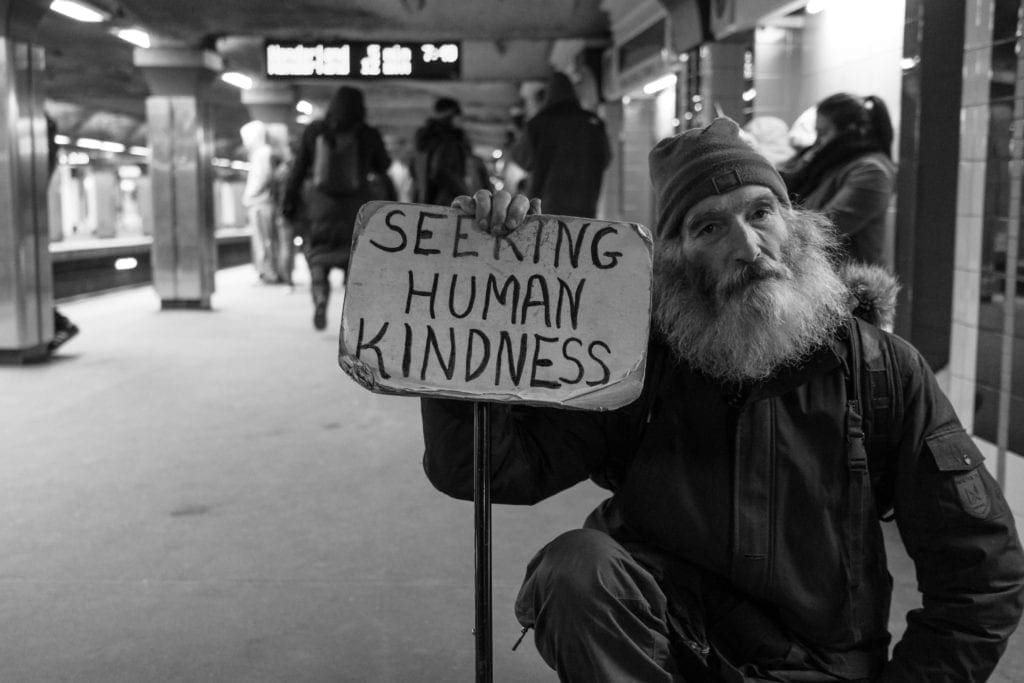 In a press release issued by the California based charity Deliverance, the non-profit organization which has helped thousands of homeless individuals and those in need, announced that as of January 31st, 2019, the organization will cease to exist. Because of the added requirements and regulations by state entities, Deliverance was no longer capable of maintaining their current operations while at the same time trying to stay afloat as they were drowned by red tape and other expenses thrown at them by the state of California.
Deliverance noted the main difficulties they encountered in their statement:
In a press release issued by the California based charity Deliverance, the non-profit organization which has helped thousands of homeless individuals and those in need, announced that as of January 31st, 2019, the organization will cease to exist. Because of the added requirements and regulations by state entities, Deliverance was no longer capable of maintaining their current operations while at the same time trying to stay afloat as they were drowned by red tape and other expenses thrown at them by the state of California.
Deliverance noted the main difficulties they encountered in their statement:
In a press release issued by the California based charity Deliverance, the non-profit organization which has helped thousands of homeless individuals and those in need, announced that as of January 31st, 2019, the organization will cease to exist. Because of the added requirements and regulations by state entities, Deliverance was no longer capable of maintaining their current operations while at the same time trying to stay afloat as they were drowned by red tape and other expenses thrown at them by the state of California.
Deliverance noted the main difficulties they encountered in their statement:
The San Diego Department of Environmental Health established requirements for LSCFOs [Limited Service Charitable Feeding Operation]. If an organization is distributing prepackaged, non-perishable food, or whole uncut produce, no action is required. However, if the organization wishes to prepare food for distribution, the LSCFO must register with SDDEH [San Diego Department of Environmental Health] and follow established best practices as set forth on their website. The primary change for Deliverance is the requirement that no food may be prepared in a volunteer’s home, which has been our primary method of food preparation. The Board of Directors discussed options for utilizing an existing food prep facility, but due to the distributed nature of the organization, this option would prove to be cumbersome and perhaps only a short term solution to the problem. As a result, Deliverance, San Diego can no longer prepare hot meals for distribution to the homeless population of downtown San Diego without incurring significant logistical and financial costs.So instead of allowing volunteers to make food in their homes and bring it to those who didn’t have food nor a home, the SDDEH decided it was too risky for all parties involved, thus giving them the grounds to craft the rules and regulations which caused the premature death of this charitable organization. Across the country, there are many cases of state and local governments arresting people for giving food to the homeless. So the question is, in an absence of a private, voluntary exchange between consenting people, what is left? An impersonal welfare state that treats recipients like cogs in machine or numbers on a computer instead of flesh and blood human beings. If the government can create laws that restrict free people from providing a home cooked meal to the homeless, what is there to stop them from crafting a law that prohibits me from giving a pan of brownies to a neighbor? Or an office potluck where everyone brings a meal? This example might sound exaggerative but this whole situation creates a slippery slope for more state intervention in consensual and voluntary exchanges. While the intentions of the regulators might be good, the homeless and needy probably would prefer a free meal instead of going hungry.

FEMA’s Incompetence In Puerto Rico: A Bug Or A Feature Of The System?
Advocates for centralized government (as opposed to self-government) often argue that without it, important services such as emergency-related aid would not be provided when needed.
Many big government advocates claim that without tax money, the Federal Emergency Management Agency (FEMA) and other government-created entities would not exist. Therefore, they add, we must allow government entities to increasingly expropriate our earned income and accumulated wealth so that when tragedy strikes, individuals have access to food, shelter, water, and other basic necessities for survival.
 This argument falls flat as soon as we see how aid is actually provided in times of need by the hands of private charities and other organizations. As Mises reports, private charity is more effective than government welfare because private persons contributing their own money are highly incentivized to identify genuine needs.
It is when government entities like FEMA utterly fail to deliver the goods when people desperately need help that we are reminded that private sector organizations and charities are almost always more capable and efficient.
After all, contractors know that governments pay better precisely because they pay more than consumers would in an open market and that they are not really expecting results. The result is obvious: a lot of waste and very little accomplished – also known as cronyism.
Recently, FEMA on a company so that Puerto Ricans struggling after Hurricane Maria would receive 30 million meals. However, only 50,000 of these meals were actually delivered.
But that’s not all. FEMA also awarded another company with a $30 million contract so that emergency tarps and plastic sheeting were delivered to Hurricane Maria victims. Well, guess what? The supplies never came.
While some believe that this story matters because they show that federal government officials as well as government entities in Puerto Rico are incompetent and unprepared to manage these types of disasters, the reality is much grimmer.
The truth is that bloated, centralized governments are too big to succeed. Organizations like FEMA are a bureaucratic mess with little to no accountability to the American public or to the victims of disasters they are supposed to be serving.
Alternatively, aid and relief provision by independent charities and private organizations has a much better track record, in large part because these organizations answer directly to their donors and boards for the efficiency of their programs and spending efforts. They also hear directly from donors how they would like their money to be spent.
And because knowledge of what people really need and when is dispersed and spread across vast areas and among countless, disparate individuals, governments will never be able to know just what people need and how to provide it efficiently as it cannot be everywhere at the same time.
The solution could be as simple as advocating for private charity over government “help.”
The benefits of voluntary giving and volunteering instead of forced taxation that add to these bloated agencies is that the people get to choose what organizations deserve their time and money instead of seeing government incompetence when lives are at stake.
This argument falls flat as soon as we see how aid is actually provided in times of need by the hands of private charities and other organizations. As Mises reports, private charity is more effective than government welfare because private persons contributing their own money are highly incentivized to identify genuine needs.
It is when government entities like FEMA utterly fail to deliver the goods when people desperately need help that we are reminded that private sector organizations and charities are almost always more capable and efficient.
After all, contractors know that governments pay better precisely because they pay more than consumers would in an open market and that they are not really expecting results. The result is obvious: a lot of waste and very little accomplished – also known as cronyism.
Recently, FEMA on a company so that Puerto Ricans struggling after Hurricane Maria would receive 30 million meals. However, only 50,000 of these meals were actually delivered.
But that’s not all. FEMA also awarded another company with a $30 million contract so that emergency tarps and plastic sheeting were delivered to Hurricane Maria victims. Well, guess what? The supplies never came.
While some believe that this story matters because they show that federal government officials as well as government entities in Puerto Rico are incompetent and unprepared to manage these types of disasters, the reality is much grimmer.
The truth is that bloated, centralized governments are too big to succeed. Organizations like FEMA are a bureaucratic mess with little to no accountability to the American public or to the victims of disasters they are supposed to be serving.
Alternatively, aid and relief provision by independent charities and private organizations has a much better track record, in large part because these organizations answer directly to their donors and boards for the efficiency of their programs and spending efforts. They also hear directly from donors how they would like their money to be spent.
And because knowledge of what people really need and when is dispersed and spread across vast areas and among countless, disparate individuals, governments will never be able to know just what people need and how to provide it efficiently as it cannot be everywhere at the same time.
The solution could be as simple as advocating for private charity over government “help.”
The benefits of voluntary giving and volunteering instead of forced taxation that add to these bloated agencies is that the people get to choose what organizations deserve their time and money instead of seeing government incompetence when lives are at stake.
This argument falls flat as soon as we see how aid is actually provided in times of need by the hands of private charities and other organizations. As Mises reports, private charity is more effective than government welfare because private persons contributing their own money are highly incentivized to identify genuine needs.
It is when government entities like FEMA utterly fail to deliver the goods when people desperately need help that we are reminded that private sector organizations and charities are almost always more capable and efficient.
After all, contractors know that governments pay better precisely because they pay more than consumers would in an open market and that they are not really expecting results. The result is obvious: a lot of waste and very little accomplished – also known as cronyism.
Recently, FEMA on a company so that Puerto Ricans struggling after Hurricane Maria would receive 30 million meals. However, only 50,000 of these meals were actually delivered.
But that’s not all. FEMA also awarded another company with a $30 million contract so that emergency tarps and plastic sheeting were delivered to Hurricane Maria victims. Well, guess what? The supplies never came.
While some believe that this story matters because they show that federal government officials as well as government entities in Puerto Rico are incompetent and unprepared to manage these types of disasters, the reality is much grimmer.
The truth is that bloated, centralized governments are too big to succeed. Organizations like FEMA are a bureaucratic mess with little to no accountability to the American public or to the victims of disasters they are supposed to be serving.
Alternatively, aid and relief provision by independent charities and private organizations has a much better track record, in large part because these organizations answer directly to their donors and boards for the efficiency of their programs and spending efforts. They also hear directly from donors how they would like their money to be spent.
And because knowledge of what people really need and when is dispersed and spread across vast areas and among countless, disparate individuals, governments will never be able to know just what people need and how to provide it efficiently as it cannot be everywhere at the same time.
The solution could be as simple as advocating for private charity over government “help.”
The benefits of voluntary giving and volunteering instead of forced taxation that add to these bloated agencies is that the people get to choose what organizations deserve their time and money instead of seeing government incompetence when lives are at stake.
16 Liberty Action Items for ’16
16 Liberty Action Items for ’16
This article was featured in our weekly newsletter, the Liberator Online. To receive it in your inbox, sign up here. “What can I do to help?” This is LITERALLY my favorite question to be asked, because I can always share SOMETHING that can be done. There’s certainly something for everyone. Here, I’ve compiled a list of 16 action-oriented items for you to share with your liberty-minded friends:
- Seek out a group of like-minded people in your area. America’s Future Foundation, The Bastiat Society, and Liberty on the Rocks are all easy ways to network with liberty-minded people, though any civic organization will be helpful.
- Seek out a group with whom you frequently disagree. I’m not suggesting that you crash their events, rather I suggest you go to listen to a different perspective.
- Identify a candidate for office that you wholeheartedly support, and campaign for him/her.
- Run for an elected office where you could serve with passion. A passion for liberty and a passion for the duties of the office will make your service fulfilling.
- Affiliate with a local group of organized, engaged, civics-minded citizens.
- Pick one issue to speak, write, or advocate for effectively.
- Write a monthly letter to the editor about the libertarian perspective on the topic du jour.
- Embrace a “disruptive” technology or innovation. 3-D printing, Uber, Bitcoin, AirBNB all come to mind.
- Adopt a new “favorite” columnist. In the age of the Internet, it should be easy to find a new writer that you enjoy reading.
- When discussing libertarian thought and philosophy, focus on what Liberty offers, rather than focusing on your desire for it. “Sell the sizzle, not the steak.”
- Pick a charity to support with your time, talent, or treasure.
- Donate to candidates and organizations that you support.
- Choose an issue to wave signs, go to a rally, or volunteer to spread the word about.
- Find one thing that you can do that will make a positive, lasting difference in the life of one person. It’s easier than you think.
- Be nice to everyone, no matter how they treat you.
- Do all of the above, and be a shining example of libertarians everywhere.
How Effective is Government Welfare Compared to Private Charity?
Dr. Mary Ruwart is a leading expert in libertarian communication. In this column she offers short answers to real questions about libertarianism. To submit questions to Dr. Ruwart, see end of column.
 QUESTION: Recently in the Liberator Online you answered a question with the following supporting argument:
“For example, about 75% of the tax dollars that are targeted to welfare programs actually go to the middle-class administrators rather than the needy. In contrast, private programs give about 75% of donated dollars to the poor. Thus, the poor get more when charitable giving is private.”
I am interested in where you got your statistics. I want to share this argument with friends, but I like to provide references. Could you do so?
MY SHORT ANSWER: Gladly! These are the references that I’m currently citing in the latest version of my book Short Answers To The Tough Questions:
“Welfare and Poverty,” NCPA Policy Report #107 (Dallas, TX.: National Center for Policy Analysis, 1983), p. 1.
“Breaking the Poverty Cycle: Private Sector Alternatives to the Welfare State,” a book by Robert L. Woodson. (Harrisburg, PA.: The Commonwealth Foundation for Public Policy Alternatives, 1988), p. 63.
“The Costs of Public Income Redistribution and Private Charity” by JR Edwards, Journal of Libertarian Studies 21: 3-20, 2007.
The last reference is the most comprehensive. On pages one and two, Edwards cites two studies, over a seven year period. He writes:
“[Government] income redistribution agencies are estimated to absorb about two-thirds of each dollar budgeted to them in overhead costs, and in some cases as much as three-quarters of each dollar. Using government data, Robert L. Woodson (1989, p. 63) calculated that, on average, 70 cents of each dollar budgeted for government assistance goes not to the poor, but to the members of the welfare bureaucracy and others serving the poor. Michael Tanner (1996, p. 136 n. 18) cites regional studies supporting this 70/30 split.
“In contrast, administrative and other operating costs in private charities absorb, on average, only one-third or less of each dollar donated, leaving the other two-thirds (or more) to be delivered to recipients. Charity Navigator, www.charitynavigator.org the newest of several private sector organizations that rate charities by various criteria and supply that information to the public on their web sites, found that, as of 2004, 70 percent of charities they rated spent at least 75 percent of their budgets on the programs and services they exist to provide, and 90 percent spent at least 65 percent. The median administrative expense among all charities in their sample was only 10.3 percent.”
Later on Edwards adds: “In fact, the average cost of private charity generally is almost certainly lower than the one-quarter to one-third estimated by Charity Navigator and other private sector charity rating services…” and tells why.
The bottom line: Government spends about 70% of tax dollars to get 30% of tax dollars to the poor. The private sector does the opposite, spending about 30% or less to get 70% of aid to the poor.
Note: I used “about 75%” from memory, which is getting a little less accurate these days. 🙂 In the future, using the “about 70%” figure would probably be better.
Edwards also makes this key observation:
“[R]aising only half as much money through voluntary donations, the private agencies (and families) could deliver the same amount as the government, saving, in the process, all the costs the government imposes on the public through the compulsory taxation. Given that aiding the poor must have large support among the public for coercive government redistribution to be policy, couldn’t the supporters raise, through voluntary donations from among themselves, half the amount that would have to be raised through taxation, and avoid coercing the rest of the nonpoor public?”
That’s the hope the libertarian vision offers: more effective aid for the poor and needy than ever before, delivered voluntarily by the private sector at a far smaller cost than today’s welfare state.
LEARN MORE: Suggestions by Liberator Online editor James W. Harris for further reading and viewing on this topic:
QUESTION: Recently in the Liberator Online you answered a question with the following supporting argument:
“For example, about 75% of the tax dollars that are targeted to welfare programs actually go to the middle-class administrators rather than the needy. In contrast, private programs give about 75% of donated dollars to the poor. Thus, the poor get more when charitable giving is private.”
I am interested in where you got your statistics. I want to share this argument with friends, but I like to provide references. Could you do so?
MY SHORT ANSWER: Gladly! These are the references that I’m currently citing in the latest version of my book Short Answers To The Tough Questions:
“Welfare and Poverty,” NCPA Policy Report #107 (Dallas, TX.: National Center for Policy Analysis, 1983), p. 1.
“Breaking the Poverty Cycle: Private Sector Alternatives to the Welfare State,” a book by Robert L. Woodson. (Harrisburg, PA.: The Commonwealth Foundation for Public Policy Alternatives, 1988), p. 63.
“The Costs of Public Income Redistribution and Private Charity” by JR Edwards, Journal of Libertarian Studies 21: 3-20, 2007.
The last reference is the most comprehensive. On pages one and two, Edwards cites two studies, over a seven year period. He writes:
“[Government] income redistribution agencies are estimated to absorb about two-thirds of each dollar budgeted to them in overhead costs, and in some cases as much as three-quarters of each dollar. Using government data, Robert L. Woodson (1989, p. 63) calculated that, on average, 70 cents of each dollar budgeted for government assistance goes not to the poor, but to the members of the welfare bureaucracy and others serving the poor. Michael Tanner (1996, p. 136 n. 18) cites regional studies supporting this 70/30 split.
“In contrast, administrative and other operating costs in private charities absorb, on average, only one-third or less of each dollar donated, leaving the other two-thirds (or more) to be delivered to recipients. Charity Navigator, www.charitynavigator.org the newest of several private sector organizations that rate charities by various criteria and supply that information to the public on their web sites, found that, as of 2004, 70 percent of charities they rated spent at least 75 percent of their budgets on the programs and services they exist to provide, and 90 percent spent at least 65 percent. The median administrative expense among all charities in their sample was only 10.3 percent.”
Later on Edwards adds: “In fact, the average cost of private charity generally is almost certainly lower than the one-quarter to one-third estimated by Charity Navigator and other private sector charity rating services…” and tells why.
The bottom line: Government spends about 70% of tax dollars to get 30% of tax dollars to the poor. The private sector does the opposite, spending about 30% or less to get 70% of aid to the poor.
Note: I used “about 75%” from memory, which is getting a little less accurate these days. 🙂 In the future, using the “about 70%” figure would probably be better.
Edwards also makes this key observation:
“[R]aising only half as much money through voluntary donations, the private agencies (and families) could deliver the same amount as the government, saving, in the process, all the costs the government imposes on the public through the compulsory taxation. Given that aiding the poor must have large support among the public for coercive government redistribution to be policy, couldn’t the supporters raise, through voluntary donations from among themselves, half the amount that would have to be raised through taxation, and avoid coercing the rest of the nonpoor public?”
That’s the hope the libertarian vision offers: more effective aid for the poor and needy than ever before, delivered voluntarily by the private sector at a far smaller cost than today’s welfare state.
LEARN MORE: Suggestions by Liberator Online editor James W. Harris for further reading and viewing on this topic:
 Free ebook: The End of Welfare: Fighting Poverty in the Civil Society by Michael D. Tanner.
In this 1996 Cato Institute book — now available as a free download — Cato’s Michael Tanner traces the growth of the welfare state in America. He argues that government welfare programs have failed to accomplish their ostensible goal of alleviating poverty. Moreover, they have undermined the traditional American principle of voluntarism. The interventionist welfare state has replaced civil society with political society — and the results have been disastrous for taxpayers, community, liberty and, most especially, the poor themselves.
Tanner argues persuasively that government welfare has failed by every measure, and that private charity can and should replace coercive bureaucratic government welfare. This will not only be more cost-effective, it will provide the poor with more effective and humane care.
* * * * * * * * * *
Got questions? Dr. Ruwart has answers! If you’d like answers to YOUR “tough questions” on libertarian issues, email Dr. Ruwart
Due to volume, Dr. Ruwart can’t personally acknowledge all emails. But we’ll run the best questions and answers in upcoming issues.
Dr. Ruwart’s previous Liberator Online answers are archived in searchable form.
Dr. Ruwart’s brand new book Short Answers to the Tough Questions, Expanded Edition is available from the Advocates, as is her acclaimed classic Healing Our World.
Free ebook: The End of Welfare: Fighting Poverty in the Civil Society by Michael D. Tanner.
In this 1996 Cato Institute book — now available as a free download — Cato’s Michael Tanner traces the growth of the welfare state in America. He argues that government welfare programs have failed to accomplish their ostensible goal of alleviating poverty. Moreover, they have undermined the traditional American principle of voluntarism. The interventionist welfare state has replaced civil society with political society — and the results have been disastrous for taxpayers, community, liberty and, most especially, the poor themselves.
Tanner argues persuasively that government welfare has failed by every measure, and that private charity can and should replace coercive bureaucratic government welfare. This will not only be more cost-effective, it will provide the poor with more effective and humane care.
* * * * * * * * * *
Got questions? Dr. Ruwart has answers! If you’d like answers to YOUR “tough questions” on libertarian issues, email Dr. Ruwart
Due to volume, Dr. Ruwart can’t personally acknowledge all emails. But we’ll run the best questions and answers in upcoming issues.
Dr. Ruwart’s previous Liberator Online answers are archived in searchable form.
Dr. Ruwart’s brand new book Short Answers to the Tough Questions, Expanded Edition is available from the Advocates, as is her acclaimed classic Healing Our World.
QUESTION: Recently in the Liberator Online you answered a question with the following supporting argument:
“For example, about 75% of the tax dollars that are targeted to welfare programs actually go to the middle-class administrators rather than the needy. In contrast, private programs give about 75% of donated dollars to the poor. Thus, the poor get more when charitable giving is private.”
I am interested in where you got your statistics. I want to share this argument with friends, but I like to provide references. Could you do so?
MY SHORT ANSWER: Gladly! These are the references that I’m currently citing in the latest version of my book Short Answers To The Tough Questions:
“Welfare and Poverty,” NCPA Policy Report #107 (Dallas, TX.: National Center for Policy Analysis, 1983), p. 1.
“Breaking the Poverty Cycle: Private Sector Alternatives to the Welfare State,” a book by Robert L. Woodson. (Harrisburg, PA.: The Commonwealth Foundation for Public Policy Alternatives, 1988), p. 63.
“The Costs of Public Income Redistribution and Private Charity” by JR Edwards, Journal of Libertarian Studies 21: 3-20, 2007.
The last reference is the most comprehensive. On pages one and two, Edwards cites two studies, over a seven year period. He writes:
“[Government] income redistribution agencies are estimated to absorb about two-thirds of each dollar budgeted to them in overhead costs, and in some cases as much as three-quarters of each dollar. Using government data, Robert L. Woodson (1989, p. 63) calculated that, on average, 70 cents of each dollar budgeted for government assistance goes not to the poor, but to the members of the welfare bureaucracy and others serving the poor. Michael Tanner (1996, p. 136 n. 18) cites regional studies supporting this 70/30 split.
“In contrast, administrative and other operating costs in private charities absorb, on average, only one-third or less of each dollar donated, leaving the other two-thirds (or more) to be delivered to recipients. Charity Navigator, www.charitynavigator.org the newest of several private sector organizations that rate charities by various criteria and supply that information to the public on their web sites, found that, as of 2004, 70 percent of charities they rated spent at least 75 percent of their budgets on the programs and services they exist to provide, and 90 percent spent at least 65 percent. The median administrative expense among all charities in their sample was only 10.3 percent.”
Later on Edwards adds: “In fact, the average cost of private charity generally is almost certainly lower than the one-quarter to one-third estimated by Charity Navigator and other private sector charity rating services…” and tells why.
The bottom line: Government spends about 70% of tax dollars to get 30% of tax dollars to the poor. The private sector does the opposite, spending about 30% or less to get 70% of aid to the poor.
Note: I used “about 75%” from memory, which is getting a little less accurate these days. 🙂 In the future, using the “about 70%” figure would probably be better.
Edwards also makes this key observation:
“[R]aising only half as much money through voluntary donations, the private agencies (and families) could deliver the same amount as the government, saving, in the process, all the costs the government imposes on the public through the compulsory taxation. Given that aiding the poor must have large support among the public for coercive government redistribution to be policy, couldn’t the supporters raise, through voluntary donations from among themselves, half the amount that would have to be raised through taxation, and avoid coercing the rest of the nonpoor public?”
That’s the hope the libertarian vision offers: more effective aid for the poor and needy than ever before, delivered voluntarily by the private sector at a far smaller cost than today’s welfare state.
LEARN MORE: Suggestions by Liberator Online editor James W. Harris for further reading and viewing on this topic:
Free ebook: The End of Welfare: Fighting Poverty in the Civil Society by Michael D. Tanner.
In this 1996 Cato Institute book — now available as a free download — Cato’s Michael Tanner traces the growth of the welfare state in America. He argues that government welfare programs have failed to accomplish their ostensible goal of alleviating poverty. Moreover, they have undermined the traditional American principle of voluntarism. The interventionist welfare state has replaced civil society with political society — and the results have been disastrous for taxpayers, community, liberty and, most especially, the poor themselves.
Tanner argues persuasively that government welfare has failed by every measure, and that private charity can and should replace coercive bureaucratic government welfare. This will not only be more cost-effective, it will provide the poor with more effective and humane care.
* * * * * * * * * *
Got questions? Dr. Ruwart has answers! If you’d like answers to YOUR “tough questions” on libertarian issues, email Dr. Ruwart
Due to volume, Dr. Ruwart can’t personally acknowledge all emails. But we’ll run the best questions and answers in upcoming issues.
Dr. Ruwart’s previous Liberator Online answers are archived in searchable form.
Dr. Ruwart’s brand new book Short Answers to the Tough Questions, Expanded Edition is available from the Advocates, as is her acclaimed classic Healing Our World.